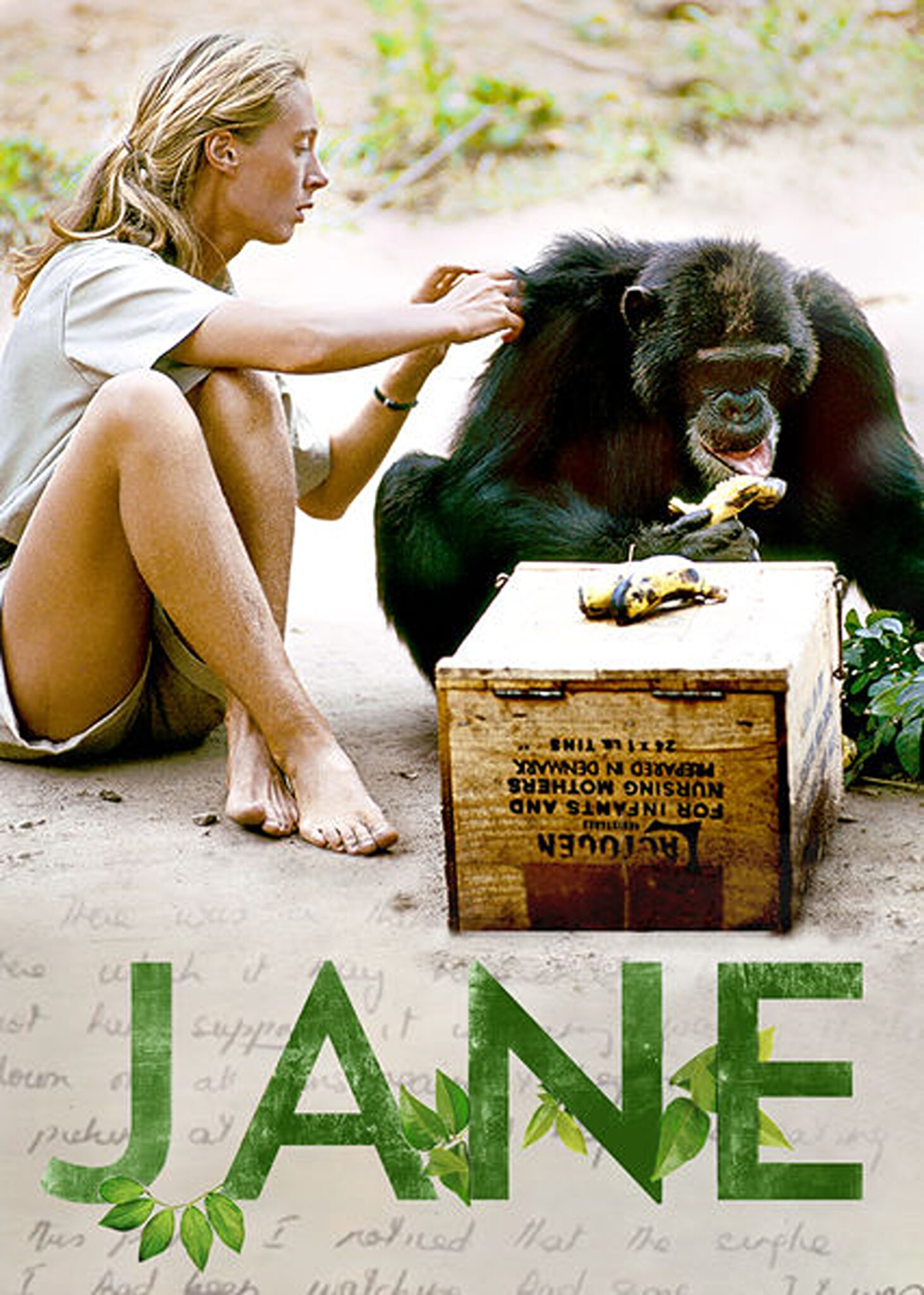
Jane (2017), directed by Brett Morgen and produced by National Geographic, is a thought-provoking documentary that celebrates the life and legacy of Jane Goodall, the English primatologist, ethologist, conservationist, and humanitarian who forever changed our understanding of chimpanzees. Born on April 3rd, 1934, Jane Goodall’s life is a story of determination, curiosity, and a deep love for nature. It is captured by the film in beautiful shots that may evoke nostalgia.
The documentary opens with a stunning montage of the flora and fauna of Gombe, Tanzania, which became Jane’s home for the next sixty years. At just twenty-six years old, Jane’s childhood dream of visiting Africa came true when Dr. Louis Leakey, a renowned palaeontologist, chose her to observe and record chimpanzee families in their natural habitat. The decision to select someone without formal scientific training was unconventional and difficult to understand at first. Still, Leakey saw in her something academia could not teach: relentless passion and empathy for living creatures.
As the film unfolds, the audience is transported into a world that feels straight out of the adventure movies we all grew up watching. The archival footage, lost for decades and rediscovered in 2014, adds to the film’s nostalgic charm. Initially, Jane struggles to gain the Chimps’ trust; every time she approaches, they flee. The documentary portrays her early disappointments and the very realistic fear of loss of funding, which every scientist can relate to.
“At the back of my mind, there was always the fear that if I don’t find out something exciting, the money will run out”.
Five months into her work, a breakthrough came: an older male chimp, recognizable by his white beard, didn’t run away. Instead, he led her to his group, marking the first real connection between human and chimpanzee in her research. This moment of trust opened doors to groundbreaking discoveries.
Jane’s observation of “object modification”, chimpanzees using tools to extract termites, revolutionized science. With this finding, she challenged long-held beliefs that tool use was unique to humans. Her meticulous data collection and visual records, captured through notes, sketches, and photographs, gave credibility to her work. Soon, the scientific community took notice.
With the press came funding and a young wildlife photographer, Hugo van Lawick, who was sent to document her work. Initially, Jane found his presence intrusive, but over time, their shared passion for nature and their work brought them together. Their relationship is beautifully portrayed through tender scenes; the best shot, in my opinion, is where Jane and Hugo mirror the chimps they are observing, highlighting their harmony with the wild.
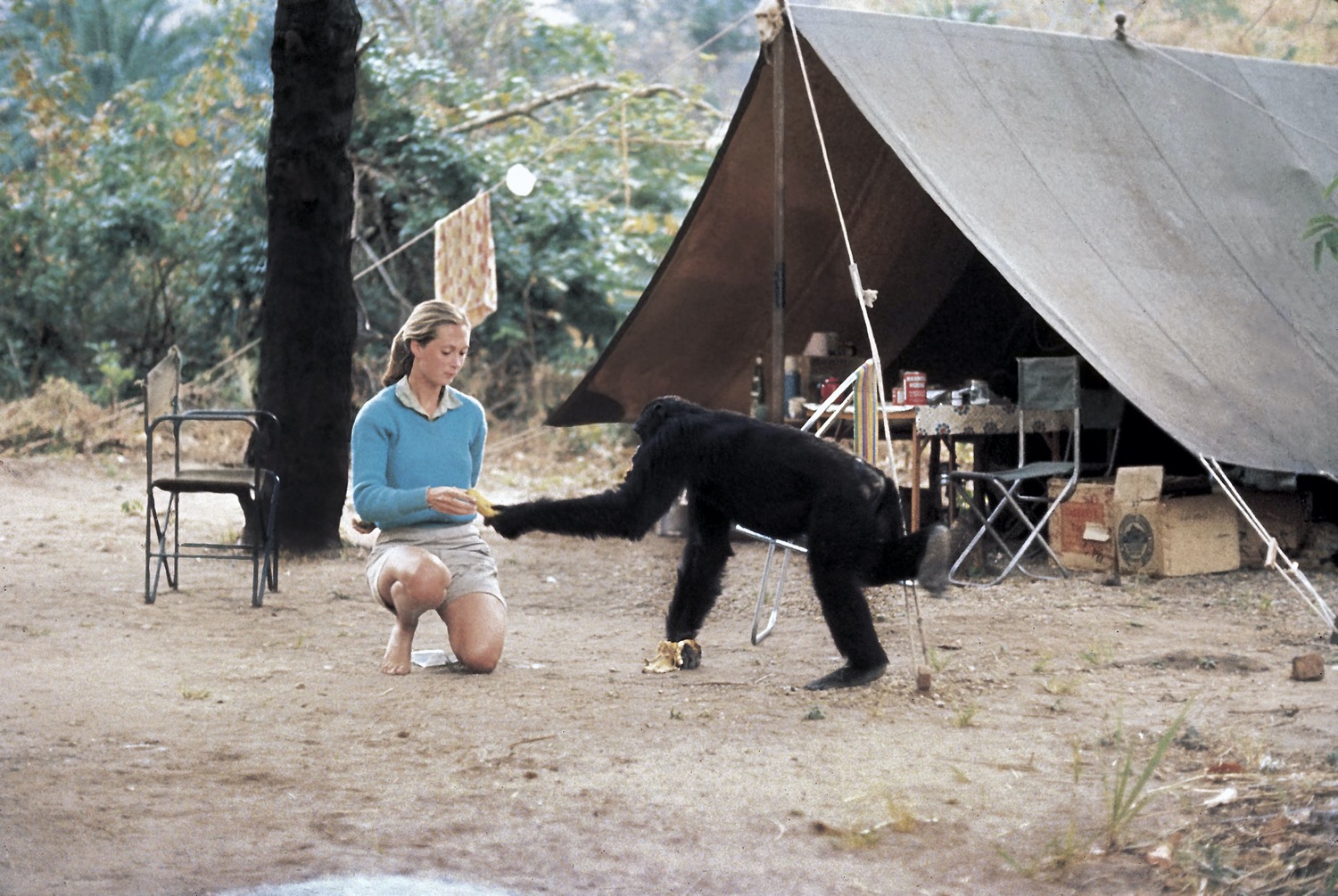
The film doesn’t just focus on science; it also delves into Jane’s personal journey and her strong bond with her mother, Vanne. Her mother, a doctor, accompanied her to Africa and supported her emotionally during the difficult early months when isolation and illness loomed large. Their mother-daughter relationship adds warmth and humanity to the story, a reminder that behind every great pioneer is someone who believed in them unconditionally.
At a particular point, she realises that she is pregnant, and “Flo”, a mother chimp) gives her the courage to be a mother. Flo had a baby recently as well, whom Jane called “Flint”. Her empathy grew even stronger as she began to notice parallels between maternal care in chimps and humans. This is a smart and insightful realization, showing how living beings learn from each other’s behaviours and instincts; also known as “Biomimicry”.
The documentary reveals an exciting reality about Jane’s personal life as her son was raised in the research centre at Gombe. Since Chimpanzees attacked human infants, he was enclosed in a cage for his protection. It is interesting to note that when parents take their kids to observe enclosed animals in a zoo, Jane was an exceptional mother. Jane enclosed her child for protection to observe the animals teaching the child humanitarian values from a very young age.
Despite the chaos of camp life, the humidity, insects, and constant challenges, Jane’s optimism and humour shine through. She is witty, often satirizing men who doubted her, and steadfastly committed to her mission. The documentary conveys the message that true happiness comes from submitting to a cause you believe in. Through breathtaking cinematography and Philip Glass’s moving score, Jane becomes not just a documentary but also a heart-warming journey, one that celebrates perseverance, love, and the power of purpose.
Jane (2017) is more than a film about science; it is a story about devotion, discovery, and humanity’s connection with nature. It teaches us that passion, not credentials, is what drives real change. It shows us how nothing can be in your way once you decide to accomplish something or fulfil a dream. As Jane says herself
“I couldn’t watch an animal suffering, any more than I could watch a human suffering and not help if I could; I see no difference in helping a human and helping an animal”.
References:
- https://www.facebook.com/photo.php?fbid=10152576252572171&id=10765027170&set=a.391778027170
- https://news.mongabay.com/2025/10/jane-goodall-1934-2025-primatologist-conservationist-and-messenger-of-hope/
- https://janegoodall.org/
More from the Author: Delhi’s Basement Infirmary: A Review on ‘All That Breathes’

Khadija Tariq is a genetics graduate who loves understanding how diseases work at the molecular level and how we can use that knowledge to create better treatments. She was an intern at Scientia Pakistan Science Writing Internship Cohort Three.

