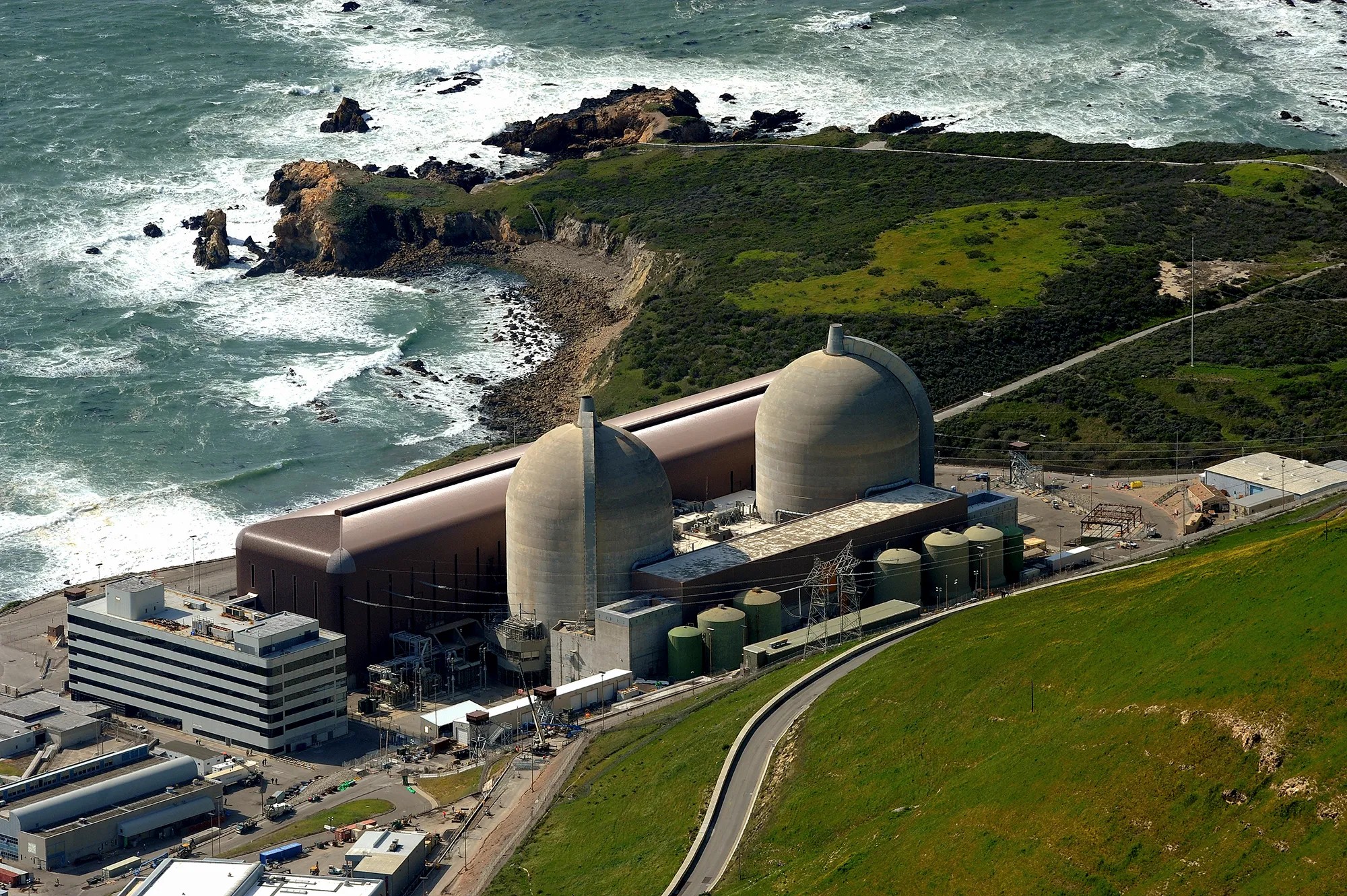
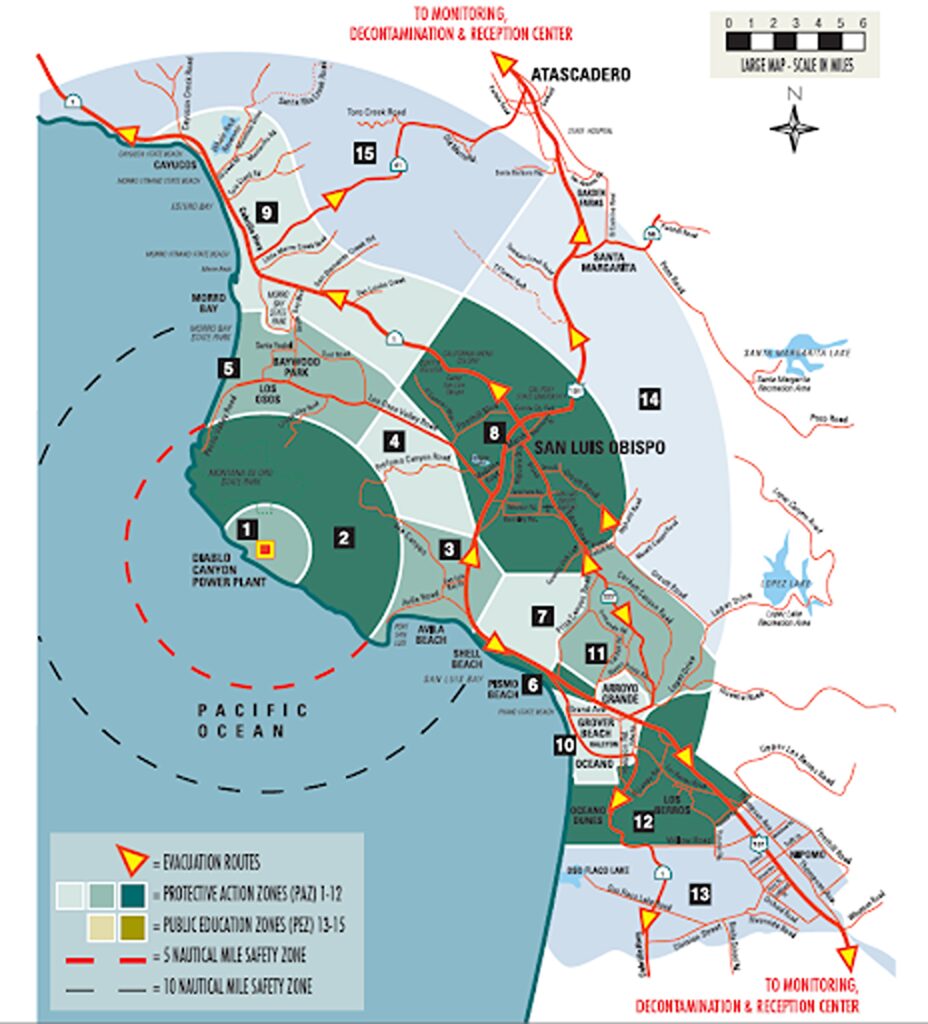
I have lived in San Luis Obispo for over a decade, about 40 km from Diablo Canyon, California’s last operational nuclear power plant. I also work in machine learning and artificial intelligence. This combination makes Diablo Canyon feel less like an abstract policy debate and more like a high-stakes reality unfolding in my own backyard.
Under a 2016 agreement, the Diablo nuclear plant was scheduled to shut down completely by 2025. It was deemed too expensive and too harmful to marine life. Then, California did one of the most significant policy U-turns of recent times. Diablo went from a facility slated for closure to one considered essential for a reliable grid in the AI era.
The Diablo nuclear plant is now expected to continue operations for another 20 years, with the U.S. Nuclear Regulatory Commission (NRC) set to finalize its license renewal in April 2026.
Diablo Canyon: capacity, concern, and the coastline
The Diablo Canyon nuclear power plant became operational in 1985. It is operated by Pacific Gas and Electric (PG&E). Diablo is an approximately 2.2 Gigawatt (GW) plant, producing 18,000 Gigawatt-hour (GWh) of electricity per year, enough to power 3 million homes in California. Nuclear power provides approximately 9-10% of California’s annual electricity generation.
Californians have debated the risks of Diablo for decades. They involve concerns for accidents, environmental impact, and California’s geological realities. California, in general, is highly susceptible to earthquakes because of 500+ active fault lines. Multiple fault lines surround the Diablo plant. Given that the plant has been in operation for 40 years, there are concerns about aging infrastructure and the steel reactor walls becoming brittle due to radiation exposure (neutron embrittlement).
The biggest reason for the shutdown agreement, however, was environmental. The plant uses a “Once-Through Cooling” (OTC) system, pulling in 2-2.5 billion gallons of Pacific seawater per day to cool its reactors, killing an estimated 1.5 billion larval fish and marine organisms a year. In response, California’s State Water Board had passed the OTC Policy, requiring power plants to either switch to closed-cycle cooling towers or shut down. PG&E decided it was cheaper to close the plant in 2025 than to build the towers.
The policy priorities of a decade ago, however, have been reshaped by new technical realities. Extreme heat, a strained grid, and above all, the explosive growth of AI changed Diablo Canyon from an environmental liability into strategic infrastructure almost overnight.
The AI power shock: understanding nuclear energy
An obvious question that comes to mind is, if data centers need energy, why not just plug into the existing electric grid? This is not feasible for 3 main reasons: time, capacity, and reliability.
Time: If a tech company wants to connect a new 1GW data center into the existing grid, it needs to join an interconnection queue, where the wait times are anywhere from 4 to 12 years. Companies can bypass the queue by connecting directly to a nuclear power plant.
Capacity: The US grid was designed for an era of flat electricity demand, where efficiency gains largely offset new usage. Things changed drastically with the rise of AI data centers, which require massive, multi-GW loads that run 24 hours a day. PG&E estimates California data centers may need another 10GW by 2035. In California, without Diablo Canyon’s 2.2 GW of steady output, supporting the growing AI clusters in Silicon Valley and the Central Valley would be far more difficult.
Reliability: The electric grid is vulnerable to extreme weather conditions, congestion, and blackouts. It is also a shared resource. A data center, however, requires a steady, reliable source of power 24/7. Nuclear plants can provide such dependable baseload power by having the data centers connect directly to the plant’s output. As of late 2025, the Federal Energy Regulatory Commission (FERC) has started creating new fast-track rules to allow data centers to co-locate with on-site nuclear power.
Another important question: Is nuclear energy “green”? Short answer: Yes and No!
Nuclear energy is “carbon-free”, yes, as a nuclear power plant emits zero CO2 during operation. However, it is not renewable, as unlike sun or wind, uranium is a finite resource whose mining is not cheap, with dangers of radioactive contamination.
Nuclear energy does cause pollution as the power plants create radioactive waste. In the United States, there is still no permanent place to put this waste. So it just sits in dry casks (giant concrete silos) on the coast at places like Diablo Canyon. Also, plants that use the OTC technique for reactors, like Diablo, cause thermal pollution by pulling in billions of gallons of cold ocean water and pumping it back out much warmer. This kills kelp, drives away native fish, and kills billions of tiny fish larvae, eggs, and plankton, effectively sterilizing a portion of the coastal waters every day.
It is important to point out that nuclear energy generally costs more to produce than typical wholesale rates. The cost is primarily shouldered by the tech companies that are willing to pay a premium today for guaranteed future capacity for their data centers. The federal and state programs also offer direct loans and tax credits to minimize the retail price. The impact on regular consumers, however, remains the most debated topic in energy economics right now.
The Diablo decade of change (2016-2026)
In 2016, PG&E reached a landmark agreement with environmental groups and labor unions to shut the plant down entirely by 2025 for reasons already discussed above.
In 2022-2023, extreme weather events kicked in with record-breaking heatwaves and the threat of rolling blackouts. The energy crisis forced California officials to reconsider losing Diablo, its largest steady power source.
The great reversal started at the end of 2022, when a new bill was signed, which authorized keeping the plant open until at least 2030 while options were considered. It also provided state loan funds for continued operations.
In 2023, NRC further permitted a rare extension of operations past its original license expiration without requiring the immediate installation of cooling towers or a new environmental review of the marine impact.
The 2024 AI boom further changed the math for Diablo Canyon. AI data centers require massive amounts of dependable 24/7 power, which the current grid cannot provide.
In 2025, California regulators acknowledged that the state’s plan to add multi-GW of AI data center load is impossible without keeping Diablo Canyon online for much longer. In late 2025, the NRC began processing a request for a full 20-year extension, which would keep the plant running until 2045.
The shift toward keeping Diablo Canyon open was not rhetorical. It showed up in formal decisions across nearly every major regulatory agency. Positions that once treated the plant as obsolete and regulatory frameworks originally designed to protect the coastline have been recalibrated or deferred by the state government in the last three years to accommodate the needs of the AI economy.
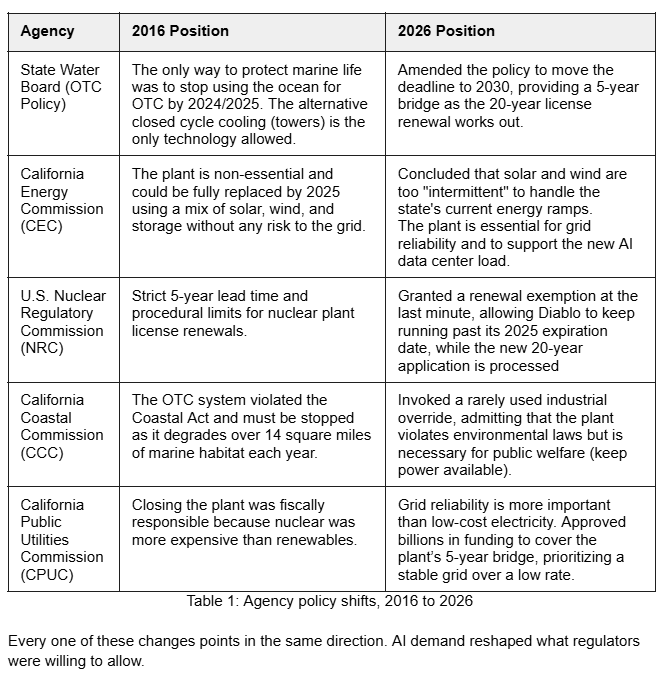
Managing the risks!
None of the original concerns about Diablo Canyon vanished.
The plant sits near fault lines in an earthquake-prone state. Its OTC system still affects marine ecosystems. Nuclear waste still lacks a permanent disposal site in the United States. Here is how some of these risks are addressed to secure the 20-year extension:
Earthquakes: The NRC’s June 2025 Safety Evaluation found the plant safe, noting it was upgraded to withstand a 7.5 magnitude quake. PG&E also conducts continuous real-time seismic monitoring.
Thermal Pollution: To offset the larval fish deaths, the California Coastal Commission forced PG&E in December 2025 to permanently conserve 4,500 acres of coastline, preventing any future development.
Embrittlement: The plant is undergoing a massive License Renewal Application audit by NRC, which includes ultrasonic testing of the reactor vessels by PG&E to prove the steel is still flexible and safe.
What risks we are willing to accept today for the needs of the AI economy tomorrow is an ongoing debate.
Diablo and AI: a symbiotic relationship
Diablo today is part of an unusual loop.
In December 2025, Diablo Canyon made history as the first U.S. nuclear plant to deploy an on-site generative AI solution by the startup Atomic Canyon. The startup spent nearly a year training its AI models to understand specific nuclear industry terminology. The resulting AI tool, called Neutron Enterprise, helps engineers navigate and search through millions of pages of technical manuals, 40 years of maintenance logs, and NRC regulations in seconds to speed up maintenance and safety audits.
So, while the plant is set to power the world’s AI, the AI is helping keep this 40-year-old plant safe and running!
It is a strange modern symbiosis that creates a situation full of complex trade-offs but no easy answers.
As a resident, I understand the unease of living near an aging nuclear plant on an earthquake-prone coast. I deeply love the California coastline, and I see the real environmental cost where the plant’s cooling system harms its fragile marine life. And as an AI engineer, I see an energy system under immense strain to deliver the stable power that the AI age demands.
What I do know is that Diablo Canyon is no longer a relic of the past. It has become a high-stakes experiment for our digital future, balancing trade-offs, humming day and night just up the coast.
Disclosure: This post utilized Gemini 3 (Feb 2026) for data synthesis and research support. The final content reflects the author’s own verification and editorial judgment.
References:
- The County Office of Emergency Services (OES) Nuclear Incidents 2026 Emergency Planning – link (accessed Feb 5, 2026)
- Biden-Harris Administration Finalizes Award of $1.1 Billion in Credits to Pacific Gas and Electric’s Diablo Canyon Power Plant, Dept of Energy Grid Deployment Office, January 17, 2024 – link (accessed Feb 5, 2026)
- International Energy Agency (IEA) Electricity Mid-Year Update 2025 – link (accessed Feb 5, 2026)
- Groups appeal NRC’s decision to keep Diablo Canyon open: ‘Simply unacceptable’, The Tribune, July 12, 2023 – link (accessed Feb 6, 2026)
- Nuclear Regulatory Commission (NRC) Safety Evaluation Related to the License Renewal of Diablo Canyon Nuclear Power Plant, Units 1 and 2, issued on June 5, 2025 – link (accessed Feb 6, 2026)
- California Coastal Commission (CCC) December 2025 Hearing Summary – link (accessed Feb 6, 2026 )
- California Energy Commission (CEC) 2025 Operations Assessment Report – link (accessed Feb 8, 2026)
- State Water Board: Permitting Actions for Diablo Canyon Nuclear Power Plant Information Sheet, October 21, 2025 – link (accessed Feb 8, 2026)
- PG&E Presentation and Complete Earnings Exhibits Q2 2025 – link (accessed Feb 8, 2026)
- PG&E Launches First Commercial Deployment of On-Site Generative AI Solution for the Nuclear Energy Sector at Diablo Canyon, Nov 13, 2024 – link (accessed Feb 6, 2026)
Read about the author: Talking Data in Healthcare and Opportunities for Women with Dr. Bushra Anjum

Dr. Bushra Anjum is a strategic data science and AI leader with more than a decade of experience building high-impact data and AI solutions. With a doctorate in computer science, she possesses deep expertise in stochastic modeling, machine learning, LLM development and AIOps. Throughout her career, she has successfully architected and launched innovative data-driven solutions in the technology, healthcare and education sectors.

