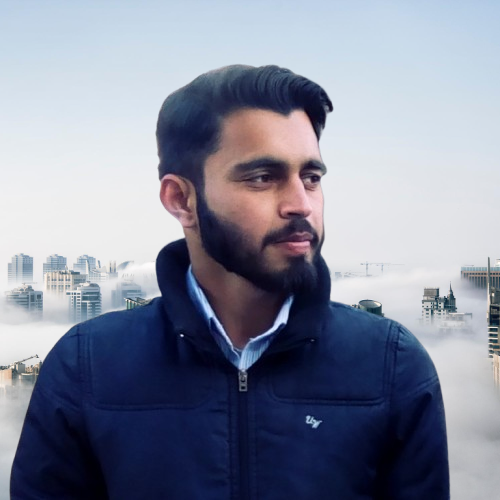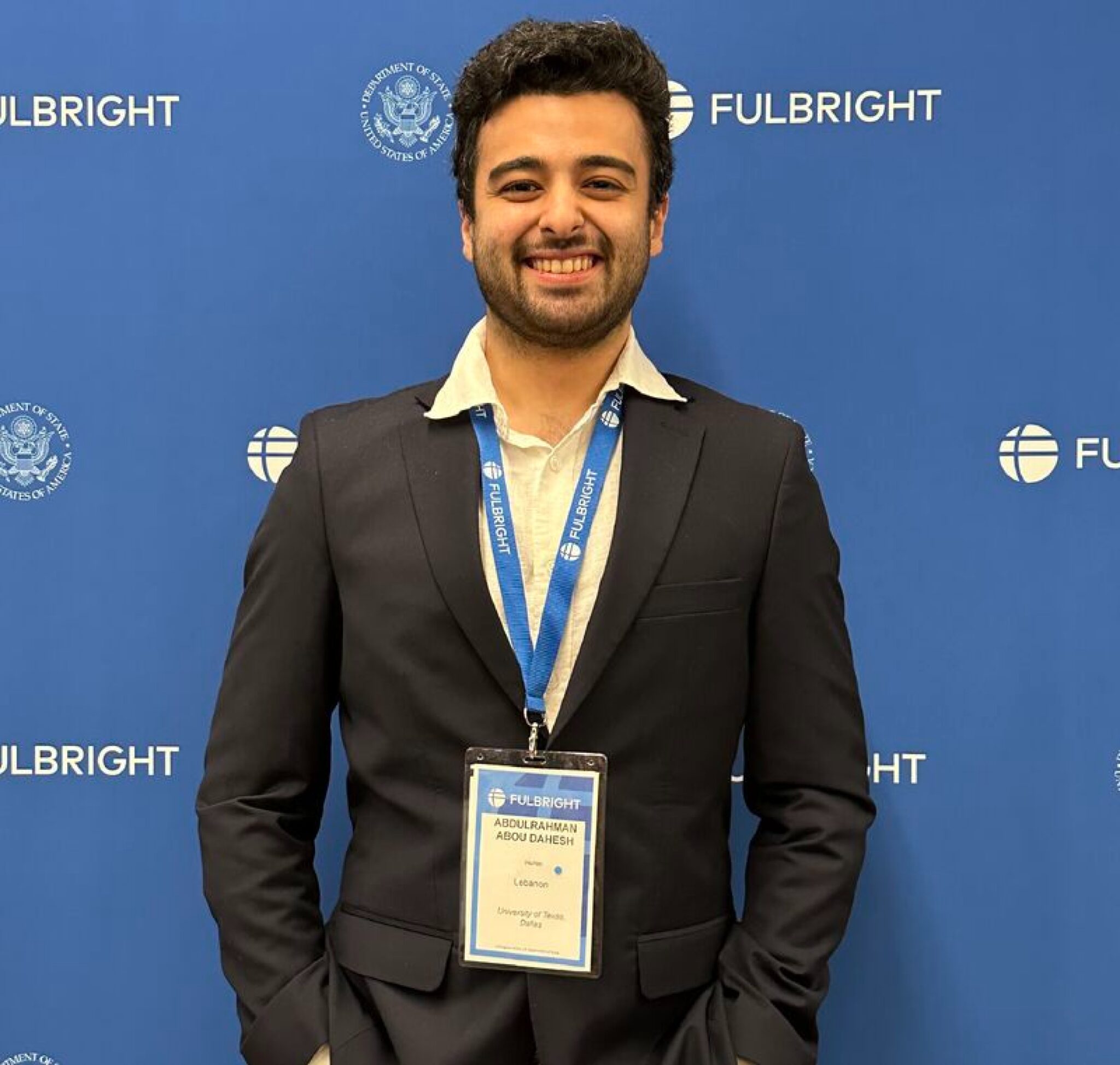
At the Lahore Science Mela 2025, the air buzzed with wonder and curiosity. Amid the incredible experiments and one of the most inspiring voices at the festival belonged to Abdulrahman Abou Dahesh, who stood out for his deeply personal mission. Despite Palestinian roots, his journey is a stirring testament to resilience, passion, and the power of science education as a force for good.
Abdulrahman is rewriting the narrative for young learners, using storytelling, immersive games, and vibrant characters. For him, neuroscience isn’t just a field of study; it is a bridge that links knowledge with empathy, helping children understand not only their biology, but their emotions, memories, and innermost selves.
Science has no borders. Abdulrahman’s appearance at LSM 2025 carried deeper significance; as a Palestinian scientist, he carried the hopes of a community often deprived of access and infrastructure. In a nutshell, he is bringing cutting-edge science into the hearts and hands of future generations.
Here are the snippets of Abdulrahman’s conversation with Scientia Magazine at Lahore Science Mela 2025.
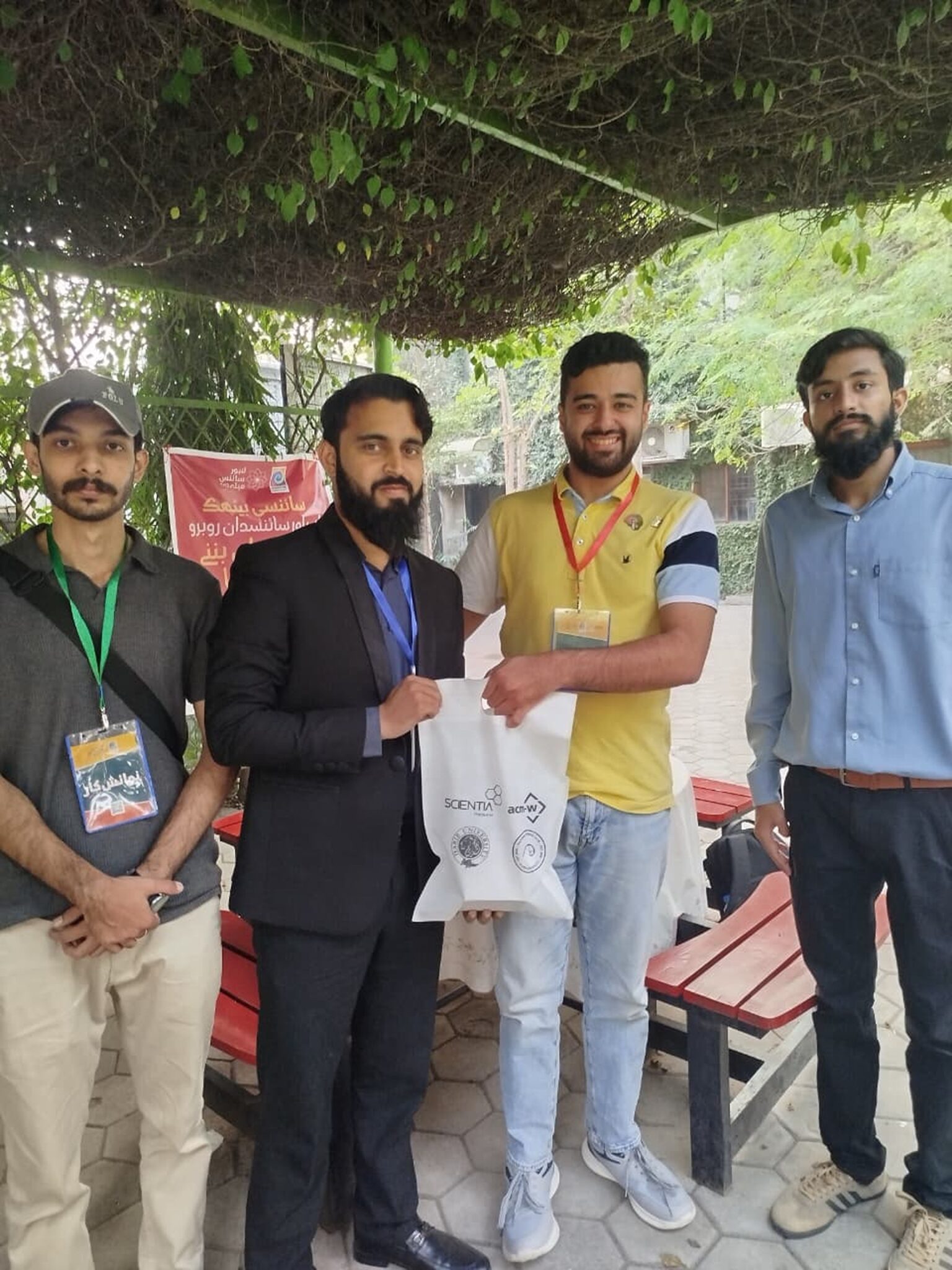
Hifz: It’s an honour to host and speak with Abdulrahman Al Dahesh, a Palestinian neuroscientist. He came from Palestine, studied in the USA, and is now at the Lahore Science Mela (LSM). How are you feeling here?
Abdulrahman Abou Dahesh: Thank you so much for having me today. It’s been really great to be part of LSM, and I feel excellent about it, as well as happy and grateful for all the people I’ve met and the students I’ve worked with. So, I’m feeling really thankful and fulfilled.
Hifz: We all love Palestine. We have an intense love with Palestinians and Muslims all around the world. So, what was your family and educational background? It’s a tough situation there in Gaza, Palestine, and the surrounding regions. How did you achieve this career?
Abdulrahman Abou Dahesh: Thank you so much for your question. My family is originally from Palestine, and in 1948, they were expelled from Palestine, and they went to Lebanon, where I was born.
So being born in Lebanon as a Palestinian doesn’t give you, I would say, the full rights you would have as compared to a Lebanese citizen there. But it’s definitely been, like, a good experience. I got a Fulbright scholarship for my Master’s in Neuroscience, and traveled to the United States. I actually just came back recently.
Thank you for what you said about Pakistan’s love for Palestine. I can see it here. Almost everyone either wears a keffiyeh or the Palestine flag on their shirt. You can see flags all around the Mela.
It’s just that this love between the Pakistani people and the Palestinian people that I cherish and love. That’s why even before coming to Pakistan, I had many friends there, and they are like a second family to me. And yeah, I’m grateful to be here.
Hifz: As you studied in the U.S., and we see that the Western people are a bit off against that region, the eastern areas. So, how was your experience as a neuroscientist based in Palestine studying in the US? Did you ever feel some bias, restrictions, backlash, or hatred due to your nationality?
Abdulrahman Abou Dahesh: I didn’t face any direct issues; the American people I met were very kind and welcoming. Unfortunately, due to changes in the government in the last year, there were definitely issues. For example, I was on a scholarship, but I couldn’t pursue an internship due to administrative issues.
But if I were to look at it from a wider view, there are definitely big issues, especially now, a whole chunk of discrimination against Palestinians. The visas of students and children coming from Gaza who want to get treatment are halted and stopped. This is definitely something that bothers me as a Palestinian, knowing that these children can receive treatment and, of course, all the policies as well. That was my personal experience during the two years.
Hifz: To me, as a common man, neuroscience is a very complex subject to pursue. What motivates you to pursue this career field? And as a recent graduate, where do you see yourself in the next few years?
Abdulrahman Abou Dahesh: I wanted to understand how humans behave and how psychology works. I come from a science background. My bachelor’s is in chemistry. I wanted to join these two fields together. That’s how I came across the field of neuroscience.
I figured out that there’s a lot of power when people start understanding their brain, like getting to learn how they work, how all these memories are made, how feelings are created. There’s a lot of power that comes with it. I call it brain literacy. We become more literate about ourselves. In that way, we understand the world better. So that’s why I wanted to pursue neuroscience and also to communicate it.
Through the Neurochem Lab, which is my platform, I build stories and programs, creating an educational experience for children to learn about their brains in fun ways through storytelling. My connections are expanding, and I am hopeful that I will see this project growing in the next years.
And as a career, I would be very interested in creating such learning experiences. So, as an educator, I have a lot of questions about the brain. So, I think I will go through a research career as well.
Hifz: The cause that brings us here, the LSM, can you share your experience, how it is going, and what your expectations are? Have these expectations been fulfilled or not?
Abdulrahman Abou Dahesh: Yeah, it’s been an amazing experience to be there. And as I said to myself, to all these people and students, that it’s just very interesting to be surrounded by people who want to learn about science and are curious, being able to demonstrate something that would contribute to this curiosity for the students. So definitely this is something that is beyond my expectations.
You can see that the children are curious, they are interested, and they want to learn more. They have questions that they want answers to. A kid just came to me, and he said, like, What is a neuron? I love these kinds of questions. I love just talking to people, to children, especially about the brain. It was definitely a great experience and filled with connection and curiosity.
Hifz: The Khwarizmi Science Society, KSS, is organizing this event. So what ties do you have with KSS?
Abdulrahman Abou Dahesh: My friend, Abeer Asif, is a Fulbright scholar. We met through a Fulbright conference. She connected me with KSS. Once they found out what I do, we had a meeting together. We aligned in really valuable ways. They were very collaborative. It’s a great organization, keeping the curiosity of science in Pakistan for children, and really helping children move in that direction, hopefully to inspire more scientists.
I am sure that I will have a lifelong connection with the Khwarizmi Science Society through more Melas (LSM), more learning activities. So, I’m really excited to have this relationship with KSS and the people behind it.
Hifz: Let us know about your neuroscience exhibit at the LSM? How does it help to learn about brain activities?
Abdulrahman Abou Dahesh: Absolutely. At my exhibition stall, we first introduce the brain to the audience and how it is common across the animal kingdom. How other species have a brain, and the difference in the brain. We also touch on what’s common between our brains and the brains of other species.
And there’s the brain cell; it’s called the neuron, has a very special shape. We have pipe cleaners and materials that children can use to build their own cell. So, actually, if you go around the Mela, you will see children holding these colorful shapes, which are usually neurons.
We also had a workshop today, where we read a story. It’s an original story that I developed. It’s called the brain blooms. It follows two characters as one is a scientist and the other is his friend. This follows as the scientists build a device based on the brain. The children learn about the brain through that story.
Hifz: You are the founder of an edtech startup, “Neurochem Lab”, which makes neuroscience engaging and relatable for elementary and middle school students. Would you like to tell us about some of its achievements?
Abdulrahman Abou Dahesh: Neurochem Lab is an extension of my efforts to basically, like, how can we make neuroscience accessible to children? We develop stories and programs that make science very accessible, interactive, and fun through storytelling.
Working with schools, especially working with children from Palestine, is an achievement. I think there are usually projects that students work on throughout their learning experience. The fact that they continued doing these educational activities even during the war is, to me, a remarkable achievement. And hopefully, it was maybe a moment of relief for them during this, this horrible suffering and genocide that they were going through.
That’s my achievement so far, and being at the LSM is definitely an accomplishment in itself. For me, it’s a challenge because, as you know, I don’t speak Urdu. But many children still understood me when I spoke in English.
It’s a challenge to actually speak to an audience that doesn’t necessarily speak a language that I do. Even the story we read today was in Urdu, and I chose it intentionally so it would be inclusive, rather than reading it in English. But I had amazing volunteers working with me, who were facilitating the discussion. It was just great that, despite everything going on, the activities still turned out so well. By the grace of God, it was a huge success.
Hifz: Do you have any plans to collaborate in the future with Pakistan regarding the Neurochem Lab?
Abdulrahman Abou Dahesh: Definitely. So as I said, with KSS, I am hoping to have more science communication events, more participation. And with Neurochem Lab, we deliver an online learning experience for students. So, hopefully, I want to collaborate with schools in Pakistan to provide these online learning experiences to these children.
Hopefully, if there is enough interest, we can have a team based in Pakistan, one that already speaks the local languages, to lead Neurochem Lab classes with schools and children here. I think that would be a very exciting collaboration for me, and a meaningful expansion of our work. It would allow us to come here more often and broaden the radius of these experiences.
More from the author: Cracking the Enigma of Crimes by Nanotechnology with Dr. Shahid Nazir Paracha