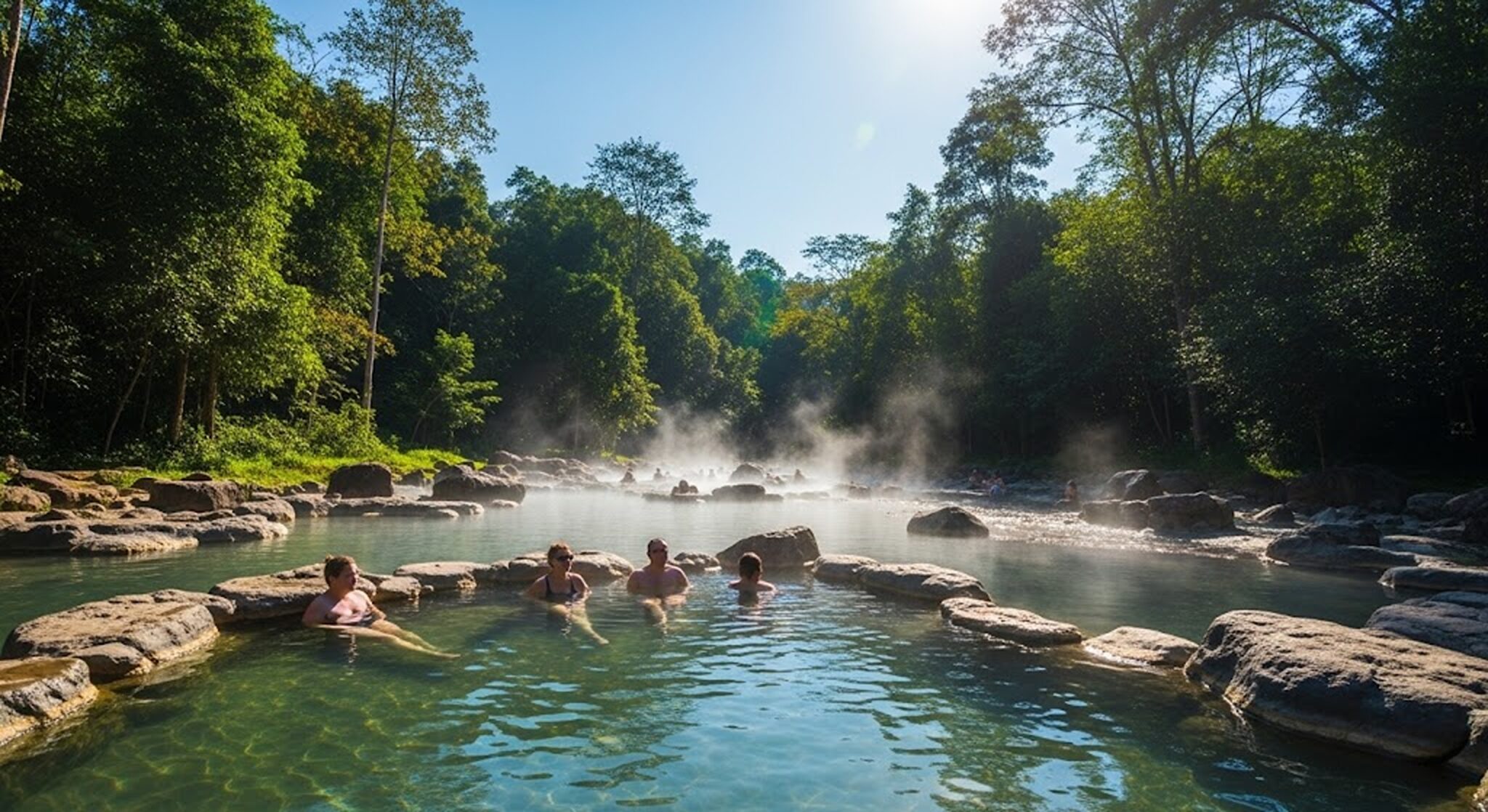
At the western Thailand’s Bo Khlueng hot spring, water temperatures rise close to 70 °C while sunlight reaches the surface with little attenuation. Heat and ultraviolet (UV) radiation are each stressful on their own; together, they create an environment that is hostile to most life. However, some microorganisms survive in these environments through biochemical adaptations that have evolved over long timescales. Gloeocapsa species BRSZ, a thermophilic cyanobacterium, is one such organism currently attracting scientific interest to produce an unidentified UV-absorbing compound.
The finding is noteworthy as it advances our understanding of microbial survival in harsh conditions. It also guides us in developing UV protection techniques that are safer for marine ecosystems and people alike. The discovery suggests new avenues for creating UV filters that are more efficient, biodegradable, and less detrimental to marine ecosystems than many of the ingredients found in sunscreens today.
Coping with heat and radiation at once
Researchers from Meijo University in Japan and Chulalongkorn University in Thailand isolated Gloeocapsa BRSZ from the Bo Khlueng hot spring in Ratchaburi Province. The research team was examining the responses of thermophilic cyanobacteria to overlapping stresses, which are increasingly prevalent in a warming world and include high temperature, salinity, and intense solar radiation. This strain produces a UV-absorbing molecule that has never been reported in cyanobacteria, according to chemical analysis.
The newly identified molecule, named β-Glucose-bound Hydroxy Mycosporine-Sarcosine (GlcHMS326), belongs to the family of Mycosporine-like Amino Acids (MAAs). This molecule carries three chemical modifications: glycosylation, hydroxylation, and methylation, which make it stand out among other MAAs. These chemical features are more than structural curiosities.
They influence how the molecule absorbs UV radiation, how stable it remains under prolonged sunlight, and how it functions in the cells. They suggest a protective system finely tuned by long-term exposure to both heat and UV stress.
How nature shields from UV
MAAs prevent damage to DNA, proteins, or cell membranes by absorbing damaging UV radiation and releasing the energy as harmless heat. They are found in various life forms, such as algae, corals, fungi, and bacteria. MAAs are typically photostable and do not readily break down into reactive or toxic by-products when exposed to sunlight.
Gloeocapsa BRSZ increases GlcHMS326’s production in the presence of both UV-A and UV-B. Genetic analysis confirms a unique set of biosynthetic genes that is responsible for the chemical modifications. Similar gene clusters appear to be uncommon, suggesting that this biosynthetic pathway may be restricted to a narrow group of heat-adapted cyanobacteria.
Interestingly, although eight thermophilic cyanobacterial strains were isolated from the same hot spring, only Gloeocapsa BRSZ produced substantial amounts of the novel MAA. This highlights how closely related organisms can adopt very different biochemical strategies even when exposed to the same environmental pressures.

Savior of Coral Reefs
Interest in naturally derived UV filters has grown significantly due to the increased concern about the environmental effects of conventional sunscreens. It is estimated that roughly 14,000 tons of sunscreen enter marine environments each year, much of it washed off swimmers in coastal waters. Several widely used chemical filters, including oxybenzone and octinoxate, have been linked to coral bleaching, disrupted larval development, and DNA damage at extremely low concentrations.
Rising ocean temperatures and acidification pose threats to coral reefs. As a result, certain states, including Hawaii, have banned the use of sunscreens with specific chemical UV filters. While these limitations minimize local exposure, they also highlight the importance of good UV protection that does not harm marine ecosystems. MAAs derived from marine algae and cyanobacteria have emerged as promising alternatives.
The emerging data suggest that GlcHMS326 could provide UV protection as a sunscreen and has antioxidant activity that can protect from both UV-associated reactive oxygen species (ROS) and oxidative damage. Therefore, this compound might serve a dual purpose, protecting the skin from the damaging effects of UV radiation while reducing oxidative damage.
Additionally, cyanobacterial photosynthesis is a growing and effective production platform; it can be cultivated with three primary resources: light, water, and carbon dioxide. Some earlier work suggests that MAA biosynthetic genes can be transferred among different microorganisms, suggesting a bio-based, scalable means of producing MAAs.
Questions remain concerning GlcHMS326. Currently, we have no data on how long GlcHMS326 will remain stable (sufficiently long to survive, say, sunscreen formulations) or how long it will last over time when exposed to UV light. Lastly, we do not yet know if it will be economically feasible to produce GlcHMS326 at scale.
Organisms that can Adapt in Extreme Environments
While the discovery of GlcHMS326 does not directly create new sunscreen ingredients, it provides avenues for new understanding of the mechanisms. With these mechanisms, several organisms can stay adaptive over time to survive even in extreme environments.
Bo Khlueng hot springs are only one example of extreme habitats where organisms survive; similar metabolic pathways exist in polar, desert, marine, and deep-ocean environments.
References:
- Samsri, S., et al. (2025). Discovery of a novel natural sunscreen from thermophilic cyanobacteria with a potentially unique biosynthetic pathway and its transcriptional response to environmental stresses. Science of the Total Environment.
- https://doi.org/10.1016/j.scitotenv.2025.181006
- Kageyama, H., & Waditee-Sirisattha, R. (2019). Antioxidative, anti-inflammatory, and anti-aging properties of mycosporine-like amino acids. Marine Drugs, 17(4), 222.
- https://doi.org/10.3390/md17040222
- Downs, C. A., et al. (2020). Sunscreen use and awareness of chemical toxicity among beachgoers in Hawaii before a ban on certain ingredients. Marine Policy, 117, 103875.
- https://doi.org/10.1016/j.marpol.2020.103875
Similar Articles:
- Beauty at What Cost?— Impacts of Cosmetic Ingredients on the Environment and Our Health
- Scientia’s TOP Ten Stories of the Year 2025

Smavia Ejaz is a Doctor of Pharmacy (D-Pharm) student who enjoys explaining science in simple, engaging ways. She is interested in stories about nature, biology, and how scientific discoveries connect to everyday life.

