Before entering the field of Lifestyle Medicine (LM), I was a physician constantly searching for a more definite path toward healing and cure, especially for chronic diseases where patients often remain dependent on pills, capsules, and injections for the rest of their lives. Over time, medications may lead to additional side effects, creating a cycle where even more medicines are needed to manage those complications. This question always stayed with me: Can true healing be possible beyond lifelong symptom management?
My journey in Lifestyle Medicine began almost five years ago, and I can happily say that it positively answered many of those unanswered questions. Through extensive learning and certifications, including a Postgraduate Certification (LMPC from Riphah International University), Personalized Lifestyle Medicine and Circadian Rhythm Alignment (SWIPE by Dr. Shagufta Feroz), Dip. IBLM (American Board of LM) and Blue Zones Certification (American College of LM), I gradually incorporated LM principles into my own life, clinical practice, teaching, and online drugless LM clinic. From the very beginning, I witnessed encouraging changes not only in myself, but also in my patients and students.
“Lifestyle Medicine is an evidence-based approach that uses healthy lifestyle modifications as a therapeutic tool to prevent, manage, and even reverse chronic diseases. It works on the correction of six pillars of lifestyle, i.e., Optimal Nutrition, Physical Activity, Stress Management, Avoidance of Risky Substances, Restorative Sleep, and Social Connection.
However, while in my LM practice, teaching, conducting awareness sessions, workshops, and community programs, I repeatedly observed one important challenge: people understood what to do, but struggled with how to stay consistent and how to prevent relapses. They needed support, accountability, connection, and continued guidance until healthier habits became sustainable.2
This realization became the foundation of my four-week “Gut Reset & Sugar Balance Program.” I noticed increasing concerns related to gut issues, dysbiosis, cravings, poor meal timing, unhealthy food combinations, lack of circadian rhythm awareness, and confusion caused by overwhelming online information and quick-fix approaches. Many people received advice from LM experts, but long-term behavior change remained a difficult challenge.
Unlike conventional diet-focused programs, this initiative was not based on calorie restriction or unrealistic promises of overnight transformation. Instead, it focused on awareness, education, and understanding the “what, why, how, and when” behind healthy habits. Participants learned about hydration, meal timing, mindful eating, balanced plates, sleep hygiene, circadian rhythm alignment, stress management, and sustainable habit formation through simple, interactive learning 3, 4.
I repeatedly observed one important challenge: people understood what to do, but struggled with how to stay consistent and how to prevent relapses. ~ Dr Saima Umair
The program consisted of weekly online sessions over four weeks, with only a few achievable goals introduced each week to prevent overwhelm. Polls, reflections, and group discussions created accountability and motivation, and participants highly appreciated this simple and practical structure.
One of the most important observations during this program was that many participants were not lacking information; rather, they were struggling with consistency, overwhelm, and the emotional fatigue that comes from repeatedly trying and failing restrictive health plans. Several participants expressed that they had previously followed different diets, social media trends, or temporary routines, but found them difficult to sustain in real life. This highlighted an important reality in Lifestyle Medicine: behavior change is not merely about knowledge, but about creating practical, realistic, and emotionally manageable habits that can fit into daily life.
The group-based interactive structure of the program also played a significant role in motivation and accountability. Simple daily reflections, polls, reminders, and shared experiences created a sense of connection among participants. Many participants reported that they felt “heard,” “understood,” and less alone in their health struggles. This emotional and social aspect of healing is often underestimated in chronic disease management, despite its strong influence on motivation and long-term adherence.
Another meaningful insight was the positive response toward gradual habit formation. Instead of introducing multiple overwhelming goals at once, participants were encouraged to focus on only a few achievable changes each week. Surprisingly, this simple approach improved compliance and reduced resistance toward lifestyle modifications. Over time, participants themselves began noticing how one healthy habit naturally influenced another — improved hydration encouraged mindful eating, better sleep supported reduced cravings, and regular movement improved emotional well-being and discipline. This interconnectedness reinforced the concept that health behaviors rarely work in isolation; rather, they support and strengthen one another over time.
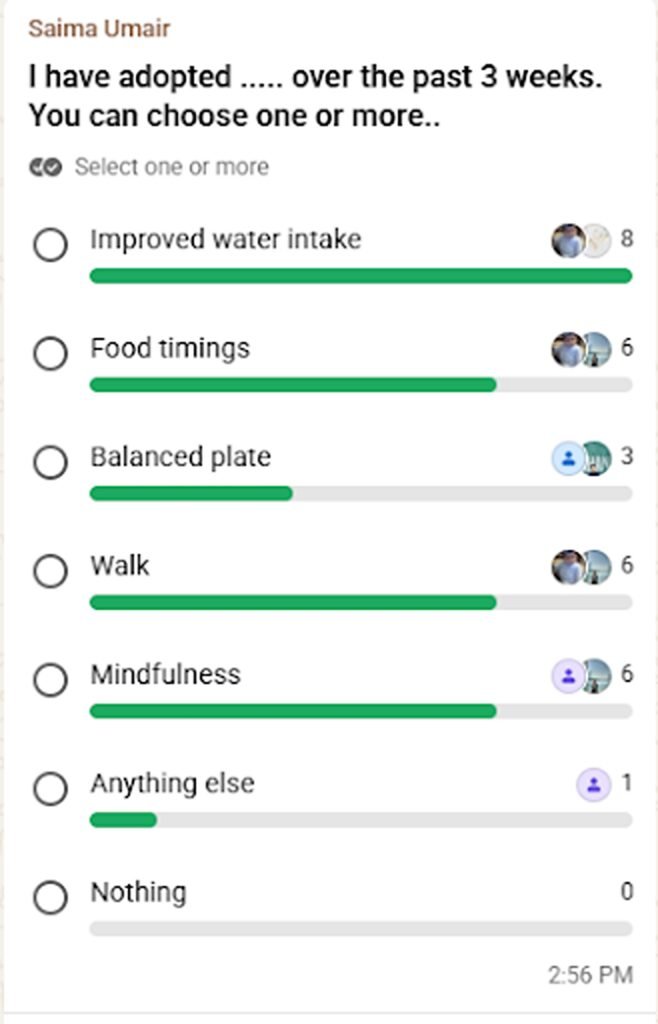
The outcomes reported by participants were deeply encouraging. Many experienced improved hydration, reduced cravings, better digestion, less bloating, increased energy, improved sleep hygiene, reduced screen time, mindful eating, increased physical activity, stress management strategies, and even improvements in allergies. More importantly, many participants described feeling more connected with their own body signals, emotions, and daily routines.
Personally, reading their testimonials and reflections was a moment of gratitude for me. This experience reinforced an important lesson for me: people respond better to simplicity than restriction. When individuals understand why a habit matters, their motivation and consistency improve naturally. I also witnessed how awareness itself can become therapeutic.
Sustainable health transformation often begins not with extreme interventions, but with awareness, support, consistency, and helping people feel heard and connected in their own healing journey 5.
References:
- American College of Lifestyle Medicine. What is Lifestyle Medicine? Available at: https://lifestylemedicine.org/ Accessed May 2026.
- Katz DL, Frates EP, Bonnet JP, et al. Lifestyle as Medicine: The Case for a True Health Initiative. American Journal of Health Promotion. 2018;32(6):1452–1458.
- Feroz S. Living as Nature Intended. Pakistan: SWIPE; Personalized Lifestyle Medicine principles and circadian alignment
- Satchin Panda. The Circadian Code: Lose Weight, Supercharge Your Energy, and Transform Your Health from Morning to Midnight. Rodale Books; 2018.
- Ornish D, Scherwitz LW, Billings JH, et al. Intensive lifestyle changes for reversal of coronary heart disease. JAMA. 1998;280(23):2001–2007
Similar articles:
Sudden Goodbyes: The Alarming Truth About Cardiac Arrest’s Hidden Dangers
It’s not a diet; it is a lifestyle- Heart-to-heart with Fareeha Jay
Dr. Saima Umair is a Lifestyle Medicine clinician, educator, Circadian Rhythm Expert, Blue zone Certified Physician, and Public Health professional with active involvement in the Pakistan Association of Lifestyle Medicine (PALM). She has contributed to multiple educational, community, and digital health initiatives related to Lifestyle Medicine and personalized health approaches.

