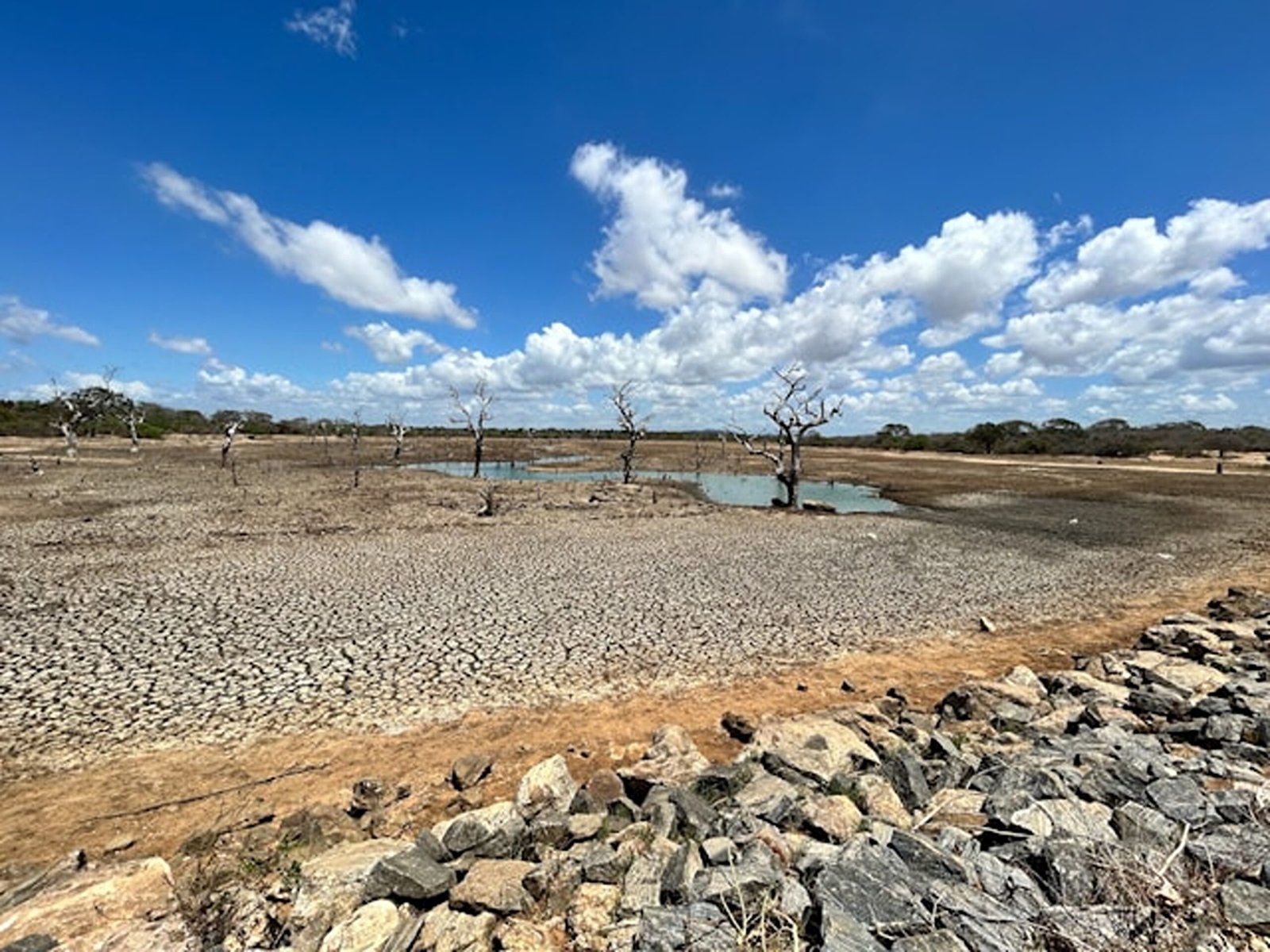
Nowadays, water is more than simply a fundamental resource. It is subtly turning into a cause of stress, demonstrations, and occasionally open conflict in many regions of the world. The Pacific Institute’s Water Conflict Chronology, which was updated and published in a number of international publications, including The Guardian in January 2026, states that the number of violent incidents related to water increased dramatically after 2022, going from about 235 cases in 2022 to over 400 incidents by 2024.
Researchers were monitoring actual conflicts where water systems, access, or shortages directly contributed to political tensions, protests, or violence, and put together this data. This dread is no longer theoretical. It is a known worldwide trend associated with increased freshwater demand, poor governance, and climate stress.
Iran is among the most severe real-world examples, as water shortages there have gotten worse over the last ten years. Excessive groundwater extraction near Tehran has resulted in catastrophic land subsidence, according to scientific and environmental papers by Iranian groundwater researchers published between 2021 and 2024 and featured in international environmental journalism. According to reports, excessive exploitation of subterranean aquifers has caused the ground in some southern regions of Tehran province to sink by more than 20 centimeters annually.
Water Crisis in Conflicted Regions
Meanwhile, drought and poor dam management have caused rivers like Isfahan’s Zayandeh Rud to dry up for extended periods of time. When irrigation water was redirected, farmers in Isfahan demonstrated in public both in 2021 and later, demonstrating how social unrest was directly sparked by water constraints. If Tehran’s groundwater collapse persists, experts caution, it may have an impact on housing stability, infrastructure, and regional water security throughout central Iran and other regions.
Local disputes between farmers and pastoral populations have been closely associated with water scarcity in Africa, particularly in the Sahel area, which includes Mali, Niger, and Chad. Long-term drought and erratic rainfall patterns have made it harder to access freshwater resources and grazing areas, according to 2023 climate-security assessments released by the United Nations Environment Programme (UNEP). One such example is the Lake Chad Basin.
According to hydrological academics and UN organizations, Lake Chad has lost around 90% of its surface area since the 1960s, according to historical satellite data. Due to the shrinking environment, migration has become necessary, and competition for scarce water and farmland has intensified. Researchers examining the relationship between climate change and conflict in the Sahel observe that while resource shortage alone does not always lead to violence, it greatly increases the likelihood of local conflicts and instability when combined with poverty, poor governance, and population growth.
Severity of Crisis in Asia
One of Asia’s most delicate transboundary water disputes is still the water politics between India and Pakistan. Water sharing from rivers, including the Indus, Jhelum, and Chenab, is governed by the Indus Waters Treaty, which was signed in 1960 with assistance from the World Bank. However, issues with water flow and dam construction have frequently escalated tensions. In numerous policy talks and regional forums, Pakistani policymakers and water specialists have voiced their worries regarding upstream hydroelectric projects constructed by India on western rivers that are part of Pakistan’s territory under the terms of the treaty.
Debates concerning the timing of water releases and the transparency of data sharing intensify in public discourse during periods of severe rains and flooding. Due to changes in river flow patterns brought about by glacier melt in the Himalayas, climate change is complicating this problem. Due to its high population density, reliance on agriculture, and unpredictable climate, South Asia is among the world’s most water-stressed regions, according to research released by regional water policy institutes between 2020 and 2024.

The escalation of the conflict between Russia and Ukraine in February 2022 has also shown how water supplies are directly targeted during times of armed conflict. In numerous Ukrainian districts, including Kherson and Donetsk, dams, pumping stations, and water treatment facilities were reported damaged, according to reports from humanitarian organizations and infrastructure monitoring groups.
Millions of residents’ access to drinking water was disrupted in 2023 due to the devastation of the Kakhovka Dam, which also had an impact on irrigation systems throughout southern Ukraine. One of the worst water-related tragedies associated with contemporary conflict, this tragedy was extensively covered by international media and environmental experts. It demonstrated how, in times of conflict, water infrastructure can be both a strategic asset and a tragedy.
According to UN-Water and the World Resources Institute’s Aqueduct Water Risk Atlas (with recent updates 2023–2025), over two billion people currently reside in nations with high or extremely high water stress. In the Middle East, South Asia, and Sub-Saharan Africa, climate change is increasing the frequency of droughts and changing the distribution of rainfall, according to the IPCC Sixth Assessment Report.
Over the past 20 years, there has been a notable loss of freshwater across northern India, areas of the Middle East, and Central Asia, according to groundwater depletion data released by NASA’s GRACE satellite mission. These scientific datasets are very reliable and frequently used in international environmental research since they are based on long-term climate monitoring, hydrological modeling, and satellite observations.
Devastating impacts on Agriculture and Food Security
Food security and agriculture are closely related to water scarcity. According to the Food and Agriculture Organization (FAO), around 70% of freshwater withdrawals worldwide are related to agriculture. Groundwater extraction and river flows are crucial to irrigation systems in nations like Egypt, India, and Pakistan. Crop yields drop, and rural livelihoods are impacted when water availability becomes uncertain because of climate change or poor policy management.
The past ten years have seen recurrent drought conditions in Pakistan’s Sindh and Balochistan regions, which have decreased agricultural productivity and increased reliance on water tankers for daily consumption. Similar trends have been noted in the Tigris-Euphrates basin of Iraq, where decreasing river flows have affected farming communities and the stability of the food supply.
One of the most reliable international databases on water-related conflicts and violence is the Pacific Institute’s Water Conflict Chronology project, which was started in the early 2000s and is updated on a regular basis. The initiative monitors instances in which water is used as a weapon, a cause of conflict, or a war casualty. Major media, such as The Guardian (January 2026 environmental reporting), have mentioned the database’s 2024–2025 updates, which show a distinct rising trend in water-related violence since 2022. To assure accuracy and trustworthiness, the project’s researchers examine field-based documentation, confirmed reports, and historical records.
Ultimately, the majority of real professionals are now speaking in clear words and genuinely expressing the same thing. In his 2014 and subsequent policy briefings at the Pacific Institute in California, for instance, Dr. Peter Gleick made it abundantly evident that water stress is already serving as a “threat multiplier” in actual conflicts such as Syria and portions of the Middle East, not as a problem for the future but as a current one.
Similarly, in his 2019 study on planetary boundaries, Professor Johan Rockström of the Potsdam Institute noted that a number of locations in Asia and Africa have already surpassed acceptable freshwater limitations, particularly in river basins such as the Nile (Ethiopia–Sudan–Egypt) and the Indus (Pakistan–India).
At the UN 2023 Water Conference in New York, even UN Secretary-General António Guterres said that poorly managed water infrastructure, growing demand, and droughts brought on by climate change are providing “a clear pathway to instability” in nations already under political and economic strain. Simply put, these experts are emphasizing that the future is not just about water scarcity as an environmental problem, but also about political abuse, unequal distribution, and poor governance of water resources at very specific times and places.
Experts predict that cities like Tehran, Karachi, Cape Town, and Chennai may experience significant social disruption within the next 20 years if governments continue to implement delayed reforms, weak transboundary agreements, and unregulated groundwater extraction. This is not because water will suddenly disappear, but rather because regional cooperation, planning, and policy enforcement will not keep up with actual consumption patterns and climate variability.
References:
- Pacific Institute – Water Conflict Chronology
https://www.worldwater.org/water-conflict/ - Peter H. Gleick (2014) – Water, Drought, Climate Change, and Conflict in Syria (Weather, Climate, and Society)
https://journals.ametsoc.org/view/journals/wcas/6/3/wcas-d-13-00059_1.xml - Planetary Boundaries (Rockström et al., 2009 – Nature)
https://www.nature.com/articles/461472a - NASA GRACE Mission – Groundwater Depletion Data
https://grace.jpl.nasa.gov/ - Indus Waters Treaty – World Bank Overview
https://www.worldbank.org/en/topic/water/resources/indus-waters-treaty - Original Treaty Text (World Bank Archive)
https://treaties.un.org/doc/Publication/UNTS/Volume%20419/volume-419-I-6032-English.pdf - UNEP Vital Water Graphics (Lake Chad shrinkage data)
https://www.unep.org/resources/report/vital-water-graphics-overview-state-worlds-fresh-and-marine-waters - World Resources Institute – Aqueduct Water Risk Atlas (2023)
https://www.wri.org/aqueduct - UN 2023 Water Conference (Official Statements & Documents)
https://sdgs.un.org/conferences/water2023 - UN OCHA – Ukraine Situation Reports (Kakhovka Dam 2023)
https://www.unocha.org/ukraine
Similar articles: Impacts of Carbon Footprints on the Water Cycle of Earth

