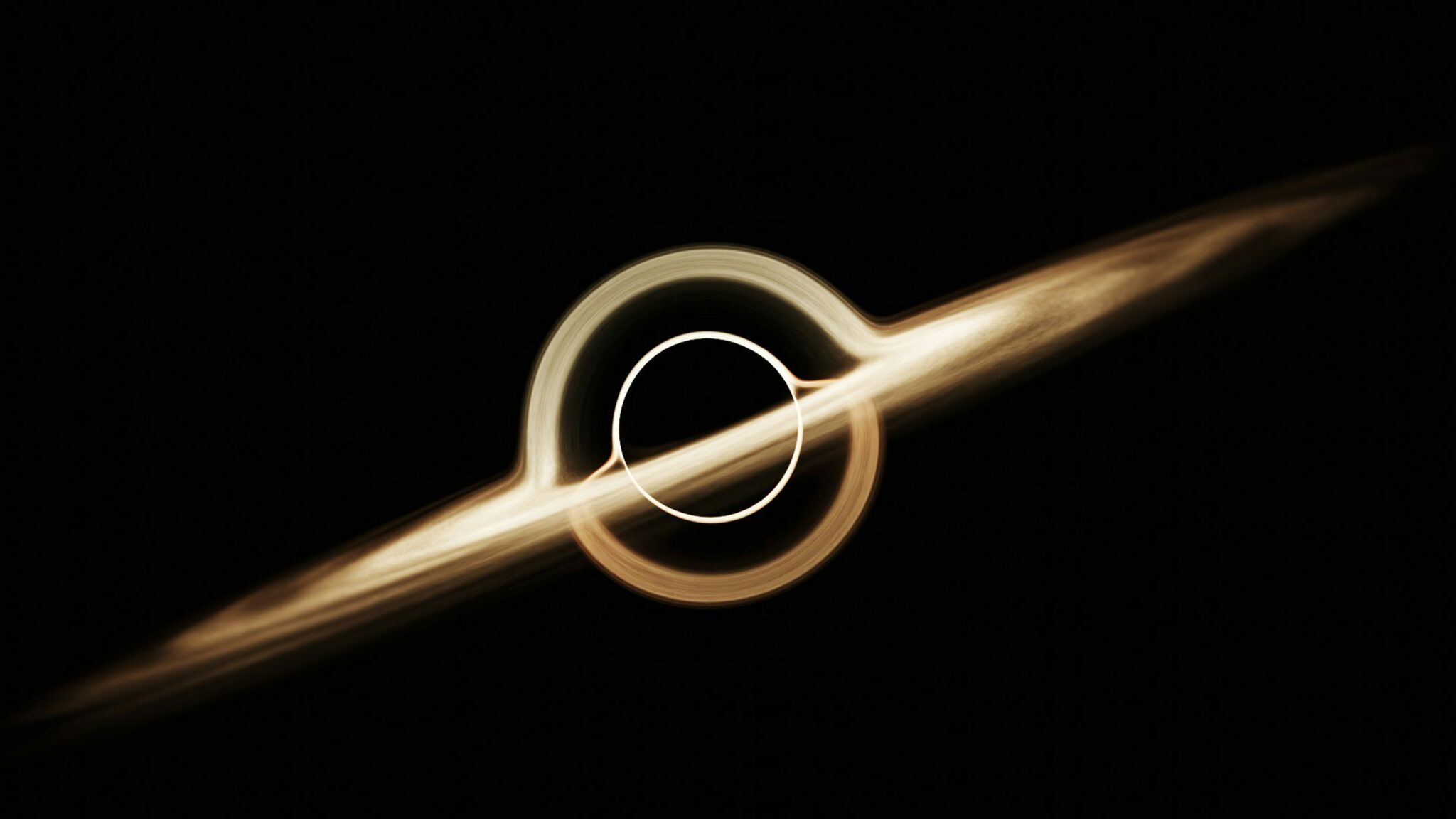
Have we ever seen a chef cooking but not in a kitchen? Or a construction worker building, but not a construction site? Every profession has a designated place to carry out duties and activities involved; however flexible, there has always been a general sense of a “land of action”. In the same sense, physics also has a “land of action,” but it doesn’t need to exist in reality or as some physicality, even though it is much more real than it looks on paper. That land of action is “Spacetime”, a term coined by the mathematician Minkowski.
This is not a physical land or place of action like other professions, but still, the world’s experiments and simulations take place here. This foreign word “spacetime” has always remained an abode for physicists as it allows us the possibility to build anything within itself, and it even evolves alongside our imaginations.
For centuries, people like Newton, Lagrange, Maxwell, Einstein, and many others have watered this land and have given us the fruits in the form of many theories and discoveries. Specifically, in Newton’s era, spacetime didn’t exist in this present shape and form. We had spatial variables evolve with respect to time, which allowed us to track the position and motion of objects, which then go on to give rise to many derived physical quantities.
But as physics evolved, physicists like Maxwell showed that there is a maximum speed limit to light, which always remained the same, leading to an important realization by Einstein that motion is always relative to the observer. So he introduced a mathematical framework called “Lorentz transformations” to move from the frame of one observer to the other, which Minkowski realized were just basic rotations in a 4-dimensional space, where the fourth dimension is time, and there came the word “spacetime” for the first time.

Although the successors of Minkowski and Einstein refined the meaning of spacetime and many used it to discover important results in physics, recently everyone has started pointing fingers at spacetime, not in a confrontational manner, but inquisitively. Some modern mathematicians, like John Baez, promote the further refinement of spacetime, while others simply demand a better replacement. John Baez’s reason for attacking spacetime is its “continuity”; there exist infinitely many points, but eventually, this concept causes many infinities or pathological behaviours in physical theories.
He goes on to state in his blog, “We’ve seen that in every major theory of physics, challenging mathematical questions arise from the assumption that spacetime is a continuum. The continuum threatens us with infinities! Do these infinities threaten our ability to extract predictions from these theories—or even our ability to formulate these theories in a precise way?”
This is not the only problem with our beloved spacetime. One of the brightest theories of the 20th century and the commercial success of today and the coming future, “quantum mechanics”, also doesn’t fit well with this existing concept of spacetime, so we use a functional space called “Hilbert space” to describe quantum mechanics. Additionally, spacetime also fails to explain quantum entanglement, where the effect of one action can instantly trigger another action even millions of kilometers away, but that violates one of the basic foundations of spacetime, that there is a maximum speed limit, i.e., the speed of light.
These are not the only problems with spacetime, which has potentially allowed mathematicians to explore different solutions. One of those concepts is the “Emergence” of spacetime. Emergence simply means that at the very fundamental level or microscopically, even though the microscopic scale is still huge, there doesn’t exist a spacetime that we usually observe, rather, that can be anything other than this or even this in its exact shape and form, but that has no role in explaining the spacetime which we see.
Simply, it means that the ingredients that make up spacetime at the very smallest scales are not the ones that we observe at normal scales, which is basically the definition that spacetime is an emergent concept.
Although the definition of emergence is difficult to understand, Steven Strogatz, an expert in emergence, puts it simply in an interview that, “To me, what the emergence of space-time means is that space-time itself is like fluid mechanics. It’s like gas temperature and pressure and things like that. It’s just a coarse-grained, high-level way of thinking about something more fundamental, which we’re trying to put our finger on.”
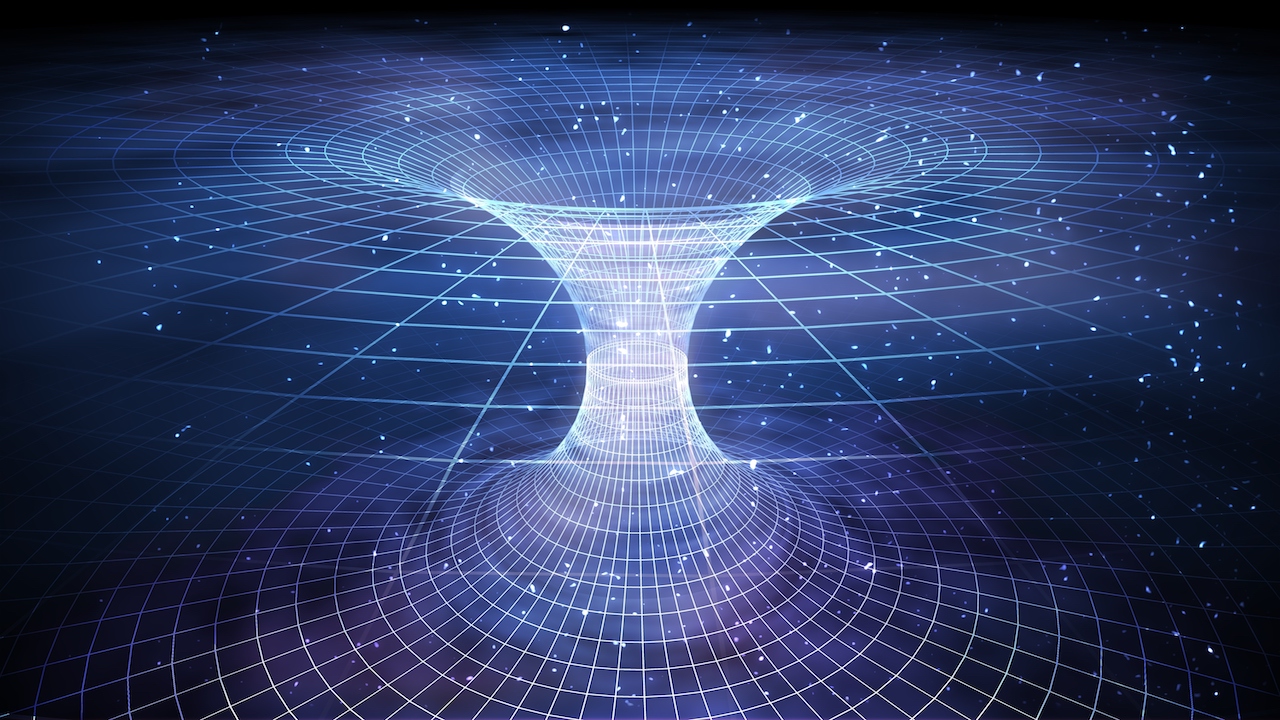
Therefore, some experts, such as Erik Verlinde and Juan Maldacena, suggest that spacetime emerges from patterns of quantum entanglement. For example, when we assume strongly entangled quantum systems, the mathematical relations these quantum systems share then resemble the geometric connections. As we reduce the entanglement, these geometric connections weaken, and as we remove the entanglement altogether, this notion of spacetime falls apart. In this picture, spacetime is not the stage on which physics happens, but a large-scale approximation emerging from deeper, non-geometric structures defined in abstract Hilbert spaces (the mathematical spaces which allow the properties of quantum mechanics to be accurately described).
If this view is accurate, among all the hundreds of other speculated models, then the continuum of spacetime that flowed like a fluid would not be the most fundamental picture. But what does it actually mean? Now back to the analogy I described at the start of this essay, that the “land of action” for physics is just an illusion we see at the surface and fruits (physical theories), which we have assumed are coming from this land, but in actuality they might be coming from somewhere else but not here, and at the same time it rightly feels like that they were just grown here. As baffling as this analogy is, it rightly captures the confusion when we say that spacetime is emergent.
Since we, as physicists and mathematicians, have identified that spacetime is no longer fundamental, we now need to address the open question of whether to replace, refine, or redefine spacetime in a new mathematical form or picture. What is certain, however, is that physics has once again reached a point where mathematical structure is reshaping our understanding of reality itself and enabling us to tell newer and more exciting stories of reality.
References:
- Does Spacetime Emerge From Quantum Information? – by Sean Caroll
- Space Emerging from Quantum Mechanics – by Sean Caroll
- Where Do Space, Time, and Gravity Come From? – podcast by Steven Strogatz
- Struggles with the Continuum (Series) – by John Baez
Also read: Humanity in Microgravity: How the ISS Is Transforming Medical Research

Lavish Kumar Aidasani is a physics student currently pursuing a Master’s in Physics at Sabanci University in Istanbul. He is interested in problems in mathematical Physics, Cosmology, and Astrophysics, and is currently cataloging active galactic nuclei using JWST data.

