More than 50 years have passed since America’s Apollo missions made history by landing humans on the Moon for the very first time in July 1969. That monumental achievement marked the culmination of nearly a decade of intense scientific effort, engineering innovation, and national determination during the Space Race — a defining chapter in human exploration. NASA just took another giant leap and launched the “Artemis II” mission.
And, while NASA’s Artemis II crew won’t make a lunar landing themselves, their ambitious mission over the next 10 days represents a critical step forward in humanity’s return to deep space. Flying aboard the Orion spacecraft, the four-person crew will complete a crewed flyby of the Moon, testing vital life support systems, navigation, and communication technologies. Their successful voyage will lay the essential groundwork — and pave the way — for the next historic human footsteps on the lunar surface.
During their trip, the four astronauts on board will fly 6,400 miles (10,299km) beyond the far side of the Moon. This side always faces away from Earth – marking the first time this has been achieved.
According to NASA officials, during these three hours, the crew will analyse and photograph geologic features, such as impact craters and ancient lava flows. These observations will assist future missions to explore the Moon’s South Pole region.
During the mission, a few studies will be conducted on the astronauts’ health, which will also help NASA better understand the deep space travel issues that can affect the human mind and body, protecting astronauts on future lunar missions and on travel to Mars.
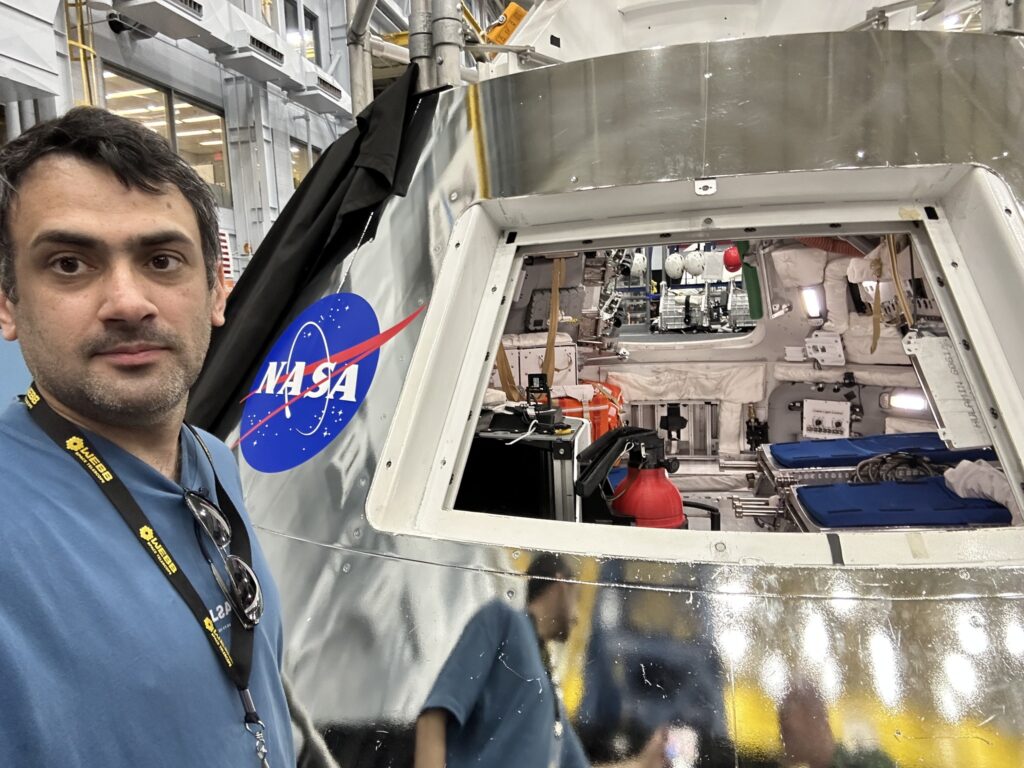
Pakistani Scientist Yasir Tufail, who has been associated with the JWST mission, has witnessed the historic launch. He shares his feelings at the historic launch and says, “What a day this is. We are going back to the Moon. The Moon is a big deal for people like me. The people on the Artemis II crew are going to do something that has not been done in a long time. They are going to fly around the Moon.”
“The last time people did this was on Apollo 17. That was back in 1972. The Moon has been left alone for over 50 years. Now the Artemis II crew is going to the Moon. It is like we are going back to visit a friend. The Artemis II crew is making history. I have a lot of feelings about the Moon and the Artemis II crew going back to the Moon. The Moon is waiting for the Artemis II crew”, Yasir adds.
The Artemis program is NASA’s series of missions to enable humanity’s return to the Moon. NASA collaborates with US commercial and international partners to establish the first long-term human-robotic presence on and around the Moon. The Gateway, a vital component of NASA’s Artemis program, serves as a multi-purpose outpost orbiting the Moon that provides essential support for a long-term human return to the lunar surface and a staging point for deep space exploration.