Betelgeuse is the second brightest star in the constellation Orion, marking the eastern shoulder of the hunter. Its name is derived from the Arabic term ‘bat al-jawzāʾ’, which means “the giant’s shoulder.” Betelgeuse is one of the most luminous stars in the night sky. It is a variable star and can be easily seen with the human eye in the night sky from Earth. With a telescope, it looks like a hunter carrying a gun on his shoulder. This is why astronomers also call it the ‘Armpit of a Giant’.
Why is Betelgeuse Called a Variable Star?
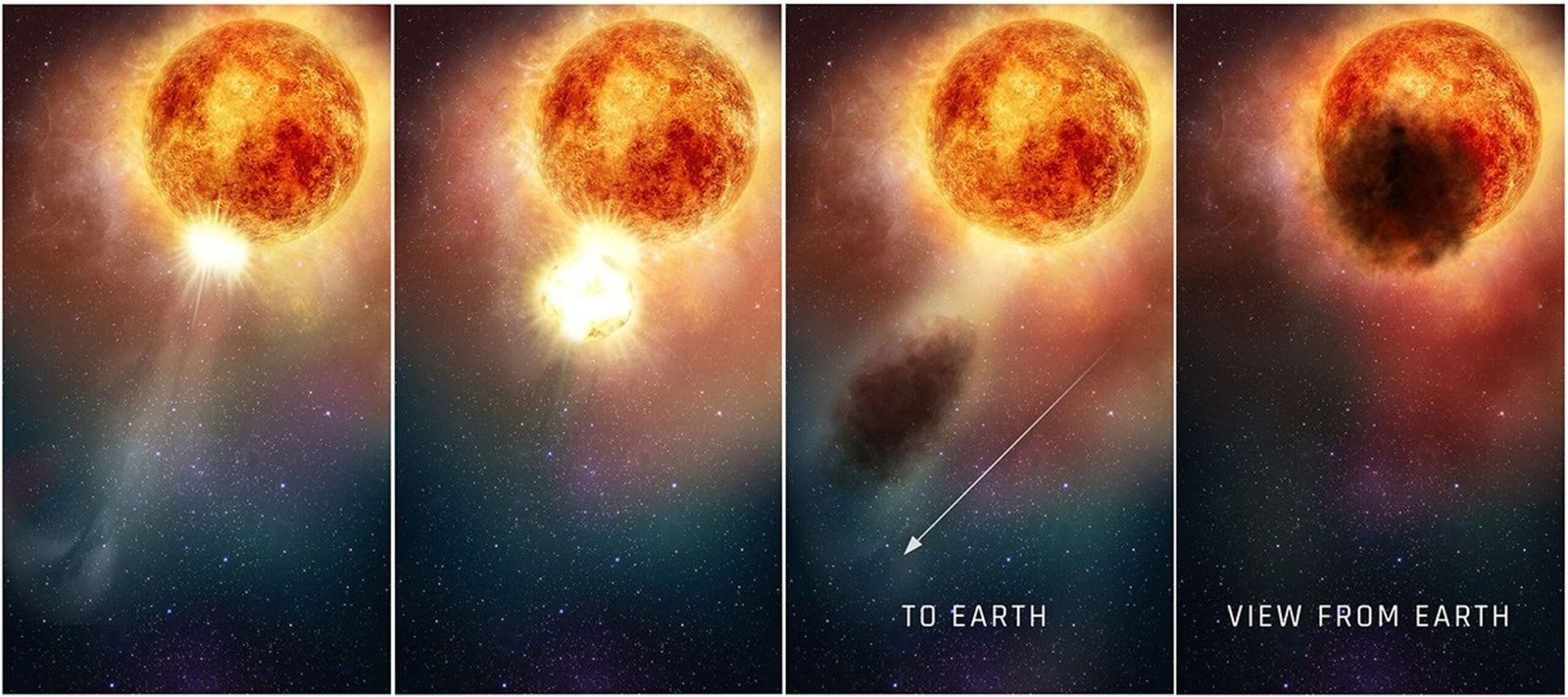
It is a variable star and usually has an apparent magnitude of about 0.6. However, in late 2019, it started dimming and reached an apparent magnitude of 1.6 by early 2020. It returned to its original brightness later that year. This “Great Dimming” was caused by a giant ejection of gas that condensed into dust when it cooled. Betelgeuse is easily discernible to even the casual observer, not only because of its brightness and position in the brilliant Orion but also because of its deep reddish colour. The star is approximately 548 light-years from Earth.
Dr Fazeel Mahmood Khan holds a PhD from the Max Planck Research School for Astronomy and Cosmic Physics at the University of Heidelberg, Germany, and is currently a researcher at New York University in Abu Dhabi, United Arab Emirates. Speaking to Scientia, Dr Fazeel Mahmood Khan said that Betelgeuse belongs to a group of variable stars, and their light changes after a certain period due to internal physical processes.
He said that the light of the giant star Betelgeuse varies in a regular cycle. A typical physical cycle lasts 2170 days. During this time, the light of this giant star dims and then automatically returns. Interestingly, these variations in light are caused by vibrations in the outer layers of this star.
According to Dr Mahmood, the mass of Betelgeuse is barely 15 times that of the sun in our solar system, and its astronomical lifespan is only 10 million years, which is much shorter than our sun’s lifespan of 10 billion years. That is why this star is now nearing its end.
When will it Explode?
Astronomers believe that Betelgeuse will explode as a supernova soon, and the process of a star becoming a supernova is extremely powerful. Scientists believe that when Betlegeuse explodes as a supernova, it will be so bright that it will outshine an entire galaxy full of billions of stars.”
Astronomers still do not know for sure when Betelgeuse will explode as a supernova. “We may be able to see this very unique scene in our lifetime, or it is also possible that our future generations will witness its explosion,” Dr Mahmood adds.
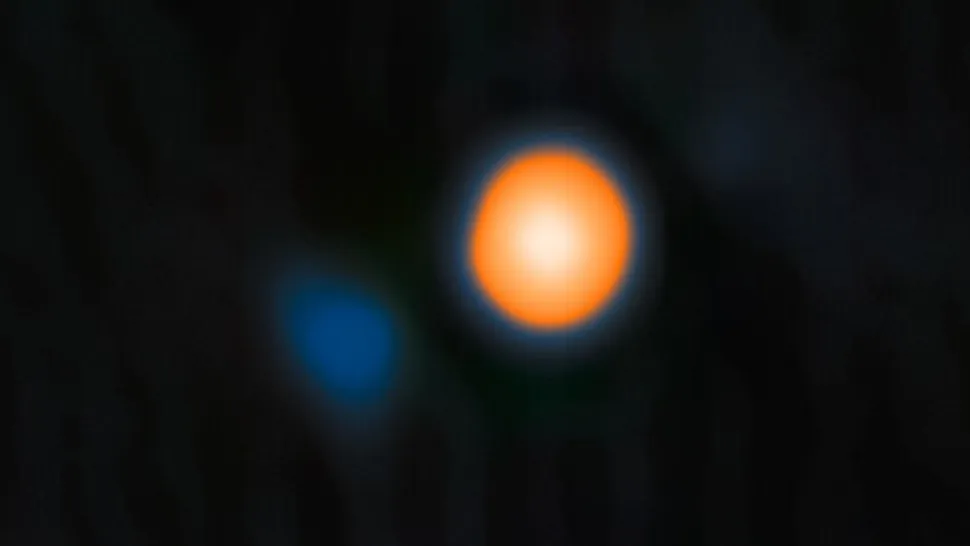
Betelgeuse’ Great Dimming
The star Betelgeuse has been the focus of astronomers’ attention for the past five years. In late 2019, a significant decrease in its brightness was noted, which had recovered by June 2020. Several explanations had been put forward for Betelgeuse’s dimming during this period.
The most plausible explanation is that a dust cloud formed near this star. According to Dr Mahmood, this explanation is also confirmed by data obtained from Hubble and several other telescopes. These telescopes also observed the “dimming” of the star, or the process of its light becoming dimmer. This theory states that Betelgeuse then ejected a large amount of material from its outer layers. This material then cooled down and condensed into a dust cloud, which partially blocked the star’s light from reaching Earth.
According to astrophysicists, Betelgeuse is a massive red star that is constantly pulsating due to its internal temperature, pressure, and unstable outer layers. This process causes the star to expand and contract, causing its light to dim or brighten during specific periods.
Why is the Process of Supernova Making Important?
Dr Fazeel Mahmood Khan explains that when Betelgeuse explodes into a supernova, it will appear brighter in the sky than Earth’s full moon. “It will probably be visible in daylight for weeks or months”. The process of stars becoming supernovae is of utmost importance in the universe. When a star explodes, it creates large quantities of crucial elements in the form of nuclear reactions, which are scattered everywhere with the explosion. These elements include iron, oxygen, nickel, silicon, sulfur, carbon, nitrogen, and uranium, etc.
‘All these elements except hydrogen and helium were actually created through this process. “Even the elements in the Earth and our bodies were formed inside stars, which were later scattered everywhere when these stars exploded and became supernovae. If we look far back in the physical history of the universe, the emergence of human existence was actually made possible only because of “stardust.”
Dr Mahmood concludes that, “Sooner or later, the outer layer of Betelgeuse will burst, turning it into a black hole, and that will mark the final chapter in the astronomical life cycle of this massive star.”
References:
- https://www.britannica.com/dictionary/derived
- https://www.britannica.com/science/light-year
- https://www.space.com/astronomy/astronomers-crack-1-000-year-old-betelgeuse-mystery-with-1st-ever-sighting-of-secret-companion-photo-video
- https://www.skyatnightmagazine.com/news/betelgeuse-companion-star-dimming
The article was originally published here: https://www.dw.com/ur/a-70287619
More from the author: Europa Clipper has begun epic journey to find how Habitable Europa is!

Saadeqa Khan is the founder, CEO, & Editor-in-Chief of Scientia Pakistan. She’s a member of the Oxford Climate Journalism Network (Second Cohort) and NASW. Saadeqa is a fellow of NPF Washington, The Falling Walls Foundation, and the Science Journalism Forum. Saadeqa has won several international journalism grants and awards for her reports.

