Archaeologist and archaeometallurgy specialist Dr. Thomas Zimmermann has spent decades researching the ancient cultures of Anatolia and has extensive excavation experience across Türkiye. Currently an Associate Professor at Bilkent University, his work combines traditional archaeology with advanced scientific analysis to investigate how ancient communities adapted, innovated, and transformed over time. In this interview with Scientia Pakistan, he reflects on his journey into Anatolian archaeology, the scientific techniques reshaping the field, and what the ancient world can still teach us about resilience and human society today.
Watch the complete interview on our YouTube Channel: Exploring the rich “Anatolian Archaeology” with Dr Thomas Zimmerman – Bilkent University.
Maham: What inspired you to study Archaeology and work on Anatolian Archaeology?
Dr Zimmerman: Two reasons drew me to archaeology. One was rather trivial: the Indiana Jones films. Although Indiana Jones has little to do with professional archaeology, I was fascinated by the idea of combining teaching and research with adventures in distant places.
The second reason was more influential. While I was doing sports archery in high school, one of the club members, a local archaeologist, invited me to join an excavation. It was a rescue dig in Bavaria in the 1990s, investigating the remains of an early Neolithic village from the 6th millennium BC. For many of the archaeologists involved, it was just another Neolithic site. For me, however, it was a revelation. That experience convinced me to study archaeology.
My path to Anatolian archaeology came later. I began my studies at the University of Regensburg, where the focus was primarily on the archaeology of Bavaria and Central Europe. That changed when a new professor, Andreas Müller-Karpe, joined the department and introduced us to Anatolian archaeology. In 1996, he took me to my first excavation in Turkey, in Eastern Cappadocia near Sivas.
The site was later identified as a Hittite provincial town, and cuneiform tablets helped confirm its name as Sarissa. That experience sparked my interest in Anatolian archaeology, and I decided to pursue it as my specialization. At the same time, my training in European archaeology proved valuable. It gave me expertise in both European and Anatolian archaeology, a combination that later helped me secure my position at Bilkent University.
Maham: Türkiye sits at the crossroads of major ancient civilizations. How has this unique geographic position shaped the archaeological record of Anatolia?
Dr Zimmerman: Anatolia is often described as a bridge between East and West, the Orient and the Occident. However, that description can be misleading because it suggests a passive role. Anatolia was not simply a corridor through which ideas and technologies passed; it was also a center of innovation in its own right.
One example is early metallurgy. Experimental work with copper began here remarkably early, long before similar developments appeared elsewhere. While this was not yet true smelting, the earliest evidence for working and shaping copper dates back to the ninth and even tenth millennium BC.
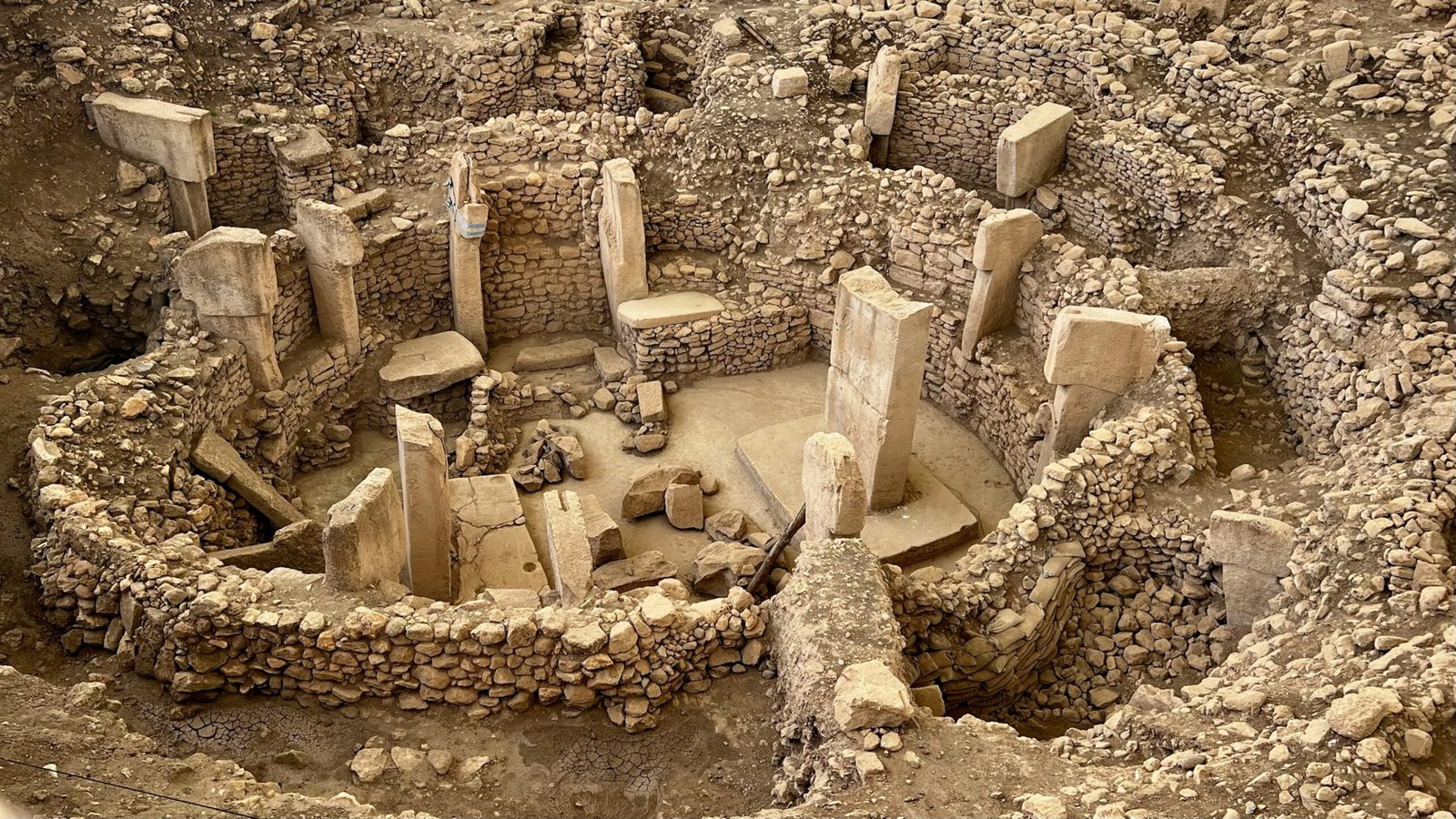
Anatolia also preserves some of the most important evidence for the beginnings of the Neolithic period. Sites such as Göbekli Tepe, Karahan Tepe, and Sayburç reveal complex and still puzzling developments that took place around 12,000 years ago, at the onset of the Holocene and the earliest Neolithic.
At the same time, Anatolia’s location connected it to many dynamic regions, including Mesopotamia, the Aegean, the Mediterranean, the Caucasus, and the Black Sea. These connections encouraged the exchange of ideas, technologies, and cultural practices, making the region a unique meeting point for different societies.
Moreover, Anatolia was one of the key regions where people first experimented with sedentary life. Around 12,000 years ago, communities here began testing a new and uncertain way of living that would ultimately transform human history.
Maham: Your expertise is also in metallurgy. What can metals tell us about ancient societies?
Dr Zimmerman: Metals are important because they reveal how ancient societies organized technology, trade, resources, and power. They were a major driver of long-distance exchange and economic development, much as they are today.
Anatolia is one of the most mineral-rich regions in the world, with many easily accessible copper deposits. People began experimenting with copper very early, initially using minerals such as malachite (oxidized version of copper) as pigments and later shaping native copper through hammering and heating. These early activities were not yet true metallurgy, but they show a growing interest in manipulating metal.
The breakthrough came around 5000 BC with the appearance of the first cast copper objects, evidence of extractive metallurgy. Interestingly, some of the earliest examples appear in Anatolia. Yet after this initial development, metallurgy seems to fade from the archaeological record for roughly 1,500 years, even as metalworking flourished in parts of the Balkans and Central Europe. Why this happened remains one of the unresolved questions in the history of metallurgy.
Around 3500 BC, metallurgy re-emerged in Anatolia and expanded rapidly. During the Early Bronze Age, we see sophisticated alloying, casting, plating, soldering, and other advanced techniques. Famous examples include the treasures from Troy and the rich burial goods from Alacahöyük.
Metals also tell us about social change. From the third millennium BC onward, the archaeological record reveals increasingly visible social hierarchies. Elites controlled resources, production, and specialized knowledge, distinguishing themselves through wealth, prestige goods, and monumental residences. Even in the absence of written records, metal artifacts provide clear evidence for the emergence of complex societies and powerful ruling groups.
Maham: Modern archaeology now increasingly relies on scientific techniques such as X-ray fluorescence, archaeometry, and more. How have these methods transformed our understanding of the past?
Dr Zimmerman: Scientific analysis has indeed transformed archaeology very dramatically over the past half-century. The field has moved far beyond simply excavating, cataloguing, and displaying artifacts. Today, archaeology seeks to answer much broader questions: Who are we? How did human societies develop? How did communities, cities, and complex social systems emerge?
Archaeological science has been central to this shift. Take metallurgy as an example. A metal object may appear to be bronze, gold, or copper, but scientific analysis can reveal its exact composition and origin. This allows us to investigate where raw materials came from, how technologies developed, and how trade networks operated.
Techniques such as X-ray fluorescence and lead isotope analysis have been particularly valuable. They enable us to identify the sources of metals and reconstruct ancient exchange networks. At Troy, for example, metal artifacts from the third millennium BC appear similar in form, but scientific analyses show that the copper used to make them came from different regions over time. This reveals changes in trade and resource acquisition that would otherwise remain invisible.
So this, of course, triggers completely different questions we have to ask. And, this is only for metal work. Think about all the other techniques, like dating with radiocarbon or oxygen isotopes, thermal luminescence, and optical stimulated luminescence, which allow us to date siliceous substances. And the biggest game changer at the moment is, of course, genetics and ancient DNA, which presents us with a real avalanche of data we have to digest.
Maham: What parallels, if any, do you see between ancient societal transitions and the challenges modern societies face today?
Dr Zimmerman: There is a famous idea that history teaches us nothing, but in reality, studying ancient societies can provide valuable insights into how humans respond to crises.
Let me give you an example from the late second millennium BC, again, focusing on Anatolia. Here we have what we call the collapse of the ancient Mediterranean civilization. So the Hittites, the Mycenaeans, the Egyptian Pharaonic kingdom, the Assyrian kingdom, they seem to have been wiped off the map and collapsed, which is not really true. We see that life is continuing. There’s a transformation going on, for sure.
But it’s much more complex than we thought. And one of the triggers here, which is still vividly debated, is climate change. It’s what we call an RCC, Rapid Climate Change, at the end of the second millennium, a kind of wiggle we see in the chart, which eventually affected also larger regions here. And what we see are also migration waves, possibly triggered by climate change. There is evidence for population movements from Europe into the Balkans and Anatolia, though this is only part of a much larger and still debated picture.
A similar debate exists for the so-called 4.2-kiloyear event around the end of the third millennium BC, a period of climatic stress lasting several centuries. Its impact varied widely by region and is sometimes linked to disruptions in states such as the Assyrian kingdom, though the relationship is still contested.
What the archaeological record shows clearly is that there was no uniform collapse. Some regions experienced severe drought and hardship, while others adapted successfully or even flourished. Communities responded in different ways: by developing new water management systems, building infrastructure, or shifting settlement strategies. So the lesson we learned from the archaeological research, focusing on this particular period, is that human communities are very resilient and also very inventive. This diversity of response is perhaps the most relevant parallel for understanding how modern societies might deal with large-scale challenges today.

Maham: Having worked on multiple excavation projects across Turkey, what has been one particularly memorable or surprising discovery from your fieldwork?
Dr Zimmerman: That’s a difficult question, because every excavation or laboratory project can produce unexpected and exciting results. One of my most memorable experiences was related to metal analysis.
We were working on material from several sites, including Kinet Höyük, a harbour settlement in Cilicia on the eastern Mediterranean. There had long been a suspicion that the Hittites had taken control of the site at some point and used it as a strategic maritime hub, based on pottery, seal impressions, and other indirect evidence. In the laboratory, we were conducting bulk analysis of metal objects using X-ray fluorescence. From a secure second-millennium BC context, we identified a group of artefacts with a very unusual chemical signature. They were arsenical copper alloys or bronze, but consistently showed a very high nickel content.
It turned out that this metal came from a highly specific source that was exploited during the Hittite imperial period and likely controlled by central authorities. It appears to have been a restricted supply of copper from a particular nickel-rich deposit. We know similar material from Hattusa, the Hittite capital, so finding it at Kinet Höyük was particularly significant. It suggests that the site was, at least for a short period, supplied with this exotic and peculiar raw material, which is copper, with a very high nickel content, through centralized control. That was quite fascinating.
Also Read: Science, Leadership, & Local Empowerment: An In-Depth Conversation with Hassun El-Zafar

Maham Maqsood is a science communicator and co-founder at Scientia Pakistan. She has over six years of experience in science communication and outreach, collaborating with researchers, educators, and communicators to develop effective strategies and content for various platforms and events.

