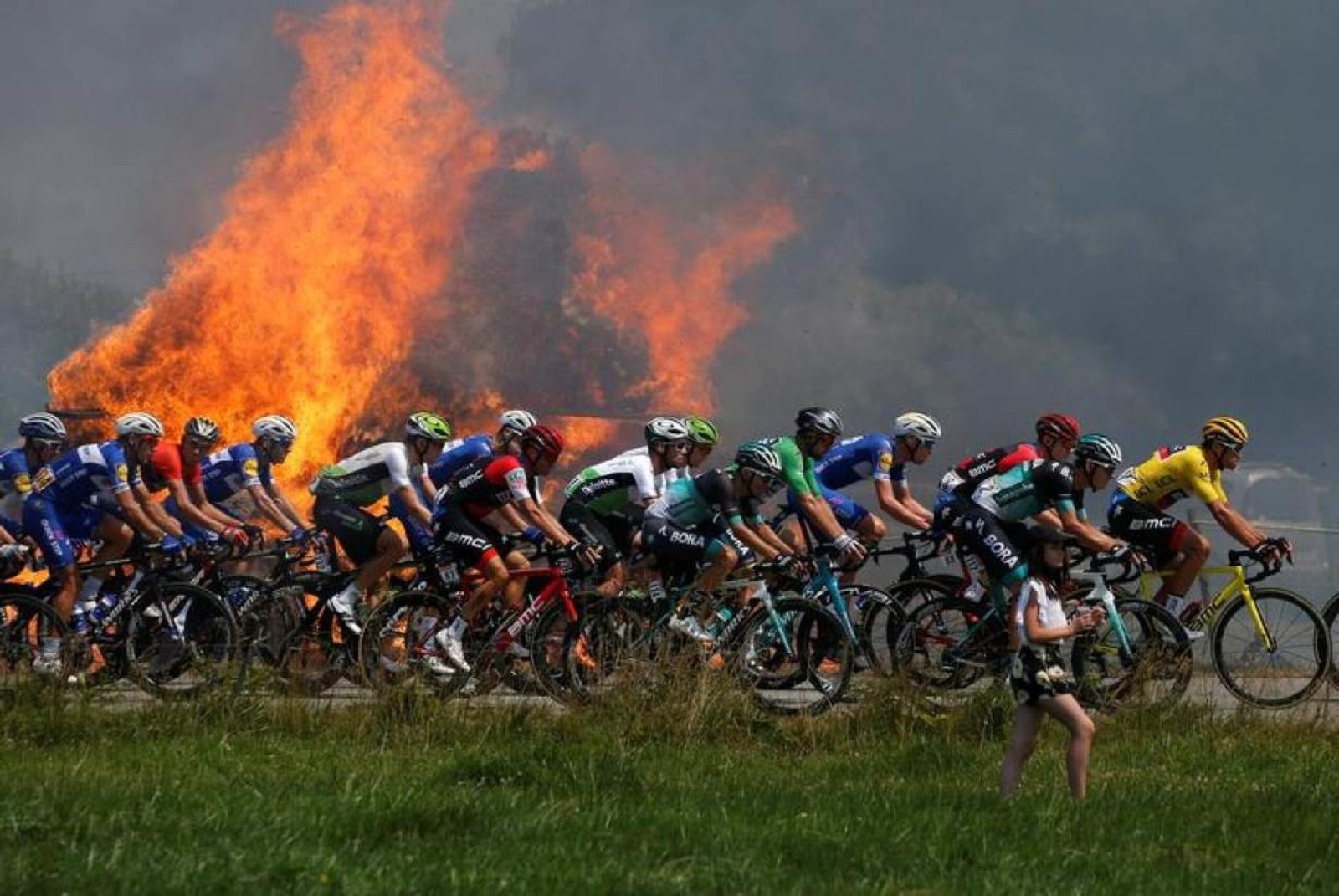
When the FIFA World Cup 2026 final was less than 24 hours away, an unlikely factor grabbed the attention of organizers and also caused panic among players and fans. It was the lingering smoke from Canadian wildfires sparked on July 13, 2026. Soon it engulfed the northern region of the US. The situation raised questions about the fate of the final on July 20, between Spain and Argentina.
Within a few hours, climate experts issued statements clarifying that air quality was likely to improve on Sunday around the New Jersey stadium. On Saturday afternoon, as predicted, a widespread thunderstorm cleared the heavy smoke, increasing the air quality index and visibility; and the final of the biggest event was played in good weather.
Simon Stiell, the Executive Secretary for the United Nations Climate Body, said in an email statement to The Guardian that “the climate crisis is hitting the things we all need, like a stable climate, clean air and affordable food, as well as the things we love, like football and other sports”.
Climate experts worldwide are raising concerns over the increasing temperature and other unexpected weather events, disrupting outdoor activities, global events, and forcing us to stay indoors with our digital devices. Joshua Devincezo serves as the assistant director at the National Center for Disaster Preparedness at Columbia University. According to Joshua, “the climate crisis is making extreme heat waves more frequent and intense, raising new questions about whether the conditions in which major tournaments are played can remain safe for the players and fans or supporters. FIFA World Cup matches have introduced a true stress of heat and preparedness”, he added.
Professional Sports and Climate Change
Federation Internationale des Associations de Footballeurs Professionnels (FIFPRO), a global representative organization for professional footballers, recommended 26 °C as a safe temperature for players and fans in the stadium. However, the recorded temperature at the New Jersey stadium on July 20 was 28 °C, 2 degrees above the recommended threshold. Still, it was a relief as the temperature in the early matches of the tournament was even higher. There were voices to shift the remaining matches of the tournament to cities with cooler environments.
Professional sports, specifically outdoor sports, face major threats including disrupted seasons, endangered venues, and financial pressure due to substantial changes in stadium infrastructure. Evidently, professional sports are never immune to these climate disruptions, which reached their peak in 2026, so much so that seasonal sports calendars and events are scheduled according to monthly/ seasonal weather predictions, no longer the reliable fixtures they once were. Major tournaments worldwide now face higher risks of cancellation, delays, schedule adjustments, or infrastructure issues that extremely unpredictable weather brings about.
However, this is only one side of the coin; professional sports are not only experiencing threats due to rising temperatures, but they are also imposing threats to our environment and playing an active role in climate change. Let’s look at the situation with this twisting angle.
Formula One, NASCAR, and other major motor sports
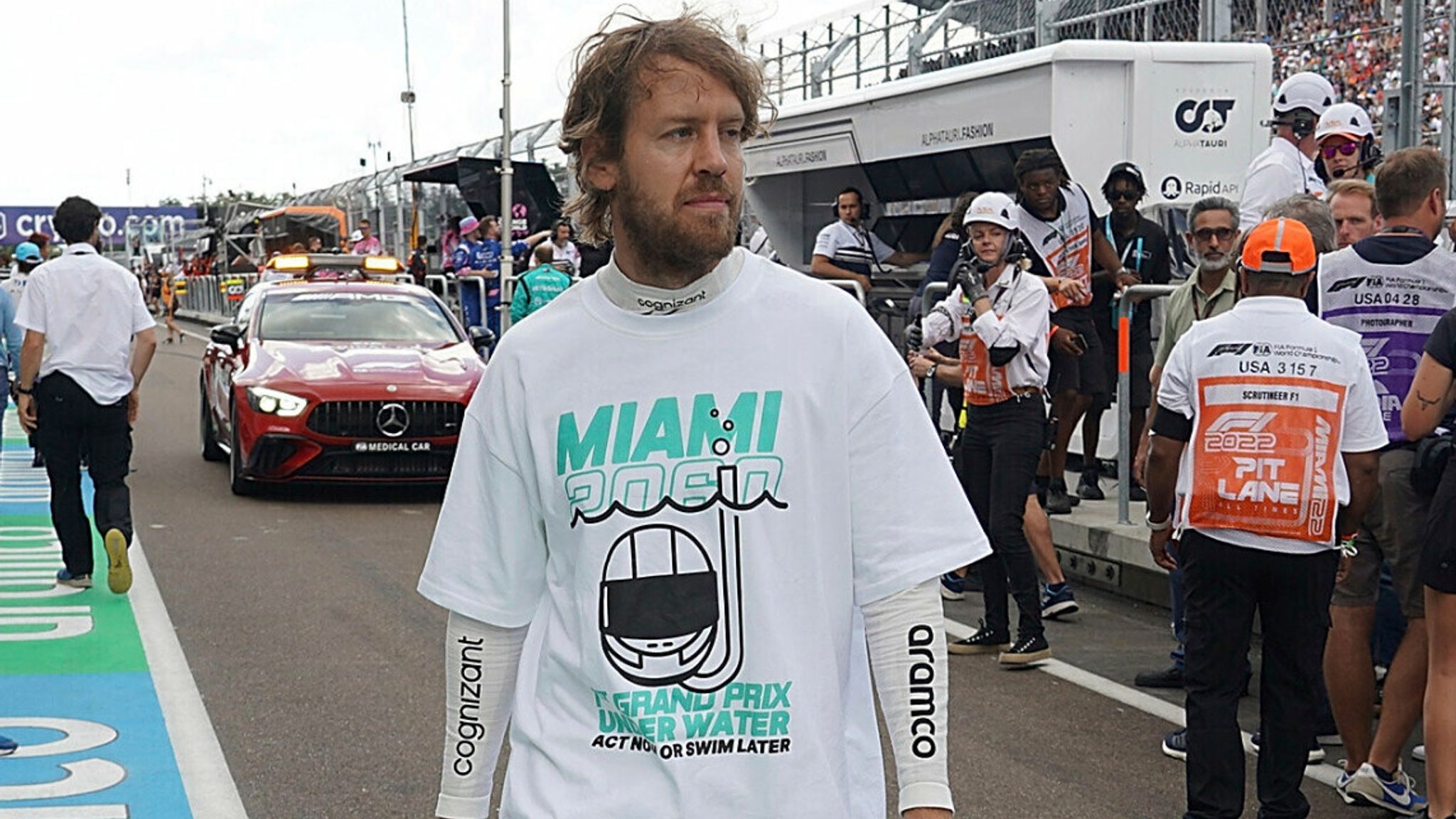
Formula One (F1), drag racing, NASCAR, and other major motor sports are often criticized for their extensive fuel use and carbon emissions. Arguably, F1 is the pinnacle of all motor sports; categorically, it is the most competitive and technologically advanced motor racing championship worldwide. An academic study conducted by Taylor and Frances in May 2026 revealed that out of twenty-five F1 circuits, 19 are at risk of extreme heat, 18 face flooding, 10 suffer poor air quality, and 7 venues face heavy rainfall. The study further shows Singapore and Qatar as the most vulnerable locations, while Austria shows a lower climate risk profile.
In 2023, the high temperatures at the Qatar Grand Prix evoked strong criticism from drivers. French driver Esteban Ocon vomited in his helmet on the 15th and 16th laps as the ambient temperatures on the track exceeded 36°C with higher humidity, leading to cockpit temperatures approaching 50°C. George Russel, who competed for Mercedes and served as the director of the Grand Prix Drivers’ Association, said in a post-race interview that “ the race conditions were absolutely brutal’ and were beyond the limits of what was acceptable for the drivers
Let’s look into the other side: According to the latest available statistics, Formula 1 accelerates climate change primarily through its massive global logistics footprint and fan travel, which push the sport’s total footprint over 1 million tonnes of carbon dioxide annually. Several experts assume the high-speed racing cars are the main culprit; twenty cars on the track actually account for less than 1% of F1’s carbon footprint.
The Constant Disruption in Winter Sports
The rising global temperature poses an existential threat to winter sports. It results in shorter seasons, retreating glaciers, and dwindling snow availability. As winter sports events heavily rely on stable environmental conditions, the worsening climate and ecological changes are causing hazards and severe disruptions.
According to the same study by Taylor and Francis, led by Madeleine Orr, associated with the faculty of Kinesiology and Physical Education, University of Toronto, Canada, it is estimated that by 2080, only eight of the 21 cities that previously hosted winter Olympic Games will continue staging the events. The remaining venues will lose this once-in-a-year opportunity due to relatively warmer winters and a substantial decrease in snow.
In Innsbruck, Australia, during the 2023-2024 Ski Jumping World Cup, athletes faced frequent weather-related interruptions driven by shifting winter patterns in the Alps. A significant number of races across all disciplines were scrapped or relocated due to the lack of snow and volatile mountain conditions.
Kamil Stoch, a Poland-based legendary three-time Olympic champion, expressed his sadness during unseasonably warm stretches. He pointed out how unnatural the environment has become. “It is a strange feeling when you look around, and everything is green, and there is a narrow strip of snow for us. Climate change has taken away a bit of winter magic”, he added.

New Normal: Major Event Rescheduling or Cancellation
The Cortina d’Ampezzo World Cup is another major event for winter sports lovers and athletes worldwide. However, Italy’s iconic Alpine venues have been increasingly affected by an unreliable snow season. These unexpected weather patterns forced the organizers to intensify snow-making operations. Additionally, rain and fluctuating temperatures also made race surfaces hard and difficult to run.
Resorts in Switzerland, Australia, France, and Italy have shortened seasons due to glacier melting. Some glacier ski races have been canceled or relocated due to a lack of snow. Experts show concerns over the growing situation as the Alps are warming at roughly twice the global average, accelerating glacier loss and reducing snow reliability.
Numerous winter sports World Cups during 2023-2025, including Alpine Skiing, Ski jumping, and cross-country skiing events, were postponed or canceled. The situation highlighted that climate change is no longer an environmental issue; rather, it is a growing challenge for athletic safety, event rescheduling, and the future of winter sports.
However, the financial escalation is equally concerning — sports facilities and infrastructure also face soaring costs from climate-related damage, while industries that depend on reliable and stable weather conditions are struggling to adapt.
Climate Change and Professional Games — Growing Opportunities
FIFA World Cup 2026 has triggered multiple calls to relocate the event due to extremely hot weather. Football fans are demanding a change in match timings to evenings or nights when the environment usually cools down.
“Now, when the event just ended with Spain being the winner, FIFA and host organizations will surely be looking at scheduling and stadium selection through a climate change lens, says Mark Saiti, CEO of environmental consultancy firm SaveMoneyCutCarbon. The statement came after the event, when the World Cup matches were organized in back-to-back heatwaves. It cast light on how our stadiums have failed to cope with warming temperatures.
Redesigning our Stadiums
According to Reuters analysis, this year, the tournament has faced back-to-back heatwaves; even the US is not exempt from those hot spells. The situation highlighted several challenges, including infrastructural concerns, as our stadiums are not designed to cope with the rising temperatures. Today, players need more protection, and fans demand a more comfortable environment to enjoy their favorite games.
Several studies are in progress to introduce the latest techniques on how football stadiums can better cope with rising heat. A similar study conducted by ULC and the University of Exeter in 2024 showed that stadiums can be cooled down with much cheaper and environmentally friendly techniques such as cool roofs. The stadium building owners could invest in building fabric measures. In this technique, white or reflective paints are coated on the roofs to make them less absorbent of heat.
Another study published by Harvard Cannedy in June 2026 discusses some other low-cost solutions. Dr DeGroot, the director of the Army Heat Center at the Martin Army Community Hospital in Fort Benning, Georgia, spoke to Harvard Cannedy in April 2026 about low-tech, budget-friendly strategies for cooling body temperatures based on his research expertise and work with the Warrior Heat-and Exertion-Related Events Collaborative.
One such technique is Arm immersion cooling developed in 2010 by Dr DeGroot and his team. Through mining existing data, Dr DeGroot proved that arm immersion cooling reduces the frequency and severity of heat illness. Executing arm immersion cooling requires no standard equipment, as it is essentially a bucket or container of cold water large enough to submerge one’s forearms.
Scaling Drop-in Sustainable Aviation Fuels (SAF)
There is no second opinion that F1’s biggest climate offense is air freight and global logistics. But it also provides several opportunities to achieve global sustainable goals. To meet its Net Zero 2030 target, F1 has invested a substantial amount in Sustainable Aviation Fuel (SAF). By acting as a high-profile, high-paying corporate buyer, F1 helps subsidize the early-stage scaling, testing, and commercial viability of synthetic aviation fuels, which the broader commercial airline industry desperately needs.
References:
- https://www.aljazeera.com/sports/2026/7/18/all-to-know-about-canadian-wildfire-smoke-air-quality-and-world-cup-final
- https://digitalcommons.law.seattleu.edu/cgi/viewcontent.cgi?article=1101&context=sjteil
- https://www.tandfonline.com/doi/full/10.1080/16184742.2025.2503163
- https://www.tandfonline.com/doi/full/10.1080/16184742.2025.2503163#abstract
- https://www.cnn.com/2023/10/10/sport/formula-one-conditions-qatar-grand-prix-spt-intl/index.html
- https://www.tandfonline.com/doi/full/10.1080/16184742.2025.2503163#
- https://theconversation.com/as-the-climate-changes-what-does-the-future-hold-for-the-winter-olympic-and-paralympic-games-274921
- https://www.formula1.com/en/latest/article/explained-what-is-the-f1-impact-report-and-why-does-it-matter.4c5wcOQrypfLR6yHaZhB9I
- https://www.formula1.com/en/latest/article/formula-1-reveals-calendar-for-2026-season.YctbMZWqBvrgyddrnauo8
- https://datasmart.hks.harvard.edu/low-tech-cooling
More from the author: Betelgeuse Supernova Can Outshine an Entire Galaxy

Saadeqa Khan is the founder, CEO, & Editor-in-Chief of Scientia Pakistan. She’s a member of the Oxford Climate Journalism Network (Second Cohort) and NASW. Saadeqa is a fellow of NPF Washington, The Falling Walls Foundation, and the Science Journalism Forum. Saadeqa has won several international journalism grants and awards for her reports.


Its like you read my mind You appear to know so much about this like you wrote the book in it or something I think that you can do with a few pics to drive the message home a little bit but instead of that this is excellent blog A fantastic read Ill certainly be back
Comments are closed.