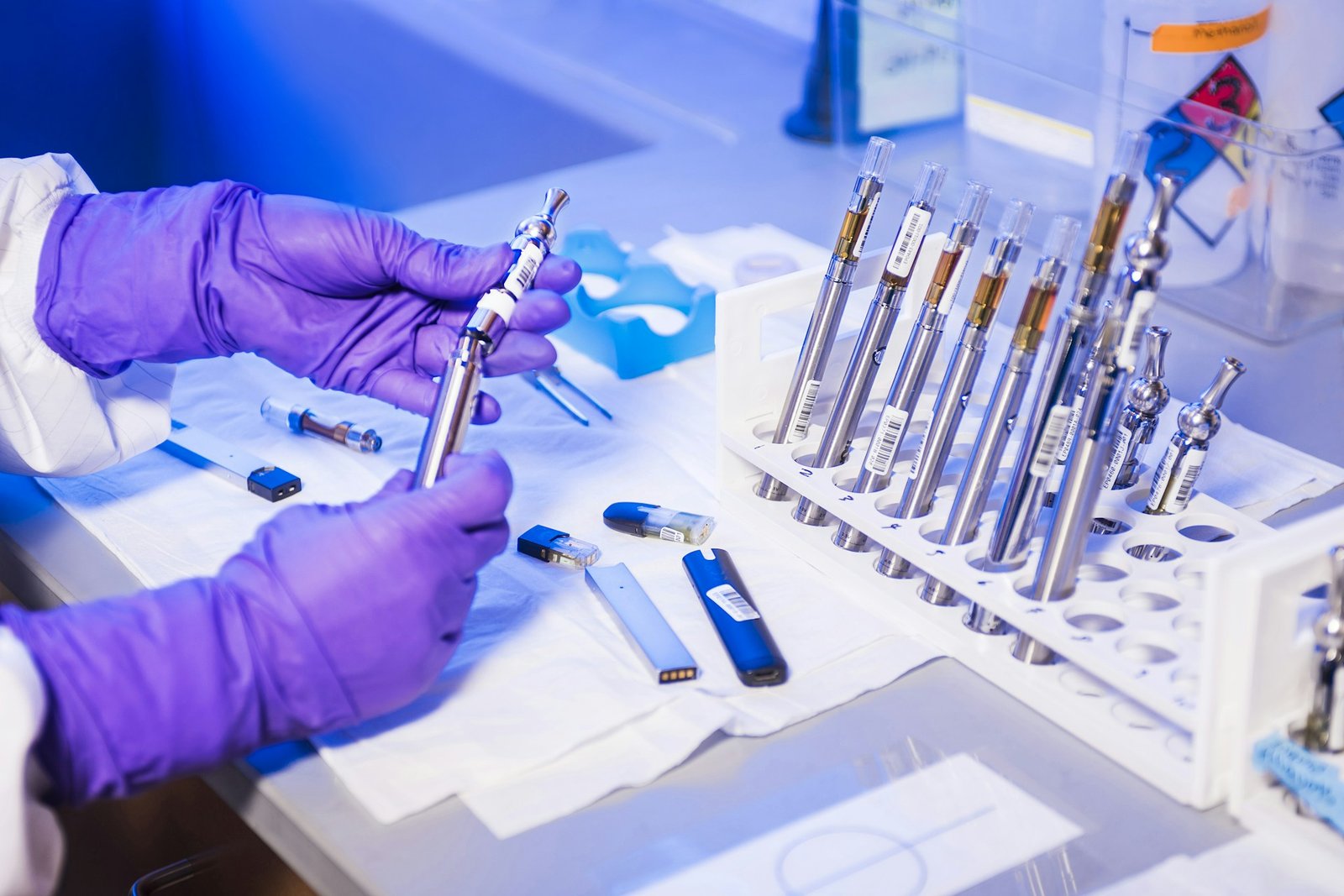
What if a treatment could be designed for just one person? What if a single dose could change the course of a genetic disease or make a chronic illness much easier to control? For decades, modern medicine has become remarkably good at managing disease. Patients take daily pills to control cholesterol, injections to manage chronic conditions, and medicines that keep infections and cancers under control. But increasingly, scientists are asking a different question: “Can we treat disease by changing what causes it in the first place?” This idea is beginning to move from the laboratory into real patients.
In 2025, doctors at Children’s Hospital of Philadelphia and the University of Pennsylvania treated an infant with an extremely rare genetic disorder using a gene-editing treatment created specifically for him. The therapy was designed around the particular mutation causing his disease. After treatment, doctors reported improvements in his ability to process protein and a reduced need for some of his medications (Musunuru et al., 2025).
The treatment was remarkable not simply because it used CRISPR. It showed that genetic medicine could potentially be “personalized to an individual patient”, rather than developed only for thousands of people with the same mutation. And this may be just the beginning.
A Gene Edit Made for One Patient
The infant’s condition, CPS1 deficiency, prevents the body from properly processing nitrogen from food. In severe cases, the resulting buildup can damage the brain and become life-threatening. Instead of searching for a conventional drug, researchers looked for the genetic mistake.
The team developed a customized CRISPR-based treatment designed to correct the problem in the child’s liver cells. The therapy was produced in months rather than the many years usually required to develop a new medicine.
The child received the treatment in 2025, and early follow-up suggested that his condition improved. The case did not prove that personalized gene editing is ready for widespread use. But it demonstrated something that once sounded almost impossible: “a medicine can potentially be designed around the DNA of a single patient.”
Researchers are now watching closely to see whether this approach can be expanded to other rare genetic diseases.
One Treatment Instead of a Lifetime of Injections
For people living with hereditary angioedema, attacks can appear suddenly and cause painful swelling. If the airway becomes involved, the condition can even become life-threatening. Today, patients can use medicines to prevent or treat these attacks. But researchers are investigating whether there is a way to tackle the underlying problem permanently.
Intellia Therapeutics has been developing an experimental gene-editing treatment called lonvoguran ziclumeran. Rather than giving patients medicine every time the disease needs to be controlled, the treatment aims to make a lasting change inside the liver.
In 2026, the company reported encouraging Phase 3 results showing that a single treatment substantially reduced attacks in people with hereditary angioedema. The treatment was still investigational, but the findings raised an intriguing possibility: “Could some genetic diseases eventually be controlled with one treatment rather than years of repeated medication?” (Intellia Therapeutics, 2026).
For patients, that difference could be enormous. It could mean fewer injections, fewer attacks, and less time spent organizing life around a chronic disease.
Rewriting the Future of Cholesterol
High cholesterol is usually treated as a problem that needs to be managed for years. Statins and other cholesterol-lowering medicines have saved countless lives, but many patients need to take them continuously. Scientists are now exploring a very different strategy.
In a 2026 clinical trial, researchers tested an experimental treatment called VERVE-102 that uses gene editing to alter “PCSK9”, a gene involved in controlling cholesterol levels. The results were striking. At the highest dose tested, researchers reported an average reduction of about 62 percent in LDL cholesterol, the so-called “bad” cholesterol (Vafai et al., 2026).
The study was still an early-stage clinical trial, so it would be premature to call this a cure for high cholesterol. Much larger studies will be needed to determine how safe and effective the treatment is over many years. But the idea is powerful. Instead of asking patients to remember a pill every day, scientists are asking whether the body’s own biology can be changed so that cholesterol stays lower for much longer.
The Search for a Functional Cure for Hepatitis B
Some medical breakthroughs are not about eliminating a disease. They are about giving patients freedom from years of treatment. Hepatitis B is a good example. The virus can remain inside liver cells for years. Existing medicines can suppress it, but many patients need long-term treatment because the virus is difficult to eliminate.
In 2026, researchers reported encouraging results from large Phase 3 trials of “bepirovirsen”, an experimental treatment developed by GSK and Ionis Pharmaceuticals. The drug targets the virus’s genetic messages, reducing the material the virus needs to reproduce. In the trials, around one in five treated participants reached what researchers describe as a “functional cure”, meaning the virus remained suppressed, and the key hepatitis B surface antigen was no longer detectable after treatment (Hou et al., 2026).
That does not mean hepatitis B has been universally cured. Bepirovirsen remains under investigation. But for people who have spent years taking medication to control a chronic infection, even the possibility of eventually stopping treatment represents a major shift.
A New Way to Attack Cancer
Cancer treatment has traditionally relied on destroying cancer cells or blocking the signals that allow them to grow. A newer strategy is more subtle: “Tell the cell to get rid of the cancer-driving protein itself.” That is the idea behind a new class of medicines called protein degraders.
One of the first major successes of this approach came in breast cancer. In May 2026, the U.S. Food and Drug Administration approved “vepdegestrant” for certain patients with advanced estrogen receptor-positive, HER2-negative breast cancer carrying specific ESR1 mutations (U.S. Food and Drug Administration, 2026).
The medicine works differently from many conventional drugs. Rather than simply sitting on a harmful protein and blocking it, it helps the cell identify that protein as something that should be destroyed. For patients whose cancers have developed resistance to earlier hormone treatments, this provides another option.
It also illustrates a larger change in cancer medicine: instead of treating all tumors in roughly the same way, doctors are increasingly using the molecular characteristics of a patient’s cancer to decide which treatment is most likely to work.
A New Generation of Weight-Loss Medicines
Obesity treatment is undergoing its own dramatic transformation. For decades, significant and sustained weight loss often required major lifestyle changes or, in severe cases, surgery. Then came medicines that could influence appetite and metabolism through hormones such as GLP-1. Now scientists are pushing the idea even further.
In 2026, researchers reported results from the Phase 3 TRIUMPH-1 trial of “retatrutide”, an experimental medicine that acts on three different hormone pathways involved in metabolism. People receiving the highest dose lost an average of about “28 percent of their body weight after 80 weeks”, while some participants lost more than 30 percent (Eli Lilly and Company, 2026).
Those numbers are remarkable because they approach the level of weight loss traditionally associated with bariatric surgery. But retatrutide is still an investigational medicine. It has not yet become an approved treatment for obesity.
What the research shows, however, is how quickly obesity medicine is changing. Scientists are moving beyond simply suppressing appetite and toward treatments that influence several biological systems involved in hunger, metabolism, and body weight.
Medicine That Starts Before Symptoms
Sometimes the best way to treat a disease is to stop it before it begins. COVID-19 research is moving in that direction. In 2026, researchers reported results from a large study examining “ensitrelvir”, an oral antiviral medicine, as a way to reduce the risk of developing COVID-19 after exposure to an infected household member.
The concept is different from conventional treatment. Instead of waiting for symptoms and then giving someone an antiviral, the medicine is taken after exposure, when the virus may be beginning to establish an infection. The study, published in ‘The New England Journal of Medicine’, explored whether this strategy could reduce the risk of symptomatic disease (Hayden et al., 2026). Such approaches could become particularly valuable for people who are repeatedly exposed to respiratory viruses or who live with individuals at high risk of severe illness.
What Comes Next?
These discoveries may seem to belong to completely different worlds. One edits DNA, another targets a viral infection, some change cholesterol biology, while others remove a cancer-related protein and act on several metabolic pathways at once. But together, they reveal a common direction: “Medicine is becoming more precise.”
Scientists are increasingly looking beyond symptoms and asking what is happening inside cells, genes and biological pathways. Instead of simply controlling disease, they are exploring ways to correct genetic mistakes, remove harmful proteins, silence viruses and change the biological systems that drive chronic conditions.
Of course, not every promising experiment becomes a successful medicine. Some treatments will fail in larger clinical trials. Others may prove too expensive or difficult to deliver. And even successful therapies must still demonstrate long-term safety. But the most exciting part of modern medicine may be this change in ambition. A few decades ago, controlling a disease could be considered a major victory.
Today, scientists are increasingly asking whether they can “rewrite it, remove it, or prevent it altogether” .The future of healthcare will probably not arrive as one spectacular discovery. It will arrive through hundreds of breakthroughs: one gene, one protein, one patient, and one clinical trial at a time.
References:
Eli Lilly and Company. (2026). ‘Lilly’s triple agonist retatrutide delivered powerful weight loss in pivotal Phase 3 obesity trial’.
Hayden, F. G., et al. (2026). Ensitrelvir for COVID-19 postexposure prophylaxis in household contacts. The New England Journal of Medicine, 394’ (19), 1905–1915. https://doi.org/10.1056/NEJMoa2509306
Hou, J., et al. (2026). Phase 3 results of bepirovirsen treatment for chronic hepatitis B virus infection. The New England Journal of Medicine, 394 (24), 2395–2406. https://doi.org/10.1056/NEJMoa2515131
Intellia Therapeutics. (2026). ‘Phase 3 clinical results of lonvoguran ziclumeran for hereditary angioedema’.
Musunuru, K., et al. (2025). Patient-specific in vivo gene editing to treat a rare genetic disease. ‘The New England Journal of Medicine, 392’ (22), 2235–2243. https://doi.org/10.1056/NEJMoa2504747
U.S. Food and Drug Administration. (2026). ‘FDA approves vepdegestrant for ER-positive, HER2-negative, ESR1-mutated advanced or metastatic breast cancer’.
Vafai, S. B., et al. (2026). In vivo base editing of PCSK9 with VERVE-102 for hypercholesterolemia. The New England Journal of Medicine. https://doi.org/10.1056/NEJMoa2601283
Also, Read: Mosquito-Borne Diseases on the Rise: Protect Yourself This Summer

Iqra Rafiq is a doctoral candidate and Lecturer in Biochemistry at the University of Gujrat, Pakistan, with a strong academic and research background in molecular biochemistry and biotechnology. Her work focuses on nutraceuticals, natural product-based therapeutics, and understanding disease mechanisms at the molecular level, with a particular interest in translating laboratory findings into meaningful biological and clinical insights. She actively engages in scientific teaching, student mentorship, and organizing health and science awareness initiatives.

