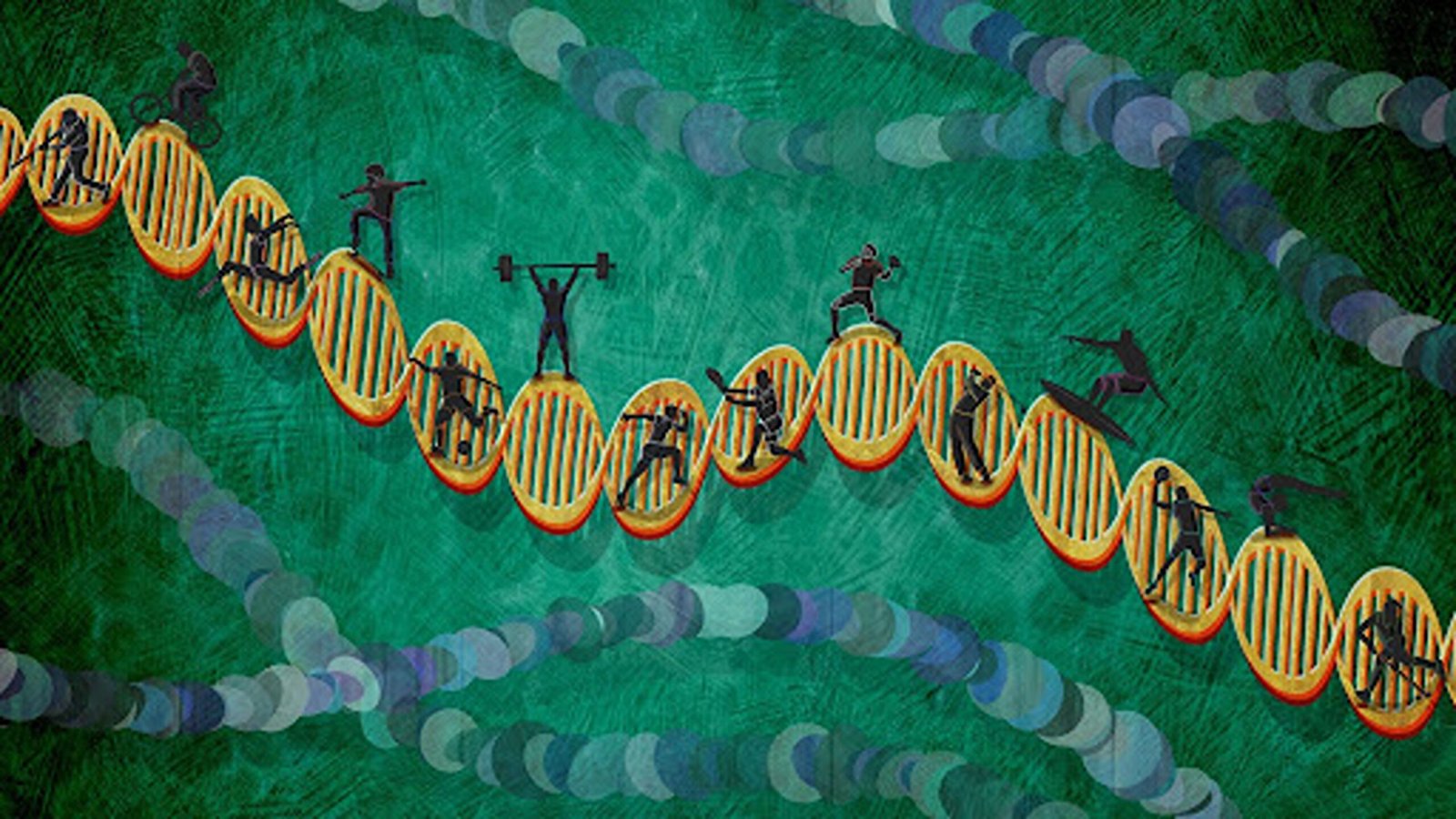
Two children tie the laces of their running shoes for the very first time. One is born with muscles that naturally favour speed and a body well suited for endurance. The other has no obvious physical advantage but refuses to miss a morning of practice. Years later, only one of them stands at the hallmark of their athletic career, or perhaps they both do. What made the difference?
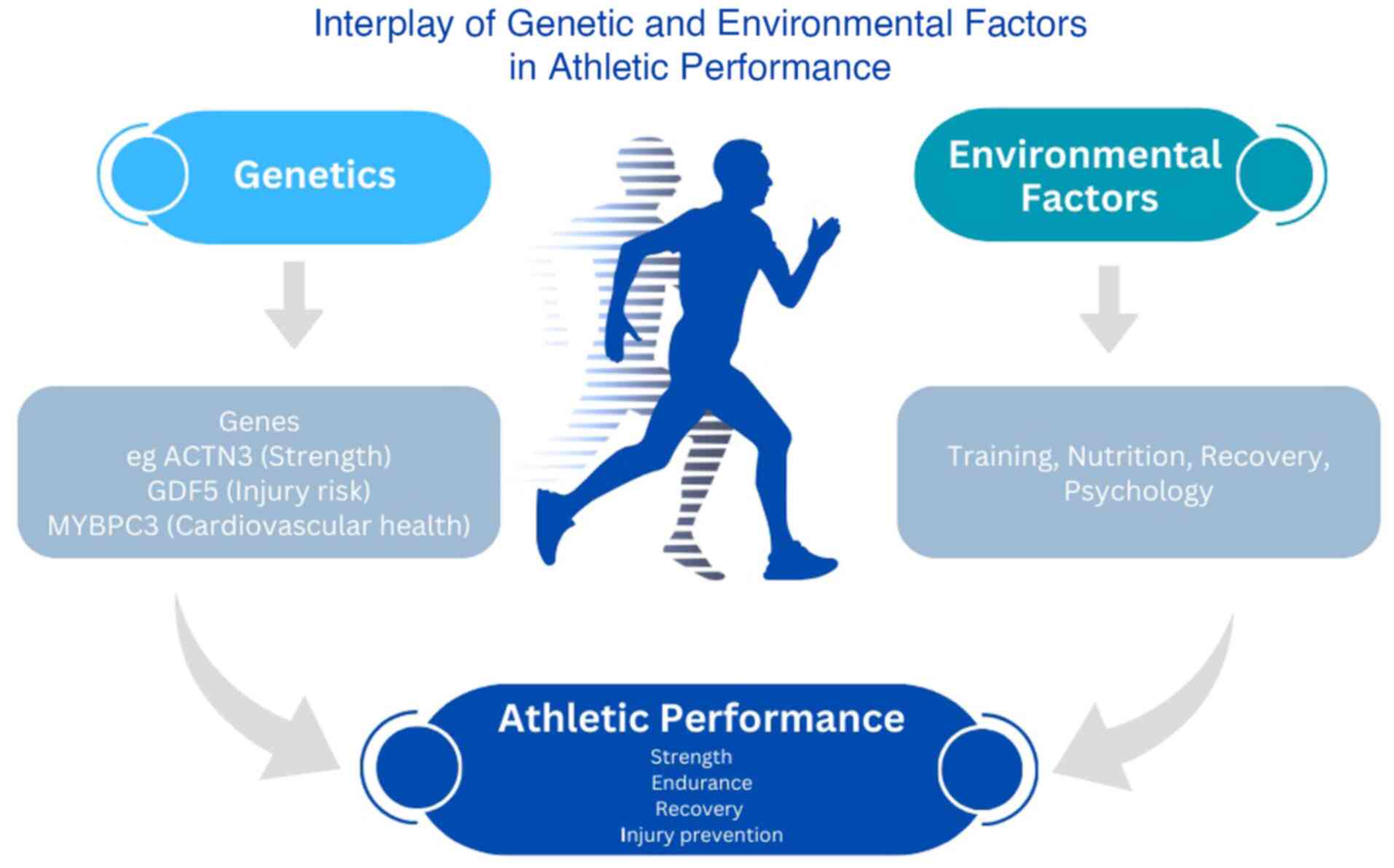
This story explores one of sport’s oldest debates: are elite athletes born or made? Research suggests that genetics accounts for 44 to 68% of the variation in maximal aerobic capacity, a key measure of endurance, but genes are only part of the picture. Training, coaching, nutrition, mindset, and access to opportunities all influence how athletic potential develops.
The journeys of Usain Bolt and Serena Williams show that natural ability alone is never enough. Behind every world record and gold medal are years of discipline, setbacks, and relentless practice. Rather than choosing between genetics and training, this story explores how the two work together to shape extraordinary athletes.
Sports and Genetics
Studies have found that genes significantly impact athletic ability and influence bodily features. So far, almost 200 polymorphisms linked with variations in sport performances have been identified. For the science crowd, a polymorphism of a gene is just like a spelling alteration. For instance, take the example of ‘colour’ and ‘color’. Same word, same meaning, but bearing different origins due to a single letter change.
To gain insight into some of these inherited influences, scientists resort to current tools of analysis, like the Total Genotype Score (TGS) and Genome-Wide Association Studies (GWAS). Fancy names of genome detectives, but with just a simple purpose: to reveal the biological systems and genetic pathways that aid in athletic performance. However, multiple obstacles make the task not so easy, for every tool or every inspection has a limitation.
Despite this, the evidence indicates that genes do play a major role in variables linked to attaining sports excellence. Finally, success in sport seldom depends solely on the genes or condition of the training but rather to some degree on both.
The 4 OG Genetic Markers
As athleticism became a hot topic of extensive study to pinpoint the traits that led to elite performance, genetic markers of potential importance became the key interest. These markers include the adenosine monophosphate deaminase 1 gene (AMPD1), the angiotensin-converting enzyme gene (ACE), the alpha-actinin gene (ACTN3), and the peroxisome proliferator activated receptor gamma co-activator 1-alpha gene (PPARGC1A). Again, very fancy names but with crucial functions.
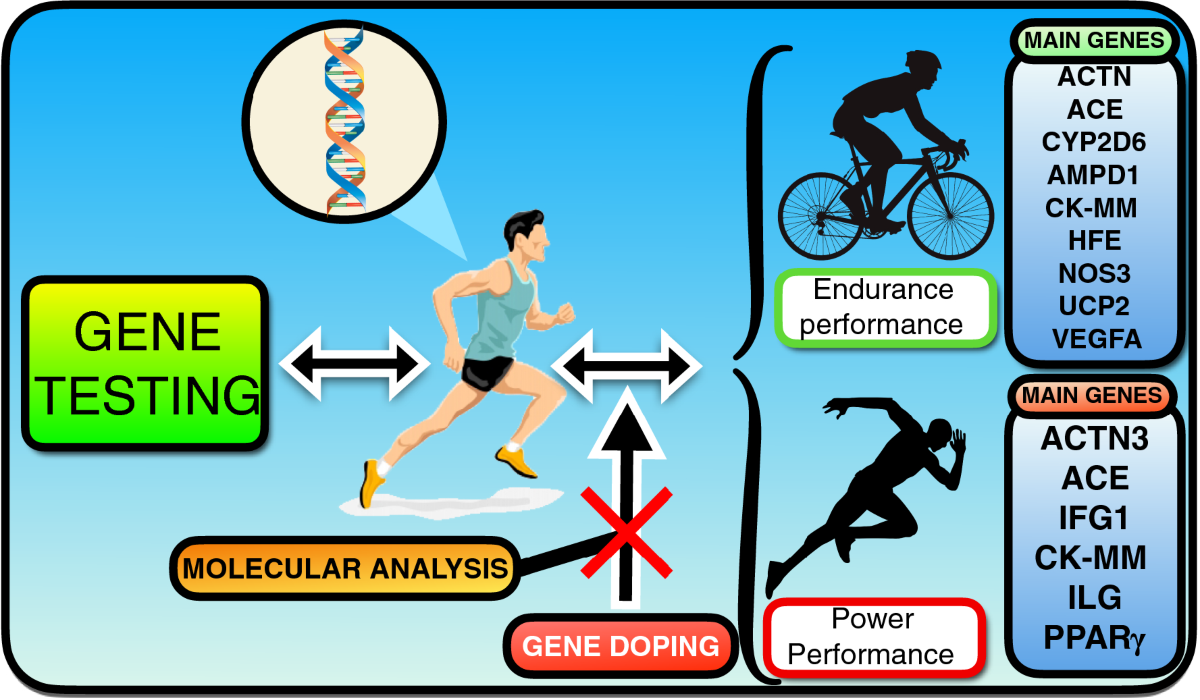
Let’s start with the infamous AMPD1. This five-lettered enzyme acronym generates a four-lettered enzymatic acronym AMPD, aka Adenosine Monophosphate Deaminase. During exercise, your muscles burn ATP, breaking it down into AMP; in turn, it needs more ATP. AMPD here jumps in and acts as an AMP cleanup crew. This allows the removal of excess AMP so that it can be recycled into ATP. A deficiency of AMPD1 would mean a deficiency of AMPD, which in turn would ultimately lead to slow recovery, fatigue, and cramps.
Next up we have the ACE-er. ACE gene makes an enzyme that assists with blood flow. For athletes, it ensures how nutrients and oxygen reach the muscles during exercise. ACE has two polymorphic versions, i.e ACE I & ACE II. While the ACE I variant is responsible for endurance, the ACE II variant is linked to short-term power surge.
ACTN3 encodes for Alpha Actinin 3. The human body has both fast-twitch and slow-twitch fibers, and this protein is found in the fast-twitch fibers, acting as a shock absorber and anchor inside our muscles that allows force to be generated at a faster rate. ACTN3 also has variants. Olympic sprinters or power lifters hold the R version, while the X version is more commonly seen in the form of endurance in marathoners and cyclists. A combination of both these variants is usually found in hockey, football, and basketball players.
PPARGC1A is the master regulator of mitochondria. Simply put, it switches muscles to endurance mode, burns more fat, increases oxygen delivery, reduces oxidative stress, and supports faster recovery among athletes.
Thus, the mounting evidence clearly implies that human genotype plays an important role in determining the response of the individual to physical activity and their potential for athletic excellence. Non-genetic factors such as environment and epigenetics also cause performance to change. In modern times, sporting ability is considered to be a polygenetic feature that contributes equally in a small but measurable manner to the overall sporting capability or phenotype expression.
Athletic Genomics through Tailored Nutrition, Endurance Training, & Muscle Fibers
The field of nutrigenomics and nutrigenetics is another thread in the athletic performance narrative that studies the influence of inherited differences on an athlete’s response to nutrition and nutritional interventions. Genetic testing is done to relate nutrition to individual requirements to understand how it can affect health, body structure, and sport potential. The idea behind personalised nutrition is to optimise performance.
Another crucial factor is endurance, depending on our body’s capacity to generate energy through aerobic metabolism that relies on mitochondrial function, gene expression, and enzyme activity. The body changes progressively over time with each endurance training session. Skeletal muscles become more efficient at using glycogen, more efficient at extracting energy from fat stores, and less lactate is produced for the same effort. Meanwhile, the heart becomes stronger, the volume of blood pumped by the heart increases, and with every beat more blood is pumped around, making long exercise sessions much easier.
Training is not the end of the story, as each athlete reacts to the same training plan differently. Research indicates that some genetic factors help to initiate the journey, while some are not heritable and don’t affect the benefits of training. The quality of training, commitment, recovery, and daily activities also play a role in progress. It has also been investigated that recovery could have its own genes, including members of the glutathione S-Transferase (GST) family. All of these appear to be associated with the body’s ability to flush away metabolic wastes, neutralise free radicals, and restore balance following strenuous exercise.
These genes are known to be influential with regard to how aerobic athletes express them compared to non-athletes. This explains why some people have better athletic abilities than others and what athletes are capable of recovering between difficult workouts.
Most importantly, muscle is not just any tissue, but rather a very diverse tissue with varying fibers of strength, fast and slow. Slow-twitch fibres lengthen more slowly, burn energy less efficiently, and do not get fatigued easily. By contrast, fast-twitch fibres produce greater force with faster speed, cause increased energy cost, and fatigue more quickly.
This natural variety allows the body to handle different kinds of physical challenges with great accuracy. In sports that require endurance, such as swimming and running, athletes tend to have a higher percentage of slow-twitch fibres. The power of sprinting athletes is found to have a greater number of fast-twitch fibres, allowing them to concentrate on speed, strength, and explosive power rather than endurance.
Gene Doping for Enhanced Performance
With increased knowledge of human physiology, there has been rapid progress in manipulating human genetic processes for better performance. With advancements in gene therapy, it has become possible to alter gene expression by inserting or changing the gene material within cells.
During gene doping, the athlete is given a virus that’s been engineered in a laboratory. The virus has new DNA that it injects directly into the target cells, such as muscle cells. After it’s in there, it will get to work with the player and help them become a better performer. However, it’s way more complicated than it sounds, as it comes with an abundance of risks and health issues. During the ex vivo technique, the doctors do not immediately inject, but first, they remove cells from the patient’s body. They cultivate those cells in the lab, modify them for better cell function, and reintroduce them. This approach has been successfully used to treat some genetic diseases.
Although these methods were designed to combat diseases, now these tools are being utilized to alter genetic mapping for better performance. New tools, such as CRISPR-Cas9 gene editing, have opened the door for even more opportunities, which led the World Anti-Doping Agency (WADA) to condemn the use of gene doping or gene-editing technologies to improve the athleticism of an athlete.
Sports Genomics is a big prospect in professional sports. It can be used to uncover early talent and develop particular programmes based on an athlete and their genes. With genomic research, injury risk can be managed more effectively, muscle recovery times can be improved, and nutrition plans can be more specific. This would lead to a greater understanding of athletic performance genetics, environment, and training, all of which play a role in the creation of champions down the road.
References:
- https://doi.org/10.3390/ijms252313041
- https://doi.org/10.3390/ijms252313041
- https://www.cbc.ca/news/science/gene-doping-olympics-1.4535719
More from the author: Green is the New Gold: A Gen-Z Guide to Renewable Investing

Mariam Mushtaq is an Aspire Alumni and a promising Research Scientist with a particular interest in Molecular Biology and Molecular Imaging. She is also a two-time Gold Medalist for her outstanding co-curricular performances during her Biochemistry degree program. Holding a strong passion for both writing and literature, Mariam hopes to produce work that is beneficial for science and society.

