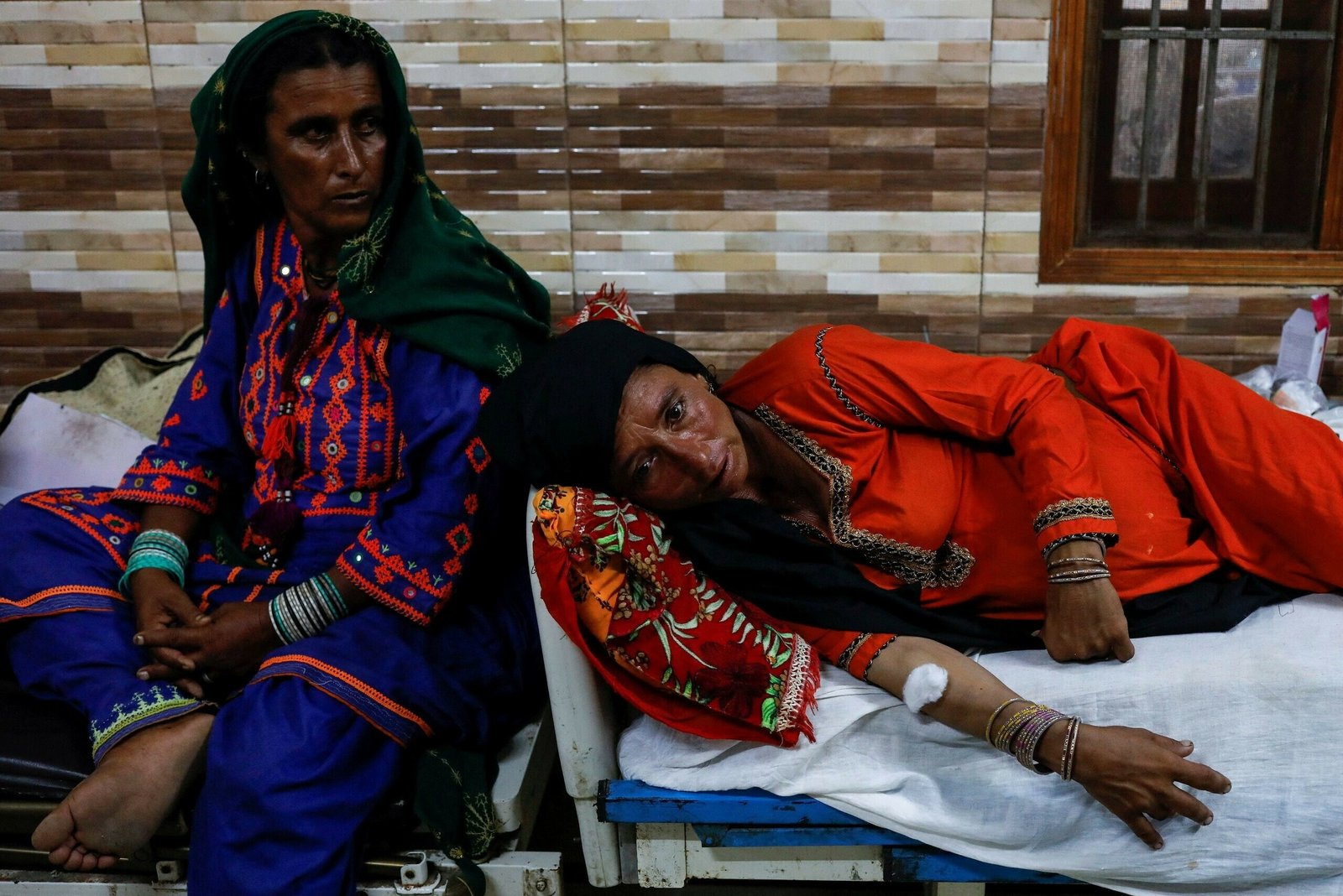
I grew up in Hunza, where the landscape decides the details of daily life. The shape of the mountains dictates where water flows, when the sun reaches the valley, and whether a landslide will close the single road that links us to the nearest hospital. In the high north you learn early that people and their environment cannot be separated.
For generations, mountain communities treated cold as the main hardship. That rhythm is breaking. Between 1 and 22 February 2026, the Pakistan Meteorological Department recorded daytime maximums in Gilgit-Baltistan running 3 to 5°C above average, and warned that warm nights were pushing meltwater into glacial lakes. Hunza was among the valleys told to stay alert [1]. By July, another outburst-flood alert went out for Gilgit-Baltistan and Khyber Pakhtunkhwa, again with daytime temperatures above normal [2]. These are places built for cool air. Few homes have any means of cooling, and our traditional knowledge has no answer for weather like this.
Yet when we talk about climate disasters, we still picture the sudden ones: a swollen river, a collapsing glacier, a road torn apart by floodwater. We talk far less about what happens inside a low-income home during a long heatwave, or to a pregnant woman in labour at the hottest hour of the day. From high-altitude villages to the concrete grids of our cities, heat is turning into a public health crisis, and it is arriving without drama.
The question facing climate negotiators is no longer only how hot the world is becoming. It is who can afford to stay safe when it does.
A fourth-floor room in Lyari
In the dense, narrow lanes of Karachi’s Lyari neighbourhood, heat does not leave when the sun goes down. It soaks into the concrete and stays in the room all night.
Samira, 29, was eight months pregnant in January 2025 when she went into labour early. She lived on the fourth floor of a fully enclosed concrete building with almost no ventilation. Her baby was stillborn. Her doctor suspected that extreme heat and dehydration had played a part [3].
I want to be careful here, because the doctor was careful. A suspicion is not a diagnosis, and stillbirth rarely has one cause. But Samira’s story points to a blind spot I recognise from my own field. When a pregnancy goes wrong during extreme weather, our health systems almost never record the temperature, let alone ask whether thermal stress was involved. Without a record, there is no evidence, and without evidence, nobody plans for it.
What the evidence says, and what it does not
A single case cannot prove anything, but the wider evidence is hard to dismiss. A 2020 systematic review and meta-analysis in The BMJ, covering 70 studies from 27 countries, found that the odds of preterm birth rose by about 5 percent for each 1°C increase in temperature and by about 16 percent during heatwaves. The odds of stillbirth also rose by about 5 percent per degree [4]. A larger review in Nature Medicine, covering 198 studies from 66 countries, found a 4 percent rise in preterm birth odds per degree and a 26 percent rise during heatwaves. It also linked heat to gestational diabetes (odds ratio 1.28) and congenital anomalies (1.48) [5].

Women who cannot stay indoors
For millions of women, avoiding heat is not a choice. In Jacobabad, the thermometer reached 51°C (123.8°F) in May 2022, and doctors at the local heatstroke centre told reporters that women, who carry most of the household work and cannot easily shift their hours because of social norms, are at greater risk [6]. For a woman who labours in the fields, staying home means giving up the day’s wage, and her family cannot afford that.
Altitude does not protect us either. In the north, heat arrives alongside glacial lake outbursts, landslides and washed-out roads, which are exactly what separate a mother from a delivery room. Pakistan has already seen how these shocks stack up. In the 2022 floods, UNFPA estimated that 650,000 pregnant women in affected areas needed maternal health services, and about 73,000 of them were due to deliver within a month [7].
Pakistan meets this warming world with a fragile maternal health baseline. The 2019 national survey put maternal mortality at 186 deaths per 100,000 live births [8]. Notably, that survey excluded Gilgit-Baltistan and Azad Jammu and Kashmir, which means my own home region is missing from the national picture [8]. Neonatal mortality was 38 per 1,000 live births in 2023, against 17 in India and 18 in Bangladesh [9]. Heat did not create these gaps. It narrows the margin of safety in systems that were already thin.
The women the research forgot
The research itself is lopsided. In the Nature Medicine review, 63.3 percent of the studies came from high-income countries [5]. In The BMJ analysis, only seven of the 27 countries were low- or middle-income [4]. The women most exposed to heat, in places with the fewest cooling options, are the ones science has measured least.
That is starting to change. A 2026 study by Aga Khan University researchers reported that 9 to 13 percent of low birth weight cases in Pakistan could be attributed to heat exposure [9]. The Wellcome-funded BIRTH-Cohort will follow 6,000 pregnant women in Matiari, Tando Muhammad Khan and Tharparkar from early pregnancy through to a year after delivery, using wearable sensors to record the heat each woman actually experiences [10]. By April 2026, about 1,200 women had been enrolled [9]. Meanwhile, since August 2025 Aga Khan University teams have been testing low-cost cooling in more than 3,000 households in Karachi and Matiari, using canvas canopies, wind-catcher ducts and solar-reflective paint. Early readings show indoor temperatures 3 to 4°C lower [9]. That is encouraging, but a cooler room is not yet proof of healthier births, and the researchers say so.

Antalya and the unfinished business of Belém
COP31 opens in Antalya on 9 November, with Türkiye hosting and Australia leading the negotiations [11]. The timing matters, because COP30 left health adaptation half-built. In Belém, countries agreed a set of indicators to track adaptation, including some on health, and launched a voluntary health action plan. As reported, neither one speaks specifically to pregnant women and newborns, and the indicators are still being refined through 2026 and 2027 [12][13]. That leaves a window, and it is short. Money is the other gap. Adaptation finance for developing countries remains a small fraction of what is needed [14]. Heat is already doing the damage. What is missing is the line item.
What protection would look like
From evidence to practice, I see four priorities.
First, heat warnings have to reach pregnant women directly. Automated text alerts will not reach a woman without a phone of her own. Warnings should travel through antenatal clinics and Lady Health Workers, whose programme once reached nearly 60 percent of Pakistan’s population through monthly home visits [15]. They should say plainly that pregnancy and breastfeeding call for extra water, rest and cooling.
Second, maternity wards must be built to withstand heat. Delivery rooms and newborn units need reliable electricity, ventilation, safe water and cooling. Solar systems are a practical answer for mountain clinics and for urban hospitals that suffer long blackouts.
Third, women who work in the heat need real protection: shade, drinking water, rest breaks and earlier or later working hours that are enforced, not merely suggested. Cash support released before a forecast heatwave would let a pregnant worker stay safe without losing her family’s income.
Fourth, health facilities should record the ambient temperature next to clinical outcomes, such as preterm births, complications and stillbirths. Without that routine record, adaptation funds will keep being spent without knowing what works, and cases like Samira’s will remain unexplained.
For the delegates in Antalya, I would turn these into three asks. Add a maternal and newborn health indicator, with data broken down by sex, age and place, to the adaptation indicators still being refined. Direct adaptation finance to heat-resilient maternity services and early warning systems that reach women. And ask countries to name pregnancy in their national heat plans, as South Africa already has.
A matter of who is protected
When I think of Samira in her fourth-floor room in Lyari, the pregnant farmworkers of Sindh, and the women of my own valley waiting for the road to open, the principle is plain. Whether a family can shield an expectant mother from extreme heat should not depend on her income, her electricity connection or where she lives.
We do not need to wait for every trial to report before we act on what is reasonable and humane. One of the researchers working on this said it better than I can: we should not wait for country-specific studies before taking action [9]. Water, income, roads and health care are tied together, and climate change pulls on all of them at once. The real test of resilience will not be a flood wall. It will be whether a mother can carry and deliver her child safely while the world around her grows hotter.
References
- Pamir Times (2026). PMD reports 3–5°C rise in daytime temperatures in Gilgit-Baltistan, warns of accelerated glacier melt. 23 February 2026. https://pamirtimes.net/2026/02/23/pmd-reports-3-5c-rise-in-daytime-temperatures-in-gilgit-baltistan-warns-of-accelerated-glacier-melt
- Dawn (2026). PMD issues Glof alert for GB, KP as fresh westerly wave approaches. 11 July 2026. https://www.dawn.com/news/2014600
- Baig, H. I. (2025). In the heat of labor: How Pakistan’s expectant mothers battle heatwaves. FairPlanet, 30 April 2025; republished by Earth Journalism Network, 22 May 2025. https://earthjournalism.net/stories/in-the-heat-of-labor-how-pakistans-expectant-mothers-battle-heatwaves
- Chersich, M. F., et al. (2020). Associations between high temperatures in pregnancy and risk of preterm birth, low birth weight, and stillbirths: systematic review and meta-analysis. The BMJ, 371, m3811. https://doi.org/10.1136/bmj.m3811
- Lakhoo, D. P., et al. (2025). A systematic review and meta-analysis of heat exposure impacts on maternal, fetal and neonatal health. Nature Medicine, 31, 684–694. https://doi.org/10.1038/s41591-024-03395-8
- Inside Climate News (2022). In Jacobabad, one of the hottest cities on the planet, a heat wave is pushing the limits of human livability. 20 June 2022. https://insideclimatenews.org/news/20062022/jacobabad-pakistan-heat-health/
- Ahmed, A. (2022). More than half million pregnant women among flood-hit in dire need of care: UNFPA. Dawn, 31 August 2022.
- National Institute of Population Studies (2020). Pakistan Maternal Mortality Survey 2019. Islamabad: NIPS, Ministry of National Health Services, Regulations and Coordination. https://nips.org.pk
- Siddiqui, Z. (2026). Pregnancy and heat in Pakistan: researchers seek to fill dangerous knowledge gaps. Dialogue Earth, 2 April 2026. https://dialogue.earth/en/climate/pregnancy-and-heat-in-pakistan-researchers-seek-to-fill-dangerous-knowledge-gaps/
- Das, J. K., et al. (2026). Biological impacts of rising temperatures on maternal, fetal and newborn health: protocol for a cohort study (BIRTH-Cohort). BMJ Open, 16(3), e107773. https://doi.org/10.1136/bmjopen-2025-107773
- Climate Home News (2026). Türkiye sets COP31 dates and appoints Australian cattle farmer as youth champion. 14 April 2026. https://www.climatechangenews.com/2026/04/14/turkiye-sets-cop31-dates-and-appoints-australian-cattle-farmer-as-youth-champion/
- International Institute for Sustainable Development (2025). What happened at COP 30 on climate and health? https://www.iisd.org/articles/explainer/what-happened-cop-30-climate-and-health
- UNFPA (2025). Four takeaways: COP30 advances gender equality and health. 17 December 2025. https://www.unfpa.org/updates/four-takeaways-cop30-advances-gender-equality-and-health
- United Nations Environment Programme (2025). Adaptation Gap Report 2025: Running on Empty. 29 October 2025. https://www.unep.org/news-and-stories/press-release/slow-climate-adaptation-threatening-lives-and-economies
- Hafeez, A., et al. (2011). Lady health workers programme in Pakistan: challenges, achievements and the way forward. Journal of the Pakistan Medical Association, 61(3), 210–215. PMID 21465929.
Also Read: Climate change linked to frequent landslides in Pakistan

Shandana Sher is a graduate of Nishtar Medical College, Multan, and holds a master’s degree in public health. She currently works with the Aga Khan Foundation, Pakistan, on public health projects that support climate-vulnerable communities. She is passionate about the climate–health nexus and about turning climate action into better health for the people who are most exposed.

