In the ongoing debate over environmental sustainability, population growth is often cited as a significant contributing factor to environmental degradation. However, the correlation between population and environmental pollution is not as straightforward as it might seem.
In fact, a growing population that is educated about environmental issues and practices minimalism could potentially contribute more positively to ecological sustainability than a smaller, less environmentally conscious population.
The assumption that a larger population inevitably leads to greater environmental harm stems from a simplified view of resource consumption and waste production. While more people can lead to increased resource demand, this does not necessarily translate into more pollution. The critical factor is how these people live and consume.
For instance, a single child in a household that prioritizes material wealth and consumption—marked by an abundance of toys, furniture, and clothing—can have a significantly larger environmental footprint than multiple children in a household that practices minimalism and environmental stewardship. This highlights that the number of people is less significant than their consumption patterns and lifestyle choices.
Environmental awareness plays a crucial role in determining the impact of a population on the environment. Educating individuals about the importance of sustainable practices can lead to a more environmentally friendly society, regardless of size.
When people understand the consequences of their actions on the environment, they are more likely to adopt behaviors that reduce pollution and conserve resources. Communities prioritizing recycling, energy efficiency, and sustainable consumption can significantly reduce their environmental footprint.
Such communities can flourish even with a larger population because the cumulative effect of their environmentally conscious behaviors outweighs the impact of their numbers.
Minimalism, the practice of living with less, directly combats the culture of overconsumption. Raising children with minimalist values instills a sense of environmental responsibility from a young age.
These children grow up understanding that their happiness and well-being are not dependent on accumulating material goods but rather on experiences, relationships, and a healthy environment. Minimalism reduces waste and conserves resources, which can mitigate the environmental impact of a growing population.
A family that practices minimalism avoids excessive consumption, which leads to environmental conservation. They might choose to buy fewer, high-quality items that last longer, reducing the demand for mass-produced goods that often come with significant environmental costs.
In the ongoing debate over environmental sustainability, population growth is often cited as a major contributing factor to environmental degradation.
Some individuals, particularly in developed countries, often point fingers at the populations of developing countries, blaming their higher birth rates for environmental problems.
These critics, who often portray themselves as champions of sustainability by having only one or two children, overlook the stark reality that the carbon footprint of individuals in developing countries is typically much lower than that of those in wealthier nations.
In developing countries, the so-called “unprivileged” populations often live more sustainably by necessity, consuming fewer resources and generating less waste. In contrast, those in developed countries with fewer children may still have a significant environmental impact due to their consumption patterns, striving to provide their children with every conceivable comfort and luxury without considering the associated carbon footprint.
Combining environmental education with minimalist practices offers a pathway to sustainable population growth. By raising environmentally conscious children who practice minimalism, society can ensure that a larger population does not equate to more significant environmental harm.
Instead, this approach can lead to a more sustainable and resilient society. Education systems can play a pivotal role by incorporating environmental studies into their curricula, teaching students about the impacts of their choices on the environment, and promoting sustainable practices. Communities can support these efforts by creating environments that encourage minimalism and sustainable living.
Moreover, policy interventions can support this cultural shift by incentivizing sustainable behaviors and reducing barriers to minimalism. For instance, policies that promote the sharing economy, support local and sustainable businesses, and encourage public transportation can all contribute to a more sustainable population.
The relationship between population growth and environmental pollution is complex and mediated by numerous factors, particularly the behaviors and lifestyles of individuals. By fostering environmental awareness and minimalist values, society can mitigate the environmental impact of a growing population.
Raising more children who are conscious of their environmental footprint and practice minimalism can ultimately lead to a healthier planet. Rather than viewing population growth as a threat to the environment, we should focus on how we can educate and inspire future generations to live sustainably.
Monroe, M. C. (2019). The role of environmental education in fostering sustainable behaviors. Frontiers in Education, 4, 26. https://doi.org/10.3389/feduc.2019.00026
Kollmuss, A., & Agyeman, J. (2002). Mind the gap: Why do people act environmentally and what are the barriers to pro-environmental behavior? Environmental Education Research, 8(3), 239-260. https://doi.org/10.1080/13504620220145401
Ivanova, D., Barrett, J., Wiedenhofer, D., Macura, B., Callaghan, M., & Creutzig, F. (2020). Quantifying the potential for climate change mitigation of consumption options. Nature Climate Change, 10, 745-751. https://doi.org/10.1038/s41558-020-0834-0
Sterling, S. (2020). Educating for the future: A vision for sustainability in education. Environmental Education Research, 26(6), 788-798. https://doi.org/10.1080/13504622.2020.1863358
According to the studies conducted by Space biologists Joshua P. Vandenbrink and John Z. Kiss in the Department of Biology, University of Mississippi USA, they found it interesting to study plant physiology and development in a unique environment of microgravity where they found that plants can grow seed-to-seed in microgravity as well as identifying the responses to other stimuli like light.
Initially, the experiments were carried out with difficulty. Still, the investigations and studies later determined that the improved experiments should be designed to maximize the value and applicability of the results generated.8
Critical analysis of scientific theories has been beneficial because it sets the grounds for more reliable approaches, novel scientific methodologies, and techniques, setting up systematic and well-organized research solutions and pioneering ways to advance inventions.
The main goal of scrutinizing the scientific approaches is to enhance societal well-being. Scientific theory is not stagnant; it flows for improvement in one way or another until it becomes a unanimous solution.
As Paloto said,“Science is nothing but perception”. Ever since prehistoric scholars began documenting their observations and experimentation, their research has been challenged by their peers and descendants, generation after generation. For decades, knowledge meant the knowledge proven, either by intellectual commentary, sensical shreds of evidence, or by systematic counter.2
After the pandemic, a heated wave of debates sprang up over the use of vaccines. Based on the published research, some doubts were raised about specific vaccines in terms of their adverse side effects.
The Historical Chinese Perspective
History narrates some exciting twists in scientific evolution, mainly affected by social and cultural influences. Some societies, like Chinese and Indian culture, had solid affiliations with sacred elements, more of a metaphysical nature, and supernatural powers. So, they somehow denied the involvement of scientific principles and natural phenomena.
The attitude of Chinese society towards natural phenomena was quite different from that of European countries, mainly during the Renaissance period.
The Chinese were stubborn about separating material things from their sacred world. They had no evident conviction that people could dominate nature and have any influential role in natural occurrences.
Nor even were they interested in developing a scientific method for their observations, due to which their theories often remained divorced from experimentation (Hellemans & Bunch, 1988, p. 59)1
What Is Good About Critical Analysis?
The critical approach paves the way for continued research and makes it more beneficial. It provides solid grounds for the continuation of the process. Unlike any other discipline, which might not need analysis for its continuity, scientific methodology and study of nature involve constant assessment and evaluation.
The scientific method is interrogated at every step to redefine the procedures for repeated results unless it becomes a theory or a law.
The nature of critical studies in science depends upon the nature of the scientific discipline. For instance, history and sociology of science demonstrate the socially determined origins of scientific ideas and methodologies by critical analysts (Kuhn, 1970; Latour, 1987; Shapin, 1995; Thackray, 1995; Fine, 1996).
The analysts who evaluate the cultural aspects of scientific data are mostly related to the dimensions of the communities and cultures in which they live (Pickering, 1992; Rouse, 1993).
The case studies regarding how the critical viewpoints have expanded, improved, and navigated the discoveries and provided well-researched, durable, and reliable solutions to problems faced by humanity, for instance, drug designing, mechanical solutions, pathological testing for disease diagnosis, and other disciplines of scientific research.
Medicine, health, and science are ripe with disputes and debates. Throughout history, spirited replies and rebuttals have been written and accompanied by rejoinders, responses, and editorials, and helped clarify or rebut essential concepts.4
Humoral Immunity to Severe COVID-19
The expert pediatricians (Fanous et al. (2020)) claimed that the neutralizing antibody responses to SARS-CoV-2 have generally been assumed to be protective against COVID-19 but with limited durability.
Humoral immunity is the ability of B cells to bind to a specific antigen, against which it will trigger an antibody response. Many factors that lead to severe immunodeficiencies are characterized by life-threatening viral infections that determine the susceptibility to severe cases of COVID-19.
However, further research proved that these neutralizing antibody responses are not demonstrated to be protective against or susceptible to severe cases of COVID-19.7
Anaphylactic Reactions to Pfizer’s Vaccine
All vaccines, especially during the COVID-19 pandemic, should meet the criteria of safety, effectiveness, durability, affordability, and availability requirements. According to the informative investigation by de Vrieze (2021) that reports:
“At least 12 people suffered an anaphylactic reaction after receiving Pfizer’s COVID-19 vaccine,” then how could the vaccine have been approved as safe, especially given the widely self-reported success rates claimed by Pfizer and BioNTech of around 95 percent in the news and social media reporting?
The investigations found the cause may be due to the compound polyethylene glycol (PEG) in their vaccine, which is also contained in the vaccine produced by Moderna.
Anaphylactic reactions are frequently caused by bee stings, eating peanuts, and some other varieties of tree nuts, so the compound polyethylene glycol (PEG) must have been known to cause similar reactions in vaccinated individuals, regardless of its previous use in vaccines.
As this was purportedly the first time the PEG compound was used in vaccine production, greater scrutiny should have been instigated and investigated in clinical laboratory trials before the vaccines were submitted for regulatory approval.
Since the second industrial revolution, the use of fossil fuels has skyrocketed, but it wasn’t until 1968 that the world learned about the adverse effects of climate change caused by burning fossil fuels such as coal, oil, and gas. The report presented to the American Petroleum Institute by Stanford Research Institute stated:
“If the Earth’s temperature increases significantly, several events might be expected to occur, including the melting of the Antarctic ice cap, a rise in sea levels, warming of the oceans, and an increase in photosynthesis.” (O. Milman, 2016)
Fossil fuels in transportation
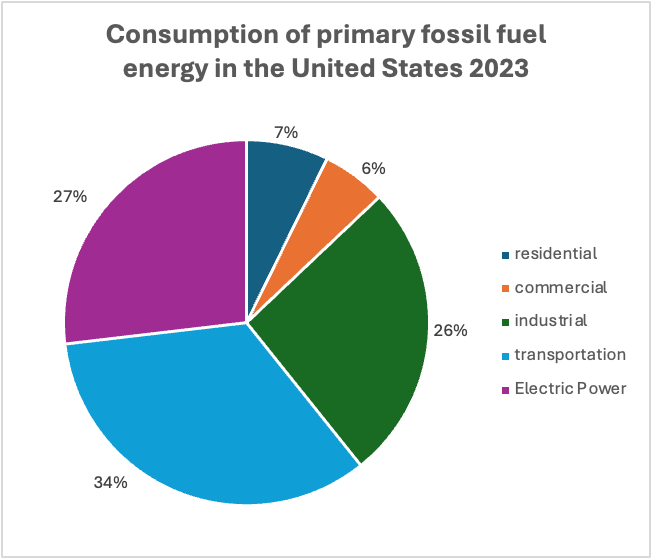
The awareness around the topic grew, and the Firth Earth Day was observed in 1971. Since then, there have been several awareness campaigns and policy-making initiatives to promote the use of sustainable energy options such as solar power. But as the graph shows below, the highest contribution towards the use of fossil fuels is from the transportation sector.
Multiple alternatives like solar power, hydropower, and wind have gained popularity for electric power. However, because these methods require enormous setup, they failed to impact the transportation sector, including fuel for cars, trucks, ships, and aviation.
Electric Vehicles (EVs)
Feeling the need to create sustainable transportation methods, battery-powered systems were invented. Although the first practical electric vehicle (EV) was created in the 1890s in America, petrol-powered vehicles were used mainly due to the rise of internal combustion engines.
The modern EVs emerged into the market with the introduction of the Toyota Prius in 1997. With continuous research and development, the 2000s marked the revival of EV cars, battery-powered or hybrid systems (EVBox, 2023).
Since then, electric vehicles have gained massive popularity and now account for every 1 in 7 cars sold globally. All major automobile manufacturers like Tesla, Nissan, Mercedes, and BMW grabbed the opportunity and introduced new and better designs for cars and trucks.
In 2022, a net-zero, fully battery-powered cargo ship was introduced by the name of Yara Birkeland, which is 80 meters long and can carry a little over 100 containers. The first all-electric aircraft, Alice, also took its first flight in September 2022, created by the company Eviation.
Furthermore, tons of research is still being carried forward to improve battery systems to have higher capacity, lower maintenance, and lower costs.
Limitations of EV technology
Although international government bodies are endorsing the use of EV transportation, major concerns need to be addressed regarding this technology.
EV cars have a limited battery range. The latest Tesla Model 3 is advertised as having a battery range of 341 miles, which may differ depending on the driver. However, a petrol-fueled car can easily drive 300-400 miles in a full tank, and a diesel car may drive up to 700 miles.
The infrastructure around charging stations for EV cars is also underdeveloped. In many countries, including Pakistan, that is a significant hindrance for the masses not to buy complete EVs. Furthermore, charging times at these stations are also quite long. Fully charging an EV car can take up to 30-40 minutes, while a petrol or diesel-fueled vehicle can be refueled in 5 mins (S. Samarasinghe, 2024).
The biggest disconcertment with EV transportation is the manufacturing of batteries that use minerals like Nickel, Magnesium, Cobalt, Lithium, and Graphite, emitting huge amounts of greenhouse gases during mining.
This makes the production of these batteries have a more significant amount of carbon footprint compared to the production of internal combustion engines, i.e., petrol or diesel engines (Tallodi, 2022).
The Green Fuel Solution: Hydrogen
Due to technical and environmental issues in the EV sector, the automotive and aviation industry has started looking for zero-emission solutions like hydrogen. Hydrogen is a highly flammable gas that can be used in internal combustion engines like diesel and petrol. It will only produce water vapors as waste.
However, combustion hydrogen engines will not be utterly emission-free because they create excess heat that generates nitrogen oxides, which are harmful greenhouse gases. Combustion is also not a very efficient process due to the loss of energy as heat (J. Nebergall, 2022).
Another alternative way of using hydrogen as a fuel is using Hydrogen Fuel Cells. In these fuel cells, hydrogen and oxygen are supplied at pressure, and an electrochemical process occurs across a membrane, creating electricity.
This process also generates water vapors like hydrogen combustion engines. The electricity produced can be used to drive motors like in an EV, and this transportation system is called a hydrogen-electric powertrain (Sopp+Sopp, 2015).
A lot of research and development is going on about hydrogen fuel cells in the automotive and avionics industries. The first widely available car based on hydrogen fuel cells is the Toyota Mirai, launched in 2014.
Along with Toyota, Hyundai and Honda have also launched cars based on hydrogen fuel cells, and recently, BMW and Audi have displayed their concept cars, iX5 Hydrogen and Q5 FCEV, respectively, which are also based on similar technology.
Regarding global climate change, the aviation industry is also a significant contributor to the cause. Several efforts have been made to reach zero-emission aviation engines. In that pursuit, multiple aviation companies are also working on enhancing the hydrogen-electric power trains that are used for aircraft.
In fact, H2FLY, ZeroAvia, and Universal Hydrogen have successfully flown manned flights with hydrogen-electric power trains.
A deeper dive into Hydrogen Fuel Cells
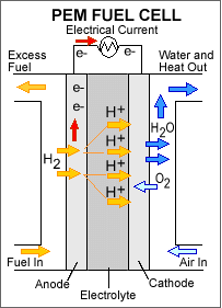
Hydrogen fuel cell technology is still in the early stages of development and requires great engineering efforts to make it a good quality industrial product. The schematic diagram below demonstrates the basic workings of the PEM (Proton Exchange Membrane) Fuel Cell.
A PEM fuel cell. Credit: University of Strathclyde.
Hydrogen on the anode side splits into proton and electron; the proton goes through the membrane and combines with oxygen on the cathode side to create water, while the electrons gather up on the anode side, creating a potential difference between the cathode and anode. Multiple cells are assembled to create a fuel cell stack (University of Strathclyde).
Bipolar Plate Assemblies in PEMFC. Credit: Ennovi
Fuel Cell Stack by EH group. Credit: Hyfindr
The fuel cell stack design is highly complicated, mainly because of the Bipolar plates (BPPs). These plates are designed to meet the requirements for an efficient electrochemical reaction across the Membrane Electrode Assembly (MEA).
MEAs are sandwiched between BBPs, which ensures the correct quantity and pressure of gases to be fed to either side of the MEA. It simultaneously maintains enough contact for efficient electron transfer. Depending on the sealing method used, the BPPs should also be able to bear enough stress to support the compression required for the stacks to be leak-tight.
Furthermore, these MEAs used are damped in strong acid, which can easily corrode metal plates. So, another layer of protective coating needs to be applied to save the BPPs from corrosion. The plates are generally made from thin sheets of metal, which are created using press forming. This is also a complicated process because of the complicated design of the BPPs.
Apart from BPPs and MEAs, the temperature management system, water emission system, and pressure and mass flow regulation are also quite challenging. There are two types of Hydrogen fuel cell systems: Low-Temperature PEM fuel cells (LTPEM) and High-Temperature PEM fuel cells (HTPEM).
As the name suggests, with a water-based cooling system, the LTPEM system operates at lower temperatures, averaging around 80 degrees C. HTPEM operates at higher temperatures of around 180 degrees C with an air-based cooling system.
HTPEM systems are still in the prototyping stages but have shown better results compared to LTPEM, especially with high energy requirements like in a truck or an aircraft. HTPEM stacks are air-cooled, significantly reducing the overall system’s total weight.
As this technology is still emerging, it faces many challenges in making it widely available. The most common concern around hydrogen is safety because it is highly flammable, so its storage and the system need to be extremely safe for public use.
Secondly, the extraction of hydrogen from the electrolysis of water requires a lot of energy, which increases the price of hydrogen that can be used as fuel. The MEAs use precious metals like platinum and iridium as catalysts, which also add up to the overall cost.
Along with a lot of investment to build this technology and its infrastructure, an intensive regulatory framework is also required to convince government bodies that this technology is greener, more efficient, and safer to use (TWI).
The future of hydrogen-electric powertrains seems promising as many companies worldwide are investing vast amounts of money into this technology, and policymakers are providing guidelines and incentives to the companies to pursue this dream of the Net-Zero Emission energy system. Therefore, according to Forbes magazine, green hydrogen will become the 21st-century version of oil.
References
Doedee, V. (2023) Inside the world’s first electric cargo ship – Yara Birkeland, Sustainable Ships. Available at: https://www.sustainable-ships.org/stories/2021/worlds-first-electric-cargo (Accessed: 02 June 2024).
Fuel Cell Types (no date) Hydrogen economy – fuel cell types. https://www.esru.strath.ac.uk/EandE/Web_sites/03-04/hydrogen/fctypes.htm (Accessed: 02 June 2024).
Hannah Ritchie and Pablo Rosado (2017) – “Fossil fuels” Published online at OurWorldInData.org and retrieved from: ‘https://ourworldindata.org/fossil-fuels’ (Accessed: 02 June 2024).
High-speed bipolar plate welding with FL-arm lasers: Coherent (2022) Coherent. Available at: https://www.coherent.com/news/blog/bipolar-plate-welding (Accessed: 02 June 2024).
History of the electric car [2023 update] (2023) EVBox. Available at: https://blog.evbox.com/uk-en/electric-cars-history#:~:text=The%20world’ s%20first%20electric%20vehicles, Morrison’s%20vehicle%20from%20around%201890 (Accessed: 02 June 2024).
Linder, M. et al. (2023) The race to decarbonize electric-vehicle batteries, McKinsey & Company. Available at: https://www.mckinsey.com/industries/automotive-and-assembly/our-insights/the-race-to-decarbonize-electric-vehicle-batteries (Accessed: 02 June 2024).
Nebergall, J. (2022) Hydrogen internal combustion engines and hydrogen fuel cells | Cummins Inc.., Cummins. Available at: https://www.cummins.com/news/2022/01/27/hydrogen-internal-combustion-engines-and-hydrogen-fuel-cells (Accessed: 02 June 2024).
The Oil industry knew of ‘serious’ climate concerns more than 45 years ago (2016) The Guardian. Available at: https://www.theguardian.com/business/2016/apr/13/climate-change-oil-industry-environment-warning-1968#:~:text=The%20Stanford%20Research%20Institute%20presented,harmful%20consequences%20for%20the%20planet (Accessed: 02 June 2024).
Published by Statista Research Department and 30, A. (2024) U.S. fossil fuel consumption by sector 2023, Statista. Available at: https://www.statista.com/statistics/244429/us-fossil-fuel-energy-consumption-by-sector/ (Accessed: 02 June 2024).
Silverstein, K. (2024) Green hydrogen will become the 21st century version of oil, Forbes. Available at: https://www.forbes.com/sites/kensilverstein/2024/03/18/green-hydrogen-will-become-the-21st-century-version-of-oil/ (Accessed: 02 June 2024).
Sopp+Sopp (2024) Hydrogen fuel cell vs hydrogen combustion vehicles: What’s the difference?, sopp + sopp. Available at: https://www.soppandsopp.co.uk/news/hydrogen-fuel-cells-vs-hydrogen-combustion-engines (Accessed: 02 June 2024).
Tallodi, J. (2024) Seven disadvantages of Electric Cars, carwow.co.uk. Available at: https://www.carwow.co.uk/guides/choosing/disadvantages-of-electric-cars#gref (Accessed: 02 June 2024).
What are the pros and cons of hydrogen fuel cells? (no date) TWI. Available at: https://www.twi-global.com/technical-knowledge/faqs/what-are-the-pros-and-cons-of-hydrogen-fuel-cells (Accessed: 02 June 2024)
Pakistan’s inaugural lunar mission on May 3rd, 2024, has generated nationwide excitement, providing a much-needed boost to the country’s space program. As the world prepares to co-habitat Mars and send humans back to the Moon, Pakistan’s space journey has just started, and it’s about time!
Are we late to the Space Race?
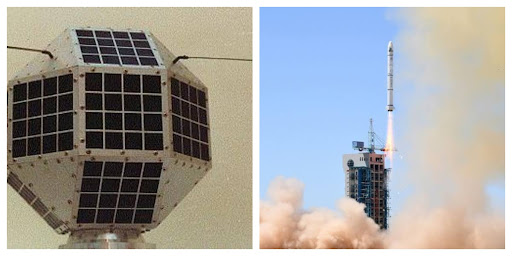
Pakistan was one of the pioneers in space technology in South Asia in the 1960s. Pakistan’s space exploration agency, The Space & Upper Atmosphere Research Commission, SUPARCO, established in 1961— began its space journey by launching groundbreaking satellites lBadr-I.
Pakistan manufactured the first domestic satellite in 1985, followed by Badr-II in 2001, Paksat-1R in 2011, and the revolutionary PRSS-1 & PAK TES-1A in 2018. The launch of ICUBE-Q in 2024 is the first time when a Pakistani satellite will collect samples from the far side of the moon!
Pakistan manufactured the first domestic satellite, Badr-I, in 1985
Our neighboring countries- like China and India- have a successful lunar mission history and a vibrant space industry. As Pakistan works towards realizing its vision for the 2040 space program, it currently relies on international partnerships for space missions due to economic limitations and the early stage of development of its space industry. Having forefathers like Dr. Abdus Salam, Dr Abdul Qadir Khan, and Dr Tariq Mustaf, the nation has failed to produce more such visionaries for decades.
The lack of education and economic challenges are some of the basic hindrances in Paksitan’s space exploration program. Despite the challenges, Pakistan has become the sixth country to launch its first-ever moon satellite: iCube Qamar.
Getting the Basics Right
With the advancement in space exploration and striving to achieve sustainable development goals, it has become even more significant to have a strong focus on the space policy for national security and human development.
According to statistics released by the Higher Education Commission of Pakistan (HEC), over one million students are presently pursuing Science, Technology, Engineering, and Mathematics (STEM) education in universities and degree colleges. On the contrary, UNICEF data reveals an alarming 22.8 million aged 5-16 are out of school.
The literacy rate lies at a mere 58 percent of the total population, and it is good to know that many are pursuing STEM education. It is worth mentioning that Pakistan’s science, technology, and innovation sectors are gradually progressing, with the government focusing on more robust policies and implementation of STIs, but the advancement in space technology and exploration is still not in the spotlight.
The literacy rate of Pakistan lies at a mere 58 percent of the total population. Credit: World Bank
The Need for Space Exploration
Although space exploration is a big-budget venture, it yields tangible advantages for life on Earth. Innovations crafted for space missions, such as satellite communication and Earth observation, enhance everyday tasks like communication, navigation, and disaster management.
The National Science, Technology, and Innovation Policy 2022 includes only a brief overview of the importance of the inclusion of space technology in the science policy, mentioned as an emerging technology, that doesn’t do justice to the agenda.
Astronomy education is not deeply integrated into the curriculum, with no specific school courses dedicated to the subject. Basic concepts are introduced at different levels, such as the Solar system and eclipses in primary education and topics like Newtonian gravity and Special relativity in secondary and higher secondary school.
Pakistan has only three planetariums in Lahore, Peshawar, and Karachi, only the one in Karachi is functional, operating under Pakistan International Airlines.
Moreover, Insufficient funding stands as a primary obstacle for SUPARCO; with a budget of only USD26 million for 2023, the agency operates within limited financial means compared to its competitors like the Indian Space Research Organization (ISRO), which enjoys an annual budget exceeding 1.5 billion USD.
According to BBC Urdu, Dr. Khurram, a member of the “iCubeQamar” mission team, highlights that while SUPARCO is persistently striving in Pakistan, students entering this field often lack special recognition and face limited opportunities within the country.
Pakistan’s Minister for Planning, Development, and Special Initiatives, Ahsan Iqbal, recently met with the SUPARCO Chairman, underscoring the significance of space exploration for Pakistan’s advancement. Ahsan Iqbal recommended bolstering the capabilities of the Institute of Space Technology and the National Center of Excellence for Satellite and Geographic Information Systems (GIS).
Furthermore, he proposed the creation of a space museum at the Narowal Learning Center aimed at promoting science education among children.
The Hope is Still Alive!
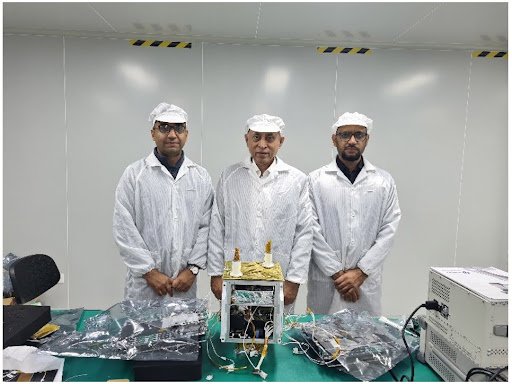
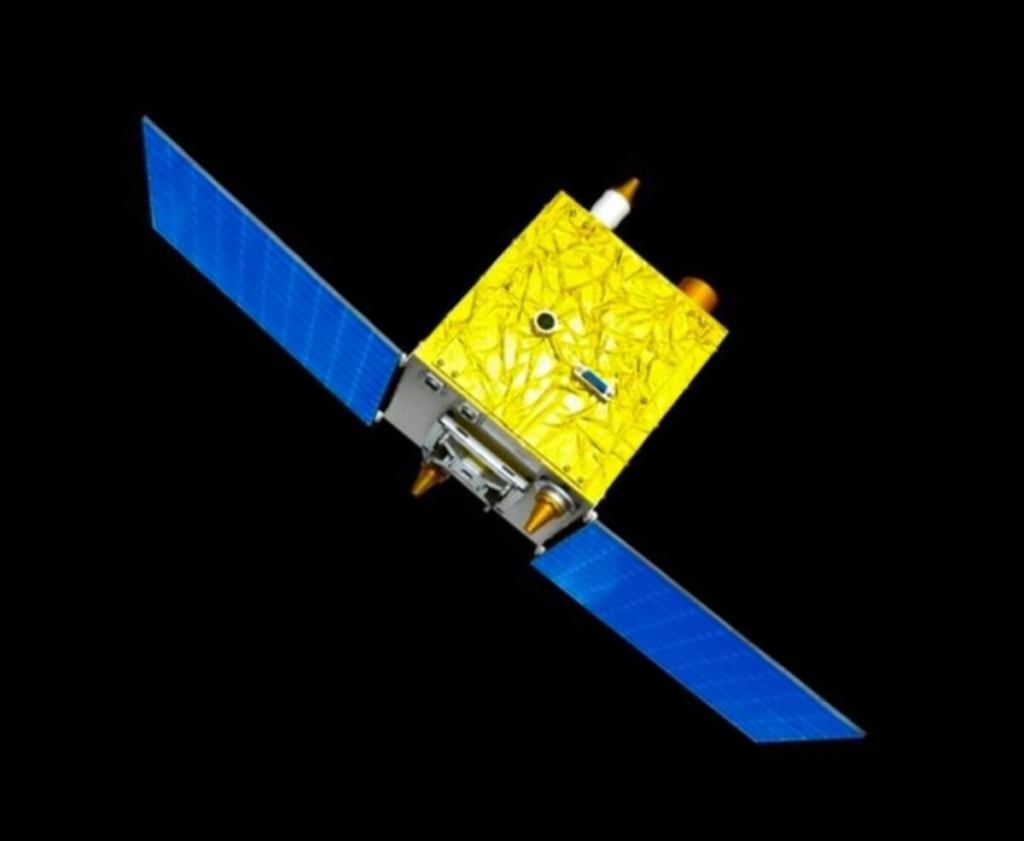
Despite the challenges, Young Entrepreneurs and Space enthusiasts in Pakistan are working tirelessly to revive its space industry. The latest triumph of students from Pakistan’s Institute of Space Science and Technology (ISST) in building the payload ICUBE- Qamar onboard the Chang’e 6 mission.
The design and development of ICUBE-Q are a collaborative effort between IST faculty and students, Pakistan’s national space agency SUPARCO, and China’s Shanghai Jiao Tong University (SJTU).
The launch of ICUBE-Q in 2024 is the first time when a Pakistani satellite will collect samples from the far side of the moon! Credit: IST
While talking to Samaa TV, Dr. Rahman Mehmood, Director of the Small Satellite Technology project, expressed that observing our neighboring countries and numerous others making significant strides in space exploration motivated us to focus on technological advancement as well.
“The launch of this iCube Qmar was made possible by collaborative efforts of students at IST and Shanghai University,” says prof Khurram Khurshid on Kainaati Chai. Nearly seventy students at IST, along with fifteen students from Shanghai University, worked on this project.”
These students were from diverse STEM backgrounds like mechanical engineering, electrical engineering, aerospace engineering, avionics, and computer science. These efforts and dedication will help pave the way for future collaboration and opportunities between China and Pakistan.
Efforts to spread Space education in Pakistan
Outside the classroom, a few amateur astronomical societies in Pakistan support astronomy education in major urban cities like Islamabad, Lahore, and Karachi. Private entities like Taqwa Observatory, Kastrodome, ZED, and Eden Observatories contribute significantly to promoting astronomy. Exploration Classroom by Yumna Majeed organizes hands-on learning opportunities for kids about space using telescopes and space meteorites.
Khawarizmi Society is renowned for organizing STEM-based events, including Science Melas and mobile planetariums. Rah-e-Qamar helps organize events like NASA Space App Challenges and the International Astronomical Union’s citizen scientists programs with the collaboration of space enthusiasts and science societies.
In Addition, SUPARCO also has a space education and awareness drive named SEAD Program that actively organizes space-related contests and activities in schools and universities nationwide.
Pakistan ranked as the third nation for organizing 7,836 events for the celebration of World Space Week (Oct 4-10, 2023). Most of these events were student-led, depicting their commitment and passion for space exploration and awareness.
We are collectively enhancing our comprehension of space sciences and technology by participating in such events and discussions on social media, in classrooms, and within our homes. Pakistan can carve out a significant role in the global space community through continued investment in STEM education, policy reforms, and international collaborations.
In recent years, Science, Technology, Engineering, and Mathematics (STEM) education has been dramatically emphasized worldwide and demands the need for equity and inclusion. Although there is a global discourse on this need, it is particularly significant in countries like Pakistan.
The World Economic Forum explains the Diversity, Equity, and Inclusion (DEI) in STEM through an analogy that “Inviting everyone to the party is diversity, sharing DJ responsibility is inclusion, and having a large enough dance floor for everyone to groove on is equity.”
This highlights the need for active participation and equal opportunities for all (Urbina-Blanco et al., 2020).
Pakistan stands at the crossroads of innovation and inequality, where the future in STEM fields seems bright. Still, disparities of inequality, fewer opportunities, and access to these fields come in the way.
Barriers to Equity in STEM
While growing up and acknowledging the diversity of subjects and fields, I felt and comprehended the need for diversity and inclusion in STEM education. Students from background areas in Pakistan, not from the bigger cities, may face the dilemma of hardly knowing the options to opt for higher studies.
Most common perceptions are about being a doctor, engineer, or other arts subject, and the knowledge about the diversity of subjects, fields, and careers in STEM is minimal.
I believe this is due to the lack of career counseling, advisory student counselors, or facilities in those areas. If we talk about public schools, their curriculum, approach to learning, and teaching practices differ from those of private schools. This highlights the issues in equity, inclusion, access, and diversity of STEM education for every such student.
Pakistan, like many other countries, faces various issues of gender inequality, regional or ethnic differences, and socioeconomic distinctions that impact access and inclusion in the STEM fields.
Particularly if we talk about women’s rights and education in Pakistan, they face many challenges, including cultural or social barriers, lack of support, and access to opportunities. This lack of gender and racial equality has been under study for more than four and a half decades, according to the National Center for Science and Engineering Statistics (NCSES) (Hamrick, 2021).
Although there is an increased ratio of undergraduate women in science fields, their number in computer science, engineering, and technology needs to be improved (Fry et al., 2021). Due to the ethnic differences, they are mainly in number in these high-earning STEM occupations (Hamrick, 2021).
Students from background areas in Pakistan, not from the bigger cities, may face the dilemma of hardly knowing the options to opt for higher studies. Credits: UNICEF/PAKISTAN
The Pew Research Center is a Washington-based nonprofit think tank that informs the public about the issues and trends shaping our world. It reports, “Despite the continuous efforts to increase diversity in STEM education, the current trends in the attainment of degrees in STEM are unlikely to close or narrow down all these gaps” (Fry et al., 2021).
Additionally, students from minority backgrounds and marginalized areas have also been primarily excluded and face issues to fully engage in STEM education and careers. Many studies highlight that the climate of higher education STEM programs is not welcoming for these kinds of students.
The Chilly Climate Theory
The “chilly climate theory” states that minority students experience discrimination in their college lives, in every aspect, including the interactions with their fellows, faculty, and administrators, due to a chilly culture in educational institutions that fosters discrimination and biases towards these students (Bottia et al., 2021).
This theory also highlights women’s negative experiences in higher education, such as speaking less or being hesitant during STEM classes. It highlights the chilly climate as racist and sexist in higher education (Bottia et al., 2021).
Another reason is that these minority students often lack sufficient academic preparation to adapt and pursue STEM fields and thus withdraw from them. One of the possible theories is that they might exit due to their limited knowledge or interest in these subjects, which is called deficit thinking.
However, anti-deficit theory highlights the disparity of educational institutions in preparing students inadequately for their further academic levels (Palid et al., 2023).
Approaches for Equity and Inclusion in STEM
As the need for STEM education evolves with time, the need for specialized and focused workforce also increases essentially, but unfortunately, not everyone has equal access and opportunity. There is a need to understand the significance of an inclusive workforce in getting scientific advancements and innovation. For that purpose, the accessibility of the population is equally important.
“If this nation wants to be a competitive leader in STEM, it has to revitalize its vision of what it needs to do, particularly in the public schools where most Black and brown people are, about producing the human and physical infrastructure to teach STEM,” says Joseph L. Graves Jr., professor of biological sciences at North Carolina Agricultural and Technical State University (O’Rourke, 2021).
What needs to be done?
The struggle to include diversity in STEM fields required continuous research into diversity-focused interventions. Fostering equity and inclusion involves several approaches.
The science curriculum must foster mathematical reasoning, scientific literacy, and a deep practical understanding of the content rather than just learning about the procedures or definitions in the text (Harrison et al., 2020). The studies focus on enhancing students’ empowerment to identify themselves as engineers, biologists, etc., particularly in identifying the fields of their interest.
A focus on STEM educators’ training to highlight the significance of equity in the educational process. It includes supporting all the students equally, not favoring certain groups, and adopting approaches that enhance their interests and participation in STEM fields like practical demonstrations, study circles, etc.
The educators should train about the integration of STEM education in all disciplines. This may include using technology-based tools like study casts and projectors and incorporating arts and reading. (Harrison et al., 2020).
There is a dire need for a few innovative approaches to fill the opportunity gaps for students who face cultural, social, or financial barriers (Ladson-Billings, 2013). This may include conducting free summer camps, assistive technology, etc.
Authorities should work to enhance ongoing professional development and training programs for educators, incorporating diversity and anti-biased training for professionals, giving equal representation to individuals from marginalized areas in STEM careers by high recruiting (Urbina-Blanco et al., 2020), using technology for education all the public and private sector schools, helping the students to identify their careers, etc.
There is a need to provide appropriate infrastructure, educational resources, scholarships, and financial aid to students from underprivileged areas and minority groups (Palid et al., 2023). This practice may help bridge the socioeconomic gaps in our society.
There should be more initiatives to break gender stereotypes and assist women’s education and career opportunities.
Overall, by creating an inclusive environment where everyone feels valued, respected, and supported, Pakistan can unlock the full potential of its diversified, talented population and promote innovation and excellence. It paves the way for an inclusive and accessible STEM landscape for national development.
References
Bottia, M. C., Mickelson, R. A., Jamil, C., Moniz, K., & Barry, L. (2021). Factors associated with college STEM participation of racially minoritized students: A synthesis research. Review of Educational Research, 91(4), 614–648.
Fry, R., Kennedy, B., & Funk, C. (2021). STEM Jobs See Uneven Progress in Increasing Gender, Racial and Ethnic Diversity.
Hamrick, K. (2021). Women, minorities, and persons with disabilities in science and engineering. National Science Foundation Retrieved from https://ncses.nsf.gov/pubs/nsf21321/report
Ladson-Billings, G. (2013). Lack of achievement or loss of opportunity. Closing the opportunity gap: What America must do to give every child an even chance, 11, 11-22.
O’Rourke, B. (2021). Increasing access and opportunity is crucial, say experts. Harvard Gazette.
Palid, O., Cashdollar, S., Deangelo, S., Chu, C., & Bates, M. (2023). Inclusion in practice: A systematic review of diversity-focused STEM programming in the United States. International Journal of STEM Education, 10(1), 2.
Urbina-Blanco, C. A., Jilani, S. Z., & Speight, I. R. (2020, August 17). Science is everybody’s party: 6 ways to support diversity and inclusion in STEM. World Economic Forum. https://www.weforum.org/agenda/2020/08/science-stem-support-inclusion-diversity-equality/
The Physician is a 2013 historical drama film about a young orphan boy, Rob Cole, who aspires to become a physician in the 11th century. The film provides a glimpse into the Islamic world of science during this period and how it shaped the development of modern medicine. The film is directed by Philipp Stölzl and stars Tom Payne, Stellan Skarsgard, and Emma Rigby. Here
The film is a sweeping epic that takes the audience on a journey through the medieval world, depicting the harsh realities of life during this period. The film is a visual feast, with stunning cinematography and production design that takes the viewer back in time.
The attention to detail in the costumes and sets is awe-inspiring, adding to the sense of immersion in the film’s historical setting.
One of the most intriguing aspects of the film is its portrayal of the medieval Persian physician Ibn-i-Sina, who is portrayed as a wise and compassionate mentor to the young protagonist. Photo Movie Nation
One of the most intriguing aspects of the film is its portrayal of the medieval Persian physician Ibn-i-Sina, who is portrayed as a wise and compassionate mentor to the young protagonist. The film highlights the contributions of Ibn-i-Sina to the field of medicine and his influence on the development of modern medical practices.
He was a polymath who wrote extensively on medicine, philosophy, and other sciences. His most famous work, “The Canon of Medicine,” was a medical encyclopedia used as a textbook in European medical schools for centuries.
The film also depicts the Islamic Golden Age, a period of intellectual and scientific flourishing in the Islamic world between the 8th and 14th centuries. It was a time whenn several groundbreaking discoveries and innovations were made, and it played a vital role in transmitting knowledge from the ancient to the modern world.
The film also provides a glimpse into Islamic hospitals and their role in the development of medicine. Islamic hospitals were some of the first institutions to offer free and comprehensive medical care, and they were a significant source of medical knowledge during this period.
They were also equipped with libraries, research facilities, and teaching rooms, which served as centers for advancing medical knowledge.
Diplomacy has deep roots in history as it is one of the oldest methods of sustaining exquisite relations among nations based on their interests in trade, information, and security education. According to the National Museum of American Diplomacy, it is an art and practice of building and maintaining relationships and conducting negotiations with people using tact and mutual respect2.
It first commenced in Mesopotamia, now Iraq, in 2850 B.C.E between leaders of Iraq and Canaan1. The United Nations stresses bilateral cooperation among countries to sort out their issues so that conflicts in the world are reduced, as before diplomacy, the planet was no less than a theatre of wars.
SCIENCE DIPLOMACY
The concept of Science Diplomacy was minted in a meeting held in 2009 at Wilton House, United Kingdom, organized by the Royal Society London & American Association for the Advancement of Science (AAAS). However, countries started working to correlate with the help of science informally after World War II.
After the Second World War, countries actively engaged in Science Diplomacy to enhance international Collaboration. Two organizations that emerged due to these efforts include the United Nations Educational, Scientific and Cultural Organization (UNESCO), founded in 1945, and the International Atomic Energy Agency (IAEA), founded in 1957.
Another significant project that emerged was the International Space Station (ISS), which collaborated with collaboration agencies in the U.S., Russia, Japan, the European Union, and Canada.
Among the matters conferred in diplomacy, Science and Technology are essential; as science progresses at an indispensable speed; extended innovations happen to be seen with every passing day. While observing all these happenings, diplomacy attempted to evolve itself by including observations on Scientific problems and discussions.
The experts and advisors develop a clan of aces from all across the world to resolve scientific issues and assist developing nations in joining the technology race following the footprints of developed countries.
In recent examples, the International Thermonuclear Experimental Reactor (ITER) being assembled in France and the Synthrotron-Light for Experimental Science and Application in the Middle East (SESAME) being funded by the EU are some prominent examples4.
The American Association For The Advancement Of Science (AAAS) also aims to bridge nations based on their scientific cooperation, elevate the science level, address global scientific problems & find solutions. Explicitly, the world has been growing in levels of science diplomacy each day.
Pakistan’s Science Diplomacy
Pakistan has long been working to fit Science into its Diplomatic initiatives. In 2016, the United States, New Zealand, the United Kingdom, and Japan joined together to formalize a Foreign Ministries Science and Technology Advisors Network aimed at elevating S&T inputs for diplomacy as Pakistan launched its SDI (Pakistan Science Diplomacy Initiative) in 2018.
Pakistan is allocating only 0.0552 percent of its total budget to Science and Technology, which is PKR 8000 million for a total of PKR14.485 trillion5. Meanwhile, India spends 0.36 percent of the total budget!
Pakistan’s Science Diplomacy Initiative is a collaborative effort between the Ministry of Foreign Affairs (MoFA), the Pakistan Academy of Sciences (PAS), and the OIC Ministerial Standing Committee on Scientific and Technological Cooperation (COMSTECH) to facilitate successful international scientific collaborations.
Despite making excellent progress, Pakistan still needs efforts to put in to equalize its potential to the rest of the world. Pakistan lacks Science Policy and diplomatic initiatives in it. Here are the reasons and instances that show how uninspiring Pakistan is when it comes to its science policy.
Major Economic Upheavals
Pakistan is allocating only 0.0552 percent of its total budget to Science and Technology, which is PKR 8000 million for a total of PKR14.485 trillion5. Meanwhile, India spends 0.36 percent of the total budget, Korea 4.8 percent of its GDP, the United States 3.45 percent, and China 2.4 percent of its GDP6.
Pakistan has been facing challenges on Economic grounds that have restricted it from spending more on R&D in S&T. The country has been entangled in gnawing debts that fade its fate to see its prosperity in science-based relationships.
Science in the Ministry of Foreign Affairs has a very minuscule portion to discuss on International platforms since MoFA is spending its majority of interests and priorities on stabilizing the economy.
Political Instability
Ever since its Independece, one major obstacle that impedes Pakistan from progress is Political Instability. Every new government tried to shift science policy according to their own agendas. This led to inconsistent science policies that dissembled Pakistan on Science Forums in research and development.
It also undermined Pakistan’s credibility as a reliable partner in science collaboration. Inconsistent Policies have been making International Partners reluctant to initiate joint research programmes with Pakistan’s Science experts and minds.
The solution to this problem is as simple as a problem—Politicians and experts must ensure the completion of ongoing projects in collaboration with International partners so that the confidence of international forums and communities in making treaties with Pakistan is not compromised.
Relations with Neighbors
Pakistan shares its border with China, India, Iran and Afghanistan. Despite having profligate relations with China, three of these states are going through border tensions with Pakistan due to several political issues that stymie collaboration founded on science.
There is a burgeoning effort undergone recently that illustrates how effective regional cooperation is to set practical examples. Pakistan and China have collaborated on a lunar mission, with Pakistan’sICUBE-Q satellite launching aboard China’s Chang’e-6lunar mission.
This mission marks a significant milestone for Pakistan’s space program and is a testament to the country’s growing capabilities in space technology.
The project is a collaboration between Pakistan’s Institute of Space Technology (IST), China’s Shanghai University, and the China National Space Agency (CNSA).
Pakistan and China have collaborated on a lunar mission, with Pakistan’sICUBE-Q satellite launching aboard China’s Chang’e-6lunar mission.
Amid border tensions with India due to territorial conflicts, Pakistan is confronting major challenges to resume diplomacy on Science. India has been making remarkable achievements in several science sectors.
According to the Ministry of Electronics and Information Technology India, in 2022, India’s IT sector exports reached $178 billion, with IT services accounting for $104 billion. 2023 the IT sector is estimated to spend over $110 billion. MEITY projected a nine percent increase in IT Exports by the end of 2023, reaching the graph to $194 billion7.
In a fairly recent development, India joined the United States, Russia, and the United Kingdom in the space exploration race by overcoming all obstacles to reach the Moon as part of the July 2023-launched Chandrayaan-3 mission.
Reviving research cooperation between Pakistan and India is imperative, putting aside political and geographical disputes in order to attain international respect in scientific forums. Despite the fact that Pakistan and India have occasionally collaborated in the past, a partnership between two TWAS Fellows, Dorairajan Balasubramanian of India and Anwar Nasim of Pakistan, created several opportunities.
Ministry of Foreign Affairs Pakistan must ensure all possible steps to reconcile with Indian Research Institutes relinquishing all territorial disputes. These efforts would revive science diplomacy and benefit humanity, unearthing several undiscovered treasures.
Issues that Pakistan could have solved with Science Diplomacy
Air Pollution: In Pakistan and India, burning crops is a typical practice for growing crops for the next year. However,, excessive crop burning is deteriorating the quality of the air in both countries. Although air quality is deemed acceptable at 100 and healthy at 50, Lahore, Pakistan, had the highest levels of air pollution in 2023, with New Delhi coming in at 333.
The problems and effects caused by unchecked smoke emissions could have been discussed by both countries’ researchers and analysts at a joint conference. Providing both countries with methods to prevent air quality from being dilapidated would be beneficial.
Water Management: Water had been one of the major problems that Pakistan encountered efficiently at the time when Pakistan was one blink away from the water war with India because India’s ability to control the Indus’ headwaters allowed it to make Fertile Pakistan a desert.
Some water-related problems between India and Pakistan are resolved, but the country fears water scarcity across Pakistan since India announced building more dams.
In order to prevent this problem from becoming the source of political unrest, Pakistan and India could have used scientific diplomacy to forge ahead with international partners in the development of cutting-edge technology for sustainable agricultural methods, water conservation, and desalination.
Climate Change: The greenhouse effect, a phenomenon that results from the accumulation of CO2 from burning fossil fuels in any form, is the main factor causing climate change and global warming.
Pakistan ranked fifth among the most vulnerable countries due to climate change. Its geographic location makes extreme weather events like floods and droughts perpetually common. According to World Bank estimates, air pollution and environmental deterioration could result in an 18–20 percent decline in Pakistan’s GDP by 2050 10.
In order to mitigate the mounting risk of climate change, Pakistan’s science policy ought to focus on international communities while urging them to act on sustainable measures to cut carbon emissions.
Shahbaz Sharif, the premier of Pakistan, warned about climate change at the World Economic Forum ( WEF ) in Riyadh during his most recent visit to Saudi Arabia. He emphasized the need for collective efforts to allay worries about climate change.
“Pakistan was not responsible for any global emissions, yet in 2022, it faced the worst climate-triggered floods, which hugely devastated the infrastructure and buildings. Consequently, they had to spend billions of rupees to rehabilitate the affected people”.
The bus jolted to a stop, waking Hassan abruptly. Stepping off, he was hit with a blast of intense heat from the midday sun, which hung high in the cloudless sky like a relentless white disk. Sweat formed on his forehead despite the cap he loosely held over his head. Hassan squinted at the “park” across the street– a dusty area of cracked earth with a few scraggly trees offering minimal shade.
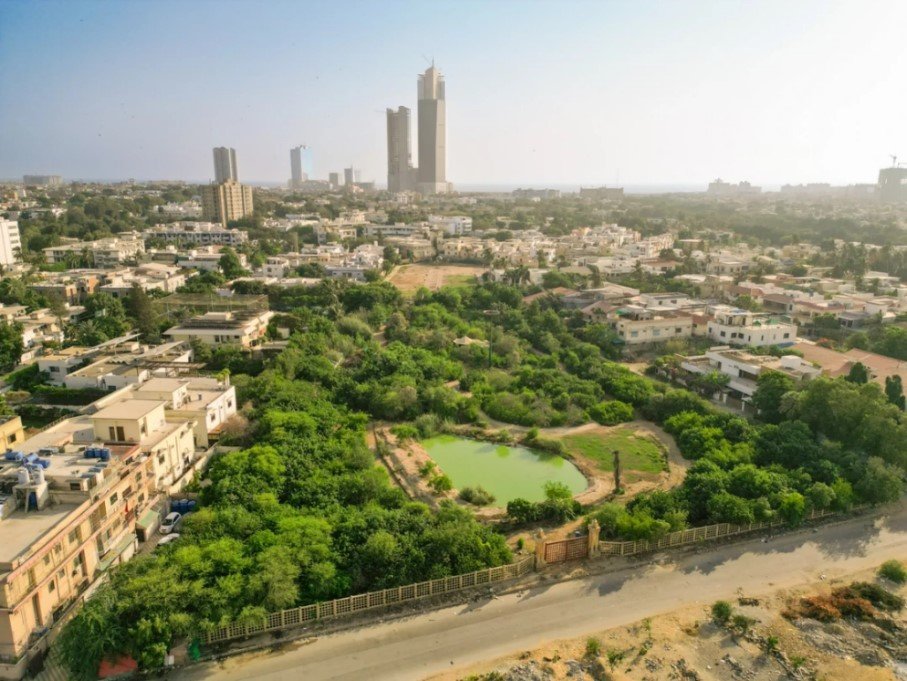
Supposed to be a refuge from Karachi’s scorching summer, a place to escape the oppressive heat trapped between towering buildings, it was a constant disappointment. Hassan sighed, feeling the familiar disappointment settle in his chest. Surely, there had to be a better way.
Hassan’s story was not unique. Millions of Karachiites faced the harsh reality of urban heat. With limited green spaces and temperatures regularly exceeding 38°C, finding relief from the relentless sun is a daily struggle.
However, what if the solution wasn’t just enduring the heat but actively fighting against it? The answer lies in a solution as simple as nature itself – creating a network of thriving urban green spaces.
Amidst the rising global temperatures, the world is becoming increasingly vulnerable to the effects of climate change. The recent global climate report released by NOAA states that April 2024 was the warmest April ever recorded worldwide, surpassing the previous record set just four years prior. As Pakistan ranks fifth on the list of countries most at risk from climate change (UN-Habitat, 2023), the urgency of addressing these challenges becomes ever more apparent.
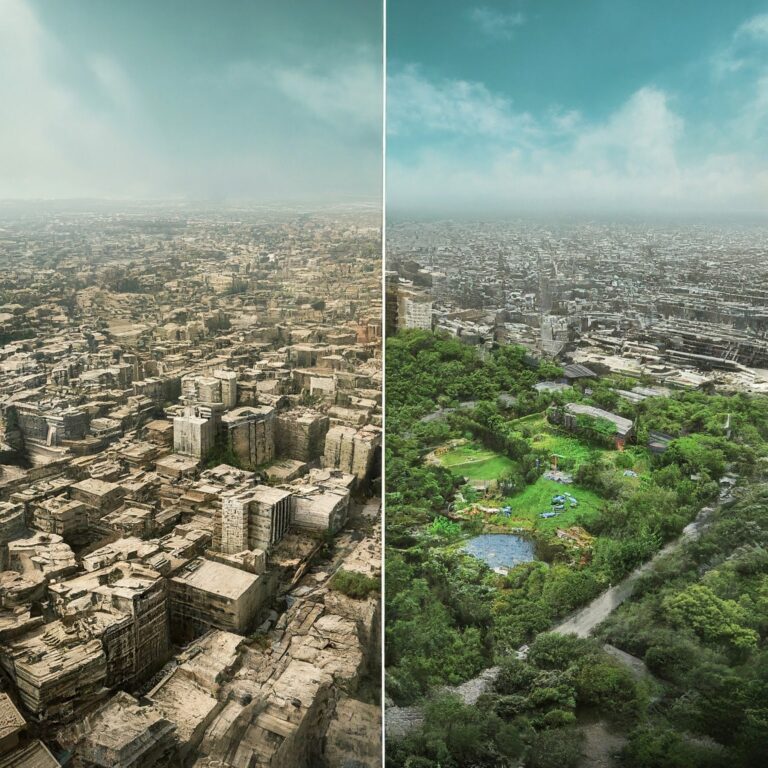
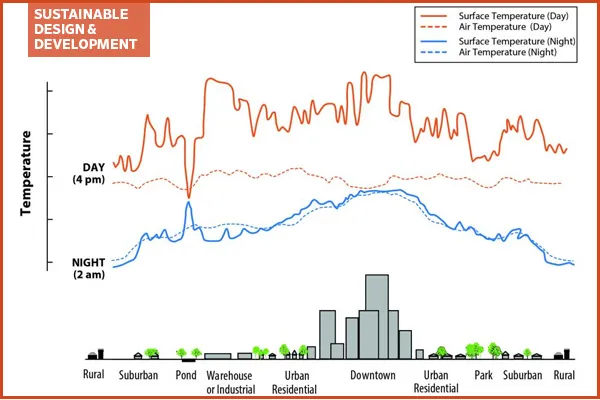
But why does the heat feel so intense in urban areas like Karachi? It’s due to the Urban Heat Island (UHI) effect. Buildings, roads, and other infrastructure absorb and release more of the sun’s heat compared to natural landscapes like forests and bodies of water. This is especially true in urban areas where there are many structures and limited greenery, resulting in localized areas of higher temperatures known as “heat islands.”
The lack of green spaces that provide a cooling effect causes urban temperatures to skyrocket, making summers even more unbearable. Studies have shown that surface temperatures in cities can be a staggering 10-15°C higher than in surrounding rural areas (Mentaschi et al., 2022).
Bodies of water and green spaces like parks create cooler microclimates in cities, while suburban-rural areas generally experience lower temperatures than downtown areas. Source: EPA United States
Heat Islands—Impact on Quality of Life
The Urban Heat Island (UHI) effect significantly impacts the quality of life in Karachi. It causes heatwaves to last longer in the city, resulting in abnormally hot and often humid weather. This has serious consequences for health, such as heat exhaustion, heatstroke, and even death, particularly among vulnerable groups like children, the elderly, and those with pre-existing health conditions.
A recent project by Aga Khan University seeks to measure extreme heat’s impact on maternal and child health. Researchers are concerned about the greater impact of heat stress and temperature fluctuations on pregnant women. Gynecologist Safia Manzoor from Lyari General Hospital states, “We have noticed an increase in cases of pre-term births during hot weather.”
In addition, high temperatures cause air pollutants, such as smog, to become trapped close to the ground, exacerbating conditions like asthma and other respiratory illnesses. This makes breathing difficult and increases the risk of respiratory attacks. Residents rely more heavily on air conditioners and fans to cope with the heat, resulting in higher electricity bills and straining Karachi’s power grid. This leads to more frequent power outages and energy shortages.
A US-based study has indicated that for every 1°F increase in temperature, there is a 1.5 to 2 percent increase in electricity demand. As most power plants in Karachi depend on fossil fuels, this heightened energy demand contributes to increased air pollution and greenhouse gas emissions, further contributing to the ongoing global warming cycle.
What can be done?
Scholars have been actively exploring effective ways to improve the urban thermal environment and decrease the negative impacts on cities. Urban parks stand out among the most reliable and natural remedies for extreme heat. Studies have shown that green spaces like urban parks and roadside greenways can significantly lower surface temperatures and overall city heat.
This is because they provide shade and evapotranspiration, creating a ‘Park oCol Island’ (PCI). Trees and plants in these areas block direct sunlight and release water vapor through evapotranspiration, cooling the nearby air and surfaces. This combination effectively reduces temperatures within parks and their surroundings, helping to counteract the urban heat island effect and regulate the nearby environment.
However, urban planners are still exploring the best places to plant trees and their effectiveness in Karachi’s specific climate. To address the growing problem of UHI, I would like to share insights from a recent research paper by Gajani (2024), highlighting the remarkable potential of Urban Green Spaces to cool down the city and revive its vanishing biodiversity.
This research identifies areas with the highest heat stress and locates thermal hotspots to prioritize the construction of green spaces in those areas.
The Cooling Potential of Urban Green Spaces.
To understand how much a green area can cool its surroundings, the study used remote sensing satellites to measure the land surface temperature (LST) across four different parks located in Karachi during the summer of 2022. LST is the temperature of the ground’s surface as measured from above.
The author then identified the “park cooling intensity,” which is the difference in temperature between the inside of the park and the area up to 500 meters outside the park boundary. The goal was to see how far the cooling effect of the park extends and how the temperature decreases as you get closer to the park.
Although temperature profiles fluctuate, all urban green spaces (UGS) in Karachi show a general trend of cooling. For example, the cooling effect in ‘Karachi Golf Club’ and ‘Clifton Urban Park’ extends to various distances, around 150 to 240 meters, and stabilizes beyond 420 meters for others.
This variation is often due to the size and shape of the parks, where it has been studied that larger parks tend to have a more pronounced cooling effect.
Researchers found unusual trends when studying the cooling potential of the city’s biggest park, Safari Park in Gulshan-e-Iqbal. Its cooling intensity values were recorded as negative. This might be due to the topography, where trees are mostly concentrated along the edges, while the central areas have limited tree coverage, leading to erratic fluctuations in recorded temperature.
This highlights the need for urban planners and administrators to prioritize preserving and enhancing the park’s design for effective urban temperature mitigation. When planning an urban park, its size and shape should be kept as a primary factor to consider.
This highlights the need for urban planners and administrators to prioritize preserving and enhancing the park’s design for effective urban temperature mitigation.
Thermal Hotspots— Detection and Analysis
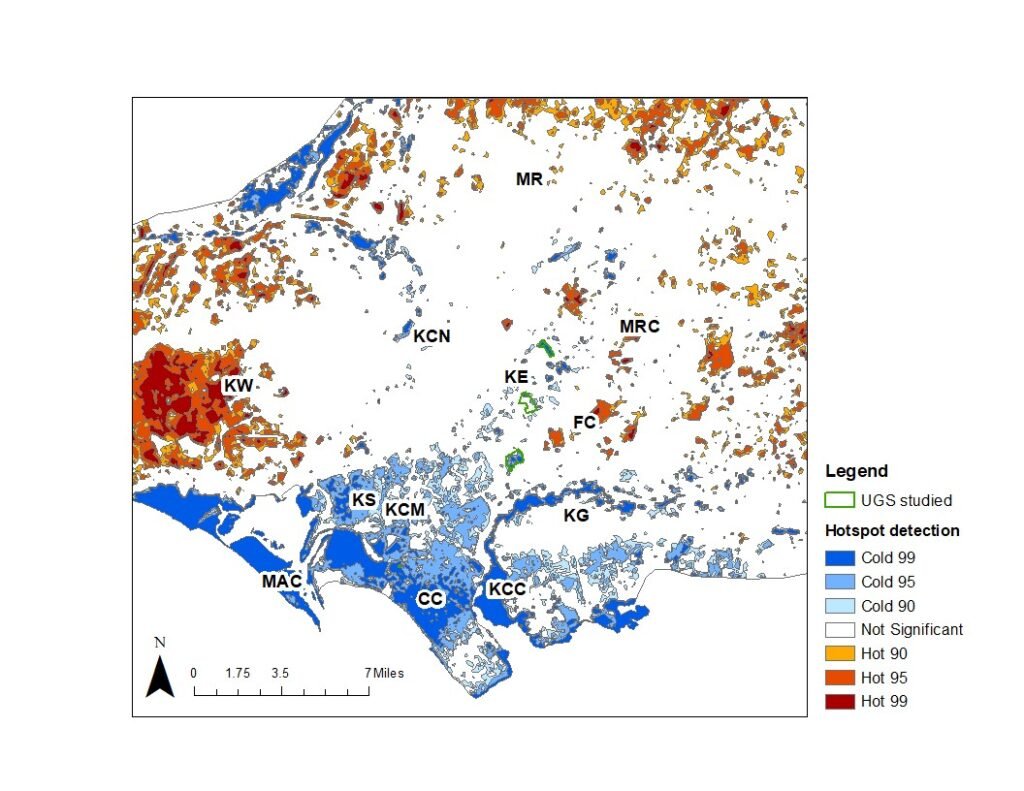
To further analyze the thermal disparities within the city, researchers identified localized clusters of ‘Hotspots’ using the Getis Ord (Gi*) approach. These clusters represent areas where high LST values are grouped by other high LST values.
Results indicate that parts of Karachi face scorching heat due to large areas of empty land with little greenery. This is especially true in Karachi West district, where neighborhoods like Mauripur and Mangopir see average surface temperatures exceeding 42°C!
In contrast, areas with more parks and green spaces, like Karachi Central and East, have fewer hot zones and cooler temperatures.
Planting trees and creating green spaces in these vacant areas is key to making Karachi more comfortable. This would help reduce hot zones and cool down the entire city, benefiting everyone. The good news is that areas near the Arabian Sea, like Clifton and Kiamari Town, tend to be cooler.
This is because of cool sea breezes and the presence of the Karachi coastline’s mangrove belt. However, even these areas can get very hot during heatwaves. Buildings that are close together, poorly ventilated, and made with low-quality materials that can trap heat are making things worse.
Location of the hot/cold spots within Karachi municipality (Gajani, 2024).
This study highlights the power of urban parks as natural air conditioners, significantly cooling down their surroundings. By strategically planting trees in the hotspot areas, we can create a targeted plan to make Karachi a cooler, healthier city for everyone.
Educating both the public and city officials about the benefits of green spaces is key. Imagine a network of parks and tree-lined streets strategically developed in Karachi’s hottest districts, like Karachi West and Malir. This wouldn’t just bring down temperatures; it would create havens for recreation and improve our overall well-being.
Challenges in Developing Urban Green Spaces—Expert Insights and Solutions
According to a study conducted by the World Health Organization, it is recommended that each individual living in a sustainable city has access to a minimum of 9 m² of green space, with an ideal value of 50 m² per capita. Karachi falls significantly short of this standard, highlighting the urgent need for action.
Mr. Haq points out that one of the primary obstacles is finding appropriate space in the densely populated city where a long-term sustainable forest can thrive. The landscape layout conflicts with existing infrastructure, buildings, and transportation networks often act as physical barriers, making it difficult to carve out sizeable green zones.
Moreover, government agencies, NGOs, and even individuals only prioritize short-term visibility over long-term sustainability. Although there are frequent plantation drives across the city, these efforts often lack strategic planning.
Instead of merely planting trees for publicity, the focus should be on identifying and protecting areas where a long-term urban forest can be developed. This approach would ensure the survival and growth of green spaces rather than temporary improvements.
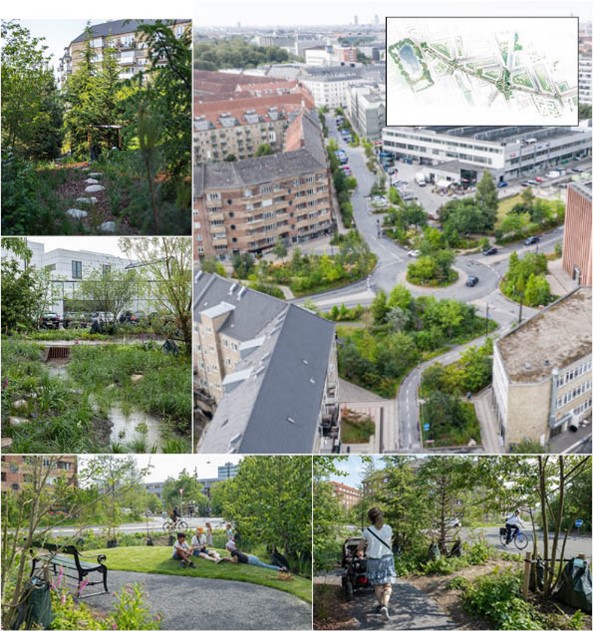
A greening project in Copenhagen that creates a connection between nature-based climate adaptation and recreational meeting places for the residents. (Source: europenowjournal.org; photographer Mikkel Eye)
Additionally, he emphasizes the importance of selecting the right type of trees and the appropriate planting time to ensure their growth and sustainability. Many people are unaware of these factors, leading to ineffective plantation efforts. Karachi’s coastline also offers a unique opportunity to plant and protect mangroves, which are crucial for the ecosystem.
Therefore, sincere commitment and vision are necessary to ensure these green spaces are maintained and protected from urban encroachment and poaching.
He suggests creating ‘peri-urban forests’ in Karachi when asked about the way forward. These forests would be located on the outskirts of the city, where there is currently mostly barren land. These peri-urban forests would act as green buffers around the city, significantly reducing the urban heat island effect and improving air quality.
He emphasizes that this transformation requires not only planting trees but also selecting species suited to the local climate and conditions and that proper patience is crucial as these forests need time to mature and become effective.
As we face the escalating challenges of urban heat and climate change, it becomes clear that the responsibility to create a sustainable future lies with each one of us. Transforming Karachi through the establishment of urban green spaces is not only an environmental necessity but also a moral obligation. Robert Swan wisely pointed out,
“The greatest threat to our planet is the belief that someone else will save it.”
It is time for every citizen, planner, and policymaker to step forward, act, and commit to greening our city. Doing so can alleviate heat stress, enhance air quality, and forge a habitable environment for future generations. Let’s embrace the challenge, for a greener Karachi is a healthier, happier Karachi for all.
References:
Gajani, A. M. (2024). Spatial patterns of urban heat islands and green space cooling effects in the urban microclimate of Karachi. In arXiv. https://doi.org/10.31223/X5VQ4X
Eckstein, D., Winges, M., Künzel, V., Schäfer, L., & Germanwatch Körperschaft. Global Climate Risk Index 2020 Who Suffers Most from Extreme Weather Events? Wether-Related Loss Events in 2018 and 1999 to 2018.
Russo A, Cirella GT. Modern Compact Cities: How Much Greenery Do We Need? Int J Environ Res Public Health. 2018 Oct 5;15(10):2180. doi: 10.3390/ijerph15102180. PMID: 30301177; PMCID: PMC6209905.
Mentaschi, L., Duveiller, G., Zulian, G., Corbane, C., Pesaresi, M., Maes, J., Stocchino, A., & Feyen, L. (2022). Global long-term mapping of surface temperature shows intensified intra-city urban heat island extremes. Global Environmental Change, 72. https://doi.org/10.1016/j.gloenvcha.2021.102441
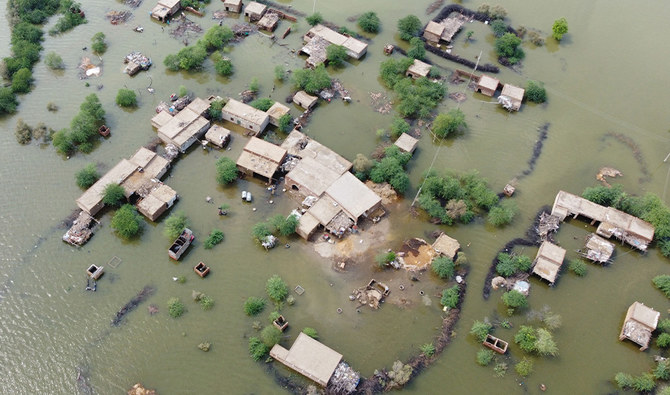
Pakistan experienced two catastrophic floods in 2010 and 2022, affecting millions of people. From 1950 to 2011, Pakistan faced a flood every three years. These flooding events resulted in the death of 8887 humans and the economic loss of $19 billion1.
The 2010 super flood affected 0.2 billion people; 1985 people died, and the financial loss was $9.7 billion. The 2022 monsoon flooding resulted in the loss of 1033 lives, 5.4 million people displaced, 2 million acres of crops and 2 million homes destroyed, and 72 districts declared calamity hits.
Pakistan has negligible carbon footprint contributors but faces harmful impacts from climate change. According to the German watch Global Climate Risk Index (GCRI), for countries most affected by flood, Pakistan ranked at 8th position and is at 7th among countries vulnerable to climate change2.
The impact of floods on different areas of Pakistan varies according to their geographical characteristics, and measures are taken to manage disastrous effects. Punjab is the most populous and agriculturally productive province and often faces more destruction due to floods.
Floods in Punjab came because of heavy monsoon rainfall, overflow of rivers, and breaching of the canal system. The agricultural sector of Punjab causes the most destruction, resulting in crop loss and livestock mortality. The urban area faces infrastructure damage and disruption of network systems.
In Sindh, floods occur because of coastal and riverine flooding, destroying crops, mainly rice, sugarcane, and cotton. In Khyber Pakhtunkhwa and Gilgit Baltistan, another type of flooding was hit due to heavy rainfall and glacier melting. Floods in KPK destroy infrastructure, hinder relief efforts, and worsen poverty in already marginalized communities.
Balochistan eastern regions experience riverine flooding and occasional flash floods in its mountainous areas. Limited infrastructure development in these areas makes it challenging to provide immediate relief assistance and health care services to remote areas during floods.
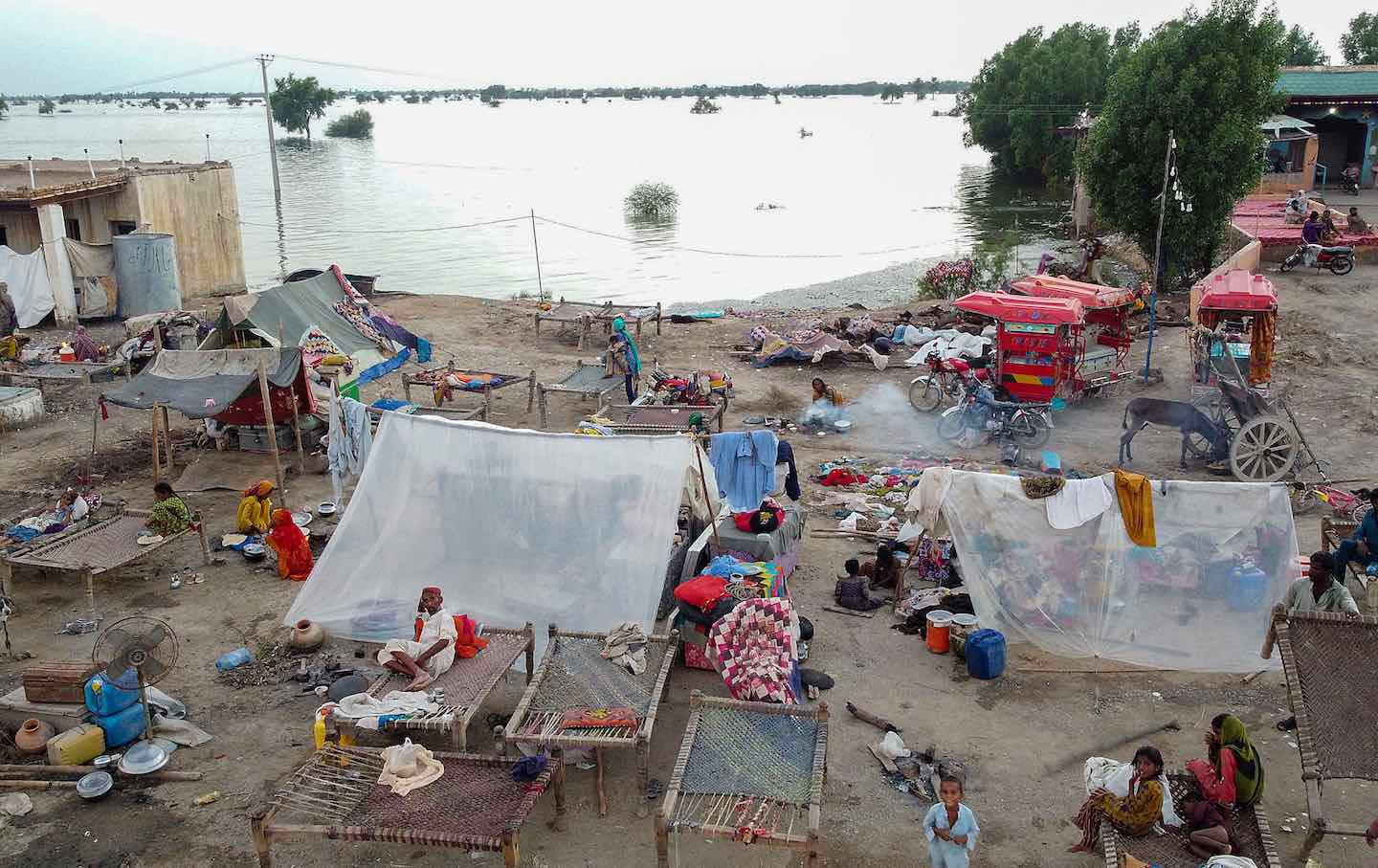
Numerous IDP camps were established in affected areas to provide temporary shelter, food, and necessities to the displaced people. Photo, The Nation
Calamities like floods bring a lot of chaos in developing countries. The recent flood in Pakistan in 2022 resulted in the displacement of 33 million people3. Numerous IDP camps were established in affected areas to provide temporary shelter, food, and necessities to the displaced people. These camps were established in schools, open spaces, and government buildings to accommodate the influx of displaced people.
Temporary shelters like tents were provided to displace people, often overcrowded, poorly ventilated, and susceptible to flooding during heavy rainfall. Access to clean drinking water in camps has been limited, increasing the risk of waterborne diseases like hepatitis, Malaria, dengue, cholera, and skin infection4.
Poor waste management and drainage systems in camps result in an unclean environment, increasing health risks for camp residents. In overcrowded camps, there is a greater chance of the rapid spreading of infectious diseases. Healthcare workers, medicines, and medical supplies are often limited to camps.
In the 2022 flood, about 650,000 pregnant women lived in IDP camps,100,000 pregnant women were in Sindh,73,000 women had delivery dates of the next month, and they urgently needed skilled birth attendants, newborn care, and financial support. Women, children, and people with disabilities were vulnerable in IDP camps and faced abuse and negligence.
Affected People felt anxiety and depression as they lived in temporary shelters— and faced trauma due to the challenging situations during this whole disaster.
Climate change has increased the intensity of natural disasters like floood by changing weather patterns. Due to excessive human activities like burning fossil fuels, the earth’s temperature keeps rising. The likelihood of rainfall increases as warmer air holds moisture, leading to flooding.
The Karakoram and the Himalayas rely on glacier melting for their river water, used for agriculture, hydropower plants, and drinking. As the temperature surges, the melting of glaciers increases, leading to rivers. Deforestation, urbanization, and expansion of agricultural land increase the risk of flooding.
In Pakistan, flood management measures have been practiced since the establishment of the Federal flood commission in 1977. The provincial government deals with the execution of protective work, whereas the federal government deals with controlling funds while ensuring timely decisions5.
The government’s structural measures to control flood water are building dams, spurs, walls, and channels. Embankments prevent overflooding and spur stop soil erosion. To protect the irrigation network, villages, and towns, buns are made. Pakistan, being a riparian country, faces challenges in managing floods.
The Flood Forecasting Division of Pakistan’s Meteorological Department and the Water and Power Development Authority (WAPDA) are responsible for forecasting floods. Provincial irrigation and drainage authorities deal with river design, development, and maintenance. They also measure the discharge of rivers, canals, and drains to foretell floods and develop strategies in case of emergency.
The relief department at the provincial level is responsible for conducting surveys and ensuring the maintenance of bunds before flooding season. In 2018, a project known as the 10 Billion Tree Tsunami was initiated for the country-wide plantation of trees to combat global warming effects.
Climate change interacts with socioeconomic challenges and increases people’s vulnerability to these natural disasters. Several strategies can be implemented to make climate-resilient Pakistan transition to non-renewable energy resources— minimize Pakistan’s reliance on fossil fuels and reduce greenhouse gas emissions.
Create awareness among people about energy conservation. Promotion of climate-friendly agricultural practices like conservation tillage, crop rotation, agroforestry, and efficient irrigation techniques to increase agricultural production— and reduce the level of greenhouse gases produced by the agriculture sector.
Afforestation and deforestation reduce carbon dioxide levels in the environment and conserve biodiversity. Water conservation measures and rainwater harvesting techniques should be implemented. There must be a plan and an early warning system in case of any emergency so the community can cope with the consequences of natural disasters.
Promoting public transport can improve air quality is the need of time. We need to raise awareness among the people about climate change, its causes— and how it drastically affects our future generations.
Better and more efficient policies, regulations, and incentives should be implemented nationally and locally. Although Pakistan’s government is taking initiatives to mitigate climate change, more robust efforts are required to reduce climate change.
References:
Ali, A., et al., Flood risk perception and communication: The role of hazard proximity. 2022. 316: p. 115309.
Shah, A.A., et al., Gender perspective of flood early warning systems: People-centered approach. 2022. 14(14): p. 2261.
Nanditha, J., et al., The Pakistan flood of August 2022: causes and implications. 2023. 11(3): p. e2022EF003230.
Ashraf, M. et al., Understanding challenges women to face in flood-affected areas to access sexual and reproductive health services: a rapid assessment from a disaster-torn Pakistan. 2024. 2024.
Tariq, M.A.U.R., Risk-based planning and optimization of flood management measures in developing countries: Case Pakistan. 2011.
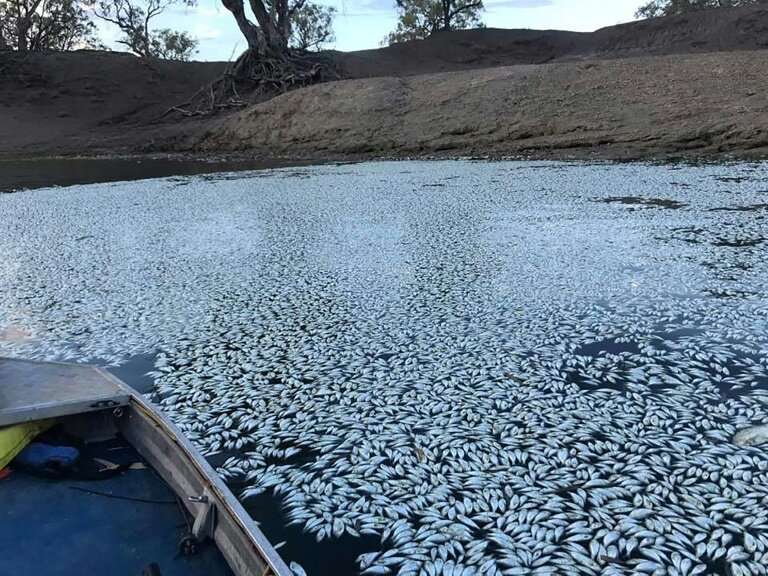
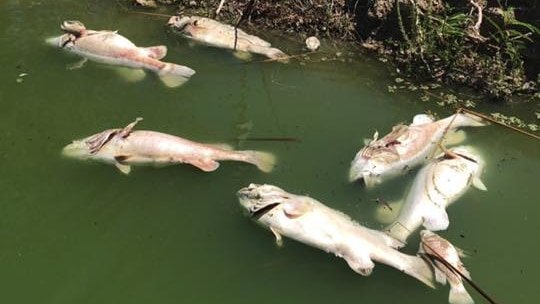
In 2013, a marine heat wave swept across Southern Australia, raising sea surface temperatures to a scorching 27 degrees Celsius, well above the average of 24 degrees. This led to a distressing ecological event as a prolonged and widespread fish-kill occurred, affecting 29 species of marine life and spanning 2900 km of coastline from January to May 2013.
Studies revealed the presence of abrasive and harmful phytoplankton in unnaturally high concentrations, raising suspicions about the cause of the mass mortality event. Laboratory tests revealed the grim reality faced by the marine inhabitants, showing signs of long-term stress, gill damage, and bacterial infections in the dead fish.
Scientists pieced together the puzzle, attributing the devastation to the marine heatwave of 2013, which acted as a catalyst for the growth of harmful algal blooms in the region.
These blooms suffocated the marine life, leading to the tragic loss of fish and other species along the Southern Australian coastline. This event demonstrated the severe impact of marine heat waves on marine life.
The 2013 disaster raised a critical question— Can marine heatwaves lead to mass extinctions? Understanding and addressing these effects is vital for the future health of our oceans, as it will help us develop strategies to mitigate these impacts, preserve marine biodiversity, and ensure the resilience of marine ecosystems in the face of a changing climate.
What is Marine Heat Waves?
Photo credit: Huang et al., 2017
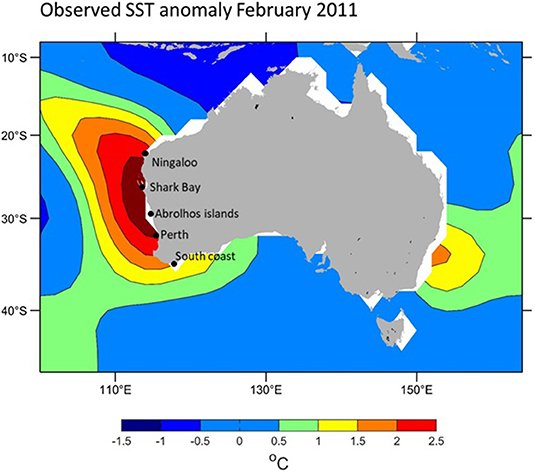
The term “marine heatwave” (MHW) was first coined in 2011 following an unprecedented warming event that swept across Western Australia, triggering alarms among conservationists and environmental scientists.
This event marked a pivotal moment in our understanding of oceanic phenomena, as it highlighted the need for a clear definition and characterization of these extremely warm water episodes.
MHWs are prolonged periods of anomalously warm water at a specific location, distinguished by temperatures that exceed either fixed, seasonally varying, or cumulative thresholds.
According to the definition, a warming event lasting a minimum of five consecutive days qualifies as a marine heatwave, with the intensity determined by the magnitude of the temperature anomaly above the normal for that location and time of year.
The characteristics of MHWs, such as duration, intensity, location, and depth of ocean warming, are crucial in determining their impacts on marine ecosystems. MHWs can cover areas ranging from 500 to 2,000 kilometers and can persist for weeks to years, posing significant challenges to marine life and ecosystems.
Prolonged and intense MHWs can have devastating consequences, leading to mass coral bleaching, significant declines in kelp forests and seagrass meadows, and substantial biodiversity losses. These ecological impacts extend to socioeconomic realms, resulting in losses in fisheries income, erosion of essential ecosystem services, mass mortalities of iconic species, and stakeholder conflicts.
Research has shown that MHWs can be driven by a combination of oceanic and atmospheric processes, including changes in ocean currents, temporary weakening of winds, and anthropogenic warming.
The impacts of MHWs can be location-, species-, and process-specific, highlighting the need for a nuanced understanding of these events and their effects on different ecosystems and communities.
The frequency and duration of MHWs have increased significantly over the past century, with a doubling of events since 1982 and a 50 percent increase in the total number of days with MHWs globally.
This trend is expected to continue, with climate change projected to lead to more frequent, longer-lasting, and more intense MHWs in the future.
The 2011 marine heatwave in Western Australia highlighted the crucial need for a standardised approach to defining and characterising these heatwaves. By clearly defining the parameters of these extreme warm water events, researchers can improve their understanding of the factors that drive marine heat waves, enhance predictive capabilities, and assess the significant impacts on marine ecosystems.
This knowledge is essential for developing effective adaptation and mitigation strategies to safeguard the health and resilience of our oceans in the face of a rapidly changing climate.
Effects of MHWs
The MHWs can drastically alter marine ecosystems, triggering events such as mass coral bleaching, the decline of kelp forests, and significant biodiversity losses. However, MHWs rarely occur in isolation. They often coincide with other stressors, such as increased turbidity, desiccation stress, harmful algal blooms, and anoxia.
These stressors create a complex web of interactions, intensifying the overall impact on marine species and ecosystems. This interconnected web of challenges poses severe threats to marine species and the overall health of our oceans.
Physiological processes governing the performance of an organism
High temperatures can have a significant impact on the physiological processes governing the performance of an organism. The consequences of MHWs can range from sublethal to lethal. A change in temperature influences fundamental biological functions such as photosynthesis, respiration, growth, reproduction, phenology, and survival of species.
As temperatures rise, organisms must utilize more energy to regulate their internal environment and cope with the altered conditions. This increased energy demand can lead to an energy deficit, particularly during intense MHWs, negatively affecting overall performance.
In response, some species opt to relocate or migrate to cooler waters, reducing local population densities. When relocation isn’t an option, species may resort to compensatory mechanisms to mitigate the energy deficit.
This may involve increased feeding habits, decreasing growth rates, or sacrificing reproductive efforts. The decline in energy availability can impair neuromuscular and physiological functions, jeopardizing individual survival.
MHWs can trigger mass mortality events among fish populations in the wild and aquaculture. These events are often associated with factors like harmful algal blooms, deoxygenation, and disease outbreaks exacerbated by elevated temperatures.
Fish species with narrow thermal tolerance are particularly vulnerable to the effects of MHWs. For instance, in the Red Sea, 40 species of coral fish succumbed to thermal stress and bacterial infections during a 2017 MHW.
In Chile, MHW-induced harmful algal blooms, dubbed Godzilla red tide events, killed 100,000 tons of coho salmon and trout. The notorious Blob events in 2014 and 2016 caused a drastic decline in the Pacific Cod population, prompting fishery closures.
In South Australia, 39 fish kill events were reported in 2013, with an estimate of about 100 – 2000 fish dying per km. Gill lesions were found in the dead fish. Laboratory tests showed the cause of death to be bacterial infection.
An interesting behaviour of trout during an MHW in the Coral Sea in 2016 was observed. The catchability of coral trout in the area significantly increased. Scientists attributed this behaviour to the fish being more active in feeding, making fish-catching baits more attractive to trout.
This is discussed in the previous section, as well as how increased temperature alters species’ feeding habits. Conversely, this increased catchability could have negative consequences, potentially leading to overfishing and a decline in the trout population.
Marine Forests
Marine forests, including kelp and seagrass ecosystems, are vital components of coastal environments, supporting diverse marine life. These underwater forests play essential roles in maintaining the health of marine ecosystems.
They provide habitat and food for numerous species, help in carbon sequestration, offer coastal protection by stabilizing sediments, and contribute to nutrient cycling. However, marine heatwaves can devastate these sensitive ecosystems, leading to cascading effects throughout the marine environment.
Damaging Kelp Forests
MHWs can cause significant damage to kelp forests, resulting in habitat loss and shifts in species distribution and behaviour. In Baja, California, the MHW events of 2014 and 2016 destroyed a large portion of the region’s kelp forests.
This catastrophic loss disrupted the entire ecosystem, causing substantial shifts in habitat structure and species behaviour. Even more alarming, the Bull kelp species in New Zealand became regionally extinct during the 2017-18 MHW in the Tasman Sea.
Impacts on Seagrass Meadows
Seagrass meadows, another critical component of marine ecosystems, are also heavily impacted by MHWs. In the Mediterranean, the combined effects of MHWs and continuous sea warming have reduced Posidonia oceanica seagrass meadows. This habitat shift has allowed non-native species to thrive, altering these ecosystems’ biodiversity and carbon capture capacity.
The most well-documented case occurred during the 2011 MHW in Western Australia, where a staggering 1,300 square kilometers of seagrass were decimated. This loss threatened the survival of numerous marine species, including sea snakes, dugongs, bottlenose dolphins, and green turtles, which rely on these habitats for food, shelter, and breeding grounds.
The impact of MHWs extends beyond the immediate destruction of marine habitats. In Western Australia, the 2011 MHW also led to the loss of 100 kilometers of kelp and fucoid forests.
A decade later, the affected areas’ vegetation, fish, and invertebrate communities struggle to recover. The loss of these “marine forests” disrupts biodiversity and compromises essential ecosystem services such as carbon sequestration, coastal protection, and nutrient cycling.
Coral Reefs bleaching
A before and after photo of coral bleaching on Lizard Island, Great Barrier Reef, Queensland. Photo credit: The Ocean Agency.
Coral reefs are among the most precious and biodiverse ecosystems on Earth, providing habitat for numerous marine species and supporting the livelihoods of millions of people worldwide. However, these vital ecosystems are severely threatened by the impacts of MHWs.
One of the most notable impacts of MHWs on coral reefs is coral bleaching. This phenomenon occurs when corals lose their vibrant colours and vital symbiotic algae, ultimately leading to their death.
The first reported case of coral bleaching dates back to 1998; since then, these events have become more severe and widespread. In 2014 and 2017, more than half of the world’s coral reefs were affected by bleaching events, highlighting the global scale of this ecological crisis.
The loss of reef habitat and structural integrity directly impacts the diversity of coral reef ecosystems and the species that rely on them. Major bleaching events, such as those experienced in the Great Barrier Reef in 2016, 2017, and 2020, have significantly declined coral-eating and herbivorous fish populations.
Concurrently, there has been an increase in plankton-eating fish and shifts in invertebrate communities, indicating profound changes in the ecosystem’s balance and functionality.
In addition to direct mortality, MHWs can also affect corals’ reproductive and growth capacity, leading to a chain of negative impacts on associated biodiversity.
Reduced reproductive and impaired growth rates can hinder the recovery and resilience of coral reef ecosystems, exacerbating the long-term consequences of MHWs.
Impacts on Other Species
Abalone (Photo credit: Shutterstock)
In addition to impacting fish and marine vegetation, MHWs also have severe consequences for sessile invertebrates like scallops, mussels, and barnacles. For example, the 2011 MHW in Western Australia significantly declined scallop and blue swimmer crab populations, leading to fisheries closures lasting between 18 months to 5 years. These closures impact commercial fisheries and disrupt local ecosystems and traditional fishing communities.
Furthermore, between 1979 and 2020, approximately 2300 mass mortality events affecting around 90 types of benthic species, including corals, oysters, and mussels, were recorded globally, with many attributed to ocean warming and the associated MHWs.
Additionally, the 1998 El Niño event led to mass mortality of Galapagos sea lions and king penguins, further highlighting the wide-ranging impacts of MHWs on marine ecosystems and species diversity.
Ecosystem services, the benefits healthy ecosystems provide to humans, encompass provisioning, cultural, regulating, and supporting services. These services are categorized into four types: provisioning, regulating, cultural, and supporting services.
Provisioning services
Provisioning services involve extracting natural goods, such as food, wood, and medicinal herbs. MHWs can adversely affect ecosystems, leading to losses in fisheries income, erosion of essential ecosystem services, and mass mortalities of iconic species. For example, the 2016 MHW in the southern Pacific led to the largest farm fish mortality event ever recorded.
Two Harmful Algal bloom events in Chile, the Godzilla red tide events, resulted in the mortality of 100,000 metric tons of coho salmon and trou, corresponding to $800 million in losses, cost of 4500 jobs, and a 50 percent increase in the cost of exported salmon to the US. Similarly, the 2012 MHW caused a $38 million loss in the lobster industry due to early inshore migration and sudden availability.
Cultural Services
Cultural services encompass non-material benefits provided by ecosystems, such as cultural development, recreational activities, spiritual enrichment, and aesthetic values. MHWs can significantly impact cultural services, leading to losses in tourism revenue and recreational activities. For instance, the 2010 MHW in southeast Asian seas caused $49 to $74 million in losses in the tourism sector due to coral bleaching and mass mortality.
Regulating services
Regulating services involve the benefits derived from natural processes that help moderate environmental conditions and phenomena, such as climate regulation, disease control, water purification, nutrient cycling, carbon capture, and flood and storm protection.
MHWs can disrupt these regulating services, leading to ecosystem functioning and biodiversity changes. For example, the 2011 MHW in western Australia destroyed seagrass meadows, releasing 2-9 billion kg of CO2 into the atmosphere for three years, resulting in significant economic losses.
Supporting services
Supporting services provide biogenic structures for habitat for many species. MHWs can significantly impact supporting services, leading to ecosystem structure and function changes.
For instance, between 1998 and 2016, MHWs in the Indian Ocean destroyed more than 70 percent of corals, leading to habitat loss and a shift in the foundation species and ecosystem services. While some coral reefs recovered, others underwent regime shifts, altering the ecosystem’s foundation species and habitat services.
Is all is lost?
Marine heatwaves significantly threaten marine ecosystems, impacting biodiversity, fisheries, and coastal communities. However, all hope is not lost. Comprehensive research and innovative strategies are being developed to understand, predict, and mitigate the impacts of MHWs, safeguarding marine environments and human well-being.
Scientists are utilizing observational data from both natural events and controlled experiments to assess the impacts of MHWs. Mesocosm systems, which simulate natural environments under controlled conditions, allow for studying multiple species and community-level experiments, bridging the gap between field surveys and laboratory studies.
Sophisticated early warning systems are being developed, integrating real-time monitoring using in situ sensors and satellite data. These systems provide crucial information on the likelihood, intensity, frequency, duration, and potential impacts of MHWs. Near forecast systems offer predictions 5 to 7 days in advance, while seasonal forecasts provide longer-term predictions.
Historical observations and experimental data are combined to understand the effects of MHWs on ecosystems better. Models and systems can also predict socioeconomic outcomes, aiding in developing adaptive management strategies for fisheries-related communities.
Management techniques are being implemented to mitigate the impacts of MHWs. These strategies include changing fishing practices, introducing catch limits, targeting specific species, and implementing measures like artificial cooling and shading in fish farms. Creating seasonally protected areas can also help safeguard vulnerable species from the effects of MHWs.
Researchers are developing innovative techniques such as early-stage heat exposure, which exposes young individuals of species to heat during early development to enhance heat resistance. Additionally, breeding programs aim to identify and propagate heat-tolerant strains of species for fisheries.
Moreover, despite these challenges, marine organisms also exhibit remarkable resilience and adaptive strategies in the face of MHWs. Behavioural changes, such as seeking refuge in cooler habitats or adjusting activity patterns, allow species to cope with rising temperatures. Cellular mechanisms help protect vital functions and prevent damage to macromolecular components, albeit at the cost of reduced growth and reproductive success.
Reducing greenhouse gas emissions from human activities remains a critical challenge in tackling MHWs. Addressing the root cause of climate change is essential for mitigating the frequency and intensity of MHWs, protecting marine ecosystems, and ensuring the sustainability of coastal communities for future generations.
We can work towards a more resilient future for our oceans through continued research, innovative management, and global climate action.
What needs to be done?
Marine heatwaves pose a significant threat to marine ecosystems, potentially triggering regional extinctions and, if left unchecked, even global mass extinctions. The compound effects of MHWs, combined with other stressors like ocean acidification, overfishing, and habitat destruction, can create cascading impacts that push vulnerable species to the brink of extinction.
While some marine species exhibit resilience and adaptive strategies in the face of rising temperatures, the increasing frequency, intensity, and duration of MHWs may exceed their ability to cope.
A sudden, extreme event could act as a tipping point, initiating a catastrophic chain reaction that overwhelms the resilience of marine life. The short duration of these events may not allow sufficient time for species to evolve or adapt, leading to mass mortality and potential extinction.
Scientific research plays a crucial role in understanding and mitigating the impacts of MHWs on marine ecosystems. Ongoing efforts to monitor and forecast these events, assess their ecological and socioeconomic consequences, and develop adaptation strategies are essential for preserving marine biodiversity.
However, the most critical factor in mitigating the threat of MHWs and preventing mass extinctions is addressing the root cause of climate change. Global cooperation and concerted action to tackle climate change are essential for preserving marine biodiversity and ensuring the resilience of marine ecosystems in the face of a rapidly changing climate.