Astronomy, the new and the old perspectives, has always been the source of unbelievable news and unusual mysteries. It leaves its followers in awe and amazement with its each novel discovery. The race to find bewildering enigmas of space capacities is constantly in progress. It won’t be wrong if we document the year 2022, as the year of amazing spatial discoveries.
ENCHANTING SPACE IMAGERY
Telescopes used to visualize the atmosphere beyond the boundaries of Earth; see it thoroughly and depict the undistorted imagery of space. The notable amongst them is Hubble Space Telescope.
JWST (James Webb Space Telescope)
The James Webb Space Telescope is the largest and the most powerful telescope which uses complex mechanics to see the panorama of the universe, unveils the spell bounding cosmic mysteries, and manifests the clarion of space imagery.
The distinctive gold-plated JWST has been introduced by Joe Biden, the President of the USA, whose phenomenal development is the joint effort of Canadian and European space agencies in collaboration with NASA. This accounts to be one of the most expensive and complex missions ever introduced in space with a worth of $10 billion. It was neither an easy construction nor so elementary to be installed. Its manufacturing took approximately 20 years, facing multiple setbacks in its operational journey.
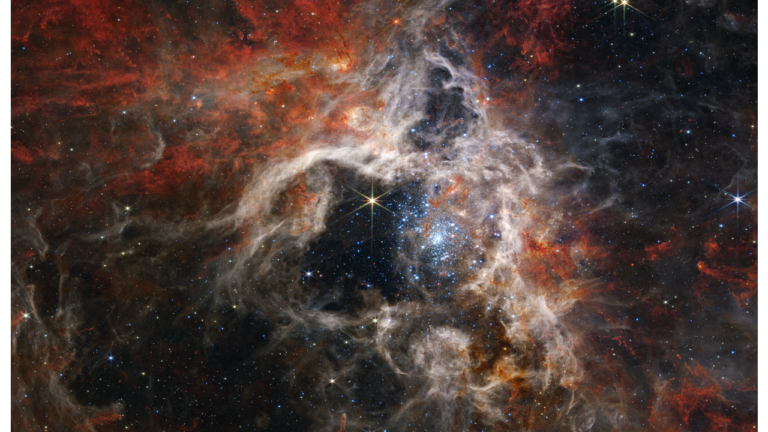
The first images and information that beamed back to Earth by JWST proved that the lifelong efforts didn’t go in vain. The astronomers were awestruck by the mindboggling imagery and data received. Those images are just the notions of what is following next.
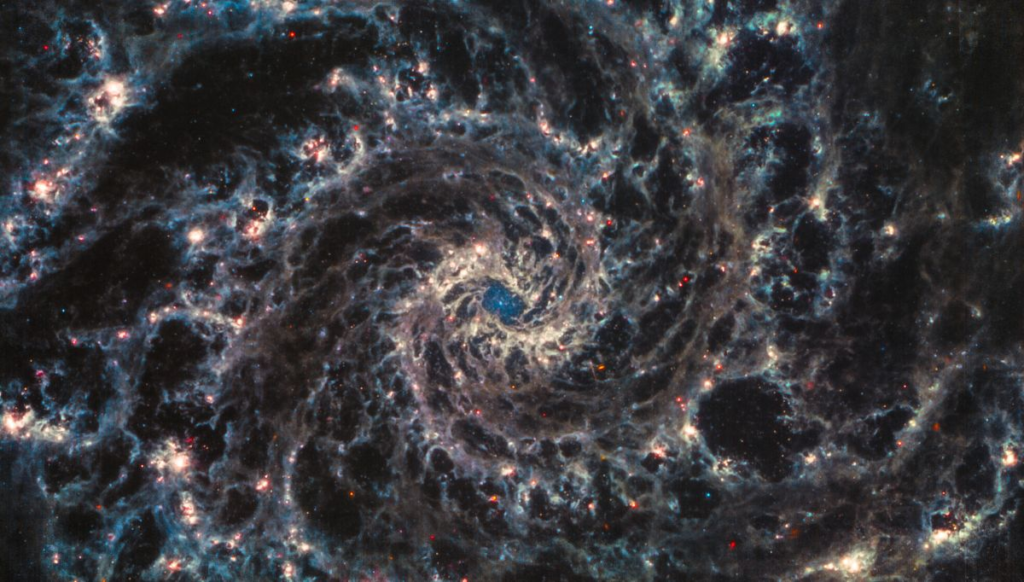
The James Webb Space Telescope’s view of the spectacular Phantom Galaxy. (Image credit: ESA/Webb, NASA & CSA, J. Lee and the PHANGS-JWST Team)
It is speculated that JWST might renounce all other space telescopes and will prove to be the most authentic source of cosmic data which will fuel thousands of research papers worldwide. In no time and without any doubts it will revolutionize the whole present picture of universe in coming years.
RECENT BREAKTHROUGHS
The Glimpse of the Most Distant and The Ancient Galaxies
Galaxies, the gigantic assortment of heavenly masses spread across the sky. They have billions of stars, planetary systems, asteroids, comets, meteorites and massive clouds of dust and gases. Our Milky Way galaxy is an enormous array of celestial bodies.
A team of astronomers has reported the recent discovery of some of the earliest galaxies visualized by NASA’s James Webb Space Telescope which are thought to be created 400 million years after the Big Bang. The data collected earlier unveiled some of the records of such faint galaxies but now, with the JWST’s spectroscopic observations, their fingerprints have been confirmed.
11th of July, 2022 is documented as the day of remarkable discovery in the history of space studies. It was a live broadcast from White House when President United States, Joe Biden witnessed the commixture of thousands of galaxies by himself and was overwhelmed at the glimpses.
The region of the sky studied by the James Webb Space Telescope Advanced Deep Extragalactic Survey (JADES). (Image credit: NASA, ESA, CSA, and M. Zamani (ESA/Webb). Science: B. Robertson (UCSC), S. Tacchella (Cambridge), E. Curtis-Lake (Hertfordshire), S. Carniani (Scuola Normale Superiore), and the JADES Collaboration.)
JWST has provided the pictorial data of the most distant celestial collections in the midst of December 2022. Almost four distant galaxies have been observed by JWST one amongst them is the far off reddish galaxy expected to be 13.8 billion years old-the most ancient one. Researchers speculated that the newly discovered galaxies are extremely beyond the distances they have anticipated before the JWST’s observed data.
Discovery of Exoplanets
Exoplanets, beyond the borders of our solar system, dwell massive number of colossal planets. They orbit stars other than sun. They might be Gas Giants, Neptunian, Super Earth or terrestrial.
The first exoplanets were discovered in 1990s and today there are over 3000 known planetary bodies orbiting around the stars. Among them only a few have been pictured directly. Most of the exoplanets are so far-flung to be detected easily. But thanks to JWST, in September 2022, the direct image of an exoplanet was captured. Moreover, NASA confirmed the presence of over 5000 exoplanets including super-Earths, gas giants and dwarf planets beyond our solar system. This great discovery has rippled the overall momentum of space studies and astronomy.
Webb’s first images of an alien world, HIP 65426b, are shown at the bottom of a wider image showing the planet’s host star. The images were taken at different wavelengths of infrared light. (Image credit: NASA/ESA/CSA, A Carter (UCSC), the ERS 1386 team, and A. Pagan (STScI).)
Titan’s Clouds
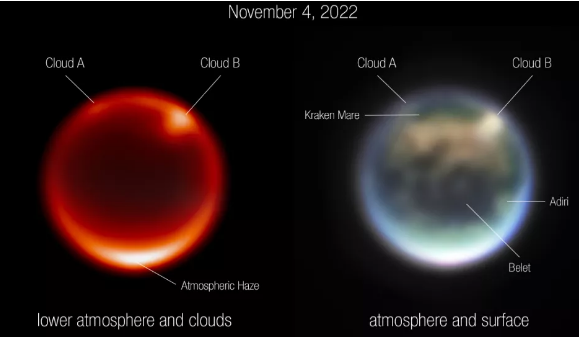
Images taken by JWST in early November 2022, researchers spotted some exciting floating entities on, probably, the northern hemisphere of Saturn’s alien moon named Titan.
Titan captivates scientists and researchers of astronomy for multiple reasons. Firstly, the intense ultraviolet radiations coming from the sun create a huge buildup of organic molecules in Titan’s nitrogenous and methane-rich atmosphere. This dense and hazy atmosphere obscures its surface drowned in expanded stretches of dunes, along with lakes, rivers and seas of liquid hydrocarbons like ethane and methane. Secondly, the scientists suspect that deep underneath the Titan’s surface, there might be the reservoirs of a salty liquid water ocean, making Titan a habitable for extraterrestrial life.
Images of Saturn’s moon Titan, captured by the James Webb Space Telescope’s NIRCam instrument Nov. 4, 2022. Left: Image using F212N, a 2.12-micron filter sensitive to Titan’s lower atmosphere. The bright spots are prominent clouds in the northern hemisphere. Right: Color composite image using a combination of NIRCam filters. Several prominent surface features are labeled: Kraken Mare is thought to be a methane sea; Belet is composed of dark-colored sand dunes; Adiri is a bright albedo feature. (Image credit: SCIENCE: NASA, ESA, CSA, Webb Titan GTO Team IMAGE PROCESSING: Alyssa Pagan (STScI))
Clouds on Titan might be a dime a dozen to any casual observer. But to the astronomers, clouds revealed a lot about the atmosphere of Titan. As Titan is the only moon in our solar system to have a dense atmosphere of nitrogen and methane that is stretched about 370 miles (600 kilometers) into the space, 10 times taller than the altitude of Earth’s atmosphere, according to NASA. So, clouds will help a lot to study about not only the atmosphere of Titan but also why Titan has atmosphere which other moons, in the solar system, are devoid of.
These clouds also validate the weather patterns which predict the appearance of clouds in the northern hemisphere of Titan during its summer season, the time when that region is entirely bathed in sunlight.
The year 2022 was the year of ground-breaking explorations and cosmic revelations. It will surely open the massive avenues to the new realms of astonishing astronomical discoveries. It was a just the beginning with the wonder-scope JWST. More is yet to come.
Are there intelligent beings elsewhere in our Galaxy? If not, where are all the Aliens? This question gives rise to one of the most profound paradoxes in history, known as The Fermi Paradox.
Named after the Italian-American physicist Enrico Fermi, this paradox is one of the biggest unsettled questions in astrobiology. The idea started when, in 1950, Fermi asked his co-workers over lunch where are the extraterrestrials. If there are billions and billions of stars and probably even more planets, indeed, we are not the only intelligent beings in the universe. Then why have we not already been in contact with the outers?
People have debated this for many years. Various articles and books have been published arguing if aliens do really exist, we should have been aware of them already. If we have not found any trace of life outside Earth yet, then they possibly do not exist. Let us look deeply into these claims and explore some solutions scientists have put forth over the years.
Possibility of life outside Earth
The expectation that the universe should be teeming with intelligent life is linked to models like the Drake equation. It suggests that even if the probability of intelligent life at a given site is small, the sheer multitude of possible sites should yield many potentially observable civilizations.
It is not the size of the universe that is important per se, but the fact that it is big enough to contain a vast number of habitable planets. We do not know precisely how many such planets are out there, but one recent estimate suggests that our galaxy might contain as many as 100 billion Earth-like planets.
The Fermi argument extends in a way by saying that it is highly likely that some of these planets will have intelligent life forms that might have developed advanced technology. But then again, we have no sign of extraterrestrial communication whatsoever.
Scientists have tackled the paradox through different scenarios based on logical reasoning. Following are a few arguments in some theories that are documented.
Problems with interstellar communication
Communication is not as accessible, as one would think!
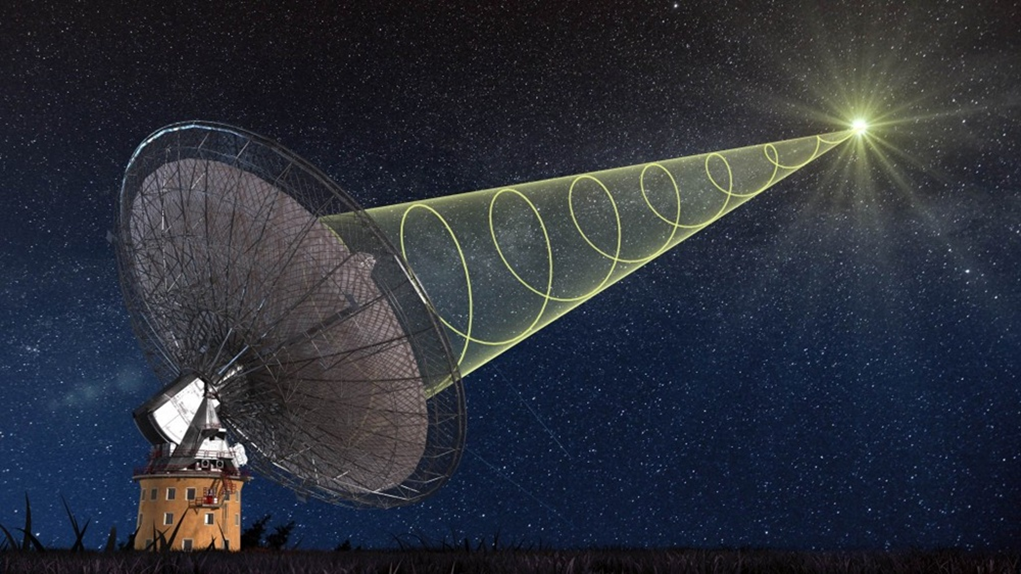
SETI (Search for Extraterrestrial Intelligence) is a non-profit research organization that monitors electromagnetic radiation for signs of communication from other planets. Although it has been trying to listen for the last 6 decades, all efforts went in vain. Part of the failure lies in the fact that we have only sampled a small portion of the universe.
Let us understand this with an analogy: if you went to the beach with a glass and scooped up some water, would you expect to find fish in it? Probably not; that does not mean there are no fish in the ocean. It just means we have not collected enough water to find those fish. The same is true with SETI; they have not checked out enough of the universe to conclude if there is someone out there.
“If we ever hope to pick up the signal from out there, we need to build a radio telescope the size of the metropolitan area of Chicago, which is twenty-five thousand eight hundred square kilometres. Then, it would be possible to detect a radio signal hundreds of light-years away. The only problem is such a telescope in our economy would cost more than 60 trillion dollars,” says Keith Cooper, a famous science journalist, in his book ‘The Contact Paradox’.
Moreover, communication is only achievable when we assume that out there civilization is as advanced as ours is. However, the Copernican Principle that asserts that we are not unique in any way suggests that the odds are far too slim that another planet is at precisely the same point in its development. The calculations hint that the signal would have to traverse a distance of more than ten million light years for more than two millennia before we receive a response. Hence, we will not get a response, even at light speed, before the year 4000 C.E.
Communication is only achievable when we assume that civilization is as advanced as ours. Credit: AAS Nova
This implies that the universe is incredibly vast. It would take centuries to establish the first contact, as far as the math is concerned.
Rare Earth hypothesis
The Rare Earth Hypothesis deals with the notion that planets like Earth are scarce. Life and the evolution of complexity require a combination of astrophysical and geological conditions that are uncommon in our Universe. In other words, we are pretty special and unique. Thus, a complex ET life is an improbable phenomenon which is likely to be rare throughout the universe.
In 2000, Peter D. Ward and Donald published a book titled “Rare Earth: Why Complex Uncommon in the Universe”. In their book, the authors indicated eighteen factors that allow complex life to evolve until they obtain intelligence. Most of them are very unlikely, and their relative independence implies that their probabilities must factorize, making the resulting probability for intelligence to evolve elsewhere than Earth very low.
Dark forest theory
This possible answer to the Fermi paradox says that the aliens out there are silent simply because they do not wish to be on the receiving end of possible destruction by another civilization. Just like hunters moving cautiously through a dark forest, they all must remain quiet; otherwise, they will be found and killed.
This would also explain why we have not found any mundane alien radio signals despite a century of being able to pick them up. Just as we accidentally send our radio signals, meant for us, out into space, another civilization would be likely to as well. One possibility is that other civilizations are so frightened of being detected that they deliberately avoid sending such evidence into space.
Nonetheless, the possibility of an alien civilization that has a similar risk aversion level and reasoning process as we do must be taken into account.
Indifferent theory
With billions of years of history at play, it might not be the case where we are at technological parity with all the other forms of life that might be out there. Alien life might simply be so far beyond us that they could regard us as insignificant as we do when we think of an ant. Why do you not try to talk to the insects in your garden? The gap is too significant. They might not talk to us because they think we have nothing interesting to say. You understand what they want ideally, and they have no hope of understanding you, so the communication is, frankly, pointless.
Conclusion
When I infer in the light of these arguments is finding a substantial probability that we are alone in our galaxy or even in our observable universe.
Where are they? — Probably exceptionally far away, and quite possibly beyond the cosmological horizon and forever unreachable. But as of now, we are simply not listening to them correctly. Perhaps, in the near future, if we follow a more practical approach, which can provide certainty about intelligent life somewhere other than Earth. However, to be honest, for now, it looks more as if the aliens are just inanimate characters in science fiction movies.
References:
Musso, P. (2001, August). On the last terms of Drake Equation: the problem of energy sources and the” Rare Earth Hypothesis”. In Exo-/Astro-Biology (Vol. 496, pp. 379-382).
“The Fermi Paradox Revisited” article in Smithsonian magazine.
Are we alone in this universe, or intelligent beings like us do exist somewhere out there? Are there more advanced civilizations than ours, and have they developed a network of linked societies throughout our galaxy? These are a few questions that blow the mind of every curious individual among us.
Several theories have been presented about the origin of life on Earth. Many of them support the idea that it is possible to have many Earth-like planets or exoplanets beyond our solar system. These planets could have similar evolution processes that we witness on Earth. Scientists argue that such processes could be fairly common in the universe, and intelligent beings like us must exist on these planets.
Our evidence of the origin of life on Earth comes from the geological record of the planet. The record that geologists have gathered so far is collected from thin rocks nearly 2.7 to 3.5 billion years old. It confirms the presence of small inclusions, a 100th of a millimetre in diameter.
These evolved organisms, like bacteria and blue-green algae, must be the beneficiaries of a pro-long evolutionary process. Geologists didn’t find a rock on Earth that is more than 4 billion years old. Scientists believe that before this time, the planet’s surface had melted in the final stage of its creation.
Since life originated on Earth seems to be short than its present age, there is additional evidence that life may evolve on other planets in our solar system or beyond it, at least on the planets having an abundance of hydrogen-rich gases, liquid water, and a constant source of energy from their host star.
James Webb Space Telescope released its first image in July 2022, and the world is overwhelmed by break-taking deep space images revealed later. Since then, several significant questions have been around in space communities about the existence of life on exoplanets beyond our solar system. Digging deep into these most concerned questions of all time, Scientia Pakistan brings its exclusive edition on “Extraterrestrial life”.
We have got exciting stories on Sentient in the cosmos, microbial life, Fermi Paradox, NASA’s program on UFOs, use of modern technologies for the search for ET life, and much more. We exclusively interviewed Dr Munazza K Alam for this edition. Have an excellent read!
It was a fine starry night; my friends and I were sitting outside for a cup of coffee when we saw a shiny object pierce through the sky. We were the only ones who caught a glimpse of this object, which appeared for a fraction of a second. “A UFO!” my friend exclaimed, but you know the possibility of that happening is low to none. Or is it?
One of the most exciting topics for a conversation is: Do aliens exist? Are we alone in the Universe? or are there other species wandering about other parts of the Universe in search of other extraterrestrial life? It is generally backed by several convincing and hilarious theories and conspiracies. But the real question is how much truth lies in these speculations. Indeed, we must not be alone in this Universe. The Hubble site states that the Universe’s expansion rate to a precision of just over 1%. This shows that our Universe, which is unfathomably large, is also expanding.
Statistics suggest that there must be at least a few with advanced civilizations for such a large number of probable Earth-like planets present in the Universe.
So, every time you look up at the night sky, know that there are roughly an equal number of observable galaxies in our Universe as the number of stars in our Milky Way galaxy or, simply put, for every grain of sand on every beach on Earth, there are 10,000 stars out there.
Now imagine a number of those stars have planets revolving around them. Statistics suggest that about 1% of those stars have an Earth-like planet revolving around them, a total of a whopping 100 billion Earth-like planets. Our Sun is relatively younger. There are older stars with planets older than Earth, having enough time to create life.
Many scientists have thought of the possibility of extraterrestrial life. One notable contribution is that of Frank Drake, who gave the Drake Equation, which helped find the number of intelligent civilizations according to its factors. The Drake equation tells us that by 2074, there should be about 10 civilizations in our galaxy alone. Furthermore, The Kardashev scale categorizes civilizations into 3 types: Type 1 civilization harnesses all energy of its planet (According to the renowned astronomer Carl Sagan, we are a Type 0.7), Type 2 civilization harnesses the energy of its star, while the Type 3 civilization harnesses the energy of the entire galaxy.
So, where is everybody? A scientist named Enrico Fermi is associated with this question. It gives rise to the paradox we must now highlight; “The Universe is about 14 billion years old. If other intelligent beings are present, why haven’t we heard from them? ” It is from this question, the Drake equation, and the Kardashev scale that The Fermi Paradox was born. We have no clear answer or evidence as to the best explanation for this paradox. We only have several possibilities and hypotheses explaining the absence of alien life. One of the most widely discussed are these possibilities:
THE GREAT FILTER
Statistics suggest that there must be at least a few with advanced civilizations for such a large number of probable Earth-like planets present in the Universe. There are other stars and planets older than our Sun, which had enough time to create life on its planets. The math suggests that thousands of them must be there in our own galaxy. This shows us that there must be Type 2 and Type 3 civilizations present out there, but there are signs of none. This is an intriguing piece of the puzzle. Why are there no Type 2 and Type 3 civilizations? A possible explanation for this question is a theory called The Great Filter.
The Great Filter theory suggests that at some point of evolution from premature life to Type 3 civilization, there must come a time when further attempts to evolve cease completely. This is a stage that is impossible for life to cross. So the question is, when does The Great Filter arrive in our own timeline? It’s essential to answer this question for our own survival.
There are three possibilities:
We have crossed it
This version suggests that, miraculously, we have survived The Great Filter. This shows that our kind of intelligent life is extremely rare and unique. It explains how there are no other Type 2 or Type 3 civilizations, and ours could be the very few of the ones that actually make it. That must mean that we have passed the Great Filter somewhere in our evolutionary process. Was it at the beginning of life itself? Scientists have tried to create life in laboratories for quite a few years, but it was never successful. If the genesis of life was indeed The Great Filter, this could explain why there could be no life out there.
Or it could be when a prokaryotic cell turned into the eukaryotic one. When the prokaryotic cells came into it wasn’t until after two billion years that the first eukaryotic cell came into being. If this is The Great Filter, then the Universe might be full of prokaryotes. Hence, the reason we haven’t heard any signals from any of them.
So, the Great Filter is characterized by one-in-a-billion occurrence only.
We would be the first to experience it!
We may move toward the Great Filter if the first hypothesis is incorrect. It means that we are one of the primary civilizations, and it is still early in the Universe for intelligent life to develop. Other civilizations are either not born yet or even more primitive than us, and we have yet to become a super-intelligent species.
We will experience it soon!
This is undoubtedly the scariest of the three possibilities. Theorists who support this hypothesis claim that life normally evolves to the point where we are. Still, it is after it reaches this stage that it is eliminated by a mysterious phenomenon. And we won’t be an exception. We might even end up destroying ourselves once we reach a point in technological advancement that harms our survival. The more clues we find about the evidence of extraterrestrial life, the more insight we gain on which stage we lie on.
EXTRA-TERRESTRIAL NEIGHBORS
Another group of theorists believes that we are not as special as we think we are. We may just be a mediocre species living on a mediocre planet orbiting a mediocre star. And there are many like us who haven’t reached out to us for one reason or the other. It must be noted that any search for alien life done by humans is limited in scope as we could only search 100 light years away from us.
Let’s explore the different theories supporting this claim:
Some theorists believe that Earth has already been visited by aliens in the past, but it was before humans were here. Humans have only been here for 50,000 years. We would have no way of knowing if any contact happened before then. Even if it happened in the early times of human civilization, we have no proof of that.
One of the most exciting theories is The Dark Forest theory. It states that predator civilizations are out there, and other civilizations are quiet and noiseless to keep themselves safe. There is no way for them to know if the predator civilizations are altruistic or would destroy them completely. Although, the safest option for any species is to destroy all others to ensure its protection. That is why we may not have received signals from the SETI(Search for Extraterrestrial Intelligence) satellites.
This phenomenon is best explained in this paragraph from the Novel ‘Dark Forest:
“The universe is a dark forest. Every civilization is an armed hunter stalking through the trees like a ghost, gently pushing aside branches that block the path and trying to tread without sound. Even breathing is done with care. The hunter has to be careful because everywhere in the forest are stealthy hunters like him. If he finds another life—another hunter, angel, or a demon, a delicate infant to a tottering old man, a fairy or demigod—there’s only one thing he can do: open fire and eliminate them.”
Astronomer Carl Sagan recommended that “the newest children in a strange and uncertain cosmos should listen quietly for a long time, patiently learning about the universe and comparing notes, before shouting into an unknown jungle that we do not understand.”
Suppose other much more advanced civilizations are already living out there, the Type 2 and Type 3 civilizations. In that case, there is no need for them to visit us or contact us when they are utilizing all their resources from their own star or galaxies. Our system would be too underdeveloped for their needs.
Our Sun is located in one of the Spiral arms of the Milky Way galaxy. If the colonization of the Milky Way has already occurred, then there was no reason for intelligent life to visit this rural area of the galaxy. It would just be impractical to travel such a long distance.
Building on the Dark Forest theory, there might just be one Super civilization out there that does not let any other civilization grow and develop and eliminates it, so it does not threaten them.
There may also be a possibility of an intelligent civilization out there, but we just don’t have the right equipment to catch the signals. Maybe the technology they use is too advanced or obsolete, so much so that it is impossible for us to detect it.
Another exciting hypothesis is The Zoo Hypothesis, which tells us that the more advanced civilizations know of our existence and are only just observing us from afar. There is a possibility that they are watching us with technology, which does not let us determine that we are being watched.
A theory suggests that we may be too irrelevant for high civilizations. So much so that they don’t even care to contact us. If that is the case, it also makes sense why we have not yet sensed them because, in the realm of physics, it would be difficult for us to perceive anything that is far too advanced than us.
Let me just add my favourite one out here in the end: Aliens have already contacted us, but the government is hiding it. This one is the most mind-bending one to me, for there is absolutely no way for contact to have already happened, and it remains a mystery.
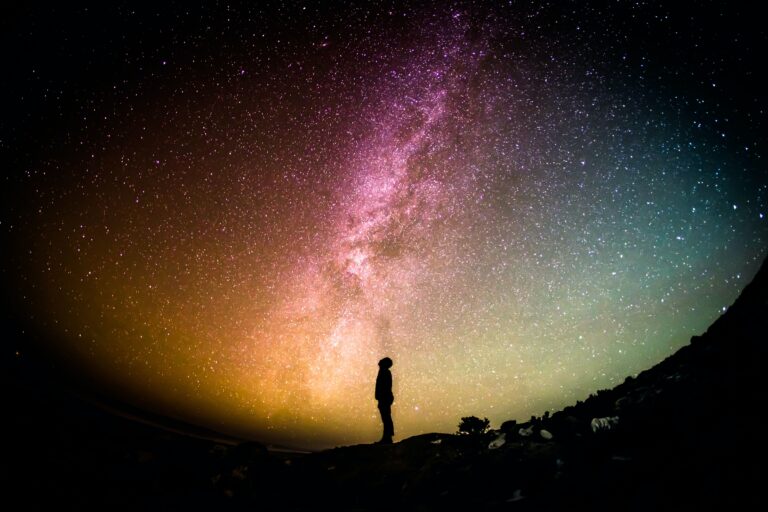
Looking at the night sky is a humbling experience. It either makes you wonder about what’s above and beyond, making you forget about all the frivolous problems of our daily lives, or it gives you something more to think about, like an existential crisis. To think that we are the only living civilization out there is a lonely experience, but to think that there may be predator civilizations or The Great Filter waiting to happen is an even scarier possibility.
The Fermi Paradox gives us the most reasonable and sound theories regarding the existence of Alien life. It makes me sometimes wonder that we may be the highest-living predator civilization instead. It’s best to negate the fear of annihilation that way. We may even go on to develop a Dyson sphere and turn into a Type 2 civilization, or we may completely wipe ourselves out by over-consuming Earth’s resources. Whatever lies ahead of us is exciting as well as terrifying.
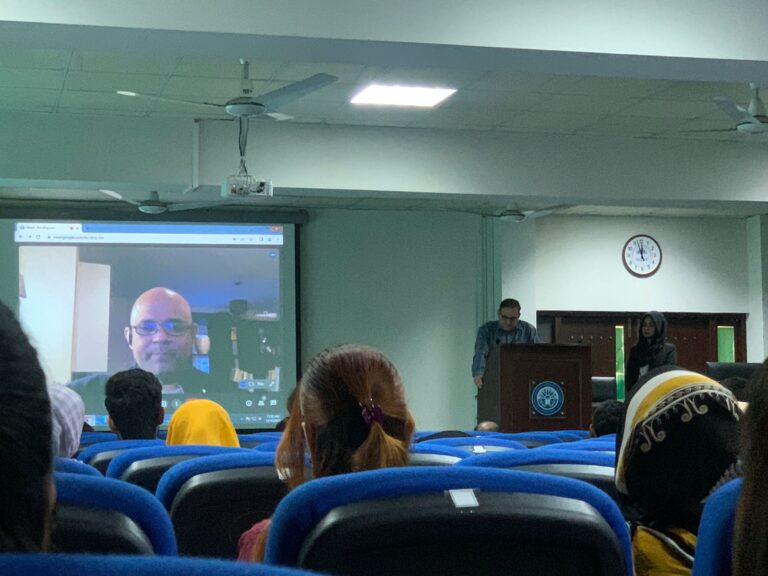
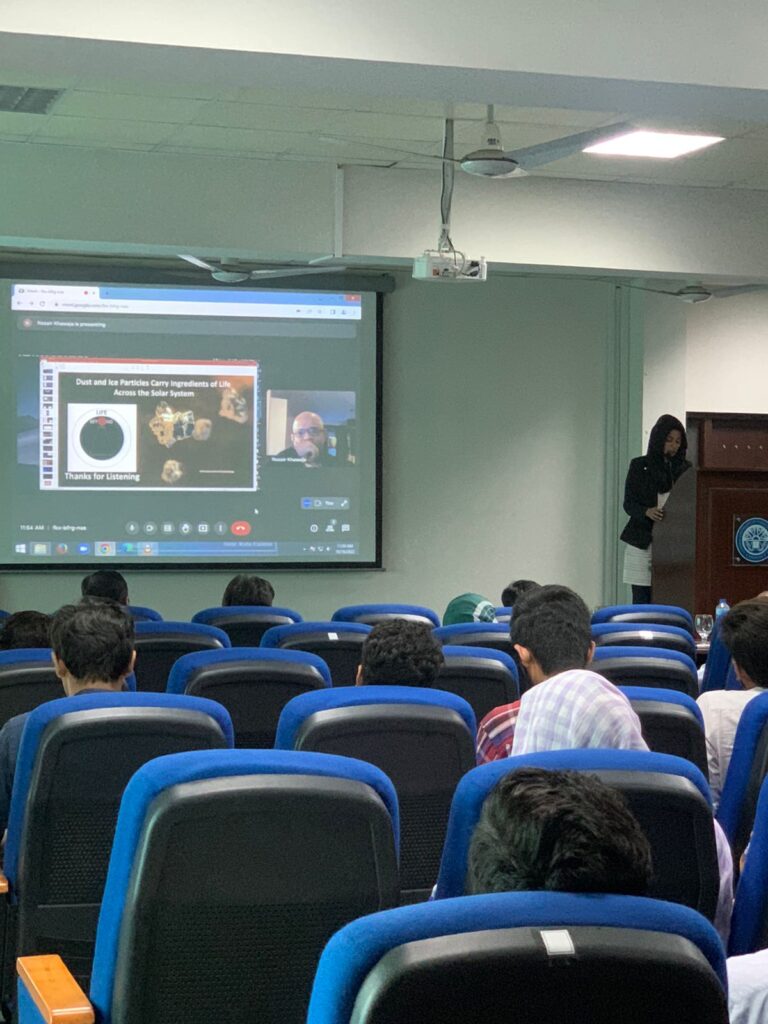
Dr Nozair Khawaja, a prominent astrobiologist based in Punjab, now resides in Germany. He has been associated with several space missions like Cassini, Europa Clipper, etc. Dr Nozair’s research papers have been published in Nature and other notable science journals.
Here are some abstracts of his recent talk, which he delivered virtually at the National University of Science and Technology (NUST)
The first question we ask in astrobiology or space exploration is whether humans exist alone in this universe or not. This question is kind of philosophical as well. Other than the interpretation of scientific data, we need to consult the Islamic and religious perspectives of Jews and Christians as well. Since finding life in outer space may have severe implications for our society, we must also keep the repercussions in mind.
To find the answer to whether we are alone in this universe or not, we usually look into two places: our solar system and, beyond it, other galaxies. There are billions of stars and galaxies, thus expanding the potential to search for life.
It should be remembered that the study of the earth also comes under the domain of astrobiology. ~Dr Nozair. Photo Aniqa Mazhar
Since this is quite an expanded field, the question I will mainly focus on is the existence of alien life within the solar system. There is a reason why I did not opt for outer space research. Interestingly, when I went to Finland for my master’s, I went to the observatory in Scandinavia, and the director there asked why I was not interested in research beyond our solar system. I answered that it would be possible within my lifetime only within the solar system because we can at least search eight to nine planets but not beyond that.
When I talk about life within the solar system, I should have some analogues. When we work in the lab, we use a template for analyzing other samples. In this case, our template is the Earth. So, we will compare any life found with the life present here on Earth. So it should be remembered that the study of the earth also comes under the domain of astrobiology.
Before proceeding, you should define what you mean by ‘life’. When I say we will detect aliens within the solar system, what kind are we looking for? So for that, we need to consider the forms of life, i.e., microbial, extremophiles, and life-like humans. If that is not the case, it could also mean there is a second genesis of life that is totally different from our versions of the definition of life, like carbon and hydrogen-based life.
Within the solar system, different space agencies have already sent numerous missions toward the interior solar system that is toward our left, including Mercury and Venus. On our right are the other planets, namely Mars, Jupiter, Saturn, Uranus, and Neptune. There are other species, like comets and asteroids. Humans visit these places extensively to learn about life’s secrets or origins.
The solar system is filled with many dust particles as well. They seem to be pretty useless but are actually of great importance. Many space missions are directed toward icy comets as well. In fact, I am also part of the research team on one such project where I use mass spectrometry in my studies.
Search for life in the outer solar system is useless due to the extremely cold temperatures and lack of water. Searching for life based on our knowledge of life on Earth, we would also expect the presence of water.
Earth comes in the zone where water is liquid, which is a suitable medium for life-related reactions. With some space missions like Aleeno and Casini, we were surprised to know that the solar system also has water in liquid form, particularly on Saturn. One of the moons of Saturn has springs of water erupting from it. That was a fantastic discovery. It changed the paradigm of the habitable zone of the solar system.
Our search for life has now spread all across the solar system. Some moons of Jupiter and Saturn have been shown to have water in liquid form on their surfaces. One of the instruments used in this detection was the ‘gravity instrument’, which measures liquid density variation below the surface.
Saturn’s moon, Enceladus, is really amazing in terms of astrobiology. The three moons of Jupiter are equally important; Saturn has rings made of ice and dust particles. The moons of Saturn, which are more than fifty, are embedded in these rings.
In 2005, by using the magnetometer, scientists discovered that it was deflecting near the Enceladus moon in irregular patterns. An emergency meeting was arranged at the NASA headquarters to organize more space missions toward this particular moon. On the south pole of this moon, enormous jets of water springing from the surface were observed. This discovery shifted the history of space exploration.
The moon has a rocky core with silicate, and water percolates in liquid form on its surface. Hydrothermal reactions occur there. When the water in the land beneath the oceans goes down and gets warmer, it returns to the surface. This is referred to as hydrothermal activity, and we have found it on this moon.
Even after discovering ice grains or dust particles, what are the detection methods for aliens? Basically, dust particles are messengers of life across the universe. The explosion of stars, comets, or asteroids causes dust formation, and some fall on Earth, too.
NASA has set up detectors in the upper atmosphere for these dust particles and collects them as well. In 2016, the research concluded that the ingredients of life might have come to Earth from the solar system. The Earth’s atmosphere blocks meteorites, but they land forcefully on planets with no atmosphere. The dust of these planets is caused to rise for several kilometres.
The ice grains from other planets and moons are helpful. They could carry signs of life if we assume that life is present on those planets. If Enceladus has light present on its surface, how do the light rays enter the ice grains? Whenever you detect light in outer space, you must look at the Earth as the analogue or template. The surface of the oceans on our earth is brimming with countless microorganisms.
When the wind blows, waves are caused on the ocean’s surface. When these waves collapse with each other, air goes into the layers and comes up again, causing bubbles. These bubbles carry microbial life and burst at the surface. Air takes these organic molecules and microbial life up via winds to clouds.
The core has a high temperature on Enceladus, so the fluid comes to the surface via a hydrothermal elevator process and bursts, causing gaseous bubbles. Gas is coming at high speed from under the oceans. It goes into the atmosphere when it comes to the surface.
If microbes are present here, they also go upwards and freeze. We could detect these frozen Mos via space missions in the form of ice grains. I led the research from 2018 to 2019 in which we detected these ice grains. We found signatures of macromolecules with a significant molecular weight of more than 2000 mass per unit value. We classified the material to be like aromatic ring structures, having H and O species as well as saturated and unsaturated sections.
I found very small Bonafede particles in those ice grains as well. Those with a background in organic chemistry will know that these molecules can make amino acids in hydrothermal regions where the temperature is 100 degrees Celsius. The pH is 9, very alkaline, via Friedel-Craft reactions. This was the primary breakthrough research where I just found the building blocks of the protogynous protein structure.
How would you detect these chemicals in the ice grains? The tool we used was mass spectrometry. We look at the cations and anions present. We sent a mass spectrometer to the moon of Enceladus, and it is the most ambitious program of 2024 to be launched.
Another mission is of Japan, heading towards an asteroid because a Japanese agency wants to know whether the dust particles from that asteroid that comes to Earth has a Galmene shower in September or October are it’s or not.
An ambitious mission of Europe was also targeted towards light study with a very interesting instrument. It studied the dust particles near comets. When a dust particle hits a spectrometer, its ions are created, which we detect. This apparatus was part of the Japanese space mission. When I looked at the mass spectrum of the ice grain from space, I observed that it had an aromatic carbon ring structure with hydrocarbon chains that have a difference of 12 to 13 units from each other, meaning they are highly unsaturated. We received a signal of up to 2,000 mass units as well. That’s amazing.
We demonstrated in the lab that we took some fatty acids with C12 to C20. We mixed them based on concentrations that indicate abiotic sources of FAs. We obtained a mass spectrum for the solution and saw that an even number of carbons, i.e., 12 14 16 18 20, had signals equal to C 13 15 17 19. There is no distinction between even and odd-numbered fatty acids.
This solution reflects abiotic features. But then we took the same fatty acids but changed the biotic concentration and saw that the signal of even-numbered C fatty acids is higher than those of odd C FAs. We use this template to tell whether FAs from outer ice grains are from biotic or abiotic sources.
Many advanced studies on extremophiles and electron and UV radiations study mutations in microbes. The moon also has a particular atmosphere. Meteorites land on the surface, and the ice particles enter the instrument of the mission and generate a mass spectrum.
The extraterrestrial ocean world is a potentially habitable place. It means there is either life or favourable conditions to start life. This is exciting!
To sum up, dust particles are basically messengers, and we can tell by their help whether there are aliens in the Solar system.
The Space transport vehicle is now approaching the planet Xenon, distant from our Earth as far as 30 Decas (a Deca equals 10 light years). I traveled by the “21Longway” wormhole to reach here; it was calmer than the “57Pathfinder”, mostly used for traveling to Arion. It was part of our training program to journey all planets in Adam’s Empire.
It’s not that we don’t have the technology to go beyond the empire; it’s just that human control has its limits in the domain of time. We have discovered dozens of planets in the outskirts of the empire that cover many nearby galaxies, lurking nearby just some Decas farther. Some of these neighbors lack the essential aspects we require to establish habitable colonies. Xenon is one such planet. It was named after the Xenon gas because no space telescope had been able to analyze the atmosphere and surface of this planet. That made its properties somewhat synonymous with the Xenon gas, “Invisible,” to be precise.
I am now entering the atmosphere. It was bleak, greyish with a pale blue sight that was due to the “sunset” time. As I completed the entry into the atmosphere, the sight became bleaker. The atmospheric sensors were showing high levels of Nitrogen! Yes! And oxygen was present, too! Xenon had an atmosphere similar to Earth. It was denser in some respects. Perhaps a dense foggy day would be very close to these conditions, that too in visual metrics.
The space transport vehicle’s sensors showed fluctuating readings of some other elements in the Earth-like air. I searched for a plan for the vehicle to settle down. Two small mountains had a clear surface between them. I landed my vehicle on it. Although the sensors showed signs of a breathable atmosphere, I put my helmet on because I didn’t want to risk myself in this alien oxygen. The gravity was slightly more than Earth. 10% stronger, to be exact. I had to put in an effort to get to the door of my vehicle. Perhaps the journey of 30 Decas had its toll on me! I glanced at my watch; it was 45 ticks past 6 UMT (Universal Meridian time). I looked out and up towards the sky of Xenon. It seemed I had about 25 ticks before dark.
As I set foot on the surface, I felt the stronger gravity. I am pulling and dragging each step forward, such as weights tied to my ankles, and heavy bags of more than 5 kgs are placed on my shoulders to dampen my movement. I put my atmosphere sensor out. It showed stable readings of Nitrogen, Oxygen, Carbon, and methane. I started taking the soil sample. The upper soil is dark greyish-blue in color. As I brushed it and collected some in my sampler, the underneath became visible. It was dark blue.
I filled half of my sampler and stood up. It was getting darker. I had walked about 5 or 6 yards from my vehicle. I was approximately at the centre of the two small mountains. I looked around and took photographs. Then I took out my binoculars and looked towards one of the mountains. I zoomed in 50 % vis. The mountain seemed of the same greyish-blue color. A slight breeze was blowing across the valley.
I looked at the mountain’s surface up towards its flat peak. I saw a shadow, no, it was a figure! Wearing a long black robe! I zoomed in 80 %; yes, it was human-like! Having a proper human body! Hurriedly, I zoomed in 100 %. yes, it was very much like a human, facing toward me, but its face was hidden in the hood of the robe. I was astonished! Startled to the very soul, my eyes froze at the figure as it moved its hand and tightened its hood as if it felt cold in the Xenon breeze! Was it an alien?
But we never found any such being on our journeys throughout the empire. Was it another captain? That sounded probable, but why is he wearing a black robe? My mind couldn’t find an explanation neither could it contemplate my next move. I kept staring at the figure through my binoculars as the darkness began to deepen. The robed figure kept facing me and seemed to turn its head as if looking around. Then suddenly it started to run down the mountain! I had difficulty walking on this surface, and that “robe thing” was running on it! Now, increasing my astonishment with fear, it was running towards me!
Life on Earth is possible with the ideal and optimal conditions that support the existence of all forms of life on its surface. The atmosphere up and around, the humidity, the temperature and countless other biotic (like plants, animals, microorganisms) and abiotic factors (air, water, soil, energy, forces) contribute to the proliferation of life forms from the microscopic level to the organisms of most giant magnitude on Earth.
Life in space requires superhuman chemistry to survive from the dangers of extreme radiation exposures, oxygen-less atmosphere and devastating sunburns. One can barely survive in this environment unless it is an extremophile (capable of surviving extreme environmental conditions) like the Deinococcus radiodurans bacterium.
EXTREMOPHILES IN SPACE
Microbiologists have spent decades studying extremophiles, the organisms that can withstand extreme limits of survival, to find out the origin of life on Earth. Some extremophiles can live unprotected in space for several days; others can endure for years, but only by carving out a home inside rocks.
Now, new findings published in Frontiers in Microbiology, based on that experiment on the International Space Station, show that the bacteria Deinococcus radiodurans can survive at least three years in space. Akihiko Yamagishi, a microbiologist at Tokyo University of Pharmacy and Life Sciences who led the study, says the results also suggest that microbial life could travel between planets unprotected by rock.
The bacteria Deinococcus radiodurans can survive at least three years in space
Lab studies have found that Deinococcus radiodurans is capable of withstanding an acute dose of 5,000 grays (Gy)**, or 500,000 rad, of ionizing radiation with almost no loss of viability, and an acute dose of 15,000 Gy with 37% viability.
Let’s compare for a better understanding that the dose of 5,000 Gy is estimated to introduce several hundred double-strand breaks (DSBs) into the organism’s DNA. For comparison, a chest X-ray or Apollo mission involves about 1 mGy, 5 Gy can kill a human, 200–800 Gy will kill E. coli, and more than 4,000 Gy will kill the radiation-resistant tardigrade (segmented micro-animal ).
REFLECTING RADIATIONS
D. radiodurans, are normally resistant to damage from radiation. Their genes code for unique proteins that repair DNA. While human cells carry about two copies of DNA, and most bacterial cells carry one, D. radiodurans contain up to 10 redundant copies. Having more copies of essential genes means the cells can synthesize more copies of proteins that fix DNA damaged by radiation. This inherent defence mechanism, combined with protective outer layers of cells, kept the microbes alive despite radiation levels over 200 times higher than those on Earth.
Murray RGE. 1992. “The family Deino- coccaceae”. In The Prokaryotes, ed. A Ballows, HG Truper, M Dworkin, W Harder, KH Schleifer 4:3732–3744. New York: Springer-Verlag
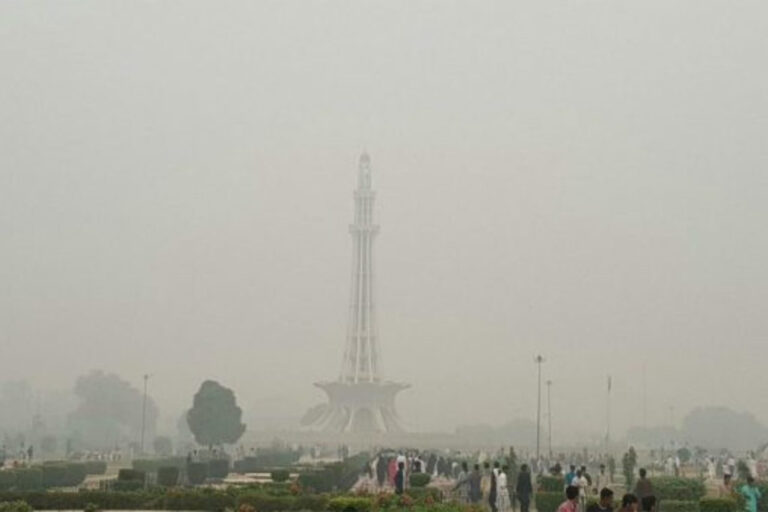
As winter approaches, a sinister grey cover blankets the city of Lahore, Pakistan. On 17th Nov 2021, Lahore was declared the most polluted city on the planet. The air quality index (AQI) value reached 348, more than the mentioned hazardous level of 300 by the World Health Organisation (WHO). A similar situation was observed in the city of Delhi, India, where the hospitals suddenly reported an increased number of patients with respiratory problems. Other symptoms include irritation in the nose as well as itchy eyes. The authorities have shut down schools and colleges due to the worst air quality. About 50% of the private sector staff were told to work from home amid the smog.
This air quality index value of 348 was unprecedented. Those wondering what these numbers mean can refer to the table below:
Daily AQI colour
Levels of Concern
Index value
Description
Green
Good
0-50
Satisfactory. No risk or threat
Yellow
Moderate
51-100
Acceptable. But it may affect people who are sensitive to air quality
Orange
Unhealthy for sensitive groups
101-150
Sensitive groups may experience health effects. The general public is less likely to be affected
Red
Unhealthy
151-200
The general public may experience health effects. Sensitive groups may experience more serious health effects
Purple
Very unhealthy
201-300
Health alert: the risk of health effects increased for everyone
Maroon
Hazardous
301+
Health warning or emergency: everyone is more likely to be affected
So the question here is, why does air quality decline in winter?
To understand this, we have to take a look at what smog is! Smog is a combination of two words – smoke and fog. The main constituents of smog are generally hydrocarbons, vehicular emissions, industrial smoke and agriculture waste burning, and dust. One must consider weather and climate to understand how and why the concentration intensifies, especially in winter.
We all have learned in school that warm air rises and cool air sinks. This is because the colder air is denser than, the warmer air. Being denser means the gas molecules have less space between each other than in warm air. We also know that because particles in smog are suspended in the air, the particles do not have much free space to move or escape in the colder air. Also, cold air does not move as quickly as warm air and does not allow the pollutants to disperse. Hence why, air pollution in winter remains for much longer. This increases people’s exposure to polluted air for extended periods, causing respiratory problems.
Rain acts as a natural cleanser of contaminants in the atmosphere. Additionally, cold air is dryer and generally cannot sustain moisture. This leads to lower levels of precipitation in winter. The lower level of precipitation means there just isn’t enough rain to wash away the pollutants.
‘Tis the season
During winter, energy demand substantially increases to keep up with the weather. More and more electricity and gas are consumed to keep our homes warm. We often leave our cars idle to defrost or to wait till a point where the heater starts to warm up the car. These activities contribute to increased air pollution. People in rural areas burn wood and coal to keep themselves warm.
Considering Lahore, one of the reasons for hazardous air quality is the burning of stubble and other agricultural waste in the surrounding region, which significantly increases pollutants in the atmosphere. Other sources include using low-grade fuels for farming purposes, emissions from brick kilns, industries including steel mills and vehicles, etc., and construction sites. Incomplete data makes it difficult to point out the exact sources and their contribution in this regard.
In contrast to the areas of the world that have moist winters, the seasonal experience can differ. Moist air brings high precipitation, cleansing the pollution from the air by natural means.
Why it matters
Air pollution has been a major cause of respiratory diseases as well as heart and kidney problems. An estimated seven million people die due to diseases related to air pollution every year in the world. A recent estimate by WHO (March 2019) shows the mortality rate has increased to 8.8 million people annually. That’s roughly 75% more than the deaths caused by COVID-19 until Dec 31, 2020. China and India are the worst-affected regions, where air pollution accounted for 9.85% and 8% of total deaths in 2017, respectively.
Steps to reduce air pollution
We have seen that most of the air pollution is caused by vehicular, industrial, and agricultural emissions. In order to prevent air pollution, every one of us has to play our part in it. The reason is that we and only us are responsible for this. We can start by taking little steps towards a better society.
Drive less and take public transport. According to the US Environmental Protection Agency (EPA), vehicles cause 75% of the total carbon monoxide emissions. Less number of cars on the road will definitely help in reducing air pollution. Using cars that follow the standards of cleaner emission standards. The use of greener and cleaner fuels can help lessen vehicular emissions. Furthermore, people often walk or ride bicycles to work. This is not just a healthy activity but better for the environment. The government can help by funding research towards greener and cleaner technologies.
Conserve energy. Turning off extra lights and using less power-consuming appliances and energy-efficient devices at home can help conserve energy. Insulating your homes properly helps reduce energy consumption and bills. By doing this, you will also reduce energy production, which is a major cause of air pollution
Shift to renewable energy sources. Solar energy is an efficient way to reduce your carbon footprint and help minimize your electricity bills. However, the installation cost can be high, but it will be worth it in the longer run.
Plant trees and stop deforestation. Trees absorb carbon dioxide gas from the atmosphere and provide us with oxygen, consequently reducing the greenhouse effect. Trees planted in urban areas can also reduce the warming effect caused by the concrete, providing a natural cooling system.
Final words! If every one of us, as an individual, cared about our environment rather than pointing fingers at each other, our world would be a better place for us and others. Secondly, we should start promoting green technologies and ventures. The government should promote and fund projects that do not cause pollution in the first place. Investing in cleaning technologies does help, but promoting intrinsically green technologies helps a lot more. In short, just do your part well!
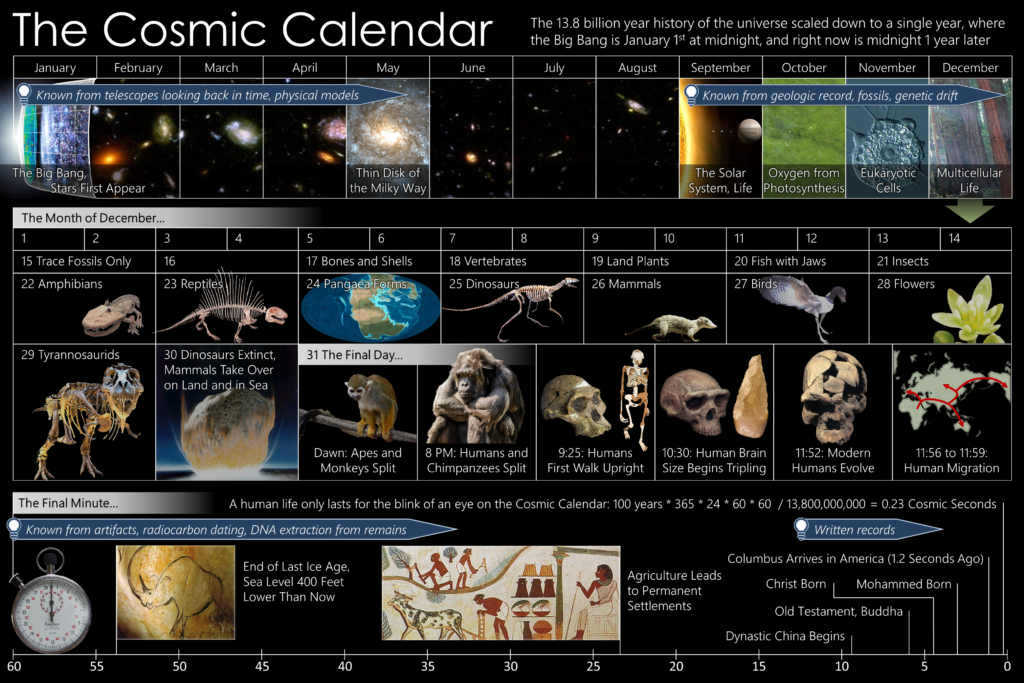
According to humans, the most intelligent creature on the planet is- human. You agree with this statement if you are presumably aware of the monumental achievements humans have bagged within their short time span of existence on Earth at the cosmic scale. Humans have been hanging around on the earth for just the last few seconds on the cosmic calendar. To understand this, just imagine the time elapsed from the Big Bang to the present as one calendar year, with the Big Bang marking January 1st while the current time is the 31st of December at midnight.
On this scale, all the recorded human achievements and industrial and technological advancements have shown up for the past 12-14 seconds. We are just a blip in this cosmic year, yet we have been intelligent enough to have a pretty good understanding of the laws and the rules that run this cosmos and the driving forces behind it. For most of our existence, we have been wanderers, hunters, and gathers, relying on our environment for our safety and survival. It has been just a few thousand years since we devised tools and methods to survive and thrive by exploiting our planet’s resources. This could have been possible because of our intelligence, driven partly by the creed for survival and partly by our curiosity.
Since the advent of our collective consciousness, we have been quenching our curiosities through explorations of our surroundings. From domesticating fire to fantasizing about life on other planets, we have tried to satisfy the intelligent beings within us. Space explorations have become a new area of interest for a class of intelligent people worldwide. There has been a plethora of questions that these people have been attempting to search answer for to. Some of them have and will pave the way for successful applications of space exploration, while some of them have been and are merely meant for the satisfaction of our intellectual ego.
Nevertheless, many of these questions are more significant than others and have an excellent reputation in the club of cosmic mysteries. One such big mystery is the possibility of intelligent life outside the Earth. But, before we hunt for life in the cosmos, we must have an introspection within our planet. Before we step outside our world in search of life, let’s first examine how much we know of life as it is on Earth.
Prof. Stephen Hawking, in an interview, once said that he would be more worried than excited if an alien civilization were able to find us and would visit us. There is a mere chance of them trying to enslave us for their benefit.
Life on the Earth probably germinated around 25th September on the cosmic calendar. The nature of life that originated on Earth was based on the chemical elements and their inter-relations with each other. These elements were original, manufactured in the core of the supermassive star that prevailed before our sun was born from its remnants when it exploded at the time of its death in a fierce explosive event called a supernova. The considerable amount of heavy elements like carbon, oxygen, iron, nickel, etc., got scattered with the star’s debris, star’s debris which later condensed to give birth to the balls that we call ‘Planets’.
These planets revolve around the next generation of stars, called our ‘Sun.’ Our planet, Earth, is among the newly formed balls (planets) that form the Sun’s family, which is that supermassive star’s next generation. When life on Earth originated, the raw material required to create life was already present in the form of the same heavy elements that create our planet and were once manufactured in the core of a supermassive star. Life on Earth is made of the same elements that compose the life of a star. So, technically, we are all made up of ‘Stardust’.
Now that we know that life on earth is based on its chemical composition, by analyzing the chemical composition of all the life forms that ever were present on earth, we can state that life on earth is based on the element carbon. Carbon is an extraordinary element that sports the property of making long chains of stable chemical bonds with itself and all other elements found on the periodic table. This property of carbon is called Catenation. This extraordinary element is the backbone of the diversity of life forms on our planet.
Life forms on Earth may seem very different in nature, color, shape, and size. There may be drastic differences in how they eat, reproduce, catch their prey, avoid predators, communicate or perform their daily activities. However, one factor common in all life forms on earth is that all these life forms are based on the element Carbon. Now, the only life form that we know is based on Carbon. But are we sure that, if there is some other life form present outside our planet, it would also be based on Carbon?
The answer to this can be a straight- No. We can never be sure about the possibility of carbon or some other element being the rudimentary base of life in the cosmos. Who knows, there can be a life form based on silicon, magnesium, or even hydrogen, the most abandoned element in the cosmos. Do we understand the role of chemical elements in the formation and sustenance of life? Or do we know the possible number of elements that can serve as the bases of life formation? So, before we find an evidence-based answer to this, we cannot move ahead with the hunting of life any further.
It has been for just a few thousand years since we devised tools and methods to survive and thrive by exploiting our planet’s resources.
Now, let’s discuss the possibility of finding ‘Intelligent Life’ out in the cosmos. As for the earth, we end the debate by stating that humans are arguably the most intelligent form of life. And there have been reasons and evidence in support of this statement. I mean, just look at the monumental achievements we have embossed on the face of this planet. The Pyramids of Egypt, the use of computers and machines, the understanding of natural phenomena and their predictions, etc., testify to the fact that humans are the prime representation of ‘intelligent life on earth as we know it. Now, there is one question that we must ask before we begin searching for intelligent life.
Do we understand ‘Intelligence’ in the first place? Intelligence, as we define it on earth, is the ability to exploit our surrounding resources effectively and progressively for our existence and to be able to evade potential hazards that may pose a threat to us. Now, one can argue that even beavers can exploit their surrounding natural resources and avoid predators, so do we categorize them as the same intelligent life as us?
Maybe yes, but the counter-argument can be put in this way- since the beavers or any other relevant species is not able to forge new things out of the natural resources and spare time to develop the advanced understanding of the natural world only to exploit the resources, in many ways imaginable, we cannot categorize them as intelligent as humans.
Now, this idea of intelligence can be self-defying for us. Let’s think of an alien who locates our planet and makes a maiden visit to us. Suppose he manages to peek through a snake while in the action of hunting its prey down. Upon his return to his world, his report to his senders can be like this- I saw life form on this planet. It had non-limbs but could move to places, yet can detect its prey through infrared technology and kill its prey by injecting venomous chemicals.
Even if we succeed at finding a form of life elsewhere in the cosmos, there are chances that the planet is yet to host intelligent beings.
This report is of some extraordinary display of intelligence present on earth. Through this example, we can be sure of the fact that we cannot define intelligence in a generic term implementable to the whole universe. In some cases, we find a rock on Mars that grows in size yearly, and we discard it as a non-living thing.
Another point needs to be discussed before we raise our excitement toward witnessing intelligent life. Statistically, the possibility of finding intelligent life can be very low in the vast cosmos, contrary to the fact that the cosmos is filled with billions and billions of galaxies, stars, and exoplanets (planets outside our solar system). This idea is well-known as the ‘Fermi Paradox’. Suppose we look back at the history of life on earth.
For billions of years, it has been dominated by single-celled life forms. The existence of complex life can be traced back around a billion years. If we zoom into the history of the existence of intelligent life, we might find it dating back to just a few million years. So, this indicates that even if we succeed at finding a form of life elsewhere in the cosmos, there are chances that the planet is yet to host intelligent beings. We might wait and return in the distant future to be able to communicate with them. At present, we have, according to the facts of science, developed tools to communicate with our counterparts if and when they show up.
Now, let’s presume we succeed at finding an alien civilization outside our planet and even establish communication with them. We are unsure whether that rendezvous would result in our favour or turn out to be our ultimate mistake! Renowned science fiction writer Arthur C. Clark said whether we are alone in the universe or not, both scenarios are worth freaking out about.
We are free to debate the question of the possibility of life for hours and might return to the same question again. We might be the leading representation of life on Earth with the potential to be the leader for the whole universe sometime in the future. Still, we cannot ignore the fact that something in contrast to this has an equal possibility of occurrence. After all, the only model we know of representing intelligent life is ours.
Now, this sounds scary to me. Prof. Stephen Hawking, in an interview, once said that he would be more worried than excited if an alien civilization were able to find us and would visit us. There is a mere chance of them trying to enslave us for their benefit. Now, you may ask what makes him think such a sceptic like that! Then, read the human history of colonization. Our history is full of evidence that we, as human beings with better intelligence, have tried to enslave inferior human beings. The same can be done to us if we encounter some superior intellectual life form from outside our planet.
So, now we have the last but most important question to answer. After this much analysis, should we keep our search for extraterrestrial life anymore? I would say –Yes. Despite many unanswered questions, we must satisfy our curiosity to know everything. This is what we live for. These explorations define our ingenuity and calibre to mark our names in the history of life at the forefront of life forms as ever.
The Cambridge Dictionary defines Sentience as ‘the quality of being able to experience feelings. ‘Sentient’ is an adjective encompassing a complex whole of cognitive and other high mental functions which definitely cannot be explained abridged.
We have come to know of and associate sentience with humans ( many of us do so ) since we occupy the top of the food chain and proudly sit at the apex of the complex pyramid of life on Earth. So, what is it that makes us sentient? Is other life on earth sentient as well? What about life beyond our planet and in some far-off solar system in ours or a distant galaxy?
SENTIENT LIFE ON EARTH
Humans are social animals, as they say. We live our lives based on what we feel, imbibe and imprint from those around us and the environment. Our complex minds enable us to feel, analyze, assimilate and react to the different stimuli around us. Our lives are shaped by our emotions. We laugh, cry, lament and despise all through. This is done primarily through our senses, both physical and, yes, through those hunches you call gut feelings.
Our minds perceive the world in relation to our identities, which are unique. We are physically distinct from each other, but there is another more profound construct at work here. That is the ‘I’. The ‘I’ is called self-awareness, which tells me I am not part of someone else but rather a unique entity. That ‘I’ is unique in having boundaries, e.g., physical or spiritual.
Our existence on earth for millions of years has depended on our complex emotional skillsets, which have enabled us to survive, interact, reproduce and build complex civilizations. Though, as a species, we have done a lot of harm by perpetuating extremes of emotions in hatred, animosity, and fear-mongering. This, too, obviously has come along with the complex package of being ‘Sentient’. Some people wear their emotions on their sleeves ostentatious in expressing their inners.
While others do not express themselves at all, making it difficult for others to actually peer into the reclusive minds as to what they think or feel. Therein lies our inaptness to actually deal with these dilemmas daily, which is where our other skill sets come into play. We try to assess the reactions of others to what we do or say and then respond accordingly, considering the risks and benefits of our responses. This awareness of ourselves and our interests in relation to the environment and other beings is what makes us sentient. An agglomeration of emotions, consciousness, and intelligence.
Being human, we know that hurting someone will cause anguish, pain, and suffering, which is why we try to abstain (well, mostly). However, as previously mentioned, we do not necessarily know what the other person or animal, for that matter, is feeling at a particular moment. If we apply that to animals since we cannot ascertain their feelings, are we at liberty to cause harm to them? Assuming that they won’t feel a thing? Experiments have been carried out repeatedly, showing that many animals, like cats, dogs, and octopuses, show self-awareness and complex thinking patterns.
The same goes for plants; we know they react to environmental variables quite drastically, showing they are aware of themselves and the environment’s effect on them. Ruthless deforestation and hurting or killing animals makes you question our intelligence as a species where we consider no being sentient beyond our bubble of the human ego. Respecting other sentience may be too much to ask for, considering the loss of innocent human lives in ongoing bloody wars.
SENTIENT LIFE BEYOND EARTH
Our highly complex mind of ours, with all its perks, has one issue. It can be very rigid in terms of adhering to preconceived notions and ideas. It can have a hard time thinking out of the box and beyond specific patterns with which it is already familiar. We ‘assume’ that life would have developed based on the same principles whereby it flourished here on earth. We also ‘assume’ that the same molecular building blocks would be required to develop life elsewhere: ribose sugars, nitrogenous bases, and phosphoric acid. While life on earth depends on water to sustain itself, who knows, life elsewhere might need some other vital ‘elixir’ to thrive.
What if some Aliens have totally different emotional skill sets from ours? Credit: Hunain Riaz
Maybe it’s the least we can do, thinking about life beyond Earth in the image of our own civilization. What really adds more intrigue to the possibility of Alien life elsewhere in the cosmos is that the universe has been around for around 13.5 billion years. While our solar system came into existence roughly 4.5 billion years ago. Our presence here on earth is merely a few hundred million years, which probably would account for a minute on the cosmic clock that has been ticked up till now.
There is a possibility that intelligent life developed elsewhere earlier on the cosmic time scale and probably exhausted itself in terms of achieving the pinnacle of civilization. Or maybe intelligence is flourishing somewhere but has not reached the point whereby it can reach out to live in the cosmos. The vast distances mean that our means of communication are pretty shorthanded in terms of reach. We use radio waves to send out messages and expect to receive the same from some distant part of our galaxy or beyond.
Make no mistake; when I talk about sentient life, I refer to life with intellectual, emotional, and functional capacities that can enable them to develop civilizations. We as humans have a tremendously broad spectrum of emotions and feelings and probably expect alien life to have a bit of the same faculties or maybe the same. What if they are on a totally different wavelength? What if they possess advanced intelligence and functional abilities or even advanced means of communication with each other, say utilizing telekinesis?
Hollywood has been riding the bandwagon of ‘Aliens coming here for nefarious purposes for far too long now. It gets obnoxiously unfair to portray any galactic neighbours as only sinister. Humans love to love, and yes, we have also loved to kill throughout history, and it seems to go on and on. What if some Aliens have totally different emotional skill sets from ours? Maybe they aren’t humanoids with brains or similar structures. Maybe they have minds which work in unison and have senses which can feel and communicate across long distances (quantum entanglement, if you will)
What if they are devoid of destructive emotions of greed, selfishness, envy, and hatred? And they only care about harmony, stability, and love for the universe and its contents. On the contrary, it could be the other way round, mirroring how the entertainment world presents aliens, Nefarious, warmongering, and usurpers of resources (I highly doubt this idea).
SENTIENT ALIEN LIFE AND EARTH, A RABBIT HOLE!
We as a species appear to be quite content with our apparent isolation in the known universe till now. What would it mean to human life knowing that there are beings who are more, if not equally, sentient? How would the human race react to this reality? Over the past many years, there has been a great debate and mystery surrounding unexplained phenomena in the skies. With different opinions regarding the subject matter, with experts divided. That, however, is a pandora’s box and beyond this article. However, the common folk generally have an opinion that if Aliens have, in fact, visited our planet and currently are doing so ( as per some enthusiasts ), why haven’t they made themselves known to life on Earth?
This opinion can be challenged in an intellectual manner. Suppose we assume that they are here and have been coming here for some time now. Now assuming that one would also have to assume that they are at a technological standpoint where they are hundreds if not thousands of years ahead of us. And maybe they are space-faring or even dimension-faring entities. Such a species would definitely be highly developed in terms of intellectual prowess.
Why haven’t the aliens made themselves known to life on Earth?
While observing us humans, would it make sense to intervene in our matters or reveal themselves in all their glory only to make people run amok? That does not just feel like the right thing to do, meddling with the social & religious status quo of a civilization. Yes, they could be observing us, or maybe even concerned for us, considering how we are ruining our environment with all the fossil fuel usage and even nuclear weapons. This is the point that I would like to highlight: such sentient life, which can traverse light years and dimensions, would know how to survive and sustain itself and would want other life elsewhere to do the same.
THE SEARCH AND WHAT TO EXPECT
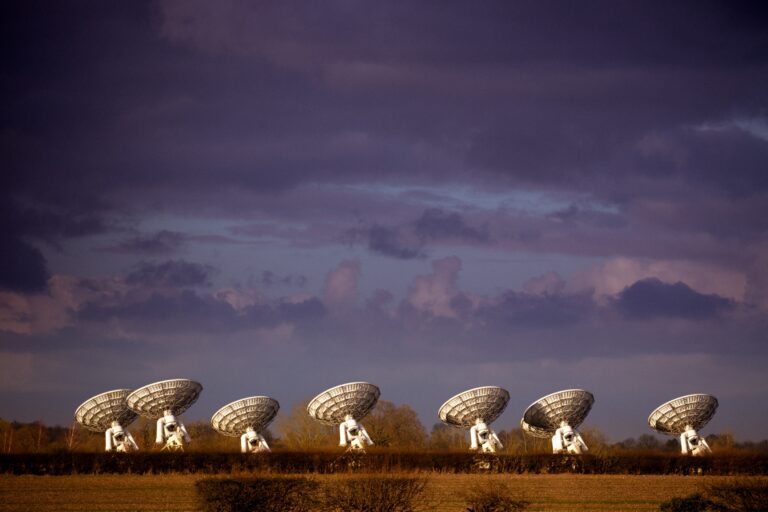
Scientists are doing their best to send out signals and awaiting a return message using our radio tech. And the recently launched groundbreaking James-Webb telescope will look out for exoplanets and habitable atmospheres. Our rovers rolling about on our neighboring planets. We certainly do our part in looking out there. And here on Earth, we have intricate and large telescope array systems like the ALLEN telescopic array, which has the added edge of listening for signals across large swathes of the sky.
But as I mentioned earlier, maybe sentient life somewhere is too advanced to use the technology which we use to communicate. We aren’t even aware of the true nature of dark matter, which is to say we know that sentient Alien life would use the same means of communication and, for that matter, follow the same ladder of civilization evolution. Scientists and organizations should keep open minds and preserve the niche of abstract ideas and possibilities.
Regarding how evolved a civilization could be regarding technological progress, a scale was devised by Russian Astrophysicist Nikolai Kardashev in 1964. The Kardeshev Scale. The scale categorized possible Alien civilizations according to the energy they can utilize. The scaling was from 0 to III. Type I would be one that would be able to harness all the energy of the nearby star and store and use it as required ( we aren’t even a type 1 civilization as yet since it would need us to bolster our energy production by thousands of times to reach the first step).
Type II civilization would be able to use starlight energy and control the star’s production of energy utilizing colossal structures (Dyson spheres). The hypothetical III civilization would be what one could call a genuinely galactic race that has mastered everything about energy production, storage, and utilization. If you consider humans to reach this pinnacle of progress, we would probably have developed sentient robots or even human/robot hybrids by then. Beings that could traverse the vastness of space without the worries of biological vulnerability. Astronomers have extended this scale up to V, which eventually includes the omega point of civilizational progress, where the whole universe’s energy is at its disposal.
To round off, It would be pertinent to question our preparation to disclose and un curtain Sentient Alien life. Are the world Governments ready? Is there an organization that has made specific rules and regulations concerning contact? What will concern right and wrong in dealing with such sentience? These ideas might seem sci-fi right now, but this will be inevitable, and we need to be prepared for it.
The fear-mongering done by media and other outlets makes me fear the freakishly panicky response humans might have to unequivocal disclosure. This would call for bringing together people of expertise and repute who could formulate specific guidelines and solutions to tackle the ruckus disclosure may cause.
Current news and media outlets are teaming up with articles and news regarding the possibility of life elsewhere and whether we are being visited or not, considering the revelations regarding UAP/UFO’s. For one, I would keep my views regarding potential sentient Alien life as being benevolent and benign whether we are faced with disclosure in our lifetimes or not.