4.4 C
Pakistan
Monday, December 15, 2025
Home Blog Page 51

Scarcity of Drinking Water & Sanitation in Baluchistan

0

Globally, water resources face threats to the growing population, increase in urbanization, rapid industrialization, and an increase in food production. As a result, this whole scenario displaying a global threat to human health and the ecosystem.

In Pakistan, especially Balochistan’s vulnerability to natural disasters, climate changes, and external and internal migration due to human-made conflicts often affect thousands of people who need emergency water and sanitation support. This situation imposes sustainable access to water, sanitation, and hygiene issues in the primary health units.

The UNICEF section on WASH (Water, Sanitation & Hygiene) explained the current status that although Pakistan has achieved significant progress in improving sanitation access, 25 million people still practice open defecation, resulting in adverse health children. In Pakistan, approx 53,000 children under age five die annually from diarrhea due to insufficient water and sanitation. Similarly, about 70 % of peoples are forced to drink bacterial water.

Contrary, the dawn report 2019, investigated that about 9,247 government-run schools in Balochistan don’t have drinking water; 9,838 schools have no toilets, which sows a bleak picture of WASH facilities at the provincial level. 

Although a global issue these days, Balochistan is facing a scarcity of water for a long time. The majority of people don’t have access to safe drinking & water for domestic use. 

The provincial government has declared a water emergency in most districts. But they are reluctant to admit it that they don’t have a future roadmap for water scarcity. Most of the local tube wells are dysfunctional due to the unavailability of water and funds. More than 2500 government & private tube wells are functional in the city, and similarly, the daily water consumption is 94%. Contrary, the underground water level is going down, an alarming situation for the provincial govt. 

There is a dire need for sustainable improvement in the natural resource management (NRM) and WASH (water, sanitation, and hygiene) sectors of Balochistan. 

Natural Resource Management (NRM) Sector

NRM sector

To protect natural resources (ecosystem, water, land, forest wildlife, etc.) and promote sustainable utilization, specifically water management and conservation for the community needs in the local context. 

To support and educate communities for knowledge and behavior change about better water consumption and generating economic benefits from natural resources.

Providing access to safe drinking water & Irrigation facilitates

BRSP, under its “Integrated Water Resource Management (IWRM)” project, has been working on water conservation & management since 2016 via harnessing people’s potential for uplifting their economic and social services in the local context. 

 BRSP, under its IWRM project, has reached a total of 39,919 households and constructed 732 Irrigation Schemes including (Spate irrigation, Solar pump, storage pond, irrigational channel, and pipeline) which benefited 34,461 households at targeted districts (Qilli Abdullah & Pishin) of the province. Similarly, 141 Karezes improved for drinking and irrigation purposes, which helped 3500 houses. Moreover, 57 Check Dams constructed in rural districts, benefited 1300 households. Besides, 1,058 homes got Solar Electrification facilities at their localities. On the other hand, around 50,000 plants were planted in different rural areas. 

Educating Communities for Behavior Change & Economic Opportunities

For behavior change and generating economic opportunities, manager NRM & WASH section added that BRSP introduced 6 High Irrigation systems with low delta plants and installed 65 Poly Tunnels to generate economic earrings. In general, 94,165 households benefited via different CPIs interventions and awareness sessions delivered in the province’s rural districts. Overall, 94,900 trained on NRM (including IWRM and Water management) including (70 individuals trained on O&M of Solar lightening; 1,000 community members trained on IWRM (Integrated Water Resource Management), and 150 government officials trained on service delivery. 

WASH sector

BRSP’s WASH (water, sanitation, and hygiene) Sector

BRSP’s aim in the WASH sector is; to reduce poverty & vulnerability by improving the population’s health facilities by ensuring better access to clean drinking water facilities, improved sanitation systems, and hygiene practices.

Providing Access to Clean Drinking Water Facility

BRSP has been working in the WASH sector for the last two decades and completed various projects during this period. From 2009 to 2014, BRSP implemented a project titled, “Improved access to and demand for quality water, sanitation & hygiene services in Quetta, Pishin and Qilla Saifullah, Balochistan” the Government of the Federal Republic of Germany through KFW Development Bank. This project was completed in three phases. BRSP, under this project, came into partnership with the government of Balochistan titled “government –civil society-community.” In which, government department called PHED (Public Health Engineering Department) and BRSP implemented a community sustainable ownership project by strengthening the allocation of land for source development under different water systems. It constructed 1,240 Small and Large Scale Drinking Water Schemes under various projects, which benefited more than 1 million people (male and female) across Balochistan.

Provision of Safe Sanitation facilities

For Safe Sanitation facilities, BRSP constructed 22,749 toilets, which benefited 138,159 people (including emergency shelters toilets and PWDs toilets). Under community development schemes, the organization provided sewerage and street pavement to 48 villages of Nohisar at district Quetta. Moreover, BRSP rehabilitated/installed WASH facilities in 561 Schools, which benefited 171,605 students and teachers. Similarly, 5 Menstruation Hygiene Management (MHM) washrooms were constructed in Girls Schools. Contrary, the organization repaired & provided necessary WASH facilities to 464 (16) Basic Health Centers.

Educating Communities on WASH Facilities

For Behavior Communication Change (BCC), a total of 34167 students & teachers received School Sanitation and Health Education (SSHE) knowledge on healthy and hygienic behaviors and ended open defecation. Similarly, 444 Wash committees and 257 WASH Clubs formed in government schools. On the other hand, 5000 girls school students sensitized Menstruation Hygiene Management (MHM) and provided 60 MHM Kits. Moreover, 24,500 hygiene kits were distributed to government schools of district Quetta. Besides, about 318,512 community members were sensitized on health and hygiene. In general, a total of 321 villages was certified as ODF.

Contributing to the Government’s Sanitation Policy

BRSP is also contributing to the government of Balochistan Sanitation Policy via striving & supporting an environmentally friendly open defecation free toilet, solid & liquid waste management, and sustainable sanitation systems that promote healthy and hygienic practices of WASH in the province. Under its GIZ S4M (Sanitation for Million) project, the organization provides access to essential sanitation services, including the promotion & construction of latrine in (household & schools) at the province’s rural and urban communities.

BRSP is also promoting an integrated and total sanitation approach called Pakistan Approach to Total Sanitation (PATS) in communities and schools. Moreover, the organization is also educating communities & stakeholders on sanitation (WASH) to bring behavior change among them. 

Currently, BRSP implements the S4M (Sanitation for Millions) project in the province’s targeted government schools. The project aims to improve sanitation & health facilities, including menstrual hygiene management and friendly toilet facilities in government girls. 

This includes the construction of decentralizing wastewater treatment & irrigation systems in the province. And overall rehabilitation and improvement of sanitary and hygiene facilities.

The organization recently inaugurated DEWATS (decentralized wastewater treatment system) at BUITMS, Quetta. The project was designed explicitly for wastewater management to reuse it for irrigation & plantation purposes. This is a process of reusing wastewater for irrigation or other drives in Baluchistan.

Though BRSP’s contributions & interventions contribute to the NRM & WASH sectors of the province, the hour’s need is to bring sustainable improvement. Balochistan is going the worst water crisis ever, and the natural resources are also depleting due to overpopulation and climate change. This is the right time that the government takes strenuous efforts with the NGO partnership because if we didn’t implement it today, our province would face severe consequences of climate change shortly.

Find daily water intake calculator by Fitness Volt:

Find Your Daily Water Intake Calculator

Pakistan Ventures into the Private Space Industry

0

The space industry is on the edge of a widespread transformation; it’s absolutely a viable industry to invest in. Just like software, as the last decade has seen several budding companies like SpaceX and Virgin Galactic begin to seek to profit in an area where most of the money was made from military contracts or expensive communications satellites.

There are three types of space companies in the market: Public companies that are purely space-focused, public companies with exposure through a significant space subsidiary, and private companies that soon may either go public or spin-off divisions.

Pakistan’s first private space company, The Rocket & Satellite Company Limited, registered with the Securities and Exchange Commission, Government of Pakistan, in December 2019. Due to COVID19 and the Global economic recession, the space missions are on halt worldwide that affected the pre-planned route of TRSC, but it would be functional soon. The company announced that it will offer low-cost solutions in three main areas. Our Chief Editor, Saadeqa Khan, had a brief conversation with Mr. Sami Ullah Khan, CEO of The Rocket and Satellite Company Limited. Below are some excerpts from this interview. 

Profile photo of Sami Ullah Khan .
Sami Ullah Khan, CEO of The Rocket and Satellite Company Limited

Saadeqa: Let us know about your early life and education? What can you tell us about your struggles in getting in there?

Sami Ullah: First of all, I am thankful to you guys for having me on Pakistan’s leading Science Magazine; it’s an honor for me.

Well, my domain is computer Science. I started my career in 1999 with Pakistan’s leading software development company with cream people in the IT industry. I have worked with local and international companies in Pakistan and outside the country.

Computer science is an engaging domain, and you have to keep dating yourself about the new enhancement in this technology. 

Saadeqa: What led you to develop an interest in the field of space sciences?

Sami Ullah: I learned about space tech during my education and job. Later on, I got a chance to research one of the space-based projects that attracted me, but space tech is a much expensive domain, so I guessed that it could make a bit easier, simpler, and cheaper for the space companies and its users, and planned to offer them low-cost solutions. From there, I kick-started my space tech journey. Later, I followed different international Space related groups and associations.

Practically, we are willing to provide a manageable and straightforward solution to all facing challenges as a tech-related professional. As I mentioned, if one is from the IT field, he has to keep updated himself more than other fields because of rapid changes in this domain that dragged me towards the idea of integrating computers with Space Tech and making it easier and cheaper.

Saadeqa: What do you think about the importance of space sciences for Pakistani youngsters?

Sami Ullah: There are many opportunities in the Space domain in Pakistan as worldwide; most industries are associated with Space Tech, only through GPS. There are many areas where space Tech plays a vital role like Agriculture, remote sensing, insurance, and more.

There is no scarcity of talent in Pakistan for space sciences. I believe that if opportunities are provided and guided in the same direction, they can do fantastic work.

Saadeqa: You recently made an announcement for the launch of Pakistan’s First Private Space Company. When this launch is expected, and what are your newly established Rocket and space satellite company’s main objectives?

Sami Ullah: Actually, we already registered The Rocket & Satellite Company with SECP, back in December 2019, and have many plans to initiate the ideas, but due to the Covid 19 worldwide pandemic business went down in slow mode, that halted space missions also. 

As mentioned, TRSC aims to offer low-cost quality services, solutions, and products under the one roof, making the work of Space companies and users a bit easier by providing the practical and professional environment to the scientists, engineers, professionals, and students. 

Saadeqa: As per the announcement, Your Space Company will offer low-cost solutions in three main areas: space launch systems, satellite manufacturing, and ground segment as a service. Let us know about these in detail? 

Sami Ullah: There are three primary and key areas of space tech;

  1. Ground segment

This is the section that receives the data from satellites orbiting in space.

2. The Satellite

There are many applications or roles of a satellite like weather tracking, remote sensing, communication, and broadcasting. The artificial satellites take the signal from one part of Earth and transmit to another region. It serves in different orbits like LEO, MEO, and GEO, depending on requirements.

3- Satellite Transportation

To transport the Satellite from Earth to Space, we need a space launch system or rockets.

Space industry

Saadeqa: Would you like to brief us about the Rocket & Satellite Company Limited’s space debris solution?

Sami Ullah: Space debris is very much dangerous for spacecraft and satellite and flight crew. Now space industry is growing, especially some space companies are going to offer the Space tourism projects. The satellites and launch vehicles are costly hardware that can face problems with space debris.

Our company TRSC will address this critical issue with a 2 layer solution; one is tracking by using Artificial intelligence AI and to fix the Space debris. Right now, this solution is in the research phase.

Saadeqa: How will your newly established space company help to increase the lifespan of satellites in Space?

Sami Ullah: As I already mentioned, the Satellite is an expensive machine, sometimes it needs more investment to build it due to requirements and application. Furthermore, the launching of Satellite makes it more extensive, it has some kind of expiry time frame as well, so if we calculate the investment to build and launching of Satellite to the working time frame of a satellite, it shows the investment is much higher and the active life if short. So automatically, the outcome of a satellite to the end user comes costly. We intend to address this issue with a technical system that will entirely perform in Space (orbit) and will result in an increase in the life span of a satellite.

Saadeqa: In 2019, I happened to talk with Dr. Yarjan Abdul Samad, the first Pakistani space scientist at Cambridge University, for Dawn. He briefed me about his future endeavors for the promotion of space sciences in Pakistan. Do you have plans to coordinate with him?

Sami Ullah: Well, in space tech, for supporting the world and humanity definitely, the cooperation is going on between professionals and space companies. So, we are also open to every individual or space company for constructive and meaningful discussions and collaboration, including Dr. Yarjan Baloch, a great inspiration for our youth in space sciences. 

Saadeqa: You aim to provide a platform for Pakistani scientists and engineers. Let us know what you have planned to achieve your goals?

Sami Ullah: Yes, I want to see our youngsters perform at an international level in Space tech. The TRSC platform is open for all to learn and serve in the Space industry and Pakistan. Also, we are working on some collaboration with Pakistani Universities that will execute in the second phase. 

Saadeqa: Behind every space mission, there is a huge team of researchers, scientists, and engineers to make discoveries happen. Do you think we can make our first crewed mission a reality?

Sami Ullah: Actually, it depends. A small number of smart professionals can produce incredible output. Yes, we can; I am indeed confident that we will send crewed mission InshaAlllah.

Saadeqa: What challenges are you facing daily for the launch of your Rocket and Space Satellite company? What is next for you?

Sami Ullah: I believe that if you have a passion and a good plan, you can easily manage all related challenges. Space tech is an expansive domain, and the big challenge is investment and finance to cover the development cost. I have some plans and very hopeful that I will manage it easily.

After our first launch, as announced, in 2025, we will focus on the moon and beyond. 

Also, Read: Pakistan’s first private company in space

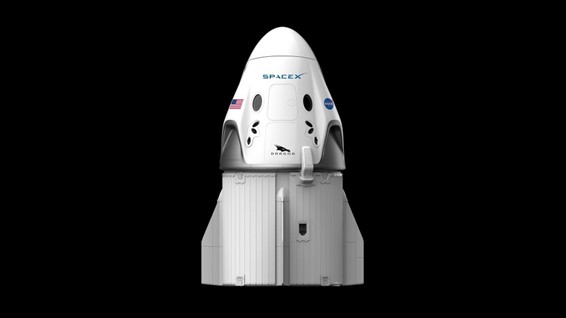
Dragon in Space: A story of how SpaceX beat industry giants in the race to ISS

0

Nearly 50 years ago, humankind first stepped on another planetary body on mission Apollo 11 with Commander Neil Armstrong and Buzz Aldrin. The entire world was watching and the Americans were celebrating their victory over the Soviet Union in a fascinating race to space. After the success of Apollo 11, the political will to explore deep space plummeted, and contrary to public inclination towards continued space exploration, no significant steps were taken. However, since 2012 remarkable initiatives have taken place, and the world has seen new game-changing aerospace company SpaceX battling with the giants of the industry. 

SpaceX, Space Exploration Technologies and Corporation, was founded by the owner and founder of Paypal, Elon Musk, in 2002. SpaceX has had a bumpy ride since its creation, but in 2019 it did the unexpected and reached new heights of innovation and technology in the space industry.

Boeing has a history of working with NASA on its major space programs and has also played a significant role in the aerospace industry for around 100 years. Boeing uses conventional methods that align with the expectations of NASA; hence, NASA trusted Boeing for the next human flight. The officials at NASA thought that there shouldn’t be any discussion, and the contract should be given to Boeing. SpaceX was not even considered a possible fit for designing and manufacturing rockets for this space exploration program. A former deputy NASA administrator, Levi Garver, who pushed the organization to outsource human spaceflight to the private sector, said, “One industry veteran told me, ‘You know their rockets are put together with rubber bands and sealing wax,’ ‘it’s not real, it won’t fly.’”

On 20 December 2019, Boeing was tasked with sending an uncrewed cargo spacecraft to dock the International Space Station (ISS). Boeing spacecraft Starliner CST-100 was launched from Cape Canaveral, Florida, with high hopes to demonstrate Boeing’s ability to cater to a human flight in summer 2020. Still, Starliner failed to stay in the correct orbit and landed back after two days in New Mexico’s White Sands Missile Range. United Launch Alliance Atlas V rocket delivered Starliner into the appropriate orbit. Still, after 15 minutes of flight, the spacecraft’s clock went 11 hours off, making the spacecraft believe it was in a different part of the mission. The backup command would have been able to maneuver the spacecraft, but there was a communication error as the Starliner was between NASA’s Tracking and Data Relay Satellite System satellites. Few things went really wrong, but in defense, Boeing officials said that “a lot of things did go right” and claimed that these are the reasons why we carry out test flights.

Starliner
Boeing’s CST-100 Starliner after integration with its Atlas 5 rocket. Credit: Boeing

After NASA’s thorough investigation Kathy Lueders, Associate Administrator of NASA’s Human Exploration and Operations Mission Directorate, came up with a list of 80 recommendations to fix Starliner’s glaring problems. She said, “Perhaps we didn’t have as many people embedded in that process as we should have,” and further explained, “the strategy was because we’re buying a service, NASA did not have a requirement to have a systems engineering management plan,” and “If we had understood what that structure was, we would have been better able to plug into the decision-making process. In particular, how they were integrating software and hardware pieces together. We thought we understood it, but over time we realized it had changed.”

Because NASA’s approach was more “traditional,” it focused more on the programming techniques of SpaceX, “When one provider has a newer approach than the other, it’s natural for human beings to focus more on that one,” Steve Stich, Manager of NASA’s Commercial Crew Program said.

In this intriguing race of technology, time, and money, SpaceX’s role was more like a rebellious teenager while Boeing was a very fatherly figure. But the winds were with the new comer’s unconventional techniques, which astonished every spectator. SpaceX has been delivering cargo in space since 2012 and was well experienced in the field by the time NASA decided to send humans to ISS for further experiments and exploration. It had the edge over its competitors in terms of innovative technology, the fascinating one being autonomous docking to ISS, and being cost-effective. According to NASA’s management of crew transportation of the international space station audit carried out in Nov 2019, SpaceX’s average cost per crew was $55 million compared to $90 million of Boeing.

A comparison of SpaceX and Boeing
A comparison of SpaceX and Boeing. Credit: NASA OIG analysis of Agency Information

SpaceX’s Falcon 9 was also better suited for the mission because of NASA’s strict limitations of the “firm-fixed-price” contract, which didn’t allow contractors to spend on technology without being economical. It has been SpaceX’s trademark that it reuses its rockets along with other equipment. This was a significant reason why Elon Musk’s inchoate aerospace startup was able to take its place in the market amongst heavily funded and experienced companies. As per sources, a 125,000-gallon liquid nitrogen tank found in a scrap was also made to use by the engineers at this organization. In an interview, Musk said, “We had to be super scrappy,” Musk once told The Washington Post. “If we did it the standard way, we would have run out of money. For many years, we were week to week on cash flow, within weeks of running out of money. It definitely creates a mind-set of smart spending. Be scrappy or die: Those were our two options. Buy scrap components, fix them up, and make them work.”

During this endeavor, SpaceX lost two Falcon 9 rockets and also struggled with its parachute system for the safe landing of the spacecraft. The Dragon capsule was also completely destroyed during emergency abort system testing.

But SpaceX analyzed its mistakes and fixed them, because of which it was able to gain confidence from NASA and successfully receive 2.6 billion dollars to provide with six operational missions to and from space stations. Boeing also received 4.2 billion dollars but is yet to demonstrate an uncrewed flight to ISS). The discrepancy in amounts assigned to both the companies fueled outrage to which Elon Musk said, “It doesn’t seem right,” he also added, “not fair that Boeing gets so much more for the same thing.” However, Boeing responded that they are offering flexibility and carry cargo equivalent to 5th passenger on its spacecraft; therefore, the overall package seems to be costly.

NASA astronauts Robert Behnken, left, and Douglas Hurley participated in mission Demo-2. Photo credit: SpaceX

Even with differences in funding, NASA’s claimed that SpaceX’s Crew Dragon spacecraft is one of the “safest and most reliable spacecraft ever built.” On 30th May, on mission Demo-2, SpaceX launched two astronauts, Bob Behnken and Doug Hurley, in SpaceX Crew Dragon spacecraft at 3:22 pm EDT. The Falcon 9 rocket took off from Launch Complex 39A at NASA’s Kennedy Space Centre in Florida.

After successful completion of Mission Demo-2, NASA’s Commercial Crew Program will officially certify Crew Dragon for operational, long-duration missions to the space station. This mission will act as a test for all aspects of human space flights ranging from launch pad 39A to spacesuits. 

This expedition is known as the “The New Beginning” by many. This event marks the history of not only space exploration but is also an epitome of the advancement of the human race concerning intelligence and innovation. This is a significant step towards the Artemis program, where extensive research experiments will be conducted on the moon, which will prepare us for future expeditions to Mars. This event also holds a geopolitical significance because, previously, NASA sent American astronauts on Russian rockets, which jeopardized the security of the USA. Still, now private companies being a part of space exploration indicates that this is not a race between two nations but a healthy technological competition with an element of economic interest.   

Also, Read: Everything you need to know about Remote Sensing

ISS: When Technology Intersects Biology

0

Amputated flatworms, ant farms, and talking zucchini sounds fanatical, right? Such unrealistic creatures were created and rigorously tested at the International Space Station (ISS), under highly controlled experiments to see the viability of such creations in unusual conditions present in the lower earth orbit.

International Space Station is a satellite designed in a way that is habitable by humans even in un-habitable situations. One might see it as a white spot on the sky that flashes across our vision without changing direction. Under the supervision and collaboration of five main agencies named NASA, JAXA (Japan aerospace exploration agency), Roscosmos (Russia), ESA (European space agency), and CSA (Canadian space agency), the International space station is a hub of genius brains that are open to unique experimentations, innovations, and ideas.

A question that pops up in mind is: What is the real motivation behind such experimentation? The main aim is to observe the influence of microgravity on physiological processes to further expand our knowledge about biology. 

International Space Station conducts experiments related to diverse fields such as space sciences, biological sciences, physical sciences, and many more. The article below primarily sheds light on the eccentric yet amazing biological experiments conducted at ISS.

Headless Flatworms

Researchers at Allen Discovery Centre at Tufts University sent planarian flatworms to ISS to observe the effect of microgravity and micro geomagnetic field on the growth and regeneration of these worms. The purpose was to determine if earth induced changes persist in these worms once they would be back to earth from space.  Cleaved and fragmented flatworms were sent into space in half-filled water tubes. After a period of 20 months, these worms were sent back to earth. The most surprising aspect that was found: one of the flatworms with cleaved head regenerated a rare double head. This was rather an astounding occurrence, never found before. Furthermore, when researchers abscised the heads of the space sent worms on earth, the middle headless region regenerated into a double-headed worm.  Another significant change observed by scientists at Tufts was that the non-amputated flatworms sent to space experienced spontaneous fission (splitting) unlike the worms sent back to earth.

ISS
Researchers at Allen Discovery Centre at Tufts University sent planarian flatworms to ISS
One of the flatworms with cleaved head regenerated a rare double head

In response to these variances, scientist started drawing possible explanations to justify this behavior. Temperature change and light intensity were thought to be responsible for observed variations. Further experiments were conducted to determine the effect of both of these factors on different species of flatworms.

Ant Farm

Ant-stronauts farm or ant farm was an experiment conducted under the supervision of Ecologist, Deborah Gordan back in 2014 with the motive of observing the response of ants while solving a collective search problem. It was pivotal to get an insight into how ant colonies adapt as a group in extreme conditions (microgravity) to figure out various algorithms they employ to do so. The advantage of this experiment was two folds: Questing for new algorithms and using those algorithms for application in robotics.

Ant farm was an experiment conducted under the supervision of Ecologist, Deborah Gordan back in 2014

The experimental design included the use of pavement ants or Tetramorium caespitum. Eight ant groups each with 100 individuals were sent to ISS. A control experiment using a similar number and types of ants was set up back at earth to compare the results. Cameras were installed and software was used to monitor ant movements and their interactions, hence determining the influence of microgravity on their motion. The group density of ants in an area is needed in many instances such as food search. The density of ants is inversely related to the area of ground they cover. Higher density in a given area causes them to move in a circular motion in the same area. Lower ant density at a respective area favors their movement in a roughly straight path hence covering more land area. In an interview with a BBC reporter, Gordon said, “The idea is to ask the ants to search a small space- and then provide more space and see what will happen when the same number of ants have to use a larger space.”

In a TED talk, Gordon commented “The idea here is that the ants are working so hard to hang on to the wall or the floor or whatever you call it, that they are less likely to interact and so the relationship of how crowded they are and how often they meet would change.”

Tissue chips

Funded by the NCATS (National Centre for Advancing Translational Sciences) program and NIBIB (National Institute of Biomedical Imaging and Bioengineering), the tissue and organ on chip research experiment laid its roots in ISS to get in-depth knowledge of human physiology and diseases. This will enable scientists to get clarity on the tissue functions and potential treatments of human diseases in unconventional conditions. The invention of such chips in outer space encompassed many scientists and researchers like those associated with genomics, pharmacology, pathology, disease biology, and many more.

Tissue and organ on chip research experiment laid its roots in ISS to get in depth knowledge of human physiology and diseases

This experiment comprised of two phases. In the first phase, researches developed and tested tissue chips at ISS science labs, under the influence of microgravity. The second phase shed light on the potential use of these tissue chips before clinical trials took place. This aimed to ensure efficient functionality and a better understanding of the work.

The tissue chips experiment comprised of two phases

The first NIH-supported tissue chip was launched into space on December 2018 as reported by NCATS. In May 2019, four more NCATS-funded tissue chips reached ISS. These four chips were analogous to lung and bone marrow, bone and cartilage, kidney and blood-brain barrier that protects our brain. Added to this, a third chip was launched in March 2020 that focused on cardiac and intestinal tissues. These experiments are set on the road of progress to open up new opportunities and endless world of possibilities to produce something beneficial to humanity even in unique conditions such as those found in lower earth orbit.

Talking Zucchini

Ever heard the term Talking Zucchini? Don Pettit coined this term, in his blog “Diary of a Space Zucchini”, to narrate the story of Talking Zucchini where he personifies zucchini. This story is the life experience of a four-leafed zucchini’s sprout grown in space. Just like any other biological experiment conducted in outer space, the aim of performing this experiment was to learn the impact of microgravity on the growth of a plant.

ISS experiment
Talking zucchini is the story of the life experience of a four-leafed zucchini’s sprout grown in space

The experimental design includes the aeroponic method of growing plants where the plant is enclosed in an air-filled bag with a small amount of water placed primarily at the corners of the bag. Water is pulled up via capillary forces in weightlessness to ensure the supply of nutrients needed for its growth. Pettit, as the plant itself, mentioned in the blog, “These 16 short periods of day and night every 24 hours are making me jet-lagged. My photosynthesis activity just gets going and then abruptly shuts down. Repeating this cycle is putting me into a dither. My leaves do not sing as loud.

ISS experiment
The experimental design includes the aeroponic method of growing plants

Zucchini was not the only plant that was tested; sunflower and broccoli also became part of this experimentation. Sunflower stood upright, whereas broccoli didn’t grow so lively. It’s week and small sprouts are revealing its story.

This is not the end though. The experiments described above are just a few of many that are constantly being performed in outer space that includes space squids and space mice. In near future, there may be an in-depth study of one of these experiments that could trigger the development of essential tool for human well being. Numerous other experiments are yet to be seen, more unusual and more complex areas of studies are yet to be revealed. The more we explore, the more we enlighten our minds with untapped theories and un-explored scientific knowledge.

As Brian Cox said:

“There are billions of places out there that we know nothing about. The fact that we know nothing about them excites me, and I want to go and find about them- And that’s what science is”.

References

Also Read: Space Missions; Insights from the past

Everything you need to know about Remote Sensing

0

The collection of data from a distance by means of satellite or aircraft called remote sensing. Let’s dive into this exciting process and see what we have achieved until now and what we can hope to do in the future!

History of Remote Sensing

The term Remote Sensing was first used in the 1960s. The historical backdrop of Remote sensing starts with photography. During the American civil war, the photographs taken from air balloons were primarily used for military purposes. The beginning of different sorts of Remote sensing detection was started back in World War II. After the end of World War l, Aerial photography was being used for meteorological and agricultural purposes, and by the time it grew with the improvement of radar, sonar, and warm infrared location frameworks. Since the 1960s, sensors have been intended to work in essentially the entirety of the electromagnetic range. Today a wide assortment of far off detecting instruments are accessible for use in hydrological examines.

How it works?

Remote sensing devices have a sensor to collect data, sensors are mounted remote sensing devices, so they can collect reflected radiations from Earth. For example, airplanes, satellites.

There are two types of sensors: Active sensors and Passive sensors.

Active Sensors: Active sensors have their own source of energy i.e. they have such devices, which emit radiations to the particular area of examine.

Passive Sensors: The passive sensors depend on Sun for radiation emission.

Active sensor-based remote sensing work can be carried out at any time while Passive sensor-based remote sensing can only be carried out in the presence of bright daylight.

Remote Sensing
Remote sensing devices have a sensor to collect data

Pakistan in the field of Remote Sensing

The Pakistan Space and Upper Atmosphere Research Commission (SUPARCO) leads space research in Pakistan. Suparco’s projects comprise of the starting of sounding rockets and satellite applications, particularly far off detecting and interchanges. Its drawn-out objectives are to create interchanges and distant detecting satellites and to dispatch lightweight logical satellites in close Earth circles.

Pakistan’s Early Space Flights

Badr 1:

It was one of the very first satellites of Pakistan that was launched in 1990 by SUPARCO. It was launched into a low Earth orbit through a Chinese rocket carrier.

This launch helped Pakistan in progressing in the field of military, technological, and scientific developments and also provided data on radio-signal distribution in the ionosphere (the upper most layer in space).

With the successful development and launch of the Badr-1, Pakistan became the first Muslim country and second South Asian country after India, to place a satellite in orbit. The satellite provided Pakistani scientists an academic, scientific, and amateur community experience in telemetry, tracking, and control and data communications as the satellite successfully completed store and dump message tests for 5 weeks.

Badr-1
Badr-1 was one of the very first satellites of Pakistan that was launched in 1990 by SUPARCO

This was the first and major step towards the development in the field of Remote sensing in Pakistan.

Badar-B:

After that, Badar-1 the satellite that has launched by Pakistan is Badar-B. The Badar-B was more advanced than Badar-l, with a CCD camera for pictures of Earth and a framework that permitted ground stations to alter the satellite’s position in space.

Satellites launched by Pakistan

Pakistan has almost five satellites in space. Pakistan Remote Sensing Satellite (PRSS-1) was the first dual-purpose, i.e. optical and earth observational, remote sensing satellite. It was launched by the collaboration of China from China’s Jiuquan Satellite Centreon 9th July 2018. One of the primary purposes of this satellite was to monitor progress as they build the China-Pakistan Economic Corridor.

Pakistan Technology Evaluation Satellite-1A (PakTES-1A), which was originally planned and created by Pakistan Space and Upper Atmosphere Research Commission (SUPARCO) engineers, has additionally been co-propelled with PRSS-1 by a similar vehicle.

PAKTES-1A

These launches were held in china because Pakistan is still lacking in the field of launching.

Impacts of recently launched satellite

According to officials, it would help country in commercial satellites for collecting information related to:

  • Meteorology.
  • In better land management, and disaster management.
  • Urban planning, mineral exploration.
  • Crop yield forecasting, water management.
  • Both civilian and military applications.
  • One of the major Impacts can be seen in the position of Pakistan in the world space race.
  • It also helps to spread general awareness for the study of Space Science
  • Plus it flourishes Pak-China Friendship that leads to the development of Pakistan’s economy especially in the field of Education and Job.

Remote Sensing as a part of course curriculum in Pakistan

Two meetings of the National Curriculum Revision Committee (NCRC) for Remote Sensing (RS) & Geographical Information System (GIS) were held at HEC Regional center in Karachi (14-16th March 2005) and Lahore (16- 18th May 2005). Realizing the importance of RS & GIS in the developed world area as well as in developing countries such as India, these meetings were organized by the Higher Education Commission of Pakistan. The focus was given to develop international standard curricula and launch 4 years BS and 2 years MS degree programs for both public and private sector degree-awarding institutions and universities of Pakistan. Various Remote Sensing, GIS, Information Technology professionals, Geographers, and educationists from all over Pakistan attended these meetings.

Future of Pakistan in Space Science

Pakistan’s Federal Minister for Science and Technology, Fawad Chaudhry, unveiled some plans last year for the promotion and development of space science.

“Proud to announce that selection process for the first Pakistani to be sent to Space shall begin from Feb 2020, fifty people will be shortlisted — list will then come down to 25 and in 2022 we will send our first person to space,” Chaudhry said. This will be the biggest space event of our history, he added. 

Chaudhry said the Pakistani Air Force will play a lead role in the selection process of the astronaut for the space mission. 

“The Air force will be the custodian of the selection process. Globally pilots are selected for space missions,” he was quoted as saying by the Dawn News website. “Ten pilots will be trained and eventually one pilot will be sent to space,” he said.

Also Read: Pakistan’s first private company in space

Future of Space Science: What’s Next?

0

When you look up at the skies, you may have asked yourself a question. What lies beyond these skies? The question followed by many other questions, and when you can answer one question, many other arguments pop up in your mind seeking their answers. The magical Universe holds infinite mysteries and anomalies that are beyond human understanding, no matter how advanced technologies we have. The human race has to learn more and more about the Universe each passing day. The science of space is fascinating but complicated at the same time. 

Once upon a time, human expeditions were constrained to our planet Earth or just observing the glowing icons on the night sky, but with the technology we possess now, we have traveled beyond our solar system, we can look beyond our galaxy, and are able to decipher the greatest mysteries of space-time, and unlock new limits of the Universe. We developed Astrobiology to study the composition of exoplanets and their moons in search of new life possibilities. We established Astrochemistry to study about the formation & anatomy of stars and heavens. We progressed with Astrophysics to learn about the rhythms and patterns of the heavenly objects and everything in the cosmos. We keep progressing by decrypting depths and enigmas of our Universe with the help of studying them through these fields and with a lot more, including Physical Cosmology, Extragalactic Astronomy, Galactic Astronomy, Steller astronomy, Solar Astronomy, Planetary Sciences, etc. The question is how much we know about ourselves, about this Earth we call home, about the Solar System that has a life-supporting planet, about the galaxy whom our Sun is a part of, and everything within this Universe.

We are in the Golden Age of Exploration but are still unaware of our past, and neither can we predict our future. We know so little about the Universe. We haven’t even the mere insight of the first page of “History of Universe and Its Future.” There was a time when skies were a threshold for the human race, and many dedicated and lost their entire lives for this cause until the Wright Brothers succeeded in achieving the milestone at the beginning of the 20th century. After that, humanity started looking beyond the skies, and space became their new threshold until they grew their capabilities well enough to step in outer space and land on the Moon in the Mid-20th Century. Since then, the human race has achieved many milestones by sending space missions to other planets and outer space in search of knowledge and extra-terrestrial life. With the advancement of technology, we developed to capacitate ourselves by developing telescopes and looking beyond the skies. Through them, we can unveil many hidden mysteries and secrets of the heavens. Now we know that there are around three and a half billion to five billion stars only in our Milky way galaxy. With the help of these high-resolution telescopes, we know that there are possibly trillions of galaxies in our universe roaming in massive space. We know how stars are formed, how they live their lives, and how they possibly end with a supernova or a neutron star or a black hole.

Close inspection of images taken with the Hubble Space Telescope shows that Pismis 24-1 derives its brilliant luminosity not from a single star but from three at least. Component stars would still remain near 100 solar masses, making them among the more massive stars currently on record. Picture Courtesy: Davide De Martin (ESA/Hubble)

We can predict the life of the Universe and its vastness through our knowledge of science and mathematics and can also estimate the movements of all heavenly bodies and answer many questions from quarks to quasars. We know that the Universe is expanding, and its expansion is accelerating with time. We know everything in the Universe has a life span, and when it dies, it becomes responsible for giving birth and life to something else. We know the chemical compositions of stars, elements they inherit, and the light they produce. We know that the clouds of gas and dust, which we call nebulae, are formed after the death of a single star, which gives birth to several other stars. We know about the wonders of comets, asteroids, and hundreds of thousands of others such objects that exist in our Universe.

The human quest for the understanding of the Universe has never stopped. We evolve with the technology opening new gateways of space explorations and finding new horizons beyond our skies. We are looking into new ideas that were long beyond the reach of human imaginations in past centuries. We are trying to connect to other worlds that support life and give us an opportunity to evolve in a better way. We have developed applied sciences to craft incredible space technologies in terms of communications, observation of the Earth, global positioning services through satellites, and giving a boom to space manufacturing and industrialization with the construction of the International Space Station (ISS).

Until now, there have been more than 135 flights of the Space Shuttle with the launch of more than 8,000 space objects, including satellites, space probes, rovers for the Moon & Mars, and dozens of exploratory missions throughout the Solar System. Space agencies throughout the world are now looking back to the Moon, and they have a plan to colonize the Moon before colonizing Mars because they know setting foot on Mars will never be easy until they learn to understand the way of survival at Moon first. There are now more than 2000 private companies working on space activities within different capacities. The government space agencies are also collaborating in this quest for space exploration. The eyes are set on orbital habitats, space manufacturing platforms, space greenhouses, harnessing asteroids, and advanced satellite technologies. The space industry is expected to contribute trillions of dollars to the global economy in the coming years.

The future of Space Science holds a technological revolution. There will be more advanced orbiting scientific spacecraft, missions to other planets, and to their moons, as well as surface rovers and robotic geologist providing us with the profound details about the surface and atmosphere of Mars. In the coming years, we can expect state-of-the-art sensors, equipment, orbiters, hot air balloons, penetrators, landers, satellites, and so on to help us discover the riddles of new worlds.

Space telescopes operating at different wavelengths across the electromagnetic spectrum to unfold mysteries.

The advancement has surprised us by the knowledge that we gained by analyzing the data collected in all those years of research and observation. We know the ways have observatories and laboratories throughout the world, collecting data and turning this data into useful information that helps us gaining knowledge about the evolution of the Universe. We are now able to understand more deeply than ever about the black holes, neutron stars, exoplanets, binary star system, nebulas, comets, asteroids, gravitational waves, dark matter, dark energy, cold spots, cold ions, subatomic particles, anti-particles, space-time expansion and many other mysteries that were never even identified some decades back. The knowledge about them is very little, but we have the direction. We know now more than ever from where to begin our quest, and we know one thing that the human mind holds as many wonders as the Universe itself. The curiosity of the human mind will lead him to watch the conundrums with an insight to develop its capabilities to avoid and major catastrophic impact.

With the help of our time machines in the form of telescopes like Hubble, Spitzer, and Chandra, we look back in time into the miracles of nature and broadening the dimensions of our visualizations. We weren’t able to imagine things that we have the ability to envision now. In the future, with the space telescopes like James Webb Space Telescope (JWST), Herschel, NuSTAR, Planck, GLAST, Con-X, LISA, JDEM, we will be able to widen our prospects of imagination even more. They will help us see back in time, at the early stages of the Universe, and identifying the secrets lying behind the curtains of its development. Within the next decade, we will be able to decode many other hidden treasures of the cosmos and the breathing life. For we can hope that human understanding of the science of strange cosmos envision us to live with its true purpose.

Also Read: China, UAE, U.S all probing Mars. What’s the difference?

Book Review: The Fabric of the Cosmos

0

In his second book, The Fabric of the Cosmos, popular string theorist Brian Greene deals with some of the most intriguing concepts within the realm of physics, and in turn, our universe. One by one, he presents a grand mystery and then gives the prominent hypotheses and theories set forth to demystify each mystery. He does this by building a narrative and using analogies (lots of them) to describe every concept’s qualitative features. Throughout the book, Greene does not employ any mathematics in explaining these concepts. But for the curious readers with some understanding, he gives some mathematical equations in the notes. From the nature of space to the abstract nature of time to the big bang, he enthusiastically guides the reader through centuries of ideas and conclusions in an ambitious journey spanning the entire universe.

Brian Greene | Columbia University School of Professional Studies
Brian Randolph Greene is an American theoretical physicist, mathematician, and string theorist.

Going through the theories

Looking back, according to Isaac Newton, space and time were separate, absolute entities, and all motion was relative to only this absolute space. A German polymath, Gottfried Wilhelm, claimed that space and time were mere words to describe where and when an event occurred. To Albert Einstein, space and time were relativistic on their own but absolute together as “spacetime.” Quantum mechanics, as it is known to do, once again challenged our intuition by going against the notion of space being empty. Brain Greene objectively goes through each of these theories, along with other ones. Every idea is explained effortlessly no matter what the complexity is.

Another major section of the book is dedicated to time. Does time flow, and does it have a direction? Greene poses these questions and goes on to discuss them. For the first question, he concludes that it is we who experience time flow. The past, present, and future are all equally real. What is truly baffling is that time does not seem to have an arrow. Newtonian physics, the theories of relativity, quantum mechanics, the laws of thermodynamics (even entropy), or any other renowned laws and theories do not distinguish between time moving into the future or time going backwards.

Digging Deep

Professor Greene then ventures into the cosmos to take on symmetry and its relationship with temperature leading to the unification of the force fields. The Higgs ocean and Higgs field, essential to the universe as they are the source of objects having mass, are introduced. Nowadays, hardly any Physics book leaves out the infamous ”Big Bang,” and this book is no different. He also tries to shed some light on the mysterious dark matter and dark energy that constitute 95 percent of the universe.

As the journey ends, Brain Greene starts on it again, but this time he takes it through the lens of ”String Theory” and its successor’ M Theory.” This elegant yet purely theoretical framework does what no other theory has done yet. It includes gravity in its unification! String theory in itself transitions to extra dimensions, multi-universes, and super-symmetry. In the last section, he discusses the experiments undertaken to prove or disprove the theories in the book from LIGO to the Large Hadron Collider (LHC). He also dedicates a whole chapter to the possibility of time travel and teleportation in our universe.

The floor for exploration

Brian Greene’s excitement about the different topics seeps through every line, which is quite contagious. Every now and then, you grin or smirk at what you read. This is mostly due to the absurdity in the matters of the universe described but sometimes because of his quirky analogies and comments. In the ”Fabric of The Cosmos,” Greene acts as an essential middle man between the cosmos and the reader. He gracefully presents the vast, sophisticated physics describing the universe, without drawing any conclusions. That is left to the reader.

Also Read: Book Review: Deception Point by Dan Brown

A Glimpse into the Cosmos with Dr. Nahar

0

Dr. Sultana Nurun Nahar is a Bangladeshi-American physicist and a research scientist at the Department of Astronomy at Ohio State University. Her research is on atomic processes of photoionization, electron-ion recombination, photoexcitation, and collision. Khwarizmi Science Society (KSS) brings an inspiration-filled webinar series “Muslim Women in Science and Technology” that celebrates the brilliance of Muslim women scientists from around the world. In its second episode, Nimra Khurram, a Science Communicator, had a conversation with Astrophysicist Dr. Sultana N Nahar. Our Team Member Aniqa Mazhar compiled this interview for astronomy lovers. Here are some excerpts from this conversation.

Dr. Nahar
Dr. Sultana Nurun Nahar is a Bangladeshi-American physicist and a research scientist at the Department of Astronomy at Ohio State University.

Nimra: What kind of work does an atomic astrophysicist like yourself undertake? 

Dr. Nahar: Astronomy is the study of celestial objects. There are three kinds of people who study Space outside the Earth. This is not a proper definition or characterization, but these people include:

  • Observers are the scientists who work through telescopes, which can be space-based or ground-based. They see celestial objects, take the image, picture, or spectrum of the object, leave it, and identify whatever they can.
  • Then come to the modelers, who take that observation and try to find out more lines like the objects’ physical and chemical conditions and composition. They put a lot of atomic modulators into it and modulate.
  • The third group is actually the astrophysicists; they provide atomic or molecular data. They go to modelers or also to the observers. They also study physics and the underlying science of these observations.

I am an atomic astrophysicist and I study the dominant atomic processes in the astrophysical plasmas. All the stars are made up of plasma. In fact, the entire Universe, the whole matter, 99 percent of the matter is plasma. When I say plasma, it means the atoms are not entirely neutral. Some of their electrons have been stripped off, so they are charged and they may be in a gaseous state.

Nimra: How many atomic processes have you studied so far?

Dr. Nahar: There are four atomic processes that I study right now. The atoms are excited by photons, which is the unit of light. So, from a star, light is coming and it hits an atom in the plasma. The atom gets excited, which means it absorbs the photon. When it comes back down, it gives out a photon. These excitations are brought about by electrons, which can heat up an atom and excite it. But no atom can stay excited for a long time. It has to come down, and when it does, it gives out the photon, which we catch through telescopes and study. The other processes include ionization by photon, which means that the atom which has electrons around it, one of the electrons will free the atom, so the atom will be charged. It will have a more positive charge than the atom, which is actually neutral. So we call it ionization, or photon ionization.

Dr. Sultana Nurun Nahar received John Wheatley award from the American Physical Society. The picture is with the President of APS.

Another process is electrons recombining to an atom by giving out a photon. When an electron is attached to an atom, it has negative energy and when it is free we say it has positive energy. Where there is a vacancy, it has to give out energy in terms of photons to combine with that atom. So all these processes, either absorbed photons or give-out photons, are the processes I study.

Nimra: Why does a layman need to be excited about this field?

Dr Nahar: You have asked why this subject is exciting to study. Okay, so here is a picture of our Milky Way galaxy at night. It is so beautiful, so fast and so big. It has 200 to 400 billion stars and it is vital to study the Space because it is fascinating with all its beauty and its bounty.

For example, the reason we should study Space or Astronomy is demonstrated by this simple story. 65 million years ago, dinosaurs ruled the Earth. They were happy doing so when an asteroid came and hit the Earth. It was a huge one, reduced to a lot of dust, and the air circulated the dust around the Earth and blocked the sunlight coming down to the surface. So the surface became cold, the Earth became cold.

Everything alive froze to death, including the dinosaurs. Asteroids have since then kept hitting the surface of the Earth and external meteorites at various places. The last big one was in December 2018 and it fell in Siberia on a river, so there were no human casualties. A lake in Tajikistan, up in the mountains, was created by a hit by an asteroid.

The water is very salty now. We can see that we are not very much protected. Even though we are studying, we still don’t know how to protect ourselves from these kinds of disasters.

Nimra: How can we detect asteroids? 

Dr. Nahar: We do have many ideas, though. There is a laser tractor beam that we use to deflect the asteroid. Asteroids have very less gravity acting on them so this is possible. Right now, we are doing fine, but what will happen in the future?

Nimrah: Why is the search for life beyond Earth or our solar system so important? 

Dr. Nahar: Five to seven million years from now, the sun will expand and become a Giant Red Star. All the hydrogen in it will become helium, which means its fuel is gone, things will collapse and then it will expand. Our Earth will be engulfed by this formation and we all will die.

We have been looking for planets, and we are finding lots of them outside our Solar system. We call such planets exoplanets. We had a feeling that exoplanets existed, but we did not actually physically see them until 2004. We have found 4000 exoplanets but our objective is to find

habitable exoplanets where we can go. The surface has to be solid so we can walk, it has to have oxygen to breathe and water. And we cannot be too close to the star because the radiation will cause cancer in humans.

Nimra: Would you like to share an interesting experience of yours? 

Dr. Nahar: One of my exciting projects was (titled “Phosphorus Puzzle, we are made biosignatures of stardust.”) This clearly extrapolates that we are made from stardust. Whenever we are interested in exoplanets and we search for extraterrestrial life, we search for biosignatures e.g., we have water in our body so we look for water molecules on that exoplanet. Does it have oxygen; does it have methane and such things? We have been looking for these in several places.

APS Physics | FIP | India Connection 2
Dr. Nahar’s research is on atomic processes of photoionization, electron-ion recombination, photoexcitation, and collision

Strangely we couldn’t find Phosphorus. We found very little of that but in contrast to that our solar system is abundant in Phosphorus. Phosphorus is also present in our DNA and is important in signal passing and information passing. So the question is why we can’t see Phosphorus in other places in Space. Does it mean we do not have any form of life out there? I have this project with some students and a postdoc and we created a spectrum. We matched the energies of photons and tallied them with that of Phosphorus. The purpose of this work was to predict what to look for to identify Phosphorus.

Nimra: Would you please brief us about multidisciplinary aspects of astronomy like how black holes could be helpful for cancer treatment?

Dr. Nahar: What is common between black holes and cancer treatment is that Black holes have x-rays and cancer patients are treated by x-rays. We have high energy x-rays in black holes. When atoms move towards the black hole, the electrons and the nucleus don’t have the same speed because the pool is so strong that by the time the atom gets there, it may be stripped of most of its electrons. It may have only two left. Those are very tightly bound electrons. The super-hot ions start to give out very high energy x-rays.

Black holes absorb light, and we can detect one by looking at the surrounding spectrum. We are now studying gold (Au) nanoparticles for cancer treatment in the lab. We are working with a purely physical technique called RNPT (Resonant Nano-Plasma Theranostics) to kill cancer cells. 

Nimra: How does astronomy contribute to making our life better?

Dr. Nahar: In the article in an Astronomy Magazine in May 2012, titled ‘What has Astronomy done for you lately?’ The first of the four things discussed is the Global Positioning System (GPS) used for navigation in everyday routine, with the second being wireless internet, which NASA discovered while trying to find connections in Space. The third is RNPT for cancer treatment, and the fourth is the JWS telescope used in hospitals for laser eye surgery. All these technologies came from Astronomy.   

Interviewer: Nimra Khurram (KSS)

Transcribe By: Aniqa Mazhar (Scientia Pakistan)

Also Read: A conversation with Dr. Nidhal Guessoum on underlying problems in Universities of the Muslim World
Goddard’s Legacy on Space Exploration

0

Space has frequently been called the last frontier. Certainly, this is true in the sense of physical frontiers, since humankind has now explored the entire land area of the earth, and our sway is rapidly being extended to the oceans and the air as well. Thus, our species has reached a fundamental turning point in history, imposed by the finite size of the earth itself. Either we are to remain an earth-bound civilization, working out our future confines of this single planet, or else we will expand into the solar system and perhaps someday even beyond.

The dream of space is more than a century old, dating from the pioneer writings of Konstantin Tsiolkovsky of Russia and Hermann Oberth of Germany, and from the inspired backyard engineering carried out by Robbert H Goddard, Wernher Von Braun, and others in the private space and rocket organization.

In the early 20th century, American physicist Robert H Goddard came across the idea of liquid fuel propellant while he was conducting a series of practical experiments in rocketry.  Goddard, at least figuratively, was over the moon.

Goddard’s fascination with space flight tracked back to his college days at Worcester Polytechnic Institute. He was actually interested in achieving higher altitude but it was a daunting task to build a liquid fuel rocket than solid –propellant rockets. Despite a lack of resources and sufficient funding, Goddard was able to build a liquid-propellant rocket by 1926. This was game-changing. 

But the euphoria of Goddard’s discovery did not leave everyone in awe. 

Some thought he was a charlatan, others believed science could not have such a leap of discovery in the 1920s. Such was the disbelief in Goddard’s work that the New York Times in an editorial not just ridiculed Goddard’s intellect and integrity but, also accused him of not understanding Newton’s third law of motion. 

“Professor Goddard with his chair at Clark College and countenancing of Smithsonian Institution [from where he held the grant to continue his research independently] does not know Newton’s third law of motion,” read the editorial, “and the relationship between action and reaction, and of a need of something better than a vacuum against which to react. Of course, he only seems to lack the knowledge ladled out daily in high schools.”

In the same year, a similar campaign simultaneously sparked out another controversy when Goddard published one of his research works in Scientific American that intensified the prevailing wave of harsh criticism. This propelled other science outlets also arguing that space travel is nearly impossible. Some even claimed that rocketry can be traced back to more than 2,000 years and never had anyone been able to do the unthinkable: travel to space. 

But Goddard was a scientist and such criticism by non-scientists was mere noise to him. 

Perhaps the greatest influence and the lifelong gift of Goddard to humanity was his deep understanding of rocketry, inspiration, and celebration that space travel would be a reality in a few decades or so later. It was actually Goddard who initially outlined an uncrewed mission to the moon. Little did he realize that this work would become instrumental in American foreign and defense policy. Goddard’s legacy has arguably quietly been absorbed by engineers and scientists at NASA and the Russian space agency, Roscosmos, who worked frantically on Vostok, Gemini, and Apollo space programs. 

In 1919, Goddard published his research work entitled “A method of reaching high extreme altitude”, condensation February 1920, Scientific American and Nature August 1920. The paper thoroughly explained the method of attaining a high altitude around 20 miles, beyond the range for surrounding balloons and developed a theory of rocket propulsion taking into account the air resistance and gravity.

Goddard concluded with the statement that if most of the mass of the rocket consists of propellant, its superiority will increase enormously. 

Fifty years after, when NASA’s mission “Apollo 11” successfully landed on the moon with Neil Armstrong, Buzz Aldrin, and Michael Collins on July 1969, those who doubted that space travel was a possibility were left stunned. Those in scientific communities who had belligerently opposed the idea of a small capsule being able to land on the moon could not believe the images. 

But it was the New York Times who first came to realize its biggest mistake — dismissing the notion of rocket propulsion and the scientist behind it.

“Further investigation and experimentation have confirmed the findings of Isaac Newton in the 17th century and it is now definitely established that a rocket can function in a vacuum as well as in an atmosphere. The Times regrets the error.”

 Though this correction was made 24 years after Goddard’s death, history absolved him.

Also read: Robert H Goddard: From Moon man to father of Rocketry

A pocketful of stars brought to you by Hubble

0

A new image has been revealed by NASA that was taken by the NASA/ESA Hubble Space Telescope. It shows the globular cluster NGC 1805 which has many colorful stars packed close together. There is a satellite galaxy of our Milky Way called the Large Magellanic Cloud near the edge of which this tight grouping of stars is present. They tend to move around each other in an orbital manner which NASA has compared to “bees swarming around a hive.” The planetary systems around these stars are also speculated to be unlikely because, in the dense center of one of these clusters, the stars are 100 to 1000 times closer together than the nearest stars are to our Sun.

This image combines different types of life and thus illustrates the sharp difference in star colors. Blue stars, shining brightest in near-ultraviolet light, and red stars, illuminated in red and near-infrared. As the Hubble telescope is positioned above the atmosphere of the Earth, it can observe ultraviolet. The atmosphere itself absorbs UV, so the telescopes on the ground are unable to visualize that.

NASA also says that “this young globular cluster can be seen from the Southern Hemisphere, in the Dorado constellation, which is Portuguese for dolphinfish.”

Most of the time, globular clusters contain stars that are born at the same time. But NGC 1805 is different as it appears to have two varying star populations which have a difference of million years in ages. The study of this type of phenomenon can aid researchers and astronomers to understand the evolution of these bodies and determine how the end their lives.

Recently, the NASA/ESA Hubble Space Telescope also captured an image featuring the blue and orange stars of the galaxy called NGC 2188. On a closer first look, the galaxy appears to be made up of a narrow band that produce a mesmerizing look. The astronomers have classified it to be a barred spiral galaxy.

Also Read: Hubble captures a peculiar cosmic image