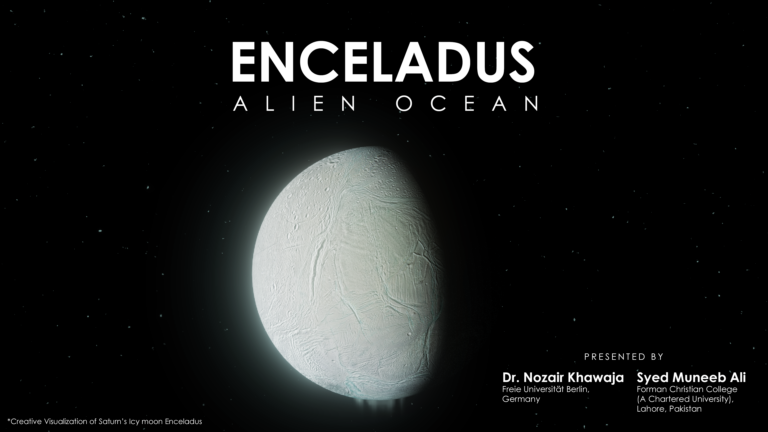
Syed Muneeb Ali, a student of Physics at Forman Christian College (A Chartered University), Lahore, has collaborated with a renowned planetary scientist, Dr. Nozair Khawaja, of Freie University Berlin, Germany to develop a 3D animation, which explains the chemical processes occurring deep inside the ocean of Saturn’s icy moon – Enceladus. Scientists suspect that these processes are favorable for life (if there is any!).
Ali’s 3d animation is inspired by the breakthrough research of 2018 & 2019 in the field of planetary science by Dr. Nozair Khawaja who discovered organics which are the ingredients of life similar to those present in Earth’s oceans.
This short animation demonstrates how these organics are formed inside the core of this brightest moon of the solar system and ejected out in space in the form of ice grains. These ice grains were then captured by NASA’s Cassini spacecraft, which conducted multiple fly-bys across the plumes to capture these grains and discovered chemical ingredients important for life in these grains.
Along with being a student of Physics, Syed Muneeb Ali is an active science communicator and currently serving as the General Secretary of Astrobiology Network of Pakistan (ABNP). Moreover, he’s a science journalist and writes blogs on Astronomy and Science on various mainstream media. He is the author of the National Award-Winning book “Kainaat – Aik Raaz”.
Ali’s volunteer work is also published on Freie University’s official website. Find it here.
Dr Asifa Akhtar has been selected to receive the most distinguished prize in Germany: The Leibniz Prize! The award has acknowledged and estimated her huge breakthrough work in the field of Cell-Biology and it’s mechanisms of epigenetic gene regulation, the prize consists of a €2.5 million research funding.
With her Freiburg team, Asifa Akhtar is investigating epigenetic mechanisms that act in addition to the genes in the cells – and thus help determine which and how genetic information is used. One focus is on molecules that change the chromatin, i.e., the packaging of the DNA, and thus play an important role in controlling gene activity. “I feel incredibly honored to receive this prize. Above all, I am grateful to my former and current lab members; their dedication and hard work made this award possible,” said Asifa Akhtar.
Dr Asifa Akhtar
The DFG substantiate its decision, among other things, with Asifa Akhtar’s “groundbreaking contribution to the understanding of X chromosome regulation, also known as dosage compensation.” Since males and females differ in the number of their X chromosomes, this mechanism ensures that both sexes shed the same amount of genes encoded on the X chromosomes. If this does not happen, severe cellular defects can occur. What are the critical molecular factors achieving dosage compensation? How do they interact, and do they also have additional functions? Studies by Asifa Akhtar’s laboratory have provided important answers to these questions and clarified the essential basics of regulating the X chromosome and autosomes.
The biologist and here team elucidated the molecular mechanism that controls the different functions of theepigenetic regulator MOF (males-absent on the first protein) on the X chromosome and the autosomes. This histone acetyltransferase facilitates the accessibility of genetic material by modifying histones, which are the proteins on which the DNA is wrapped around within the nucleus. Furthermore, the team discovered that this epigenetic regulator is also involved in other control processes in the genome. The DFG acknowledges that these findings have been “fundamental for understanding developmental and pathological processes as to be known in cancer”.
The broader importance and clinical relevance of the basic research carried out in the Akhtar lab was brought to the fore by the discovery of a human syndrome caused by a mutation in an epigenetic regulator closely related to MOF and another one of the lab’s main proteins of interest. The later termed “Basilicata-Akhtar syndrome” is marked by severe developmental delay and neurological dysfunction. The lab’s groundbreaking work on the molecular characterization of this human syndrome paves the way for better understanding and eventually alleviating the condition.
Dr. Asif was born in Karachi, Pakistan and she presides the Max Planck Institute of Immunobiology and Epigenetics as its vice president, the first International female to have this position. She is among 10 other scientists who will be awarded this prize in 2021 in an expected virtual ceremony.
Our heartfelt congratulations are presented to her. She is an inspiration for so many people pursuing science both in Pakistan and Germany. We look forward to her contribution to science.
The images released by Hubble since it started working 30 years ago have served as amazing windows to see the universe in new ways. On its 30th anniversary this year, NASA has released fascinating images showing 30 galaxies and breathtaking stars, nebulas, and more.
What’s more exciting about these shots is that they can also be visualized through a backyard telescope. The difference is that NASA has processed them in a way to make the objects more striking and apparent.
According to the official website, “All of these celestial objects belong to a collection known to amateur astronomers as the Caldwell catalog.” These were compiled by an amateur astronomer from British, Sir Patrick Caldwell-Moore, and the collection was published in 1995. It took inspiration from the Messier catalog that was put together by Charles Messier, who was a French comet-hunter. The catalog had around a hundred bright objects that could be mistaken for comets by the unaided, untrained eye. Caldwell’s catalog featured 109 galaxies, star clusters, and more that were not a part of the Messier catalog but were dazzling enough to be observed easily.
Marking Hubble’s birthday, NASA released more than 50 images, and the collection features 30 objects in the Caldwell catalog. The official announcement quotes, “Some of these 30 Caldwell objects appear in more than one new Hubble image.” The released photographs are not new and have been taken by Hubble over the years and were used in research but only now has NASA has fully processed them for public release.
To access new images in Hubble’s Caldwell catalog, click here.
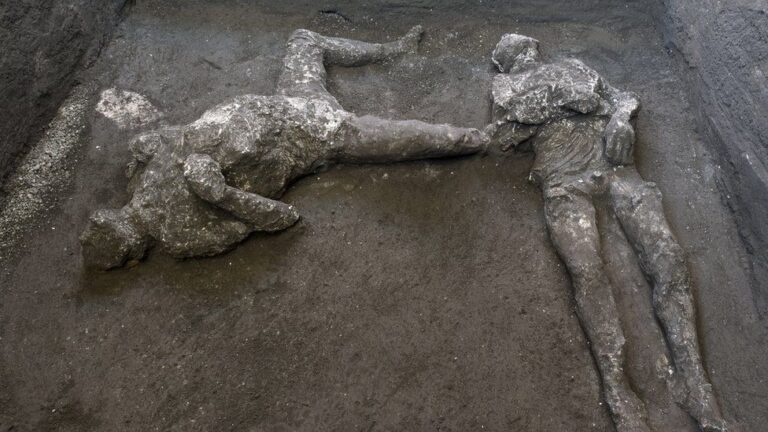
The remains were found in Civita Giuliana, a town 700m Northwest of the center of Pompeii. The two men found had stark resemblances. One of them seemed to be middle-aged and well-dressed in fur coats, while the other was young, aged 18 to 23, and had a few broken bones in his back, which indicated that he was a laborer and often carried heavy objects. The richer man had traces of his coat under his neck while the younger one was dressed in a simple tunic.
Both of them seem to be running to escape the volcanic lava as they have clenched teeth and fists, indicating thermal shock. The two men’s teeth and a couple of bones were stored, and the voids left by their soft tissues were filled with plaster that was left to freeze and then unearthed to show the outline of their bodies.
Director Massimo Osanna said that they “were perhaps seeking refuge” from the eruption “when they were swept away.” He also added to the reporters that, “It is a death by thermal shock, as also demonstrated by their clenched feet and hands.”
According to archeologists, the site of Pompeii is a rich source of information and an incredible spot for research and further study. More planned excavations need to be focused upon in the future.
DW quotes that, “Pompeii, 23 kilometers (14 miles) southeast of Naples, was home to about 13,000 people when the Mount Vesuvius eruption buried it under ash, pumice pebbles and dust, preserving many of the city’s ruins and remains.”
The Youth Advocacy Council Pakistan has been a finalist among eight aspiring organizations from 19 Asia-Pacific countries by the Taiwan Ministry of Economic Affairs (R.O.C) and KPMG for the Asia-Pacific Social Innovation Partnership Award 2020. The YAC Pakistan is the first Pakistani organization that made into the finale of this competition world-wide.
Asia Pacific Social Innovation Partnership Award(APSIPA) is a regional award advised by Executive Yuan, Taiwan (R.O.C.), and held by the Ministry of Economic Affairs, Taiwan (R.O.C.). It is established to explore dynamic social innovation models in the Asia Pacific and to motivate more change-makers to contribute to social innovation, discovering and celebrating social innovation partnerships that connect diverse stakeholders and make significant social impacts. Cases of partnerships are required to set achieving the United Nations Sustainable Development Goals (the SDGs) as their core value.
Founder and CEO of Youth Advocacy Council Pakistan Mr. Mohsin Khan says that the TransHelp app aims to empower the transgender community
This year, there were 95 applications from 16 countries/economics, which is really an inspiring number especially in the challenging times amidst covid19. There are also cases that contribute to fighting against the global pandemic, sharing excellent partnering experiences in the Asia Pacific including YAC Pakistan, promoting good health and well-being, and reducing gender inequality through the use of digital technologies and developing Pakistan’s first TransHelp app.
On the occasion, the Founder and CEO of Youth Advocacy Council Pakistan Mr. Mohsin Khan said that “the TransHelp app aimed at bridging knowledge gaps, and tend to enhance access to health care services for the marginalized communities, particularly during the pandemic for transgender persons. It will not educate, sensitize, and empower more than 50,000 Transgenders and youth but enable them to counter stigmas associated with HIV/AIDS, and reduces HIV, STI, and other endemic disease incidences in Pakistan”.
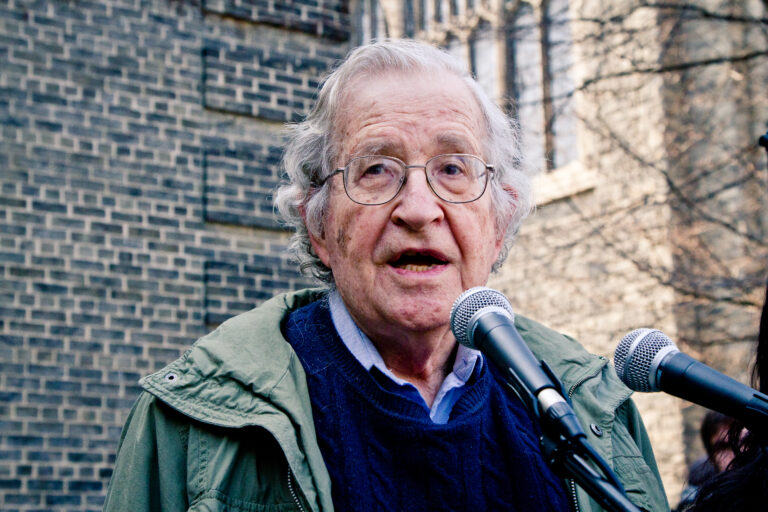
International philosopher, cognitive scientist, political activist, and sometimes called “the father of modern linguistics,” Noam Chomsky gave a striking lecture at the Habib University Karachi yesterday on December 7, 2020.
Chomsky’s stature and significance can be summed up from The New York Times’ words, “Judged in terms of power, range, novelty, and influence of his thought, Noam Chomsky is arguably the most important intellectual alive today” as dated back on Feb. 25, 1979.
New York Times piece quotations. Credits: The Chomsky Problem by Paul Robinson
The conversation point was “Bullet dodged or merely delayed: Reflections on the future of democracy, nuclear threat and the looming environmental catastrophe in a post-Trumpian world.”
In the lecture, professor Chomsky expressed his concern, warning, and guidance for the postmodern and post-Trumpian world’s problems.
Chomsky started with how “We should recognize what a unique moment in human history; this is. Humans have been on earth for a few hundred thousand years; the present generation is facing questions that have never arisen in human history, and that will never arise again in human history unless given appropriate answers. So, that’s a tremendous burden and remarkable challenge, I think we are at a moment of confluence crises.”
He concluded how the senior analysts had presented three major issues the world faces around the ticking clock of doomsday for humankind. “First: the Nuclear War Threat, Second: The Environmental Catastrophe and the third: The Deterioration of Democracy Worldwide.” and “Pandemic: the fourth major crisis.”
ON DETERIORATION OF DEMOCRACY AND THREAT OF REACTIONARY FORCES
According to Chomsky, “As far as the deterioration of democracy is concerned, it’s proceeded very far. The Trump administration has purged the executive branch of the government of any independent voices. Nothing left, except sycophants.” He said that “The congress years ago installed inspector generals to monitor the executive offices’ performance for corruption, maleficence. They began to look into the enormous swamp of corruption that Trump had created in Washington, and he took care of that by firing them. They are gone.”
Then coming to elections, he concluded how “The election was a total disaster, how the republicans drifted off the political spectrum years ago, and if you look at the international comparisons, they are alongside the parties in Europe with Neo-fascists Origins: Alternative to Deutschland, Le Pen’s National Front and so on and the republicans have stopped being a parliamentary party. They are now a party of environmental denialists, ultranationalists, evangelical Christians, militarists, xenophobics, racists, white supremacists, and a hazardous organization.”
“In the past couple of years has been the growth of a “Reactionary international.” It’s not formalized, but it’s taking shape with Trump in the White House and led by the white house. It includes the most reactionary states in the world, the ones most bitterly attacking and destroying democracy. In the western hemisphere, the leading members are Bolsonaro of Brazil, who is dismantling the democracy of brazil into shreds.
Chomsky in conversation with the Habib University President Wasif Rizvi and Vice President Academic Affairs Dr. Christopher Taylor. Credits: Habib University
The Middle East includes the most reactionary states, in the world: The Emirates, Saudi Arabia, Egypt with the most brutal dictatorship it ever had, includes Israel which has gone very far right, it’s one country in the world where maybe the very only where Trump’s popularity was overwhelming, maybe it is the only country in the world, where the younger population is more reactionary than the older one. Moving to the east, Modi’s India: Destroying the remnants of Indian secular democracy, crushing Muslim rights, placing Kashmir under the vicious, brutal rule. Pakistan is not too far behind. These are the shapes of things that are happening.”
ON THE PANDEMIC
“It is least of the four crises, severe though it is and dominant though it is at this moment. We will emerge from the pandemic at a terrible cost and needless cost; we can see a needless cost because some countries have dealt with it. By January 10th, Chinese Scientists had identified the virus, only after the few weeks of symptoms they had sequenced the genome provided it to the entire world. The virologists knew what they are facing and knew what kind of measure there had to be taken. In some places, the measures were taken, others not. Now, we can see the difference.”
He argued by referring, “China, the center of the crisis. Life is pretty back to normal. South Korea had severe outbreaks, dealt with it expeditiously and effectively; the situation is reasonably under control. Europe waited too long, but finally, Europe began to take significant measures. Others didn’t. – India didn’t. Brazil didn’t. The United States didn’t. France didn’t. These are the countries in the lead in facing the pandemic catastrophe.”
“In the United States, the government has given up. It has informed the public that there is nothing we can do. Unfortunately, the public has been inundated with massive propaganda from the right-wing, which tells people there’s no crisis. It’s a hoax; the liberals made it up, a large portion of the population sees no problem. People literally dying in the hospital, claiming to the nurses that there is no disease, it’s a hoax.”
He emphasized how the “Media barely mentions the fact, seldom that China has a vaccine, which might come into availability first. But Americans have to be deprived of it. Why? because we have to undermine Chinese development, this is madness.”
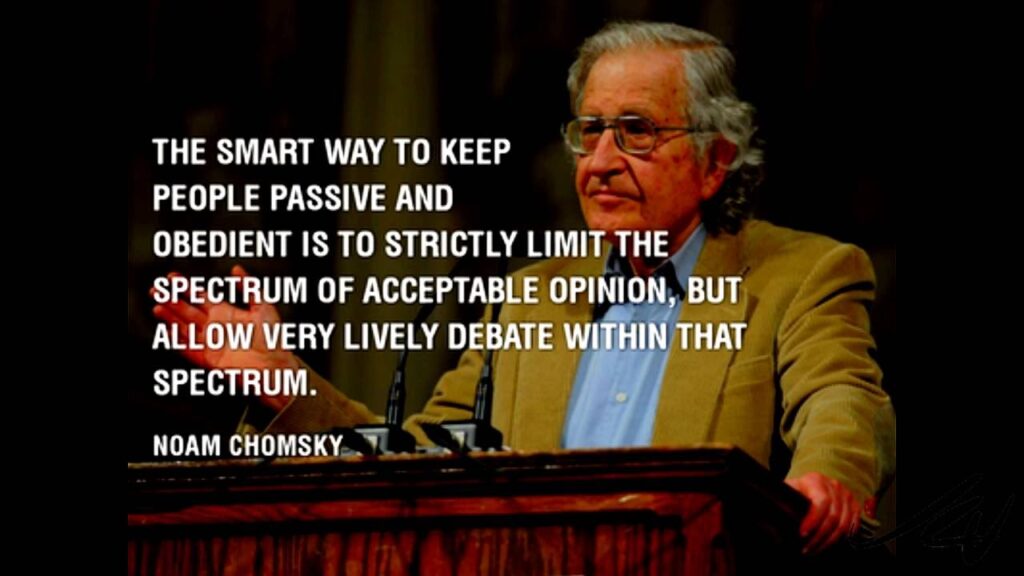
Chomsky’s quote on “Debate Spectrum”. Credits: Noam Chomsky, Book: The Common Good, 1998
He further touches on the issues of Nuclear Weapon Threats and Environmental Issues:
He reminisced while referring to 1945 in Japan, he said that “It’s worth remembering that any nuclear war among powers of any significance, certain Pakistan and India will be terminal and will be lethal for the rest of the world”
Further, he pointed out, how the “Trump administration has continued is continuing at this very moment, to open the new areas of this country for fossil fuel exploration, it’s dismantling the regulations that impose some constraints on fossil fuels and incidentally also protects the population from emissions that are extremely harmful to health particularly at this period when people are facing respiratory diseases.”
Summarizing his conversation he said:
“Take any of the crises we face; nuclear weapons, environmental catastrophe, destruction of democracy, pandemic, racism, xenophobia, many others. They have solutions and we know the solutions. The solutions are feasible and in hands.”
“But it’s not enough to just have academic knowledge of what to do. Somebody has to take that knowledge and work with it. That’s the burden this generation is facing. It’s a severe responsibility and exciting challenge, if it’s not met we are literally facing the end of organized human society.”
By the end of the discussion. President Rizvi of the Habib University asked Professor Chomsky for advice to University Students:
Chomsky: Advice to say, to university students?
Interestingly and adequately, he advised Pakistani Students while lifting them up: “Well, Pakistan used to have an advanced scientific establishment, Nobel Prize Laureate, and so on. Now, science has virtually disappeared from the educational system.”
“Several scientists have been trying to preserve a rational educational system, which deals with the reality of the world.” “Pakistan has no future if it’s going to live in a world of religious superstition.”
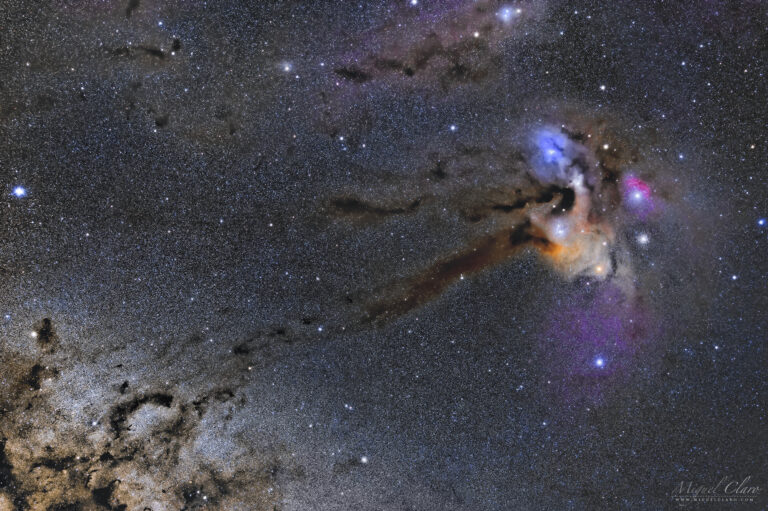
Recently – at the Max Planck Institute for Extraterrestrial Physics, renowned Dominique Segura-Cox and fellow scientists observed a system that is only 1,000,000 years old, approximately at a distance of 470 light-years in the “Rho Ophiuchi,” a star formation region. The structure is idiosyncratic; A protoplanetary disk with a young ‘star’ hosting detailed rings of planet-forming material. This all suggests that the planets can form simultaneously with host stars rather than at the end of star birth.
Likewise, there were concentrated and highly dense rings surrounding the star ‘also known as protostars’ suggests the ongoing formation of a planet as per widely accepted theory for solar systems. As the planets are being born, they create vivid gaps in this disc, illuminating ring structures. As the observations show the visibility of these similar shapes around the class II future-stars, not more than one million-year-old in age. Now, the star is about to become a main-sequence star with the appearance of clear rings around it.
The phenomenal contradistinction between the two different regions, dimmed and enlightened with energy, proposes that the planet’s formation is already in progress with class II protostar. The real evidence suggests that the formation of the planet starts earlier when the star is only in the class I phase, the enthralling part about the star being only 100,000s years old within the specks of dust and gases, under the gravitation forging.
Ring and Gap features of IRS 63. Credits: ALMA/Segura-Cox et al. 2020
The researchers used the renowned Atacama Large Millimetre Array (ALMA) radio telescope for its observations, located in Chile. Segura-Cox’s team suggests that this phenomenon is first of its kind; the system is present in the L-1709 interstellar cloud zone about 144.103 Parsec away from us.
The Two Side-By-Side Rings
Seen at millimeter wavelengths, within the disc, shows two separate rings with an approx mass of half that of Jupiter. The rings’ radius would be around 20 AU (1 AU is the distance between earth and sun, approximately 150 Million Kilometres). With such a vast area, conveying massive material presence, these rings are enough to coalesce into solid cores; the eventual result can be creating gas-giant planets. This entire hypothesis suggests that the planets and their host stars can be of the same age, just like siblings or twins.
The Rho Ophiuchi star-forming region. Credits: ESO/Digitized Sky Survey 2
The team of Segura-Cox is also optimistic about researching the problem of “radial-drift” through the study of these rings; as the particles in a protoplanetary disk become bigger, they face more drag due to their surrounding gas in the disc and lose angular momentum, and in some cases, they fall into the protostar before they can form into planets.
The observations also infer that rings having a higher density of gases than the rest of the disc can set in motion a series of intensity in gas pressure; efficiently trapping solid material that could be prevented to inspiral and fall into each other, so if the planets can form around a budding star as IRS-63 then the radial drift is not a problem here.
The IRS-63 system is entire of the same size and mass as our solar system, which could also help find out answers and a glimpse of the past about our neighbors of the planets and how they formed 4.57 Billion years ago. As a science-tidbit, the Jupiter core could have formed much larger with the same distance from the sun as it has today before moving inwards.
Segura-Cox, D.M., Schmiedeke, A., Pineda, J.E. et al. Four annular structures in a protostellar disk less than 500,000 years old. Nature 586, 228–231 (2020). https://doi.org/10.1038/s41586-020-2779-6
It was a scorching day of October 2000, when Dr. Asma Ibrahim – an Archaeologist and a Museologist, received a phone call from a police station in Karachi; the caller introduced himself as Deputy superintendent Farooq Awan and said, “We have rescued a Mummy from smugglers.”
“What! A Mummy!! Did you really said this?” Asma said in a trembling voice as she had a student life dream to work on a Mummy. During a telephonic conversation, Asma assumed that police had got some misconception, as mummification is the specified art of Egyptians and Police officer was claiming that the mummy was recovered from a Baloch smuggler.
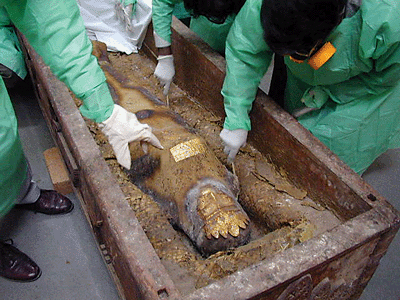
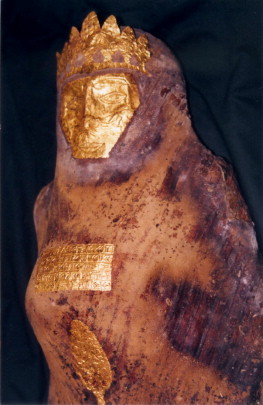
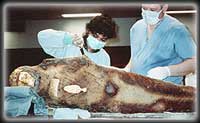
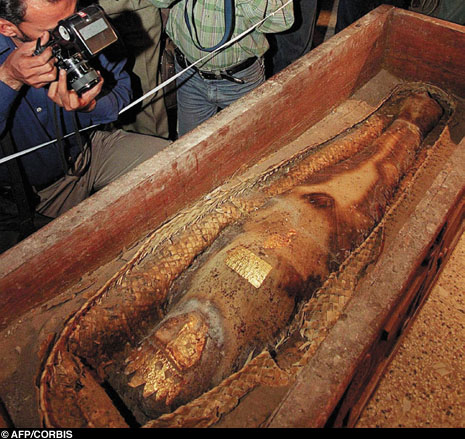
Finally, she reached out to the police, where the Mummy was kept in a separate room. Her wooden sarcophagus was opened, and the carved stone coffin was already removed from the body. She was wearing an exquisite golden crown and mask. Her body was wrapped in cloth stripes, as any Mummy could be, with an inscription on her breastplate that read, “I am the daughter of the great King Xerxes, I am Rhodugune.” She was laid on the reed mat in a coffin. Internal organs of the body were taken out in the same that the ancient Egyptians used to mummify their dead.
The mummy recovered from smugglers*
King Xerxes was the greatest ruler of the Achaemenid empire of Persia, ruling from 486 to 465 BC, so being a daughter of Xerxes, the mummy was supposed to be 2600 years old. Interestingly. Persians are not known for mummifying their dead as Egyptians used to do. So the discovery caught attention across the globe.
All the eyes were focused on the National Museum of Pakistan, where Mummy was shifted after recovering from smugglers. Dr. Ahmad Hassan Dani, a well-known Archaeologist from Quaid-e-Azam University, Pakistan, addressed a press conference and said,” Despite having no traces of mummification in Persia, she might have been an Egyptian princess married to a Persian prince, or a daughter of the Achaemenid king Cyrus the Great.
The government of Pakistan constituted an investigation committee consisted of Archaeologist Dr. Asma Ibrahim, Assistant Archaeological Chemist Touseef, Technical Officer Rafiq, and Expert of preservation Zubair Ahmad Madni. No one other than members of the committee was allowed to work on the mummy.
The team started its investigation on many aspects, including the analysis of Cuneiform text written on the breastplate, X-rays and CT scans of the body, technical analysis of the wooden sarcophagus and the coffin, and finally, radiocarbon dating of the objects on which Mummy was laid in her sarcophagus.
The team started its investigation on many aspects. Credit: BBC
Dr. Asma contacted Agha Khan Hospital and Karachi X-ray for the CT scans and X-rays of the mummified corpse. While talking to Scientia, she said, “initially, the authorities were not ready for the medical examination of the corpse as who would take the responsibility of damages occurred during the medical examination, if it would be real.”
Once Agha Khan and Karachi X-rays finished their medical examination, they sent their reports to the national museum of Pakistan, which were not disclosed till April 2001. When Asma released her investigation report.
However, during the investigation, an Italian expert of Cuneiform script confirmed Iranian authorities for the script, and they demanded the return of the Mummy from Pakistan. Meanwhile, an expert of the Cuneiform language from American University issued a two-page report of the text. The first page consists of the actual translation of the text on the breastplate, and the second page of analysis listed several problems with the mummy’s inscription that led the scholar to believe that it is the author who penned down in such a manner inconsistent with Old Persian. He concluded the inscription was likely a modern falsification, probably dating “from no earlier than the 1930s.”
Crucially, the inscriber had used the later Greek version of the princess’s name Rhodugune, instead of the Persian Wardegauna. In the meantime, Asma analyzed the medical reports of the Mummy and found Several detailed operations common to Egyptian mummifications had been omitted during the mummification of the mummy, now famous as “Persian Princes.” The heart was not there in the cavity, which is significant in the ancient mummification process as it would be the medium for the resurrection of the dead.
Medical examinations, including computerized tomography (CT) scans and X-ray photographs of the body inside the mummy, unveiled that this was no ancient corpse but a woman who had died in the recent past and that her neck was broken. An autopsy confirmed that this woman may indeed have been murdered to provide a body for the fakers to mummify.
A portion of the Reed mat was also sent for the radiocarbon dating to Pakistan’s atomic energy commission, which confirmed that the mat is not more than fifty years old; all these shreds of evidence confirmed that the mummy was forged and made to sell in the illegal antiquities market.
“I was young and passionate conservator these days, and I was analyzing the Mummy from a far different perspective,” Said Zubair Madni during a telephonic conversation while remembering the days of investigation. He was a member of the team constituted for scientific investigation of the Mummy.
The mummy was exhibited for the first time, during a press conference at the National Museum in Karachi, 26 October 2000.
He told us that during the investigation, he drew several conclusions based on technical analysis and visual inspection, some of which are as follows; Not only was the coffin new, but in some places, the varnish was also found on it. It was a modern varnish and barely 20-30 years old. It looked like some old wooden furniture was used to make this coffin.
The reed mat laid in the coffin and on which the mummy was enclosed in the sarcophagus was not ancient. This mat must have been barely a few years old. Close observation was enough to prove that it would not be correct to call that mat thousand years old. A technical study of sarcophagus also did not prove that it could be more than twenty-five years old.
Scientific and technical study and close observation also showed that the tools used to carve forms and inscriptions on the coffin wood were new. Fiber identification proved that the fabrics of the mummy wraps were also modern. Items applied to these strips, such as honey, were also fresh.
All the above facts were proved to be correct after in-depth scientific analysis in foreign laboratories. Madni also said that while analyzing the situation, he observed that the art of mummification is unique and specific to Egypt. Logically, the inscriptions on the coffin of the mummy and all the accompanying items, including the ornaments placed on top of the mummy, should have been written in the ancient Egyptian script. In contrast, all of these inscriptions were found in Cuneiform script. People interested in archaeology know that no formal evidence of mummy-making has been discovered in Persia.
The daughter of the ruler to whom May was attributed, ruled a huge and rich empire. Logically the ornaments on Mummy’s body should have been large and very heavy. In contrast, these gold ornaments were so cheap and so delicate that they twisted when touched. How was it possible for a rich king’s daughter to be buried with such cheap and modest jewelry.
On April 17, 2001, Dr. Asma Ibrahim issued her 11-page report enclosed with all scientific examination reports declaring the Persian Mummy a fraud. Once known as Persian Princess now lost all the attention in her. Police lodged a murder case, which was never concluded.
Later, Edhi Foundation took custody of the body and announced in 2005, “it was to be interred with proper burial rites.” Foundation wrote several letters to Police and other government authorities for official permission but never answered. Finally, in 2008, the foundation carried out the burial in the graveyard of unidentified corpses.
*Credit: W Kretschmer, K von Grundherr, K Kritzler, G Morgenroth, A Scharf, T Uhl, The mystery of the Persian mummy: original or fake?, Nuclear Instruments and Methods in Physics Research Section B: Beam Interactions with Materials and Atoms, Volumes 223–224, 2004, Pages 672-675, ISSN 0168-583X,
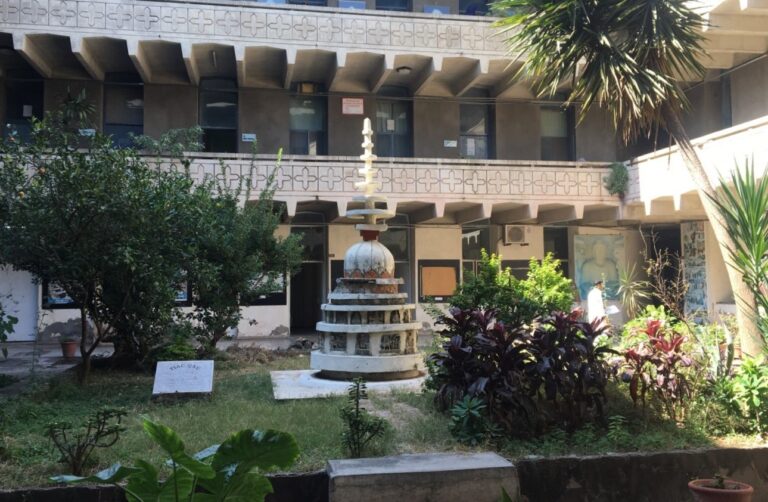
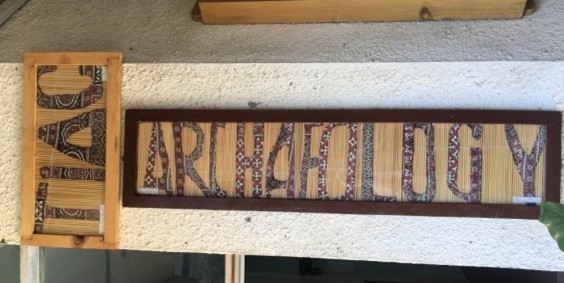
The Taxila Institute of Asian Civilizations was established in 1967 at Quaid-i-Azam University Islamabad in order to become a Center to study the history, culture, and architecture of Asia and the world in a scientific way. The major activities at TIAC include Academics, Field Research, and Publications. The programs offered include MSc archaeology and MPhil/Ph.D. in Asian Studies. The facilities available at the department include the Ahmed Hassan Dani Memorial Library and the Museum of Archaeology and Ethnology.
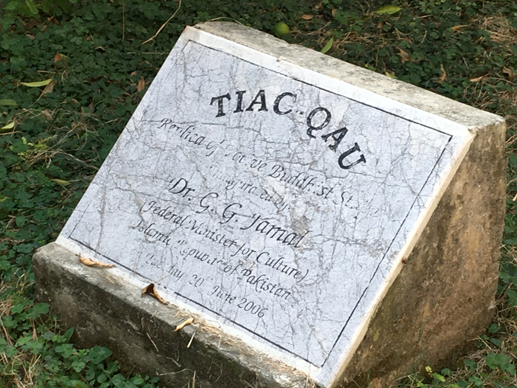
Inaugural stone at the TIAC garden
Wandering around the department, I stumbled upon the library, which is full of books and books on architecture, history, and the sort. In a corner on a table, I find two studious faces buried in thick volumes and simultaneously scribbling notes. I decide to go over and, after introducing myself, asked for some information about the science of Archaeology.
Which program are you two from, and can you share what you study in Archaeology?
Aniqa: We both are from M.Sc. In Archaeology, we study ancient cultures, and our research work depends on material things. When we do a survey or find something at the excavation of an ancient site, we analyze and study our antiques. The underlying purpose of Archaeology is to go through whatever ancient asset we find and then use the information for our present benefits.
In Archaeology, various parts of several fields like Geology, Chemistry, Physics, Sociology, Anthropology, Fine Arts, etc., are integrated. For example, in Chemistry, we study the scientific procedures of preserving antiques and maintaining the various sites we find. We study methods to conserve them.
The creativity of the students is reflected in this unique and beautiful installment
The two great civilizations in Pakistan include Gandhara, also known as Buddhist, and the Indus. These two civilizations are a great attraction to foreign countries, e.g., the French Mission in the Swat region and others like American, German, etc. They form the basis of their research on our civilizations, and that is how they are gaining popularity.
We also study other civilizations like Greek, Egyptian, Roman, Chinese, Mesopotamian, etc. We perform analysis and compare their advancements with our Indus civilization. The material remains that we find are made up of two types; archaeological artifacts and sources or pieces of writings.
Literary sources include the writings we find, for example, sacred books of Hinduism, Vedas, the Jerok verdicts of King Ashoka in Mardan, Pakistan. These show us the writings and policies of the kings of that time. These have mostly been written on rocks. The Ashokan Rocks are very popular here in Pakistan since they have been engraved with messages and notes.
We also find pottery, usually in pieces. But that’s not an issue as we have advanced to the level where we can estimate the measurements and design the whole pot from that single piece. Using analytical techniques in experimental archaeology, we find out about the food that was being eaten at that time. If we find thumbprints on the pottery, we can use genetics to picture the appearance and psyche of the person who ate in that pottery. This technique is not available in Pakistan, though.
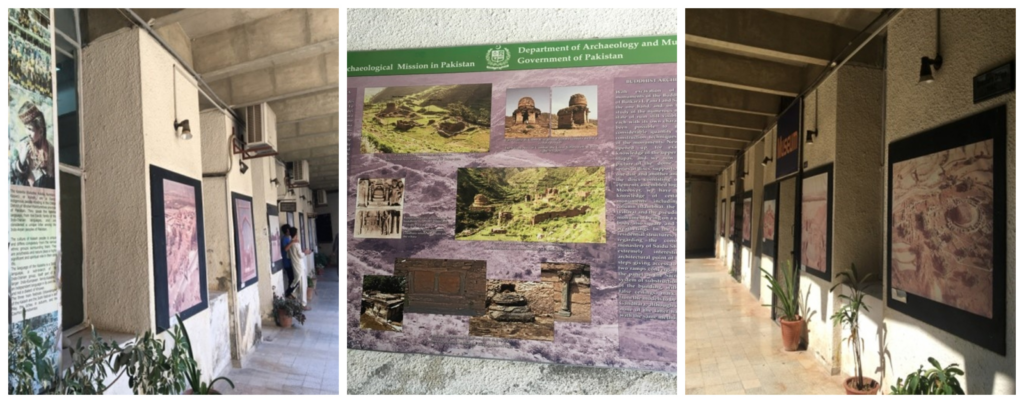
The walls at TIAC are bursting with colorful and informative posters on Archaeology. One does get lost in the details while wandering about.
Can you give an example of what your thesis work is based upon?
Azizullah: Archaeological sites like Mohenjo Daro and Harappa are common topics for Ph.D. thesis. The exact topic could be ‘A comparative analysis of the pottery of Mohenjo Daro and Harappa’ or the topic can also be the archaeological survey of a whole specific district. Another example can be exploratory Archaeology, in which we find new sites. We use the data of some previous sites to work, e.g., we go to a remote area of Balochistan and find new sites. Tools of broader level are used, so this is done at MPhil Ph.D. level rather than BS or MSc levels.
Which subfield of your subject do you like the most?
Aniqa: I basically like tourism since it has a lot of scope and space for advancement. We also do religion studies, including major religions of Pakistan, e.g., Sikhism, Hinduism, Jainism, Christianity, Zoroastrianism, etc.
Azizullah: I personally like Numismatics, which is the scientific study of coins. Coins of different periods are studied. They are found during the excavation of any site and need to be first cleaned. Then they are studied to figure out the type of inscription on them and what the inscription might mean. We can figure out many things by this scrutiny, e.g., the religion, the ruler and politics of the era, and the position of the economy from the material of the coin. A strong economy is represented if the coin is gold or silver, and a weaker one if it is copper. We also get to know about that civilization’s trading partners if we come across coins belonging to another part of the world there. I find all this very interesting.
Aniqa: Many people ask us whether our own beliefs weaken while studying other religions, but that’s not the case. It’s actually the opposite. We find flaws while studying other religions, and when we compare them to Islamic beliefs, we find that they make more sense to us and that we are better off than the ancient people in many ways.
They have some false nonsensical myths that may be sacred for them, but they really do not have solid reasoning or background. So, I would say we basically enjoy religious studies, as well as studying civilizations. We also study prehistoric eras like the Stone Age, when humans lived in caves and made their tools out of stone. We enjoy studying all our subjects.
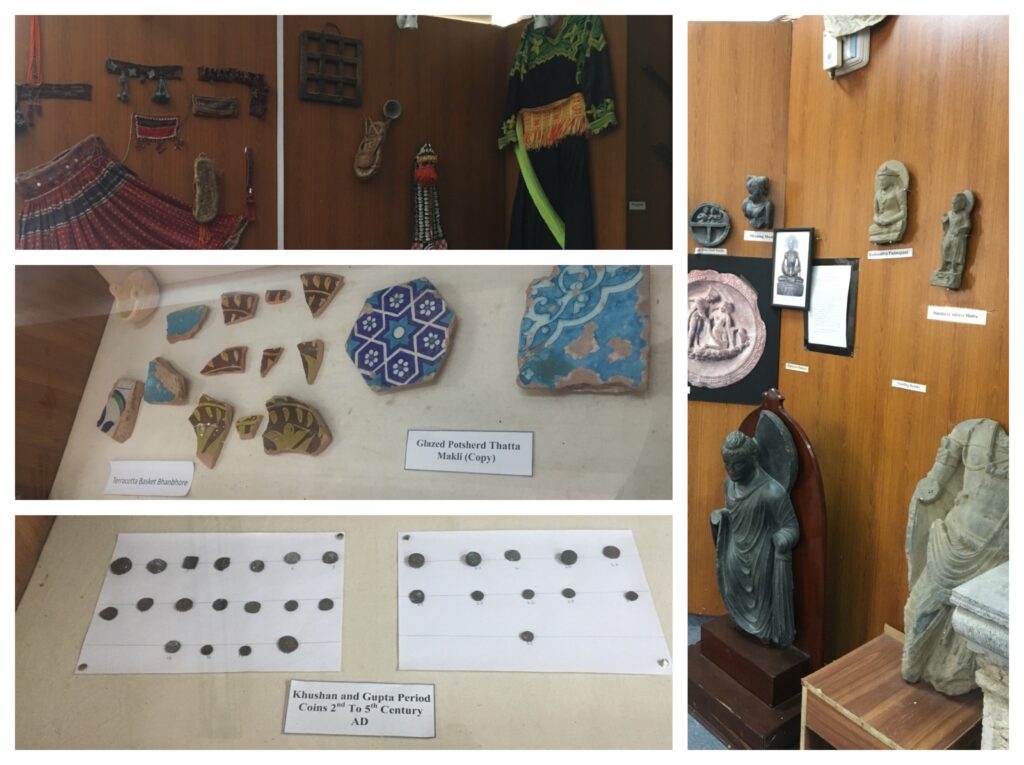
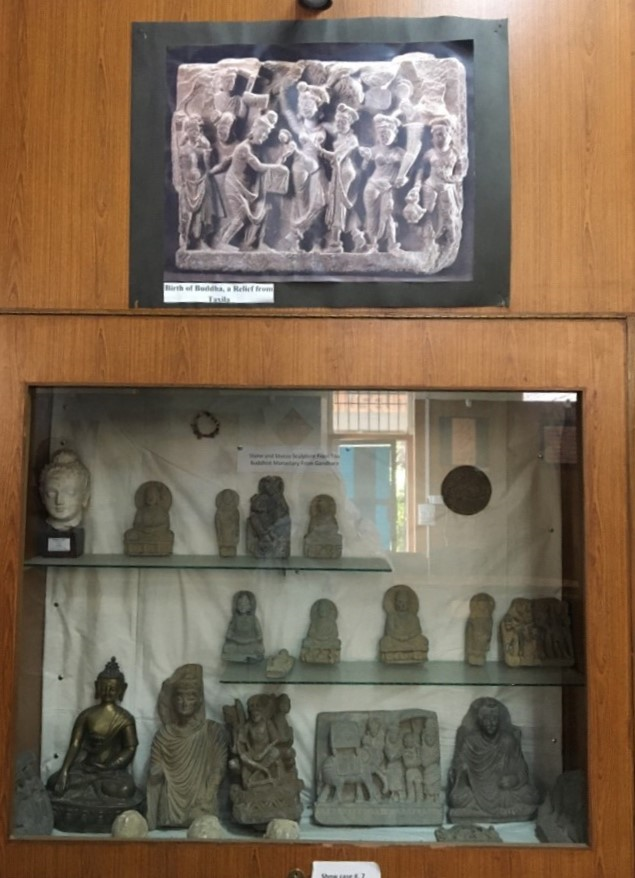
The museum at TIAC features different statues, writings, dresses, pottery and coins etc.
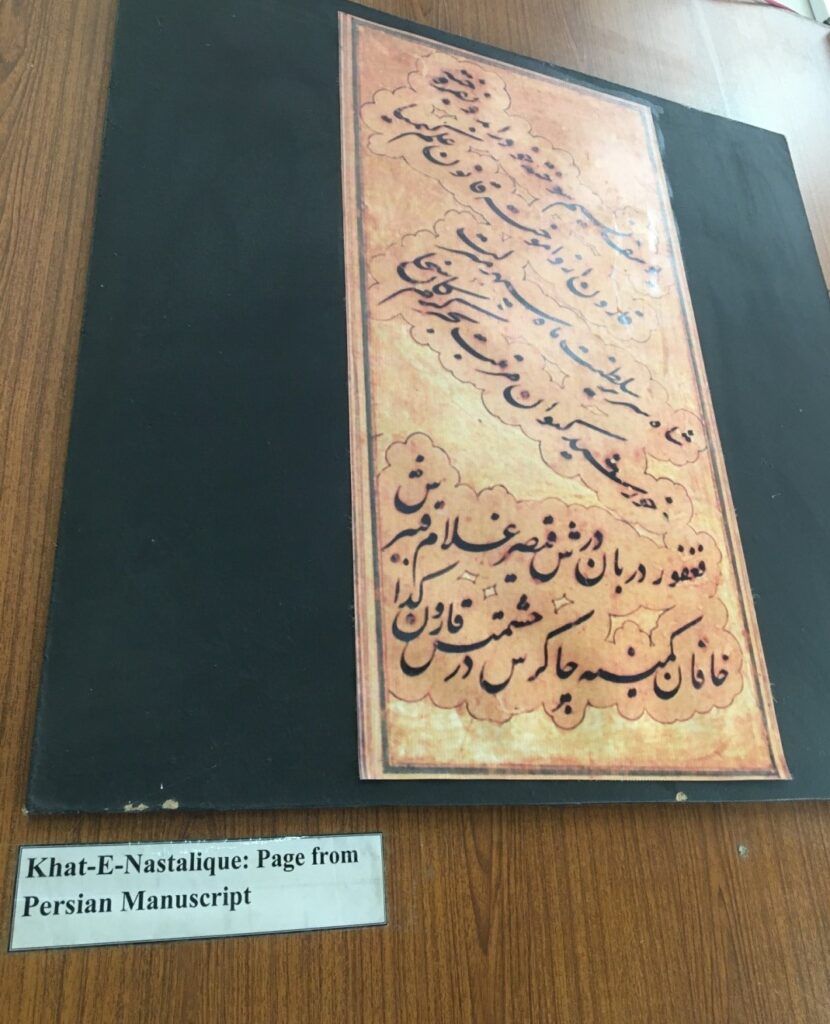
A Persian text
Are movies made on Archaeology and History accurate?
Aniqa: Most movies made on mummies or ancient sites and buildings are based on fantasy. They are made to attract people, and lots of elements are added. Some sites might be shown the way they are, but the moviemakers add many things e.g.in The Mummy Returns, the place is authentic, but the plot is exaggerated and all spiced up to attract people.
Is Archaeology your subject of interest, or did you end up here unwillingly?
Aniqa: People who come in this field include both; those who end up here unwillingly and those who are passionate about the scientific study of history and architecture. I belong to the second type. If we want to catch other people’s interest in this subject, we should discuss Archaeology at the governmental level and illustrate it at the school level by telling us about its importance, how we can learn about the past, our ancestors and their lifestyle. We study how Man progressed on Earth and the obstacles he faced during these advancements. All this can be known in Archaeology.
As an MSc archaeology student, what job do you expect to land in Pakistan with this degree, and what can you expect of its future here?
Azizullah: There are several fields you can count on as an archaeologist to land a job in. there are jobs in provincial cultural departments related to antiquities and culture, which, before the 18th Amendment, belonged to the Federal government. Jobs under the department include Curator, Assistant Curator. A curator is the Head in Charge of a museum.
Smaller jobs in a museum include Gallery In-charge, Lab in Charge, Chemist, and other specialized jobs like Surveyor, Excavation Director, Exploration Director, etc. This is the scope for jobs in the government sector. Another job is, of course, is in educational institutes as a faculty member, visiting as well as permanent.
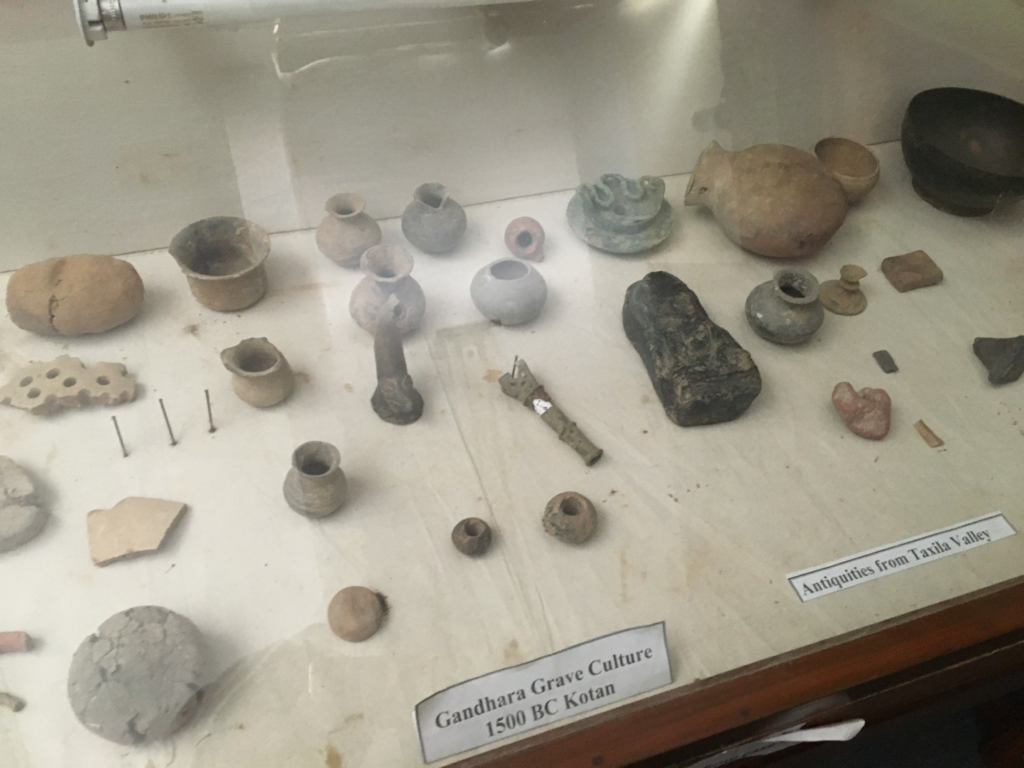
Some of the fascinating pieces at the TIAC museum
The pieces in the display are mostly copies of the original items found in excavations or fieldwork by students and teachers at TIAC
Antiques from the Taxila Valley
Plus, some private institutions seek archaeologists, e.g., EFT (Endowment Trust Fund), which mostly works in Sindh as the regional government established it. It is a private institute mostly working on conservation and restoration etc., and sometimes excavation as well. Jobs are also available in local and international NGOs, in UNESCO, etc. It has a country head everywhere, including Pakistan. They work for the maintenance of World Heritage Sites and employ MPhil and Ph.D. scholars as well as foreigners for supervision.
The current government is taking an interest in archaeological sites to promote tourism. In contrast, earlier governments did not take any interest in maintenance or for the sake of tourism. Imran Khan has made many Hindu temples functional. For example, a Mandir called Shivala Deva Singh Mandir in Sialkot had been closed since partition, but now it is opened and cleaned up so that the nearby Hindus could continue their worship. By working for minority rights, Pakistan can develop a good international image. One of the purposes of Pakistan being made was to take care of minorities and their rights.
Aniqa: Pakistan’s geography is full of antiquities and archaeological sites. This subject has a lot of potential in Pakistan if only the government cooperates. Across the world, the Egyptians and Romans are advancing quite rapidly in this field. In our country, research is slow due to a continuous constrain of funds. We can take this subject to great heights, though.
The Japanese spacecraft Hayabusa 2 just landed in the desert of southern Australia, brought a small cache of asteroid Ryugu’s rocks to the Earth. It’s only the second time in history that materials from an asteroid have been brought to the earth. Eventually, scientists will research and uncover the precious rocks within to learn more about the asteroids that permeate our Solar System.
Hayabusa-2 was launched in December 2014 by JAXA. Its mission was to visit the distant, lonely, and icy world of Ryugu―a half-mile wide-body― study its surface and collect soil and debris samples. Asteroid Ryugu is a primitive asteroid that orbits the sun at a distance of up to 131 million miles (211 million kilometers).
After launching from Japan in 2014, the Hayabusa2 spacecraftspent four years journey to reach Ryugu and studied the 900 meters wide asteroid up close since last June. The mission plan includes a touchdown of the spacecraft inside the crater to pick up a pinch of dust samples of the asteroid.
In February 2019, Hayabusa-2 had touched down on the asteroid’s surface and successfully collected the samples. The second touchdown onto the asteroid, preceded by the latest blast on the surface provided scientists with subsurface dust samples that had not been exposed to sunlight or other space radiations for billions of years. Scientists hope to additional knowledge about the origin of inner planets, particularly the origin of water and organic compounds on earth, all relevant to the origin of life on earth.
Japanese spacecraft, Hayabusa-2 released photographs
The first photo was taken at 10:06:32 JST (onboard time) and the gravel flying upwards was quite visible. The second shot was at 10:08:53 where the darker region near the center is due to touchdown,” JAXA tweeted.