General satellite imagery is also known as Earth observation imagery or spaceborne photography. These are images of Earth or other planets collected by imaging satellites operated by governments and businesses. The importance of satellite imagery is the technological advances and increasing availability of high-resolution satellite imagery offer the potential for more accurate land cover classifications and pattern analyses around the world. Being a world-class organization, NASA strives to conserve and protect natural resources through great habitat and species management programs.
NASA strives to promote the increased efficiency of raw materials and the conservation of natural resources. These resources include land use, wetlands and floodplains, threatened and endangered species, wildlife, ecosystems, oceans, and coastal zones. Natural Resources Management ensures that NASA makes efficient use of natural resources while protecting the environment and valuable wildlife. This management further allows NASA to conserve precious natural resources for future generations.
NASA’s satellite instruments
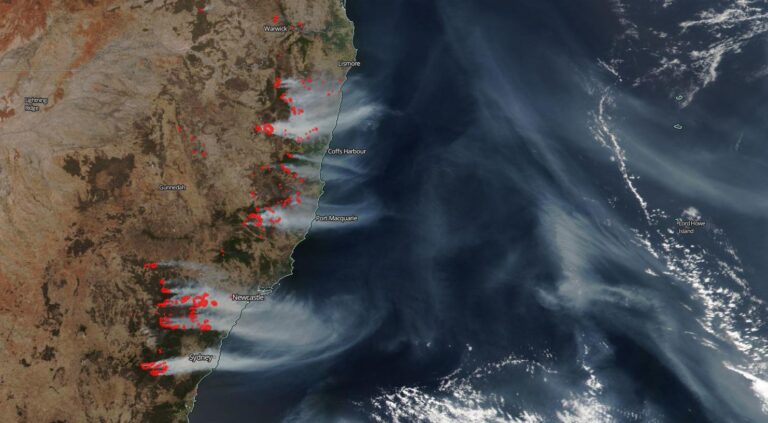
NASA’s satellite instruments are often the first to detect wildfires burning in remote regions, and the locations of new fires are sent directly to land managers worldwide within hours of the satellite overpass. Together, NASA instruments detect actively burning fires, track the transport of smoke from fires, provide information for fire management, and map the extent of changes to ecosystems, based on the extent and severity of burn scars. NASA has a fleet of Earth-observing instruments, many of which contribute to our understanding of fire in the Earth system.
Satellites in orbit around the poles provide observations of the entire planet several times per day, whereas satellites in a geostationary orbit provide coarse-resolution imagery of fires, smoke, and clouds every five to 15 minutes. NASA satellites can show the movement of the smoke across the globe as evidenced above, but other instruments found onboard can give scientists, firefighters, health experts, local government, and others information about what is happening on the ground in real-time.
How NASA contributes to global wildfire detection
Wherever fires are burning around the world NASA-NOAA’s
Suomi NPP satellite’s Ozone Mapping and Profiler Suite (OMPS) can track the
smoke and aerosols. Suomi’s OMPS tracks the health of the ozone layer and
measures the concentration of ozone in the Earth’s atmosphere and can detect
aerosols. Ozone is an important molecule in the atmosphere because it partially
blocks harmful ultra-violet radiation from the sun. OMPS data help scientists
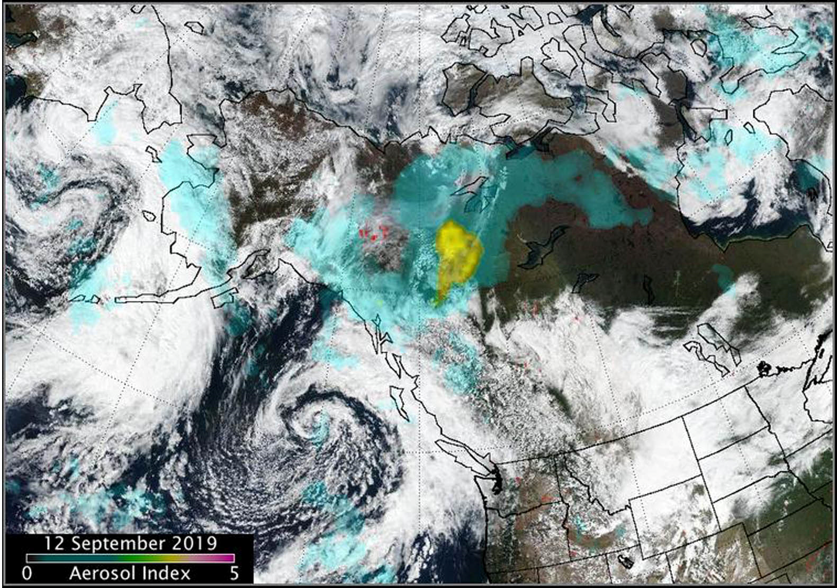
monitor the health of this vital protective layer. On Sept. 13, 2019, data from
OMPS revealed aerosols and smoke from fires over both South America and North
America.
Fires in South America generated smoke that continues to
create a long plume east into the Atlantic Ocean. Fires over western Brazil
were generating aerosols at a level 2.0 on the index. Higher aerosol
concentrations, as high as 4.0 were seen off the southeastern coast of Brazil
as a result of the fires in the region.
Western Brazil, South America
In North America, Suomi NPP’s OMPS detected smoke and aerosols from fires over Canada’s Yukon Territories. Aerosol concentrations were very high over the Yukon fires due to a pyrocumulus event that occurred on 11 September. The image also shows a low-pressure system (the area of spiraled clouds) off the coast of western Canada.
Western Canada, North America
Tracking and detecting Australia’s Bushfires
NASA scientists using data from its NOAA/NASA Suomi NPP satellite have traced the movement of the smoke coming off the Australian fires across the globe showing that it has circumnavigated the Earth. Suomi NPP carries carry five science instruments and is the first satellite mission to address the challenge of acquiring a wide range of land, ocean, and atmospheric measurements for Earth system science while simultaneously preparing to address operational requirements for weather forecasting. Suomi NPP also represents the gateway to the creation of a U.S. climate monitoring system, collecting both climate and operational weather data and continuing key data records that are critical for global change science.
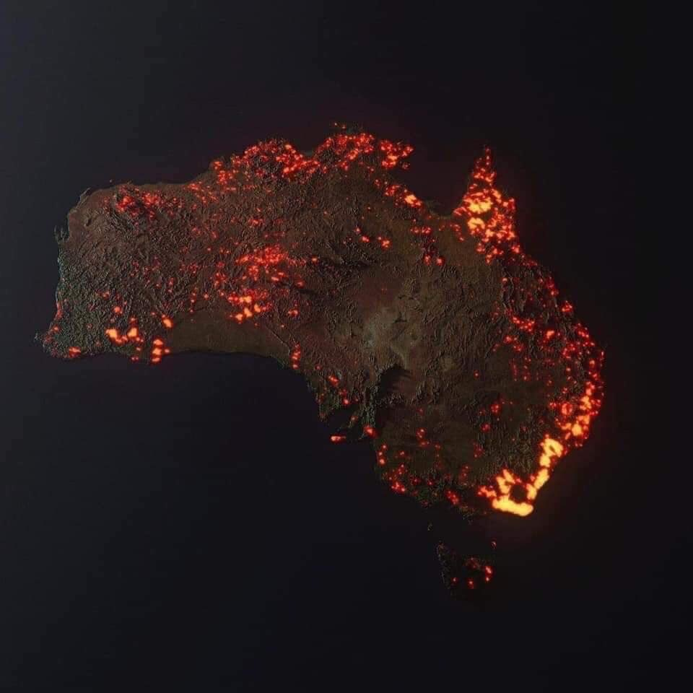
Satellite Image constructed using data from NASA, showing the extent of Australia’s Bushfire
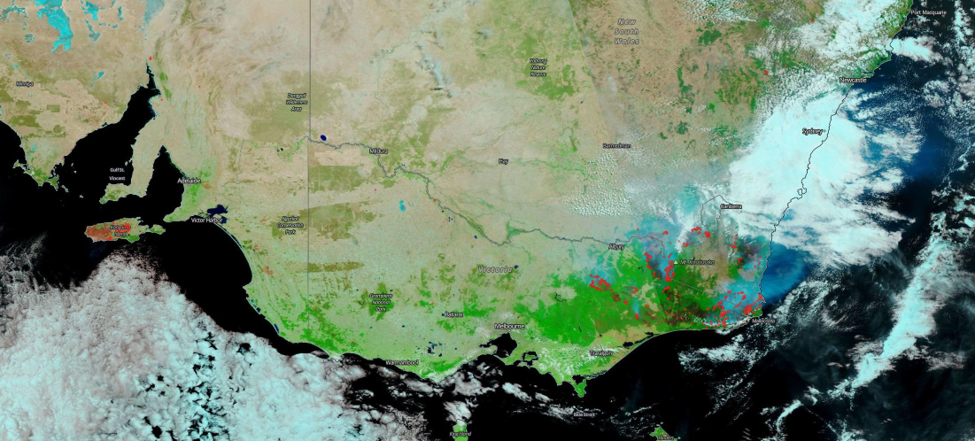
In an image taken on Jan. 13, 2020, the Suomi NPP satellite used the reflectance bands on the VIIRS (Visible Infrared Imaging Radiometer Suite) instrument to clearly show the areas that have been affected by the fires (dark brown to black) alongside areas not burned (appearing green to bright green). These reflective bands can also be used to show the “height” of clouds since clouds lower to the ground appear whiter and clouds higher in the atmosphere appear bluer to aqua since the ice crystals within the clouds reflect a bluer color using this instrument. Just changing values on a satellite instrument can give those on the ground information they would not have any other way. The image below shows the burned areas, clear areas, and clouds.
Suomi NPP satellite showing Australia’s Bushfires
In Australia, an estimated 1 billion animals killed. Many wild animals and some farm animals have been
killed directly by the flames. Other animals have not been burned alive but
have faced death due to the destruction of their natural environment, which
they rely on for food and shelter. This is a crisis for biodiversity in
Australia, which is home to some of Earth’s most distinctive animals, like
marsupials.
NOAA meteorologists incorporate Suomi NPP data into their weather prediction models to produce forecasts and warnings that help emergency responders anticipate, monitor and react to many types of natural disasters, including the bushfires plaguing Australia currently. Suomi NPP serves as an important link between the current generation of Earth-observing satellites and the next generation of climate and weather satellites. It observes the Earth’s surface twice every 24-hour day, once in daylight and once at night. In its orbit Suomi NPP flies 512 miles (824 kilometers) above the surface in a polar orbit, circling the planet about 14 times a day.
The satellite sends its data once an orbit to the ground station in Svalbard, Norway and continuously to local direct broadcast users. The data collected by Suomi NPP can help save lives. One-third of land on an Australian island that is a refuge for some of the country’s unique and endangered wildlife has been scorched by raging bushfires, NASA satellite images show the extent of fire damage to Kangaroo Island in the state of South Australia was captured by NASA’s Terra satellite. NASA estimates that 155,000 hectares (600 square miles) of the island have been consumed by fires, calling it “an ecological tragedy”. NASA saved 90,000 animals.
Satellites used by NASA saved many lives not only humans but animals as well. The data collected by satellites can save lives within minutes. Satellite imagery helps to save every living being around the globe. More missions focused on satellite imagery for prediction and modeling wildfires are needed to avoid catastrophes.
From Pakistan to the Middle East, from the Middle East to US states; From US states to Australia and Amazon, Wildlife did not have an easy go of it in 2019. The extent of forest fires has sparked outrage around the globe & a considerable trace of forests in Australia, Africa, Russia, Brazil, and other parts of the world has been under fire. In August 2019, multiple forest fires broke out in the Canary Islands of Gran Canaria, Tenefire, and Lanzarote. In the same month, record-breaking forest fires ripped through the Amazon.
According to the Non-Permissive Environment (NPE) report, there were more than 80,000 fires, most of them recorded in Amazon, which burned around 7 million hectares of land. The worst of all was/is Australian bushfires that pushed more than 7.3 million hectares, had put a huge devastating impact on wildlife, many endangered species like Koala and Kangaroo were in the fire path, and as per reports, one billion animals have been killed or affected, including birds, reptiles and mammals. Almost a third of Koalas may have been killed in Australia’s New South Wales bushfire, and 30% of their habitat has been destroyed till the date when there are reports that fires reignite with soaring temperature in NSW. The Australian administration keeps trying to whittle away at critical protections for endangered species.
So with this rough bit of recent history, what does 2020 holds? According to environmentalist and forest experts, the primary threats to wildlife are; climate change, massive infrastructure construction, global warming, plastic waste, emerging decease, and poaching, snaring, and wildlife trafficking.
Climate change and widespread drought are the primary cause of wildfires outbursts in 2019 and destroyed a million hectares of land. Climate scientists have been warned long ago that the scale of devastation of wildfires will be overwhelmed in the future and will be a clear-cut example of the way climate change can intensify natural disasters. Moreover, this is not limited to fires; the extremely upsetting expects of climate change are not showing signs of breaking and the administrations worldwide, refuse to recognize it.
An overall rise in the ocean in the ocean surface water increased precipitations, which is causing extensive flooding, deforestation, snowstorm, tornados, and extensive draught all are affecting a species existence, correctly put a severe threat to endangered species survival. According to a noted wildlife conversationalist, William Laurence of James Cook University, reduced oxygen level at oceans could have a significant influence on zooplankton, which is one of the building blocks of the ocean food web. Any further changes in ocean composition will be a huge impact, much alike to a great dying.
From rising sea levels to wildfires, wildlife is at high risk more than ever
Another critical threat to wildlife conservation is building new roads and an avalanche of infrastructure projects most of them initiated by Chinese investors and are craving into primary inhabitants of Africa, Asia (especially Indonesia and nearby), and Amazon. As the construction process speeded up, most of the governments around the globe are experiencing tight stress to preserve some of their prestigious wildlife inhabitants, especially some particular areas of biodiversity and ecosystem importance.
Another factor is plastic waste, which popped up as a most significant threat to ocean-life and sub-marine creatures and equally affecting wildlife an environment. A new study reveals that around 100% of sea turtles have plastic or micro-plastic in their digestive system. Plastic has been found as the primary persistent polluters of several environmental niches from Mount Everest to the bottom of oceans and flooding cities by trapping their drainage systems. The causes and effects of plastic pollution are needs serious and immediate attention.
Meanwhile, due to escalating pollution, emerging deceases like those affecting Bats, Frogs, and several reptiles are outnumbering and are more likely to cause a more significant loss of species worldwide. The forests of South Asia and South Africa are gradually emptying their local species due to poaching, snaring, and wildlife trafficking.
As per expert’s opinions, there will be more blood, more habitat loss, and more wildfires in 2020. The opportunities to make a difference in the issues, as mentioned earlier, are quickly running short. Our planet is getting punished for over-exploitation of its natural resources; we already have got poisoned its atmosphere, land, and oceans. We need to put aside our political, religious, and social differences and should work together to cease this catastrophic situation.
Share your thoughts about the biggest threats to wildlife and endangered species with hashtag #Wildlife2020.
The “Circumhorizontal Arc”, more commonly known as the “Fire Rainbow” is a unique and strikingly beautiful natural phenomenon that is observed in the atmosphere. It occurs in high-level cirrus clouds in the form of ice crystals and with a little help from the sunlight, a halo is formed. The term Fire Rainbow itself is not real or scientifically accurate and is just used to describe its shape as it appears like a rainbow that is fire-shaped.
The Fire Rainbow frequently occurs in the US and is often apparent in the summer at various locations. And it is not so common in other areas such as the northern parts of Europe etc. In London, during mid-May to late July, the sun goes high in the sky for 140 hours, and in Los Angeles, from late March to late September, the elevation may increase up to 58 degrees for 670 hours. During such conditions, the halo can be seen several times a year.
Here are some fascinating pictures of the phenomenon!
The colorful sky in Michigan. (Credit: Derek W, via Wikimedia Commons)
Here it can be seen in the background. (Credit: Attila Magyar, via Flickr)
The West Virginia skies offering a mesmerizing sight. (Credit: Jeff Kubina, via Flickr)
The optical phenomenon formed by the refraction of light in ice crystals suspended in the atmosphere. (Source: Pinterest)
The rare ‘Fire Rainbow’ seen here above a mountain. (Source: Oleg Bartunove via APOD)
It occurs in high-level cirrus clouds in the form of ice crystals and with a little help from the sunlight, a halo is formed. (Source: Dave McGlinchey)
Imagine buses, railways, subways, trucks and all kinds of public and private transportations getting closed. Airports getting closed completely and the traffic going in and out of the city through ferries, ships, and vessels getting closed. Roads getting blocked and all the life, in a major metropolitan city coming to halt.
This mass quarantine is not a scene from any movie, but actually being carried out by the Chinese authorities due to the spread of Coronavirus in China, especially Wuhan―a metropolitan, with a population of 11.08 million, in China’s Hubei Province. It is the 42nd largest city in the world, with the catastrophic potential to exponentially spread the coronavirus, which is rapidly becoming an epidemic
China is fighting a battle against deadliest Coronavirus and nationally, there are currently 830 confirmed cases of patients infected with this virus. The Chinese government has widened a lockdown in the center of the outbreak, in the Hubei province but the impact of the virus is not limited to one province only and warnings have been issued in other provinces also. The travel restrictions will affect at least 20 million people across 10 cities, including the capital Wuhan, where the virus emerged.
But controlling the
outbreak of contagious, endemic micro-organisms, which can be transmitted
virtually through our environment, especially in such a large city is not a
piece of cake as explained by Professor Adam Kamradt-Scott, a health security
expert from the University of Sydney who says that, “the only way you
could do it, realistically, would be to ring-fence the city with the PLA
[Chinese military].”
BBC reported that “as of 10:00 on Thursday (02:00 GMT), buses, trains, subways, and ferries were stopped from leaving the city.”
Gauden Galea, the
World Health Organization’s (WHO) representative in China, put it more
straightforwardly: “To my knowledge, trying to contain a city of 11
million people is new to science,” he told the Associated Press. “We
cannot at this stage say it will or it will not work.”
And – even if it
proves possible to shut the stable door on Wuhan – the horse may already have
bolted.
What is Coronavirus?
Coronavirus is a kind of common virus, causes respiratory infections in humans, often mild, but in rare cases potentially it could be dangerous. It causes an infection in the nose, sinuses, or upper throat. There are no cure or vaccines approved for the prevention or treatment of the virus so far.
Most of the types are not lethal at all and everyone gets this virus infection once in a lifetime which could be treated with proper cure and treatment. But in January 2020, the World Health Organization identified a new type: 2019 novel coronavirus (2019-nCoV) in China. By late January, there were 300 confirmed cases in China and a death count that was still in the single digits but rising. And despite airport screenings, a traveler had brought the first case to the U.S.
How contagious is this virus?
Touching or shaking hands with a virus affected person can pass the virus from one person to another. Making contact with surface walls, floors, doors, etc or object that has the virus and then touching face, nose, eyes, or mouth is also a major cause of the speedy outbreak of the virus. On rare occasions, a coronavirus may spread through contact with feces.
The coronavirus in China was first reported to the WHO on 31st December. But it was not until 20th January that Chinese officials assessed that the virus is contagious and can be passed from human-to-human.
The coronavirus outbreak is not
limited to Wuhan or China alone, where out of 571 reported infections 18 have
died. The coronavirus has infected people in Thailand, Taiwan, South Korea,
Japan, and Saudi Arabia and even as far as the US.
In the past decade, Artificial Intelligence has revolutionized the digital world in marvelous ways. Almost every smart appliance uses AI in one way or the other making human life easier and more joyful.
Worldwide
spending on artificial intelligence (AI) systems is forecast to reach
$35.8 billion in 2019, an increase of 44% over 2018, and to more than
double to $79.2 billion in 2022 (IDC). Apple, IBM, Facebook, Google, Amazon are
undoubtedly the heavy investors of this year again.
Every
year the world witnesses some huge breakthroughs in AI, unleashing the
potential of AI in the digital world and setting new benchmarks for the
following year. This year was no different in this regard and we have seen some
stunning technology making its way to the digital world.
Some of the jaw-dropping technologies of 2019 you don’t want to miss are:
Generative Adversarial Network (GAN)
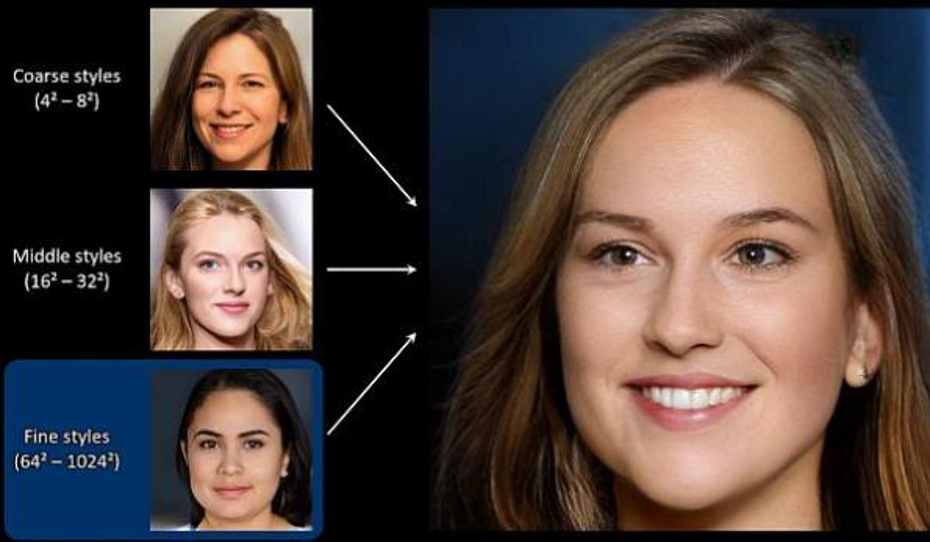
GAN is a deep neural net architecture that can learn to mimic any distribution of data. It is known as the robot artist that can generate artificial pieces of art, music, speech or prose by impersonating the real data.
GAN generates realistic human faces. Source:smart2Zero
In May 2019, Samsung used a GAN based system to produce a full-motion video from a single picture. Researchers in Samsung’s AI lab used it to animate Britney Spears, Neil Patrick Harris, Marilyn Monroe, even the Mona Lisa herself.
GUAGAN is another interesting GAN model of this
year, that turns doodle and sketches into stunning photorealistic landscapes.
GAN is one of the greatest breakthroughs for AI this year because of its huge potential. It can be used to generate high-resolution images, text to image synthesis and high-quality videos. It can also play a vital role in strengthening face recognition systems as it has the ability of 3D face reconstruction. GANs are also very useful in the medical field for image analysis, anomaly detection or even for the discovery of new drugs. It has also become a part of online retail sales because of its promising visual content having remarkable accuracy.
Deep Learning
Deep learning is the field of artificial intelligence where machines can learn from experience, acquire skills and do tasks that require human intelligence without the supervision of any human. Deep learning basically involves an artificial neural network algorithm inspired by the human brain.
2019 has been a year of immense growth for deep learning, as we have seen very impressive emerging technologies based on deep learning making. Generative model, reinforcement learning, algorithms used in biomedical research, advancements in Computer-Aided Drug Designing (CADD) and unsupervised text translation all are based on Deep learning.
Deep learning in AI
AI Augmentation
Augmented intelligence is the partnership model of human and AI working together to enhance the efficiency of performance. It includes learning, decision making, new experiences, and many more.
“This year we have seen artificial intelligence evolve into augmented intelligence;
a technology specifically created to assist enterprise decision-making rather
than to replace it. Augmented intelligence drives business results by
monitoring and summarizing to create intelligent insights that help surface
previously unseen issues.”
According to Gartner,
Inc. In 2021, artificial intelligence (AI)
augmentation will create $2.9 trillion of business value and 6.2 billion hours
of worker productivity globally.
Natural Language
Processing (NLP)
NLP is an important component of AI, which enables the computer program to understand the human language as it is spoken and respond intelligently in real-time. NLP is capable of interpreting free text and make it analyzable.
2019 is marked to be the gamechanger in the field of NLP by releasing BERT and ROBERT, the revolutionary model of NLP that is superlative in terms of functioning as compared to conventional NLP models, achieving state-of-the-art performance in General Language Understanding Evaluation (GLUE).
One of the major applications of the NLP model is text classification and categorization. It can also be used to classify if an email is a spam or not. BERT is also now being utilized in many conversational AI applications like a chatbot for customer support.
Reinforcement
Learning
Reinforcement learning is the training of machine learning model to make a sequence of decisions in order to chase a goal in a complex environment.
Reinforcement learning remained one of the most important domains of this year. In January 2019, Google DeepMind introduced AlphaStar- an intriguing and unorthodox AI player that played one of the most challenging real-time strategy games Star Craft II using a deep neural network based on supervised and reinforcement learning.
DeepMind AlphaStar AI beats StarCraft II pro players. Source: SlashGear
In October, DeepMind announced that AlphaStar has reached the grandmaster level and is beating 99.8% of humans including the top professional players.
Retail Vision
This year has massively revolutionized the brick and mortar store through retail vision, making it an essential part of digital enterprise transformation. Retailers are using Al enabled computer vision to speed up their business operations like data management, store security, shelf management, compliance, employee performance and also for automated payments like in AMAZON GO.
Retailors are also using computer vision for face recognition of customers and for monitoring their purchases. Retailors use these tactics to improve customer experience by offering discounts on the goods that are more likable for the customers, also to make their occasional customers their local customers and for in-store advertisements via smartphones using location data.
Face recognition is also used for sentimental analysis like when the customer is happy, frustrated or delightful and to monitor salesman and customer interaction.
QUANTUM COMPUTING
Quantum
computing has taken a quantum leap this year, having its immediate applications
in machine learning in AI. It has the capacity to perform even the tedious
tasks of AI within nanoseconds that can be achieved through traditional
methods.
Google and NASA have just announced that they
have achieved ‘quantum supremacy’. Their quantum computer solved a problem in
200 seconds that would take the world’s fastest supercomputer 10,000 years.
Quantum computing as described by Google AI: “is a new paradigm that will play a big role
in accelerating tasks for AI. We want to offer researchers and developers
access to open source frameworks and computing power that can operate beyond
classical capabilities.”
Black Hole Detection
The first image of the black hole revealed to the world by Dr. Katie Bouman and a team of scientists at MIT in APRIL, was generated using a machine learning algorithm known as CHIRP (Continuous High-resolution Image)
Artificial intelligence has taken the world by storm this year, it proved to be a real game-changer, bringing reality to the fantasies we have seen only in sci-fi movies. It is now intertwined in almost every aspect of our life, but we have to be considerate about the ethical dilemmas regarding AI and have to define the extent to which we wan to integrate AI in our lives before it’s too late.
It took William Herschel a lifetime to discover Uranus back in 1781. Cosmologist James Peebles and astronomers Michel Mayor and Didier Queloz took nearly 7 years discovering and confirming the existence of an exoplanet in the year 1995, for which they were awarded for the Nobel Prize for physics in 2019. But a 17-year-old just outperformed them.
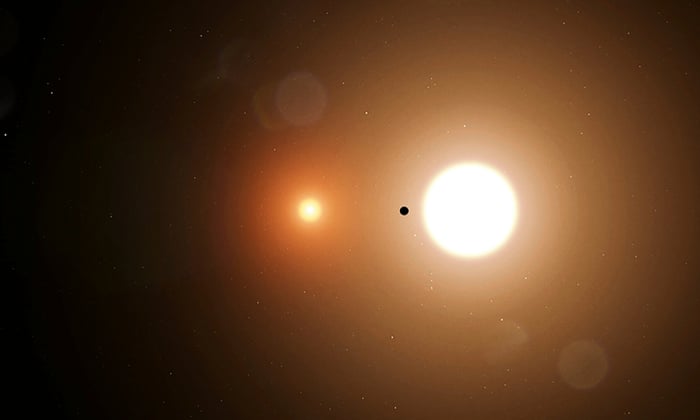
Wolf Cuckier joined NASA’s Goddard Space Flight Center as a summer intern under Planet Hunters TESS citizen science project. He was assigned to examine the variation in the brightness of distant stars in search for the existence of exoplanets. And guess what!! He did it in just 3 days into his internship. This was the quickest discovery of an exoplanet. What he discovered was a dip in the brightness of a Double Star system. The resulting comprehension confirms the presence of a circumbinary planet, a world orbiting two stars.
The planet, called TOI 1338 b, is around 6.9 times larger than Earth, or between the sizes of Neptune and Saturn. It lies in a system 1,300 light-years away in the constellation Pictor. The stars in the system make an eclipsing binary, which occurs when the stellar companions circle each other in our plane of view. One is about 10% more massive than our Sun, while the other is cooler, dimmer and only one-third the Sun’s mass. TOI 1338 b’s transits are irregular, between every 93 and 95 days, and vary in depth and duration thanks to the orbital motion of its stars. TESS only sees the transits crossing the larger star — the transits of the smaller star are too faint to detect. Its orbit is stable for at least the next 10 million years. The orbit’s angle to us, however, changes enough that the planet transit will cease after November 2023 and resume eight years later. (Source:NASA’s Goddard Space Flight Center)
This remarkable discovery is a part of NASA’s Transiting Exoplanet Survey Satellite (TESS) mission which started in early 2019 with a launch aboard SpaceX Falcon 9 on April 18, 2019. The mission objective is to search for planets outside of our solar system (technically called exoplanets), that can support life or have earth-like features. The mission uses transit photometry as a tool to determine the existence of such planets. In this method, the periodic variation in the brightness of the light coming from a distant star is measured to determine the presence of an exoplanet around it. The photometric signature is used to find the size, distance, orbit and relative position of the star with that of its orbiting planet.
The TESS mission has been planned to conduct this extraterrestrial search in a very systematic way. According to NASA, TESS will survey the entire sky over the course of two years by breaking it up into 26 different sectors, each by 24 degrees by 96 degrees across. The powerful cameras on the spacecraft will stare at each sector for at least 27 days, looking at the brightest stars at a two-minute cadence. From Earth, the moon occupies half a degree, which is less than 1/9,000th the size of the TESS tiles. TESS will create a catalog of about thousands of exoplanets and upon compiling the data, a ground-based analysis will be conducted in order to confirm the existence of these exoplanets.
The ground-based telescopes will collaborate with other ground-based telescopes to measure the masses of the planets. Using the known planet size, orbit and mass, TESS and ground-based follow-up will be able to determine the planets’ compositions. This will reveal whether the planets are rocky (like Earth), gas giants (like Jupiter) or something even more unusual. Additional follow-up with ground- and space-based missions, including NASA’s James Webb Space Telescope, will also allow astronomers to study the atmospheres of many of these planets.
The quest for the search of extraterrestrial life has been the hottest interest of modern astronomy lovers. And this discovery by Wolf has triggered worldwide interest in ‘Exoplanet Hunting’. However, the relevance of this discovery or this very objective remains a debatable topic among scholars given the present scenario. Despite being able to find life on such a remote planet, humanity does not justify the sustenance of life on earth itself.
Pakistan as a signatory of many international conventions and agreements is under numerous obligations related to the environment. However, the environment of Pakistan is under severe crisis which is degrading in many ways at an alarming rate, for instance, water pollution and scarcity, land pollution, air pollution, soil erosion, and deforestation. These deteriorated conditions also adversely affect the lives of common masses.
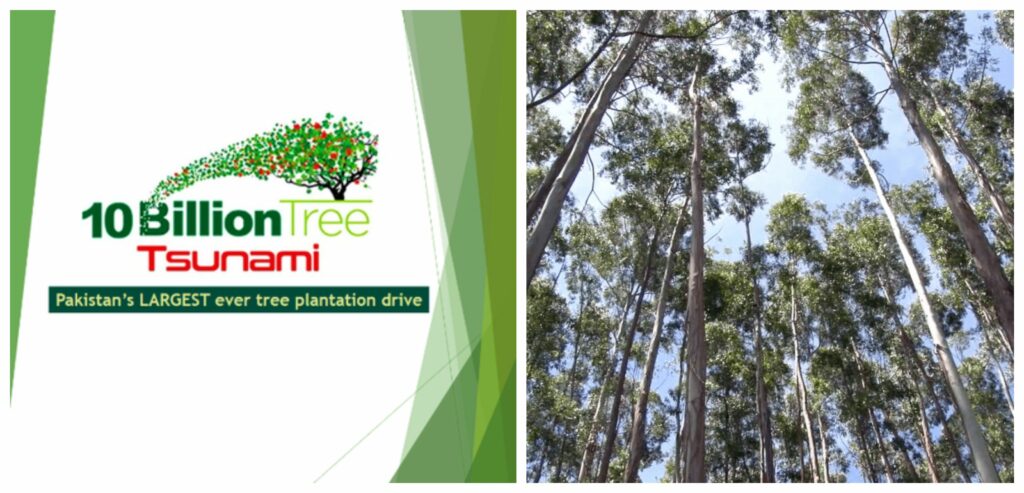
According to the Ministry of Climate Change in 2015, Pakistan had only 5% of land covered with forest while at present only 2.5% of the land is left with forest. In Asia, Pakistan has the highest deforestation rate per annum. Hence, the country is under ‘Green emergency’ which needs to be addressed on an immediate basis or else, Pakistan is expected to exhaust its natural resource of forests in the next 50 years. Under consideration of these threats and to combat the effects of climate change, the current government has taken measures to meet posed challenges. Under the PTI government, a policy of reforestation is adopted. ‘10 Billion Tree Tsunami’ is a project which aims to plant about 10 billion trees within span of five years. However, among the tree saplings that are being planted the ‘eucalyptus’ tree is of great concern which is likely to lead to the situation of ‘green desertification’.
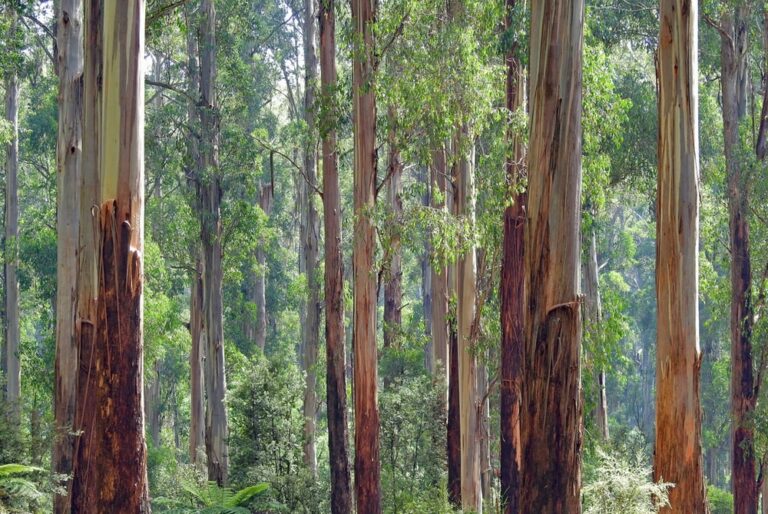
Eucalyptus is considered to be a favorable plant species in most reforestation programs due to its fast growth and adaptability. These pros are why Pakistan government is excessively using eucalyptus in its reforestation programs. However, despite the heavy pros it also carries quite many cons that significantly outweigh the pros.
Eucalyptus trees can cause trouble in the ‘10 Billion Tree Tsunami’ project.
Eucalyptus affects the soil fertility, it kills the microorganisms that are vital for biodegradation, it also ruptures the natural process of germination, oil on its leaves is highly flammable and prevents birds from building nests which in turn pose threat to biodiversity and above all the water consumption, which can deplete a country from water if it is already having acute shortage of water. These cons were not considered by the policymakers as well as their emphasis on its timber value in the reforestation program is also of great concern.
Eucalyptus plant is planted in different countries because of its commercial value. It boosts paper Pulp and Timber industries. It is not favorable for usage in Environmental reforestation policies. This plant is native to Australia where the soil is not very fertile and climate is quite harsh than Pakistan, which is suitable for its growth but its plantation in highly fertile soil can be counterproductive. Patterns of rainfall are already disturbed in Pakistan due to Global Climate Change under such circumstances eucalyptus tree will only add fuel to the fire.
If the current situation continues there is little chance of improvement and the millions of dollars and thousands of hours put into the reforestation program will all be for naught. Therefore, it must be asserted with environmental and technical considerations. In this regard model of china can be adopted which is also using eucalyptus for its afforestation program but is also taking steps to manage its impacts on biodiversity and its water consumption.
It is now essential that Pakistan start acknowledging the effects this foreign tree is causing and take immediate actions by drafting proper policies and planning to turn this situation around in its favor to provide prosper and healthy environment to its generation to come as it initially was meant to.
From
managing global supply chains to optimizing delivery routes, artificial
intelligence is helping in industries to improve productivity and capacity of
work. AI has widely influenced every facet of our daily lives to improve
efficiency and augments human capabilities. Algorithms are playing a vital role
in obtaining the optimized solution of problems. NEH (Nawaz, Enscore, Ham)
algorithm is an efficient algorithm developed in the early ’80s that works by
minimizing makespan for scheduling problems.
Today we are going to introduce with this brilliant engineer of Pakistan who developed the NEH algorithm in 1980 during his Master of Engineering at Pennsylvania State University, US, which is an essential part of almost all references or textbooks covering Scheduling topics. No graduate course on Scheduling is complete without a discussion on NEH. Furthermore, the paper covering the NEH algorithm is one of the most-cited research articles by a Pakistani, given the First or lead author was affiliated with a Pakistani institution (University college of Engineering, Taxila), as shown on the paper. Only a few research papers by Pakistani researchers as lead authors and affiliated Pakistani institutions have more than 1000 citations. A story was published by Pennsylvania State University, the US in October 2019, in their engineering news on Eng. Nawaz’s contribution to NEH algorithm advancement.
Engr Mohammad Nawaz
Mohammad Nawaz was born in Lahore completed his BSc from the University of engineering and technology, Lahore. After his Master from Pennsylvania State University, the US, he has been served in the University of Engineering and Technology, Taxila. Here are some excerpts of his conversation with our Editor-in-Chief Saadeqa Khan.
Let
us know about your academics and who inspired you the most in such an offbeat
career in early 1980?
In
my school years, the teachers who inspired me were mathematics teachers. If to
name one that influenced me the most was my year 9 & 10-grade mathematics
teacher, Mr. Sheikh Abdul Qadir, whom we used to call Baba. He had his own
notes to teach us and textbooks even he asked us not to buy books – He was a
true inspiration due to his devotion to his profession and indeed was a rare
example in the 1960s era.
Another
teacher of mine, Professor Emory Enscore of Penn State University, was the
Supervisor of my Master thesis. He was an excellent Professor and a gentleman
who showed me the real essence of academic integrity and professionalism. I
honestly give all credit for the publication of my paper to Prof Enscore.
Let
us know an event that would have proved as a turning point in your life?
During
1978-80, I was a Graduate student at Pennsylvania State University, USA. As
part of my M.Eng degree, in addition to other courses, I was supposed to do a
six Credits Minor Research Project or Thesis. I chose ‘Scheduling’ as my
Research field and Professor Emory Enscore Jr as my Supervisor and Professor
Inyong Ham as Second Supervisor. I had only six months to complete the research
work, write the report, and get it typed in the approved format. Two months
passed by, and I had no clear direction.
One
day, an idea sprang in my mind to solve the ‘problem’ that was completely
different than what other researchers were working on in this field. I tried
the approach on a few examples, and it worked. I shared it with Prof Enscore,
and he provided me enough computing time to prove that my ‘heuristic’ was at
least as useful as past researchers’ work. Since there were no PCs in the ’70s
or early ’80s, and we had only one big IBM mainframe in Penn State, and I had
to do all my work in the PSU Computer Centre). I did prove that my heuristic (self-programming
approach) was best to be considered for future work. I completed my research work
within three months and handed over a copy of my short thesis to Prof Enscore.
He went through and made corrections in a week or so. I got my thesis typed and
submitted for final approval. The whole process did not take more than 6
months. I got my MEng degree at the end of August 1980 and decided to go back
to Pakistan.
Just
two weeks before my departure to Pakistan, Prof Enscore asked me to write a
paper summarizing my research. He thought my work was worthy of being
considered for publication. I did whatever I could and gave a handwritten copy
of the work to him before leaving for Pakistan.
Prof
Enscore converted my work in a proper format and submitted to a research
journal. The journal sent the paper to referees for comments; the referees
asked for further analysis and evaluation of the proposed heuristic algorithm.
I was in Taxila, Pakistan, and had no computing facility to do any statistical
analysis. Prof Enscore assigned the job to another of his Master student, YB
Park analyzed and got his own MEng degree. Late 1981, Prof Enscore submitted
the paper with my algorithm, and its evaluation to Omega – The
International Journal of Management Science for publication, Omega accepted
the newspaper in July 1982 and published in January 1983.
Prof Enscore had an excellent academic of integrity when I finished my studies at Penn State University, I did not think of getting the paper published. From September 1980 to January 1983 – the paper publication date, there was not much communication between me and Prof Enscore – just a couple of letters. I’m talking about pre-email times; there were no fax machines; there were only a couple of phone lines in the Taxila campus, and because of the time difference between Taxila and Penn State, it was hard to make phone calls. Prof Enscore did all the work – putting the work in a proper format for publication, communicating with journals, asking another researcher to do further analysis, and much more. He could have put his name as the First Author, but he did not. He put my name – as the First Author, and University College of Engineering, Pakistan as my affiliation just because I was working in the College at the time.
I Salute to Emory Enscore and believe that such academic integrity is nearly impossible in Pakistan until and unless our teachers devote their life and all energies to their profession.
What
is the NEH (Nawaz Encore Ham) algorithm? How can it be useful for improved
quality solutions?
Before talking about the NEH algorithm, I would like to elaborate on a couple of simple terms for the lay-readers.
Sequencing
The
sequencing problem is a method of defining an order in which tasks to be done.
In other words, the sequencing problem involves the determination of the relative
position of tasks amongst all others. An issue may include jobs in a
manufacturing plant, aircrafts waiting for landing clearance, customer orders
in a fast-food facility, programs to be executed in a computer, loads of linen
to wash and iron in an industrial laundry, etc.
Let’s
consider this: you have two jobs, there are two possible sequences. Similarly,
if there were 3 jobs, the possible sequences would be six. And if you have 10
jobs to execute, mathematically you would have 3,628,800 (a factorial of 10)
possible sequences. Now imagine, you have 50 jobs, how many possible sequences
are there? Possibly 50 factorial.
If
all jobs are exactly the same, it does not make any difference in which
sequence you choose from. However, if each job is different, we need to determine
which the best sequence is. In the case of 2 or 3 jobs, one can quickly check
which the best out of 2 or 6 is. However, if we have 50 or 100 jobs, there is
no way to check every possible sequence to find the best one.
Flow-shop
Flow-shop is
a term used for a system where all tasks are to process on machine 1, namely
processer 1, then to machine 2 (processor 2), and so on. A simple example is, consider
an industrial laundry; where Loads of dirty linen from local hospitals, to be
washed first in a washing machine (machine 1), then go to a dryer (machine 2),
then to ironing press (machine 3). The sequence of loads remains on all
machines.
If
one keeps the same sequence of all works on every machine, the problem becomes
a bit simpler; this problem is called Permutation Flow-Shop Problem
(PFSP).
Scheduling
Scheduling is just a timetable indicating the start and finish of any job on any machine or conversely, the beginning of the first job on the first machine which will end up the last job on the last machine.
For
researchers or practitioners, the question is which sequence is the best out of
many possible ones. But before this, one must decide what criterion is to be
used to judge if the selected sequence is the best. One criterion used
for PFSP (easiest flow-shop) is the Minimization of
Makespan – the time between the starting of the first job on the first
machine and finishing the last job on the last machine.
Now back to your question, Johnson SM (1954) developed an algorithm to find the optimal solution for the PFSP for any number of jobs, but only for 2 machines (3 machines only as a special case). Theoretically, one can find the optimal sequence for any number of jobs and any number of machines, but for a larger number of jobs and machines, the time required to get optimal is prohibitive.
NEH (Nawaz, Enscore, Ham) is a heuristic algorithm to find a sequence of jobs to Minimize the Makespan for a PFSP for any number of jobs and any number of machines. The NEH algorithm gives a very quick and good solution. The algorithm uses a simple strategy to evaluate only a small number of sequences to get a better solution. For example, if we have 10 jobs, to process on any number of machines, the algorithm evaluates only 55 sequences. The algorithm does not guarantee optimal but gives an excellent sequence most of the time. Many researchers have dissected the working of this simple algorithm, analyzed its results, and found it be one of the best. The algorithm is straightforward; it needs only a few lines of coding.
NEH and your name are well-known in the decision Sciences or Scheduling field, but I could not find an academic article/ research or a simple blog about your work in Pakistani publications. How can we popularize scientific research and breakthrough news in our media?
I
would like to make it clear that the NEH algorithm is ‘older enough; however,
my paper’s citations and NEH’s applications are increasing with time. One can
check Google
Scholar and Scopus for its
citations.
In
general, a lot of research is being done in the scheduling field in many
institutions around the world; for the last 10 years, most papers are from
China. Interestingly, many researchers from Iran are publishing excellent
articles in reputable journals in the field too. One can see NEH’s applications
in those papers.
I
have seen a few outstanding papers in international journals by Pakistani
researchers referring to my algorithm. Almost all these papers by Pakistani
researchers are in collaboration with Chinese academic institutions.
How
to popularize scientific research and breakthrough news in media? People like
to read stories or articles or watch a program only of their interest. For the
average person, the new medicine is a news, and average (popular) media gives
coverage of this. Even in this case, the benefits of modern medicine would be
given in detail, but there could be no mention of a scientist(s) or
researcher(s) who developed the drug.
On the other hand, if someone develops a new variety of wheat, it would not make a news item in the popular media at all. Then what can we do? Here are a few suggestions:
Pakistan needs more science magazines like your Scientia Pakistan, Spectra, and Global science along with skilled scientist journalists who can write articles acceptable to news outlets such as DAWN or Tribune. Not everybody would read those articles, but a specific intellectual circle is really interested in topics.
Pakistani scientists, engineers, mathematicians, researchers, and most importantly, academics should visit institutions other than their own to present their research works. HEC, NSF, and similar organizations should support this type of program.
Students of M.Sc, M Phil and Ph.D., should be asked to visit Degree and Intermediate Colleges to show Pakistani researchers’ works.
College Principals and School Heads should be ‘trained’ to popularize science in their institutions.
Trainees in Teaching Training College should be coached on how to get Pakistani scientists or researchers’ success stories and then pass on to students and media.
How
much further study and improvements have been done in the NEH algorithm since
1983 when you developed it?
The
NEH was devised to minimize makespan; however, its concept has been
used to solve other related PFSP problems like minimization
of average flow- time; this is the amount of time machine takes to process
all the steps include wait or a rework. A number of researchers have also
developed many variants of NEH to tackle different problems. Like, in 1990,
Eric Taillard, did not change my algorithm but suggested improvement to cut
down its computing time. Some researchers call this the Taillard’s accelerated
NEH.
You developed the NEH algorithm as a part of your Master of Engineering program at Pennsylvania State University, US, in 1980. Let us know about its importance in academics?
The
NEH algorithm is in almost all references or textbooks covering Scheduling
topics. No graduate course on Scheduling is complete without a discussion on
NEH.
The
PSU, the US, has recently published a story on the NEH algorithm in its yearly
magazine as a highly cited publication in Omega. How do you feel about such a significant
achievement?
The
paper covering the NEH algorithm is one of the most-cited research articles by a
Pakistani, given the First or lead author was affiliated with a Pakistani
institution, as shown in the paper. Only a few research papers by Pakistani
researchers as lead authors and affiliated Pakistani institutions have more
than 1000 citations.
How
do I feel myself? Well, I usually see two or three citations every week, and
sometimes a new article with NEH in the title, I feel content and pleasure that
my contribution to the scheduling field is worthwhile. But I equally ponder
why? I’m not a hardworking person, I’m not a good researcher/writer; the answer
comes – Sometimes Allah gives you than what you deserve.
Below
is the story published in PSU Engineering News:
Let
us know about some NEH algorithm applications in non-manufacturing disciplines?
An
important example of NEH algorithm applications in non-manufacturing
disciplines is as under.
Search for missing Tourist
In recent years, there have been overwhelming incidents of missing tourists around the world. The use of unmanned aerial vehicles (UAVs) has significantly improved the performance of search and rescue operations. However, planning the search paths of UAVs can be a highly complex optimization problem, and one of the most challenging tasks in the problem formulation is the estimation of target location probability distribution over time. This method presents a UAV, s solution to search for missing tourists, and also proposed estimation of tourist location probabilities which change with topographic features, weather conditions, and time.
A couple of other useful applications of the NEH algorithm is Primitive matching in World Wide Web searching and energy-efficient real-time computing.
Google
has recently announced breakthrough research on Quantum computing, which
enables new generation computers to work on the fastest speed. What do you
think Super AI will be beneficial or harmful for humankind?
AI is beneficial for humankind, but ONLY if it is used for good causes. The AI is a technology, its benefits or harms depend on its users, just like nuclear technology that can be applied to cure deceased, or to generate electricity for lighting homes, and the same technology can be used to kill thousands of people in minutes.
Every year in science, there are new advancements and
researches based upon the previous ones. The science world keeps molding its
facts and figures with new experiments and techniques in order to dig deeper
into the working of life, chemistry, physics and how their principles work.
Scientists are a group of humans who work tirelessly around the clock in order
to achieve something big.
The scientific field of food and nutrition interprets the interaction of nutrients and other substances in our food in relation to maintenance, growth, reproduction, health, and diseases of an organism. It basically includes food intake, absorption, assimilation, biosynthesis, catabolism, and excretion.
I think the most interesting topic for gossip and chitchat is what we eat, what others eat, and how it affects our mood and body. Meetings, events, and plans all circulate around a common question; what’ll be the menu? When students are free from classes in educational institutes, they head straight to the cafeteria thinking, what should we eat today? When tea break time arrives, the decision of whether you should have a hot samosa or a creamy pastry with your cup is an important one to ponder upon. Even when you get up in the morning, the first thing you want is a nice cup of tea or the aroma of an egg sizzling. Let’s face it, one corner of most of our minds daydream or unconsciously think about foods and cravings.
On average, people may spend from 40 minutes to an hour of their day thinking about food, and it goes without surprise that chocolate is the most popular food to be thought of. While each of us has developed our tastes and preferences in the department of munching, little thought is devoted to our health. Is your daily food intake fulfilling the requirements of your body? Do you eat junk food on a daily basis? What about fast food? Fried food? Sugary ones? Fizzy drinks? How many glasses of water do you drink? Do you examine food labels and ingredients before you buy a pack of food? Are salad and fruits important for you? Do you eat red meat? What new diet trends are common in society for keeping yourself trimmed, and are they effective?
Let’s look at some of the latest research and
findings in nutrition during the year of 2019.
1. Unhealthy habits can start young; Infants, toddlers, and added sugars. (Elsevier,14 November 2019)
It is usually believed that little babies should be given more sugar. It is added to their milk, baby food, etc. this makes them develop a sweet tooth from a very early age. Eating sweet foods can be bad for the teeth as well as increasing the likeliness for obesity. Little kids are always happy for sweets, chocolates, sugary cereals, and sandwich spreads, etc or want to eat boiled rice or milk with sugar as well. Mothers in Pakistan are happy to feed their kids with Ghee and sugar etc, believing that they are providing them with a healthy diet. This is utterly incorrect. A child needs to develop all the tastes from an appropriate age and eat a balanced diet of whole grains, meats, vegetables, etc along with sweet dishes. Also, since sugars are merely carbohydrates, children need a colorful diet with vitamins, minerals, etc which helps in their proper development. The main point to note here is that the present sugars in food are enough for a child. The extra ones added to ‘fatten’ him up will not be beneficial at all in the long run.
2. Micro-particles could help fight malnutrition. (Massachusetts Institute of Technology, 13 November 2019)
According to this research, staple food fortification
has become much easier and efficient. The micro-particles are made from a
biocompatible polymer that protects the nutrients from degrading during
cooking. This new strategy makes it easier to fortify foods with vitamin A and
Iron. According to a clinical trial that followed, it was shown that women who
ate bread fortified with encapsulated iron were able to absorb it from the
food, thus proving its compatibility. Fortified food is a better and more
economical option than dietary supplements and neutraceuticals.
3. Food comas and long-term memories: New research points to an appetizing connection. ( New York University, 10 October 2019.)
Food comas refer to the periods of rest observed after eating. Neuroscientists have linked these with the formation of long-term memories in humans. After the intake of a hefty amount of calories, we start to feel drowsy. This helps us to form a long-term memory of the flavor of the food. Insulin and the insulin-like growth receptor II help in redistributing the energy away from active behavior to the storage of both nutrients and memory. That is why it is important to not busy yourself immediately, both mentally and physically, right after a meal.
4. No need to cut down red and processed meat for health reasons, controversial findings suggest. (McMaster University 30 September 2019)
Well, this one is a huge surprise. I’ve heard so many doctors and nutritionists highlighting the link of red meat with cardiovascular diseases, high blood pressure and even cancer that I had to read the heading twice just to make sure. Yes, the heading does mention a controversy, but it is still quite unbelievable that a paper could be published in favor of red and processed meat. The main point discussed here is that five systematic reviews by McMaster and Dalhousie researchers show that cutting back has a little positive impact on health. According to the professors, their studies were contrary to previous ones and no link was established between coronary disease or cancer and consuming red meat. Meat-lovers, dig in!
5. What and how much we eat might change our internal clocks and hormone responses (Helmholtz Zentrum Munich- German Research Center for Environmental Health. November 8, 2019)
Such research has been carried out for the first time, showing how glucocorticoid hormones e.g. cortisol control sugar and fat levels differently during the day and night, while feeding and fasting, rest and activity, over the course of 24 hours.
Each cell in the human body is driven by the circadian rhythm of 24 hours. It is synchronized with the natural cycle of day and night mainly by sunlight, but also through social habits. In a healthy system, glucocorticoid stress hormones are produced every morning by the adrenal gland. The secretion reaches a peak before awakening and propels the body to use fatty acids and energy sources for the day’s activities. When this rhythm is disturbed due to nightshifts, jetlags, etc, metabolic dysregulation like obesity and type2 diabetes, etc prevail.
The knowledge of the action of these hormones can be used to understand their anti-inflammatory and immunosuppressive properties. They can be synthesized artificially and administered in patients with diabetes, obesity and liver disorders. A link can be developed between lifestyle, hormones and physiology and adaptation to a good routine can be encouraged with strong evidence. Chronomedicine explores the interaction between biological rhythms, medicine, and drugs.
6. Individuals with obesity get more satisfaction from their food
(Elsevier, July 30, 2019)
We can all relate. It’s usually the chubby ones who enjoy every morsel of their food and describe it as scrumptious, finger-licking good and indulge in its flavor and aroma. Even in all the movies and cartoons, the fat characters are shown to be the foodies e.g. Homer Simpson, Joey Tribbiani, Fred Flintstone, Pumbaa, Garfield, Winnie the Pooh, Fuzzy Lumpkins, etc.
A new study found no significant difference in taste perceptions between participants of normal weight and those who were overweight. However, obese ones had higher initial taste perceptions, and this may explain why some people eat more than others. People who are foodies actually have good feelings and pleasure associated with foods and are eager to try more tastes and eat more to attain the satisfaction that they crave for.
7. Seeing greenery linked to less intense and frequent unhealthy cravings.
(University of Plymouth, July 12, 2019)
This study is the first to demonstrate that passive exposure to nearby green-space is linked to both lower frequencies and strengths of craving. It supports the fact that greeneries be preserved and that eating in a peaceful, natural environment induces the brain to calm down and think about similar natural foods. No wonder expensive restaurants have outdoor fancy lawns and captivating raw salads and fruit drinks on their menus. Cravings for alcohol, sugary bakery items, cigarettes, etc decrease when sitting in a natural environment compared to a hotel crammed with loud music and a zillion people or a fast food outlet teeming with loud mobs. So next time you want to plan an outing, make some cold sandwiches and a nice salad and head to the park! I’m sure that’ll be light on your pocket too, along with your health!
8. It’s OK to indulge once in a while, study suggests: The body adapts to occasional short-term overeating. ( American Physiological Society April 25, 2019)
A smile is surely evident on the reader’s face upon reading this title! Yes, it sure does make everyone happy. Who doesn’t want a nice sweet bite here and there, or an ooey-gooey, cheesy one? Even the strictest of nutritionists allow a cheat day a week, because, yes, our body deserves a break once in a while too. Always worrying about dieting and weight control may affect our mood and body. Our body understands us and covers up our little bouts of snacking once in a while. If within a limit and not too frequent, these itsy bitsy trips down snack lane don’t hurt us at all!
9. The heart ‘talks’ to fat cells. (Temple University Health System. May 9, 2019)
Interesting, isn’t it? And cute, too. To imagine that the tiny cells of our body chitchat with each other in order to pass messages and perform functions. After all, all the cells of our body do reside next to each other in a community. Communication is rudimentary. So, what sacred message does Mr. Heart send to Mr. Fatty?
The senior investigator leading this research, Walter J. Koch, says that this is the first study to provide evidence of crosstalk between the heart and fat tissue that is regulated by the enzyme GRK2. The heart relies on GRK2 to relay information to fat cells regarding metabolism. It directs them on how and where to accumulate in the body and how to act in different body conditions.
10. Only-children are more likely to be obese than children with siblings. (Elsevier, November 6, 2019)
Now, this was quite an unexpected finding! The main point in this study was that families with multiple children tend to make more healthy eating decisions than families with a single child. Researchers also noted that mothers of singletons were obese themselves as well.
As to the conclusions, scientists were confused. Having siblings and eating with them leads to less intake than when a single child sits all alone. Social and domestic factors do also play a part in the food intake of a family. More surveys need to be done in this case to establish a link between eating habits and the no. of family members.
More similar researches regarding advances in Nutrition science research can be found on sciencedaily.com!
2020 brought with it the first Wolf Moon of the decade. The full moon was apparent in the sky in a penumbral lunar eclipse, with one side showing the outer edge of the shadow of the Earth. This phenomenon was visible to skywatchers at night on January 10th and 11th across Europe Asia, Europe, and Africa. Four more lunar eclipses are expected in 2020.
The next month’s full moon will be on February 9th and will be called the “Snow Moon”.
Images below show what the wolf moon looked like.
Full moon during the penumbral lunar eclipse over Colombo, Sri Lanka, on Jan. 11, 2020. Earth’s shadow can be seen on the top left. (Image credit: Chamila Karunarathne/EPA-EFE/Shutterstock)
Progression of the partial lunar eclipse in Ankara, Turkey. (Image credit: Ali Balikci/Anadolu Agency/Getty)
A Full Wolf Moon can be seen rising over the horizon at the beach in Malaga, Spain. (Image credit: Jesus Merida/SOPA Images/LightRocket/Getty)
A beautiful image captured in Kuratica, Macedonia. (Image credit: StojanStojanovski)
Astronomy Events Coming Up Soon
2020 has started and brought many exciting events for astronomy lovers who long to gaze up at the skies and witness the celestial marvels. Here are some of the events coming up soon.