Body
fat in humans is stored in the adipose organ, which consists of distinctive fat
depots. Our total body fats reside under the skin, storing 80-90% of total body
fat in the form of Subcutaneous white adipose tissue (SAT) depots. Mainly fats
depots are present in the abdominal (around the waist), subscapular (on the
upper back), gluteal and femoral (thigh) areas. These subcutaneous adipose
tissues have distinct morphological and metabolic profiles and exhibit
sex-specific differences in size and function.
When it comes to comprehending how males and females store fat differently, the fruit fly is the key helper in this understanding. Fruit flies and humans are surprisingly alike in their genetic makeup. Studies have indicated that 75% of the disease-causing genes present in humans are also found in flies in similar form.
Researchers from UBC’s faculty of medicine recently published in PLOSBiology about their new fundamental genetic discovery in differences for fats storage and metabolism in both males and females using fruit flies. The study’s senior author, Elizabeth Rideout, an assistant professor in the Department of Cellular and Physiological Sciences, and graduate student Lianna Wat explain how this discovery will serve as a ladder in coming future for treating and managing metabolic diseases, including Type 2 diabetes and cardiovascular disease.
Q. How is fat storage and metabolism different between
men and women?
A. In humans and most animals, females not only store
more fats as compared to males but also breakdown fats slowly than their
opposite gender. In humans for the same body mass index (BMI), women typically
present with nearly 10% higher body fat compared to men. Aging increases
adiposity in both sexes, but again, women are characterized by higher percent
body fat throughout the entire life span While this difference in fat metabolism between men and women partly depends on
lifestyle, biological
factors such as sex hormones and sex chromosomes also play a role.
A lot of research has documented hundreds of fat
metabolism genes that are controlled by sex hormones and sex chromosomes, but
less is known about which of these genes cause the male-female difference in
fat storage.
Fruit flies in the lab. Credit: University of British Colombia
Q. What is the benefit of studying the fruit fly?
A. Fruitfliesshare nearly 60% of human genes and are studied by
thousands of scientists around the world. The reason is that fruitflies
and humans use the same or similar genes to develop into adults. And the short
life cycle of the fly makes it an ideal subject for genetic experiments. Nearly
75 percent of human disease-causing genes can be found in the fruit fly in a
similar form. It has been identified that fruit flies show a similar trend
towards fats deposit and metabolism as animals and humans i-e the female flies
store more fat than males, and metabolize it more slowly. This trend makes them
a perfect animal to improve our understanding of the genes that affect
male-female differences in fundamental cellular processes like fat metabolism.
Q. What did your study find?
A. Research has identified a major fat metabolism gene
that regulates and maintains differences in fat storage in males and females.
This idea was supported by the flies that showed without this gene, the male
and female flies store the same amount of fat. This discovery greatly provided
a link for identifying metabolic genes that control male-female differences in
other aspects of development and the study of physiology.
Q. What are the implications for people?
A. This study of the identification of metabolic genes was the earliest stage of the discovery process. But we hope that recognizing the genes that showed the difference in male and female fat storage would provide a great deal of knowledge regarding risks of some major diseases linked with abnormal fat storage in males and females, including cardiovascular diseases and Type 2 diabetes. Knowledge about the roles of genes associated with fat storage and metabolism will play an important role in treatments and eradication of metabolic diseases. Today, only a few drugs are available for treating abnormal fat storage and metabolism. Drugs which are somehow available, show differential effect for males and females. Identification of genes in fruit flies that control differences in male and female fat storage will also give more detailed knowledge for treating abnormal fat metabolism through new therapies for males and females.
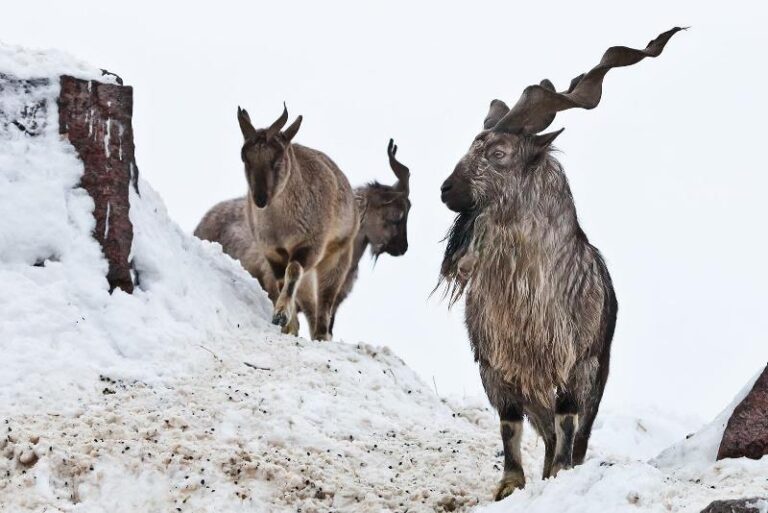
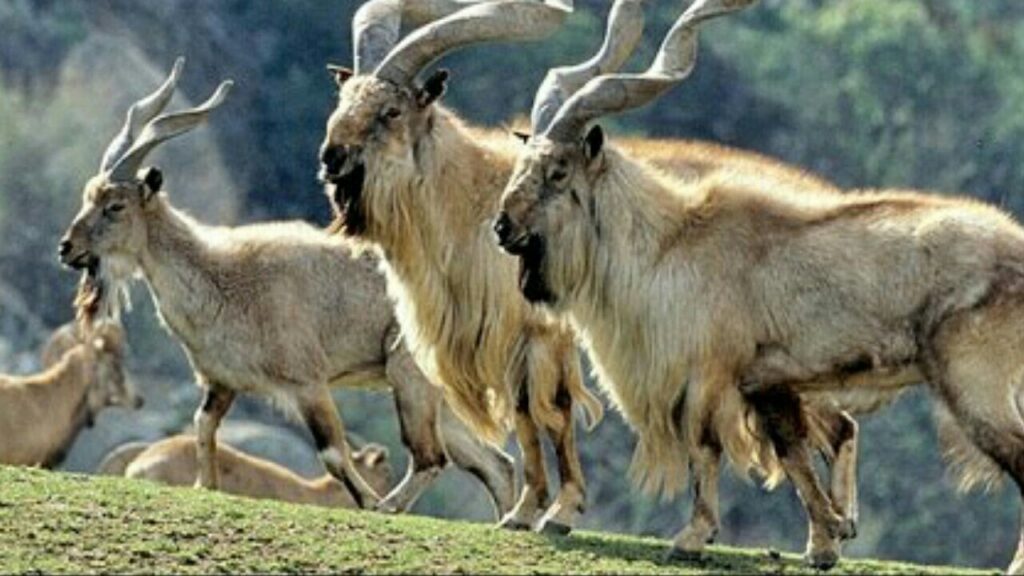
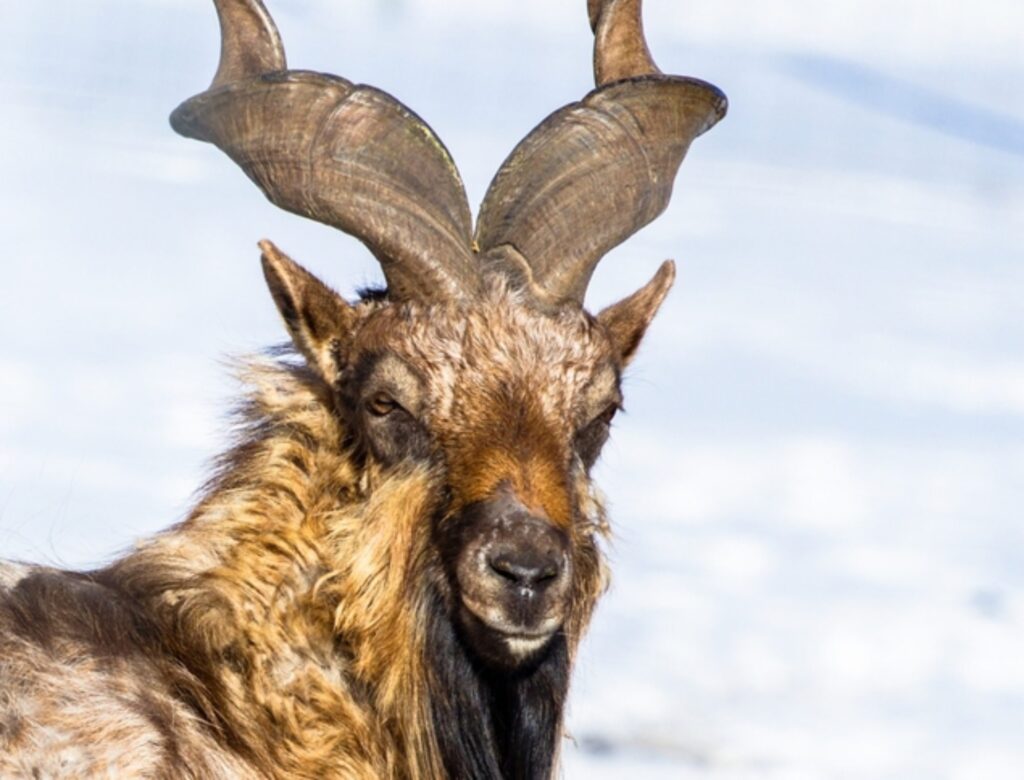
I have been flogged with the dreaded stick for the second
time today. The first time was because I was late at jumping when Master
counted to three and the second time, I bleated at the wrong moment and frightened
a little human child away.
These days are pretty tough because of the prevailing chilly
weather. Master has a terrible cough and my companion, Bandar Khan, is not
feeling up-to-date either. As for myself, the cold never bothered me. That is
because the lands I come from are several times colder than this.
I feel a stabbing pain in my heart whenever I think of those
lands. The lands where I was born, where I opened my eyes for the first time, I
took my first breath, my first bleat, my first bite and my first trembling
steps. Where I pranced happily with
members of my kin and ate the sweet grass on the ground as much as I liked. My
mother and family members were part of a herd of dozens, headed by a human
shepherd. The shepherd was a kind soul. He never hit us or yelled at us or
starved us. He took such good care of us all.
My companions and I used to frolic about carelessly,
bleating and chasing each other. Then we would eat the juicy meals our
shepherds provided for us, savoring each and every flavor of freshness and
richness. The rocky mountainside and the fresh air were heavenly. There were no
worries and life was beautiful. We were free to roam about where ever we liked.
The human children of the village played with us, fed us scraps of food and
stroked our coats lovingly. They used to stare with awe at our horns, which
were of special interest to them.
But then a few new men came from below the mountains one day
and started talking with our shepherd. They started inspecting each of the
goats in the flock, rudely poking their grubby hands into our mouths and
yanking our lips apart to see our teeth. Then they would pat our backs and legs
and trace our horns with their fingers. I did not like it one bit, since their
hands were rough and ragged.
The next thing they did was haul a few of us, including me,
into the back of a truck. I was utterly surprised and retaliated with all my
strength, but the humans were sturdier and managed one goat at a time. I
bleated and shrieked till it seemed my lungs would burst. My family and friends
were bleating at the top of their voices too, some from the truck, some from
the ground. I was confused and frightened. I stood up on my hind legs to get a
better view of my mother, who had not been loaded onto the truck. One of the
men hollered at me and flogged me on the butt. That was the first time I felt
the pain ripple through my body. I yelled and panicked.
The man, along with another, held me down and calmed me. All
the goats on the truck now cowered and stood close to each other, unaware of
what was going to happen. We were given stale leaf stalks to munch on and there
were so many of us crammed up together that movement was difficult. After
several hours, we were unloaded from the truck into a marketplace overflowing
with other goats, sheep, cows and buffaloes. We had ropes around our necks, by
which the men guided us to our stables.
All my friends and family members had been divided. I did
not know a single animal in here and eating green smelly mush from the same stable
as those gluttony sheep was unacceptable. Life was very different for me here.
I could no longer roam about or breathe fresh air. I was nervous and didn’t
make new friends either. Then a man with a monkey at his side came to my owner
one day. He wore tattered clothes and dirty shoes. He pleaded to my owner to
give him a goat in the little money he was offering. Since I was among the
skinny ones and didn’t adjust well, I ended up with the monkey and the dirty
man.
Life with the monkey and the dirty man was beyond the
wildest of my thoughts. To think that I would let this scrawny human
circus-train me into doing a bit of jumps and tricks and performances in the
streets of the city was unimaginable. The training part I wish not to repeat
because it was painful and confusing. Mostly because I felt homesick and could
not grasp what the Master wanted me to do.
The monkey was my best friend during these times of hardship. Bandar Khan was a calm, composed and clever old monkey. He told me how he had been with the Master for eight years. He had been captured from the forest of Changa Manga and was being sent to a zoo along with his family members, but fate wrenched them apart and he ended up with the Master, who was just a small boy then. The Master had been poor and lived alone on the streets. He made friends with Bandar Khan, played with him and shared his food with him. Master had been a beggar then and did odd tasks like cleaning car windscreens, serving at dhabbas, picking up garbage etc. When Bandar Khan escaped from the truck taking his family to the zoo, he was lost, cold and hungry. Master found him and gave him a piece of dried roti and patted him on the head. They became friends, Master taught Bandar some tricks and then they hit it off in the streets.
Bandar was quick and
witty and attracted people and children. The audience always applauded and gave
generously, including notes of hundred and fifty, packets of chips, nimko and biscuits, and bananas. Bandar
also helped me to train. He instructed to memorize the few commands the Master
said and follow them in order to avoid the stick. I was usually good at all the
jumping and twisting about, but sometimes I forgot. And the outcome depended on
Master’s mood. If the money and the weather were both kind, Master always
patted and comforted me. But if he was in a bad mood, he would flog me with the
stick. I would bleat painfully and Bandar would jump and come to stand in front
of me. Master would then melt and ruffle the hair on top of my head, saying he
was sorry.
By the time a few months passed, I was still not used to
this life of misery. Scarce food and water, no warm place to sleep, no
companion animals, the smoke and the garbage-specked streets of the city were
all very uncomfortable. At times like these, I would cry and wonder where my
mother and brothers and other fellow goats were. I would miss the fresh air of
the mountains and the crispy, luscious grass of my homeland. I could do
anything to have one day in that heaven of a place. Then Bandar Khan would feel
homesick for his family and forest too, and we would weep together, offering
each other solace.
At times, we did get chances to smile. When we made little kids laugh with our tricks, their parents patted us or paid Master some extra money. Master would then buy corn from the street vendors or something else and treat us. When I saw the children happily talking and laughing and their mothers beaming, I would remember my own mother. I would bleat at them loudly and they would come closer to stroke my back. The touch of their loving warm hands reminded me of my mother and how I used to play with her as a kid and she would then caress me. I do wish one day I am able to return to the mountains and my mother, for I cannot tolerate the thought of my whole life on these drab streets. And I pray that Bandar Khan also finds his way back to his forest home.
In a patriarchal society like Pakistan, Women are still seen as just the homemakers or the mommies but no one can think of them as the potential leaders or the CEOs of multinational companies. They are still subconsciously raised to be subservient, and we are not ready to see them leading.
Wildlife photography
But in this pool of dismay, some women have come out to break all the glass seals, ready to challenge the stereotyping and their journey give pangs of inspiration and validation to all the women out there- Sofia Kashif is one of them. Sofia Kashif, greatly known for her work as a photographer, blogger, and writer, has excelled in all the niches with her effective content and exceptional way of presenting her work. We are not very fortunate to see much of such inspirational women, having such diversity in their work.
In our society people like Sofia Kashif are present for the womenfolk. “Gohar honay tak” and “Mummy ki diary”- these two books have given her outstanding recognition in the mob. Completely different genres “Gohar honay tak” a research book, on the other side “Mummy ki diary’’ on parenting, the diversity in the subjects she chooses to write and the simplicity in her writings is one of the reasons that her work stands out. Her write-ups on social issues incite readers to think out of the box and are very much acclaimed by the masses.
Sofia Kashif is greatly known for her work as a photographer, blogger, and writer
Sofia Kashif
She is not only a renowned writer but also a photographer that contributes a lot to her prestige. Her love for nature photography has led her pictures to be featured on international platforms like Guardian Magazine, UAE Reads, Abu Dhabi Magazine, and Gulf News.
She did her masters in English literature from Islamia University of Bahawalpur and B.ED from Allama Iqbal Open University. Later she offered her services as an English lecturer in the NICIAS college system and Army Public School. She left Pakistan in 2008 and moved to the United Arab Emirates, where she spent 13 years of her life. Currently, she is working as a blogger for DAWN, ARY, and HUM news and also looking forward to the publishing of her next book.
Besides, she is also a MOMMY of two extremely talented kids Diya and Ariz. Diya is twelve years of age, studying in seventh grade; nature and wildlife interest her the most. She is an extraordinary genius having extensive knowledge of wildlife and loves to paint. Her paintings on wildlife are spectacular. She is not only a painter but also an enthusiastic reader and wants to write a book on wildlife and strange myths.
Following are some excerpts from my recent candid conversation with Sofia Kashif and her daughter Diya Kashif
Snakes and iguanas, Photo credit Sofia Kashif
You are famous for your Photography, blogging, and write-ups, which one do you think is the most effective medium to communicate with the masses?
I have started my journey from Instagram, taking pictures, posting them and alongside I started writing. But in today’s digital world, the most effective medium is social media to present yourself, display your talents, introduce yourself to the whole world. But for the young lot, as they have full time for their ambition and they are not occupied by other responsibilities, they should give an important place to all the mediums to produce effective content and for the marketing of their product. When you are able to communicate in English, you are no longer limited to the subcontinent; you can reach out to the whole world using these platforms.
Colors of Autumn, Photo credit Sofia Kashif
What inspires your photography and do you think photography influences your writing too?
When it comes to photography, everything inspires me; I can’t name one specific thing. I have spent a major part of my life in Abu Dhabi, U.A.E, which you know is a total desert, though you can enjoy all the modernity, luxurious lifestyle there but one thing that place lacks was nature, we used to go to resorts to enjoy fresh air and greenery, which is one of the essential reason of my interest in nature photography as I have missed it the most living there and it inspires me or you can say amazes me the most. And definitely, when you start seeing things through the camera lens it unfolds a new layer of everything for you. Photography not only influenced my writing but assisted me in a number of ways as all the pictures I use for my writings and Blogs are the ones I capture myself and have a major role in my popularity and recognition among the masses.
Sofia Kashif’s photograph Featured in Dawn News
Which aspects of Nature photography do you love the most?
The beauty of nature, the shades of green excite me the most. For people, they are just bushes and shrubs but to me, every shade of green has a special feel, special value that I cannot explain in words.
What are the tips and techniques for nature photography?
I feel like it’s not the camera that works for you but it’s basically you, what you see. I do photography of the things that interest me the most that are “NATURE” and I have a special eye to see nature, I go to the same places multiple times and every time I discover a new layer, a new angle to capture the beauty of that place. It’s basically your passion, your love for the things you capture and your angle to see the things. In simple words, it’s not the lens of the camera, it’s your eye and the way you see things that can do wonders to your photography.
Sofia with her daughter Diya.
What type of writing intrigues you and what type of genre do you lean towards the most?
I am a very avid reader even from my teenage. Reader’s magazine at that time was a total treat for me but there is no specific genre, I read everything and every single thing intrigues me. But writings of Elif shafak, I can say fascinate me the most as her writings are basically the catharsis of feminism and even from her writings about the society of turkey, we- the readers of Pakistan can relate so much which I find very interesting. And when it comes to my own personal writings, you can see my work is very dynamic from “Gohar honay tak” to “Mummy ki diary” to my write-ups on social issues. I cannot confine myself in walls nor do I hesitate from taking risks and experimenting. I am not here to make records so it doesn’t bother me even if I lose my audience while trying new things, I think I am comfortable this way or you can say it’s my way of doing things.
Can you tell me about your book MOMMIES?
I shifted to UAE after my marriage where I did not have the assistance of any of my relatives at the time of parenting of Diya and Ariz, so you can say I was leading my life from the forefront and was trying to figure out things myself by reading books about parenting and through the internet. At that time, this idea of writing about parenting came to my mind and it was a total experiment. Little did I know at that time that this book will be my identity in the long run and at that time I realized how much mothers of Pakistan are in need of content like this.
Blue Parrot, Photo credit Sofia Kashif
You talk a lot about the integral factors of successful motherhood in “MUMMY KI DIARY”, can you summarize it for our readers?
There is no set definition of successful motherhood but invest in your child, invest in yourself. There is this very wrong concept that prevails in our society that our mothers quit their passion, their ambition, their talent’s got all rusted in the grind of daily life which is very wrong. In my perspective, you should pursue your ambition, make use of your talent not just for yourself but for your child because a mother should be a role model and the very first inspiration of her child. And another thing I want to mention here is that a mother should be very brave and strong who can take stand for her children even if she has to go against the society and unfortunately, I haven’t seen such strong women in our society in a significant number. Remember this: Only a strong mother can raise a strong child who can counter difficult situations in life and will pay back the society in the long run.
Diya Kashif.
Diya Kashif
How old were you when you started painting?
I was two when I used to see my mom doing painting and that’s when I learned to use colors and paper to draw.
What are your hobbies other than painting?
I like reading, playing on my recorder and playing badminton.
How did you develop an interest in wildlife?
Since I was 2 when my mom read me so many stories about animals and the way she described them with so many colors developed my interest in wildlife.
What attracts you the most about wildlife?
The beautiful flowers, birds singing in the trees, animals in the forests- this is what captures my attention the most.
Which is your favorite animal?
My favorite animals’ are Zebras and wolf for wildlife and cats and birds for pets.
(L) Diya’s artwork. (R) An artistic depiction of Diya’s love for Koalas
What is your inner animal?
Wolf because I like to be silent and in pairs or groups.
Would you like to say something about the recent Issue of Australian wildfire?
What’s done is done. I feel sad about the koalas and the people and the country.
What do you think we should do to conserve or protect wildlife?
We should stop cutting down their habitat. Some people take animals from the forests and they keep them as pets, those animals die, which is needed to be stopped.
Is there any message you want to convey through your paintings of wildlife? The only reason I like to draw wildlife paintings is that I want people to be nicer and kinder with animals.
What are your future goals and do you want to do something for the conservation of wildlife in the future?
I want to become a fighter pilot because I like to fly and it’s my dream to fly a plane and protect my country. And if not a fighter pilot then I would like to be a veterinarian and will save animals. I also want to write a book on wildlife and want to help nature but right now I can’t think of any way to help it as I am too young and a single person can’t do anything, he/she can only convince others but it needs a collective effort to get an effective outcome.
Bumblebees have been declared the most important living things on the planet, and rightly so. They help in the process of pollination and are thus crucial for the growth of new plants. Just like everyone has preferences, bees also like specific plants compared to others. If bee conservation programs are to be planned, these flowers and plants must be given attention.
In the summer of 2015-16, bumblebees were found in more than 100 plant species across 400 plots in the Plumas National Forest in California. This is a mountainous and meadowy area with running water and wildlife, and bees are found here in huge numbers. It was found that Oregon checker-mallow and mountain pennyroyal flowers are the most beloved of the bumblebees. (Pictured below.)
North American bumble bees have seen a sharp decline of 44 percent between April 2015 to April 2016, and beekeepers in the US are worried. The reasons pinpointed behind this decline include competition with other insect species, transfer of parasites from honey bees to bumblebees, loss of floral resources, or a mismatch between the phenology of plant species and bumblebee species.
The researchers assessed the choice of five species of bumblebees, each species selecting a different flower within the same plot of land. The most abundant species was Bombus vosnesenskii, the yellow-faced bumblebee, and it preferred the large-leaved lupine. Three of the five species studied chose A. urticifolia, a flowering plant of the mint family.
Agastache Urticifolia, thick-stem Aster and Ryderberg’s penstemon
Along with this, thick stem asters and Ryderberg’s penstemon were primary choices as well. It was observed that these choices remain persistent despite changes in seasons and availability of other plant species. Reasons for preference include quantity and quality of nectar and pollen, availability, ease of accessibility, length of a bee’s tongue, flower symmetry, and color preference.
As whacky as it may sound, another group of researchers from New York found that cannabis crops were also beneficial for declining bee populations. Marijuana crops are also helpful. And the good part is that they don’t need insecticides while farming them. They are nutritious and a good option when flowering plants are scarce.
Source: CNN, 28 Jan 2020 by Kristen Rogers and David G. Allan
Television channels related to wildlife and nature are pretty much the least-watched ones all over the world. The bickering war that goes on between the family members of a house for the remote is basically because the father wants to catch the headlines on the news channels or watch a talk show on budget and policies. Or the mother wants to see what the latest episode of her ongoing drama has unveiled, and what has the most popular chef cooked up this week. And the kids are interested in watching cartoons, funny TV commercials, and movies. Rarely anyone especially turns on the TV to know what goes on in the wildlife community of our planet.
I remember how I, as a child, would sometimes stumble upon these while flipping the channels. If there was an interesting documentary or a ferocious lion hunting his prey, I would become glued to the screen, gaping till the lion tore at the flesh of the poor deer and ripped it off, chomping and smacking. Other than that I never really watched these shows.
I can guarantee you that a lot of hard work and patience
goes into videotaping these moments of nature, not to mention the guts it takes
to go into the depths of a jungle with camera equipment and no connection to
the human world. People who are true wildlife lovers and are brave and daring
can go and deal with these beasts
Animal Planet is one such TV channel dedicated to showing the world of these wild beasts to us. This is an American pay television channel owned by Discovery Inc. It was established in October 1996 and has since then devoted to viewing documentaries on wild as well as domestic animals. The channel was a joint venture with BBC Worldwide, but since 2008, it rebranded itself and started using the logo it still uses today.
The basic ail of this television is to provide good quality
shows on wildlife which are engaging and informative. These educational shows
are captured and displayed with premium quality, suitable dramatic or calming
background music and explanations in English related to the animal and their
behavior.
Animal Planet keeps remodeling the themes of its shows and slogans according to the demand and reactions of its viewers. Its latest slogan was adapted in 2018, which is ‘keeping the childhood joy and wonder of animals alive by bringing people up close in every way.’
Let’s take a look at some of Animal Planet’s popular shows!
Crikey! It’s the Irwins
This TV show began in October 2018 and it exhibits members of the Irwin family struggling with various challenges as they tend to the animals at the Australia Zoo. The IMDb rating of this show is a mighty8.6 and only after one season! This is a reality show and each episode has the viewer holding his breath, like the one where Robert was seen wrestling with rattlesnakes in the heart of Arizona.
The Irwin sisters, Bindi and Terri are no less in bravery
and seeking adventure. The episode where Bindi saves the life of a Koala and
lovingly cradles it is so heart-warming.
Open your laptop and search the net to catch up on the rest
of the episodes showing the adventures of the Irwin siblings.
Extinct or Alive
Since we all know the catastrophes that our Earth is facing, it is not surprising to hear that another species of wildlife is on the brink of extinction. But we might be mistaken. It may be it that animals which have been declared extinct do still exist, and to prove just that, wildlife biologist Forrest Galante has taken the mission of venturing into remote woodlands and searching for the truth. He ponders over the reasons for the animals’ demise and questions eyewitnesses about where and when they saw the last of the species.
More like the Sherlock Holmes of Wildlife, this man concludes every episode of his with either proof that the species is extinct, or that it may be surviving. Some of his best episodes include the ones where he treks through the world’s largest caves in Vietnam in search for the exotic saola species, where he is determined to find out about the reclusive Ivory-Billed Woodpecker of the Bayou, or where he unravels the mysterious attacks on recent cattle which suggests the existence of the southern Rocky Mountain Wolf in the Sierras.
River Monsters
Where ever there is man, there is a myth. Stories and folklore are common, especially when it comes to monsters in water bodies. Murky, creepy, slippery, slithery monsters in dark waters are very often inculcated in bedtime stories for little kids. Since we can’t see what’s under the water, we tend to make up stories and then, as generations come and go, believe in them and let them haunt us.
Jeremy Wade explores freshwater mysteries and local folklore, debunking most of them and sharing his mind-boggling and harrowing experiences. The show ended in 2017 but is still one of the most viewed ones, with a rating of 8.2 (IMDb).
.
His show is like some very well-written horror mystery and it chills us to the spine. For example, when he heard the story of two men vanishing at a remote lake in Malaysia and unraveled a mysterious lake monster. To find out what the monster is, the whole episode is to be watched. Another time he had his viewers frozen with suspense when he dug into the mystery of the terror at a volcanic island of the pacific. Jeremy describes himself rightly as the ‘underwater detective’.
Developing interest in such shows can really inspire us into loving and caring for nature, so do spare some minutes of your TV time for this channel and similar ones!
From Pakistan to the Middle East, from the Middle East to US states; From US states to Australia and Amazon, Wildlife did not have an easy go of it in 2019. The extent of forest fires has sparked outrage around the globe & a considerable trace of forests in Australia, Africa, Russia, Brazil, and other parts of the world has been under fire. In August 2019, multiple forest fires broke out in the Canary Islands of Gran Canaria, Tenefire, and Lanzarote. In the same month, record-breaking forest fires ripped through the Amazon.
According to the Non-Permissive Environment (NPE) report, there were more than 80,000 fires, most of them recorded in Amazon, which burned around 7 million hectares of land. The worst of all was/is Australian bushfires that pushed more than 7.3 million hectares, had put a huge devastating impact on wildlife, many endangered species like Koala and Kangaroo were in the fire path, and as per reports, one billion animals have been killed or affected, including birds, reptiles and mammals. Almost a third of Koalas may have been killed in Australia’s New South Wales bushfire, and 30% of their habitat has been destroyed till the date when there are reports that fires reignite with soaring temperature in NSW. The Australian administration keeps trying to whittle away at critical protections for endangered species.
So with this rough bit of recent history, what does 2020 holds? According to environmentalist and forest experts, the primary threats to wildlife are; climate change, massive infrastructure construction, global warming, plastic waste, emerging decease, and poaching, snaring, and wildlife trafficking.
Climate change and widespread drought are the primary cause of wildfires outbursts in 2019 and destroyed a million hectares of land. Climate scientists have been warned long ago that the scale of devastation of wildfires will be overwhelmed in the future and will be a clear-cut example of the way climate change can intensify natural disasters. Moreover, this is not limited to fires; the extremely upsetting expects of climate change are not showing signs of breaking and the administrations worldwide, refuse to recognize it.
An overall rise in the ocean in the ocean surface water increased precipitations, which is causing extensive flooding, deforestation, snowstorm, tornados, and extensive draught all are affecting a species existence, correctly put a severe threat to endangered species survival. According to a noted wildlife conversationalist, William Laurence of James Cook University, reduced oxygen level at oceans could have a significant influence on zooplankton, which is one of the building blocks of the ocean food web. Any further changes in ocean composition will be a huge impact, much alike to a great dying.
From rising sea levels to wildfires, wildlife is at high risk more than ever
Another critical threat to wildlife conservation is building new roads and an avalanche of infrastructure projects most of them initiated by Chinese investors and are craving into primary inhabitants of Africa, Asia (especially Indonesia and nearby), and Amazon. As the construction process speeded up, most of the governments around the globe are experiencing tight stress to preserve some of their prestigious wildlife inhabitants, especially some particular areas of biodiversity and ecosystem importance.
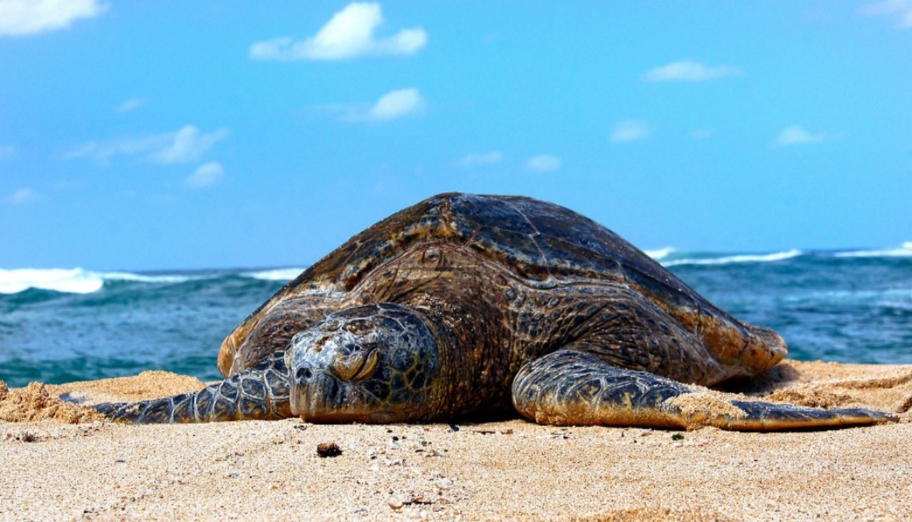
Another factor is plastic waste, which popped up as a most significant threat to ocean-life and sub-marine creatures and equally affecting wildlife an environment. A new study reveals that around 100% of sea turtles have plastic or micro-plastic in their digestive system. Plastic has been found as the primary persistent polluters of several environmental niches from Mount Everest to the bottom of oceans and flooding cities by trapping their drainage systems. The causes and effects of plastic pollution are needs serious and immediate attention.
Meanwhile, due to escalating pollution, emerging deceases like those affecting Bats, Frogs, and several reptiles are outnumbering and are more likely to cause a more significant loss of species worldwide. The forests of South Asia and South Africa are gradually emptying their local species due to poaching, snaring, and wildlife trafficking.
As per expert’s opinions, there will be more blood, more habitat loss, and more wildfires in 2020. The opportunities to make a difference in the issues, as mentioned earlier, are quickly running short. Our planet is getting punished for over-exploitation of its natural resources; we already have got poisoned its atmosphere, land, and oceans. We need to put aside our political, religious, and social differences and should work together to cease this catastrophic situation.
Share your thoughts about the biggest threats to wildlife and endangered species with hashtag #Wildlife2020.
The “Circumhorizontal Arc”, more commonly known as the “Fire Rainbow” is a unique and strikingly beautiful natural phenomenon that is observed in the atmosphere. It occurs in high-level cirrus clouds in the form of ice crystals and with a little help from the sunlight, a halo is formed. The term Fire Rainbow itself is not real or scientifically accurate and is just used to describe its shape as it appears like a rainbow that is fire-shaped.
The Fire Rainbow frequently occurs in the US and is often apparent in the summer at various locations. And it is not so common in other areas such as the northern parts of Europe etc. In London, during mid-May to late July, the sun goes high in the sky for 140 hours, and in Los Angeles, from late March to late September, the elevation may increase up to 58 degrees for 670 hours. During such conditions, the halo can be seen several times a year.
Here are some fascinating pictures of the phenomenon!
The colorful sky in Michigan. (Credit: Derek W, via Wikimedia Commons)
Here it can be seen in the background. (Credit: Attila Magyar, via Flickr)
The West Virginia skies offering a mesmerizing sight. (Credit: Jeff Kubina, via Flickr)
The optical phenomenon formed by the refraction of light in ice crystals suspended in the atmosphere. (Source: Pinterest)
The rare ‘Fire Rainbow’ seen here above a mountain. (Source: Oleg Bartunove via APOD)
It occurs in high-level cirrus clouds in the form of ice crystals and with a little help from the sunlight, a halo is formed. (Source: Dave McGlinchey)
Imagine buses, railways, subways, trucks and all kinds of public and private transportations getting closed. Airports getting closed completely and the traffic going in and out of the city through ferries, ships, and vessels getting closed. Roads getting blocked and all the life, in a major metropolitan city coming to halt.
This mass quarantine is not a scene from any movie, but actually being carried out by the Chinese authorities due to the spread of Coronavirus in China, especially Wuhan―a metropolitan, with a population of 11.08 million, in China’s Hubei Province. It is the 42nd largest city in the world, with the catastrophic potential to exponentially spread the coronavirus, which is rapidly becoming an epidemic
China is fighting a battle against deadliest Coronavirus and nationally, there are currently 830 confirmed cases of patients infected with this virus. The Chinese government has widened a lockdown in the center of the outbreak, in the Hubei province but the impact of the virus is not limited to one province only and warnings have been issued in other provinces also. The travel restrictions will affect at least 20 million people across 10 cities, including the capital Wuhan, where the virus emerged.
But controlling the
outbreak of contagious, endemic micro-organisms, which can be transmitted
virtually through our environment, especially in such a large city is not a
piece of cake as explained by Professor Adam Kamradt-Scott, a health security
expert from the University of Sydney who says that, “the only way you
could do it, realistically, would be to ring-fence the city with the PLA
[Chinese military].”
BBC reported that “as of 10:00 on Thursday (02:00 GMT), buses, trains, subways, and ferries were stopped from leaving the city.”
Gauden Galea, the
World Health Organization’s (WHO) representative in China, put it more
straightforwardly: “To my knowledge, trying to contain a city of 11
million people is new to science,” he told the Associated Press. “We
cannot at this stage say it will or it will not work.”
And – even if it
proves possible to shut the stable door on Wuhan – the horse may already have
bolted.
What is Coronavirus?
Coronavirus is a kind of common virus, causes respiratory infections in humans, often mild, but in rare cases potentially it could be dangerous. It causes an infection in the nose, sinuses, or upper throat. There are no cure or vaccines approved for the prevention or treatment of the virus so far.
Most of the types are not lethal at all and everyone gets this virus infection once in a lifetime which could be treated with proper cure and treatment. But in January 2020, the World Health Organization identified a new type: 2019 novel coronavirus (2019-nCoV) in China. By late January, there were 300 confirmed cases in China and a death count that was still in the single digits but rising. And despite airport screenings, a traveler had brought the first case to the U.S.
How contagious is this virus?
Touching or shaking hands with a virus affected person can pass the virus from one person to another. Making contact with surface walls, floors, doors, etc or object that has the virus and then touching face, nose, eyes, or mouth is also a major cause of the speedy outbreak of the virus. On rare occasions, a coronavirus may spread through contact with feces.
The coronavirus in China was first reported to the WHO on 31st December. But it was not until 20th January that Chinese officials assessed that the virus is contagious and can be passed from human-to-human.
The coronavirus outbreak is not
limited to Wuhan or China alone, where out of 571 reported infections 18 have
died. The coronavirus has infected people in Thailand, Taiwan, South Korea,
Japan, and Saudi Arabia and even as far as the US.
In the past decade, Artificial Intelligence has revolutionized the digital world in marvelous ways. Almost every smart appliance uses AI in one way or the other making human life easier and more joyful.
Worldwide
spending on artificial intelligence (AI) systems is forecast to reach
$35.8 billion in 2019, an increase of 44% over 2018, and to more than
double to $79.2 billion in 2022 (IDC). Apple, IBM, Facebook, Google, Amazon are
undoubtedly the heavy investors of this year again.
Every
year the world witnesses some huge breakthroughs in AI, unleashing the
potential of AI in the digital world and setting new benchmarks for the
following year. This year was no different in this regard and we have seen some
stunning technology making its way to the digital world.
Some of the jaw-dropping technologies of 2019 you don’t want to miss are:
Generative Adversarial Network (GAN)
GAN is a deep neural net architecture that can learn to mimic any distribution of data. It is known as the robot artist that can generate artificial pieces of art, music, speech or prose by impersonating the real data.
GAN generates realistic human faces. Source:smart2Zero
In May 2019, Samsung used a GAN based system to produce a full-motion video from a single picture. Researchers in Samsung’s AI lab used it to animate Britney Spears, Neil Patrick Harris, Marilyn Monroe, even the Mona Lisa herself.
GUAGAN is another interesting GAN model of this
year, that turns doodle and sketches into stunning photorealistic landscapes.
GAN is one of the greatest breakthroughs for AI this year because of its huge potential. It can be used to generate high-resolution images, text to image synthesis and high-quality videos. It can also play a vital role in strengthening face recognition systems as it has the ability of 3D face reconstruction. GANs are also very useful in the medical field for image analysis, anomaly detection or even for the discovery of new drugs. It has also become a part of online retail sales because of its promising visual content having remarkable accuracy.
Deep Learning
Deep learning is the field of artificial intelligence where machines can learn from experience, acquire skills and do tasks that require human intelligence without the supervision of any human. Deep learning basically involves an artificial neural network algorithm inspired by the human brain.
2019 has been a year of immense growth for deep learning, as we have seen very impressive emerging technologies based on deep learning making. Generative model, reinforcement learning, algorithms used in biomedical research, advancements in Computer-Aided Drug Designing (CADD) and unsupervised text translation all are based on Deep learning.
Deep learning in AI
AI Augmentation
Augmented intelligence is the partnership model of human and AI working together to enhance the efficiency of performance. It includes learning, decision making, new experiences, and many more.
“This year we have seen artificial intelligence evolve into augmented intelligence;
a technology specifically created to assist enterprise decision-making rather
than to replace it. Augmented intelligence drives business results by
monitoring and summarizing to create intelligent insights that help surface
previously unseen issues.”
According to Gartner,
Inc. In 2021, artificial intelligence (AI)
augmentation will create $2.9 trillion of business value and 6.2 billion hours
of worker productivity globally.
Natural Language
Processing (NLP)
NLP is an important component of AI, which enables the computer program to understand the human language as it is spoken and respond intelligently in real-time. NLP is capable of interpreting free text and make it analyzable.
2019 is marked to be the gamechanger in the field of NLP by releasing BERT and ROBERT, the revolutionary model of NLP that is superlative in terms of functioning as compared to conventional NLP models, achieving state-of-the-art performance in General Language Understanding Evaluation (GLUE).
One of the major applications of the NLP model is text classification and categorization. It can also be used to classify if an email is a spam or not. BERT is also now being utilized in many conversational AI applications like a chatbot for customer support.
Reinforcement
Learning
Reinforcement learning is the training of machine learning model to make a sequence of decisions in order to chase a goal in a complex environment.
Reinforcement learning remained one of the most important domains of this year. In January 2019, Google DeepMind introduced AlphaStar- an intriguing and unorthodox AI player that played one of the most challenging real-time strategy games Star Craft II using a deep neural network based on supervised and reinforcement learning.
DeepMind AlphaStar AI beats StarCraft II pro players. Source: SlashGear
In October, DeepMind announced that AlphaStar has reached the grandmaster level and is beating 99.8% of humans including the top professional players.
Retail Vision
This year has massively revolutionized the brick and mortar store through retail vision, making it an essential part of digital enterprise transformation. Retailers are using Al enabled computer vision to speed up their business operations like data management, store security, shelf management, compliance, employee performance and also for automated payments like in AMAZON GO.
Retailors are also using computer vision for face recognition of customers and for monitoring their purchases. Retailors use these tactics to improve customer experience by offering discounts on the goods that are more likable for the customers, also to make their occasional customers their local customers and for in-store advertisements via smartphones using location data.
Face recognition is also used for sentimental analysis like when the customer is happy, frustrated or delightful and to monitor salesman and customer interaction.
QUANTUM COMPUTING
Quantum
computing has taken a quantum leap this year, having its immediate applications
in machine learning in AI. It has the capacity to perform even the tedious
tasks of AI within nanoseconds that can be achieved through traditional
methods.
Google and NASA have just announced that they
have achieved ‘quantum supremacy’. Their quantum computer solved a problem in
200 seconds that would take the world’s fastest supercomputer 10,000 years.
Quantum computing as described by Google AI: “is a new paradigm that will play a big role
in accelerating tasks for AI. We want to offer researchers and developers
access to open source frameworks and computing power that can operate beyond
classical capabilities.”
Black Hole Detection
The first image of the black hole revealed to the world by Dr. Katie Bouman and a team of scientists at MIT in APRIL, was generated using a machine learning algorithm known as CHIRP (Continuous High-resolution Image)
Artificial intelligence has taken the world by storm this year, it proved to be a real game-changer, bringing reality to the fantasies we have seen only in sci-fi movies. It is now intertwined in almost every aspect of our life, but we have to be considerate about the ethical dilemmas regarding AI and have to define the extent to which we wan to integrate AI in our lives before it’s too late.
It took William Herschel a lifetime to discover Uranus back in 1781. Cosmologist James Peebles and astronomers Michel Mayor and Didier Queloz took nearly 7 years discovering and confirming the existence of an exoplanet in the year 1995, for which they were awarded for the Nobel Prize for physics in 2019. But a 17-year-old just outperformed them.
Wolf Cuckier joined NASA’s Goddard Space Flight Center as a summer intern under Planet Hunters TESS citizen science project. He was assigned to examine the variation in the brightness of distant stars in search for the existence of exoplanets. And guess what!! He did it in just 3 days into his internship. This was the quickest discovery of an exoplanet. What he discovered was a dip in the brightness of a Double Star system. The resulting comprehension confirms the presence of a circumbinary planet, a world orbiting two stars.
The planet, called TOI 1338 b, is around 6.9 times larger than Earth, or between the sizes of Neptune and Saturn. It lies in a system 1,300 light-years away in the constellation Pictor. The stars in the system make an eclipsing binary, which occurs when the stellar companions circle each other in our plane of view. One is about 10% more massive than our Sun, while the other is cooler, dimmer and only one-third the Sun’s mass. TOI 1338 b’s transits are irregular, between every 93 and 95 days, and vary in depth and duration thanks to the orbital motion of its stars. TESS only sees the transits crossing the larger star — the transits of the smaller star are too faint to detect. Its orbit is stable for at least the next 10 million years. The orbit’s angle to us, however, changes enough that the planet transit will cease after November 2023 and resume eight years later. (Source:NASA’s Goddard Space Flight Center)
This remarkable discovery is a part of NASA’s Transiting Exoplanet Survey Satellite (TESS) mission which started in early 2019 with a launch aboard SpaceX Falcon 9 on April 18, 2019. The mission objective is to search for planets outside of our solar system (technically called exoplanets), that can support life or have earth-like features. The mission uses transit photometry as a tool to determine the existence of such planets. In this method, the periodic variation in the brightness of the light coming from a distant star is measured to determine the presence of an exoplanet around it. The photometric signature is used to find the size, distance, orbit and relative position of the star with that of its orbiting planet.
The TESS mission has been planned to conduct this extraterrestrial search in a very systematic way. According to NASA, TESS will survey the entire sky over the course of two years by breaking it up into 26 different sectors, each by 24 degrees by 96 degrees across. The powerful cameras on the spacecraft will stare at each sector for at least 27 days, looking at the brightest stars at a two-minute cadence. From Earth, the moon occupies half a degree, which is less than 1/9,000th the size of the TESS tiles. TESS will create a catalog of about thousands of exoplanets and upon compiling the data, a ground-based analysis will be conducted in order to confirm the existence of these exoplanets.
The ground-based telescopes will collaborate with other ground-based telescopes to measure the masses of the planets. Using the known planet size, orbit and mass, TESS and ground-based follow-up will be able to determine the planets’ compositions. This will reveal whether the planets are rocky (like Earth), gas giants (like Jupiter) or something even more unusual. Additional follow-up with ground- and space-based missions, including NASA’s James Webb Space Telescope, will also allow astronomers to study the atmospheres of many of these planets.
The quest for the search of extraterrestrial life has been the hottest interest of modern astronomy lovers. And this discovery by Wolf has triggered worldwide interest in ‘Exoplanet Hunting’. However, the relevance of this discovery or this very objective remains a debatable topic among scholars given the present scenario. Despite being able to find life on such a remote planet, humanity does not justify the sustenance of life on earth itself.