Home Blog Page 67

World AIDS Day: Street Children are the most at-risk group in Pakistan

0

World AIDS Day, designated on 1 December every year since 1988, is an international day dedicated to raising awareness of the AIDS pandemic caused by the spread of HIV infection and mourning those who have died of the disease.

AIDS (Acquired Immuno Deficiency Syndrome) is a pandemic disease caused due to the infection of the Human Immunodeficiency Virus (HIV), which causes damage to the immune system.

A Burundi woman called Jeanne was the first person to disclose that she was living with HIV, Twenty-five years ago. Today, Jeanne is holding leaders accountable and fighting for the right to health care.

Modern-day medical sciences already found treatments for HIV, and there are various formulas have been also taken to fight against discrimination and to safeguard HIV patients with proper treatments.

Still, there are millions of HIV patients, who still do not have access to tests, treatments, and medications for HIV. So it is important to observe the day. It will act as a reminder for all that HIV still exists and we need to fight together to end this the disease. This year the theme for World Aids Day 2019 is “Ending the HIV/AIDS Epidemic: Community by Community.”

History

World AIDS Day was first observed in 1988. And each year, different organizations across the world bring attention to the HIV epidemic, endeavor to increase HIV awareness and knowledge.

According to World Health Organization, “37.9 million people living with HIV at the end of 2018, 79 percent received testing, 62 percent received treatment, and 53 percent had achieved suppression of the HIV virus with reduced risk of infecting others.”

2.8 million Were children aged 0-18 years. Each day, approximately 980 children became infected with HIV. Nearly 320 children died from AIDS-related causes. Mostly because of inadequate access to HIV prevention, care, and treatment services.

Street children vulnerable to AIDS

There are approximately 100 million street children across the globe. In Pakistan, an estimated 1.5 million children are living on streets in highly vulnerable conditions.

National AIDS control program conducted detailed research and survey in 2006, in cooperation with Azad Foundation Pakistan related to street children as highly vulnerable group at risk for HIV/ AIDS.

The research was conducted by Dr. Faran Emmanuel – Independent Epidemiologist and principal investigator, Farah Iqbal and Naveed Khan – Co-Investigator. After three years of research the report concluded;

  • In Pakistan, 35% of children just hear about the disease
  • 25% knew that HIV spread through sexual intercourse
  • 17% knew that HIV can also spread through the use of unclean needles and syringes
  • Only 2% knew that blood and bi product can also be a reason
  • An overall 71% of the children did not know of any protective measure
  •  06% of the children had incorrect information regarding ways to protect against HIV

Ratodero out Break

Meanwhile, an outbreak of HIV reported in Ratodero, Larkana Sindh this year, and to date, general screening for HIV has been done 37,272 individuals from the general population in Ratodero.

Till now 1,181 have suspected HIV positive during this screening. There are 941 children and 240 adults.

All suspected HIV cases were referred to the HIV Treatment center for confirmation. To date 754 Children have been confirmed positive and linked to HIV Treatment center. Similarly, 141 adults have been declared HIV positive and linked with HIV treatment center.

Also Read: Breast Cancer; The deadliest disease worldwide

Salam Biopic Review: Reflecting the true end of a tragedy

0

Aristotle once said, “The True end of a tragedy is to purify the passion.” Perhaps that’s the best way to describe the life of Dr. Abdul Salam. The makers of Salam – The First ****** Nobel Laureate indulge the audiences in the extraordinary life of the boy who was born without even ordinary privileges.

The documentary starts with the childhood stories of Dr. Salam. How his work ethic was build and the struggle his family goes through to nurture the genius. I especially like the part where audiences were told how his parents identified the intellect inside him and gave him privileged treatment within the family, given the financial constraints. In our childhood, we heard these sorts of stories for foreign scientists, but, regrettably, we have buried the same of our own.

Conventional isn’t the word associated with Dr. Salam, the documentary showcased interviews of his students and colleagues who believe his mind is always exploding with ideas. Though 90% of them are full of non-sense, the remaining 10% is worth winning a Nobel Prize. An exciting incident on that matter was also recorded when Salam sent a scientific paper to famous physicist Wolfgang Pauli which he declared absurd and dismissed it completely. Later, two physicists published the same idea and won the Nobel Prize for it. Salam obviously disappointed took it comically and always advised his student to “Never listen to grand old men.” Wolfgang Pauli later did apologize to Salam, and it all becomes a history.

The documentary also shares some personal stories of the Laureate

Eventually, he received Nobel Prize in 1979 for his theory in the unified weak and electromagnetic interaction between elementary particles along with two other scientists. He was an advisor to the Ministry of Science from 1960 till 1974. It was quite surprising to know about his contributions to laying groundworks for the program that build up and lead to the attainment of nuclear deterrence of Pakistan. It is quite unfortunate that such notable work has been systematically removed from the books of history.

A strong force invoked when a populist leader, Z. A Bhutto in a constitutional amendment declared Ahmadiyya’s non-muslims. Later on, Gen. Zia also passed the legislation on that amendment. It was he believe that whole Ahmadiyya’s community had been downgraded to 2nd level citizens at once. This impacted him to the core, and he was pushed to part his ways from the government in 1974. The environment in Pakistan had isolated him and made him moved abroad permanently.
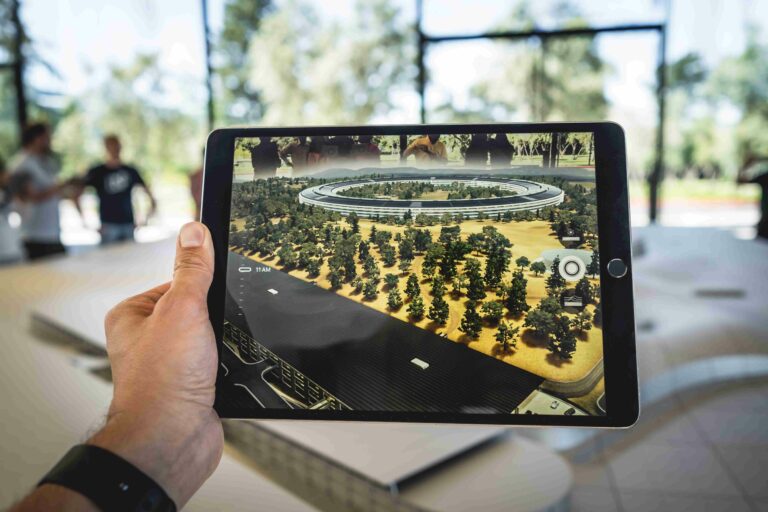
Dr. Salam Founded the International Centre for Theoretical Physics (ICTP) in Italy in 1964, He devoted his later life for the development of the ICTP. His passion for Pakistan was no secret, and according to his son, a handful of government officials stayed in touch discreetly with Dr. Salam. Later on, after his Nobel Prize achievement, the Government of Pakistan awarded him the highest Civilian award in his recognition. This reflects the bigotry and hypocrisy of our leaders how distinguished scientist from Pakistan was treated due to intolerance and religious extremism.
A close-up shot of Salam’s tombstone

Abdul Salam remained the champion of science and was the protagonist in the story of theoretical and particle physics. It is a matter of great disenchantment of how his intellectual contributions were made controversial due to his religious belief and presented him as an antagonist to the nation of Pakistan. This is very well elaborated through facts in this documentary, and all praise goes to the makers for portraying it to precision.

I think the only criticism goes to this documentary is I expect more from it on the scientific part, I wish there were more on how his contributions help the scientific community. There is also rather some debatable choice of religious extremism incidents portrayed, which I feel is twisted in reflecting an accurate background of extremism in Pakistan.

All in all, it was a well-rounded documentary that helps us understand why we need to cherish our heroes instead of abandoning them. To this day, I can say this is the most comprehensive documentation of Salam’s life and his passion for the people of Pakistan.

DirectorAnand Kamalakar Rating: 4 stars out of 05

Also Read: ‘Life’ Review: A somewhat recycled take on the human-hating Alien cliché

Scientists who knocked down Disability Barriers

0

Stephen Hawking, one of the most accomplished scientists of our time for whom we don’t need to scroll social media or follow science news. But what made him the scientists of the twentieth century? His scientific discoveries on the black holes and parallel universes, his dozens of books on challenging scientific topics, or his inspiration for millions of differentially abled people around the globe?

Hawking’s life was a juxtaposition of sparkling intellect and a deceased body. He was like a testament that “disability is not inability” and that differentially abled people could get anything once they hook to. Stephen Hawking caught by a debilitating motor neuron decease at the age of 21, gradually his nerve cease functioning, and he was trapped in the body, but his mind was fully active and functionally till his date on 14th March 2018. He lived around 50 years more as was early diagnosed and estimated by his doctors that he can live only two or three years. Later, Hawking was entirely dependent on a team and electric chair with a speech synthesizer to communicate to the world outside.

One of his significant contributions merely is being visible when the voice of differentially abled persons were missing in popular culture. Despite his severe disability, he made appearances in popular science shows like Star Trek and Big Bang theory, his life dramatized in “Theory of Everything,” a movie based on real-life events and his relationship with his first wife, Jane Hawking. He breathed fully and was an incredible exemplar of there being no boundary to human endeavor.

Thomas Eddison was the greatest inventor of his time. He is well-known as the ” father of electricity,” caught by the fever that ended on complete deafness of both ears. Eddison converted his medical condition into his greatest strength. He believed that his mostly silent existence helps him to wholly absorbed in his research with no external distraction.

Einstein, the genius of all time, suffered a learning disability, and could not speak appropriately until age four. In school, Einstein was often confronted by his teachers for his inability to grasp the concept. It is widely considered that he suffered through dyslexia. Alone, Einstein, and Stephen Hawking, and Eddison are enough to show that ” Physics is the heritage of the disabled.”

There remains an extensive list of scientists with disabilities includes Gustav Kirchoff, Charles Steinmetz, Edwin Krebs, John Forbes Nash, Jr(an acclaimed mathematician), Ralph Bruan, Geerat Vermeij, Farida Bedwei, and Leonardo Da Vinci. They stand as an inspiration to those who are physically perfect but unable to show enthusiasm toward their career and life.

In the modern era, millions of other scientists have been contributing to high-level scientific research around the globe with their severe disability and health conditions. Only in the United States, half million people serving in STEM have some sort of disability. Their medical conditions challenged them to tackle scientific problems uniquely and differently.

However, scientific research is barely designed to meet the basic necessities of scientists with disabilities. This situation can be understandable in Asian and third world countries like India and Pakistan, where STEM research hardly puts in Government’s’ agenda, but the fact is that differentially abled scientists have been facing hurdles in US and European countries as well. Alone in the United States, 20 percent population and 40 percent worldwide are suffering and the countdown is intensifying each day after growing cases of mental illness.

Despite the obstacles these peoples face daily in their education, research, and career moves, they are incredibly genius, hardworking and devoted to their profession and hundreds of them have demonstrated as successful only because they have access to modern technology, emotional and institutional support, and better health facilities.

In western societies, disable persons are fully getting benefits that come from their differences even a couple of scientists with mental illness have shown that thinking differently was instrumental in playing their role as a researcher. Having said that, they were able to use their creative skills with emotional weight to make case sensitive decisions with their fragile health conditions.

There are a handful of examples in Western societies that disability cannot define a person and his capabilities. The personal problems these scientists encounter daily spur them to tackle technical issues in a novel way and they were able to play their part in making this world a better place.

Also, read Life of Stephen Hawking through pictures

Rare ‘Alpha Monocerotids’ shower predicted this week

0

Get ready stargazers! A rare meteor shower i.e. Alpha Monocerotids, is expected this week (between the nights of Nov 21-22).

The prediction has been shared by scientists from the SETI Institute and NASA’s Ames Research Center who along with other fellows calculated the estimated time and distance of the outburst. The provided time is 11:50 pm ET (or 04:50 UT) and the shower will be the brightest at 15 minutes. The total expected time is 40 minutes. The best views will be in South America, Western Europe, etc.

The first time the Alpha Monocerotids was observed in 1925 in Virginia. Witnesses saw “three bright meteors” within a minute and noticed and marked its location around the Orion constellation. It was later observed in 1935 in India and almost 100 meteors were counted in a span of around half an hour. And they have observed quite sometimes in the skies around the world.

The original source of Alpha Monocerotids is relatively unknown

The original source of Alpha Monocerotids is relatively unknown but their orbital period has been found to be of around 600 years. It might have left a trail and some of it is thought to be completing its first revolution around the sun.

What makes it so rare is the fact that the torrent only goes around the orbit of the Earth sometimes and this year, the conditions are similar to those of 1995 when it occurred, igniting hope in scientists that maybe we can witness it in 2019 as well.

To enjoy the expected Alpha Monocerotids shower, pick out an open location where you can have a good view of the sky to increase your chances. Don’t forget to prepare for the winter breeze, if you live in an area that has welcomed the season. One might be lucky even if one doesn’t own a telescope because this expected show is so bright, there is no need for any special equipment to marvel at it.

Also Read: Marvel at the latest alpha capricornids meteor shower

Brain Net Technology – An Attractive Digital Medium of Communication

0

Even after being the most efficient existing species in this world, our communication system is still not up to the mark. We face hurdles while communicating our thoughts -as simple as giving directions to someone while driving or sharing any experience, but what if we surpass this barrier where we don’t need words for effective communication, but our brain does all the work. For years, this digital medium of communication using brain was restricted to the fiction movies only but embraced yourselves, now it’s making its way to the real world.

A recent study published in Scientific Reports highlighted the work of such researchers at Washington University, who developed a device named “Brain Net,” which is “the first multi-person non-invasive direct brain-to-brain interface for collaborative problem-solving.” Brain net involves the collaboration of three human brains that communicate directly via their thought system.

It isn’t the first example of brain-to-brain communication. In 2014, a team from Spain made a setup that allowed two participants that were located 2,000 miles apart, to play a game, and the winning percentage was 80%. 

For the research, led by Dr. Rajesh P.D. Rao, three participants were hooked up. Two senders with the EEG (electroencephalographs) and one receiver with TMS (transcranial magnetic simulations). EEG reads and decodes the neural activity of the sender, and TMS encodes that useful information back into the brain of the Receiver.

Linxingg Preston Jiang sets up Savannah Cassis as a sender for this experiment. (credit: Mark Stone/ U. Washington)

The team led the three people to play a Tetris-like-game, where the only sender could see the screen, and the Receiver has to play the game by interpreting the information received from the sender through TMS. For rotating a block appeared on the screen, the sender would focus on a high-frequency light source of 17hz and would stare on a low-frequency light source of 15hz, if the block didn’t need to be rotated. The Receiver would interpret what kind of light they are focusing on and would rotate the block accordingly.

Brain to brain interface

In 13 out of 16 trials, Receiver correctly rotated the block and cracked the game with 81 percent accuracy. Andrea Stocco, an assistant professor of psychology at UW, explained the experiment in a statement.

“To deliver the message to the Receiver, we used a cable that ends with a wand that looks like a tiny racket behind the Receiver’s head. This coil stimulates the part of the brain that translates signals from the eyes,” Stocco said. “We essentially ‘trick’ the neurons in the back of the brain to spread around the message that they have received signals from the eyes. Then participants have the sensation that bright arcs or objects suddenly appear in front of their eyes.”

In the second round, after the Receiver makes the decision, both the sender and receiver can see the output of the Receiver’s action, and the sender can check if the block has placed correctly; if not, Receiver has given a chance to rectify the error.

The researchers also check the sender’s learning ability to rely on a more reliable sender. They purposely tricked Receiver by flipping one of the sender’s response in 10 out of the 16 trial- so that a “Yes, rotate the block” suggestion would be given to the Receiver as “No, don’t rotate the block,” and vice versa; representing it as a bad sender. With time, the Receiver learned to rely only on the information of the excellent sender instead of being neutral.

All these results point in the direction of a progressive future where human brains can collaborate digitally for a common cause and open gate of enormous possibilities for researchers.

Future of Brain Net Technology

The neuroscientist is aiming for a future of more developed human beings who don’t need a physical medium for communication, but electrical impulses can do the work. However, the level of complexity of information is still the same binary i-e simple yes or no. Still, scientists are working towards the advancement of a system from binary to stochastic using functional MRI to deal with more complex statements.

Scientists aim to use functional MRI to deal with more complex statements

The ultimate goal of this technology is the development of “Internet of Brains that can solve a common problem,”; collaborating human brains using a social network for a common cause.

But not everyone is the advocate of this technology, as it has come with a price to be paid. We-the humans of this evolving digital era will pay this price by the trade of our privacy. This new technology will open the way to breach the data even present in one’s mind, compromising individual autonomy, which can turn into an alarming situation if not dealt properly.

 Researchers must consult with the Neuroethics team first to discuss all the preventive measures that should be taken to ensure that people’s privacy is respected before introducing this technology in the market.

“But for now, this is just a baby step. Our equipment is still expensive and very bulky, and the task is a game,” Rao says. “We’re in the ‘Kitty Hawk’ days of brain interface technologies: We’re just getting off the ground.”

Now, it is time for us to decide the dimensions where we want humanity to go. Are we ready to pay such a heavy price for just a fancy way to communicate?

Read Also: First-ever Ebola Vaccine is here

Team Pakistan wins seed-grant at TechWomen 2019

0

Pakistan has no doubt amazing potential in the technology sector, and this just got proven at TechWomen 2019, where a team from Pakistan, consisting solely of energetic females, was declared among the top 5 seed-grant winners.

TechWomen is an exchange program that aims to connect, bring together and empower females that are the potential leaders of the future, especially those working in the field of science, technology, engineering, and mathematics (referred to as STEM). The target regions are Africa, Middle East, Central and South Asia where such women are recognized who have big goals like helping their communities and serve as a symbol of inspiration for others. It was launched in 2011 by the U.S. Department of State’s Bureau of Educational and Cultural Affairs and is managed by the Institute of International Education.

Team Pakistan was one of the seed-grant winners at TechWomen 2019

The team from Pakistan included Asmara Rahat, Ayesha Mumtaz Khan, Farhat Yasmeen, Asna Javed, and Zeenat Anjum who work in and came from different domains such as IT and digital media. Their plan comprised of creating an online portal called Bacha-O.org which will aid in promoting the awareness of the issue of child abuse, which is a grave problem in Pakistan, and of Mera Bacha, that is an already established platform created by the government where child sexual abuse cases can be reported.

In a statement provided on the website, the team said,” Our mission is to reduce child sexual abuse in Pakistan by raising awareness and providing child protection tools, using a new digital platform called Bacha-O. Our objective is to make every child safe by activating the community and engaging all the stakeholders to reduce the number of incidents. A recent report by the Pakistani government depicts an alarming rise in the number of cases of child abuse. Children need a safe environment for societal growth. Our plan is to create a portal, Bacha-O.org, to promote awareness of the issue and of Mera Bacha, an existing government portal for reporting child sexual abuse cases. As awareness increases, we will manufacture wristbands for child protection, create community hubs and an AI chatbot for children, and deliver training for parents and teachers on recognizing and reporting child abuse.”

TechWomen provides mentorship to the teams with the best pitches and especially focuses on enhancing the professional capacity and developing more interest in STEM careers. The grant helps them to apply and work on the prophets in their home countries.

Also Read: A Historic Day: NASA astronauts conduct the first-ever all-women spacewalk

Microbial Creativity: A beautiful fusion between science and art!

0

“Put life into your artwork!”

Students at the Pharmaceutical University of Nanjing, East China took these words of inspiration way too literally! 

By taking different colored strains of bacteria and placing them in Petri dishes, students created microbial masterpieces for an art competition arranged in November 2018.

Taking creativity to the next level in the labs!

Now, this practice has become a whole ‘art’, where schoolchildren are introduced into the world of microorganisms in a fun and colorful way! Here are some interesting pictures which take you into a world where biology and creativity beautifully merge.

Yeast species – which are fungi – used include Saccharomyces cerevisiae (yellow-white) Aspergillus flavus (yellow-green spores), Aspergillus ochraceus (yellow), Aureobasidium pullulans (black), Candida albicans (whitish buff), Candida sakeCandida sp. (whitish), Cladosporium herbarum (brown to black), Cladosporium resinaeEpicoccum nigrum (yellow, orange, red, brown, and black), Fusarium sp., Rhodotorula sp., and Scopulariopsis brevicaulis.[5][a]

Protist species used include Euglena gracilis (photosynthetic, green) and Physarum polycephalum (yellow-green).

Pigmented bacterial strains are used in the process

Agar plates are used as a canvas, while pigmented or fluorescent bacteria and yeasts represent the paint. In order to preserve a piece of microbial art after a sufficient incubation, the microbe culture is sealed with epoxy.

A technique called “bacteriography” involves selectively killing certain areas of a bacterial culture with radiation, in order to produce artistic patterns. After incubation, the culture is sealed with acrylic.

One really wishes after seeing these artistic pieces that universities in Pakistan also adopt such learning activities. It would really help in developing students’ interest in science!

Taking agar art to the next level, successful attempts are made to create detailed portraits and sceneries.

The American Society for Microbiologists hosts an annual contest for microbial art: Agar Art. The 2015 edition covered 85 submissions, of which microbial art created by Mehmet Berkmen and Maria Peñil called Neurons won first place. They have been working together since 2011 on making bacterial art. The artwork used yellow Nesterenkonia and orange Deinococcus and Sphingomonas.

Also Read: Artificial Intelligence is on its way to conquer the art scene

The time when Saturn’s storm was captured

0

At the beginning of this decade, NASA’s Cassini spacecraft took some images of the surface of the planet Saturn which showed the details of a storm. It was seen around 35 degrees north latitude of the planet and continued to rage on the months later as well. That storm was almost five hundred times larger than the previously observed storm which appeared from 2009 to 2010.

Below are some of the images of the observed storm!

As seen in December 2010
Another view of the storm
Here the evolution of the storm is depicted, which usually occurs every 30 years
An active storm captured on Saturn by NASA’s Voyager or Cassini spacecraft
This image was taken by amateur astronomers

About Cassini – The mission to Saturn

In Cassini- Huygens mission, NASA JPL along with European space agency (ESA) and Italian space agency (ISA) decided to launch a probe to the planet Saturn to study its rings and natural satellites. This mission involves Cassini probe and Huygens lander, which was the largest interplanetary spacecraft the Fourth probe that reached to the Saturn was Cassini, named after Italian astronomer Giovanni Cassini

Cassini launched in October 1997 and stayed on board for more than 20 years, out of which 13 years spent in orbiting Saturn and studying the planet and its system. The spacecraft accompanied by comet rendezvous asteroid flyby (CRAF) spacecraft but due to a shortage of budgets, CRAF construction had terminated to continue the synthesis of Cassini. Main objectives of the mission include:

  • To determine the 3D structure and dynamic behavior of the rings of Saturn.
  • To determine the composition of the surfaces of the various satellite
  • To measure the three-dimensional structure and dynamic behavior of the magnetosphere.
  • To explore the dynamic behavior of Saturn’s atmosphere at cloud level.
  • To Study the time variability of Titan’s clouds and hazes of planet Saturn.

Also Read: NASA releases ghostly images in the spirit of Halloween

Mercury-Transit; A rare Astronomical phenomenon

0


Karachi: This month, a unique and exciting event will be experienced in space in which the planet, Mercury, will pass in front of the Sun. This is called Mercury transition. Millions of people around the globe will observe the planet on the face of the Sun as though it is a pimple on it. This event will reoccur after a wide gap of 13 years, in 2032. It shows that in a century, this happens only 13 times. There are only two planets in our Solar System which float pass in front of the Sun during their course, and these include Mercury and Venus.

Previously, Venus passed in front of the Sun in 2012, many institutions are preparing to capture stunning photographs of the event. Mostly, planets orbit around the Sun quite fast, but their path is not parallel with that of Earth’s. Either they are above the Sun or pass beneath it. On this basis, November is a particular time when Earth, Mercury, and the Sun are in one line, and can carefully observe the orbit of Mercury.

In this case, Mercury is seen as a black dot on the surface of the Sun, making up a very tiny portion of the Sun’s area. For this moment, NASA has asked the observers of space to be prepared because this is an exceptional and mesmerizing event.

Most experts from NASA and other space agencies have warned that looking directly at the Sun in this situation can harm our eyesight. It is suggested to observe the shadow of the Sun in a bowl full of water or by using an old X-ray. With these precautions, Mercury can be seen moving gradually from one pole to another on the surface of the Sun.

A sad piece of news is that this transition will not be visible in most parts of Pakistan. Only a glance will be caught from Karachi and areas in its vicinity from 5 34 pm. A dot (Mercury) will be visible on the upper right side of the face of the Sun. It will be more prominent in the next 2 minutes and eventually move towards the middle area of the Sun, which will start setting at 5 44 pm.

For people who wish to see, it is again instructed that they don’t look at the Sun directly and use an X-ray to observe.

Link to similar posts : Hubble captures a peculiar cosmic image

Mapping a treatment plan; Doctors recommend a Second Opinion

0

Life would not remain the same after a cancer diagnosis, it gets a twist, and everyone bound to have lots of questions about the severity of the disease, treatment, and life after recovery. A newly diagnosed patient needs assurance always that there is still hope, but most important of all, where should a patient go for treatment.

This question seems simple, one can scroll social media or Google world best cancer treatment hospital within a few seconds, but the road to a complete recovery is harder enough. One needs to figure out available financial resources and insurance and then to map out a treatment plan. In Pakistan, patients and family members often got stuck at the initial stage of planning due to the lack of cancer awareness. Cancer is life-threatening, but most of its types can be cured when diagnosed at an early stage.

In a developing country like Pakistan, there is a severe need for awareness about “Second Opinion.” This is mandatory step doctors recommend to patients and their families to slow down their search of cancer specialists and hospitals and take a crucial but more often an overlooked step and get a second opinion.

Scientia’s editorial team reached out to some cancer specialists and cancer survivors and came across these five reasons why patients and family members should take the second opinion on their road to recovery.

  • Peace of Mind
  • Up-to-date treatment and technology
  • A different approach to treatment
  • Access to best up-to-date medical facilities
  • A continuous assurance that there is hope
Mandi Hudson, an author shows his support for the second opinion

According to a physician of Cancer Treatment Centers of America® (CTCA), “Getting a second opinion may help you decide the cancer treatment designed to meet your needs. Many of us face time constraints, and fitting another appointment into your busy work or home life may be challenging. Many factors determine how long a second opinion evaluation takes. During the evaluation, a dedicated team of oncologists, nurses, dietitians, and other cancer experts work with you to review your medical history, diagnostic tests, and treatment status. We may also use additional diagnostic technology to further evaluate the disease. Using all this information, we then develop your personalized treatment plan.”

Pam Lefferts, a cancer survivor expresses his views on second opinion
Pam Lefferts, a cancer survivor expresses his views on the second opinion

Carly O’Brien, LCSW, OSW-C, discussed the need for the second opinion and came across the situations when taking the second opinion is mandatory.

  • You have a rare or unusual cancer
  • You feel uncomfortable with your doctor, the diagnosis or you need confirmation
  • Your health insurance requires it
  • The treatment offered has side effects or risks that you find disconcerting
  • More options will result in unacceptable or unreasonable demands on your life and your family
  • Your doctor’s treatment goals are different from your own
  • Your cancer is not responding to your current treatment

Link to similar posts: Opinions, Artificial Intelligence edition