Home Blog Page 65

2019 blessed us with the first-ever image of a black hole, finally

0

The year 2019 was full of surprises, wonders, and even setbacks. From Greta Thunberg championing climate activism to quantum supremacy claims by Google, we saw massive movements and moments in this field. But one that stood out was the first-ever portrait of a black hole. Scientific community around the world rejoiced at the stunning image of this enigmatic phenomenon, and most of the scientific outlets have named it the best achievement in science of the year.

This is undoubtedly a great end to a decade. A decade that brought us unprecedented advancements in science and technology and has put us onto a path of even greater scientific enlightenment. The image of the black hole united the scientific community as everyone sat together, talked and marveled at the beauty and complexity of this universe.

Before this image, many theories were given about the black hole’s actual shape. Researchers constructed various images, but due to lack of ample data, those were not quite right. This conundrum was also explored in Hollywood movies, and Interstellar even managed to come a bit close with its depiction of a black hole. Nevertheless, we now have an accurate visual treat of what a black hole really looks like.

Interstellar came quite close to predicting what a black hole might look like
Interstellar came quite close to predicting what a black hole might look like.

Achieving the feat

Bringing the image to life was not an easy task. Even in this age of technology and modern equipment, it took years to process the data by a big team of talented scientists. Some theories presented earlier called for recording the shadows that surround the glowing area of a black hole. For that, a vast network of telescopes was created around the world that ultimately came to be known as the Event Horizon Telescope or the EHT. To be able to visualize distant images in a high resolution and detail, a telescope should have a large aperture or diameter. This way, more light is gathered and can be used in image construction.

A technique called Very Long Baseline Interferometry (VLBI) was further honed by scientists and was used to create a network of telescopes that can aim at an object of interest at the same time. This network can then act together as one big telescope. To locate spacecraft and missions in outer space, and to capture photos of various things in the universe, this technique is preferably used. EHT’s aperture is substantial and is equal to the distance between the two stations at the South Pole and in Spain. This was cleverly arranged as the resulting setup ended up being almost the same length as the diameter of the Earth. The arrangement and spacing of the telescopes are also crucial in image resolution, and the farther they are, the better the quality gets.

For taking the image of the black hole, the team of scientists decided to test the VLBI technique and computer programs and algorithms on two targets, each with its complexities and wonders.

A map of the Event Horizon Telescope

One of these was Sagittarius A* – the closest supermassive black hole to our planet. Located at the very center of our galaxy at a distance of 26,000 light-years away, this appears to be the biggest in size when seen from the Earth. But its existence in the Milky Way also posed a problem for scientists, who figured that they would have to clean out all the background noise and pollution in the data, and a complicated process was needed to filter it all out. Still, it offered an exciting opportunity to the researchers who ultimately chose it as a target, despite such issues.

The other target was the black hole M87*, which is located in the center of the galaxy Messier 87 at 53 million light-years away. It is massive, and to get an idea of its size, the fact should be noted that it contains a whopping 6.5 billion solar masses! It was also an exciting and intriguing choice for the researchers as it is an active black hole meaning that matter is continually falling in and out of it.

The particles also jet out of M87* at very high velocities (almost at the speed of light). Being that far away was yet another challenge in taking its picture. Katie Bouman, the computer scientist with the Event Horizon Telescope team who became the star and another highlight of this feat, very aptly described it as similar to taking the photo of an orange on the surface of the Moon.

(L) A close-up image of the core of the M87 galaxy. (M) A jet of subatomic particles streaming from the center of M87*. (R) The first image of a black hole. (Credits NASA)
(L) A close-up image of the core of the M87 galaxy. (M) A jet of subatomic particles streaming from the center of M87*. (R) The first image of a black hole. (Credits: NASA)

Originally the EHT had eight locations around the world but in the later years, more telescopes were added to help analyze and refine the data. For the collection of the data, there was a need for having suitable weather for telescope viewing at each location and it took almost ten days to observe it all.

Valid calibration and synchronization of the telescope was an essential task which ultimately enabled EHT to have a resolution that was 4,000 times better than that of the Hubble Space Telescope. A considerable amount of data was obtained by the team, which was then transported to the primary location where it could be studied easily with high internet speed. It was in this central area, where the scientists managed to combine the data using various programs and algorithms and developed the first-ever image of the silhouette of the event horizon of M87*. The other target’s image is also in the process of being developed. NASA also contributed to this strenuous task, and several spacecraft were used to observe the black hole with varying wavelengths of light.

The genius minds behind the scenes

The team who made this wonder possible from impossible also deserves immense appreciation for their hard work. These researchers were recently honored with the Breakthrough Prize in Fundamental Physics for their efforts. The team was led by Shep Doeleman at the Harvard-Smithsonian Center for Astrophysics. He told in an interview that “For many years, I would tell people that we were going to image a black hole, and they would say, ‘Well, we’ll believe it when we see it.’ But when you finally come with robust evidence, when you make a breakthrough like this, then you have the satisfaction of really giving birth to a new field.”

As mentioned above, another scientist that almost became a household name in the field of science was Katie Bouman, who garnered worldwide attention for working on the algorithm that helped to make the final image of the black hole. She became an inspiration for many people, especially women working in STEM. She started working on the algorithm as a graduate student at the Massachusetts Institute of Technology or MIT. In a caption to her Facebook post, she wrote, “Watching in disbelief as the first image I ever made of a black hole was in the process of being reconstructed.” She was hailed and appreciated around the world for her groundbreaking work along with her team.

Katie Bouman became a worldwide sensation for her work in creating the first-ever image of a black hole.

Also Read: Scientists are working to develop a black hole movie

Paving the way for scientific glory

Taking this image is no ordinary achievement. It is a big step in unraveling the mysteries of the universe. It can help us to test predicted theories and make observations about spacetime and celestial objects that have staggered humans since almost the beginning of the time. From working out and filling the gaps in Einstein’s theory of relativity to improving Hawking’s views on quantum mechanics, such type of data and knowledge are essential tools for figuring stuff out.

Einstein’s theory of general relativity was not really been proven for the black hole and other similar paradoxes. This project offers a more precise calculation of the mass of a black hole. The radius of M87 *’s event horizon was accurately measured, and a method of mass estimation was validated. General relativity equations can be used to provide an estimate of the size and shape of a black hole, which calls for it to be roughly circular contrasting other theories. The developed image showed that it indeed has a circular silhouette, thus proving the theory. This data provided information about formation and behavior, and some elements, such as the ejection of particles at the speed of light, are now offering new research interests for scientists.

As EHT continues to provide more data, new questions can now be answered, and studies can be done at an accelerated pace. Other areas can also get benefit from it, and it has also successfully ignited the fuel of passion and curiosity about the universe that has enabled scientists and researchers to come this far and will continue to take us to infinity and beyond!

Note Asterisk (*) is used to represent a black hole.

Space Missions; Insights from the past

0

Many wondered how these space agencies design a space mission. Well, for the starters, they PLANET (pun intended). Designing and execution of a space mission require vast financial resources, years of planning, hard work, and collaboration of different teams comprising world-class professionals. But before going into these details, we will enlighten you about the history and space missions of NASA and ESA.

NASA was established on October 01, 1958, and has a unique history of space exploration and technological achievements of aeronautics and astronomy since its inception. Decades after its foundation, NASA has successfully landed a human on the moon with Apollo 11 mission in July 1969, explored the atmospheres of planets like Mercury and Jupiter with Voyager 1 and Voyager 2. Cassini Huygens, a joint NASA/ESA spacecraft, launched in 1997, has been orbiting this ringed plant since its landing in 2004 and taking stunning imagery of planet’s rings, moons and planets.

Spirit and Opportunity, the twin Mars Exploration Rovers, landed on opposite sides of the planet in January 2004 and provided evidence of liquid water on the surface of Mars. With the Hubble telescope, astronomers can peer deep into the universe to see the cosmos more clearly. Throughout history, however, there have been several failures along with the many successes. The Challenger and Columbia accidents, being the most tragic of accidents.

Voyager 2  | Source: https://canonn.science/codex/voyager-2/
Voyager 2  | Source: https://canonn.science/codex/voyager-2/

The European Space Agency (ESA), an international intergovernmental organization of 20 Member States, was founded on May 30, 1975. The “raison d’être” of ESA is cooperation among the European States in space research and technology and their space applications. ESA started working on the launch of Ariane in 1974 and launched Ariane 1 successfully in 1979, followed by successive launches of Ariane 2, 3, and 4. The Ariane heavy-lift launch vehicle scheduled to launch James Webb Space Telescope in 2018. In 1986, ESA launched the Giotto Space probe to examine the core of Halley’s Comet, and in 1990 Ulysses spacecraft explored the Sun’s Polar Regions.

Joint ESA-NASA Solar observation mission SOHO, launched in December 1995, provides real-time data for space weather forecasting. At the beginning of the 21st century, ESA launched the Mars Express orbiter and its lander, Beagle 2. With the launching of the Columbus laboratory on the International Space Station in 2008, ESA became a full partner in the operation of the station. Huygens probe landed on Titan in 2005 was the first-ever human-made object to land in the outer Solar System. Rosetta, orbiter mission studying comets and their evolution, was launched in March 2004.

In May 2009, Herschel was launched, the Infrared space observatory missions for general astronomy. NASA and ESA are collaborating to detect and accurately measure gravitational waves (tiny ripples in the fabric of space-time) using Laser Interferometer Space Antenna (LISA), which is planned for launch in 2034. For years to come, ESA has many robotic and human spaceflight missions already in the pipeline, such as Jupiter Icy Moon Explorer (JUICE) is planned for launch in 2022 to study Jupiter and its three moons and ExoMars rover launching July 2020 to explore Mars in collaboration with Roscosmos.

Also, read; NASA space App Challenge

When Moon eclipse the Sun

0

A solar eclipse sets in when the Moon moves between the Sun and Earth, and blocks out the Sunlight for a specific period of time and cast a shadow on parts of Earth. Since the Moon’s shadow is not big enough to engulf the whole earth, so the shadow is always limited to a certain area. As Earth and Moon are in constant motion with regards to each other, this area changes during the course of the eclipse. Earth continuously rotates around its axis while it orbits the Sun, and the Moon orbits Earth. This is the reason why solar eclipses seem to travel from one place to another.
A partial Solar eclipse observed around the globe today early morning. There are reports that in some parts like Singapore and UAE, thousands dazzled by rare “ring of fire” which is also coined as “Diamond ring’ sometimes.

Millions gathered, from casual onlookers to astronomy enthusiasts armed with the telescope and captured stunning glimpses of Solar eclipse around the world. Her we are sharing a few astrophotographs.

Different phases of Solar eclipse on 26th December 2019
A stunning view of the ring of fire, captured in Singapore
A beautiful view of  the solar eclipse captured in Pakistan, photo credit Bilal Maqsood
A beautiful view of the captured in Pakistan, photo credit Bilal Maqsood
The rare ring of fire during Solar eclipse of 26th December 2019
Photo Credit Islamabad astronomers society

Link to similar posts: The Time when Satur’s storm captured

LARRY PAGE; A computer scientist and Internet entrepreneur.

0

Larry Page, born as Lawrence Page, is an American entrepreneur and computer scientist who, along with Sergey Brin, co-founded Google Inc., the search engine giant that offers a wide range of internet products and services. Google initiated as an online search firm and gradually expanded its operations to other internet related areas. As the son of computer professionals, Larry’s fascination with computers started at an early age. As a child, he showed a keen interest in technology, business, and innovation

While studying Computer Science at Stanford University, he met Sergey Brin with whose assistance he created a search engine that returned results based on relevancy. Larry and Brin launched the company under the name ‘Google Inc’ in 1998. They both served as co-presidents until 2001 when Eric Schmidt was appointed as Chairman and CEO of Google. In 2011, Larry officially became the CEO of Google, while Schmidt continues to serve as executive chairman. Larry is also a member of the Board of Directors of the company. He has an interest in renewable energy technology and philanthropy. Google.org, the philanthropic branch of the company, was set up in 2004. It basically deals with issues of climate change and renewable energy.

Larry Page and Sergey Brin

During his Ph.D. at Stanford, he met fellow researcher Sergey Brin while working on a research project in 1995. By 1996 they had built a search engine – initially called ‘BackRub.’ It was operated on Stanford servers for many months.

Larry and Brin decided to incorporate their project as a company. Sun Microsystems co-founder Andy Bechtolsheim played a significant role in financing the company as he wrote a check for $100,000 to the entity that had not even come into existence as yet.
In September 1998, the project, now renamed as ‘Google,’ was officially incorporated as a company. Eric Schmidt was appointed as the CEO in 2001, while Page and Brin became the presidents of products and technology, respectively.

In 2004, Google launched Orkut, a social networking site, and introduced Google Desktop search. The same year, Google held its Initial Public Offering (IPO), which made Page and Brin billionaires. The philanthropic wing of Google, Google.org, was formed to contribute towards social issues and causes.
The year 2005 was quite productive for Google. Google Maps, Blogger Mobile, Google Reader, and iGoogle were released that year. The next year, Google acquired Youtube and introduced the chat feature in Gmail.
Google entered into a partnership with China Mobile and Salesforce.com in 2007. The company also signed partnerships to make Google Apps for Education freely available to thousands of students in Kenya and Rwanda.
In 2008, Google launched Google Sites and a new version of Google Earth. Google Health, a personal health information centralization service, was also released in the same year, but the service was discontinued in 2011 when it was unable to achieve the desired impact.

iCase for Mac was launched in January 2009, followed by Google Latitude and the latest version of Google Earth. Google Ventures, a venture capital fund for supporting new technology companies, was also introduced the same year.
In 2010, Google acquired Aardvark and Picnik. The Google Apps Marketplace, a new online store for integrated business applications, was launched to enable customers to easily manage cloud applications.
In January 2011, Larry Page was made the CEO. Eric Schmidt, the former CEO, continues to serve the company as Executive Chairman. Google acquired Admeld and Zagat intending to provide improvised services to its clients.

Larry Page’s most prominent work is the formation of Google. Google, founded in 1998, is the world’s leading search engine, serving millions of users worldwide. Besides search, Google offers many other products and services like Gmail, Blogger, Google Maps, Picasa, etc.
The charitable arm of the company, Google.org, was formed in 2004. The organization is dedicated to finding technological solutions to help address global challenges like hunger and poverty.
In 2002, Page and Brin were named in the MIT Technology Review TR100 for being among the top 100 innovators in the world under the age of 35.
The World Economic Forum named Page as a Global Leader for Tomorrow in 2002.

Larry and Brin received the prestigious Marconi Foundation Prize (2004), which is given to honor significant contributions in science and technology. They were also elected Fellow of the Marconi Foundation at Columbia University.

Also, Read Elon Musk; 21st-century entrepreneur

Earth’s Magnetic North Pole Crosses Prime Meridian

0

Scientists have found that the magnetic north pole of the Earth has crossed the prime meridian. It has been in motion at a higher speed than expected and within the past two decades, it has moved on from the Canadian Arctic to Siberia with a rate of more than 50 kilometers.

The data was released on 10 December by the National Centers for Environmental Information and British Geological Survey which along with telling about the current speed, have predicted that the movement of the magnetic north pole will continue, although, at a much slower rate.

There is a need to understand and deeply study the model as it used in the calibration of different equipment for navigation including the GPS (Global Positioning System).

The magnetic north pole has moved on from the Canadian Arctic to Siberia  (NOAA NCEI/CIRES; ScienceAlert)
The magnetic north pole has moved on from the Canadian Arctic to Siberia. (NOAA NCEI/CIRES; ScienceAlert).

The magnetic field of our planet is produced when the outer core, which is made of iron, movies, and results in a complex north-south field. It is currently facing a reduction in strength due to unknown reasons. This is also one of the reasons for the movement of the magnetic north. According to the National Centers for Environmental Information, its location in the earlier part of 2019 was found to be at 86.54 N 170.88 E, within the Arctic Ocean.

After every five years, a new version of the World Magnetic Model is released when scientists recalibrate and carefully study the behavior and movement of the Earth’s magnetic field. The expected 2020 model features a “Blackout Zone” as well which is the area around the magnetic north and compasses are unable to give the correct information about the right direction as true north isn’t easily identified. This map also shows magnetic northeast of the prime meridian, which was set as the official point and marker of zero degrees, zero minutes and zero seconds in the geographic coordinate system.

Also Read: The ‘Tiger Stripes’ on Icy Saturn Moon Enceladus finally explained

Scientists are working to develop a black hole movie

0

This year, some great achievements were made in the field of science and one such thing was the first-ever image of a black hole and its event horizon. This enigmatic phenomenon has mesmerized and confounded scientists and researchers for decades and more work is being done to understand it better.

To capture the image, a huge telescope was made by connecting seven observatories located in different parts of the world, which helped in stitching together the image of a black hole. It proved the existence of event horizons and Einstein’s theory.

The image focused on a galaxy, M87 whose heavyweight and size made it easy to study. The gases moving around it were slower than those of others and its brightness remained consistent.  For another black hole Sagittarius A, which is located in the center of the Milky Way, there is a need to develop a movie as it changes its appearance very quickly as compared to M87’s black hole.

EHT (Event Horizon Telescope) team member Katie Bouman, a data scientist at Caltech, says that it can be done by breaking up the observations made in a night into different parts and then joining them together. But due to the lack of enough information and data, it is extremely hard to do that.

To capture the image, a huge telescope was made by connecting seven observatories located in different parts of the world. Credit: Scott Manley.

So, the team is developing other methods that can eliminate the gaps and breaks and provide information on how the black hole moves forward in time. This can help to understand in-depth, the structure and workings of a black hole. The black hole of M87 may also get a movie. Astrophysicist Kazu Akiyama says, “Our observations provided good evidence that M87 is actually changing [within] the timescale of a week.” The changes may also disclose about its rotation and spinning of magnetized plasma.

A great discovery

In the earlier part of 2019, scientists revealed the first-ever direct image of one of the most mysterious things in the universe, the black hole, which was previously unseen and considered to be non-observable. The supermassive black hole seen in the image released is a halo of dust and gas tracing the outline of the accretion discs of the monster body in the core of Messier 87 galaxy, some 55 million light-years away from the earth. The phenomenon itself–a trapdoor from which nothing and absolutely nothing can escape– it is considered that black hole cannot be seen and only the shadowy edges of hot swirling clouds of gas, destined to be sucked in by the monster, are visible.

The breakthrough image was unveiled by a team of more than 200 scientists working on the Event Horizon Telescope (EHT), a network of eight radio telescopes spread from locations in Spain, Chile, Antarctica and other parts of the world. These images will bring revolution in our understanding of one of the most mysterious things in the universe.

Also Read: EXTREME BLACK HOLE AGAIN VINDICATES EINSTEIN

Giant Panda Babies Are Born ‘Undercooked,’ and this is still a mystery

0
Three cubs in a hospital after a few weeks of birth

There are various theories presented why Giant panda babies are born weirdly tiny and underdeveloped? But most of them turned out to be wrong. Some researchers suspect that the newly born pandas are tiny as compared to their moms due to hibernation: At some point, bears started cutting short their pregnancies to avoid gestating during their hibernation, and now that trait is baked into every bear species — even pandas, which don’t hibernate.

Though this theory turned out false and new research shows that Pandas are born exceptionally tiny and underdeveloped which sometimes referred to as “undercooked”. And other bears, including species that do hibernate, are born with robust, mature skeletons.

Peishu Li, the lead author of this research, an undergraduate at Duke University at the time of the research and is now a doctoral student at the University of Chicago, said in a statement that newly born Panda babies weigh just about 3.5 ounces (100 grams), which indicates they are 9 times smaller as compared to their mothers. Only a couple of other species, including kangaroos and echidnas, have similar weight differences at birth. Still, it is nearly possible as a truthful universal bear story.

Li and her co-author, Duke, biology professor Kathleen Smith, researched two of preserved cubs or newly born pandas. They used a CT scanner to build 3D models of the unfortunate critters’ skeletons and scanned newborn grizzlies, sloth bears, polar bears, dogs, a fox, and other animals. Comparing all the skeletons, Li and Smith found that pandas appeared to have uniquely under-developed bones at birth.

Link to similar posts: The revival of Indus river Dolphins

Alpha Monocerotids didn’t really live up to the hype

0

Last month, there was the prediction of a beautiful Alpha Monocerotids meteor shower. But, the weak shower left many disappointed.

The prediction was shared by scientists from the SETI Institute and NASA’s Ames Research Center who along with other fellows calculated the estimated time and distance of the outburst. The provided time was 11:50 pm ET (or 04:50 UT) and the shower was predicted to be the brightest at 15 minutes. The total expected time was 40 minutes. The best views were thought to be in South America, Western Europe, etc.

The first time the Alpha Monocerotids was observed in 1925 in Virginia. Witnesses saw “three bright meteors” within a minute and noticed and marked its location around the Orion constellation. It was later observed in 1935 in India and almost 100 meteors were counted in a span of around half an hour. And they have observed quite sometimes in the skies around the world.

Here are some images of the shower.

 Michael Boyle Sr. caught an Alpha Monocerotid speeding through Orion.
Michael Boyle Sr. caught an Alpha Monocerotid speeding through Orion.
The shower reflecting on a lake. Credit: Bob King.
Alpha Monocerotids shining through the sky
Alpha Monocerotids shining through the sky. Credit: Greg Hogan in Kathleen.

Also Read: The Last Cold Moon of The Decade

The Last Cold Moon of The Decade

0

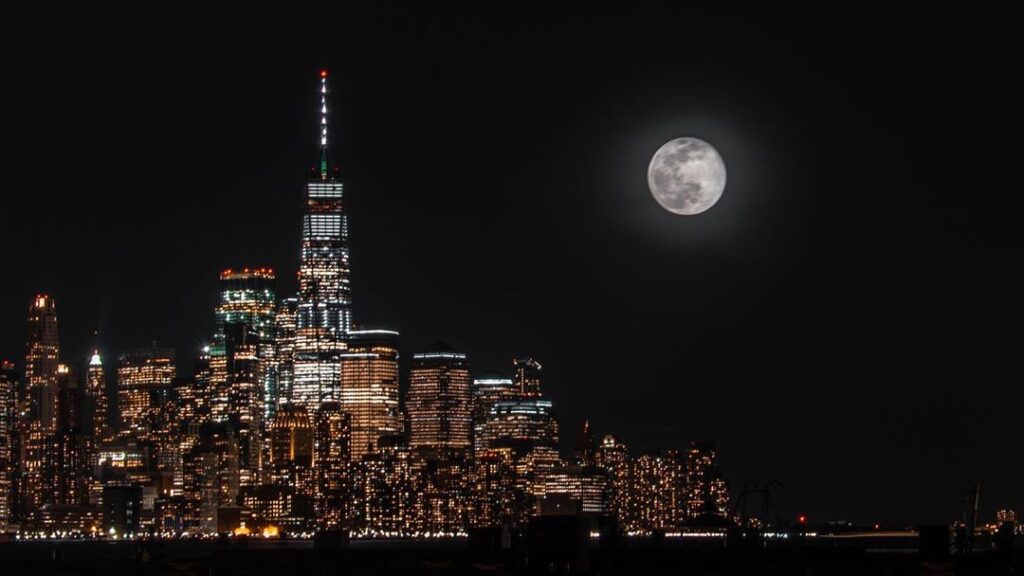
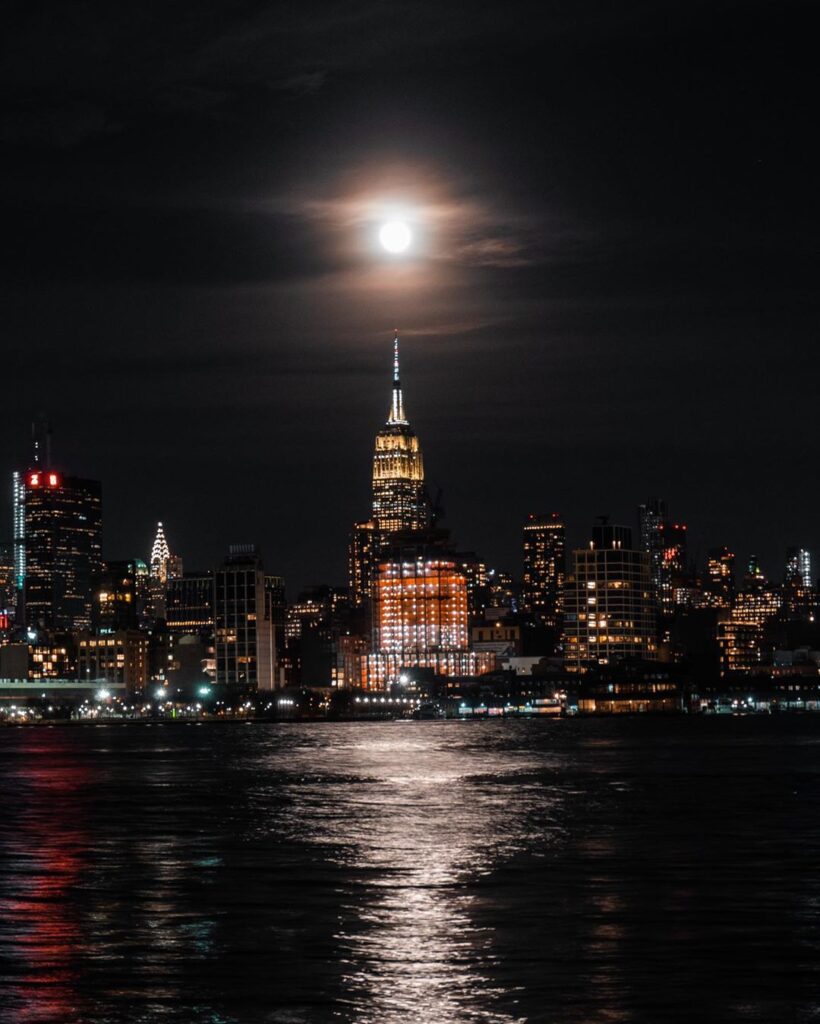
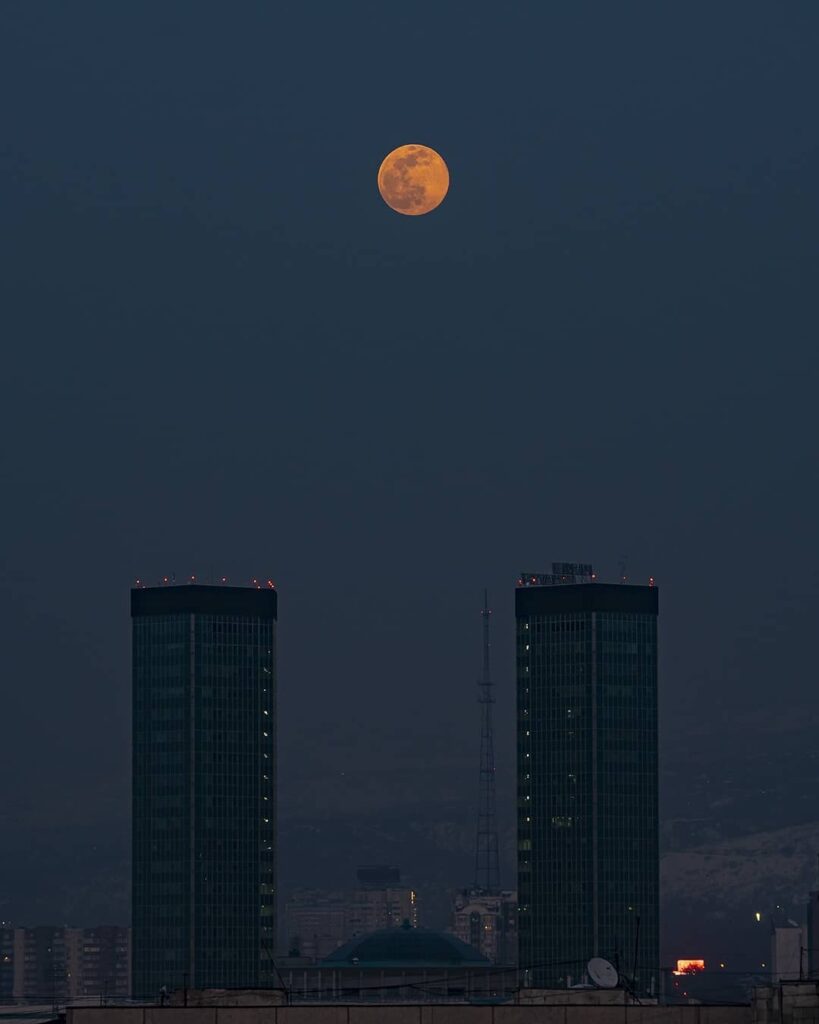
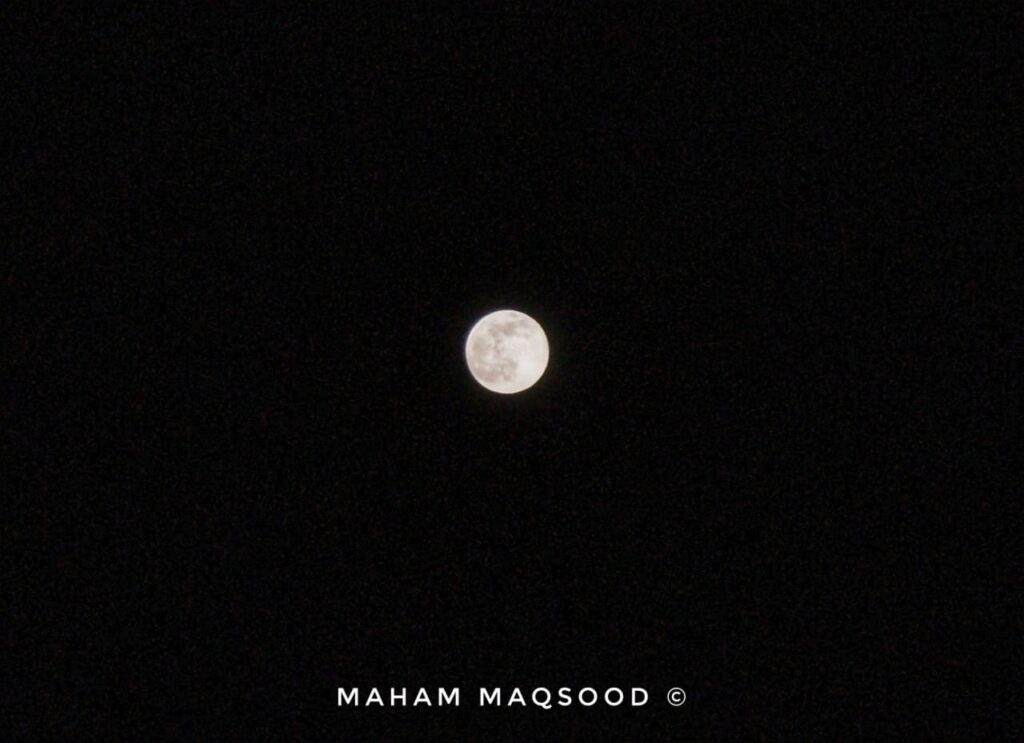
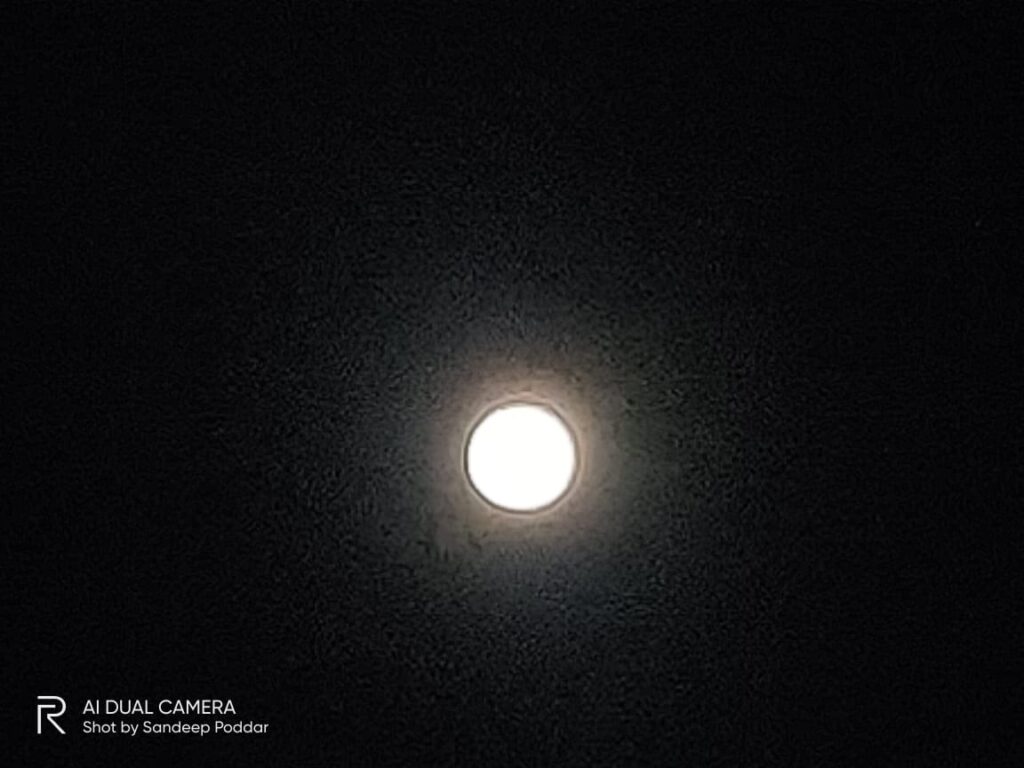
The last full moon of the decade occurred yesterday. It’s called the full “cold moon”. The Moon appeared full all night, first sighted in the east with a saffron-colored tinge as it climbs just above the horizon. The full moons usually brighten since the side catching the sunlight is facing earth. That means the Sun, Moon, and Earth are all in a nearly perfect lineup.

This December full moon was dubbed a “cold moon,” for reasons everybody (well, everyone except folks in Pakistan) can probably guess. Let’s take a tour of some of the fascinating sights of this cold moon, captured worldwide.

The Cold Moon sits atop the Chrysler Building as it rises next to the Empire State Building in New York City tonight.
The Cold Moon sits atop the Chrysler Building as it rises next to the Empire State Building in New York City tonight. Photo Credit; Gary Hershorn
Cold moon captured in GAZA
Full moon captured in GAZA
Captured in Virginia, Photo credit Rami_astro
A stunning view of the cold moon with grey shades. Photo credit; Jaxson Pohlman
A stunning view of moon with grey shades. Photo credit; Jaxson Pohlman

While the auspiciously timed the full moon was a beacon of curiosity for some, it’s slated to put a damper on tonight’s Geminid meteor shower, which will outshine many of the fainter meteors.

lInk to similar posts; Hubble captures a peculiar cosmic image

The ‘Tiger Stripes’ on Icy Saturn Moon Enceladus finally explained

0
Enceladus has strange, parallel “tiger stripes” at its south pole.
(Image: © NASA/JPL/Space Science Institute)

Enceladus, one of the moons of Saturn got overwhelming attention and attraction of scientists in a few years. The data obtained from Cassini spacecraft has been analyzing and with each coming day, some more mysteries are getting resolved. The ‘Tiger stripes’ of Enceladus are one of them, and a piece of good news is that the Weird Physics behind ‘Tiger Stripes’ Finally Explained.

Enceladus has been of particular interest to scientists ever since it was observed by NASA’s Cassini spacecraft. After analyzing Cassini’s data, they detected an icy, subsurface ocean on the moon and strange, tiger stripe markings on Enceladus south pole that are like nothing else known in our solar system. Icy material from Enceladus’ ocean spews into space through these stripes, or fissures, in the moon’s surface. These stripes are parallel and evenly spaced, about 130 kilometers long and 35 kilometers apart, and are continually erupting with water ice.

New research performed at Hemingway and colleagues Max Rudolph of the University of California, two scientists Davis, and Michael Manga of UC Berkeley unveiled the physical forces on the moon that cause these fissures to form and keep them in place. The team was also figured out why these cracks are even spaced and only found on the south pole of the moon. 

The study shows that Enceladus is not a frozen solid, because the gravitational changes caused by its eccentric orbit around Saturn stretch it out slightly. It shapes deformed and causes the ice sheets at the poles to be thinner and more susceptible to splitting open. The team concluded that the fissures that make up these tiger stripes could have formed on the moon’s north pole just like the south pole, but the south pole cracked first. 

Also, Read Enceladus, A potentially astrobiological habitable candidate