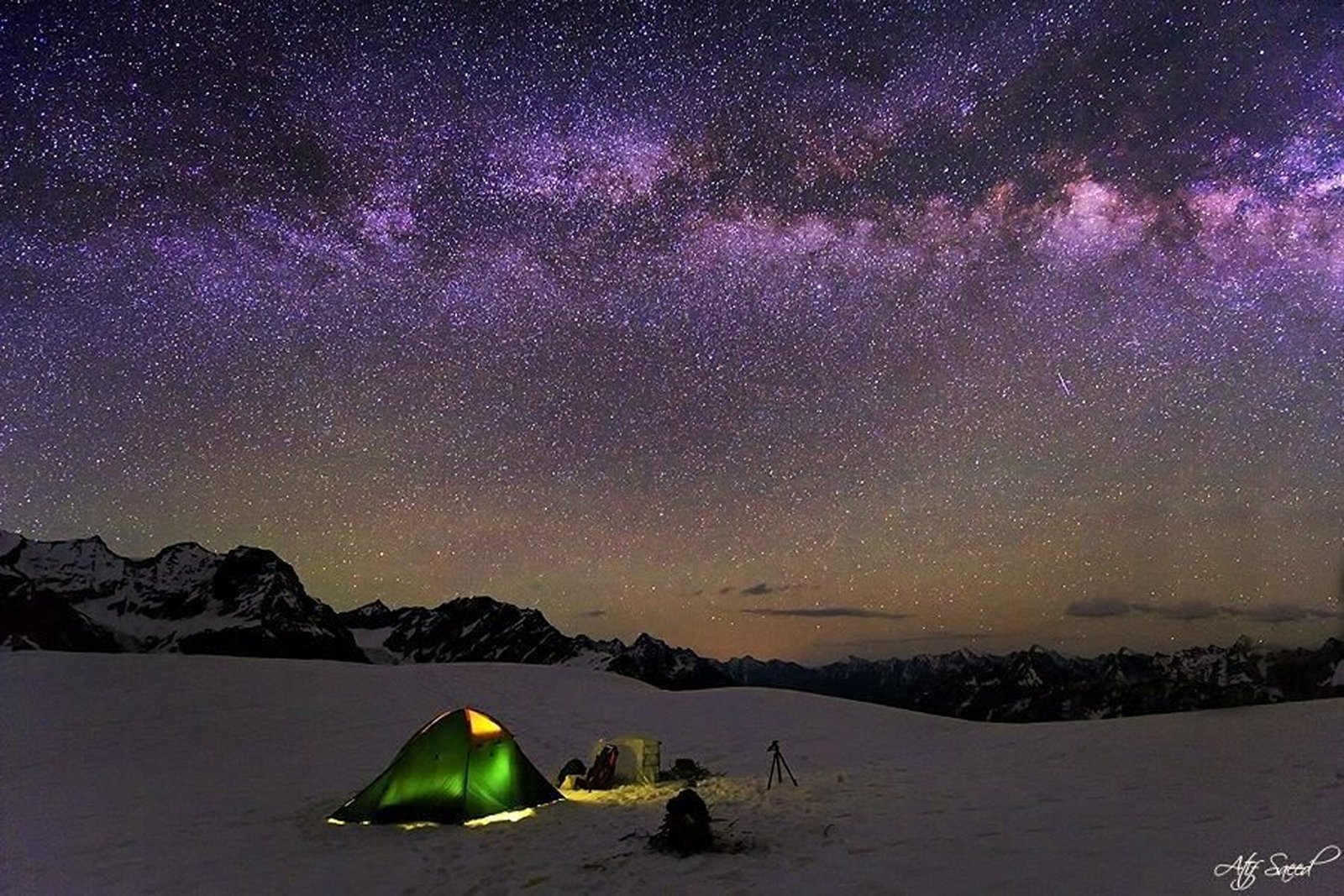
How odd is it that light has the power to obscure the world? Humanity has gazed up at a canopy of stars since the dawn of civilization. Ancient civilizations, from the astronomers of Mohenjo-Daro to the scholars of the Mughal courts, once mapped these skies of incredible clarity. Across Pakistan’s rapidly urbanizing landscape, artificial light is swallowing our night skies and, along with it, our connection to the cosmos.
Light pollution, defined as the excessive or misdirected artificial light that brightens the night sky, has emerged as one of the most widely spread yet least discussed environmental crises in Pakistan. From the gleaming skyscrapers of Karachi to the capital’s ever-expanding range of glowing new buildings, millions of Pakistanis now live under skies so washed out that they may never see the Milky Way with their own eyes.
The Scale of the Problem
Pakistan is among the fastest-urbanizing nations in Asia. With a population exceeding 230 million and cities growing at immense rates, the country’s artificial light output has expanded tremendously over the past two decades. The Indus Valley corridor (an area stretching from Lahore through Faisalabad to Karachi) now forms a near-continuous band of sky glow which is clearly visible from space.
The Bortle Scale measures night sky darkness from 1 (perfectly dark) to 9 (extreme light pollution). Most of Pakistan’s major urban centres sit at levels 8 or 9. City residents can only make out the Moon, a handful of planets, and perhaps a few dozen stars: a tiny fraction of the roughly 4,500 stars visible under truly dark skies.

Sources of Light Pollution
Across Pakistani cities, streetlights – many of them newly installed LEDs – are not properly shielded, directing as much light upward into the sky as downward onto the roads. In Islamabad, the sprawling commercial strips of Blue Area and the floodlighting of commercial markets bathe the city in a permanent haze.
Islamabad’s otherwise orderly urban planning has paid almost no attention to the direction or intensity of its outdoor lighting. In Lahore, commercial districts like Liberty Market blaze with unregulated billboards and shop-front signage throughout the night. Karachi’s Tariq Road and Clifton do the same on an even larger scale. Pakistan currently has no national legislation addressing any of it.
The Cost to Nature and Health
The consequences extend well beyond astronomy. Sea turtles nesting on Hawke’s Bay and Sandspit beaches near Karachi are often disoriented by nearby urban glow, causing hatchlings to crawl toward city lights rather than the sea. Migratory birds travelling the Indus Flyway, one of Asia’s most significant migration corridors, collide with lit-up structures and lose their bearing during nocturnal flights.
Human health bears a cost, too. Research consistently links chronic exposure to artificial light at night with disrupted sleep, suppressed melatonin production, and increased risks of metabolic disease. In Pakistan’s crowded cities, where unshielded streetlights illuminate residential areas all night, millions of people, in particular children, are affected.
Pakistan’s mountainous north remains one of South Asia’s last great dark sky refuges. Villages like Karimabad in Hunza and the Shimshal Valley offer Milky Way views that rival the world’s finest stargazing destinations. Balochistan’s vast, sparsely populated plateaus and Pakistan’s southern deserts of Cholistan and Thar have skies dark enough to allow the Milky Way to cast visible shadows on the ground. These are irreplaceable assets, and they are under growing threat as development creeps out from urban centres.
The Path Forward
Light pollution, unlike most environmental crises, is almost entirely reversible. Other countries have shown the way. The Canary Islands introduced lighting ordinances in the 1980s that protected observatory-grade skies without halting development. Flagstaff, Arizona, became the world’s first International Dark Sky City in 2001 through a combination of shielding requirements and public education. Interestingly, the changes involved are not costly: shielded light fixtures, warmer LED colour temperatures, timers on commercial signage, etc. But they require political will and coordinated policy.
Pakistan’s first step should be introducing outdoor lighting standards through the Pakistan Standards and Quality Control Authority, mandating shielded, warm-spectrum fixtures for all new public and commercial installations. Dark sky designations for Gilgit-Baltistan and Balochistan through the International Dark-Sky Association could unlock astrotourism, channelling visitors and revenue into regions that need both. Universities in Islamabad are well-placed to lead citizen science efforts, mapping sky brightness and building the public awareness that drives change.
The stars above Pakistan have not gone anywhere; however, they have been shrouded behind a ceiling of light we have built ourselves.
Also Read:
Is Limited Light Exposure Causing Sadness and Depression in the Modern World?

Shanzay Sajid is a high school student from Pakistan with a passion for physics, astronomy, and science communication. She enjoys exploring how complex scientific ideas can be made accessible through research and writing, with interests spanning astrophysics, environmental science, and STEM outreach.

