
In June 2023, a cyclone named Biparjoy churned toward Gujarat, on India’s western coast, packing sustained winds strong enough to flatten huts and snap power lines. Twenty-five years earlier, in June 1998, a cyclone of almost identical strength had struck nearly the same stretch of coastline. That storm, remembered as the Kandla cyclone, killed close to 1,200 people. When Biparjoy made landfall in 2023, Gujarat recorded zero deaths.
Two years later, in mid-August 2025, a very different kind of storm hit a mountain district called Buner, in northern Pakistan. Unlike a slow-moving cyclone that news channels track for a week, it hit without warning. It was a cloudburst, an intense, highly localised downpour worsened by glacier melt, that emptied a mountainside’s worth of water onto a handful of villages within minutes. Flash floods and landslides followed almost immediately. Within days, the death toll in Buner alone had passed 200, part of a wider toll across the province that climbed past 300. Survivors told reporters that the loudspeakers on local mosques, the traditional way news travels fast in remote areas, never sounded a warning. Pakistan’s disaster management authority later acknowledged that an early-warning system existed on paper; it simply could not outrun the storm.
Two disasters, roughly two years and two thousand kilometres apart. Between them sits nearly everything researchers now understand about why early-warning systems succeed or fail.
It Usually Isn’t the Forecast That Fails
For decades, “early warning” conjured images of satellites and sirens, the hardware of detection. But a large and growing body of disaster-risk research, spanning floods, cyclones, earthquakes and landslides, keeps arriving at the same conclusion. Forecasting the hazard is, for most disasters, now the easier part. What breaks down is everything downstream of the forecast: whether a warning reaches the right person, in a language and format they trust, with enough time and enough reason to actually move.
Disaster scientists describe an effective system as resting on four connected pillars: understanding who is at risk, monitoring and forecasting the hazard, getting the warning to people, and having the resources in place for them to respond when it arrives. Weaken any one pillar and the other three stop mattering as much. The World Meteorological Organization’s latest global count of national systems, published alongside the UN climate summit in Belém last November, found that disaster mortality is nearly six times lower in countries with comprehensive multi-hazard systems than in countries with only partial ones. Researchers increasingly argue that this is the right way to treat early warning: as infrastructure to be funded and maintained, not simply information to be broadcast.

A Wealthy Country Proves the Point
If this were purely a poverty problem, Luxembourg would not be a useful case study. In July 2021, the same storm system that devastated parts of Germany and Belgium also produced Luxembourg’s most financially costly disaster on record. Researchers who later reconstructed the event found that strong warning signals were available days in advance and did reach the relevant institutions, but were not consistently translated into public warnings or coordinated protective action in time. Separate modelling of that same flood found that impact-based forecasts, the kind precise enough to tell a mayor which specific streets and buildings will flood, could have given authorities up to 17 hours of building-level warning. The technology existed. What lagged was the chain of decisions between the forecast desk and the front door.
The Clock Runs Differently for Every Hazard
How much warning time is even possible depends entirely on the hazard, and that shapes what “acting on a warning” can realistically mean. Flood forecasts can now offer hours to several days of notice. Cyclone tracks are typically visible almost a week out. Earthquakes offer, at best, tens of seconds, enough to drop, cover and hold on, not enough to evacuate a city.
That distinction helps explain the gap between Kandla and Biparjoy. Between 1998 and 2023, India’s meteorological department sharply improved its ability to forecast a cyclone’s formation, track and landfall with useful lead time, but the lives saved came from what happened next: district officials who trusted the forecast enough to order evacuations, and coastal residents who trusted the officials enough to leave. A similar dynamic played out in Odisha in 2019, when a technology-enabled dissemination system helped move an estimated 1.2 million people out of Cyclone Fani’s path in a matter of days.
Earthquakes are far less forgiving. In Central America, where seismic hazard is high and building codes are inconsistent, researchers estimate that earthquake early-warning networks, which give people only seconds, still reduce average annual fatalities by roughly 10%, translating into hundreds fewer deaths in Costa Rica and Nicaragua and thousands fewer in El Salvador and Guatemala over time. Even a few seconds, it turns out, is worth building for.
Comprehension matters as much as speed. When Typhoon Haiyan struck the Philippines in 2013, researchers later surveying survivors found that most residents knew a powerful storm was approaching. What many did not grasp in time was the specific danger of storm surge, a wall of seawater distinct from wind or rainfall, because the forecast language never quite translated into a mental picture of what was coming. People braced for a familiar kind of typhoon and were met with an unfamiliar one.
Who Still Gets Left Out
Even where systems exist on paper, they rarely reach everyone equally. A study examining Pakistan’s flood early-warning systems, based on interviews with officials and community focus groups, found the design leaning bureaucratic and top-down, with limited gender sensitivity and little routine engagement of the residents it was meant to protect. A separate global assessment of 182 major cities found that only 71 (39%) had a complete four-pillar warning system in place, and that cities in high- and upper-middle-income countries were roughly three times more likely to have one than cities in low- and lower-middle-income countries. Health was named as a goal by most of these cities, yet only 41% had given public-health agencies any defined role within the system.
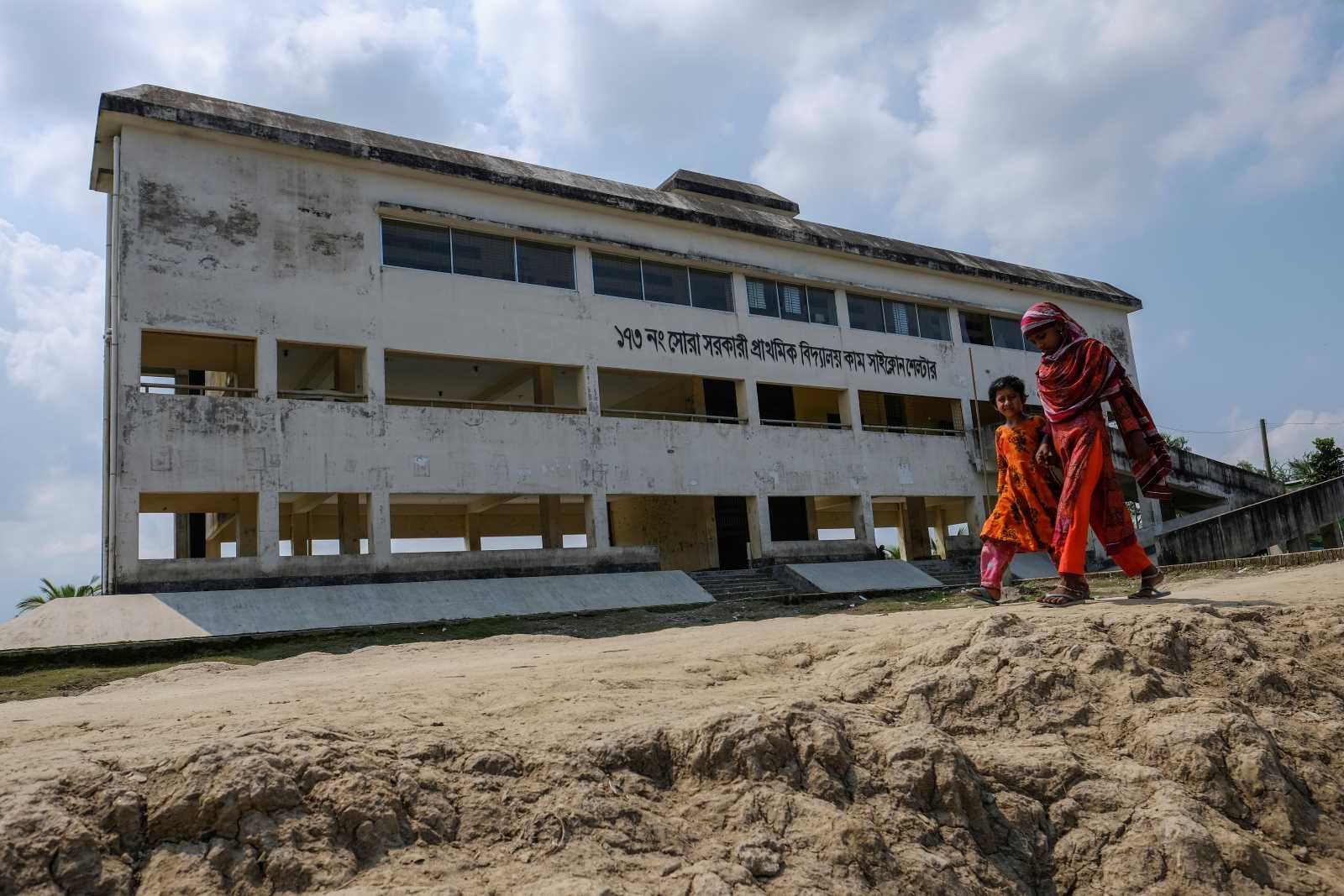
The regional picture shows both how far the world has come and how far it has not. Since the 2004 Indian Ocean tsunami, researchers tracking Southeast Asia found the share of countries with multi-hazard systems rose from about a quarter in 2015 to two-thirds in 2023. What is still missing, the same review concluded, is reliable “last-mile” delivery: turning a warning issued in a national capital into something a fisher, a farmer or a grandmother in a remote village receives in a language, format and moment she can actually use. Across the wider literature, the same pattern repeats in different countries: women, people with disabilities, and communities in low-income or conflict-affected settings are consistently the last to be reached, even in countries with strong national capacity on paper.
What Technology Can, and Cannot, Fix
New tools are narrowing some of these gaps in genuinely useful ways. In 2024, researchers described an artificial-intelligence flood-forecasting model that predicts extreme river floods up to five days ahead, even in watersheds with no stream gauges at all, a breakthrough specifically for the low-income and remote regions that dense monitoring networks have historically skipped. The system was reported to be running operationally in more than 80 countries.
But the WMO’s own tracking data is a caution against expecting technology alone to close the gap. Globally, the weakest of the four pillars remains the most human one: understanding, in granular detail, who is exposed and how vulnerable they are. Fewer than a third of countries report having that capability well developed, even as monitoring and forecasting tools race ahead. Reviews of the wider research literature reach a consistent verdict: evidence that artificial intelligence and connected sensors can extend warning coverage is real but still rated moderate; evidence that the deepest, most persistent problem is communication, trust and response, not detection, is rated strong.
What Is Actually Working
Bangladesh offers the longest-running proof that the fix is more human than technical. The cyclone that struck the Bay of Bengal coast in November 1970 killed an estimated 300,000 to 500,000 people, by different counts, among the deadliest natural disasters on record. Bangladesh’s government and the Red Crescent responded by building the Cyclone Preparedness Programme, a network that now trains and deploys more than 76,000 volunteers, roughly half of them women, who go door to door on foot and bicycle carrying flags, hand sirens and warnings delivered in local dialects. The toll from major cyclones has fallen with almost every storm since: about 138,000 lives lost in 1991, roughly 3,400 to 4,000 in 2007’s Cyclone Sidr, fewer than 30 each in 2019 and 2020. A separate survey of coastal households found they were willing to pay roughly $5.57 a year, out of their own pockets, for better warning services delivered in their own language, a small figure that says something large: when a system is trusted, people do not just receive it, they invest in it.
That is the model the United Nations is now trying to scale worldwide through its Early Warnings for All initiative, launched in 2022 with a deadline of protecting every person on Earth by the end of 2027. As of last November, 119 countries, 60% of all UN member states, up from just 52 a decade earlier, reported having some form of multi-hazard system. Researchers who track the initiative’s progress against the UN’s Sendai Framework point to three gaps still holding it back: inconsistent understanding of what “early warning” even means across agencies and disciplines, a failure to formally fund and recognize the informal community networks already doing this work in fragile settings, and weak collaboration between scientists, governments and the communities on the receiving end of every warning.
Gujarat and Buner were both, in the end, hit by an accurately forecast hazard. The difference was not in the sky. It was in everything underneath it: funded shelters, trained volunteers, a warning system built with the people it serves rather than issued at them, and enough institutional trust that when the alert came, someone believed it enough to move. Building that kind of system everywhere, for everyone, by 2027, remains very much a work in progress. But for the first time, researchers say, the gap between what is technically possible and what is actually delivered is a target with a name, a deadline, and a shrinking, if still substantial, distance left to close.
References
Ahsan, M. N., Khatun, A., Islam, M. S., Vink, K., Ohara, M., & Fakhruddin, B. (2020). Preferences for improved early warning services among coastal communities at risk in cyclone-prone south-west Bangladesh. Progress in Disaster Science. https://doi.org/10.1016/j.pdisas.2020.100065
Da Costa, J., Ebert, E. E., Hoffmann, D., Cloke, H., & Neumann, J. (2026). Signals without action: a value chain analysis of Luxembourg’s 2021 flood disaster. Natural Hazards and Earth System Sciences. https://doi.org/10.5194/nhess-26-343-2026
De Perez, E. C., et al. (2022). Learning from the past in moving to the future: Invest in communication and response to weather early warnings to reduce death and damage. Climate Risk Management. https://doi.org/10.1016/j.crm.2022.100461
León, J. V. D., Bogardi, J., Dannenmann, S., & Basher, R. (2006). Early warning systems in the context of disaster risk management. Entwicklung und Ländlicher Raum, 40, 23–25.
Merz, B., et al. (2020). Impact forecasting to support emergency management of natural hazards. Reviews of Geophysics, 58. https://doi.org/10.1029/2020rg000704
Mohapatra, M., & Sharma, M. (2025). Cyclone warning system in India: A journey of success over 25 years. Weather and Forecasting. https://doi.org/10.1175/waf-d-23-0188.1
Najafi, H., et al. (2024). High-resolution impact-based early warning system for riverine flooding. Nature Communications, 15. https://doi.org/10.1038/s41467-024-48065-y
Nearing, G., et al. (2024). Global prediction of extreme floods in ungauged watersheds. Nature, 627, 559–563. https://doi.org/10.1038/s41586-024-07145-1
Orihuela, B., et al. (2025). Impact assessment of earthquake early warning systems in Central America. Earthquake Spectra, 41, 3094–3122. https://doi.org/10.1177/87552930251342826
Rajendran, L., & S, S. R. (2021). ICT-enabled early warning dissemination system for disaster management. 2021 6th International Conference on Inventive Computation Technologies (ICICT), 443–448. https://doi.org/10.1109/icict50816.2021.9358641
Rokhideh, M., Fearnley, C. J., & Budimir, M. (2025). Multi-hazard early warning systems in the Sendai Framework for Disaster Risk Reduction: Achievements, gaps, and future directions. International Journal of Disaster Risk Science, 16, 103–116. https://doi.org/10.1007/s13753-025-00622-9
Shah, A., Ullah, A., Khan, N. A., Pal, I., Alotaibi, B. A., & Traore, A. (2022). Gender perspective of flood early warning systems: People-centered approach. Water, 14(14), 2261. https://doi.org/10.3390/w14142261
Sheehan, M., Boned-Ombuena, A., Cash-Gibson, L., Damis-Wulff, A., & Fox, M. A. (2025). A global assessment of urban extreme weather early warning systems and public health engagement. Bulletin of the World Health Organization, 103, 294–303. https://doi.org/10.2471/blt.24.292205
Yadav, N., Thalakiya, R., Srivastava, S., Yadav, N., & Ostadtaghizadeh, A. (2026). Scoping review of early warning systems in improving disaster risk outcomes: perspective from evolution to usage in Southeast Asian countries. BMC Public Health, 26. https://doi.org/10.1186/s12889-026-26292-w
Yore, R., & Walker, J. (2020). Early warning systems and evacuation: Rare and extreme vs frequent and small-scale tropical cyclones in the Philippines and Dominica. Disasters. https://doi.org/10.1111/disa.12434
News, institutional and data sources
Associated Press / PBS NewsHour. (2025, August 17). Pakistan defends flood response after more than 270 people killed in northwestern district. https://www.pbs.org/newshour/world/pakistan-defends-flood-response-after-more-than-270-people-killed-in-northwestern-district
Associated Press via CBC. (2025, August 17). Pakistan defends flood response, says foreign help not needed as death toll tops 270. https://www.cbc.ca/lite/story/1.7611077
Asia News Network. (2025, August 18). Death toll in Pakistan floods climbs to 323 as rescue operations continue. https://asianews.network/?p=221237
The Business Standard. (2021). 50 years of cyclone preparedness: Success in saving lives, but not livelihood. https://www.tbsnews.net/thoughts/50-years-cyclone-preparedness-success-saving-lives-not-livelihood-368398
UN Office for Disaster Risk Reduction (UNDRR). (2023). Congratulatory message [on the 50th anniversary of Bangladesh’s Cyclone Preparedness Programme]. https://www.undrr.org/news/congratulatory-message
World Bank. Saving lives from Cyclone Mahasen in Bangladesh. https://blogs.worldbank.org/en/endpovertyinsouthasia/saving-lives-cyclone-mahasen-bangladesh
World Meteorological Organization & UN Office for Disaster Risk Reduction. (2025, November 12). Global Status of Multi-Hazard Early Warning Systems 2025. https://wmo.int/news/media-centre/early-warning-systems-reach-new-heights-critical-gaps-jeopardize-global-progress
World Meteorological Organization. Early Warnings for All. https://wmo.int/site/wmo-and-early-warnings-all-initiative
UN Office for the Coordination of Humanitarian Affairs (OCHA). (2022). Pakistan: 2022 Floods Response Plan. https://www.unhcr.org/sites/default/files/2022-10/Pakistan%20Floods%202022%20-%20Floods%20Response%20Plan%20-%20Revision%20-%2004%20Oct%202022.pdf
Also read: Beyond Filtration: Dr Mohammad Haris on Removing Microplastics, Nanoplastics and PFAS

Sufyan is the 3rd-ranked intern of Scientia Pakistan’s Science Writing Internship (Cohort Five). He is an engineering student from Karachi dedicated to bridging the gap between technical research and public understanding.

