Did you know that you can survive without food for weeks, but it takes only three days of no water for a person to meet death?
The human body consists of cells which are the building unit of life. Each cell comprises about 80 to 90 percent water. Water is what supports life, in other words. All the characteristics of life require water in one way or another. That is why only Earth has life on it; because it contains water in all three physical states.
What is Human Biology?
Biology is the study of life, so Human biology focuses explicitly on human beings, the most advanced form of life on Earth. To understand how water is such a rudimentary part of this field, we must first understand what Human Biology exactly studies.
Subfields of Human Biology and the Integration of Water
Human biology can be described as an interdisciplinary field of study because it includes many biological and molecular fields mixed with the social sciences.
Genetics
Genetics is the study of inheritance, the DNA molecule which is found in the nucleus. Water molecules surround DNA in the form of a hydration shell and hold it together. The nucleic acids form their double-helix structure in water basically because they get their polarity in water. Without water, this molecule’s function would be disrupted as it would not obtain its B-form, which is considered its standard form.
Human Physiology
It is the study of how the human body functions. This is inclusive of the physical, biochemical, and bioelectrical working of the body. The maintenance of homeostasis is based on the fact that all cells are bathed in tissue fluid, which basically involves water as a solvent. All human metabolic reactions require water as a medium; body structures and cells are composed of water. So we need water structurally as well as functionally
Anatomy
Anatomy is defined as the study of the structure and parts of an organism. Water plays a vital role in the chemical reactions inside all parts of the body. As discussed above, the new cell generation relies on water to maintain the well-being of both structure and functioning.
Epidemiology
It is the study and analysis of distribution patterns and determinants of health and disease conditions in defined populations. Water is an essential determinant of health because unsafe drinking water is the root cause of most illnesses and deteriorating health.
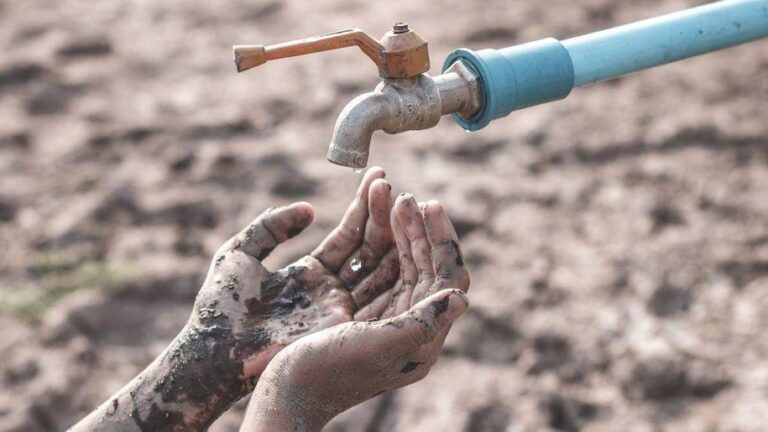
Safe drinking water is essential for better health
Anthropology
This subfield of Human Biology deals with the scientific study of humanity, human behavior, human biology, cultures, and societies. Water plays a meaningful role in solving many issues that it highlights, like environmental degradation, climate change, local politics, changing consumption patterns, and research agendas.
Ecology
Human ecology studies the relationship of humans with their natural, social, and built environments. Since water is part of the natural ecosystem as well as the irrigation and sanitation systems that humans have made, it is necessary to study it when focusing on the interaction of humans and their environment.
Human nutrition
What is nutrition? The elaboration is not much needed as everyone is urged by health experts to increase the amount of water drunk in a day. Maximum 8 to 12 glasses of water a day are one of the tips that ensure a nourished, healthy, and properly functioning body.
Histology
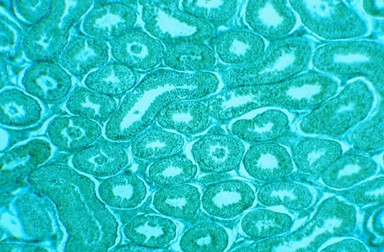
This is the study of cells and tissues by making slides and examining them under a microscope. Histology can be called microanatomy because it studies the human structure at a minute level that is not visible to the naked eye.
Preparation of slides relies on water. Cells need to be able to maintain their shape, and a dye is added to them to give them color. The solvent for the dye is also water.
Cell Biology, Molecular Biology and Biochemistry
Cell biology is the study of cell structure and function of living organisms; it highlights that the cell is the structural unit of life. Life exists because the cell is about 80 percent water. Water is the solvent and medium for all metabolic reactions and the main constituent of many cell organelles.
Life exists because the cell is about 80 percent water
In a cell, molecular Biology peaks into the role of water at the molecular level. Water assists the diffusion of biomolecules and can be considered the active matrix of life in the cells. Biochemistry studies the importance and chemical properties of water that are supportive for biological systems and reactions.
Developmental biology and Embryology
How living things grow and develop, regenerate and reproduce all involve the participation of water. For example, the fluid in the semen comprises water. The sperm is designed structurally to swim in the male and female body fluids. If no water existed, the continuation of a species would become impossible. Embryology analyzes the prenatal development of gametes, fertilization, and embryonic development. The embryo in the uterus is surrounded by a watery fluid for buoyancy and protection.
Immunology
The body’s defense system involves the active engagement of water, especially the humoral response involving B cells. Water also helps in flushing toxins from the body, a process relates to innate immunity. Sweating and tears, the passing of urine are natural defenses of the body. Since water has cohesive properties, it is an excellent antibacterial agent.
Water also regulates body temperature, is the medium in the blood for carrying oxygen and nutrients to cells, and moistens body parts like eyes, nose and mouth. All these entrances of the body are like barriers or checkpoints for the entry of bacteria, and water plays a role in moisturizing or lubricating them.
Biophysics
How can we forget the field of physics when discussing such an important molecule like water? The physical analysis of the properties of water helps us understand how this molecule is the special one that sustains life. Water biophysics involves studying how HOW water molecules interact with biological ones like DNA, carbohydrates, proteins, etc.
Role of Water in supporting life
There are several reasons that this molecule is the ‘chosen one’ for the sustenance of life. It is a polar molecule and, thus, a universal solvent. All biochemical reactions can quickly occur in water. Metabolism in an organism is totally dependent on water as a solvent.
Secondly, water supports cellular structure as it helps maintain the turgor pressure and shape of the cell. This is important for the resistance to external pressures and the formation of the cell membrane structure. Thirdly, its polarity and solubility, and unique physical properties make it vital for life functions.
With a handsome amount of economy thriving on agricultural output, Pakistan’s reliance on the availability of fresh water is a necessity. The economic survey of Pakistan states a 5.4% contribution of major crops to GDP accompanied by a 25.6% contribution of these crops in the agricultural sector of Pakistan; it employs 38.5% of its workforce. Furthermore, the accelerating rate of urbanization and population has led to a drastic increase in the demand for freshwater supplies. Irrespective of the importance and availability of freshwater resources in Pakistan, water crises remain a matter of grave emergency for Pakistan. The real question is: Is Pakistan running out of water?
The severity of the current water crisis can be analyzed from the United Nations Development Programme (UNDP) and Pakistan Council of Research in Water Resources (PCRWR) who claim that there will be an absolute water scarcity in Pakistan by 2025. A report released by the IMF (International Monetary Funds) claimed Pakistan is the third most water-stressed country worldwide. To prevent the country from hitting a deadlock, a framework of action must be drafted, highlighting the causes, effects, and effective solutions to solve the obstacle.
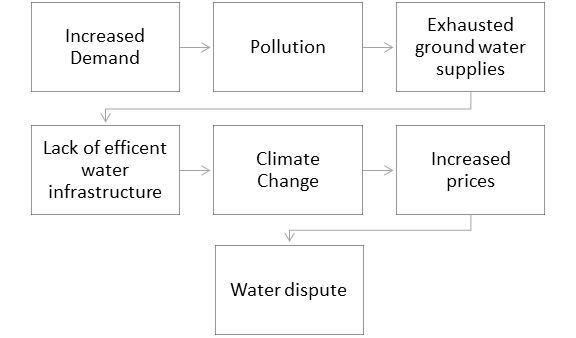
The first step in the framework of action is figuring out the causes for the lack of fresh water supplies in Pakistan. The web below exhibits few prime reasons that appear as root factors for water crisis.
Figure 1: Reasons for lack of freshwater access
Increased Demand
Pakistan is the sixth-largest country in the world inhabiting over 220 million inhabitants and this graph continues to expedite. With an escalating population, the demand for freshwater rises. The current freshwater supplies are already exhausted so the provision to keep up with these demands seems impossible.
Pollution
Pollution marks itself as one of the key candidates contributing to the scarcity of freshwater. Both point sources and non-point sources play a vital role in polluting freshwater sources. Point sources are defined as those sources that directly discharge effluent via effluent pipes originating from factories or industrial setups. These sources can be easily identified. Non-point sources include the means where rainwater washes away pesticides, insecticides, and fertilizers from agricultural fields that end up into large water bodies. These sources are difficult to mark as pollution comes from more than one definite source.
The discharge of industrial waste, dumping of household waste that makes its way into streams and rivers, the agricultural waste draining in water bodies, all contaminate the water supplies. Increased nutrients within water bodies result in eutrophication, a phenomenon where the structural changes in a defined ecosystem, such as a lake promote algal growth hence making the water unfit and harmful to be used for drinking, washing, cleaning, etc.
Exhausted Ground water supplies
Pakistan is the third-largest country that utilizes ground water supplies for irrigated agriculture. However, waterlogging and salinity accompanied with unmonitored ground water extraction have led to damaging consequences that can potentially tire the remaining water supplies. Pumping out water quicker than it can be replenished reduces the water volume that can be stored and hence reduce fresh water access.
Water crisis is growing severe day by day
Lack of efficient water infrastructure
Water infrastructure in Pakistan is dated and inefficient to store and regulate the available water. Lack of reservoirs and dams prevents the storage of excess water for future use. Moreover, the sedimentation at the beds of these water storage bodies reduces the capacity to store the required volume of water. Currently, there are two large dams in Pakistan: Tarbela Dam and Mangla Dam. However, these dams have reached their dead levels and cannot further support more influx of water. According to Muhammad Khalid Rana, Pakistan receives around 145-million-acre feet of water, but it can only store 13.7-million-acre-feet of water. More than 25 million acres of water are wasted due to the lack of dams to store surplus water.
Climate Change
Global warming is pacing at an alarming rate which impacts the behavior of glaciers, oceans, precipitation rates, the occurrence of floods and droughts. Higher water flow results in floods and with a lack of dams, the flood water cannot be stopped or stored. Water gushes down the soil-covered land causing erosion that results in sedimentation in dams and water bodies thus reducing their water carrying capacity and making the water unfit for consumption. Moreover, the rising mean daily temperatures mean that the earth is getting warmer that causes heavy rainfalls as the entire water cycle is disrupted.
Escalating greenhouse gas emissions cause a rise in mean daily temperatures leading to rapid melting of glaciers and drying up of water bodies. Drying up of water bodies leads to droughts with adverse effects such as famine that destroy communities and societies. Being a water-stressed country, Pakistan can face serious water emergencies that can potentially affect a large mass of people. For example, increased floods or other natural water disasters can contaminate the water bodies and also support the growth of several water-borne diseases like cholera and typhoid that are a threat especially to the health of children.
Increased Prices
The true value of water from its extraction to purification to transport is not properly calculated. This results in a lack of investment and funds for the development of infrastructure, water conservation technologies, and water transport facilities. With decreased financial input to cover the costs and non-defined high taxation on water distribution has led to a deterioration of the available resources and the management system. With over 2/3rd of Pakistan’s population residing in rural areas, such high costs are unbearable for families living on a constrained financial budget.
The accelerating rate of urbanization and population has led to a drastic increase in the demand for freshwater supplies
Water dispute
In 1960, post-partition, Pakistan and India’s dispute over water resources was solved via Indus Water Treaty that aimed to effectively divide the water in the Indus water basin between both countries. India was given access over water present in the eastern rivers (Sutlej, Beas, Ravi) while Pakistan was to use water from western rivers (Indus, Jhelum, Chenab). However, India is accused of violating this treaty by constructing dams over rivers flowing into Pakistan via Kashmir. This has reduced the water flow in Pakistan.
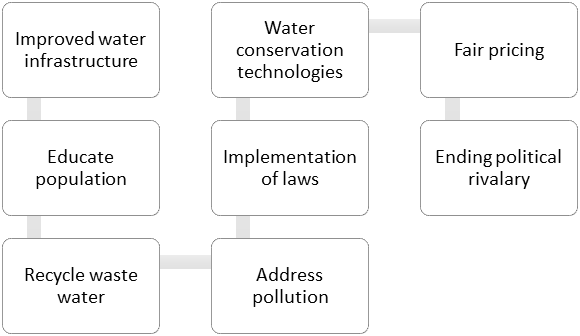
To restore and replenish this driving force of nature, concrete measures must be implemented without further delay. It is mandatory to keep aside political differences and differences of opinions and work towards providing clean and ample water supply to masses within Pakistan, knowing that 90% of the usage of water is for agricultural purposes that engage a majority of the labor force.
Figure 2 : Solutions for the existing water crises
Improved Water Infrastructure
In order to keep up with the growing water demands, infrastructure for water management and storage must be built. Knowing that the two largest dams of Pakistan have already reached their maximum water holding capacity, more dams should be constructed along with reservoirs to store the water especially that of monsoon rainfall. This will aid in preventing the occurrence of floods in low-lying areas and prevent additional losses from floods such as erosion and sedimentation. The proposed construction of the Kalabagh dam on the Indus River is underway. However, dams have their own set of downsides that can pose much greater threats.
To overcome this, the government can strive to opt for Dam equivalents (DE) which are structural setups mimicking the purpose of large dams. They are considered a favorable alternative as they avoid the downsides that are involved in dam construction such as high costs. DE can rejuvenate the traditional canal irrigation practices.
Educate people.
Awareness is the first step to bring forth a change. It is cardinal to educate people and raise awareness among the lot about water scarcity, the significance of clean water access, and the unfavorable outcomes if Pakistan runs out of clean water. By providing statistical data and making people realize the sensitivity of the current and future condition, if freshwater scarcity is not prevented can prove to be an effective measure.
Giving people examples from daily life such as the amount of water wasted while cleaning, washing, or cooking would enable them to analyze the grave concerns of the authorities over freshwater scarcity. Furthermore, it is pivotal to educate people that each individual can play a significant role in conserving fresh water. A stigma that prevails in our society is that a single person cannot bring a change at the expense of millions of other wasting waters. This needs to be eliminated from among us.
Recycle wastewater!
Gallons of non-treated wastewater are discharged daily. This pollutes the clean water supplies and makes water unfit for consumption. Hence, before discharging the water, treating the wastewater to make it harmless will prove to be a fruitful practice. This action will help conserve water, increase the available water supply and help meet the water requirements.
It is a need to mark out planned water recycling schemes in an attempt to enhance freshwater availability and access. Recycled water can be used for several purposes such as irrigation of agriculture (under a set of guidelines provided by WHO), municipal water supply, environmental restoration, etc. Such practices will cut down the surplus demand for fresh water for activities mentioned above by directing the recycled wastewater to fulfill these demands.
Water conservation technologies
A rather smart move is to use efficient water conservation technologies that cut off excess water usage and hence water wastage. Drip irrigation, Laser levelling, and sprinklers can be utilized to reduce water wastage. Drip irrigation prevents water wastage via evaporation. Similarly, sprinklers halt the excessive flow of water and ensure an adequate supply of water to crops without wasting any.
Implementation of Laws
Laws related to water distribution and consumption must be strictly implemented and practiced. In case of violation of any clause, authorities must take legal action against the violator. Implementation of drafted laws will ensure that all people get a reasonable share of water supply as marked by the authorities and there are no illegal ways of getting access to fresh water supplies at an expense of deprivation by the lows.
Address Pollution
Pollution is an incurable disease. It can only be prevented. Stepping into the 21st century, it is the utmost need to address and eradicate pollution which is a threat to all lives on the planet. Inappropriate waste disposal pollutes clean water supplies which is a source of many water-borne diseases, habitat for microorganisms, and a deadly dose to many birds and water living communities.
Fair pricing
Access to clean water supplies is not only limited to access to the resource itself but the finances behind it play a vital role. Accessibility in these terms deals with fair pricing that will enable all classes within a society to be able to use clean water. Water should be a privilege enjoyed by all, not a menace.
Ending political rivalry
By far one of the greatest and most effective solutions to existing water crises is by halting the political rivalry between India and Pakistan primarily. The division of authority over the western and eastern tributaries and construction of dams on these should be talked through by peacekeeping aside difference of opinions between both countries. The government should take steps to enable both countries to come to a common ground and solve the crises so that the local population does not have to suffer due to it.
This is the time we act as individuals and as a community to combat the existing water crises which if not resolved, can lead to severe deterioration of communities in the future.
“When the well is dry, we know the worth of water” – Benjamin Franklin.
Living in a desert is not easy; it is not always like living in big cities where you can find your favorite foods at your doorstep or at the nearest high street. Lack of facilities and basic necessities of life like health, education, unemployment, scorching weather, and loneliness make the life of its dwellers miserable. The statistics show a slight rise in the death toll of children between 2 to 10 years owing to several complications like low birth-weight, pneumonia, respiratory distress syndrome (RDS), malnutrition, and diarrhea.
Thar-Parkar is the largest district of Sindh and has Mitthi as its district headquarter. It covers an area of 19,638 square km (7,582 sq mi) with a population of 1.64 million people. It enlists in the 18th largest desert of the world and is considered to be the only fertile one. Enriched with coal, it has the world seventh largest reserve in the world.
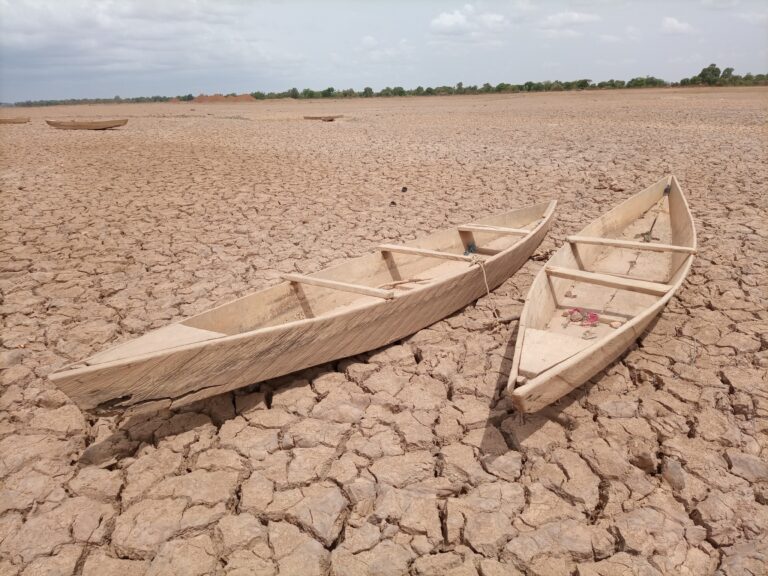
However, the limited periods of rainfall due to widespread climate change in Pakistan and mainly in Sindh caused an acute shortage of water for the inhabitants. Once the areas that provided scenic fertile views in the Mon-Soon season, now hardly receive rain in a season.
Limited periods of rainfall due to widespread climate change in Pakistan and mainly in Sindh caused an acute shortage of water for the inhabitants
Here, the rainy season often kick starts in early July and ends in September. In the past, Tharparker and adjacent deserted areas received sufficient rains, so the ponds get enough water for the dwellers for another three to four months when the areas usually received moderate rainfall in the winter. Here the primary water resources are wells with a ground-water-level of 200 feet deep that went even deeper in the last decade due to the dearth of rains.
The situation in Tharparker worsened when the Sindh government failed to provide water in sufficient amounts to meet the local residents’ daily requirements. Agriculture gets nearly impracticable when people striving for water to meet the basic necessities of life.
DUA Foundation Agriculture farm
The past governments of Pakistan wouldn’t pay attention to the area unless the Thar coal mine project was inaugurated in May 2008. Once the Sindh Engro Coal Mining Company (SECMC) and Thar Power Company Ltd. (THARCO) started generating electricity, the area caught the attention and became the center of attention to the national and international mainstream media outlets. In a short period, several non-governmental organizations shifted their focus to uplift the lifestyle of the residents of Thar. Sindh Engro Coal Mining Company (SECMC) is also working on multiple projects as their corporate responsibility, and a primary project among these is the Bio-saline water irrigation project.
The company planted an area of 10 acres (4.04 hectares) and with 120 Ber (wild-Berries) trees on each acre. The effort was part of the bio-saline agribusiness by utilizing underground water of the third aquifer pumped from a profundity of roughly 200 meters.
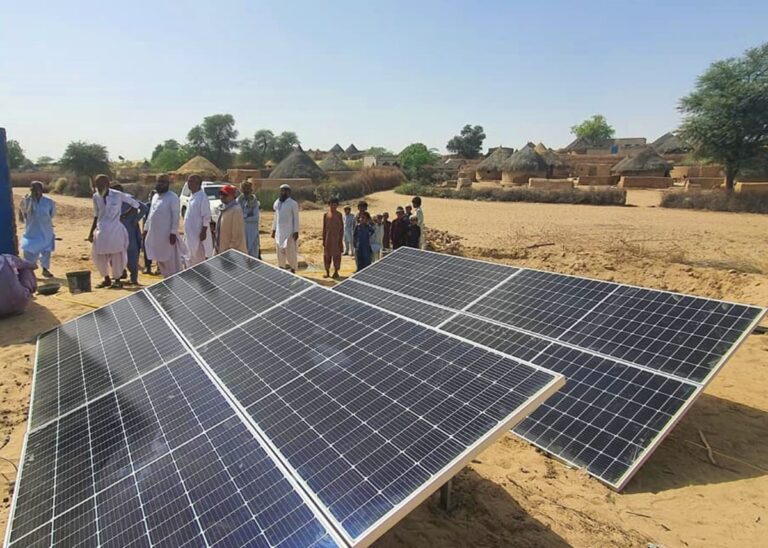
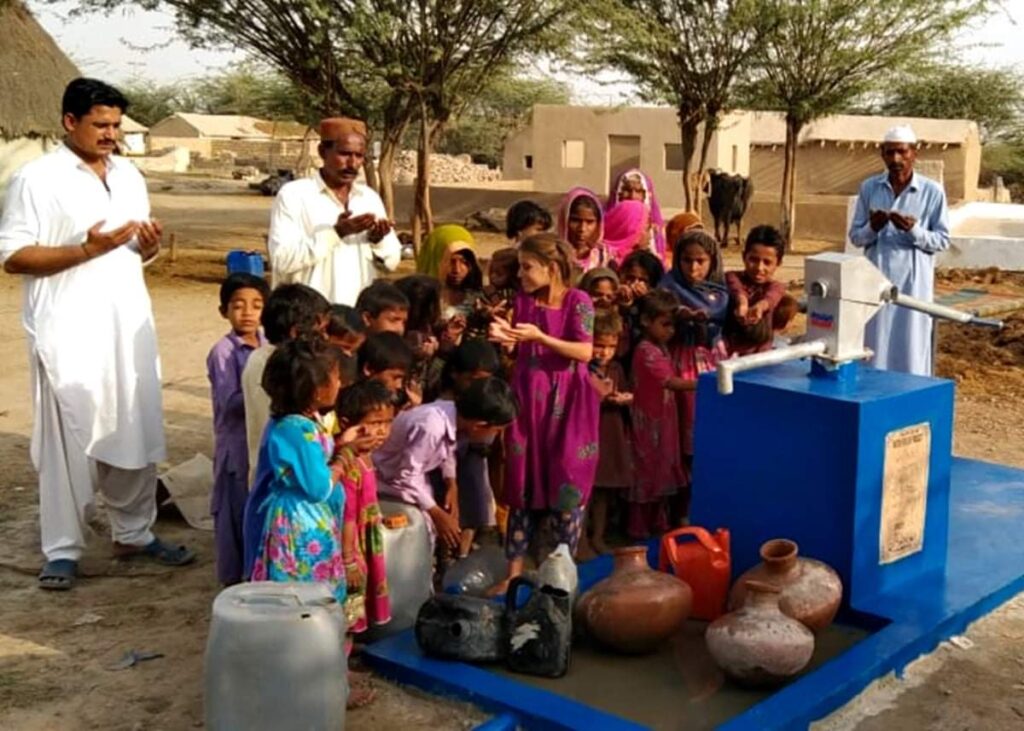
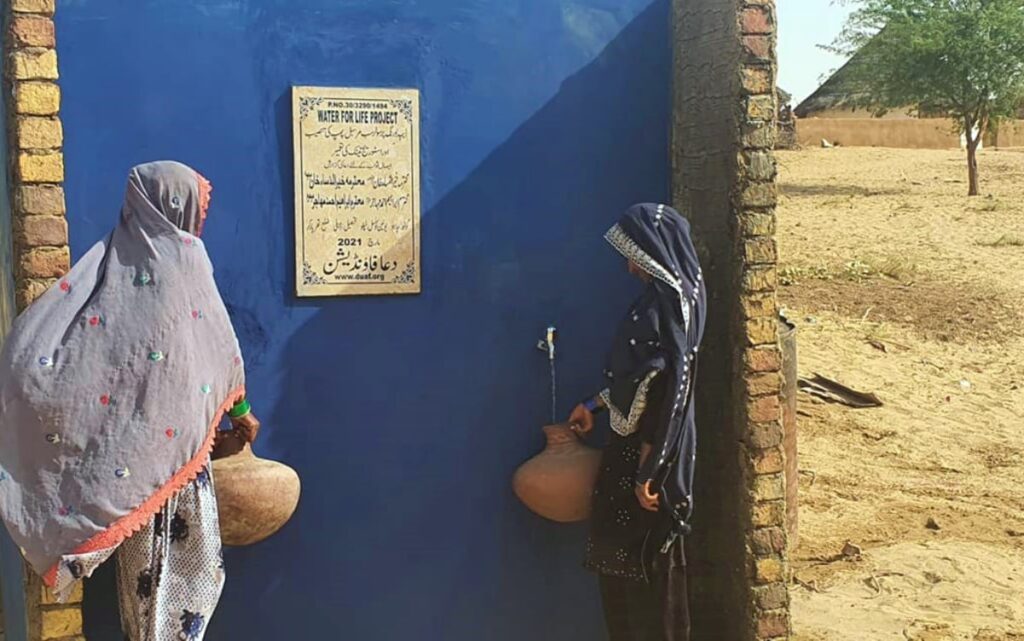
DUA Foundation has installed the Water Project (Submersible pump on 500 feet deep boring with water storage tank) at Village Chaho, Uc Laplo, Tehsil Dahli, District Tharparkar. Credits: DUA Foundation
The planted trees are watering up to 3500 ppm TDS beneath specialized back given by Pakistan Horticulture Inquire about Committee (PARC), and 120 trees were planted per acre so far. These plants have started yielding within one year, and each tree has produced an average of 5 to 7 kilograms of fruits. The 120 trees on a land section could provide around 35,000 to 40,000 PKr within the, to begin with, harvest.
Dua Foundation is an NGO with small-man-power, struggling to regain the fertility of Thar Desert, once it was known for. Dua Agro Farm was a constructive idea to turn Thar green, which has now become a reality. With optimism and good faith, these farms are now showing their spring. So far, 45 agro farms have been completed. These successful experiences are creating new sources of employment for Thar residents.
These Agro farms are bored for irrigation and various types of pumps. In case of lack of electricity, solar power cells are also installed, and at the same time, storage tanks are constructed for storing water. The inhabitants of adjoining villages also have access to daily necessities and clean drinking water due to these efforts.
Installation of water pump has been very useful for the local residents. Credits: DUA Foundation
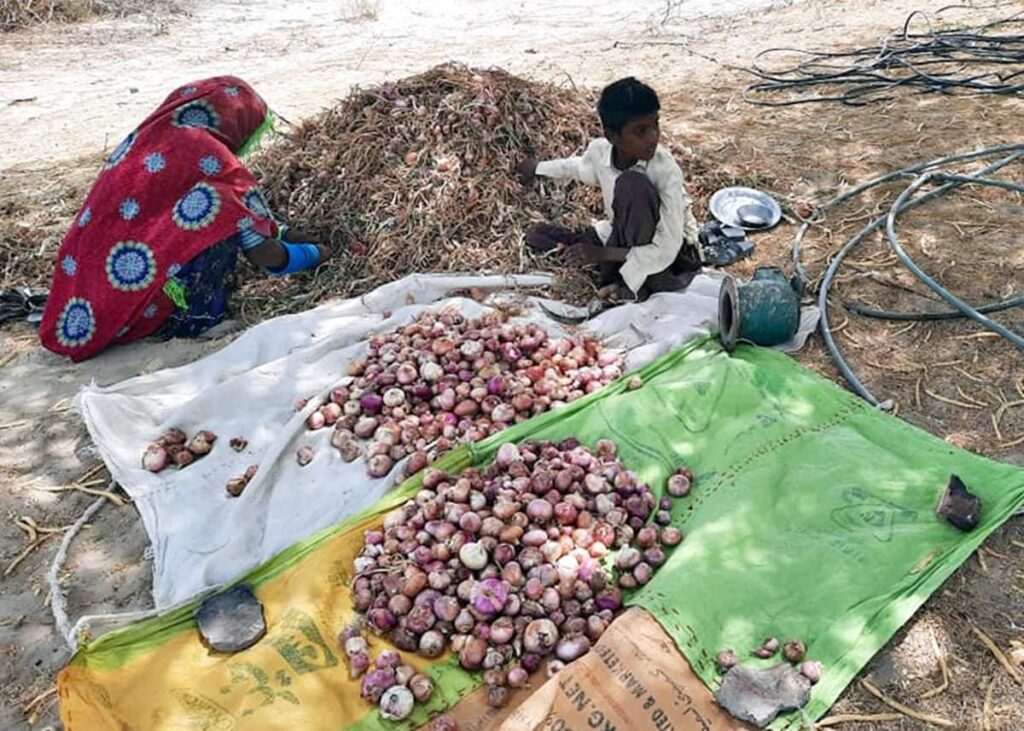
Dua Agro farm has also been set up in Kaloi Tehsil of Tharparkar, in which plants like mustard, Tara Meera, Tomato, Onion, Berry, and Lucerne are being cultivated. Meanwhile, the farm management started some research work, and a few Lotus plants have also planted experimentally in a pond.
In various areas of Tharparkar, Jalebi, Pomegranate, Wheat, Palm, Olive, Lotus, Tomato, Onion, Dragon Fruit, Spaghetti, Cumin Mustard, Tara Meera, Lawson, Lemon, Fig, Mulberry, Guava, Falsa, grains, and other vegetables are planted. Following the successful experimental cultivation of more seasonal fruits and vegetables, a few mega farming projects have been launched.
Farmers ready to harvest golden wheat from DUA agro farm. Credits: DUA Foudation
These farms are not only meeting the food needs but also providing economic autonomy to the villagers. Thus, the Dua Foundation promotes small-scale cultivation of fruits, vegetables, and grains in the Tharparkar area. In addition to preparing the fields, training is also provided to the residents for their maintenance and good yields.
With the help of philanthropists, these agro farms are prepared and handed over to the local communities. The existing wild berries in Tharparkar have also been grafted with good quality berries, and now the branches of these trees look bent under the weight of good quality big tasty, and nutritious berries. Under Dua Foundation, 200 trees of Kahu (Wild Olive) in Dhirkot District Bagh have also been grafted with required quality foreign olives. This will improve the economic situation of the locals.
Pertinent to mention that the foundation had launched a campaign of grafting olives in the country, and after their successful advocacy, Prime Minister Imran Khan also showed interest in it and ordered the authorities to support farmers in it.
The issue of climate change has emerged very strongly during the last two decades on a global scale, given its projected implications on the environment of vulnerable states. Steadily rising temperature and its impacts on the cryosphere and rainfall are evident in many regions worldwide. There are indications that Pakistan has had its share of the significant climatic variations that are known to have taken place in northwest India in the past. The dominant component of the climate variations was spatial shifts in the rainfall patterns, associated with fluctuations in the general circulation of the region’s atmosphere. Changes in rainfall patterns directly affect water, agriculture, and disaster management sectors.
Keeping the dominant causes of water shortage under consideration, our Chief Editor Saadeqa Khan has reached out to Mr. Zubair Ahmed Siddiqui for our special “Water Day Edition”. Mr. Siddiqui is a Senior Meteorologist and Climatologist who has been working in various sections of the Pakistan Meteorological Department, including the Climate Data Processing Center of PMD, IMG-Training Center of PMD, and Director of Regional Center for Gilgit-Baltistan, for around twenty years. At the moment, Mr. Siddiqui is serving as the Director of the PDM’s Regional Center for Sindh.
Below are excerpts of this conversation.
Saadeqa: Let us know about your life and career and work experience?
Mr. Siddiqui: I completed my M.Sc. (Physics) in 1992 and then PGD in Computer Science from the University of Karachi in 1993. Later I did M.S./M.Phil. in Meteorology from Nanjing University of Information Science & Technology, China. I joined Pakistan Meteorological Department in 1999 as a “Meteorologist” after passing through FPSC exams. Since then, I have been working at various sections of PMD, including the Climate Data Processing Center of PMD, IMG – the Training Center of PMD, Senior Aviation Met Forecaster at Karachi Airport and Director of Regional Center for Gilgit-Baltistan and now at present as Director of Regional Center for Sindh. Some of my research papers have been published in National and International peer-reviewed Scientific Journals. I have been a fellow at Japan Met Agency Tokyo and have also represented Pakistan at various Conferences and Symposiums in several other countries.
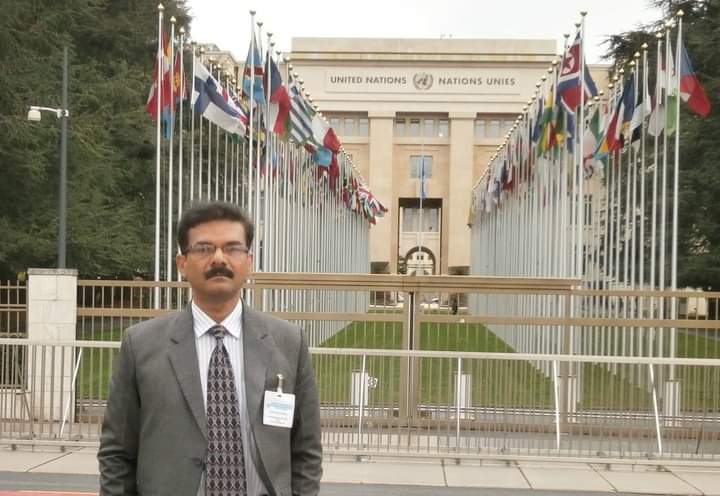
Mr. Zubair Ahmad Siddiqui at the UN office
Saadeqa: How long have you been serving in PMD’s Regional Center for Sind? Let us know about particular projects you would have loved to work on?
Mr. Siddiqui: PMD is a Federal Government Department and I have been the Director of Regional Center for Sindh for the last One & a Half years. My main responsibilities include the Administration and Control of the Network of 18 Met Observing Stations, 06 Aviation Met Offices, and 04 Agromet Centers in the province of Sindh while issuing Forecasts, Alerts, and early Warnings related to Daily Weather, Seasonal Weather, Monsoon Rain Forecasts, etc. Moreover, extreme weather like Heat Wave and Cold Wave Forecasts, Urban Floods and Flash Floods Forecasts and other Extreme and Unusual Weather Events, etc., are also a part of my services.
Saadeqa: What are the Met Office predictions for the coming Mon Soon season in Karachi and Sind?
Mr. Siddiqui: Monsoon Season onsets/starts in Pakistan from 1 Jul every year. Hence PMD will issue its monsoon forecast in the last week of May for entire Pakistan, including Sindh and Karachi.
With Trainees from SAARC countries, at IMG Karachi (2011)
Saadeqa: The Arabian Sea is heating up with average surface temperature increasing from 29 C to 31 C in just two years. How could we stop this overheating process to minimize unusual rain patterns in Sind/ Karachi?
Mr. Siddiqui: Sea surface temperature of the Arabian Sea has been increased a little due to global warming, but I disagree with your above numbers (31 C or 29 C, both are not correct). The average SST of the Arabian Sea in January remains near 24 C, while in June or October the SST remains just near 27 C. If it further rises, then cyclone formation is likely to occur along with some other parameters.
There is no method discovered to stop the heating of the Ocean Surface / Sea Surface, except to control global warming or climate change. Moreover, the unusual rain pattern in Sindh / Karachi depends on Monsoon currents during the period from June to September, while it depends upon “Western Disturbances” during the period from October to March. The increasing “Sea Surface Temperature” is causing the increase in tropical cyclones’ frequency in the Arabian Sea and the Bay of Bengal.
Editorial Note: The question was based on a report of Deutsche Welle English service published 8 Sep 2020, entitled, ‘Pakistan: Climate change, environmental problems put the government on a blind,’ reported by Mr. S khan (Islamabad). It has appeared after further investigation that the news provided wrong and baseless demo-graph which couldn’t be possible under the conditions that we have had last August after having massive rains in Karachi and significant parts of Sind). We are thankful to Mr. Zubair Ahmed Siddiqui for the mention and for making things correct for us.
“Cutting of trees and rapid increase in the number of concrete structures and high-rise buildings is also one of the main reasons for extreme weather in Sindh and Karachi.”
Saadeqa: Karachi, like most parts of Pakistan, has faced fewer rains in the winter season that was very unlikely and indicates climate change even on a more significant level than we expected. Do you agree with it?
Mr. Siddiqui: Sindh receives NO rainfall during the months of January and February 2021, while only 10% of the monthly average during December 2020. A weak La-Nina started effecting during September 2020, while reached Moderate strength during December 2020. A neutral Indian Ocean Dipole (IOD) effect persists during the period from October 2020 to February 2021. Both conditions usually suppress the pre-winter precipitation in Pakistan. And yes, these are linked with Climate Change effects as well.
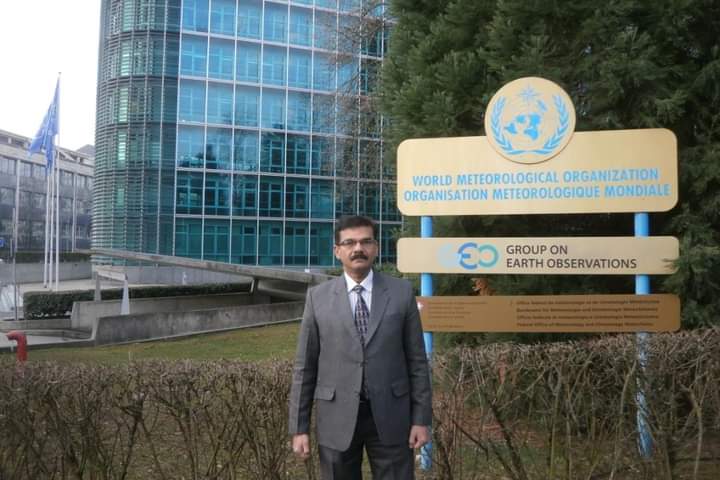
At WMO headquarter Office, Geneva Switzerland. pioneering/establishing the “Third Pole Regional Climate Center Network”
Saadeqa: What Met office predicts for the coming summer season? What could be the max temperature during the peak months of June/July?
Mr. Siddiqui: Extreme weather events, including heatwaves, are the most significant effects of climate change impacts on Pakistan, especially Karachi city. Another reason for increasing temperatures in Karachi during summer is the “Urban Heat Island” effect. Cutting of trees and rapid increase in the number of concrete structures and high-rise buildings is also one of the main reasons. At least one heatwave (or more) is expected during May, June, and July 2021, respectively. Maximum Temperature during the afternoon time may reach above 42 C during the heat waves. At this moment, this is only a seasonal outlook, PMD will issue a more precise forecast one week before these events.
Saadeqa: The Indus river delta has been badly affected by the Arabian Sea intrusion that damaged people’s livelihood and gives rise to climate changes. What measures are needed on urgent notice to stop sea intrusion?
Mr. Siddiqui: Indus Delta will have an adverse effect of sea-level rise on the Pakistan coast. Topographically, Indus Delta is a tidal flat zone. During the event of tropical cyclones in the Arabian Sea near Sindh Coasts, “Storm Surges” also cause sea intrusion and severe damage to the Indus Delta zone. An increase in Mangroves forests may help in mitigating this problem. Another measure is building small water-storage-dams near the flash-flood affected areas to store the excess water of flash floods during the monsoon period and then utilize this water during the water-shortage months.
Water, a basic necessity of life, is not available for everyone. It is the sad truth we face today in the 21st century. About 71% of the world is water, but still, why are we facing water scarcity in underdeveloped countries of the world? The answer to this obvious question is that the useable or drinkable water is only 2% of the total water present. And this percentage is falling fast as we easily waste the water we use daily.
Brave Blue World, released in 2020, stars celebrity activists Matt Damon, Jaden Smith, with strong narration by Liam Neeson. Directed and produced by Tim Neeves, this documentary is available on Netflix to stream. Brave blue world, alongside portraying the dreadful picture of the scarcity of water in the world, also provides hope for the new technologies being employed to preserve and recycle water. This documentary is optimistic, encouraging, and promising in solving the water problem in the near future.
The documentary covers the whole world and explains water problems in a specific region and how the people there are applying innovative ideas to solve those problems.
Some of the technologies shown in the documentary are Water box by Jaden Smith, Majik water (extracted water from the atmosphere), Orange county sewage wastewater treatment, Chicago’s biggest wastewater treatment plant, dying factories, and their water treatment, Hydra loop to recycle your household water and last but not the least, Water.org by Matt Damon.
Brave Blue World is optimistic, encouraging, and promising in solving the water problem in the near future.
These inventions help their communities on a local level by providing safe drinking water and have the potential to work globally. The most interesting part I liked about the movie was the way innovators thought about how wastewater could produce a large amount of fertilizer and can be used again for household use. Scientists try to mimic nature and that way, it recycles water to a 100% level. Bio mimicking is utilized in membrane technology where aquaporins (a protein present in our bodies to filter water) were first used in filtering larger amounts of wastewater.
The documentary does not overwhelm us with the fact that we are on the brink of a water catastrophe but suggests different ways to avoid the looming problem. It is a promising movie that shows hope for our future generations that we can and are able to solve the water crisis in our lifetimes. All that is required is to invest in this cause, have the government’s support, and adopt new water recycling methods to mitigate the problem.
I highly recommend everyone reading this review to watch Brave Blue World because after watching, you will be optimistic about evading the water crisis and how you can individually take part in solving the problem.
Mars. The Red planet. Our Sister planet. It’s the one in our Solar system that enjoys the most prominent place in Ancient Mythology and Astrology across many cultures. Humanity seems to have a centuries-old romance with two celestial bodies; Our Moon and Mars. This fascination engulfs a large number of Scientists & Astronomers as well! It’s the reason that astronomers have closely set their sights on Mars with the advent of modern telescopes. Man did visit the Moon, but since we stopped visiting it, the next stop for space travel was logically set to be Mars.
With advancements in Robotics and Artificial intelligence, the ultimate application of this technology was in Space. Over the years, many orbiter spacecraft and Landers equipped with exploring rovers have been successfully sent to explore Mars. Interestingly, the motivation to explore Mars has always been attached to its past. Was it once habitable? What led to it becoming a barren red planet? Can it be transformed/ terraformed into a habitable planet for humanity? These are the pivotal questions whose answers are being searched today with the latest space technology.
Water on Mars!
The answer to render Mars as livable, the confirmation of the presence of forms of Water on Mars, came as a huge advancement. Early telescopic observers correctly assumed that the white polar caps and clouds were indications of water’s presence. These observations, coupled with the fact that Mars has a 24-hour day, led astronomer William Herschel to declare in 1784 that Mars probably offered its inhabitants a livable environment. It is confirmed through the latest studies that Mars lost its atmosphere and water relatively quickly. Within a short period of time, geologically speaking, all that water disappeared, aided by dust storms. Presently, there is water ice on the poles of Mars (on the surface & underground) and tiny amounts of vapors in the Martian atmosphere.
Let’s have a look at the forms of Water that have been confirmed to be present on Mars:
Water ice below the Martian surface
In 2018, researchers led by USGS planetary geologist Colin Dundas presented detailed observations of eight Martian regions with the help of HiRISE, a powerful camera aboard NASA’s Mars Reconnaissance Orbiter. They found several locations where erosion had uncovered large, steep cross-sections of underlying ice. It’s not just the volume of water they found (it’s no mystery that Mars harbors a lot of ice in these particular regions); it’s how mineable it promises to be. The deposits begin at depths as shallow as one meter and extend upwards of 100 meters into the planet. The biggest problem to tap this ice is that these locations are present between 55 and 60 degrees north or south of the equator, where temperatures can drop extremely low. Most Mars missions restrict their landing sites to within 30 degrees of the equator (to remain warm!), as would future crewed missions to the planet’s surface. So we have to wait for a mission planned to land near these sites having underground ice. Erosion on Mars has uncovered large, steep cross-sections of clean, subterranean ice. The following false-color image captured by NASA’s HiRISE camera shows one of the eight discovered stripes that appear dark blue against the Martian terrain.
Researchers have found several locations where erosion had uncovered large, steep cross-sections of underlying ice. Image credit: NASA/JPL/ University of Arizona /USGS
Water ice on the Martian surface
NASA has big plans for returning astronauts to the Moon in 2024, a stepping stone on the path to sending humans to Mars. But where should the first people on the Red Planet land?
A new paper published in Geophysical Research Letters will help by providing a map of water ice believed to be as little as an inch (2.5 centimeters) below the surface. Water ice will be a crucial consideration for any potential landing site. With little room to spare aboard a spacecraft, any human missions to Mars will have to harvest what’s already available for drinking water and making rocket fuel.
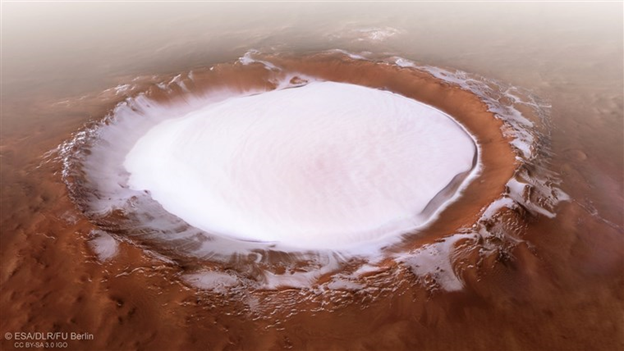
In 2018, ESA’s Mars Express took a set of images that showed a large ice-filled crater! The image developed after stitching together five photographs taken by the Mars Express spacecraft is a spectacular shot of the Korolev Crater, a dish-shaped basin on the broad plain that surrounds the Martian north pole.
Kirsten Siebach, a planetary geologist at Rice University in Houston, told NBC News: “There used to be liquid water in rivers and lakes on Mars, but it largely either froze as the atmosphere dissipated or was lost to space about 3 billion years ago,” Siebach said. “Ice still exists on Mars near the poles, and the Martian atmosphere has a tiny amount of water vapor.”
Mars has seasons just as Earth does, but the ice never melts because of the location of the crater and its topography.
A spectacular shot of the Korolev Crater, a dish-shaped basin on the broad plain that surrounds the Martian north pole. Image Credit: ESA/DLR
Water vapors in the Martian atmosphere
In 2008, ESA’s scientists discovered the presence of water vapors in the Martian atmosphere. This was based on the data acquired by the “Mars Express” orbiter, which carried three instruments, PFS, SPICAM, and OMEGA. These allowed planetary scientists to study the water cycle of Mars in unprecedented detail.
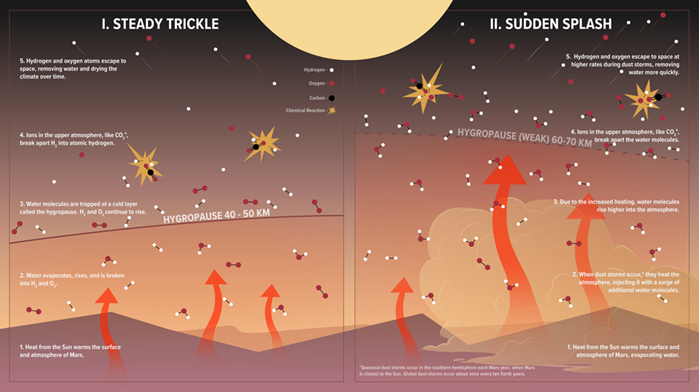
In 2020, Scientists using an instrument aboard NASA’s Mars Atmosphere and Volatile EvolutioN, or “MAVEN” spacecraft, discovered that water vapor near the surface of the Red Planet is lifted high into the atmosphere. The new study’s title is “Hydrogen escape from Mars is driven by seasonal and dust storm transport of water.” The lead author is Shane Stone, a former laboratory chemist who is now a Doctoral student at the University of Arizona Lunar and Planetary Laboratory. Their paper is published in the journal Science. To make their discovery, Stone and his colleagues relied on data from MAVEN’s Neutral Gas and Ion Mass Spectrometer (NGIMS), which was developed at NASA’s Goddard Space Flight Center in Greenbelt Maryland. The mass spectrometer inhales air and separates the ions that comprise it by their mass, which is how scientists identify them.
“We were all surprised to find water so high in the atmosphere,” said Stone, “The measurements we used could have only come from MAVEN as it soars through the atmosphere of Mars, high above the planet’s surface.
Stone and his team tracked the abundance of water ions high over Mars for more than two Martian years. In doing so, they determined that the amount of water vapor near the top of the atmosphere at about 93 miles, or 150 kilometers, above the surface, is highest during summer in the southern hemisphere. During this time, the planet is closest to the Sun and thus warmer, and dust storms are more likely to happen.
The warm summer temperatures and strong winds associated with dust storms help water vapor reach the uppermost parts of the atmosphere, where it can easily be broken into its constituent oxygen and hydrogen. The hydrogen and oxygen then escape to space. Previously, scientists thought that water vapor was trapped close to the Martian surface like it is on Earth.
“Everything that makes it up to the higher part of the atmosphere is destroyed, on Mars or Earth,” Stone said, “because this is the part of the atmosphere that is exposed to the full force of the Sun.”
Formation of water vapors on Mars. Image credit: University of Arizona/Shane Stone/NASA Goddard/Dan Gallagher
This phenomenon was also confirmed recently, along with the fact that some of it is vaporizing, in the form of hydrogen leaking from the atmosphere, according to the new research co-authored in the journal Science Advances by two scientists at Britain’s Open University.
They detected the vapor by analyzing light passing through the Martian atmosphere using an instrument called the Nadir and Occultation for Mars Discovery.
The device is traveling aboard the ExoMars Trace Gas Orbiter, a joint mission between the European Space Agency (ESA) and Russia’s ROSCOSMOS.
Future of Possibilities!
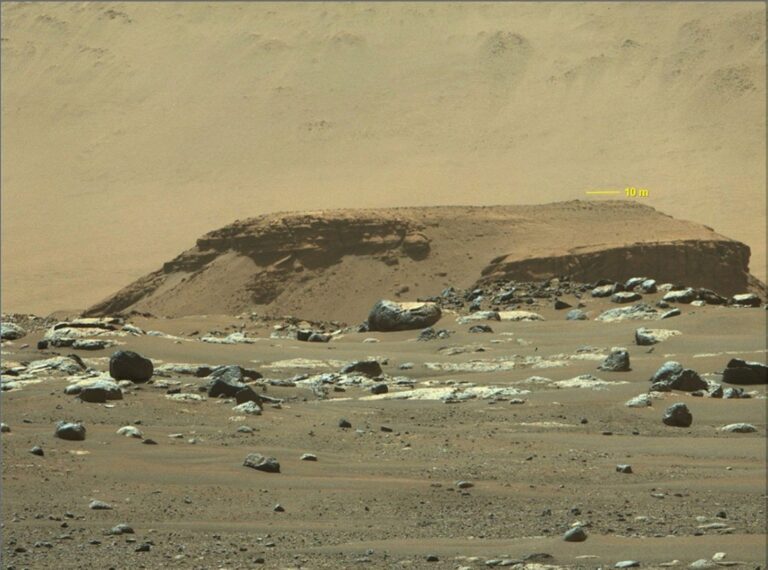
Scientists are very optimistic about new discoveries as we are witnessing new spacecraft entering the Martian orbit. Namely, UAE’s HOPE Mars mission, the Chinese Tianwen-1 mission, and NASA’s Perseverance rover. Especially, the mission profile of the Perseverance rover is very promising. It has landed and started roving the Jezero Crater, whose fan-shaped delta and rim show it was once a lake that was several hundred feet deep! The latest images are being analyzed by planetary & geological scientists. It is imperative that we are going to discover new exciting facts about the forms of Water on Mars and so much more!
There are a couple of diverse reasons involved in water scarcity worldwide. Water could get scarce due to the physical shortage of water (lack of rainfall), the administration fails to preserve water resources, or the entire absence of adequate infrastructure to ensure a regular supply of drinking water to the communities, even in the places where water is abundant.
A report of the water scarcity clock shows that water usage has grown at more than twice the growth in the world’s population over the last century. Climate change has intensified the risk of drought in several parts of the world, especially Asia and Africa. The demographics are pretty horrible; it indicates that around 2 billion people are now experiencing a high-level water shortage.
Water scarcity is not merely a vague problem. Over the last two decades, we can observe its effects in some brutal forms. In Yemen, one of the most water-scarce countries globally, water shortage leading to social and political upheaval. It was also the invisible hand behind other humanitarian crises; like in 2010, the Boko Haram insurgency in Nigeria broke out of the demand for clean drinking water. Meanwhile, in Pakistan, Sind and Baluchistan were primarily affected by prolonged drought spells in the last decades. During the 2017-2018 drought seasons, a slight rise in the suicide rate was observed in rural parts of Sind. After a massive migration from these areas, the physical environment, poverty, and loneliness forced the remaining inhabitants to commit suicide as they were left with no hope.
Water is a precious life-giving commodity; it becomes scarce because it is never treated as worthy as gold, oil, gas, or other natural resources of industrial importance. The American multinational investment bank Goldman Sachs once said that “water could be the petroleum for the 21st century.” The think tanks suggested that commercializing water resources and sending a price signal could force governments and industries/ agriculture sectors to use water wisely. As a result, many close-end-funds invest a considerable amount to buy water supplies in several countries.
However, making a profit out of water resources could hazardous in the future and results in disputes among nations; a living example is Pakistan and India’s water dispute. The situation needs to deal wisely by the authorities. Water access and usage can be protected through effective policies. Like Carbon-tax implemented in several countries, a water tax for the large multinational and subsidies could apply to save water infrastructure investments for the lows worldwide.
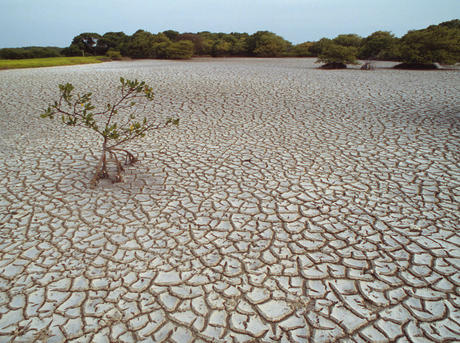
Drought, Mangrove in parched land. French Guiana. Credits: WWF
In 2010, in Cape Town, South Africa, the authorities had introduced the term “Day Zero” to focus the public’s attention on water preservation for the future. It was because the demo-graphs were showing a critical situation, and the city was just three months away from running out of water. It was indeed a luck-charm that Cape Town city’s plan worked out, and this last-minute emergency measure managed to get the city out of the water crisis.
But this “hope” strategy wouldn’t work everywhere and every time. Because the primary cause that the planet is running out of water is low precipitation due to the profound climate changes.
According to the “charting our water futures” report by the global consultancy McKinsey, by 2030, global water requirements would increase from 4500 billion cubic meters to 6900 cubic meters under an average economic growth scenario. The demo-graph shows a wide gap between supplies and demands. The report further states that the drivers for this more water-resource challenge are basically tied to the states’ economic development, food consumption, and trades.
Keeping an eye on the global water crisis, Scientia Pakistan is launching its exclusive edition on world water day; it celebrates worldwide to raise awareness among the 2.2 billion populations living without clean drinking water. The theme for world water day in 2021 is “valuing water,” which sums up environmental, social, ethical, economic, and moral values that people should place to figure out the global water crisis.
We have got some exciting stories on water scarcity in different parts of the world, the melting of Himalayan Glaciers, and modern-day agriculture techniques in the desert of Thar (Rural parts of Sind). We reached out to Dr. Perviaz Amir, a Harvard university Alumnus; director of the Pakistan water partnership, who worked on various notable posts in the Agro-Economics sector to gain insight into the role of water in Pakistan’s economy. We questioned Mr. Zubair Ahmad Siddiqui, a metrology and climatology expert who serves in the PMD’S regional center for Sindh and learned some compelling information about Al Nino, La Nina, and climate changes.
Have a good read; don’t miss sending your feedback to us with the hashtag #water2me.
Noise pollution is a causative agent of stress and deteriorating health. This fact is not only applicable to humans but animals as well.
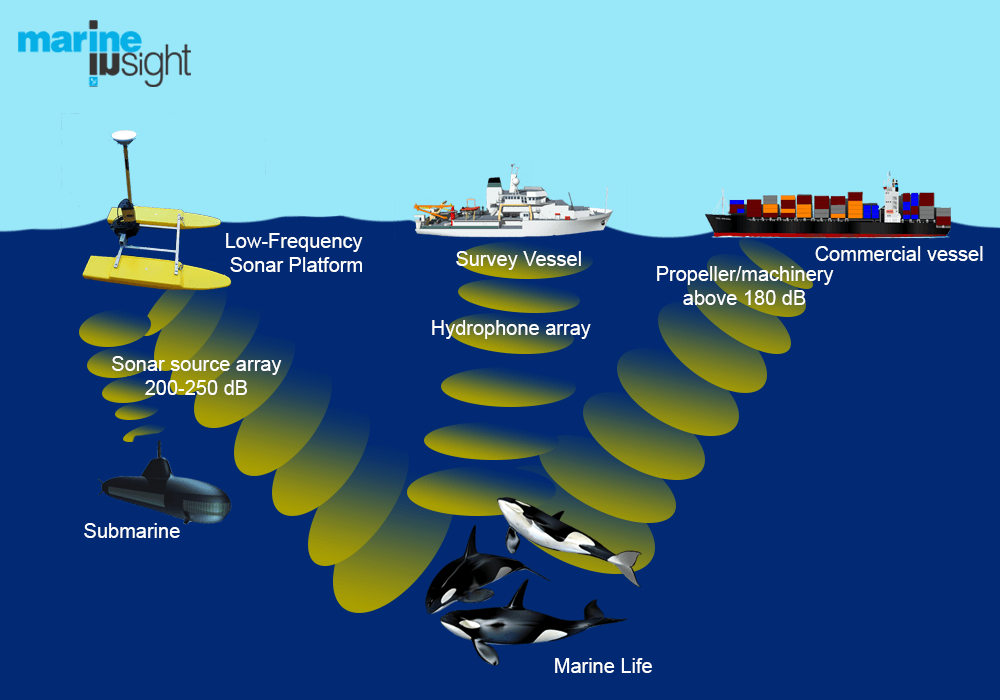
Recently, a study carried out by ecologists at the University of Victoria in Canada confirms that human activities are disturbing ocean life in several ways, noise pollution being lately included in the list.
Shipping traffic causes too much noise for aquatic life, they are in a place with constant high noise levels. Marine life use sound waves to communicate with each other, for hunting and for mating as well. Excessive sound waves from ships disturb their ability to interpret natural sounds, therefore ruining their quality of life. Masking is the word used to describe the drowning of natural sounds into noises of the same frequency.
Shipping traffic causes too much noise for aquatic life. Excessive sound waves from ships disturb the ability of marine life to interpret natural sounds. Credits: Marine Insight
Exposure to continuous loud frequencies and amplitudes leads to the fish being under stress and at risk of permanently losing its hearing. This has a negative effect on their capability to mate, survive and fight disease due to weak immunity.
According to scientists, other human activities which result in drastic climatic changes are also responsible for muddling up the intricate ocean soundscape. Climate change basically messes up physical processes that shape ocean sounds, like wind, wave, and melting ice.
A positive fact is that noise pollution is easy to deal with- you just need to stop its source. It can be dealt with more easily than other types of pollution, where time and organization are required at a higher level. The effects of noise pollution can be reversed once the noise is ceased.
A few weeks back, when my cable operator shut-down my channel subscriptions, I could only see nothing but the “Radiation of Big Bang” sarcastically and philosophically; I could see nothing but everything at the same time. CMB is one of the very discussed, researched, and debated topics among cosmologists all over the world; why not? It’s one of the proofs of the big bang, and many regard it as “Light of Beginning of the Creation itself.”
Last year, I had the privilege to learn and meet one of the most active and vigilant cosmologists in Pakistan, Faisal Ur Rahman (Currently a Ph.D. Candidate, Researcher & Visiting Member at the University of Karachi), who also happens to be a part of an International Group of Cosmologists; “Investigating the Cosmic Microwave Background Cold-Spot.” I walked by him a few miles and asked him a number of questions regarding his work on the “Cold Spot,” which happens to fall into a long series of explanations about the phenomenon, which I’ll be discussing throughout this textual endeavor.
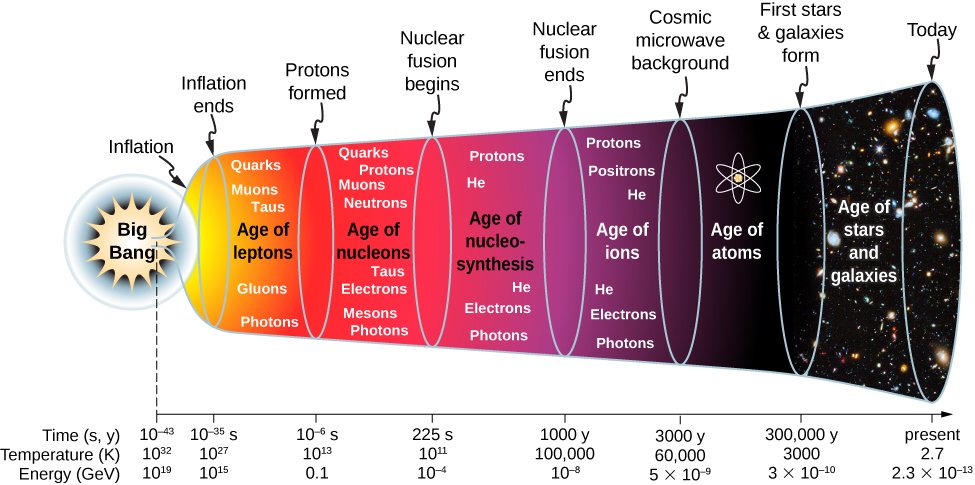
His-ideas are narrated in my words: Our standard model of the big-bang tells us that our Universe was a hotter, extremely-dense plasma type, made up of elementary particles such as nuclei, electrons, and protons only for the first few hundred thousand years. And just after 380,000 years old, our space-time in the Universe had expanded and cooled to below 3000K, allowing the birth of atoms and the first atoms of the first element “Hydrogen” formation. As the free electrons and protons decreased to a very small fraction, the photons were finally able to move around the Universe and till the existence of today’s CMB. And that’s why to regard it as an evidentiary account of the Birth of the Universe. Further, as we know, the Universe is expanding today; thanks to the discovery by Astronomer Hubble, the current CMB wavelength is stretched and has a temperature of just about 2.7K.
Faisal Ur Rahman giving a seminar on “Big Bang: The Birth of Universe” on the invitation of the Royal Aeronautical Society Pakistan.
When analyzed at around 10-5K, it’s all isotropic, and the entire CMB has a fine blackbody spectrum (fully uniform temperature). But, as we change it to the microkelvin scale, we start seeing the variations in the graph of Temperature in terms of different temperatures, some cold, some hot, and some hotter. It is important to note that matter wasn’t evenly distributed after the big bang due to the tiny quantum fluctuations in densities. Instead, we can always see some areas have more matter or galaxies, and some don’t, eventually giving rise to the cosmic web we see in the models of the Universe. The CMB photons traveling from the surface of the last scattering moving through a denser region have to overcome a deeper gravitational pull which results in an apparent redshift, and the photons passing through a less dense region will appear blue-shifted.
The increase or decrease in the wavelength of the CMB photons is caused by the changes in μK scale or parameters. More vividly, there’s a relation between the large-scale universe and temperature anisotropies, different temperatures at larger scales, referring to different properties. There’s a Sachs-Wolfe effect, which is a gravitational effect on the large-scale anisotropy of the CMB, which has two kinds. First is the “Ordinary Sach-Wolfe effect,” the non-integrated type, which is related to the early Universe only and tells us about the redshift of light from the last scattering surface. Then the other is the “Integrated Sach-Wolfe (ISW) effect,” which depends on the changes in gravity as the matter-density in the Universe evolves over time, eventually a change in CMB photons.
The evolution of the Universe, with main events occurring at different intervals of time. Credits: Phys.libretexts.org
The primitive fluctuations in the CMB have the strong support of evidence for cosmic inflation, and cosmologists believe that the Universe had the uttermost rapid expansion when it was merely seconds old. Researchers estimate the relative abundance or amount of Dark Matter and Dark Energy in the Universe by the CMB fluctuations, along with Gravitational Lensing as predicted by Einstein’s theory of General Relativity and the Sunyaev-Zel’dovic Effect: In which the CMB photons are distorted due to the high level of energetic electrons in the clusters of galaxies they come through.
Penzias and Wilson stand at the 15 meter Holmdel Horn Antenna that brought their most notable discovery. Credits: ESA
Since the discovery of CMB in 1964 by Physicist Arno Penzias and Radio-Astronomer Robert Wilson (For which they won the Nobel Prize of 1978), the Cosmic Microwave Background has given scientists oceans of information and curiosity. Although, it has raised some of the most substantial and complex questions and anomalies, as the strange incongruity of the CMB, as seen from both opposite hemispheres of the sky.
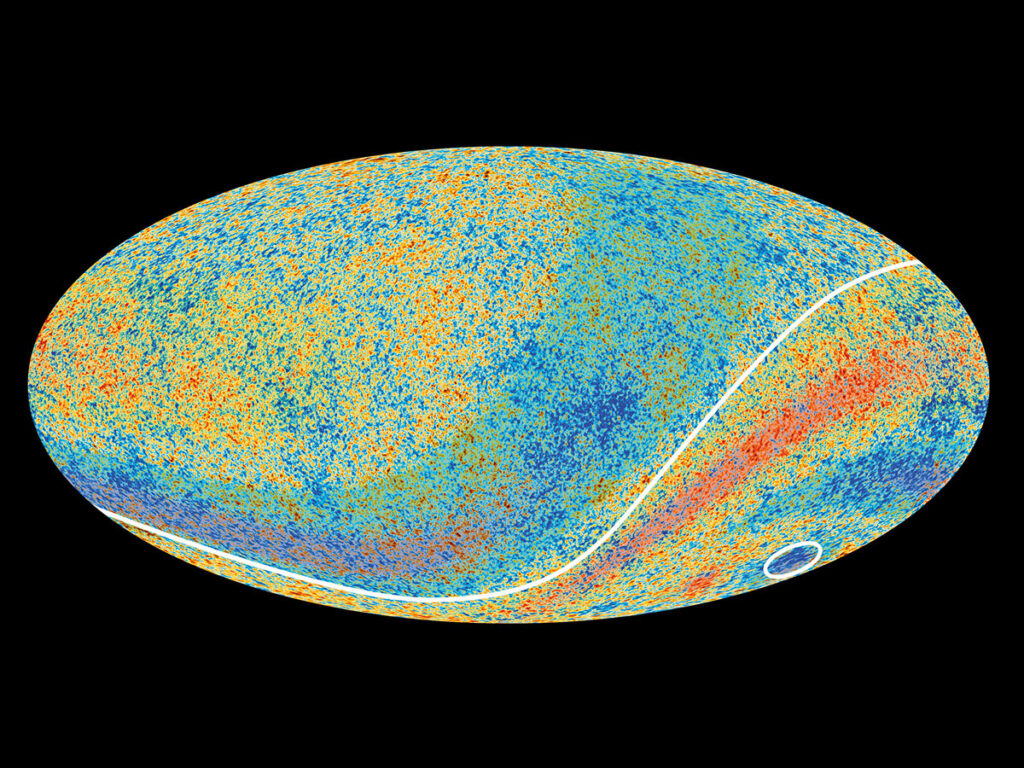
The map of Cosmic Microwave Background (CMB) temperature as data collected by the ESA’s Planck satellite, and confirmed fluctuations, the circled) cold spot, which extends over the large area of the sky and has a too lower temperature. Credits: ESA/Planck/Physics World
In the CMB, there lies a substantial question, a huge cold spot, which is around a billion light-years across. This cold spot was first seen by WMAP in 2004 and more strongly discovered by ESA’s Planck Satellite. We call it “CMB Cold Spot,” it’s around 70µK cold on average than the entire CMB temperature of the Universe and located in the southern celestial hemisphere.
In other ways, it may be a possibility that the cold-spot was born the first of the big bang density fluctuations or irregularities that bought the entire CMB temperature anisotropies into existence because those anisotropies have a Gaussian distribution, which only permits small variations (at the scale of around 16µK) but not such large. A few found places the temperature of the spot is around 150μK colder than the average CMB, more than of which is permitted from a Gaussian distribution. The radius of the cosmic cold spot extends about an angle of 5°, but apparently, on the other hand, the largest fluctuation found in the primordial CMB temperatures occurs at 1°, making it peculiar and uncanny.
If we go through the literature review, the researchers have postulated many different hypotheses of this mysterious cold spot in our Universe, and a lot of debate is going on to reveal its mystery and reason of occurrence. Few explanations suggest that the spot is nothing but forefront contamination of the matter (as a kind of dust or synchrotron radiation) within our galaxy or some kind of celestial object. But, profoundly, the observations of NRAO Very Large Array Sky Survey (NVSS), 2 Micron All-Sky Survey (2MASS), Sloan Digital Survey, with proper detailed optical images of Hubble, show us that ‘no object’ found at those coordinates.
Void and null
One suggested simple but questionable explanation for it is that there might be a “super huge void” between us and the cold spot, but our universe structure on a larger scale, the galaxies have already been found in voids, their density can be much lesser in some cases (1/10th) than other densely populated areas in the Universe. On another side, the Universe also has superclusters – regions where there are more galaxies or quantities of matter in easy terms than normal cases.
Veiled void? One promising explanation for the phenomenon is that there exists a vast cosmic “supervoid” between us and the cold spot, thanks to the large-scale structure of the Universe. While galaxies still exist within voids, their density of matter is much less (one-tenth of the average) than in other regions of the Universe. On the flip side, the Universe also contains superclusters – huge regions with many more galaxies than normal.
Faisal Ur Rahman (Physics World, 2019) says that according to analysis, “Both supervoids and superclusters have a very impactful effect on the photons of the CMB as the Integrated Sachs-Wolfe effect varies due to the physical properties of it, it can also be termed as late-time ISW effect. As the CMB photons pass through the superclusters (passing through huge gravitational effects), they gain potential energy as they pass through the superclusters and have a thermal energy increase. Everything is fine; the increase in energy within the photon should be dispersed once the photon comes out of the gravitational valley of the supercluster. But, there’s another factor, Dark Energy, that comes into action, which is responsible for the overall expansion of our Universe.
During the time when a photon travels across a supercluster, dark energy expands the valley, stretching it in a way that the photon leaving does not have the extra energy to climb back out of the valley. That’s why the CMB photons have some heat. In the same manner, the super-voids work as gravitational hills, and the entering photon of the CMB loses more energy while getting into a void and getting out with regain in energy as they are leaving the void (as now the void is big due to the dark energy). This phenomenon colds the photons. The ISW has a possibility in this phenomenon for the CMB cold spot, and there must be a supervoid existing in the place of the cold-spot then.
Lambda-CDM Model of the Universe.
Hide and seek
Discussing another study in 2007 at the University of Minnesota by Rudnick and colleagues claimed the presence of supervoid in that place, but a prominent dip in extragalactic brightness and numbers of radio sources that were present there, as seen through the NVSS radio catalog. But another study done by University of Cambridge researchers under Kendrick Smith and collaborators of the University of Michigan in 2010 found that there’s no data evidence for the presence of dips in NVSS maps, which dismissed the presence of a supervoid. Further later in 2014, Seshadri Nadathur of the University of Helsinki concluded that the ISW influence on the CMB light from the believed supervoid is not a possible explanation of the cold-spot. They said that for the possibility of the necessary photon temperature decrease via ISW, the supervoid must be extremely massive and without matter that our standard model of the cosmology will be violated and changed, known as ΛCDM.
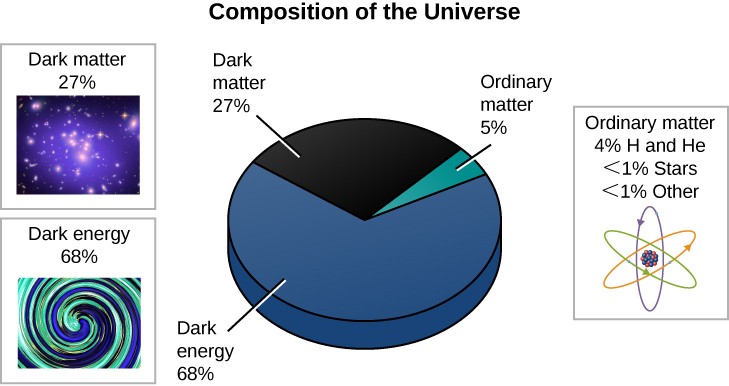
ACDM provides us with an overall understanding of the Universe in a way that dark matter (26.8% of the Universe is mass/energy) and dark energy for 68.3%. The war between the gravity of the dark matter and dark energy’s expansion of the cosmos. Nedathur’s work finds that by anyway, we ought to explain the cold-spot that would be completely anomalous for our knowledge of today.
More puzzling, another claim rose in 2014, when a team of astronomers under the leadership of István Szapudi of the University of Hawaii found a rare supervoid, with a size of 1.8 billion light-years. And they quoted it as “the largest individual structure ever identified by humanity.” They combined the infrared data from NASA’s Wide-field Survey Explorer (WISE) 2MASS Catalogue and Hawaii’s Pan-STARRS1 (PS1) optical observations for it. They surveyed galaxies near the cold-spot boundaries and found a supervoid. According to the team of Hawaii, the void was 3 Billion light-years away from us, which was not found in previous surveys because searches in the past focused on the early Universe, farther away from us in space and time. Besides this discovery, researchers realized that the large supervoid isn’t enough for the CMB Cold Spot’s temperature down, as the cooling Integrated Sachs-Wolfe effect would be a maximum of 20μK.
To test the hypothesis of Szapudi, spectroscopic data was used by a team led by Ruari Mackenzie of the University of Durham from the 2dF-VST ATLAS Cold Spot Redshift (2CSz) survey at the Anglo-Australian Telescope in New South Wales, so they could study the redshift in-line of sight to the cold spot. They measured twice from different lines of sight and found three voids out to a distance of three billion light-years and with a possibility of a fourth void as well. Although all the voids were smaller than the void Szapudi predicted in his research, they all had an overall 31μK ISW cooling impact, but simply not most-likely enough to support the cold spot.
Surprisingly, all the research led to this theory that the voids are not the conclusion here; it’s due to something else, the massive size must have something to with primordial fluctuations. This is so because the standard ΛCDM model will be conflicting if we go through Szapudi’s idea of supervoid. While on the other hand, coded simulations suggest that there’s only a 1 in 50 chance of random, nonGaussian quantum fluctuation in the CMB for the birth of the cosmic cold spot.
Unusual Structures
Thinking with a different approach, there lies another explanation for the cold spot of the CMB. Maybe the motion of matter or galaxies within that region is unusual, with a super gravitational effect. This could be something similar to the concept of “Greater Attractor,” a kind of abnormality at the mid-point of Laniakea supercluster (the object between our Milky Way) which occurs due to extremity of the presence of mass, and the related “Dipole Repelling,” which works as a gravitational repulsion on the large scale flow of galaxies in our local group, and that might be supposed to exist due to large supervoid. These both have their effect on the CMB dipole, but none such abnormal or unusual structures have been identified within the cold-spot or its surrounding place. Another study from independent sources by Qi Quo and fellows at the Chinese Academy of Science pushed forward the probability of 19 dwarf galaxies that have dark-matter insufficiency, which is very strange because mostly these small galaxies are filled with dark matter normally.
Among these galaxies, 14 are isolated, and they are not the satellite-orbiting type around a large galaxy like ours, which leads to the view that the dark matter deficiency was not the result of any connection with larger or other dwarf galaxies. As per studies, these low-dark-matter dwarf galaxies may change the results of other ISW parameters, all of which are impacted by dark matter. Some cosmologists believe that may be a cold-spot answer lies with the theory of inflation itself? Or maybe after it. Maybe after the whole big-bag, within the infant universe, this patch of the Universe went on for a longer period of infancy, due to which the cold-spot came into being naturally in that part of the Universe. That’s a theory put forward by Yi Wang at the Honk Kong University of Science and Technology and Yin-Zhe Ma of the University of KwaZulu-Natal of South Africa. They proposed a “feature scattering” system of inflation that predicts cold spots (not hot ones). But, still, these substantial questions must be consistent with the validity of other phenomena, including the impact of such anomalies on permutations of density and the overall stars and galaxy evolutions within our Universe.
Since I’ve discussed so many circulating solutions to uncover this mystery, it’s important to consider each explanation with the larger context of the cosmology, such as Ia supernovae, baryonic acoustic oscillations, and the entire CMB itself for supporting evidence. Some gravitational physicists suggest that a more precise Hubble constant value can be arrived at in the future through mergers of neutron stars or black holes. These observations, with some changes in value for the cosmological parameters, must support the ΛCDM, and so any solution must be consistent and agreeable with the model.
But, still exploring alternatives outside our standard model play an important role in studying the anomalies such as itself, the cold-spot. For example, Elenora Di Valentino at the University of Manchester carefully studied the Planck satellite data of 2018, and their findings challenged our understanding of the usual ΛCDM assumption of the Universe being flat. Their results pointed out a “closed universe,” which is contradictory to our present assumptions and challenges the inflation theory. While their research was only 3σ, not conclusive, it needs a parallel study for more investigation as a cross-check.
The above map shows CMB fluctuations. Credits: ESA
The map shows the amplitude fluctuations polarization. While the temperature map clearly signifies the cold spot, the anomaly. It doesn’t show any statistical signification in anomalies of the polarization map, but doesn’t rule out the potential relevance of seen in the temperature map, but makes it more mysterious as a puzzle to be followed. Credits: ESA
Getting to an exotic route?
As we don’t have any standardized explanation or theory for the cold-spot of the Cosmic Microwave Background Radiation, some thinkers, for instance, philosophical actors, opt for a more weird possibility that the cold spot might be due to a “collision” between our Universe and a parallel universe. This goes with the popular multiverse theory we hear today by physicists all around the world. It says that the Universe collides and interacts over-time. The other Universe must have collided with ours, also thanks to the quantum entanglement between universes before they were separated at first by the cosmic inflation, and the interactions left this footprint on the CMB as a cold-spot. But, still, the “ECREE: Extraordinary claims require extraordinary evidence as said by Dr. Carl Sagan” and must be following the laws of other cosmological observations. If there’s a possibility to the theory of collision between universes, then there would have been an identifiable polarization signal in the coldspot. This has been suggested by Tom Shanks of the Centre of Extragalactic Astronomy at Durham University in 2017.
The recent data results of the Planck team in 2019 involved further analysis of the polarization found in the CMB (that’s entirely different from its temperature scale) to further dive into the anomalies and mysteries such as the cold spot. Planck’s multi-frequency data are designed to eliminate noises already existing from other microwave sources, including the dust and gas coming in between surveys from our own Milky Way. Even due to this scrupulous and worthy analysis, they failed to find any specific breakthrough traces of anomalies in the polarization maps (shown in maps). Till now, the Planck team has not denied or confirmed any of the nature of such anomalies as cold spots. This leaves an open-minded possibility of testation and explanations that would better our understanding and the implications of laws of physics for parameters at a cosmological scale.
Giant Magellan Telescope to be finished in 2029 as per gmto.org. Credits: GMTO
Further in the future, we need more data from more sensitive telescopes such as the MeerKAT array and other ventures like Giant Magellan Telescope and Square Kilometre Array. We also need to understand more about the existing forces such as Dark Energy and how it plays a role in the overall evolution of our Universe every passing second to understand the workings of the Integrated Sache-Wolfe effect. We do not reach any steady conclusion about the CMB cold spot with our present knowledge and limitations. So, we direly need better observational data or maybe revisitation in our current universal understandings. On the bright side, we can always use more advanced ground or space-based telescopes to get deeper to find a substantial explanation for the question of this enigmatic scientific occurrence of CMB cold spot.
References:
1. “The Enduring Enigma of the Cosmic Cold Spot.” Physics World, 11 Feb. 2020, https://physicsworld.com/a/the-enduring-enigma-of-the-cosmic-cold-spot/.
2. Dark Matter & Dark Energy | University of Oxford Department of Physics. https://www2.physics.ox.ac.uk/research/dark-matter-dark-energy. Accessed 27 Jan. 2021.
3. “Astronomers Discover Largest Known Structure in the Universe Is … a Big Hole.” The Guardian, 20 Apr. 2015, http://www.theguardian.com/science/2015/apr/20/astronomers-discover-largest-known-structure-in-the-universe-is-a-big-hole.
4. Goss, Heather. “What Created the Universe’s Cold Spot?” Air & Space Magazine, https://www.airspacemag.com/space/what-created-universes-cold-spot-180955343/. Accessed 27 Jan. 2021.
5. Hu W, Dodelson S. Cosmic microwave background anisotropies. Annu Rev Astron Astrophys. (2002) 40:171–216. doi: 10.1146/annurev.astro.40.060401.093926
6. Kolb EW, Turner MS. The early Universe. Front Phys. (1990) 69:1–547.
Childhood obesity is not something that has plagued only a particular part of the world rather; it is branching to every nook and corner of the world. Unfortunately, we humans do not take anything seriously until it smacks us right into our faces and rattles our bones. The pandemic is just like a fine wine; the longer it is left alone, the more it ferments and the costlier it becomes; yet terrible in taste.
You might not be alarmed by the situation yet but the facts will startle you. The rise in the obesity rate is not one or twofold rather a tenfold increase in the last 40 years since 1975. To conduct the study, a team from the Non-Communicable Disease (NCD) Risk Factor Collaboration (NCD-RISC), led by researchers from Imperial College London and the World Health Organisation (WHO), analyzed 2,416 different existing studies that measured the height and weight of a total of 31·5 million 5- to 19-year-olds from 200 countries.
They found that from 1975 to 2016, the number of girls with obesity went from 5 million to 50 million, and the number of boys with obesity went from 6 million to 74 million. That doesn’t even include the 213 million children and adolescents that fell in the overweight range in 2016.
Few extra pounds have enough potential to make childhood miserable and a lifelong course that will eventually lead to low quality of life. Obese children might look bulky and healthy, but they are often malnourished lacking essential vitamins in their bodies, diagnosed with serious medical conditions.
Obesity is a life-threatening disease — diabetes, high blood pressure, high cholesterol, musculoskeletal disorders, hypertension, and cardiovascular disease all stem from obesity and completely deteriorating a child’s health. They face physical health problems and major setbacks mentally, including poor self-esteem due to depression, anxiety, and complexes related to their body image.
It is not merely the result of parent’s ignorance or the laziness and bad choices of our kids when it comes to food. The whole shift of system from processed food, beverages to the way our communities, workplaces operate to the activities we indulge ourselves into. The new transit system has just digitalized everything minimizing the mobility and physical activity restricting the new generation to their cellphones and computers.
The rise in obesity is like a ski slope; to stop this snowball effect, we have to closely monitor the symptoms, causes, and risk factors of the problem so that we can address it in a more professional way; involving all the stakeholders and relevant departments to bring changes on a systematic level.
How do you know if your child is obese?
You might not be able to know by the physical appearance of your child whether the child is obese or not. Child weight depends on the body frame and the fat percentage in the body, which vary at various growth stages.
Obesity is defined by Body Mass Index (BMI), which is a standard scale used worldwide to calculate overweight or obesity. BMI is calculated by taking weight concerning height; at or above the 95th percentile for obese children and teens of the same age and sex.
If you are worried about your child’s weight, it is better to consult a doctor rather than doing self-medications. The doctor will find BMI with other tests and consider your family’s weight-for-height history to see where your child land on the growth chart and will decide accordingly whether your child is obese or not.
What are the causes of obesity in children?
Not one factor alone but a combination of factors make a child overweight or obese.
Diet: One of the leading factors of obesity in kids is regular intake of junk food consisting of more salt, more sugar, artificial sweeteners, and other hazardous ingredients. And brownie points to the desserts, candies, chocolates, and all the sodas and sugary drinks, posing life-threatening risks other than obesity.
Lack of physical Exercise: Kids having a more sedentary lifestyle, spending more time on their tablets playing video games, or watching cartoons are more prone to gain weight than the kids who actively participate in physical activities, including bicycling and other outdoor sports.
Genetic Factor: Your family history and genes also play a significant role in your kids’ weight. Suppose your child comes from a family of overweight people. He/she has significant chances of becoming obese.
Psychological factors: Kids who don’t know how to express their emotions or when their parents do not address their emotions or problems or loved ones overreact to the situations. Few children tend to overeat when they feel under stress, anxiety, or fighting their boredom.
Socioeconomic factors: Children being raised in neighborhoods lacking access to supermarkets often eatconvenience foods, such as frozen meals, crackers, and cookies that result in obesity. Also, the lower-income communities lacking safe exercise spaces where physical activities are not encouraged, kids are likely to gain weight.
Medications: Certain prescription drugs including prednisone, lithium, amitriptyline, paroxetine (Paxil), gabapentin (Neurontin, Gralise, Horizant), and propranolol (Inderal, Hemangeol) can cause obesity.
Children being raised in neighborhoods lacking access to supermarkets often eat convenience foods, such as frozen meals, crackers, and cookies that result in obesity.
Risk factors for childhood Overweight
Type 2 diabetes: Obese child faces four times the risk of developing type 2 diabetes that affects how the child uses glucose.
High Blood Pressure and High Cholesterol: Around70% of obese children have at least one CVD risk factor; they have higher systolic and diastolic blood pressure (BP). Plaque buildup in their arteries, causing them to narrow and harden, resulting in a stroke or heart attack later in life.
Joint Pain: Obese children are often victimized to pain and sometimes injuries in the hips, knees, and back because of extra stress on hips and knees.
Nonalcoholic fatty liver disease (NAFLD): This disorder causes the deposition of fatty acids in the liver leading to scarring and liver damage.
Breathing problems: Asthma is prevalent in obese children. Also, sleep apnea, the disorder in which a child’s breathing repeatedly stops and starts during sleep.
Emotional Complications: Overweight kids may experience bullying from their peers resulting in a loss of self-esteem and an increased risk of depression and anxiety
How can you prevent your child from being obese?
A child nutrition researcher at the Johns Hopkins Bloomberg School of Public Health, Sara Benjamin-Neelon, says
“The most important opportunity to prevent childhood obesity is within the first thousand days after birth, during that time, mothers should breastfeed as much as possible and especially avoid unhealthy food during an infant’s transition to solid foods, a formative time for a child’s metabolism.“
Other important factors that can help prevent weight gain in your child are :
Be an example for your child
Make sure to adopt a healthy lifestyle as a parent performing all the physical exercises and confirming healthy eating, including greens and fruits, in your daily routine so that you might inspire your child towards a healthy lifestyle.
Offer healthy food alternatives to your child
Try to replace all the junk food with alternative healthy choices, including air-popped popcorn without butter, fruits with low-fat yogurt, baby carrots with hummus, or whole-grain cereal low-fat milk. Try new recipes and put some effort into making food appealing for kids – the senses are of the utmost importance for kids.
Incorporate new foods
It might be difficult for you to make your child get used to any new food. But don’t be discouraged; kids take time in acceptance. Expose new food to your child in different ways, let them know about the food’s nutritious value.
Be conscious of your child’s sleep schedule
Make sure that your child completes the whole 8 hr. sleep cycle at every cost. Lack of sleep can cause hormonal imbalance resulting in increased appetite.
Use Non-Reward Technique
Offering candy or anything junk as a reward is a bad idea. Stop it now!
With every passing day, the situation is getting worse- a study led by the World Obesity Federation projected the number of obese/ overweight children worldwide to grow by 100 million by 2030. Organizations like WHO, Mayor Bloomberg, former First Lady Michelle Obama, the Obesity Action Coalition, the Obesity Society, the European Association for the Study of Obesity (EASO) are trying their best to make people aware and bring changes on a systematic level still stats are a clear indication that we have to deal this matter with more responsibility.
Parents should make sure to take their kids to a child specialist once a year for medical examination. And the government should also take sufficient actions, apply taxes on sugar-sweetened beverages (SSB), and improve food labeling, manufacturers reducing the amount of sugar, and school lunch programs.