This year has seen a lot of traffic diving and descending into the Martian Surface. The recent successful touchdown of China’s Zhurong Rover (meaning God of Fire) – a six-foot-long robot armed with different kinds of spectrophotometric and optical devices – has become the second rover to land on the surface of the red planet.
Zhurong Rover, which landed on Saturday, was released by China’s Tianwen-1 spacecraft, which was orbiting the Red planet for the last few months, studying its atmosphere and mapping its surface topography.
The successful touchdown is a remarkable achievement making China the first nation to land successfully on the Red planet in the first attempt. The milestone is difficult to achieve due to a staggering distance of 323.8 million kilometers between Earth and Mars, making remote controlling a susceptible task. This huge distance means the radio message from the lander and rover takes almost 18 minutes to reach the control room on earth. The Zhurong vehicle used a combination of different techniques to descend on the surface of our neighbor successfully. It deployed its protective capsule, a parachute, and a rocket platform to make the descend.
Before this touchdown, only the Americans had gained the mastery to land on Mars successfully. All other nations and space agencies tried either crashed or lost control or contact with their vehicles soon after touchdown.
After a time lag of 17 nerve-breaking minutes, the rover sent back the signal after successfully deploying its solar panels. Zhurong, which landed on Utopia Planitia, a vast terrain on the planet’s Northern hemisphere, will try to spend almost 90 Martian days and keep studying the planet’s geology.
Zhurong is 2000 kilometers away from NASA’s Perseverance landing site and its Ingenuity helicopter in Jezero Crater. The American and Chinese spacecraft was actually beaten by the United Arab Emirates (UAE) Hope, an orbiter that reached the Martian atmosphere on February 9, a few days before it got American and Chinese companions on the red planet.
Thomas Zurbuchen, NASA’s associate administrator for science, offered his congratulations to China. “Together with the global science community, I look forward to the important contributions this mission will make to humanity’s understanding of the Red Planet,” he wrote on Twitter.
Unlike other months of Islamic calendar, every year Ramazan and Shawwal brings a lot of hustle, disturbance and of course highlight the major flaws in our system. Pakistan’s image has been severely affecting for a decade or so over multiple celebrations of Eid in different parts of the country specially in KPK, it is now a routine that they start fasting one day earlier from the entire country and celebrate Eid a day before everyone. Last night while live session of the central Royat e Hilal committee was going on but things getting complicated as its went long, in presence of no clear evidence of moon sighting from around the country the Committee continue its session and declared Eid late night. The decision has proved wrong when today people witnessed moon in different parts around the country.
Scientia Pakistan has reached out to the renowned pioneer of Astronomy in Pakistan and Former Director Institute of Space Science & Technology at the University of Karachi, Dr. M Shahid Qureshi, to analyze the situation. According to Dr. Qureshi, ”
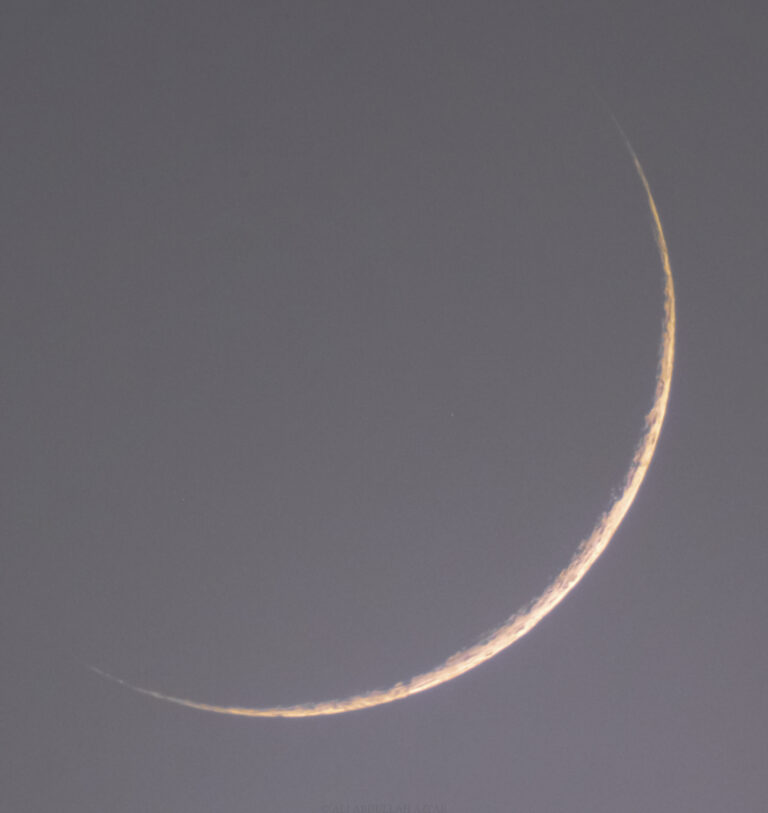
The birth of the Shawwal moon had taken place on the night between May 11 and May 12, 6 seconds before midnight Pakistan time (May 11 at 11:59:54 PM).
The state of the crescent at sunset in Karachi on the evening of May 12 was as under:
Sunset 19:07:08
Crescent sunset 19:42:47
The difference between sunset 35 minutes 97 seconds.
Omar Hilal (age of crescent) 18 hours 59 minutes and 52 seconds.
The crescent will set in just 35 minutes and 39 seconds after sunset.
At sunset, the crescent will be only 7.5 degrees above the horizon.
In addition, the width of the crescent was only 9 arc seconds (only 9 parts out of 3600 parts of 1 degree).
In these circumstances, the crescent could not be visible in Pakistan even with the help of binoculars. However, in these circumstances, evidence of the appearance of the Eid moon often comes, especially from Khyber Pakhtunkhwa, as happened this year too. For some time now, similar testimonies have been coming from Gwadar and Pasni. Such testimonies need to be examined scientifically. Because scientifically, the crescent is unlikely to be visible without binoculars. From the current scientific point of view, it was nearly impossible to see the crescent from any part of Pakistan through binoculars on May 12. Further, the phase of the moon was no more than 0.5% in Pakistan. It was photographed through a telescope in Turkey with difficulty where its phase had increased to 0.7% and was not seen with the naked eye.
And on the same day, the crescent in Makkah was set in 39 minutes and 12 seconds after sunset. At sunset, the crescent was 8.4 degrees above the horizon. The crescent was likely to be seen through binoculars in Saudi Arabia this evening. Traditionally, the Saudi Council announces the appearance of the crescent in these circumstances.
The above diagram is for 2021 May 12 and exhibits more shaded regions than those found on the map for 2021 May 11. Consequently, a larger fraction of the surface of the Earth will be able to observe the crescent Moon with ease. But, not visible within Pakistan. Credits: http://astro.ukho.gov.uk/
Dr. Prof. Shahid Qureshi also delves deeper into the motions of lunar physics, how they change as beautiful celestial sightings.
The Moon phase cycle varies from 29.2 days to 29.8 days. The average is 29.53 days. However, the variation is not periodic, still, it creates a wonderful phenomenon.
There may be 3 consecutive lunar months each of 29 days. This mostly happens when the lunar phase cycle remains close to its minimum of 29.2 days.
There can be 4 consecutive lunar months each of 30 days. This happens when the lunar phase cycle remains close to its maximum of 29.8 days.
In case of 1, first of the 29 day crescent in the evening of bright and wide enough and stays longer over horizon. It looks like a 30 day crescent. The second of the 29 day crescent is less bright, less wide and stays on horizon for a shorter period. The third of the consecutive 29 day crescent is the thinnest and faintest and remains above horizon for shortest time. But this pattern of 3 consecutive 29 day crescent may not follow this sequence every time it occurs as lots of perturbations are involved. Usually people think that every 29 day crescent is like this third one which is a wrong perception.
In the case 2, first of the 30 day crescent may be thin, faint and short period. The second a brighter wider and long period and so on. Again in case of 4 consecutive 30 day crescents may not follow this sequence due to perturbations mentioned earlier.
The occurrence of such consecutive 29 day or 30 day crescents is not periodic and do not occurr very frequently.
Now lunar phase cycle variation (from minimum 29.2 to maximum 29.8) is not frequent and the period of phase cycles may remain close to its average 29.53, then mostly lunar months follow a pattern of alternate 29-day new crescent followed by a 30-day new crescent. When this occurs the 30-day new crescent is bright, wide, and stays longer in the sky and an occasional/casual observer thinks as this “OH LOOK AT THAT…IT IS 2ND DAY MOON”.
“But, in reality, it’s the 1st DAY of Moon”
For today, May 13, 2021: Below are stunning photographs we sorted out around Pakistan.
Cosmic Tribe’s Achievement Unlocked! Dark Skies Gaze Back, which is an Interdisciplinary Art & Sciences exhibition has been recognized internationally by International Dark-Sky Association. Cosmic Tribe is also the first Pakistani Associate Member organization of the International Astronomical Artist Association working on Space & Astronomical Art.
The collaborative project focused on exploring the connection between effects of lights, sustainable fashion, digital design, and surveillance. The work was executed by IAU Dark Skies Ambassador & IDA (International Dark Sky Association) Advocate – Rayan Khan (Founder of Cosmic Tribe) and Ayesha M. Ali (Visual Artist), who designed a rebellious artistic expression through facial jewelry and costumes.
The goal was to share the message of the impact of artificial lights especially on the psychological health of the post-millennial generation. “Dark Skies Gaze Back” aimed at producing a visual exploration through experimentation by fusing traditional and digital techniques to talk about abstract ideas of light and its unseen effects in our life.
The collaborative project focused on exploring the connection between effects of lights, sustainable fashion, digital design, and surveillance.
The completion and execution took 8 months but because of setbacks by COVID-19, the exhibition was postponed earlier. But the situation was also incorporated into the work especially in observing the drastic impacts of artificial lights on psychological health during the whole quarantine period of COVID-19, which disrupted the entire world including physical activities and induced the need for a virtual experience.
The inspiration is highlighted in a curatorial note, “While working for the cause of Light Pollution during the past 8 months, we tried to understand and investigate its effects on our environment and our bodies through multiple art forms and different mediums of representation. The effects include but are not limited to depression, anxiety, disturbance of biological clock and sleep patterns, irregularity of the circadian rhythm which we have tried to showcase as a journey, or a pross that we went through.”
Serotonin, also known as 5-hydroxytryptamine (5-HT), is a neurotransmitter playing an essential role in transmitting signals between the nerve cells (neurons). In the brain, serotonin is believed to be a key factor in memory building and mood regulation, for which it is widely known as the happy hormone. It is noteworthy that a major proportion of the body’s serotonin (about 90%) is found in the gut and not in the brain. The intestines are responsible for most of the body’s serotonin production, where serotonin is necessary for healthy digestion. Elsewhere in the body, serotonin also regulates sleep, sexual function, bone health, and blood clotting. It is produced by the serotonergic neurons and is responsible for transmitting signals from one nerve cell to another. This subsequently activates a secondary intracellular messenger cascade producing an excitatory or inhibitory response, relaxing the brain.4,5
Serotonin in the brain
Only 1-2% of the body’s natural production of serotonin (happy hormone) occurs in the brain. The serotonergic neurons found clustered in the middle of the brain are a unique source of serotonin forming the serotonergic system. Once produced, serotonin commonly gets stored in the presynaptic vesicles of the serotonergic neurons. Upon activation of the neuron by nerve impulses, serotonin gets released into the synaptic cleft (the space separating two neurons), subsequently binding to postsynaptic receptors. These postsynaptic receptors can be G-couple protein receptors or ligand-gated ion channels, leading to activation of another intracellular messenger cascade producing different types of excitatory or inhibitory responses in the brain.
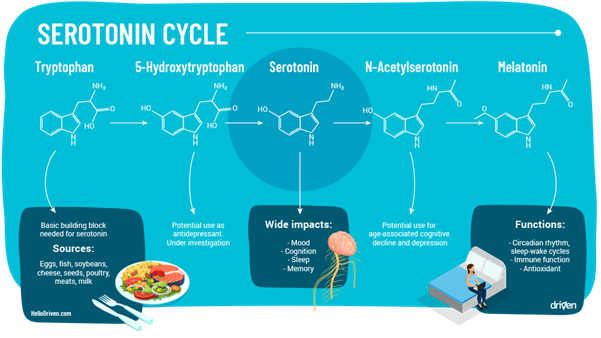
Fig.1 Summarises the chemical cycle of serotonin and it’s behavioural impact on human body which will be discussed in detail in this paper.6
The production of these responses results in a relaxing effect in the brain, proving serotonin as the body’s natural “feel-good” chemical. It is important to note that serotonin cannot cross the blood-brain barrier, making it essential for the brain to produce its own serotonin. The latter makes it impossible to measure brain serotonin levels as they are totally independent of blood serotonin levels. Hence, mental health interventions do not supply serotonin directly but aid an increase in serotonin levels indirectly through triggering related chemical reactions.10
Several studies investigated the effect of brain serotonin levels on mood through a technique called acute tryptophan depletion (ATD). It is believed that once in the central nervous system, tryptophan gets hydroxylated to 5-hydroxytryptophan, which subsequently gets decarboxylated into serotonin (5-hydroxytryptamine, 5-HT).11 Hence, lowering tryptophan levels in the diet would lower serotonin production in the brain allowing the ATD technique to reveal behavioral effects of brain serotonin levels.
Clinical studies have shown that healthy and never-depressed volunteers with an established familial history of depression. showed clear mood abnormalities upon depletion of dietary tryptophan.12,13 Moreover, the temporary lowering of dietary tryptophan in remitted depressed patients resulted in a relapse of acute depression.14-16 Interestingly, dietary tryptophan depletion in never-depressed healthy volunteers without familial history of depression showed little to no effect on mood.17,18 Moreover, healthy women showed more susceptibility to mood-lowering upon tryptophan depletion than healthy men.19 These findings reveal that people with pre-existing vulnerabilities in the serotonergic system were more vulnerable tryptophan challenge, making it evident that lower tryptophan and serotonin levels contribute towards lowered mood states.
Poor sleep and sexual activity, serotonin at play?
Apart from lowering the mood, low serotonin levels are also linked with poor sleep and sexual activity. The same ATD technique was used to investigate the impact of lower brain serotonin levels on sleep quality. Various studies on mice models and zebrafish showed that increased brain serotonin levels increased the body’s homeostatic sleep pressure, resulting in improved sleep compared to lower brain serotonin levels.20 Interestingly, high levels of serotonin in the brain downregulate human sexual activity.
Fig.2 Highlights the essentiality of healthy dietary intake for improved mental health as mentioned above.26
The inhibitory role of the body’s naturally produced chemical 5-HT (serotonin) and the anti-depressants that increase brain serotonin levels on human sexual activity is well-evident from different studies performed in rat and mice models as well as in humans. 5-HT is found to elevate the lateral hypothalamic area (LHA) and decrease extracellular dopamine (a feel-good hormone) during sexual activity hence downregulating it. Together these findings are of great clinical value for depressed patients regularly utilizing anti-depressants and experiencing behavioral side-effects. 21
Serotonin in the Guts
It is estimated that 90% of the serotonin in the human body is stored in the Enterochromaffin (EC) cells located in gut epithelia. EC cells storing the largest 5-HT (serotonin) pool release it into the gut lumen in response to various stimuli.22 For example, nutrients such as fatty acids, glucose, and some acids and bases have been evidenced to induce the release of 5-HT (serotonin) from EC cells.23 Upon being secreted, the serotonin gets absorbed by the circulating platelets, subsequently causing intestinal contractions. The excess serotonin enters the bloodstream interacting with blood platelets, where the platelets absorb and store until the clots form. Upon clot formation, the serotonin gets re-released into the bloodstream hence regulating homeostasis and blood clotting.24 The mentioned findings highlight the essential role played by serotonin in regulating normal body functions.
Where else is the happy hormone found outside the body?
The happy hormone lies right there in tryptophan-rich protein-based foods, including meats such as salmon, and turkey which are rich tryptophan sources. It is also evident that dairy products such as eggs are boosters of blood plasma tryptophan levels. Cheese is also a great source of tryptophan. Fruits such as bananas and pineapples are also serotonin boosters. Most interestingly, all sorts of nuts and seeds are also vibrant sources of tryptophan, a raw product for serotonin production.25 Hence, apart from the body’s natural serotonin production, tryptophan intake through the mentioned foods would essentially increase serotonin levels. This would subsequently improve the body’s normal functioning and improve one’s mental health naturally without taking anti-depressants that possess various side effects when used in the long term.
References:
Frazer A, Hensler JG. Serotonin involvement in physiological function and behavior. In: Siegel GJ, Agranoff BW, Albers RW, et al., editors. Basic Neurochemistry: Molecular, Cellular, and Medical Aspects. 6th edition. Philadelphia: Lippincott-Raven; 1999.
Lv J, Liu F. The role of serotonin beyond the central nervous system during embryogenesis. Front Cell Neurosci. 2017;11. doi:10.3389/fncel.2017.00074
David DJ, Gardier AM, [The pharmacological basis of the serotonin system: Application to antidepressant response]. L’Encephale. 2016 Jun; [PubMed PMID: 27112704]
Smith C, Smith M, Cunningham R, Davis S, Recent Advances in Antiemetics: New Formulations of 5-HT3 Receptor Antagonists in Adults. Cancer nursing. 2019 Jan 25; [PubMed PMID: 30688665]
Serotonin and Its Unusual Role In The Brain [Internet]. Home.hellodriven.com. Available from: https://home.hellodriven.com/serotonin-role-in-brain.html
Kling A (2013). 5-HT2A: a serotonin receptor with a possible role in joint diseases (PDF) (Thesis). Umeå Universitet. ISBN 978-91-7459-549-9.
Cao L, Hu R, Xu T, Zhang Z, Li W, Lu J. Characterization of Induced Pluripotent Stem Cell-derived Human Serotonergic Neurons. Frontiers in Cellular Neuroscience. 2017;11.
Jenkins TA, Nguyen JC, Polglaze KE, Bertrand PP. Influence of tryptophan and serotonin on mood and cognition with a possible role of the gut-brain axis. Nutrients. 2016;8(1):56. doi:10.3390/nu8010056
Serotonin: Function, uses, SSRIs, and sources [Internet]. Medicalnewstoday.com. 2021 [cited 25 April 2021]. Available from: https://www.medicalnewstoday.com/articles/232248
Fernstrom J.D., Fernstrom M.H. Exercise, serum-free tryptophan, and central fatigue. J. Nutr. 2006;136:553S–559S
Feder, A.; Skipper, J.; Blair, J.R.; Buchholz, K.; Mathew, S.J.; Schwarz, M.; Doucette, J.T.; Alonso, A.; Collins, K.A.; Neumeister, A.; et al. Tryptophan depletion and emotional processing in healthy volunteers at high risk for depression. Biol. Psychiatry 2011, 69, 804–807. [Google Scholar] [CrossRef] [PubMed]
Van der Veen, F.M.; Evers, E.A.T.; Deutz, N.E.P.; Schmitt, J.A.J. Effects of acute tryptophan depletion on mood and facial emotion perception related to brain activation and performance in healthy women with and without a family history of depression. Neuropsychopharmacology2007, 32, 216–224. [Google Scholar] [CrossRef] [PubMed]
Booij, L.; van der Does, A.J.W.; Haffmans, P.M.J.; Riedel, W.J.; Fekkes, D.; Blom, M.J.B. The effects of high-dose and low-dose tryptophan depletion on mood and cognitive functions of remitted depressed patients. J. Psychopharmacol.2005, 19, 267–275. [Google Scholar] [CrossRef] [PubMed]
For a country like Pakistan, where astronomy is still not a very popular area of study, directly impacting the unawareness of the general public and on the bright side an opportunity for a somewhat industrial country to tackle and have legislation on Light Pollution.
The ‘Cosmic Tribe’, is one of the emerging and authentic social entrepreneurship startups in Pakistan. They have a lot of focus on advance and charming areas of science & arts, from aviation to astronomical education and public outreach. Most importantly, they advocate and spread awareness on the postmodern issue ofLight Pollution, which has really impacted the overall ecosystem of the Planet.
For a country like Pakistan, where astronomy is still not a very popular area of study, directly impacting the unawareness of the general public and on the bright side an opportunity for a somewhat industrial country to tackle and have legislation on Light Pollution. At this initial and crucial stage, where the country already has very low rankings on “Light Pollution”, this is what inspired by the Cosmic Tribe and its founders & community members.
Most recently, Cosmic Tribe hosted one of the first International Dark Sky Week in Pakistan virtually, where very selective, yet highly creative people were invited, to share their work and stories.
International Dark Sky Week by Cosmic Tribe
For instance, from Honk Kong, Exodus Sit (Member International Committee of International Dark-Sky Association, and National Astronomy Education Coordinator (Chair of Hong Kong) of International Astronomical Union) shared his ideas for Astropreuners, from promoting at first Astronomy as a Popular Science, talking about the theory of multiple intelligences: combing STEM and ART based interdisciplinary approach for the inclusion of all types of people, to participate and be a part of the Astro-community and using technology as a tool to go with your message individually locally and international.
The next day, Chris Wade (Member of International Association of Astronomical Artists), who is a Rocket Artist, creating masterpieces of Space-based facts with artistic illustrations, to have a huge detail in his work spreading the exploration and big thoughtful questions, of how mankind has explored the Solar System and Beyond.
Left to Right: Chris Wade (Member International Association of Astronomical Artists), Ayesha M. Ali (Co-founder Cosmic Tribe), Rayan Khan (Founder Cosmic Tribe)
Later the founder of Cosmic Tribe had the most excited person onboard “Marlin”, a future Author/Speaker and IAU Dark Skies Ambassador, who talked about his upcoming book, “Astrotourism: Star Gazers, Eclipse Chasers, and the Dark Sky Movement”, the book explores how stars are gone, when artificial lights spread all over the planet, polluting the traveling “Star Lights”, how he has been working with different communities and the Yellowstone National Park to get ‘Light’ level certified. So, Astrotourists and observatories can work and enjoy the Dark Skies in peace and tranquility.
While in Malaysia, Emma Zulaiha Zulkifi highlighted her work on Dark Skies, as Directs: Dark Sky Malaysia, how she grew up seeing the unpopularity of Dark Skies in Malaysia, how many places can be used for Astronomy Tourism, how people love seeing this all. Later how she joins IAU and Light Pollution Advocacy to spread more awareness about light pollution by hosting meteor shower events, star gazing, and including a science curriculum for schools, how schools books have water, air, noise pollution, but the absence of Light Pollution.
The Cosmic Tribe hosted all the social changes and people who are trying to secure and protect the beauty of Dark Skies, in the last days of the event, they hosted Sergio Emilio Montufar Codoner, an astrophotographer who says that unfortunately there are around 80% of the world regions are full of light pollution and it’s now the right time to certify important region as designated Dark Skies with the inclusion of Kramer Dahl, a San Fransisco based Board Certified Music Therapist, who believes that music is the way to breathe and he uses Dark Skies Yoga to better concentrate, to play and dream, how this requires him to advocate the need of Dark Skies, while he played one of the beautiful tones, that was soothing for the listers, including the traditional and ancient “OM”.
At last, the story of the Dark Sky Defender: Rayan Khan was shared starting how he educated an advance and narrowly known subject of ‘Light Pollution’ among the audience by “Wearing Black and Turning Off the Lights” making people understand experimentally and artistically.
Co-founders Cosmic Tribe together with theme costume of Darkness to spread awareness about the Light Pollution.
Further, how in Pakistan, he went on to change his career from being a successful Aircraft Maintenance Engineer to studying Astronomy formally and founding different forums and societies, till the birth of Cosmic Tribe with his artistic and stem abilities, how he couldn’t find stars while living in the so-called “City of Lights” i-e Karachi, hoe very lesser people know about the topic, how he thinks that dark places in Pakistan can be used for Dark Tourist opportunities, how he wants the bring the attention of people, in the region, how his efforts as the IAU Dark Skies Ambassador have been so far, a truly inspiring story for me as I’m writing this down, blogging this entire event.
Rayan Khan (Founder of Cosmic Tribe, IAU Dark Skies Ambassador, National Node of Light.org)
The entire week was advocating and impacting, as different interdisciplinary approaches were highlighted to spread awareness about light pollution, how people can make our Dark Skies lesser vulnerable, how humanity: people from the different regions believe in the same essence of nature, how perseverance to preserve this dark heritage is important. How we can save our Dark Skies to know the Universe astronomically and let the light of stars enter into our lives.
If you’ve missed any of the segments, you can follow up on the entire International Dark Sky Week at:
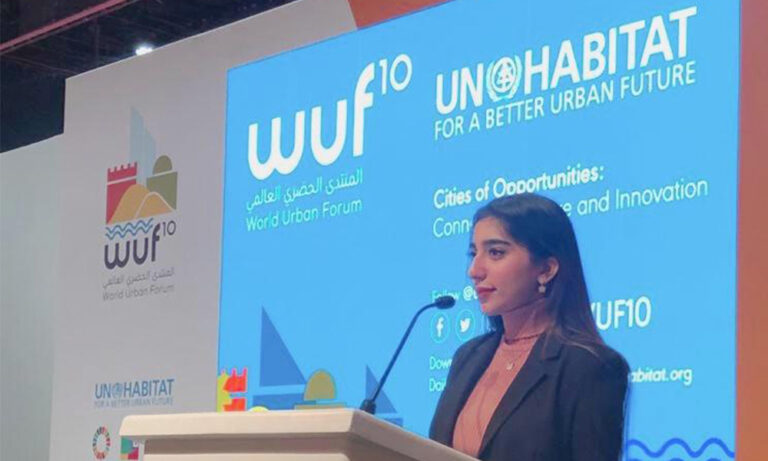
A UAE-based Pakistani Student, Aliza Ayaz, has been recently appointed as the UN envoy for sustainable development goals. United Nations Goodwill Ambassadors and Messengers of Peace are distinguished individuals, carefully selected from the fields, who have agreed to help focus worldwide attention on the work of the United Nations to improve the lives of billions of people everywhere.
Ms. Ayaz is the second Pakistani student to be selected as a United Nations Youth Ambassador for SDGs alongside Malala Yousafzai. She is also the first-ever international representative at the UK House of Lords. Aliza is a student of Masters in Infectious Disease Epidemiology in a joint program with University College London and the London School of Hygiene and Tropical Medicine. Alongside, she works with NHS CCGs (Clinical Commissioning Groups) to create sustainable change across the hospital pathway through data-driven insights and on-the-ground implementation of solutions to improve the quality and accessibility of healthcare.
Below are excerpts of Aliza’s recent conversation with our team member Fouz Siddiqui:
Having lived in Abu Dhabi & Dubai, Aliza is familiar with Middle Eastern culture and local sociopolitical set-up. Outside of work, Aliza chairs the Climate Action Society and enjoys horse-riding.
How do you feel after your recent appointment as the UN’s youth ambassador to help promote their SDGs? What would be your priorities?
Aliza: “It’s a massive honor. To be given this responsibility at just 21 is incredible. It’s unreal.”
In terms of priorities: COVID-19 is spreading human suffering, destabilizing the global economy, and upending the lives of billions of people around the globe. The pandemic is an unprecedented wake-up call, laying bare deep inequalities and exposing precisely the failures addressed in the 2030 Agenda for Sustainable Development and the Paris Agreement on climate change.
Aliza is also the first-ever international representative at the UK House of Lords
Leveraging this moment of crisis, when usual policies and social norms have been disrupted, bold steps can steer the world back on track towards the Sustainable Development Goals. This is the time for a change, for a profound systemic shift to a more sustainable economy that works for both people and the planet. The Sustainable Development Goals are vital for a recovery that leads to greener, more inclusive economies and stronger, more resilient societies. Click on each goal to read more.
Fouz: You have been working as the student advocate for the health and the environment. What do you think Pakistani students are effectively playing their role in such activities and resolving these issues?
Aliza: I hope my experience of climate advocacy for young people is an example. This is why I put so much time, energy and effort into what I do. It’s not fluff.
I recommend that the youth try reaching audiences with an environmental message, make each interaction relatable to society as a whole. As this generation are and will be, most affected by climate change they need to be involved in the discussions on future environmental policy.
Current decision-making processes have excluded young people, but with the UK hosting COP26 later this year, we need to take the lead in putting young people center stage. Post-COVID, important decisions will be taken on future investments in infrastructure and the economy – including the next generation of leaders in this process is essential as they will need to buy into, own and drive those solutions forward. Work with companies, be it Nestle, Unilever, EFU, or Food Panda, pitch a sustainability job to them and tell them you are the asset that will make it happen:
The pandemic has exposed inequalities in society with significant negative impacts on Black and Asian communities in particular. We need to expand our understanding of why this is and develop policies to address these disparities. Such lessons are indeed relevant and translate to policymaking in climate change; we must ensure a just and equitable transition to a green economy.
Aliza presenting at a symposium organized by UCL Climate Action Society
Fouz: Major part of Pakistan has been under thick fog for more than two months due to less rain and climate changes. What steps are integral to better cope with this situation next winter? ( the Questionnaire was made at the end of February 2021, when major parts of Pakistan was under a thick blanket of fog)
Aliza: More research to dissect the fog patterns. It’s not entirely climate change, and it’s not an entirely natural change of seasons. There are few measurements of aerosol composition in Lahore’s fog water chemistry, for example. Are there studies that potentially suggest strong variations in geographic and seasonal signatures that reflect air parcel bidirectional trajectories across marine and terrestrial surfaces?
The scientific phenomenon is that fog forms as atmospheric aerosol particles absorb moisture and water condenses into droplets around these cloud condensation nuclei (CCN). CCN that readily attracts moisture can initiate droplet formation at relative humidities as low as 33%. The reactivity and degree of water affinity of fog CCN become potentially even more complex when considering back trajectories of air masses over industrial and urban landscapes. If we tap into this area, we can actually understand how to tackle fog immediately and use it to communal benefit without worrying about the massive infrastructural and slow government changes needed to reduce pollution, which by the way, are also super important.
Fouz: Do you agree with the environmental policy of Pakistan and think that we are doing great to deal with the alarming situation in the upcoming summer?
Aliza: I think it’s progressive, but has various loose ends.
The good things: Ministry of Planning, Development & Special Initiatives (MoP & SI), Government of Pakistan, Planning & Development Departments of provincial governments with the support of UNDP – Pakistan has launched a five years joint project of “National Initiative for Sustainable Development Goals to institutionalize 2030 Agenda.
At the national level, the Federal SDGs Support Unit was established at the ministry with the mandate to ensure early institutionalization of SDGs to provide coordination and advisory to respective ministries and line departments. Technical experts of relevant fields are part of the unit, including Social Advisor, Economic Advisor, I.T/ Data Analyst, Research Analyst, M&E Officer, Admin & Finance Officer, and Communications Specialist.
Aliza advises to make climate action an experience that people cannot forget about
The initiative brings together the planning, financing, and statistical institutions to work collectively to lay the foundation of SDGs implementation in the country. The institutional mechanism for coordination & oversight and management arrangements can be well explained through the below-mentioned overall structure of the project.
BUT there is no combined unit working on the actual activities to support SDGs implementation.
Fouz: What advice would you like to share with young people worldwide on Sustainability and Climate Action?
Aliza: After learning that temperatures in the Middle East were increasing more than twice the global average, I was horrified when I talked to my relatives and realized that they were unaware of the ramifications of the climate crisis. They didn’t really understand how important it was that we all work together to advocate for climate action and for our governments to be working to minimize our effects on the climate crisis. So I set about trying to educate them by translating climate material into Urdu. The large population in Pakistan speaks the local language – Urdu. A lot of the translations that I did were morally explaining in Urdu what climate change is, how it works, and why it’s so damaging. I also worked with my mum to translate articles or important information that I found online into Urdu and then sent it to them.
And, I mean, I think it was really needed because they realized, “Oh, this is an impending disaster or a disaster that’s already happening,” so they have become a lot more eco-conscious; they’ve tried to minimize their carbon footprint. They try to be a lot more sustainable overall. Most importantly, they’ve tried to educate others in their community. Iran also signed onto the Paris Climate Accord, and even though they haven’t ratified it yet, it is definitely a step forward.
I have realized that since I was able to have such a great impact by myself educating a group of people, that other people could do the same thing.
So CAS was born from my experiences translating climate information. The way that CAS works is that we give students community service hours for translating climate information into different campaigns: recycling, Veg food, urban redevelopment.
In a nutshell, my advice is to build experiences for people. Make climate action an experience that they cannot forget about. By doing all of this, I think that we’re really going to be reaching new demographics of people, especially people of color.
Did you know that you can survive without food for weeks, but it takes only three days of no water for a person to meet death?
The human body consists of cells which are the building unit of life. Each cell comprises about 80 to 90 percent water. Water is what supports life, in other words. All the characteristics of life require water in one way or another. That is why only Earth has life on it; because it contains water in all three physical states.
What is Human Biology?
Biology is the study of life, so Human biology focuses explicitly on human beings, the most advanced form of life on Earth. To understand how water is such a rudimentary part of this field, we must first understand what Human Biology exactly studies.
Subfields of Human Biology and the Integration of Water
Human biology can be described as an interdisciplinary field of study because it includes many biological and molecular fields mixed with the social sciences.
Genetics
Genetics is the study of inheritance, the DNA molecule which is found in the nucleus. Water molecules surround DNA in the form of a hydration shell and hold it together. The nucleic acids form their double-helix structure in water basically because they get their polarity in water. Without water, this molecule’s function would be disrupted as it would not obtain its B-form, which is considered its standard form.
Human Physiology
It is the study of how the human body functions. This is inclusive of the physical, biochemical, and bioelectrical working of the body. The maintenance of homeostasis is based on the fact that all cells are bathed in tissue fluid, which basically involves water as a solvent. All human metabolic reactions require water as a medium; body structures and cells are composed of water. So we need water structurally as well as functionally
Anatomy
Anatomy is defined as the study of the structure and parts of an organism. Water plays a vital role in the chemical reactions inside all parts of the body. As discussed above, the new cell generation relies on water to maintain the well-being of both structure and functioning.
Epidemiology
It is the study and analysis of distribution patterns and determinants of health and disease conditions in defined populations. Water is an essential determinant of health because unsafe drinking water is the root cause of most illnesses and deteriorating health.
Safe drinking water is essential for better health
Anthropology
This subfield of Human Biology deals with the scientific study of humanity, human behavior, human biology, cultures, and societies. Water plays a meaningful role in solving many issues that it highlights, like environmental degradation, climate change, local politics, changing consumption patterns, and research agendas.
Ecology
Human ecology studies the relationship of humans with their natural, social, and built environments. Since water is part of the natural ecosystem as well as the irrigation and sanitation systems that humans have made, it is necessary to study it when focusing on the interaction of humans and their environment.
Human nutrition
What is nutrition? The elaboration is not much needed as everyone is urged by health experts to increase the amount of water drunk in a day. Maximum 8 to 12 glasses of water a day are one of the tips that ensure a nourished, healthy, and properly functioning body.
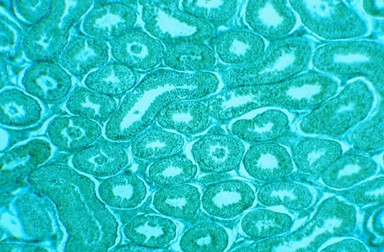
Histology
This is the study of cells and tissues by making slides and examining them under a microscope. Histology can be called microanatomy because it studies the human structure at a minute level that is not visible to the naked eye.
Preparation of slides relies on water. Cells need to be able to maintain their shape, and a dye is added to them to give them color. The solvent for the dye is also water.
Cell Biology, Molecular Biology and Biochemistry
Cell biology is the study of cell structure and function of living organisms; it highlights that the cell is the structural unit of life. Life exists because the cell is about 80 percent water. Water is the solvent and medium for all metabolic reactions and the main constituent of many cell organelles.
Life exists because the cell is about 80 percent water
In a cell, molecular Biology peaks into the role of water at the molecular level. Water assists the diffusion of biomolecules and can be considered the active matrix of life in the cells. Biochemistry studies the importance and chemical properties of water that are supportive for biological systems and reactions.
Developmental biology and Embryology
How living things grow and develop, regenerate and reproduce all involve the participation of water. For example, the fluid in the semen comprises water. The sperm is designed structurally to swim in the male and female body fluids. If no water existed, the continuation of a species would become impossible. Embryology analyzes the prenatal development of gametes, fertilization, and embryonic development. The embryo in the uterus is surrounded by a watery fluid for buoyancy and protection.
Immunology
The body’s defense system involves the active engagement of water, especially the humoral response involving B cells. Water also helps in flushing toxins from the body, a process relates to innate immunity. Sweating and tears, the passing of urine are natural defenses of the body. Since water has cohesive properties, it is an excellent antibacterial agent.
Water also regulates body temperature, is the medium in the blood for carrying oxygen and nutrients to cells, and moistens body parts like eyes, nose and mouth. All these entrances of the body are like barriers or checkpoints for the entry of bacteria, and water plays a role in moisturizing or lubricating them.
Biophysics
How can we forget the field of physics when discussing such an important molecule like water? The physical analysis of the properties of water helps us understand how this molecule is the special one that sustains life. Water biophysics involves studying how HOW water molecules interact with biological ones like DNA, carbohydrates, proteins, etc.
Role of Water in supporting life
There are several reasons that this molecule is the ‘chosen one’ for the sustenance of life. It is a polar molecule and, thus, a universal solvent. All biochemical reactions can quickly occur in water. Metabolism in an organism is totally dependent on water as a solvent.
Secondly, water supports cellular structure as it helps maintain the turgor pressure and shape of the cell. This is important for the resistance to external pressures and the formation of the cell membrane structure. Thirdly, its polarity and solubility, and unique physical properties make it vital for life functions.
With a handsome amount of economy thriving on agricultural output, Pakistan’s reliance on the availability of fresh water is a necessity. The economic survey of Pakistan states a 5.4% contribution of major crops to GDP accompanied by a 25.6% contribution of these crops in the agricultural sector of Pakistan; it employs 38.5% of its workforce. Furthermore, the accelerating rate of urbanization and population has led to a drastic increase in the demand for freshwater supplies. Irrespective of the importance and availability of freshwater resources in Pakistan, water crises remain a matter of grave emergency for Pakistan. The real question is: Is Pakistan running out of water?
The severity of the current water crisis can be analyzed from the United Nations Development Programme (UNDP) and Pakistan Council of Research in Water Resources (PCRWR) who claim that there will be an absolute water scarcity in Pakistan by 2025. A report released by the IMF (International Monetary Funds) claimed Pakistan is the third most water-stressed country worldwide. To prevent the country from hitting a deadlock, a framework of action must be drafted, highlighting the causes, effects, and effective solutions to solve the obstacle.
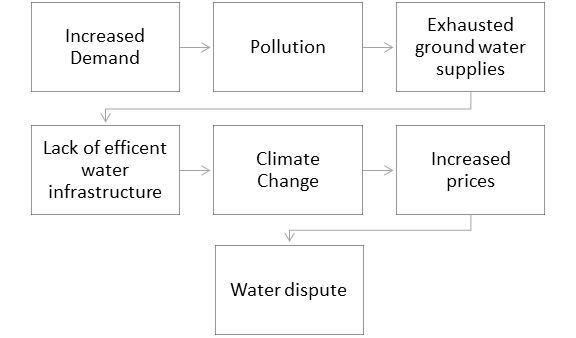
The first step in the framework of action is figuring out the causes for the lack of fresh water supplies in Pakistan. The web below exhibits few prime reasons that appear as root factors for water crisis.
Figure 1: Reasons for lack of freshwater access
Increased Demand
Pakistan is the sixth-largest country in the world inhabiting over 220 million inhabitants and this graph continues to expedite. With an escalating population, the demand for freshwater rises. The current freshwater supplies are already exhausted so the provision to keep up with these demands seems impossible.
Pollution
Pollution marks itself as one of the key candidates contributing to the scarcity of freshwater. Both point sources and non-point sources play a vital role in polluting freshwater sources. Point sources are defined as those sources that directly discharge effluent via effluent pipes originating from factories or industrial setups. These sources can be easily identified. Non-point sources include the means where rainwater washes away pesticides, insecticides, and fertilizers from agricultural fields that end up into large water bodies. These sources are difficult to mark as pollution comes from more than one definite source.
The discharge of industrial waste, dumping of household waste that makes its way into streams and rivers, the agricultural waste draining in water bodies, all contaminate the water supplies. Increased nutrients within water bodies result in eutrophication, a phenomenon where the structural changes in a defined ecosystem, such as a lake promote algal growth hence making the water unfit and harmful to be used for drinking, washing, cleaning, etc.
Exhausted Ground water supplies
Pakistan is the third-largest country that utilizes ground water supplies for irrigated agriculture. However, waterlogging and salinity accompanied with unmonitored ground water extraction have led to damaging consequences that can potentially tire the remaining water supplies. Pumping out water quicker than it can be replenished reduces the water volume that can be stored and hence reduce fresh water access.
Water crisis is growing severe day by day
Lack of efficient water infrastructure
Water infrastructure in Pakistan is dated and inefficient to store and regulate the available water. Lack of reservoirs and dams prevents the storage of excess water for future use. Moreover, the sedimentation at the beds of these water storage bodies reduces the capacity to store the required volume of water. Currently, there are two large dams in Pakistan: Tarbela Dam and Mangla Dam. However, these dams have reached their dead levels and cannot further support more influx of water. According to Muhammad Khalid Rana, Pakistan receives around 145-million-acre feet of water, but it can only store 13.7-million-acre-feet of water. More than 25 million acres of water are wasted due to the lack of dams to store surplus water.
Climate Change
Global warming is pacing at an alarming rate which impacts the behavior of glaciers, oceans, precipitation rates, the occurrence of floods and droughts. Higher water flow results in floods and with a lack of dams, the flood water cannot be stopped or stored. Water gushes down the soil-covered land causing erosion that results in sedimentation in dams and water bodies thus reducing their water carrying capacity and making the water unfit for consumption. Moreover, the rising mean daily temperatures mean that the earth is getting warmer that causes heavy rainfalls as the entire water cycle is disrupted.
Escalating greenhouse gas emissions cause a rise in mean daily temperatures leading to rapid melting of glaciers and drying up of water bodies. Drying up of water bodies leads to droughts with adverse effects such as famine that destroy communities and societies. Being a water-stressed country, Pakistan can face serious water emergencies that can potentially affect a large mass of people. For example, increased floods or other natural water disasters can contaminate the water bodies and also support the growth of several water-borne diseases like cholera and typhoid that are a threat especially to the health of children.
Increased Prices
The true value of water from its extraction to purification to transport is not properly calculated. This results in a lack of investment and funds for the development of infrastructure, water conservation technologies, and water transport facilities. With decreased financial input to cover the costs and non-defined high taxation on water distribution has led to a deterioration of the available resources and the management system. With over 2/3rd of Pakistan’s population residing in rural areas, such high costs are unbearable for families living on a constrained financial budget.
The accelerating rate of urbanization and population has led to a drastic increase in the demand for freshwater supplies
Water dispute
In 1960, post-partition, Pakistan and India’s dispute over water resources was solved via Indus Water Treaty that aimed to effectively divide the water in the Indus water basin between both countries. India was given access over water present in the eastern rivers (Sutlej, Beas, Ravi) while Pakistan was to use water from western rivers (Indus, Jhelum, Chenab). However, India is accused of violating this treaty by constructing dams over rivers flowing into Pakistan via Kashmir. This has reduced the water flow in Pakistan.
To restore and replenish this driving force of nature, concrete measures must be implemented without further delay. It is mandatory to keep aside political differences and differences of opinions and work towards providing clean and ample water supply to masses within Pakistan, knowing that 90% of the usage of water is for agricultural purposes that engage a majority of the labor force.
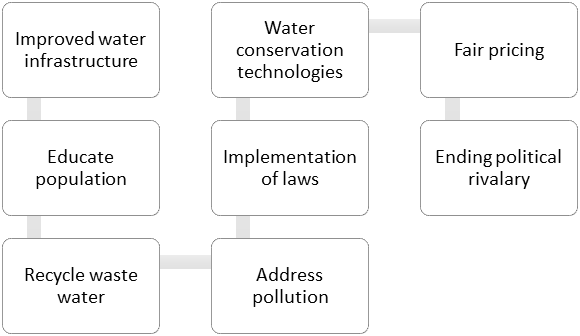
Figure 2 : Solutions for the existing water crises
Improved Water Infrastructure
In order to keep up with the growing water demands, infrastructure for water management and storage must be built. Knowing that the two largest dams of Pakistan have already reached their maximum water holding capacity, more dams should be constructed along with reservoirs to store the water especially that of monsoon rainfall. This will aid in preventing the occurrence of floods in low-lying areas and prevent additional losses from floods such as erosion and sedimentation. The proposed construction of the Kalabagh dam on the Indus River is underway. However, dams have their own set of downsides that can pose much greater threats.
To overcome this, the government can strive to opt for Dam equivalents (DE) which are structural setups mimicking the purpose of large dams. They are considered a favorable alternative as they avoid the downsides that are involved in dam construction such as high costs. DE can rejuvenate the traditional canal irrigation practices.
Educate people.
Awareness is the first step to bring forth a change. It is cardinal to educate people and raise awareness among the lot about water scarcity, the significance of clean water access, and the unfavorable outcomes if Pakistan runs out of clean water. By providing statistical data and making people realize the sensitivity of the current and future condition, if freshwater scarcity is not prevented can prove to be an effective measure.
Giving people examples from daily life such as the amount of water wasted while cleaning, washing, or cooking would enable them to analyze the grave concerns of the authorities over freshwater scarcity. Furthermore, it is pivotal to educate people that each individual can play a significant role in conserving fresh water. A stigma that prevails in our society is that a single person cannot bring a change at the expense of millions of other wasting waters. This needs to be eliminated from among us.
Recycle wastewater!
Gallons of non-treated wastewater are discharged daily. This pollutes the clean water supplies and makes water unfit for consumption. Hence, before discharging the water, treating the wastewater to make it harmless will prove to be a fruitful practice. This action will help conserve water, increase the available water supply and help meet the water requirements.
It is a need to mark out planned water recycling schemes in an attempt to enhance freshwater availability and access. Recycled water can be used for several purposes such as irrigation of agriculture (under a set of guidelines provided by WHO), municipal water supply, environmental restoration, etc. Such practices will cut down the surplus demand for fresh water for activities mentioned above by directing the recycled wastewater to fulfill these demands.
Water conservation technologies
A rather smart move is to use efficient water conservation technologies that cut off excess water usage and hence water wastage. Drip irrigation, Laser levelling, and sprinklers can be utilized to reduce water wastage. Drip irrigation prevents water wastage via evaporation. Similarly, sprinklers halt the excessive flow of water and ensure an adequate supply of water to crops without wasting any.
Implementation of Laws
Laws related to water distribution and consumption must be strictly implemented and practiced. In case of violation of any clause, authorities must take legal action against the violator. Implementation of drafted laws will ensure that all people get a reasonable share of water supply as marked by the authorities and there are no illegal ways of getting access to fresh water supplies at an expense of deprivation by the lows.
Address Pollution
Pollution is an incurable disease. It can only be prevented. Stepping into the 21st century, it is the utmost need to address and eradicate pollution which is a threat to all lives on the planet. Inappropriate waste disposal pollutes clean water supplies which is a source of many water-borne diseases, habitat for microorganisms, and a deadly dose to many birds and water living communities.
Fair pricing
Access to clean water supplies is not only limited to access to the resource itself but the finances behind it play a vital role. Accessibility in these terms deals with fair pricing that will enable all classes within a society to be able to use clean water. Water should be a privilege enjoyed by all, not a menace.
Ending political rivalry
By far one of the greatest and most effective solutions to existing water crises is by halting the political rivalry between India and Pakistan primarily. The division of authority over the western and eastern tributaries and construction of dams on these should be talked through by peacekeeping aside difference of opinions between both countries. The government should take steps to enable both countries to come to a common ground and solve the crises so that the local population does not have to suffer due to it.
This is the time we act as individuals and as a community to combat the existing water crises which if not resolved, can lead to severe deterioration of communities in the future.
“When the well is dry, we know the worth of water” – Benjamin Franklin.
Living in a desert is not easy; it is not always like living in big cities where you can find your favorite foods at your doorstep or at the nearest high street. Lack of facilities and basic necessities of life like health, education, unemployment, scorching weather, and loneliness make the life of its dwellers miserable. The statistics show a slight rise in the death toll of children between 2 to 10 years owing to several complications like low birth-weight, pneumonia, respiratory distress syndrome (RDS), malnutrition, and diarrhea.
Thar-Parkar is the largest district of Sindh and has Mitthi as its district headquarter. It covers an area of 19,638 square km (7,582 sq mi) with a population of 1.64 million people. It enlists in the 18th largest desert of the world and is considered to be the only fertile one. Enriched with coal, it has the world seventh largest reserve in the world.
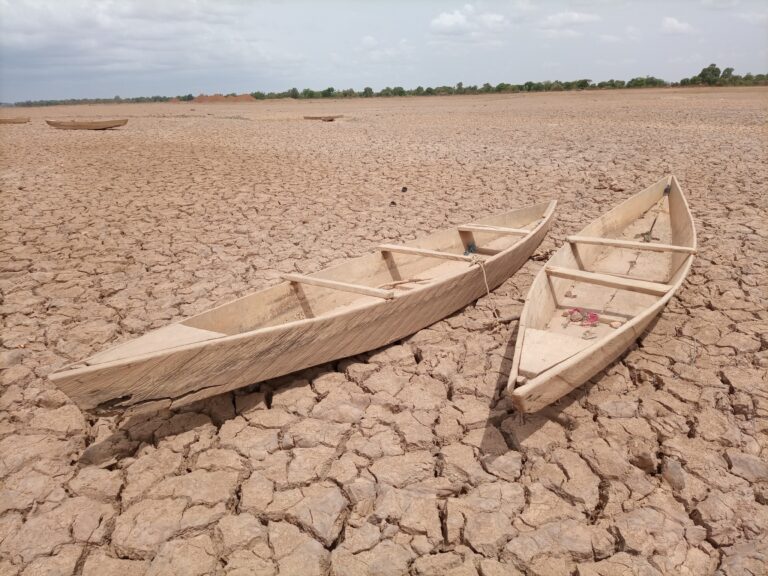
However, the limited periods of rainfall due to widespread climate change in Pakistan and mainly in Sindh caused an acute shortage of water for the inhabitants. Once the areas that provided scenic fertile views in the Mon-Soon season, now hardly receive rain in a season.
Limited periods of rainfall due to widespread climate change in Pakistan and mainly in Sindh caused an acute shortage of water for the inhabitants
Here, the rainy season often kick starts in early July and ends in September. In the past, Tharparker and adjacent deserted areas received sufficient rains, so the ponds get enough water for the dwellers for another three to four months when the areas usually received moderate rainfall in the winter. Here the primary water resources are wells with a ground-water-level of 200 feet deep that went even deeper in the last decade due to the dearth of rains.
The situation in Tharparker worsened when the Sindh government failed to provide water in sufficient amounts to meet the local residents’ daily requirements. Agriculture gets nearly impracticable when people striving for water to meet the basic necessities of life.
DUA Foundation Agriculture farm
The past governments of Pakistan wouldn’t pay attention to the area unless the Thar coal mine project was inaugurated in May 2008. Once the Sindh Engro Coal Mining Company (SECMC) and Thar Power Company Ltd. (THARCO) started generating electricity, the area caught the attention and became the center of attention to the national and international mainstream media outlets. In a short period, several non-governmental organizations shifted their focus to uplift the lifestyle of the residents of Thar. Sindh Engro Coal Mining Company (SECMC) is also working on multiple projects as their corporate responsibility, and a primary project among these is the Bio-saline water irrigation project.
The company planted an area of 10 acres (4.04 hectares) and with 120 Ber (wild-Berries) trees on each acre. The effort was part of the bio-saline agribusiness by utilizing underground water of the third aquifer pumped from a profundity of roughly 200 meters.
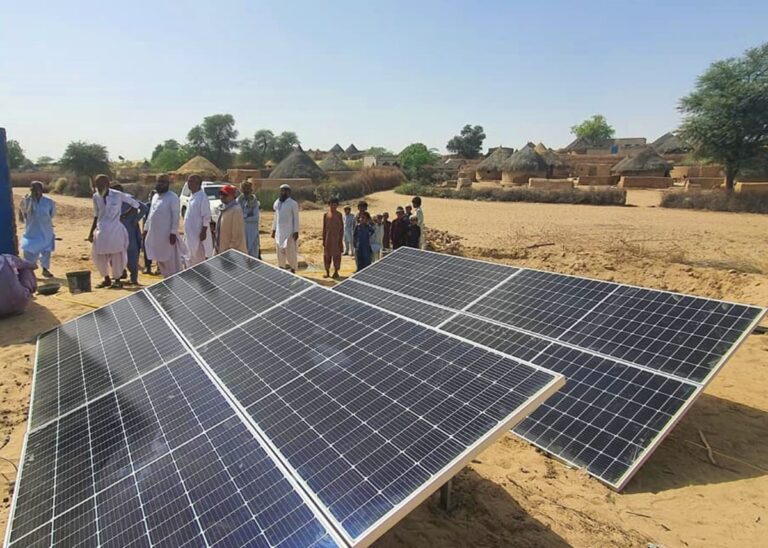
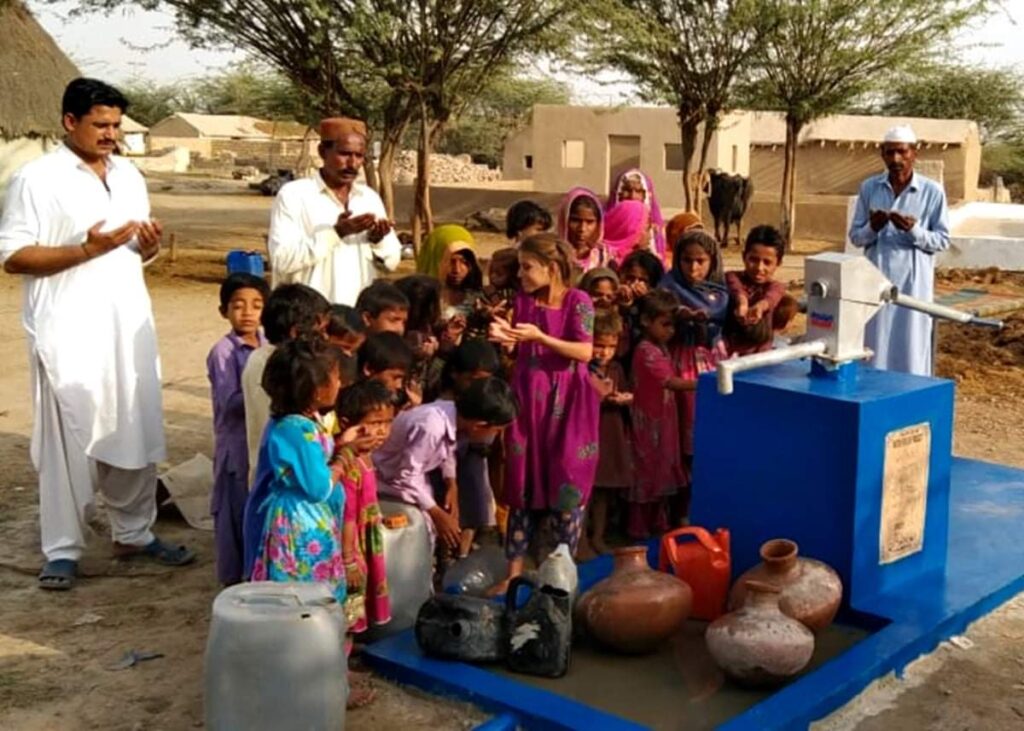
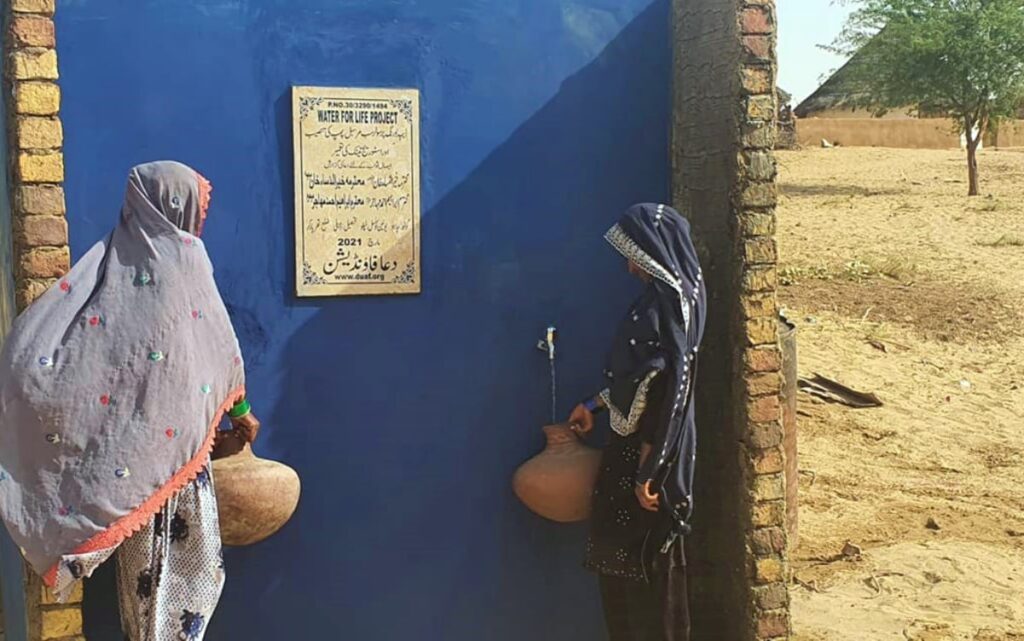
DUA Foundation has installed the Water Project (Submersible pump on 500 feet deep boring with water storage tank) at Village Chaho, Uc Laplo, Tehsil Dahli, District Tharparkar. Credits: DUA Foundation
The planted trees are watering up to 3500 ppm TDS beneath specialized back given by Pakistan Horticulture Inquire about Committee (PARC), and 120 trees were planted per acre so far. These plants have started yielding within one year, and each tree has produced an average of 5 to 7 kilograms of fruits. The 120 trees on a land section could provide around 35,000 to 40,000 PKr within the, to begin with, harvest.
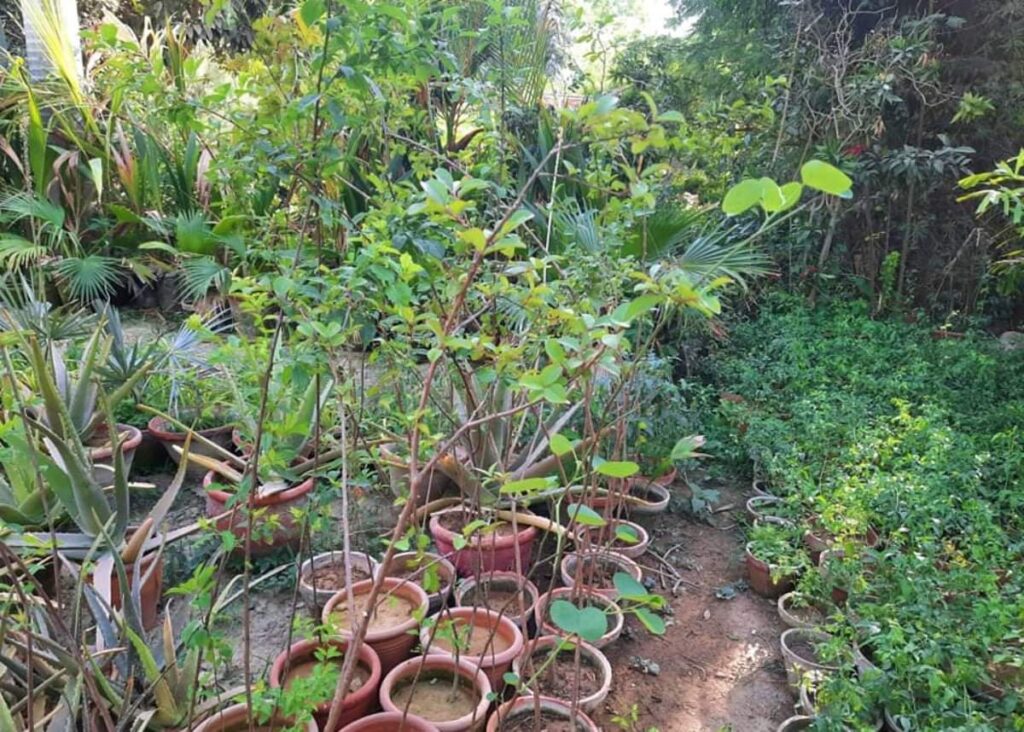
Dua Foundation is an NGO with small-man-power, struggling to regain the fertility of Thar Desert, once it was known for. Dua Agro Farm was a constructive idea to turn Thar green, which has now become a reality. With optimism and good faith, these farms are now showing their spring. So far, 45 agro farms have been completed. These successful experiences are creating new sources of employment for Thar residents.
These Agro farms are bored for irrigation and various types of pumps. In case of lack of electricity, solar power cells are also installed, and at the same time, storage tanks are constructed for storing water. The inhabitants of adjoining villages also have access to daily necessities and clean drinking water due to these efforts.
Installation of water pump has been very useful for the local residents. Credits: DUA Foundation
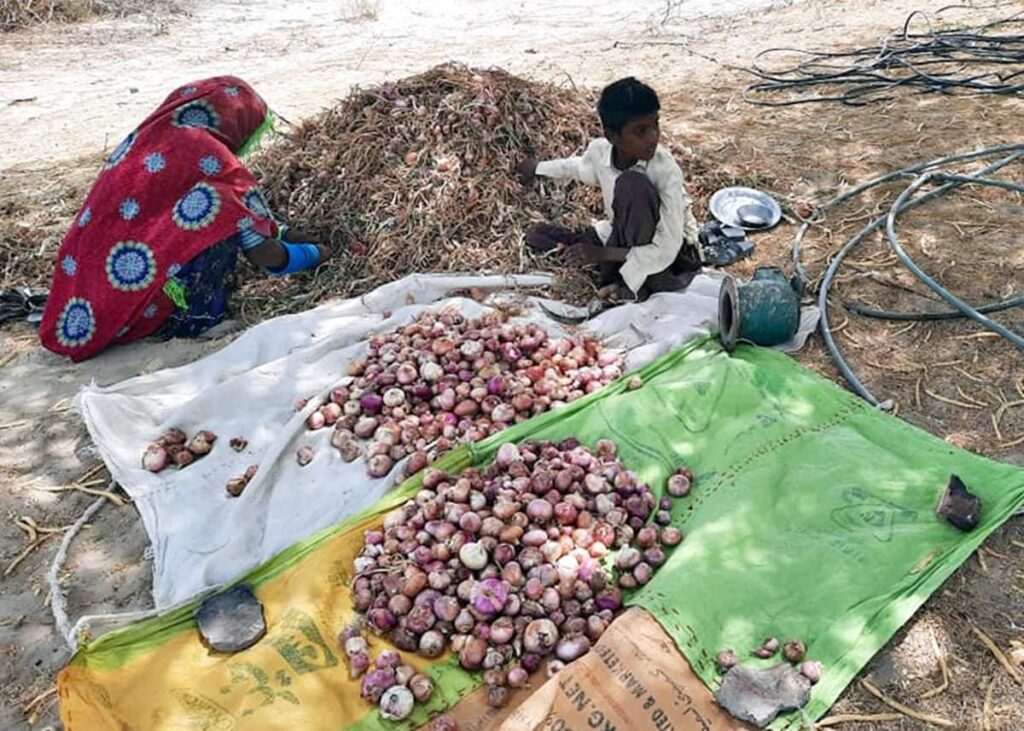
Dua Agro farm has also been set up in Kaloi Tehsil of Tharparkar, in which plants like mustard, Tara Meera, Tomato, Onion, Berry, and Lucerne are being cultivated. Meanwhile, the farm management started some research work, and a few Lotus plants have also planted experimentally in a pond.
In various areas of Tharparkar, Jalebi, Pomegranate, Wheat, Palm, Olive, Lotus, Tomato, Onion, Dragon Fruit, Spaghetti, Cumin Mustard, Tara Meera, Lawson, Lemon, Fig, Mulberry, Guava, Falsa, grains, and other vegetables are planted. Following the successful experimental cultivation of more seasonal fruits and vegetables, a few mega farming projects have been launched.
Farmers ready to harvest golden wheat from DUA agro farm. Credits: DUA Foudation
These farms are not only meeting the food needs but also providing economic autonomy to the villagers. Thus, the Dua Foundation promotes small-scale cultivation of fruits, vegetables, and grains in the Tharparkar area. In addition to preparing the fields, training is also provided to the residents for their maintenance and good yields.
With the help of philanthropists, these agro farms are prepared and handed over to the local communities. The existing wild berries in Tharparkar have also been grafted with good quality berries, and now the branches of these trees look bent under the weight of good quality big tasty, and nutritious berries. Under Dua Foundation, 200 trees of Kahu (Wild Olive) in Dhirkot District Bagh have also been grafted with required quality foreign olives. This will improve the economic situation of the locals.
Pertinent to mention that the foundation had launched a campaign of grafting olives in the country, and after their successful advocacy, Prime Minister Imran Khan also showed interest in it and ordered the authorities to support farmers in it.
The issue of climate change has emerged very strongly during the last two decades on a global scale, given its projected implications on the environment of vulnerable states. Steadily rising temperature and its impacts on the cryosphere and rainfall are evident in many regions worldwide. There are indications that Pakistan has had its share of the significant climatic variations that are known to have taken place in northwest India in the past. The dominant component of the climate variations was spatial shifts in the rainfall patterns, associated with fluctuations in the general circulation of the region’s atmosphere. Changes in rainfall patterns directly affect water, agriculture, and disaster management sectors.
Keeping the dominant causes of water shortage under consideration, our Chief Editor Saadeqa Khan has reached out to Mr. Zubair Ahmed Siddiqui for our special “Water Day Edition”. Mr. Siddiqui is a Senior Meteorologist and Climatologist who has been working in various sections of the Pakistan Meteorological Department, including the Climate Data Processing Center of PMD, IMG-Training Center of PMD, and Director of Regional Center for Gilgit-Baltistan, for around twenty years. At the moment, Mr. Siddiqui is serving as the Director of the PDM’s Regional Center for Sindh.
Below are excerpts of this conversation.
Saadeqa: Let us know about your life and career and work experience?
Mr. Siddiqui: I completed my M.Sc. (Physics) in 1992 and then PGD in Computer Science from the University of Karachi in 1993. Later I did M.S./M.Phil. in Meteorology from Nanjing University of Information Science & Technology, China. I joined Pakistan Meteorological Department in 1999 as a “Meteorologist” after passing through FPSC exams. Since then, I have been working at various sections of PMD, including the Climate Data Processing Center of PMD, IMG – the Training Center of PMD, Senior Aviation Met Forecaster at Karachi Airport and Director of Regional Center for Gilgit-Baltistan and now at present as Director of Regional Center for Sindh. Some of my research papers have been published in National and International peer-reviewed Scientific Journals. I have been a fellow at Japan Met Agency Tokyo and have also represented Pakistan at various Conferences and Symposiums in several other countries.
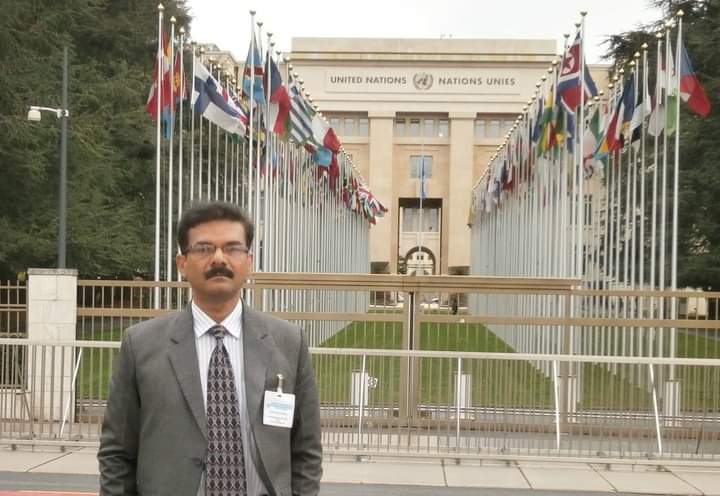
Mr. Zubair Ahmad Siddiqui at the UN office
Saadeqa: How long have you been serving in PMD’s Regional Center for Sind? Let us know about particular projects you would have loved to work on?
Mr. Siddiqui: PMD is a Federal Government Department and I have been the Director of Regional Center for Sindh for the last One & a Half years. My main responsibilities include the Administration and Control of the Network of 18 Met Observing Stations, 06 Aviation Met Offices, and 04 Agromet Centers in the province of Sindh while issuing Forecasts, Alerts, and early Warnings related to Daily Weather, Seasonal Weather, Monsoon Rain Forecasts, etc. Moreover, extreme weather like Heat Wave and Cold Wave Forecasts, Urban Floods and Flash Floods Forecasts and other Extreme and Unusual Weather Events, etc., are also a part of my services.
Saadeqa: What are the Met Office predictions for the coming Mon Soon season in Karachi and Sind?
Mr. Siddiqui: Monsoon Season onsets/starts in Pakistan from 1 Jul every year. Hence PMD will issue its monsoon forecast in the last week of May for entire Pakistan, including Sindh and Karachi.
With Trainees from SAARC countries, at IMG Karachi (2011)
Saadeqa: The Arabian Sea is heating up with average surface temperature increasing from 29 C to 31 C in just two years. How could we stop this overheating process to minimize unusual rain patterns in Sind/ Karachi?
Mr. Siddiqui: Sea surface temperature of the Arabian Sea has been increased a little due to global warming, but I disagree with your above numbers (31 C or 29 C, both are not correct). The average SST of the Arabian Sea in January remains near 24 C, while in June or October the SST remains just near 27 C. If it further rises, then cyclone formation is likely to occur along with some other parameters.
There is no method discovered to stop the heating of the Ocean Surface / Sea Surface, except to control global warming or climate change. Moreover, the unusual rain pattern in Sindh / Karachi depends on Monsoon currents during the period from June to September, while it depends upon “Western Disturbances” during the period from October to March. The increasing “Sea Surface Temperature” is causing the increase in tropical cyclones’ frequency in the Arabian Sea and the Bay of Bengal.
Editorial Note: The question was based on a report of Deutsche Welle English service published 8 Sep 2020, entitled, ‘Pakistan: Climate change, environmental problems put the government on a blind,’ reported by Mr. S khan (Islamabad). It has appeared after further investigation that the news provided wrong and baseless demo-graph which couldn’t be possible under the conditions that we have had last August after having massive rains in Karachi and significant parts of Sind). We are thankful to Mr. Zubair Ahmed Siddiqui for the mention and for making things correct for us.
“Cutting of trees and rapid increase in the number of concrete structures and high-rise buildings is also one of the main reasons for extreme weather in Sindh and Karachi.”
Saadeqa: Karachi, like most parts of Pakistan, has faced fewer rains in the winter season that was very unlikely and indicates climate change even on a more significant level than we expected. Do you agree with it?
Mr. Siddiqui: Sindh receives NO rainfall during the months of January and February 2021, while only 10% of the monthly average during December 2020. A weak La-Nina started effecting during September 2020, while reached Moderate strength during December 2020. A neutral Indian Ocean Dipole (IOD) effect persists during the period from October 2020 to February 2021. Both conditions usually suppress the pre-winter precipitation in Pakistan. And yes, these are linked with Climate Change effects as well.
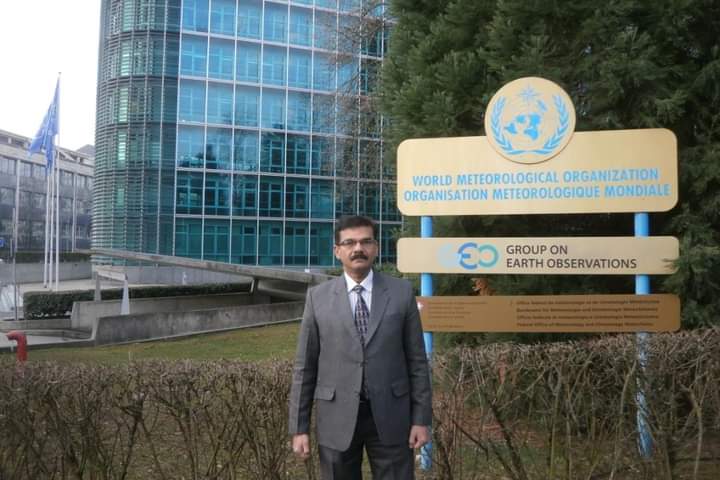
At WMO headquarter Office, Geneva Switzerland. pioneering/establishing the “Third Pole Regional Climate Center Network”
Saadeqa: What Met office predicts for the coming summer season? What could be the max temperature during the peak months of June/July?
Mr. Siddiqui: Extreme weather events, including heatwaves, are the most significant effects of climate change impacts on Pakistan, especially Karachi city. Another reason for increasing temperatures in Karachi during summer is the “Urban Heat Island” effect. Cutting of trees and rapid increase in the number of concrete structures and high-rise buildings is also one of the main reasons. At least one heatwave (or more) is expected during May, June, and July 2021, respectively. Maximum Temperature during the afternoon time may reach above 42 C during the heat waves. At this moment, this is only a seasonal outlook, PMD will issue a more precise forecast one week before these events.
Saadeqa: The Indus river delta has been badly affected by the Arabian Sea intrusion that damaged people’s livelihood and gives rise to climate changes. What measures are needed on urgent notice to stop sea intrusion?
Mr. Siddiqui: Indus Delta will have an adverse effect of sea-level rise on the Pakistan coast. Topographically, Indus Delta is a tidal flat zone. During the event of tropical cyclones in the Arabian Sea near Sindh Coasts, “Storm Surges” also cause sea intrusion and severe damage to the Indus Delta zone. An increase in Mangroves forests may help in mitigating this problem. Another measure is building small water-storage-dams near the flash-flood affected areas to store the excess water of flash floods during the monsoon period and then utilize this water during the water-shortage months.