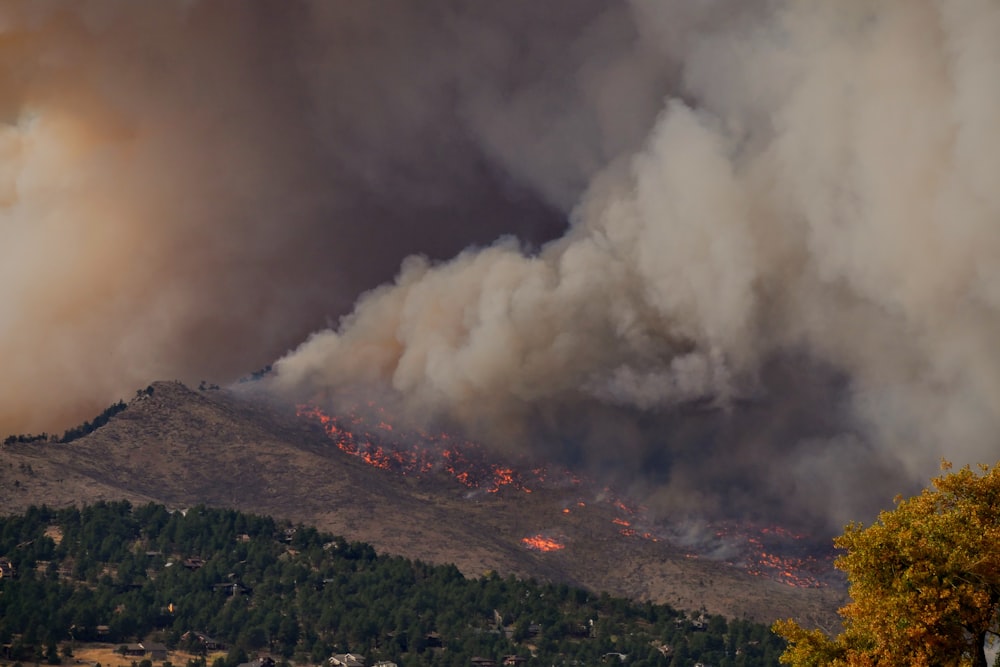
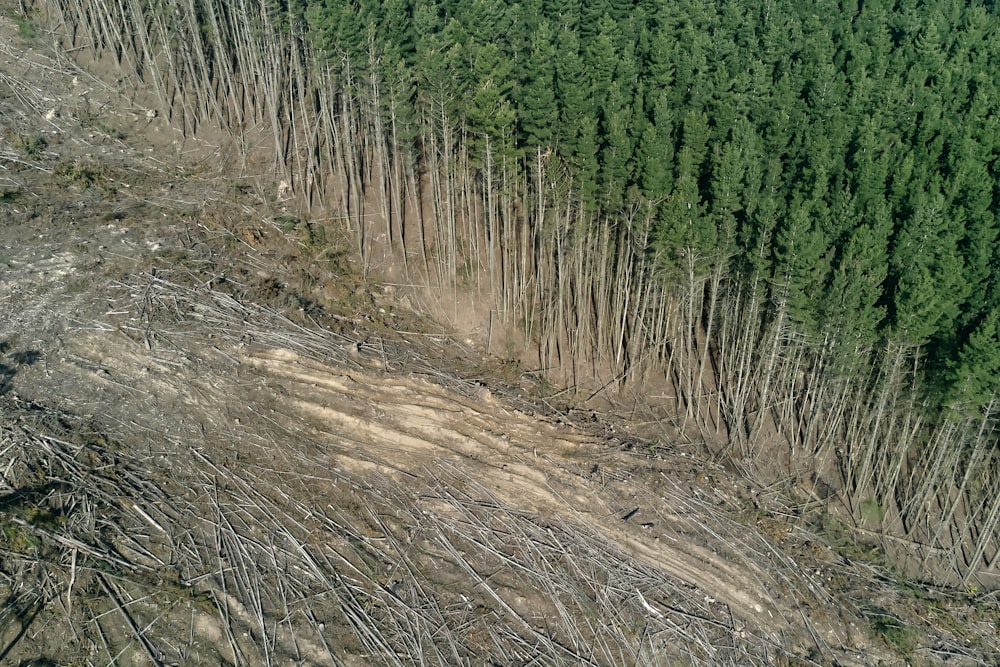
WildFire is not a new thing for Australia. The Australian landscape evolved because of fire. The survival of many plant species is depending on fire. There is a variety of species that adapted and even getting benefit from the fire in Australia. The Australian landscape was designed by fire in a way to prevent wildfire and also to provide resources. We know that the root cause of any natural disaster is somehow linked with global warming and overall climate change. Global warming is causing a slight rise in temperature, which leads to a decrease in rainfall in some areas of Australia. This phenomenon leads to an increase in the frequency, extent, and intensity of the wildfire in the last decades. These disturbed fire patterns increased their harmful effect on biodiversity.
According to Geoscience Australia, the leading natural reason behind these wildfires is lightning coupled with human and other biological activities. According to CSIRO, wildfire mostly breaks due to scorching weather and vegetation. But it is required to figure out the major cause of their ignition, whether lightning or accidental fire? When these factors combine with speedy winds, it results in a wildfire.
NSW RFS reported that lightning is the reason for the Gospels’ mountain fire which burnt 512000 hectares. The media reported Kangaroo island fire also started with lightning. It is concluded that in 2019-20 fires, most of the fires begin with lightning. The fires in Tasmania in December 2019 are because of deliberately lit fires results in 21000 to 35000 hectares burned.
Studies proposed that by 2050, the risk of wildfire can increase up to 25%. It is a need of an hour to understand their changing pattern, cause, and impact on biodiversity for better management of the disaster they caused.
According to CSIRO, wildfire mostly breaks due to scorching weather and vegetation.
Australia has faced extensive and continuous bushfires from June 2019 to Feb 2020. These wildfires are unexpectedly prolonged, and that’s why named Black Summer or season from hell. The outbreaks of 2019-20 adversely affected the NSW and Sydney. Overall, 2019 in Australia 2019 was recorded as driest and scorching. The FFDI (Forest Fire Danger Index), which calculates the intensity of danger caused by the wildfire in Australia, recorded the spring season in 2019 wildfire as the highest rate.
In 2019, about 15000 fires were reported in different areas, which collectively damage 19 million hectares of Australian land. This area is larger than the total burnt area of Amazon and California in recent fire events; an annual wildfire is widespread in Australia, especially the savannahs of northern tropical, last year damage the vegetation. An increase in temperature and extended drought conditions have worsened the condition at the start of November 2019.
In January 2020, heavy rainfall decreased the fires in some areas but unable to extinguish the fires completely. Drought, hotter temperatures combine with high winds increased the fires to a dangerous level again at the start of February 2020. This is followed by heavy rainfall in mid of the Feb 2020 results in the complete extinguishment of fires in NSE, but victoria was still facing the bushfire. All the fires completely stopped in March after nine months of prolonged bushfire season.
In 2019-20, wildfires affected millions of people living in these areas with 33 deaths and thousands of homes burned. The smoke from these prolonged fires causes air pollution in major cities, and even the smoke reaches over New Zealand. Hazardous air pollution causes about 400 deaths and hundreds of people hospitalized because of asthma, cardiovascular and respiratory issues. These fires released about 900 million tonnes of CO2 emissions. According to NASA, these fires produced a considerable amount of smoke, taking one complete circle of the Globe. In current times Sydney and Canberra are listed among the top 10 most polluted cities.
According to WWF estimation, about 3 billion native vertebrates are present in the 2019-20 bushfire areas, which include mammals, reptiles, birds, and frogs. These extended bushfires also affected endangered species, wildlife, ecological communities, and heritage Areas. Threatened species lost their required habitat because of these fires. The heritage sites like Gondwana InDuring 2019-20, many historical places like Greater Blue Mountain, and Old Great North Road were destroyed due to the wildfires. Many modeling and studies are carried out to explain the actual damage caused by 2019-20 fires on fauna and flora. However, much data is still an estimation from past fire events and requires detailed analysis and expert opinions.
Australia was able to come out of this emergency with the help of many Philanthropic and Governmental support. CDP (Center of Disaster Philanthropy) supports it with their global recovery funds; this helps donors meet the challenges presented by the global crises. These donations then transferred to various organizations working in the country to overcome the current emergency, just like the Australian Red Cross Society awarded $336,000 to help the human life affected by bushfires. It also includes three years of bushfire recovery programs.
FRRR (Foundation of Rural and Regional Renewal) awarded $500,000 to help at the community level and invest in community projects. This helps in the recovery of rural and remote areas of the country affected by bushfires.
WWF was also awarded $1.19 million for long-term recovery projects. This is actually for wildlife and restoration of the environment and natural habitat. The federal government of Australia announced in Jan 2020 the formation of the National Bushfire Recovery Agency. The government also initiates $A2 billion for recovery and helping the farmers, families, and businesses affected by bushfires.
The ongoing demand is the requirement of resources and funds for rebuilding communities and structure which resist the bushfires.
Living in a fast-paced digital world equipped with artificial intelligence and machine learning comes with many pros and cons. However, it is undeniable that technology does offer a solution to almost every problem, to the extent that it now can fight nature.
The leading cause of destructions in the world for the past years is natural disasters, including storms, heatwaves, floods, wildfires, and earthquakes. According to a rough estimate, natural disasters caused losses of $131.7 billion in 2018, affecting the lives of millions around the world. With the empirical advancement in technology over the years, it has now become more accessible for the agencies and rescue teams to fast track the locations and conduct rescue operations worldwide, enabling them to play an influential role in disaster relief aid.
Robots, including drones, have an admirable potency to make the rescue easy as the technology can go where human can’t; can access damage in real-time and deliver services accordingly in less time and at a lower price.
Let us look at the innovative pieces of technology that effectively bring digital solutions in the humanitarian sector, impacting humanitarian relief and counteracting the natural disasters that have been costing us lives for years.
Land Slides and Earthquakes
Recent technology has developed at the Cornell University, capable of forecasting the plate tectonic motion of lower intensity lasts for hours or days, called “slow-slip earthquakes.”
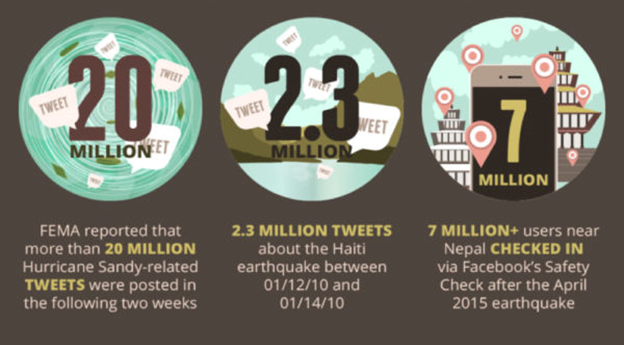
SERVAL PROJECT is another mighty development in response to the Haiti earthquake. The technology has been in use since 2010. It allows mobiles to communicate with each other even in a no-network coverage area using the TERA (Trilogy Emergency Relief Application) designed SMS text system.
NASA Finder, a suitcase-size device, was developed in response to the 2015 Nepal earthquake. This device can detect human heartbeats under 20 ft of solid concrete and 30 ft of rubble.
The earthquake early-warning system is also in the process of development by the U.S. Geological survey. This system will be a groundbreaking technology as it uses a network of high-quality ground motion sensors.
Storms
Data statistics show that 90% of all-natural disasters are weather-related. To reduce the massive loss of life, technology has to offer something extraordinary other than the old radar technology used in World War II to better anticipate weather forecasting.
Data statistics show that 90% of all-natural disasters are weather-related.
Kevin Petty, director of Science & Forecast Operations from The Weather Company, a subsidiary of IBM, said in an interview.
“One of the key things that we are always looking to do is to enhance prediction of weather globally to reduce those impacts that it has on the population, allowing populations to be more resilient in the face of high impact weather.”
Promising algorithms will be available soon, capable of fast and accurate hand in-depth analysis of data coming from multiple domains, such as geophysics, from the atmosphere, ocean, or the biosphere.
Another mystic model has been developed at the National Centre for Atmosphere Research for wildfire prediction. The system simulates how weather drives fires and how fires impact climate. Scientists can regularly update forecasts by restarting the model every 12 hours with the latest observed data.
Floods
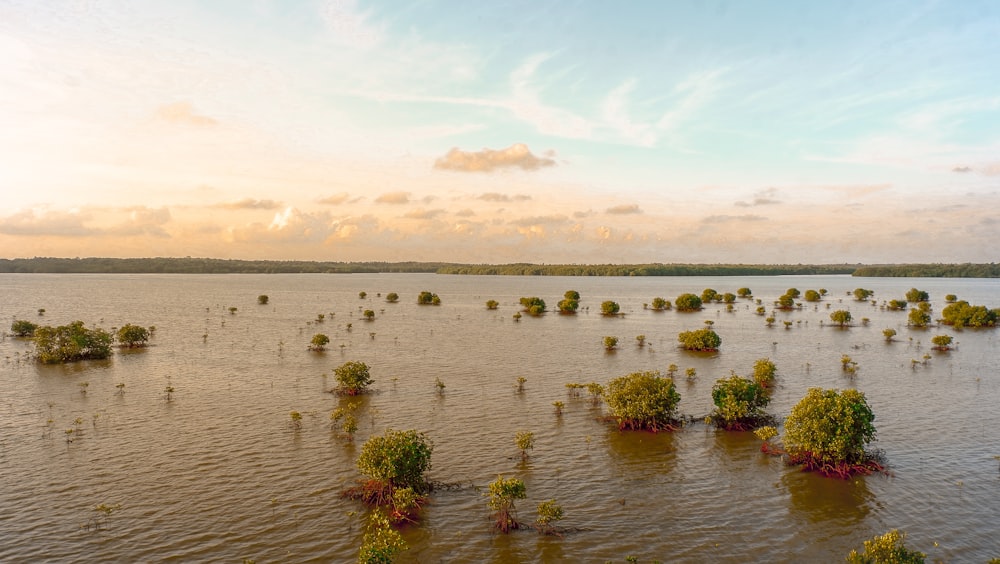
Massive flooding caused by natural causes, such as increased rainfall or storms, has been reported in Nepal, Myanmar, China, Bangladesh, and Pakistan, forcing millions of residents out of their homes.
But technology has equipped us with such forecasting models that can better analyze the data and automatically alert the authorities beforehand. A flood forecasting model was implemented by Google in September 2019 in the Indian region of Patna. Google has collaborated with several on-ground companies to provide real-time data.
An inundation model has been built by the U.S tech giant built can forecast flash flooding by assessing the water behavior through prediction of water level rise in a particular area. A highly detailed computer model uses radar and advanced streamflow computer simulations to provide specific guidance for decision-makers during the crucial 1 to 12- Hour window.
Epidemics
AI-enabled forecasting models can be used to identify hot spots of an emerging disease and its spread rate and trend. Health care reports are correlated with environmental data such as soil components, a rise in temperature or humidity – all factors that can help the disease spread rapidly. The path of a specific insect that transmits disease can also be tracked using satellite imagery.
Role of Social Media in Disaster Communications
Online Applications for Disaster Relief Aid
Micromappers, launched in 2013, is a world-renounced application for its effective contribution to the 2015 Nepal earthquake. Micromappers processed over 60,000 images and tweets during the 2015 Nepal earthquake. This application works by creating a map from social media relief updates and forwarding it to the aid agencies that get real-time updates from affected areas. Micromappers assist the concerned organizations in planning effectively before stepping into the disaster zone.
Google people finder is another innovative open source technology developed in response to the Haiti earthquake in 2010. This application is available in over 40 languages, and it allows users to search and post for the status of people affected by a disaster.
Red Cross emergency app is a handy application with the credit of saving several lives in the United States. This application is a very reliable source for giving weather updates, preparedness information, and safety tips.
Pakistan Disaster Management Strategy
Pakistan has had its fair share of disasters in the past 14 years in earthquakes, floods, and storms. And just like how its people stood firm in the face of every adversity that came in their way, they showed incredible resilience to cope with the natural disasters. But the management of catastrophe is highly dependent on the efficacy of governance, and for this purpose, Pakistan modeled its proactive disaster management by enacting the National Disaster Management Act 2010 under the United Nations International Strategy for Disaster Reduction (UNISDR).
NDMA has developed a framework under the National Disaster Risk Management fund (NDRMF) that operates at the national level. It works as a coordinating, implementing, and monitoring body, which provides guidelines for disaster risk management at federal, provincial, and district levels.
Despite the financial and resources constraint, the administration has done explicitly well to manage such situations with a minimal loss of life. But the system still has some loopholes making it faulty on the ground level. To make the institution functioning impeccably, along with its up-gradation by integrating new technology, the government should develop disaster management bodies from the central government right down to the community level.
This remedy will help the government to translate its policies and effectively execute programs at the ground level. And will ensure the deliverance and access of essential services to the citizens.
December 2019 marked the beginning of the global COVID-19 pandemic, with its initial cases being diagnosed in Wuhan, China. The virus outbreak began as pneumonia due to an unidentified cause and had soon spread to different countries in Asia, Europe, and the US. On the 30th of January 2020, the COVID-19 outbreak was declared as a Public Health Emergency of International Concern (PHEIC) by the World Health Organisation (WHO). On 11th March 2020, WHO announced the coronavirus outbreak as a pandemic.1
COVID-19 is an infectious disease believed to be caused by severe acute respiratory syndrome coronavirus-2 (SARS-CoV-2)2 belonging to the family of Coronaviruses known to infect mammals, including humans and bats3,4. SARS-CoV-2 is an enveloped positive-sense single-stranded RNA virus known to enter the host cell through its binding to ACE2 receptors. ACE2 receptors are found on the cell membranes of certain human tissues, including those in the respiratory and GI tracts.5,6
Progress of the COVID-19 pandemic in India
The first COVID-19 case in India was reported on 30th January 2020 in the state of Karela; a student who was studying at the Wuhan University had traveled back to India and had tested positive for the virus.7 The virus then began to spread in the towns of Thrissur, Alappuzha, and Kasargod, all in Kerala, from students traveling back to India from Wuhan. By May 2020, India had the largest number of confirmed Coronavirus cases in Asia. To the relief, 10th June onwards, the number of recovered cases in India started exceeding the active cases. By September, infection rates started to drop.10 Mid-September onwards; the infection rates started to increase again, peaking to more than 90,000 confirmed cases daily. The infection rates dropped again to only 15,000 daily cases by January 2021.11
India commenced its vaccination program on the 16th of January 2021 and administered 3-4 million doses a day by April.12,13 India had authorized the British Oxford–AstraZeneca vaccine, the Indian BBV152 (Covaxin) vaccine, and the Russian Sputnik V vaccine for emergency use. As of 15th May 2021, around 40,298,750 people have been fully vaccinated, with a total of 181,201,743 doses administered.14,15 Parallel with the nationwide vaccination program, India saw the second and much larger wave of COVID-19 beginning in March 2021. Subsequently, there occurred nationwide shortages of vaccines, hospital beds, oxygen cylinders, and medicines.16 By late April, India had become the first country in the world to report over 400,000 new cases in one day.17,18 As per the data from May 2021, India holds the second-highest number of confirmed cases globally (after the USA), with 25.4 million reported COVID-19 cases and 283,248 deaths.12 Despite the nationwide mass vaccination program, why has India been terribly hit by the second wave of COVID-19?
Fig.1 Presents a graphical depiction of the progress of COVID-19 pandemic in India.10-18
The double mutant (Indian) COVID-19 variant and the second Coronavirus wave in India
Multiple factors have been at play in causing a sudden spike in the number of COVID-19 cases during the second Coronavirus wave in India. One of the most suspected reason has been the emerging of the new Coronavirus variant lineage B1.617.2, first identified in Maharashtra, India, during October 2020.19,20 The former has been named as the double mutant variant by the Indian SARS-CoV-2 Consortium on Genomics (INSACOG), a group of 10 national laboratories under India’s health ministry which carried out genomic sequencing on samples collected from western Maharashtra state. A double mutation has been seen in the Coronavirus spike protein, which is believed to potentially increase the virus’s infectivity and its ability to escape the human immune system.
It is worth mentioning that the virus spike protein (shown in figure.2) is the part of the virus through which it penetrates inside the human cells.21 These virus mutations are suspected to result in re-infections in people already recovered from COVID-19, although with milder symptoms compared to primary infection. Hence, this would allow the virus to penetrate the herd immunity and reach the most vulnerable people at higher risk of developing severe disease.21 Despite the reports of the virus’s increased infectivity, there is still a lack of enough evidence to conclude the double mutant variant of COVID-19 as the main cause of India’s deadly coronavirus situation. Hence, a significant number of further studies generating more data are needed to confirm these speculations.
Fig.2 Shows the Coronavirus and its labelled components.22
Apart from the virus’s mutated variant, several other factors have significantly contributed to a sudden spike in India’s number of COVID-19 cases. Lack of “preparedness” for dealing with the second wave of the virus in dismantling the temporary hospital faculties once the cases began to decline, poor implementation of health and safety precautions during weddings, festivals such as the Holi celebrated on the 29th of March. In April, the Haridwar Kumbh Mela plus poor adherence to COVID-19 standard operating procedures (SOPs) during sports events like the Indian Premier League (IPL) and during the ongoing local elections inside several states have majorly contributed towards the grim numbers23-30. Reports are linking the Haridwar Kumbh Mela to at least 1,700 positive COVID-19 cases in a period of 4 days only, between 10th-14th of April.31,32
The political rallies being held for local elections have also been massively backlashed for being responsible for the sudden rise in COVID-19 cases inside the country.33-35 To make things worse, vaccination supply issues also started to occur due to the temporary suspension of Oxford-AstraZeneca vaccine export by the UK to help meet their domestic demands. Moreover, vaccine hesitancy and lack of knowledge among poor and rural communities (accounting for about 68.4% of India’s total population) had also burdened the country’s vaccination program, aiding the spread of the deadly virus. 36-38 Hence, the combined effect of the mentioned factors allowed the deadly second wave of COVID-19 to prevail all over India, taking many lives.
Conclusion
India accounts for being the second largest in Asia concerning its population.39 About 68.4% of India’s population accounts for the rural population, whereas the urban population stands for only 31.1% of India’s total population. Currently, India is recording the highest number of new COVID-19 cases per day, reaching 400,000 new cases every 24 hours. Various factors, including lack of awareness and knowledge regarding the virus itself among rural communities plus the countrywide poor implementation of safety and health precautions, have massively contributed to these grim statistics. Insufficient knowledge and hesitance towards the vaccination program shown by the rural and poor communities have also been a major constraint in overcoming the deadly pandemic.
Moreover, the emergence of the double mutant Indian variant of the coronavirus is also believed to be potentially at play behind the peaking COVID-19 cases due to its increased infectivity and ability to escape the neutralizing antibodies naturally produced human immune system. It is noteworthy that the double mutant coronavirus variant found in India plus the primary Coronavirus itself are novel viruses. There remains a lack of sufficient knowledge to conclude these new virus strains being the primary cause of this pandemic not ending. It is important to note that there have been no reports of the Indian variant of COVID-19 being more lethal or increasing the disease mortality rate. Hence, strict implementation of COVID-19 SOPs and health and safety precautions, plus successfully running countrywide vaccination programs, remain the most effective approach towards fighting the global pandemic.
References:
Progress of COVID-19 Epidemic in Pakistan – Khadijah Abid, Yashfika Abdul Bari, Maryam Younas, Sehar Tahir Javaid, Abira Imran, 2020 [Internet]. SAGE Journals. 2021 [cited 23 May 2021]. Available from: https://dx.doi.org/10.1177/1010539520927259
Branswell H (9 November 2015). “SARS-like virus in bats shows potential to infect humans, study finds”. Stat News. Retrieved 20 February 2020.
Wong AC, Li X, Lau SK, Woo PC (February 2019). “Global Epidemiology of Bat Coronaviruses”. Viruses. 11 (2): 174. doi:10.3390/v11020174. PMC 6409556. PMID 30791586. Most notably, horseshoe bats were found to be the reservoir of SARS-like CoVs, while palm civet cats are considered to be the intermediate host for SARS-CoVs [43,44,45].
Ge XY, Li JL, Yang XL, Chmura AA, Zhu G, Epstein JH, et al. (November 2013). “Isolation and characterization of a bat SARS-like coronavirus that uses the ACE2 receptor”. Nature. 503 (7477): 535–8. Bibcode:2013Natur.503..535G. doi:10.1038/nature12711. PMC 5389864. PMID 24172901.
Hamming I, Timens W, Bulthuis ML, Lely AT, Navis G, van Goor H (June 2004). “Tissue distribution of ACE2 protein, the functional receptor for SARS coronavirus. The first step in understanding SARS pathogenesis”. The Journal of Pathology. 203 (2): 631–7. doi:10.1002/path.1570. PMID 15141377.
Pakistan has one of the most disaster-prone countries in South Asia. It has to suffer approx—18 billion dollars in damage and losses from natural disasters. Nearly 3 million people are affected by disasters each year in Pakistan (World Bank June 3, 2017). The annual impact is estimated between 1.2 billion to 1.8 billion dollars, equivalent to a 0.5 to 0.8% yearly GDP of Pakistan. Another disaster like the 2010 flood could cause losses in access of 15 billion dollars.
This flood is considered one of the devastating natural disasters in Pakistan’s history that led to a humanitarian crisis more than the Oct 2005 devastating earthquake in Kashmir and KPK. It affected more than 20 million people, destroyed massive infrastructure, including homes, crops, and left millions vulnerable to malnutrition and water-borne diseases.
With one-fifth of Pakistan affected, rescuers and humanitarian aid workers struggle to reach victims stranded by rising water and extensive damage to the roads and bridges in all four provinces. The majority of people, who were severely impacted by this flood, were poor farmers; an estimated 4.5 million acres of crops were destroyed, along with an estimated 1.2 million head of livestock. The floodwater had swept more than ten thousand schools, 500 clinics, and hospitals in rural areas.
Every year natural disasters claim around 90,000 lives and affect more than 150 million worldwide. Among these, floods pose the most intense and devastating threats to lives and livelihoods.
A growing body of research supported by the UN’s Office of Disaster Risk Reduction (DRD) has found a close linkage between climate change and natural disaster risks. The global climate risk index by German-Watch analyses global extreme weather events and their socio-economic impacts. The 2019 CRI ranked Pakistan as the most affected country in terms of extreme weather events.
According to Mr. Shiraz Ahsan, a Ph.D. candidate and visiting faculty at IGIS NUST, “Pakistan’s geographical and geopolitical location makes it a country confronted by varying natural disasters. Especially in the last two decades, Pakistan has faced some of the most devastating events that placed the country in an almost continuous emergency state.”
“The prolonged drought of Baluchistan that ended in 2000, Kashmir earthquake in 2005, and monsoon floods in 2007, 2010, and 2020, are among the most significant crisis of that period. These disasters highlighted the importance of an effective disaster management policy and an early warning system that could alert the machinery as well as the public a few days or a few hours ago; this is how we can minimize the losses in terms of lives and infrastructure.”
Every year natural disasters claim around 90,000 lives and affect more than 150 million worldwide. Among these, floods pose the most intense and devastating threats to lives and livelihoods.
In Pakistan, more often than not, during a humanitarian crisis caused by a natural disaster, the capacities of the government, either federal or provincial, local institutions and communities, proved to be inadequate to effectively respond to the unprecedented situations. We lack the most is the ground assessment and early warning system based on up-to-date information through satellite imaging and GIS software that can enable us to respond appropriately to the first wave of decision making. Shiraz added.
In Pakistan, timely information from the field wouldn’t be sufficient to report frequently during an evolving disaster such as riverine floods and earthquakes. The first set of data provided to the management helps them allocate available resources in the right direction and minimize in-efficiencies, which is conventionally based on mere, sometimes no accurate, information.
A couple of years ago, Shiraz Ahsan, with his co-researchers, worked on geospatial techniques for managing a disaster crisis response caused by the poor disaster management policy countrywide.
Remote sensing is now an essential tool for disaster management worldwide. It is the science of acquiring information about the earth using remote instruments such as satellites that provided accurate, frequent, and up-to-date data over the large areas affected by a particular disaster. This remotely sensed data can be used very efficiently in developing an effective strategy for post-disaster relief operations.
We lack the most is the ground assessment and early warning system based on up-to-date information through satellite imaging and GIS software that can enable us to respond appropriately to the first wave of decision making. ~Shiraz Ahsan (IGIS NUST)
The Geographic Information System (GIS) coupled with Global Positioning System (GPS) is handy in search and rescue operations in disaster-impacted areas in the disaster relief phase. In floods and earthquakes, when roads and bridges are damaged and helicopters are the only option to reach the people in far-flung areas, GPS could help tracking the people stranded in floodwater or under damaged houses/ buildings and need rescue within few hours. Where Pakistan lacks the most in its disaster management policy is planning; we never have enough geographical information of the disaster-affected areas.
GIS can play a vital role in early relief and rescue operation efforts. GIS software grouped with satellite imagery help to identify disaster-prone areas. In the recent case of a high-intensity storm cyclone, Tauktae, the disaster management department of Sind, had zero to no preparation for the situation. Thank God it had not put on much trouble in Karachi and other coastal areas, but another cyclone is likely to hit the shores by the first week of June.
The increasing seawater temperature can possibly cause more than three cyclones of high intensity during the ongoing monsoon season. The disaster management department needs to analyze the situation through satellite on a daily basis and should work on a practical strategy/ rescue operation in case of any deadly situation like Karachi had faced in August 2020.
Illustration of Remote Sensing
In pre-disaster preparation, the government needs to focus on early warning system and evacuation of residents on short notice that we mainly observe in western countries. In floods, the process should execute on a daily basis to monitor water recession and suggest which areas are safe for the return of displaced people. This monitoring step is of great importance for high-intensity earthquakes when an area is still under threat of aftershocks and buildings have cracked.
An early warning system plays a pivotal role in risk assessment related to the natural hazard; however, the ratio of its effectiveness depends on the available warning time and the time necessary for implementing the required prevention action. The latter strongly depends on the associated processes and activities of people and systems. An early warning system on the regional level, adequately equipped with remote sensing and GIS software, monitors signals and indicators of both natural and man-made threats. These information issues warning of emerging events like cyclones, torrential rains, typhoons, floods, droughts, or other immediate variations in the environment of a particular area. The warning helps both the governments and communities in anticipating and reducing the impact of a humanitarian crisis.
In Pakistan, the governments never prepare for any hazardous situation; every year in the monsoon season, the drainage system gets blocked after a few heavy showers in big cities like Karachi and Lahore, and local/ municipal corporations start accusing each other of negligence. Contrary, our people are not well aware of disasters and have insufficient knowledge of how to rescue themselves and the people in the surrounding in a particular disaster.
Besides working on a practical strategy and a working disaster management policy, we need to educate the masses for such emergency situations. Youngsters can play a vital role in pre-disaster-rescue-operation if they are well trained, facilitate, and adequately equipped. The proper training and planning can help minimize the loss of lives and colossal infrastructure when a disaster strikes.
A training program for disaster risk reduction should have activities that aim to reduce vulnerabilities, including physical, social, economic, and environmental factors that increase susceptibility and lessens the impact of the disaster. Youngsters update about the man-made activities that cause climate change and give rise to natural disasters. More than variation in the earth’s system related to the ancients environmental cycles, our activities are potentially impacting the lives and livelihood of communities.
Moreover, Governments and NGOs should work to develop and enhance the capacity of individuals, communities, and institutions to reduce natural disaster risk and build up resilience.
Natural disasters are the inevitable shifts in our planet Earth. There is no way to stop them, but there are ways to minimize the damage caused by them. Floods, hurricanes, tsunami, earthquakes are majorly caused by changes in Earth’s crust. One such modern-day natural (plus nuclear) disaster took place near the Japan Pacific Coast in the reactors of Fukushima Daiichi on March 11, 2011. It was caused by an earthquake followed by a tsunami named Tōhoku.
A nuclear reactor consists of different reactors containing fuel rods, generators cooling water tanks, etc. Due to any damage, if one of these reactors stops working, others come to the rescue. They are known as standby reactors. In the case of the Fukushima nuclear disaster, reactors 1,2 & 3 were working, and the other (4,5 & 6) were in maintenance mode.
With the first surge of the earthquake, reactors 1, 2 & 3 instantly shut down, and their temperature kept on rising as it contained the steam. The other reactors couldn’t save the day and added to the misery. The earthquake caused a complete power outage, and the underground generators were then responsible for filling in for the power deficit. Although the condensation plants were working on dropping the temperature levels in the reactors, they weren’t much help, considering the unstable condition inside them.
The Fukushima I Nuclear Power Plant after the 2011 Tōhoku earthquake and tsunami. Reactor 1 to 4 from right to left.
While the workers on site were trying their best to recover from the damage of the earthquake, little did they know that a tsunami was coming their way. Accompanying the general terror of the tsunami was the fact that the water seepage due to it shut down the generators flushing their fuel tanks along with it. This caused even more unrest at the people on-site and even stirred tremor in the government rankings. As evident from the condition of the reactor 1 and 3, the speculations of an explosion seemed quite real. These speculations led to a 2 -mile evacuation notice effective immediately from the nuclear site. The situation at the nuclear plant got nerve reckoning as the older workers filled in for the younger ones, so they might save themselves from a disaster they could right in the eye.
It might not be an understatement to say that the last tsunami wave marked the end of the Fukushima reactor. With the temperature levels getting out of control in reactor 1 and 3, the water was completely dried out, leaving the control rods exposed to dry air. This resulted in even higher temperatures that melted the control rods, making a pool of highly radioactive metal at the bottom of both the reactors. The on-site workers were trying to bring down the temperature by flushing the reactors with seas water, but the huge depositions of hydrogen gas in them resulted in the first explosion, which was reactor 1, followed by a second and third explosion, for which the reactor 3 was responsible. Reactor 2, which was meant to be unstable now that the rest of the two fellow reactors had blown up, followed suit. The government officials gave orders to clear the perimeter to a 12.4-mile radius.
There were substantial casualties, which can never be forgotten. But the worst from the nuclear disaster is what is yet to be followed. The radioactive atmosphere has led to a complete quarantine zone around the area, the soil rendering any vegetation was radioactive, and the water too was contaminated. Although precautions were taken to minimize the spread of the radiations, the future shall tell how useful the precautions prove themselves to be. Still, to this date, the area is highly radioactive and out of bounds for normal use.
Natural catastrophes occur and cause damage on a massive scale, but when this is linked with another disaster that is usually man-made, then the situation turns into uncontrollable havoc.
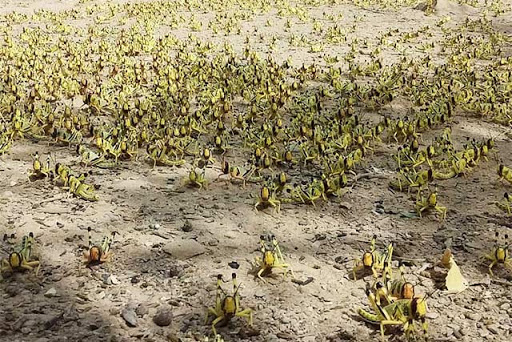
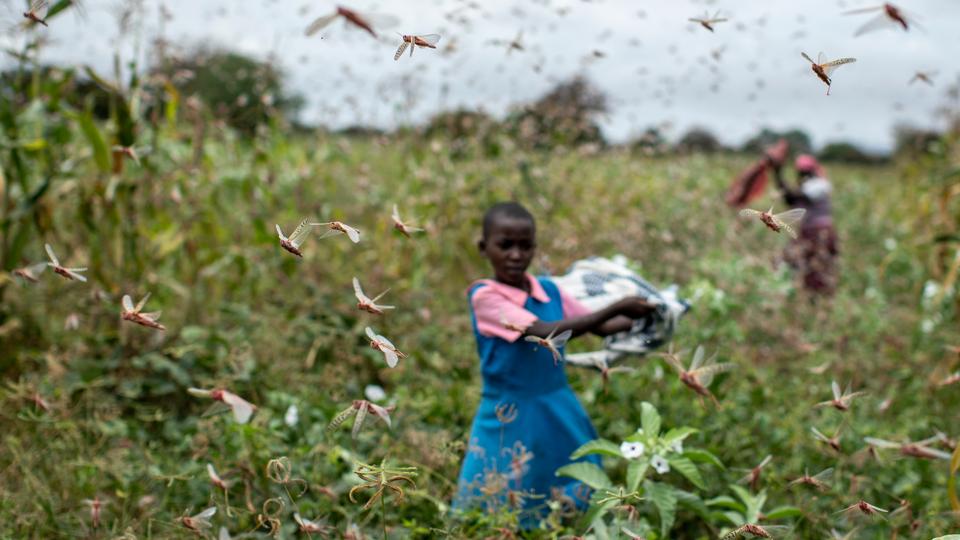
Bright yellow and finger-sized locusts are grasshopper species capable of assembling in large destructive swarms and feeding on agriculture. These creatures currently prevailing in Africa, particularly East Africa, are a new disaster on its way. According to the International Rescue Committee (IRC), the desert locust swarms of East Africa are the worst outbreak witnessed in the past 70 years. Not to forget, the ongoing COVID-19 pandemic has wrapped the world around its fingers, with thousands losing lives every day. Loss of economy, business, security, quality of life, and loved ones is topped by the threat of these upcoming locusts swarms that can starve people of East Africa to death.
Why are these tiny creatures a threat to an entire region?
Their rapid reproduction and an exponential increase in numbers in a small frame of time make them a threat. The food and agricultural organization (FAO) states that each desert locust can consume approximately two grams of fresh food each day. Almost a 1000-meter swarm of desert locusts can eat the same quantity of food each day as a total of 35000 people will consume. Though it may not sound like an alarming scenario practically, these figures have drastic impacts on the agricultural crop that gets wasted due to these locust attacks.
Several locusts exist as listed below. However, among all these, desert locusts are the most minacious lot due to their rapid reproduction, the ability to migrate over long distances, and the capability of crop exhaustion and devastation.
Desert locust
Red locust
Australian plague locust
Rocky Mountain locust
Patanga Succinct
American bird grasshopper
Why is Africa prone to locust attack?
In Africa, almost 60% population residing below the poverty line; lack of infrastructure, overpopulation, impaired facilities, inadequate access to information and tools have worsened the situation. The land area covered by Africa is mostly utilized for farming purposes, but with such a pronounced threat of locusts’ attack lingering above their heads, the inhabitants of Eastern Africa are in a consequential state.
Though locust swarms exist all across the globe, Africa is the most vulnerable to these attacks in recent years due to three basic reasons.
Desert locusts are a minacious lot due to their rapid reproduction
Firstly, favorable weather is a crucial factor for attracting these locust swarms. Experts in Somalia and eastern Ethiopia have received higher than average rainfall during the rainy season (2020) that lasted for three months: September, October, and November. Plenty of rainfall indicates a fruitful agricultural output. An increase in crop production is the ideal breeding ground for locusts. The lush green vegetation covers a significant part of the land which means a greater number of breeding grounds for locusts for expanding their population and multiplying the members of their locust’s army. A report issued by the FAO (Food and agricultural organization) and the World Meteorological Organization claimed that the desert locusts could multiply massively. Within a year, there can be 160,000 times their initial population.
Rick Overson of Arizona State University’s Global Locust Initiative explained the behavioral changes in locusts when favorable weather conditions persist. “Instead of repelling one another, they become attracted to one another — and if those conditions persist in the environment, they start to march together in coordinated formations across the landscape, which is what we’re seeing in eastern Africa.”
Secondly, Cyclone Gati further fueled the growth and reproduction of locusts. One of the strongest tropical cyclones that hit the arid northern Somalia, Cyclone Gati resulted in an unexpected heavy rainfall in the region. This heavy rainfall turned the dry topography of northern Somalia into a reproducing ground for locust. It saturated the soil and made it the best fit for locust to lay their eggs and reproduce. Though the sudden propagation of vegetation could have been beneficial for locals provided that it was not being preyed upon by the intractable locust swarms.
Favorable temperature is another crucial factor that influences the life cycle of these creatures. In order for these locust eggs to hatch, a particular range of temperature in required. Flooding prior to the dry winters keep the soil moisture intact through the winters. This gives more time for the females to lay eggs hence increasing the population density of locust in the area.
Impact of Locust attack on Africa
The upcoming and previous locust attacks on Africa have posed grave concerns to the government and local population. According to World Bank, locust-related losses, including crop devastation, livestock, and others, sum up to $8.5 billion for the East Africa region and Yemen. In Ethiopia, early analysis depicts that desert locusts have caused the destruction of nearly 800 square miles of cropland, over 5,000 square miles of pasturelands, and a loss of more than 350,000 metric tons of cereal. This can result in approximately one million people seeking food aid and relief. In Africa, almost 24 million people are victims of food insecurity, and their locust swarm is predicted to lead to almost 5 million people facing starvation. Observing the severity of the issue, United Nations has warned that the people of Africa might reach a stage where they have to decide between migration or starvation.
Locust-related losses, including crop devastation, livestock, and others, sum up to $8.5 billion for the East Africa region and Yemen. (Credit: AP)
Locust swarms coupled with climatic shifts and a deteriorating economy have further added pressure on the inhabitants of Africa. Masses are being displaced from their homes to safer areas. However, people traveling in search of food and water for their survival are in danger of being the victims of trafficking or, at worst, physical violence. This case scenario gets more serious when teenage girls and women search for food and water. When the available resources fall short, and there are more mouths to feed, it generates social pressure and disrupts family setups. With a larger population and limited in-hand resources, the competition amongst people stirs upon the fair division and utilization of the slim available resources. These situations can potentially worsen the existing crises and lead to greater damage.
Is there a way out?
The real question is that is there any possible way the severity of the locust situation in Africa can be controlled. There are proposed suggestions that may succor the pressure of locust attacks. Firstly, environmentally friendly biopesticides are required. This will reduce the number of invading locusts and will harm the environment to the least considering the arid and dry topography to Africa. Viewing the current situation in Africa, microbial biopesticides for instance fungus-based “Green Muscle” can prove to be a solution. Such biopesticides can be imported or aided from producing countries such as Netherlands or Japan.
Secondly, there is a natural way to diminish these creatures with respect to a particular region. Introduction of natural predators who prey on these dessert locusts can be environmentally friendly and fulfill the objective as well. Natural predators such as wasps, birds, and reptiles may prove effective at keeping mini swarms away.
Thirdly, eliminating the root cause is one of the best techniques to prevent the multiplication of swarms. Early preventative measures and effective management strategies to avoid greater losses can play a huge role in reducing their numbers and halt further such instances. Tracking the pattern movement of these adult locusts, especially the deadly desert locusts, is another useful strategy to prevent large-scale damages. In collaboration with United Nations, NASA is striving to arrest the expansion of locust swarms by intercepting the insects’ relationship with Earth’s climate. Employing space satellites to track the behavior of these insects, NASA scientists can learn how environmental changes influence locust populations, and the obtained information can help prevent future locust-derived disasters from occurring.
Africa is in dire need of support from all across the globe in these ongoing crises. Thousands of lives are at stake from the threat of hunger and starvation along with the COVID-19 pandemic. Neighboring countries should provide resources, medical supplies, food and water supplies, shelter, safety, and aid to enable Africa’s people to cope with such extreme conditions. It is time to keep aside political differences and work together as one body fighting to save humanity.
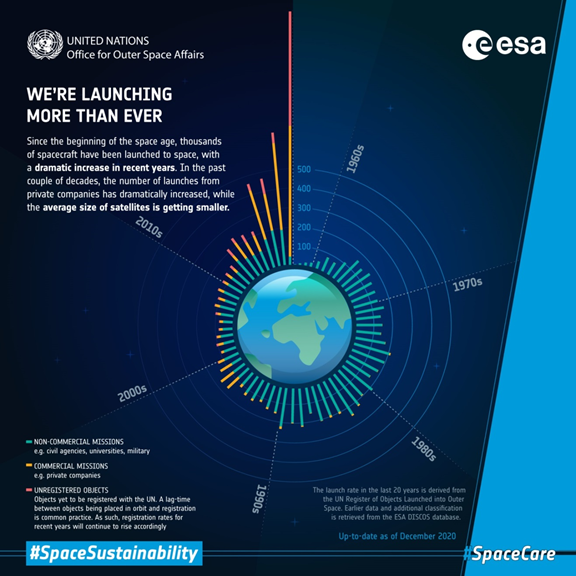
Since the beginning of the space age, starting with the launch of Sputnik in 1957, humans have launched thousands of rockets carrying more than ten thousand satellites into space. The last few years have seen a dramatic increase in these numbers, and over the last few decades, there has been a change in the type of mission flown, with private companies launching smaller satellites than those launched by non-commercial agencies.
What goes up nearly always comes back down!Space junk, also called Space debris, is an artificial material that is orbiting Earth but is no longer functional. This material can be as large as a discarded rocket stage or as small as a microscopic chip of paint. The causes of Space debris are dead satellites, used-up rocket stages, batteries & solar panels, fragments created by collisions, explosions, electrical problems, and even just the detachment of objects due to the harsh conditions in space. Some of the tiny space debris can travel up to 40,000 km/h in orbit, giving insight into their hazard!
Here, we explore the impact of Space debris as a rapidly growing disaster risk.
ROLE OF UNOOSA TO ANALYSE & MITIGATE RISK OF SPACE DEBRIS
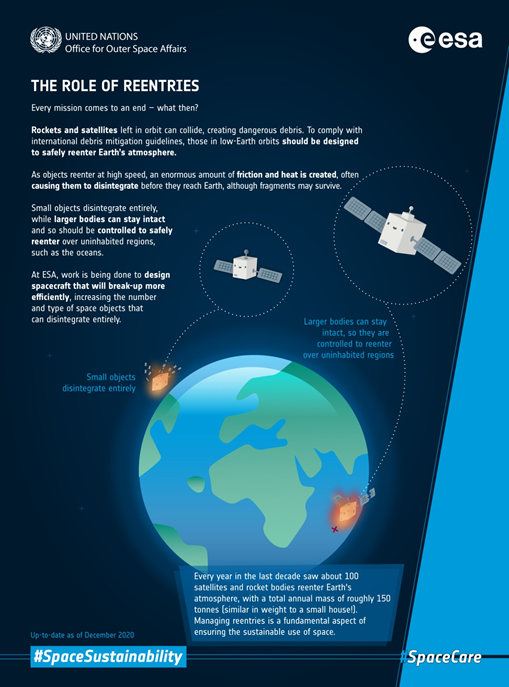
To mitigate the disaster risk of Space debris, it is crucial to collect data, forecast & track the possible hazardous objects in space. The United Nations Office for Outer Space Affairs (UNOOSA) is actively working to raise awareness about the growing danger of Space junk. It has made laws, guidelines & regulations to ensure that all satellite launching nations/companies work to keep space clean & safe. UNOOSA has collaborated with ESA and created a series of infographics and podcasts that tell the story of space debris, explain the risks and illustrate the solutions available to ensure future space exploration remains sustainable. Here is one of these interesting infographics that give importance to Re-entering debris into Earth’s atmosphere safely:
RISK OF SPACE DEBRIS RE-ENTRY
When it comes to the objects we send to space, atmospheric reentries are actually a fundamental tool in minimizing space debris and ensuring a sustainable future in space. Objects in low-Earth orbit, affected by the ‘drag’ forces caused by Earth’s atmosphere, gradually lower in altitude and then make a rapid and fiery descent towards Earth. Small objects disintegrate as they reenter due to the immense friction and heat created, but parts of larger bodies can reach the ground, so they should be controlled to land over uninhabited regions. So, if such huge objects are unregistered hence not timely detected or uncontrolled, we will surely face a huge disaster risk on Earth. The occasional impact on Earth will have detrimental effects on the environment. For example, debris from Russian Proton rockets, launched from the Baikonur cosmodrome in Kazakhstan, litters the Altai region of eastern Siberia. This includes debris from old fuel tanks containing highly toxic fuel residue, unsymmetrical dimethylhydrazine (UDMH), a carcinogen that is harmful to plants and animals.
CHINA’S TIANHE ROCKET STAGE RE-ENTRY
A very recent example of a major space debris event was the re-entry of China’s Tianhe rocket stage. It was a huge concern for space agencies worldwide that China did not share details of the rocket stage whereabouts, such as the possible location of its re-entry & crash on Earth. The size of this debris posed a possible disaster risk. On 8 May 2021, the rocket stage plummeted into the Indian Ocean near the Maldives safely. But this event showed the possibility of a disaster caused by Space debris.
RISK IN SPACE (FOR SATELLITES & THE ISS)
Space debris is the only major cause that can impart a human catastrophe on Earth and in Space since humans have a constant presence in orbit in the International Space station. More missions are planned from 2022 onwards, such as the Chinese Space station, the Artemis Lunar mission that involves a human habitat in orbit of the Moon, are notable examples. The ISS has been hit by small space debris many times. Although these have minor damages, the upcoming habitat missions signify the need to make space a safer place by addressing space debris to prevent a big disaster.
To understand the hazardous nature of Space junk, here is an interesting infographic showing the increasing number of unregistered objects in space which makes it more challenging to identify potential dangerous Space junk:
PRESENT SOLUTIONS
The main control room for potential space collisions is the U.S. Air Force’s Space Surveillance Network to track space debris. It shares its data with other space agencies and satellite operators to avoid collisions in orbit with space debris and sends out timely alerts. With the development of similar tracking centers in other space agencies, it is expected that the overall accuracy of space debris data will improve. Some space companies have developed workable solutions to mitigate their disaster risk. These include Astroscale’s Elsa-d mission launched in March 2021. The End-of-Life Services by Astroscale-demonstration (ELSA-d) mission will test a magnetic docking technique to remove debris from the orbit. The “servicer” satellite will use GPS to locate space debris and then latch onto it using a magnetic docking plate to carry it down toward the Earth’s atmosphere, where it will burn up.
Another method is to extend the mission life of the satellite by in-orbit servicing. A mission that has already been successful is the Northrop Grumman’s Mission Extension Vehicle-2 (MEV-2) docking to the Intelsat 10-02 (IS-10-02) commercial communications satellite to deliver life-extension services. This took place in April 2021 and paved the way for minimizing space debris in orbit.
The fact is that Space debris has already become a big disaster risk in Earth’s orbit. It is set to pose a huge disaster risk detrimental for life on Earth if it is not mitigated efficiently.
Throughout its history of 4.5 billion years, Earth has been a dynamic creature breathing in and out its atmosphere. The uneven heating of the ocean surface gives rise to some of the most vibrant atmospheric disturbances that often result in high-speed winds, called storms. Characterized by the rules of physics, the storms can be seen as an attempt of a huge gust of ambient air rushing to fill up the gap, or a region of low pressure (of the atmosphere), created by the heating of the air by the sun over a given geographic region. The speed of the rush is determined by the rate of heating up of the air to be replaced. When these high-speed winds are grown enormously and fastened up, they are called Storms. And getting any bigger and potentially more hazardous makes them a cyclone. Cyclones have been one of the greatest natural hazards witnessed by humans. They can cause unimaginable devastations across lands and seas, causing the loss of lives and property.
Thanks to the advancements in technology and research, we are, up to a considerable extent, able to forecast the path, severity, and potential destructiveness of any cyclone concerning us. Science has enabled us to track, forecast a cyclone and raise early warnings, thus saving lives and property. At the time, when we cope with the Covid-19 surge in the sub-continent, the atmospheric depression over the Arabian Sea cooks up a cyclonic giant that grew up to be one of the deadliest cyclones in the near future.
Here comes ‘Tauktae’!
Extremely Severe Cyclonic Storm ‘Tauktae’ is the name given to an incredible cyclone in the Arabian Sea that turned into the most grounded cyclone to make landfall on the western shores of India. Tauktae began from a tropical aggravation, which the Indian Meteorological Department first observed on May 13. The unsettling influence drifted toward the east and coordinated into profound wretchedness by May 14. The tempest before long took a turn toward the north, proceeding to a step-by-step escalate, and the system reinforced into a cyclonic tempest and was named Tauktae later that very day. Tauktae kept strengthening into May 15, arriving at serious cyclonic tempest status soon thereafter.
Tauktae started to resemble the shoreline of the Indian provinces of Maharashtra, Kerala, and Karnataka before quickly escalating into an extreme cyclonic tempest on May 16. Almost immediately on May 17, Tauktae increased into an amazingly serious cyclonic tempest, arriving at its pinnacle power soon subsequently. Later that very day, Tauktae went through an eyewall substitution cycle and debilitated prior to strengthening as it approached the shoreline of Gujarat, making landfall. After making landfall, Tauktae steadily debilitated as it turned north-eastward, moving further inland. On May 19, Tauktae debilitated into a very much stamped low-pressure territory.
Observed track of ESCS ‘Tauktae’ over Arabian Sea during 14-19 May 2021. Source: Indian Meteorological Department
Why named ‘Tauktae’?
The term ‘cyclones’ comes from the Greek word ‘Cyclos,’ which implies a coiling snake. It is an arrangement of wind pivoting inwards around a low-pressure region. Brought about by unsettling environmental influence, cyclones are generally joined by serious climate conditions like storms. When the speed of a storm wind reaches or crosses 74 mph, then it is considered to be a Cyclone. Only when a storm becomes a Cyclone is it given a name.
The act of naming cyclones started to recognize them in warning messages. It is hard to recollect specialized numbers and terms of the cyclones for individuals. In this way, to build local area readiness if there should be an occurrence of crisis and to make it simpler for media reports to spread data, cyclones are given names.
The panel comprising 13 countries, including India, Bangladesh, Myanmar, Pakistan, the Maldives, Oman, Sri Lanka, Thailand, Iran, Qatar, Saudi Arabia, the United Arab Emirates, and Yemen, name cyclones in the region. In 2020, a new list of names was released that had 169 names of cyclones, having 13 suggested names each from 13 countries.
Table showing the cyclone naming convention used by the panel of 13 countries in the Indian sub-continent. Note that the next two cyclones would be names Yaas and Gulab recommended by Oman and Pakistan respectively. Source: Twitter
For now, List 1 is in use, where the name of the current cyclone comes from. As recommended by Myanmar, the name Tauktae, pronounced as ‘Tau-te,’ is of Burmese origin and is the name of the ‘Gecko,’ a highly vocal lizard found in the region. No wonder this nomenclature inspired by this noisy lizard has perfectly synced with the cyclone as the latter has been screaming into the shores with choking noises.
Tauktae’ Lizard- the noisy gecko found in the hilly regions of Myanmar and the North-East Indian state of Nagaland. Source: Google
The aftermath!
Tauktae carried substantial precipitation and blaze floods to zones along the coast of Kerala and on Lakshadweep. There were reports of substantial downpour in the provinces of Goa, Karnataka, and Maharashtra as well. Tauktae resulted in 101 deaths in India and left another 81 individuals missing. There were additionally five deaths reported in Pakistan. The tempest dislodged more than 200,000 individuals in Gujarat. The cyclone caused far-reaching devastation on the western shore of India. As much as 40 anglers were lost adrift when their boats were trapped in the storm. Mumbai additionally experienced effects from the tempest, with airports being shut for safety reasons. The city encountered its fastest at any point recorded breeze blast at 114 km/h (70 mph). Power blackouts and other electrical issues likewise affected locales.
This can be seen merely as a coincidence that Tauktae was devastating Gujarat through the landfall the same day. At the same time, India recorded its, at that point, most elevated single-day COVID-19 loss of life, with 4,329 deaths reported, making the day nothing sort of an Armageddon for the western part of the country. The cyclone likewise caused an enormous number of sea occurrences as it moved along the shores of western India. Hundreds went missing from different boats; nonetheless, most of them were rescued—other bigger ships likewise experienced issues. Reportedly, 37 bodies were recuperated from protected barges, with more than 40 individuals actually went missing.
Waves engulfing pavement at the historic Gateway of India in Mumbai. Source: Mid Day Magazine
In Pakistan, the external wind region of the cyclone came to the extent lower Sindh area. Because of the impact, it produced dust storms and was followed by a light downpour, which influenced the city of Karachi. The solid breezes additionally caused a rooftop to implode, killing four individuals. The residue storm likewise destroyed trees, billboards, and electric shafts. The Pakistan Meteorological Department (PMD) recorded 7 mm (0.28 in) of downpour around there. It causes a heatwave in the city, with temperatures rising as high as 43.5 °C (110.3 °F). In the Maldives and Sri Lanka, more than 730 families were influenced by the cyclone.
Is that over yet?
Our planet is a living creature breathing through its atmosphere. Our existence depends on its wellbeing. No matter how arrogantly we claim to have tamed the forces of nature, our planet makes sure that we are reminded of its enormous powers every now and then. Cyclones are one such natural reminder for us. They are evidence of how furiously nature can treat us. They remind us of the fact that Earth is a very vulnerable place. A tiny change in the atmosphere may gradually result in the devastation of a civilization. The cyclone ‘Tauktea’ was right here above us, knocking us out and asking us to stay inside our shells of arrogance. Natural hazards are nature’s way to warn us not to take this beautiful planet for granted. While we have thrown all of our scientific achievements into coping with the global pandemic, another cyclone is churning up in the Bay of Bengal, ready to hit us in the last week of May. Behold!
Geology is mainly the study of non-human-induced changes taking place throughout earth’s history. Geologists think of the last 50 million years as the recent past, both because they represent only about one percent of the age of the earth and because plate tectonics, the geologic process that controls conditions within the solid part of the earth, has operated without significant change during that time. This is the exact period to gain an insight into the earth’s climate that can be applied to the present-day global warming debate.
Scientia Pakistan reaches out to the renowned geoscientist, Prof. Dr. Nayyar Alam Zaigham, for its exclusive ‘Natural Disaster Edition’ to gain an insight into the historical study of earth’s climate cycles and how much they impacted earth’s geographical features and its environment. We take a look at the primary reasons for the growing number of natural disasters on every part of the earth due to these climate changes.
Prof. Dr. Nayyer Alam Zaigham is currently working as Executive Director, GeoEnvoTechServices (GETS), A Research Group of Geoscientists & Environments, Karachi, Pakistan
Below are excerpts of Dr. Zaigham’s brief conversation with our editor-in-chief Saadeqa Khan.
Saadeqa: Geology is mainly the study of non-human-induced changes taking place throughout earth’s history. How could it better contribute to study climate changes?
Dr. Zaigham: It has been observed that the climate system is continually changing due to the extremely complex interactions among the various components of the Earth System as well as the external energy sources. In fact, the Earth spins around its inclined axis and simultaneously rotates around the sun. Top of it, it is further diagnosed by NASA that the sun with its whole solar system (inclusive of Earth) orbits around the center of the Milky Way Galaxy at an average velocity of 828,000 km/hr or 230 km/sec. Thus, it is deduced that the global climate variability will remain the consistent and complex phenomena controlled by these three, maybe more, movements as well as constantly varying impacts of the sun and other various celestial bodies as encountering on the orbital-way at the unknown varying periods of the very long-term orbital-journey around Milky Way Galaxy.
However, on the basis of the overall research assessment of our earth as a member of the present ‘Solar System’, it was identified that the ‘Earth System’ itself inherent four various complex functioning components or the mega “Spheres” (Figure-1), like:
the Lithosphere (i.e., solid earth) that includes all types of the exposed geological and geomorphological features and the whole inside of the earth;
the Atmosphere (i.e., the gaseous envelope surrounding the Earth) that extends about 560 km from the surface of the earth and comprises four different sub-spheres (i.e., troposphere, stratosphere, mesosphere, and thermosphere);
the Biosphere (all the concerning living organisms) that includes all living things, like the trees, the birds, the flies, the viruses, the animals and even the people who are the most notorious creature pocking their nose in all four the earth’s ‘spheres’; and
the Hydrosphere, that contains all the liquid, solid and gaseous water-types as rivers, lakes, snow, glaciers, icebergs, huge icecaps, ice caps, ice sheets, and ice shelves, permafrost, and seasonally frozen grounds, gulfs, seas, and oceans of earth inclusive of atmosphere & biosphere too.
A model shows Earth’s systems (spheres), energy source from the Sun & cosmic radiations from the celestial bodies of the universe. (Modified after Zaigham & Aburizaiza, 2019; Christopherson, 2005; Trewartha et al., 1977)
Interactively, all the spheres are dependent on each other, as indicated by the numbers and the arrows under the strict control of solar energy and its other cosmic radiations as well as from the other celestial bodies of the universe. Some of the nutshell deductions indicated some of the salient interactive effects, with reference to arrow and numbers plotted on the model, are described as follow:
1: the atmospheric chemistry and temperature effect the organisms on the biosphere;
2: the atmospheric chemistry and temperature effect the weathering of rocks on the lithosphere;
3: the atmospheric chemistry and temperature effect the evaporation of the hydrosphere;
4: the photosynthesis on the biosphere affects the concentration of the atmospheric CO2;
5: the plants aid weathering (physical and chemical) of rocks of the lithosphere;
6: the plants control water transfer from soil to atmosphere from the hydrosphere;
7: the weathering and erosion control nutrient supply to the life on land and in oceans;
8: the volcanic eruptions add CO2and aerosols to atmosphere;
9: the locations of continents control circulation pattern of oceans of the hydrosphere;
10: the rainfall and runoff erode the land surface;
11: the soil water limits the plants growth in biosphere;
12: the ocean circulation controls how much CO2 is removed from the atmosphere; and on and so forth.
These interconnected ‘spheres’ of the Earth System play the greatest and the most intriguing roles in describing many great things that make this planet habitable in terms of a) how the natural processes and cycles of the Earth work, and b) how human activities are effecting and changing them.
Practically, it was identified from the above discussion that all the four earth components and the external energy sources play key roles in a clear understanding of the creation of climate zones over our planet and its variability trends with respect to the passage of time periods. Thus, the earth has a variety of climatic zones right from the north-pole to the south-pole. These climatic zones have variable climatic variability trends within themselves individually too on micro, macro, and/or mega levels.
The climate of any area/region depends on the micro, macro, or regional impacts of various natural and/or anthropogenic factors, i.e., the distance from the sea, the ocean currents, the elevations (land relief or topography), latitude, atmospheric behavior (direction of prevailing winds and/or the el-Nina phenomena), distance from the equator, earth tectonic processes, celestial cosmic activities, axis inclination & rotation of the earth and other anthropogenic urban, industrial, global political interest, etc. The different combinations of these factors collectively affect the climate in short and/or long terms showing the varying climatic changes in regions accordingly.
[Note: Brief is taken and described with reference to Book entitled “Hydro-Tectonics & Fault-Zone Aquifers in Desert Terrains of Saudi Arabian Crystalline Shield”, written by Nayyer A. Zaigham & Omar S. Aburizaiza, ISBN# 9960-06-943-5, Published in 2019 by Scientific Publishing Center, King Abdulaziz University, Jeddah, Saudi Arabia]
Saadeqa: What do you think are the main reasons for earth’s climate fluctuation between cold and warm periods? How much earth’s tilt fluctuation relative to its orbital plane contributed to these changes?
Dr. Zaigham: Our knowledge about the earth’s natural system is limited, and still, we cannot claim that we have explored everything as discussed during your first question. In the past, scientific knowledge was almost blind-fated, and people were reluctant to accept new things that oppose their old traditional rigid beliefs. Today, we know that earth is moving around Sun, but in 1543, when Nicolas Copernicus detailed his radical theory of the Universe that the earth, along with the other planets, rotates around the Sun, he had to face widespread hate and outrage of some orthodox leaders over his theory.
Today we know that earth is not only revolving around Sun but also around its own axis as well as around Milky Way Galaxy. Such triple movements of Earth and the solar energy & cosmic radiations/currents from known and unknown celestial bodies may be creating a bit complicated climate & its variability trend(s). We are experiencing global climate changes and altered weather (especially the temperature and the rainfall/solid precipitation patterns in every part of the world due to new weather cycles that the earth has faced before during past geological historical periods. No doubt, the anthropogenic activities affect the Earth’s weather as well as the climate significantly, but varying region to region and human activity to activity.
The climate change effects are evident everywhere. The satellite images have helped to identify the climate changes in comparison with the past. For examples, current images show on-set of the drought in several parts of Europe and the Siberian regions.
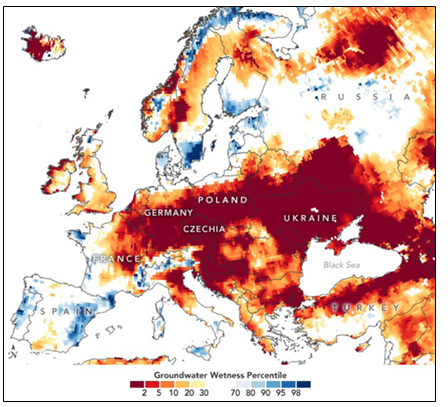
NASA Image, released on June 26, 2020, revealed that the 2019-20 winter in Europe was the warmest on record, with little snow (Figure-2). The spring was also drier and warmer than normal, with a historic heatwave in the middle of May. Ultimately, it resulted in the long-term rainfall deficits, persisting heat waves, and increased evaporation, which have depleted some of the groundwater supply beneath central and eastern Europe.
NASA image released on June 26, 2020.
Even, eastern Siberia is famous for some of the coldest wintertime temperatures in the Northern Hemisphere, but in 2020, it has also been the region’s wildly high temperatures and wildfires as reflected by NASA Image released on June 26, 2020.
Similarly, the NASA image of March 25, 2020, shows the depleting growth trends of the Arctic sea ice as compared to long-term average levels due to regional winter warm for most of the middle latitudes of the Northern Hemisphere. Nowadays, Antarctica is also being investigating for the increase of the earth’s temperature as the glaciers are melting faster than last few decades ago.
Likewise, in the 1970s and 80s, certain injurious chemicals were found to be accumulating in Earth’s stratosphere, where sunlight breaks them into components that destroy ozone. The ozone layer naturally absorbs ultraviolet radiation from the Sun, so less ozone in the stratosphere means greater risks for sunburn, skin cancer, and cataracts. The primary reason behind the increasing of severe drought periods and damage to the Ozone layer, particularly over the European & Arctic ice sea regions, is considered due to the massive industrial revolutions. However, NASA released a report on February 13, 2018, which described that the Earth’s ozone layer is slowly healing, and we now have proof that policy decisions have helped.
In the case of Pakistan, an article in ‘Nature-LETTERS/2006’ published led by Kerstin Treydte of the Swiss Federal Research Institute that identified two types of heavy oxygen trapped in the trees in northern areas. Based on the extracted cores of the trees, the yearly tree’s growth rings were assessed to estimate the ratio of normal to heavy oxygen. The end results of the study revealed that the yearly snowfall is stretching back more than 1,000-years in comparison to the local snowfall records. The phenomenon was further linked in an accompanying article in ‘Nature’ by Michael Evans of the Arizona, Tuscan, USA, who pointed out that the biggest increases in snowfall occurred in the last 150 years approximately coincident with the industrial revolution & greenhouse gas increases.
But in this connection, I gave my views in an interview-2006 to a local correspondent of SciDevNet, Aleem Ahmed, that was published on April 27, 2006. I told him that the increase in the snowfalls, as another explanation, could be the direct impact of the very huge flood-irrigation options by using the largest canal systems, barrages, dams, special linked-canal networks for the large-scale forming in the northern areas initially developed in the 1830s. It was pointed out that such that intensive irrigation practices coincide with the western ‘industrial revolution’. For more than 60-years or so, we have built, even are still building, a number of dams in the northern part of the country to retain the water there for more agriculture without adequately considering the southern part of the country. Consequently, the significant increase in the precipitations and decrease in the temperatures in the northern parts and decrease in precipitation and increase in the temperatures in the southern parts of the country were prevailing for a long time – causing the climatic discrimination by the unforeseen anthropogenic activities.
I have been working on it for several years, and my research concluded that the increasing earth’s temperature is not new; but even around 18 thousand years ago, the earth had experienced another climate cycle that completely altered its natural oldest system on the semi-global scale. We are working to figure out that what are the primary reasons behind these climate effects still.
Saadeqa: Do you agree that climate variations are mainly due to processes (man-made) occurring on earth, as contrasted to the Sun?
Dr. Zaigham: As I mentioned above, the atmosphere above the earth has different layers mainly responsible for the earth’s natural weather patterns. Humankind activities affected them directly due to which many parts of the world are experiencing little to no rainfall as compared to the past. Cyclones, tornados, and torrential rains are causing floods and massive destruction in the coastal regions.
Presently, Pakistan is also experiencing less rainfall, particularly Baluchistan (area-wise the largest province) and Sindh Province. Its economy is primarily dependent on agriculture, and thus, the low precipitation is gradually draining it out. Around 100 years ago while the discharge of Indus flow was about 150 cusecs within the delta region, there was an excellent irrigation model in & around the Indus Delta. But now, in the same areas, down to Kotri barrage, the water flow is usually much below the decided ‘limit of 10 cusecs of flow’ except the over-flooding time of Indus River. Moreover, many parts of Pakistan are experiencing much less than 100-millimeter rainfall (averaging to 50-mm) due to the onset of the climate changes due to the irrational divergence of the Indus River System to the northern parts of Indo-Pakistan in the form of huge canal networks, barrages, dams, and other much accusive water utilization option. That is why most of the northern areas of Pakistan have better climates as compared to the lower Sindh down to delta coastal region as well as the nearby areas of Baluchistan too.
The Tharparkar district, the part of the Greater Thar Desert, of Sindh province, once famous for its green-established large sand dunes, but now turned into a ‘lost desert ecosystem due to the man-made intensive interventional huge activities. We have started open-pit coal mining ventures in Thar, constructed the coal-fired power plants, and other linked urban & industrial development too. Considering the examples of such huge older urban & industrial developments in Europe, as discussed above, we will face or maybe, the verse repercussions. However, it has been assessed that these development projects will alter the total Thar’s ecosystem in terms of the annual rainfall, fauna & flora, grazing landscapes, agriculture lands, groundwater aquifers encountering from near-surface shallow down to different depth levels, even the deep-basement ones and etc. Moreover, it is also assessed that such enormous physical mining development activities may invoke strong seismicity directly within the Tharparkar region. Now, the Government, beneficiary companies, and NGOs are working to make the artificial ecosystem in Thar for irrigation and livelihood. In fact, the thing we are worst to visualize because once we, the humans, destroy a natural ecosystem, it could never be refixed.
Similarly, in our rural and mountainous regions of Pakistan, we blindly cut the forests that caused massive floods, glacier melting, and other severe climate changes accordingly. We need to learn that the earth’s natural system has its own ability to restraint. Likewise, the vivid coastal urban & industrial developments along the more than 1000-km long Pakistan coasts by reclamations of sea-lands likely appear to badly affect the coastal climate and other coastal-marine ecosystems too. The living example is the vast DHA urbanization in Karachi, as the people are now experiencing the side effects.
According to Dr. Zaigham, in our rural and mountainous regions of Pakistan, we blindly cut the forests that caused massive floods, glacier melting, and other severe climate changes accordingly.
In fact, urban development, including land-use changes, dense building developments, localized heat emissions, various human activities, etc., has a great impact on the local climate of a city. One of the best-known effects of urbanization is the urban heat island effect, which develops when urban cooling rates are slower than rural ones. Some of the main factors that may bring about the difference in temperatures between urban and rural areas, like as i: the high heat capacity of the buildings in the urban area compared to surrounding rural areas, resulting in more of the sun’s energy being absorbed and stored in urban; ii: the high-density buildings in urban areas block the view of the sky and reduce the heat release back to space; iii: the man-made heat emissions by buildings, air conditioning, transportation and industries in urban areas; and iv: the dense development in urban areas, which reduces wind speeds and inhibits causing suffocation. Ultimately, the urbanization effects collectively result in increasing the ‘greenhouse gas impacts’ causing randomness in annual precipitation. Karachi city is one of the best examples.
Saadeqa: Why do we need to implement a strict building code in Pakistan?
Dr. Zaigham: I have illustrated the situation with a minor example of the big residential built during about last decades, the 1970s-2021, along the Clifton coastal belt of Karachi, which shows that good fieldwork is essential while planning those megaprojects. Many of our planners don’t have sufficient knowledge of the risk assessment. In most cases, it is the main point of the disaster management policy worldwide. Having said that, several countries of the world including Pakistan are facing the worst disaster management. Like in Dubai, they have built shopping malls, hotels, resorts, and massive projects without giving importance to the environmental research against the business/financial plans or considering the side effects of the amazing mega-constructions within one of the worst desert ecosystems, which owe the Arabian/Persian Gulf, a very shallow marine body. Now, the climatic & other earth-related seismo-threats are gradually creeping up on the micro-macro levels. I have presented my research studies on Karachi-Clifton issues on 24th October 2007 at Urban Resource Center, Karachi and on the deterioration of the Arabian/Persian Gulf issue in 2012 at Riyadh, Saudi Arabia.
Whether it is Karachi, Dubai, or any other big city of the world, a strict building code with proper fieldwork and risk assessment strategy is essential for the mega constructions. We can use modern computer technology for making a digital model before commencing construction work. I have worked on the groundwater system in Saudi Arabia, adjacent to these areas and still developing different climate models considering the present ongoing trends in comparison to historic to prehistoric ones – the amazing realities appear.
Moreover, in the case of Karachi, a book was written entitled “Seismic Zoning of Karachi & Recommendations for Seismic Design of Buildings in 2000 by A. Razzak Loya, Nayyer Alam Zaigham, Mushtaq A Dawood, and published jointly by the Association of Consulting Engineers, Pakistan (ACEP) and Karachi Building Control Authority (KBCA), which was taken as the approve ‘Building Codes’ for Karachi city. It is interesting to point out that in the recommendation section, it was advised to update the book-findings after five years by incorporation the precise mapping data of the land-fill areas of the mega Karachi city. So far, nobody has come forward from ACEP and/or KBCA, though the copies of the book are now out of stock and are not available for new engineers. One can imagine – how serious we are about safety issues!
Saadeqa: What is the status of geological research in Pakistan? Do our educational institutions provide modern tools and research facilities like remote sensing to the students and researchers?
Dr. Zaigham: You can figure out the status of geological research in Pakistan on your own with the statement that the geological survey of Pakistan is functional without a Director-General for more than two years. The universities are neither being providing modern research facilities and/or adequate research funds to the deserving students willing to undertake research projects on much-needed topics related to threats related to the seismotectonic and climatic change issues in the region.
Moreover, researchers and teachers are getting salaries that are insufficient to meet their basic necessities, so how could the researchers work peacefully when are trapped by the financial crisis.
It is a lacuna within under developing countries that when a senior professor got retired from a university, they toss him out like a spare part of society. The fact is different. In developed countries, the research persons of the universities are immediately taken as Emeritus Professors after having retired. I myself was appointed after retirement as Outstanding Research Professor, with full financial benefits & working facilities and high honor, by King Abdulaziz University, Jeddah, Saudi Arabia. Still, I am linked with them and working on one or the other research issue.
However, the Higher Education Commission (HEC) of Pakistan can fully recharge its system with such experienced individuals to boost a research culture in Pakistan, especially in the education-cum-professional research sectors.
The image of the 6,000 years old amulet was discovered from Mehrgarh. PHOTO COURTESY: D. Bagault, C2RMF
A small amulet discovered from the ruins of Mehrgarh, an archaeological site in Balochistan, has been declared as the oldest known lost-wax cast object and its technology is still being used in the world, including by the National Aeronautics and Space Administration (Nasa), to manufacture different metallic objects.
According to a PAPER published in NATURE COMMUNICATIONS – a well-cited primary research journal – the wood-wheel-shaped amulet is the first ever example of “lost-wax casting” still in practice.
The imperfect-shaped amulet looks green and rusty and was discovered in 1985 by Jean-François Jarrige, a French archaeologist who uncovered a Neolithic Mehrgarh site located near Sibi. But the discovery remained in the dark until it was shined by state-of-the-art lighting and imaging techniques.
The image shows the remains of mysterious Mehrgarh located near Sibi, Balochistan. PHOTO COURTESY: C. Jarrige, Mission Archéologique de l’Indus
By analyzing the light bounce back from the 2cm-wide amulet, physicist Mathieu Thoury from the French Synchrotron, and his colleagues concluded that the object was carved in a single piece, adding that they did not find any soldering parts even at the joints of the rods. Scientists observed the emitting lights from the amulet shows it was made by pure copper melted at 1,085 degrees Centigrade.
The lost wax casting method
Mehrgarh’s craftsmen used a simple but innovative way to mold the metals in their desired shape. First, they made a copy of the object with any material having a low melting point, most probably a lump of beeswax; encased it in soft clay to form a mold, which was then heated or baked to harden.
Finally, the molted metal, such as copper, was poured which melted the wax replaced the metal. After the cooling process and smashing the clay model, they got their once-piece metal object. This process is also called “investment casting” and is still used in the making of delicate jewelry and small parts of space crafts.
With some advancement, the process was also used to create parts of the Messenger spacecraft which orbited Mercury between 2011 and 2015. It is also used to make numerous metallic parts of the International Space Station.
Speaking to Express News, the key author of the paper, Mathieu Thoury, said: “It is a first discovery which shows the major metallurgy method of lost-wax cast and may have been adopted by other civilisations later on – such as Mesopotamia.”
According to the author, the amulet was carved from pure copper found in native areas.
Mehrgarh – the home of innovation
Mehrgarh was a remarkable site where according to some reports, first-ever dentists were found, and cotton was weaved for the first time. In April 2006, a team of French scholars revealed that the Stone Age man used flint drills for boring teeth some 9,000 years ago. French archaeologist Christophe Moulherat and his colleague analyzed a total of 11 drilled teeth collected from a Mehrgarh graveyard.
In 2002, Moulherat discovered several threads preserved by mineralisation, which are the earliest known examples of cotton thread. The cotton fibres were preserved in copper beads and the study suggested that Mehrgarh was home for textile making.
Sadly, much of the part of this important site has been destroyed due to tribal clashes.
The article was originally published in Express Tribune and re-sharing on the permission of author Suhail Yusuf.