The collection of data from a distance by means of satellite or aircraft called remote sensing. Let’s dive into this exciting process and see what we have achieved until now and what we can hope to do in the future!
History of Remote Sensing
The term Remote Sensing was first used in the 1960s. The historical backdrop of Remote sensing starts with photography. During the American civil war, the photographs taken from air balloons were primarily used for military purposes. The beginning of different sorts of Remote sensing detection was started back in World War II. After the end of World War l, Aerial photography was being used for meteorological and agricultural purposes, and by the time it grew with the improvement of radar, sonar, and warm infrared location frameworks. Since the 1960s, sensors have been intended to work in essentially the entirety of the electromagnetic range. Today a wide assortment of far off detecting instruments are accessible for use in hydrological examines.
How it works?
Remote sensing devices have a sensor to collect data, sensors are mounted remote sensing devices, so they can collect reflected radiations from Earth. For example, airplanes, satellites.
There are two types of sensors: Active sensors and Passive sensors.
Active Sensors: Active sensors have their own source of energy i.e. they have such devices, which emit radiations to the particular area of examine.
Passive Sensors: The passive sensors depend on Sun for radiation emission.
Active sensor-based remote sensing work can be carried out at any time while Passive sensor-based remote sensing can only be carried out in the presence of bright daylight.
Remote sensing devices have a sensor to collect data
Pakistan in the field of Remote Sensing
The Pakistan Space and Upper Atmosphere Research Commission (SUPARCO) leads space research in Pakistan. Suparco’s projects comprise of the starting of sounding rockets and satellite applications, particularly far off detecting and interchanges. Its drawn-out objectives are to create interchanges and distant detecting satellites and to dispatch lightweight logical satellites in close Earth circles.
Pakistan’s Early Space Flights
Badr 1:
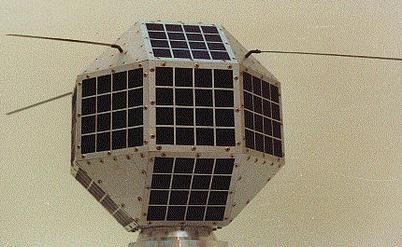
It was one of the very first satellites of Pakistan that was launched in 1990 by SUPARCO. It was launched into a low Earth orbit through a Chinese rocket carrier.
This launch helped Pakistan in progressing in the field of military, technological, and scientific developments and also provided data on radio-signal distribution in the ionosphere (the upper most layer in space).
With the successful development and launch of the Badr-1, Pakistan became the first Muslim country and second South Asian country after India, to place a satellite in orbit. The satellite provided Pakistani scientists an academic, scientific, and amateur community experience in telemetry, tracking, and control and data communications as the satellite successfully completed store and dump message tests for 5 weeks.
Badr-1 was one of the very first satellites of Pakistan that was launched in 1990 by SUPARCO
This was the first and major step towards the development in the field of Remote sensing in Pakistan.
Badar-B:
After that, Badar-1 the satellite that has launched by Pakistan is Badar-B. The Badar-B was more advanced than Badar-l, with a CCD camera for pictures of Earth and a framework that permitted ground stations to alter the satellite’s position in space.
Satellites launched by Pakistan
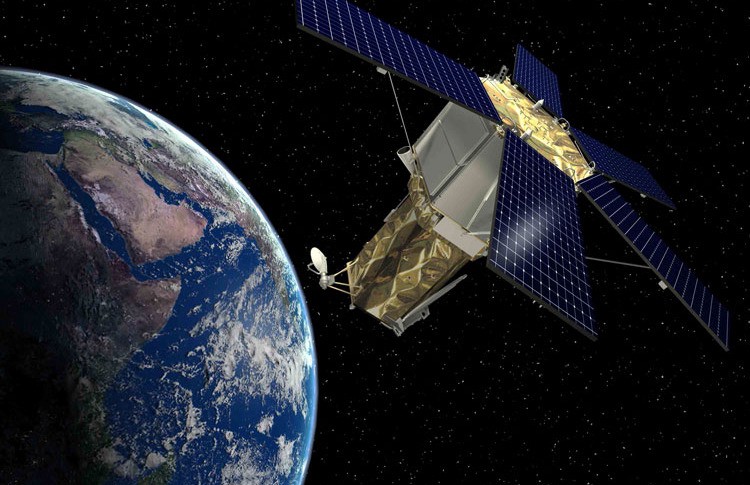
Pakistan has almost five satellites in space. Pakistan Remote Sensing Satellite (PRSS-1) was the first dual-purpose, i.e. optical and earth observational, remote sensing satellite. It was launched by the collaboration of China from China’s Jiuquan Satellite Centreon 9th July 2018. One of the primary purposes of this satellite was to monitor progress as they build the China-Pakistan Economic Corridor.
Pakistan Technology Evaluation Satellite-1A (PakTES-1A), which was originally planned and created by Pakistan Space and Upper Atmosphere Research Commission (SUPARCO) engineers, has additionally been co-propelled with PRSS-1 by a similar vehicle.
PAKTES-1A
These launches were held in china because Pakistan is still lacking in the field of launching.
Impacts of recently launched satellite
According to officials, it would help country in commercial satellites for collecting information related to:
Meteorology.
In better land management, and disaster management.
Urban planning, mineral exploration.
Crop yield forecasting, water management.
Both civilian and military applications.
One of the major Impacts can be seen in the position of Pakistan in the world space race.
It also helps to spread general awareness for the study of Space Science
Plus it flourishes Pak-China Friendship that leads to the development of Pakistan’s economy especially in the field of Education and Job.
Remote Sensing as a part of course curriculum in Pakistan
Two meetings of the National Curriculum Revision Committee (NCRC) for Remote Sensing (RS) & Geographical Information System (GIS) were held at HEC Regional center in Karachi (14-16th March 2005) and Lahore (16- 18th May 2005). Realizing the importance of RS & GIS in the developed world area as well as in developing countries such as India, these meetings were organized by the Higher Education Commission of Pakistan. The focus was given to develop international standard curricula and launch 4 years BS and 2 years MS degree programs for both public and private sector degree-awarding institutions and universities of Pakistan. Various Remote Sensing, GIS, Information Technology professionals, Geographers, and educationists from all over Pakistan attended these meetings.
Future of Pakistan in Space Science
Pakistan’s Federal Minister for Science and Technology, Fawad Chaudhry, unveiled some plans last year for the promotion and development of space science.
“Proud to announce that selection process for the first Pakistani to be sent to Space shall begin from Feb 2020, fifty people will be shortlisted — list will then come down to 25 and in 2022 we will send our first person to space,” Chaudhry said. This will be the biggest space event of our history, he added.
Chaudhry said the Pakistani Air Force will play a lead role in the selection process of the astronaut for the space mission.
“The Air force will be the custodian of the selection process. Globally pilots are selected for space missions,” he was quoted as saying by the Dawn News website. “Ten pilots will be trained and eventually one pilot will be sent to space,” he said.
When you look up at the skies, you may have asked yourself a question. What lies beyond these skies? The question followed by many other questions, and when you can answer one question, many other arguments pop up in your mind seeking their answers. The magical Universe holds infinite mysteries and anomalies that are beyond human understanding, no matter how advanced technologies we have. The human race has to learn more and more about the Universe each passing day. The science of space is fascinating but complicated at the same time.
Once upon a time, human expeditions were constrained to our planet Earth or just observing the glowing icons on the night sky, but with the technology we possess now, we have traveled beyond our solar system, we can look beyond our galaxy, and are able to decipher the greatest mysteries of space-time, and unlock new limits of the Universe. We developed Astrobiology to study the composition of exoplanets and their moons in search of new life possibilities. We established Astrochemistry to study about the formation & anatomy of stars and heavens. We progressed with Astrophysics to learn about the rhythms and patterns of the heavenly objects and everything in the cosmos. We keep progressing by decrypting depths and enigmas of our Universe with the help of studying them through these fields and with a lot more, including Physical Cosmology, Extragalactic Astronomy, Galactic Astronomy, Steller astronomy, Solar Astronomy, Planetary Sciences, etc. The question is how much we know about ourselves, about this Earth we call home, about the Solar System that has a life-supporting planet, about the galaxy whom our Sun is a part of, and everything within this Universe.
We are in the Golden Age of Exploration but are still unaware of our past, and neither can we predict our future. We know so little about the Universe. We haven’t even the mere insight of the first page of “History of Universe and Its Future.” There was a time when skies were a threshold for the human race, and many dedicated and lost their entire lives for this cause until the Wright Brothers succeeded in achieving the milestone at the beginning of the 20th century. After that, humanity started looking beyond the skies, and space became their new threshold until they grew their capabilities well enough to step in outer space and land on the Moon in the Mid-20th Century. Since then, the human race has achieved many milestones by sending space missions to other planets and outer space in search of knowledge and extra-terrestrial life. With the advancement of technology, we developed to capacitate ourselves by developing telescopes and looking beyond the skies. Through them, we can unveil many hidden mysteries and secrets of the heavens. Now we know that there are around three and a half billion to five billion stars only in our Milky way galaxy. With the help of these high-resolution telescopes, we know that there are possibly trillions of galaxies in our universe roaming in massive space. We know how stars are formed, how they live their lives, and how they possibly end with a supernova or a neutron star or a black hole.
Close inspection of images taken with the Hubble Space Telescope shows that Pismis 24-1 derives its brilliant luminosity not from a single star but from three at least. Component stars would still remain near 100 solar masses, making them among the more massive stars currently on record. Picture Courtesy: Davide De Martin (ESA/Hubble)
We can predict the life of the Universe and its vastness through our knowledge of science and mathematics and can also estimate the movements of all heavenly bodies and answer many questions from quarks to quasars. We know that the Universe is expanding, and its expansion is accelerating with time. We know everything in the Universe has a life span, and when it dies, it becomes responsible for giving birth and life to something else. We know the chemical compositions of stars, elements they inherit, and the light they produce. We know that the clouds of gas and dust, which we call nebulae, are formed after the death of a single star, which gives birth to several other stars. We know about the wonders of comets, asteroids, and hundreds of thousands of others such objects that exist in our Universe.
The human quest for the understanding of the Universe has never stopped. We evolve with the technology opening new gateways of space explorations and finding new horizons beyond our skies. We are looking into new ideas that were long beyond the reach of human imaginations in past centuries. We are trying to connect to other worlds that support life and give us an opportunity to evolve in a better way. We have developed applied sciences to craft incredible space technologies in terms of communications, observation of the Earth, global positioning services through satellites, and giving a boom to space manufacturing and industrialization with the construction of the International Space Station (ISS).
Until now, there have been more than 135 flights of the Space Shuttle with the launch of more than 8,000 space objects, including satellites, space probes, rovers for the Moon & Mars, and dozens of exploratory missions throughout the Solar System. Space agencies throughout the world are now looking back to the Moon, and they have a plan to colonize the Moon before colonizing Mars because they know setting foot on Mars will never be easy until they learn to understand the way of survival at Moon first. There are now more than 2000 private companies working on space activities within different capacities. The government space agencies are also collaborating in this quest for space exploration. The eyes are set on orbital habitats, space manufacturing platforms, space greenhouses, harnessing asteroids, and advanced satellite technologies. The space industry is expected to contribute trillions of dollars to the global economy in the coming years.
The future of Space Science holds a technological revolution. There will be more advanced orbiting scientific spacecraft, missions to other planets, and to their moons, as well as surface rovers and robotic geologist providing us with the profound details about the surface and atmosphere of Mars. In the coming years, we can expect state-of-the-art sensors, equipment, orbiters, hot air balloons, penetrators, landers, satellites, and so on to help us discover the riddles of new worlds.
Space telescopes operating at different wavelengths across the electromagnetic spectrum to unfold mysteries.
The advancement has surprised us by the knowledge that we gained by analyzing the data collected in all those years of research and observation. We know the ways have observatories and laboratories throughout the world, collecting data and turning this data into useful information that helps us gaining knowledge about the evolution of the Universe. We are now able to understand more deeply than ever about the black holes, neutron stars, exoplanets, binary star system, nebulas, comets, asteroids, gravitational waves, dark matter, dark energy, cold spots, cold ions, subatomic particles, anti-particles, space-time expansion and many other mysteries that were never even identified some decades back. The knowledge about them is very little, but we have the direction. We know now more than ever from where to begin our quest, and we know one thing that the human mind holds as many wonders as the Universe itself. The curiosity of the human mind will lead him to watch the conundrums with an insight to develop its capabilities to avoid and major catastrophic impact.
With the help of our time machines in the form of telescopes like Hubble, Spitzer, and Chandra, we look back in time into the miracles of nature and broadening the dimensions of our visualizations. We weren’t able to imagine things that we have the ability to envision now. In the future, with the space telescopes like James Webb Space Telescope (JWST), Herschel, NuSTAR, Planck, GLAST, Con-X, LISA, JDEM, we will be able to widen our prospects of imagination even more. They will help us see back in time, at the early stages of the Universe, and identifying the secrets lying behind the curtains of its development. Within the next decade, we will be able to decode many other hidden treasures of the cosmos and the breathing life. For we can hope that human understanding of the science of strange cosmos envision us to live with its true purpose.
In his second book, The Fabric of the Cosmos, popular string theorist Brian Greene deals with some of the most intriguing concepts within the realm of physics, and in turn, our universe. One by one, he presents a grand mystery and then gives the prominent hypotheses and theories set forth to demystify each mystery. He does this by building a narrative and using analogies (lots of them) to describe every concept’s qualitative features. Throughout the book, Greene does not employ any mathematics in explaining these concepts. But for the curious readers with some understanding, he gives some mathematical equations in the notes. From the nature of space to the abstract nature of time to the big bang, he enthusiastically guides the reader through centuries of ideas and conclusions in an ambitious journey spanning the entire universe.
Brian Randolph Greene is an American theoretical physicist, mathematician, and string theorist.
Going through the theories
Looking back, according to Isaac Newton, space and time were separate, absolute entities, and all motion was relative to only this absolute space. A German polymath, Gottfried Wilhelm, claimed that space and time were mere words to describe where and when an event occurred. To Albert Einstein, space and time were relativistic on their own but absolute together as “spacetime.” Quantum mechanics, as it is known to do, once again challenged our intuition by going against the notion of space being empty. Brain Greene objectively goes through each of these theories, along with other ones. Every idea is explained effortlessly no matter what the complexity is.
Another major section of the book is dedicated to time. Does time flow, and does it have a direction? Greene poses these questions and goes on to discuss them. For the first question, he concludes that it is we who experience time flow. The past, present, and future are all equally real. What is truly baffling is that time does not seem to have an arrow. Newtonian physics, the theories of relativity, quantum mechanics, the laws of thermodynamics (even entropy), or any other renowned laws and theories do not distinguish between time moving into the future or time going backwards.
Digging Deep
Professor Greene then ventures into the cosmos to take on symmetry and its relationship with temperature leading to the unification of the force fields. The Higgs ocean and Higgs field, essential to the universe as they are the source of objects having mass, are introduced. Nowadays, hardly any Physics book leaves out the infamous ”Big Bang,” and this book is no different. He also tries to shed some light on the mysterious dark matter and dark energy that constitute 95 percent of the universe.
As the journey ends, Brain Greene starts on it again, but this time he takes it through the lens of ”String Theory” and its successor’ M Theory.” This elegant yet purely theoretical framework does what no other theory has done yet. It includes gravity in its unification! String theory in itself transitions to extra dimensions, multi-universes, and super-symmetry. In the last section, he discusses the experiments undertaken to prove or disprove the theories in the book from LIGO to the Large Hadron Collider (LHC). He also dedicates a whole chapter to the possibility of time travel and teleportation in our universe.
The floor for exploration
Brian Greene’s excitement about the different topics seeps through every line, which is quite contagious. Every now and then, you grin or smirk at what you read. This is mostly due to the absurdity in the matters of the universe described but sometimes because of his quirky analogies and comments. In the ”Fabric of The Cosmos,” Greene acts as an essential middle man between the cosmos and the reader. He gracefully presents the vast, sophisticated physics describing the universe, without drawing any conclusions. That is left to the reader.
Dr. Sultana Nurun Nahar is a Bangladeshi-American physicist and a research scientist at the Department of Astronomy at Ohio State University. Her research is on atomic processes of photoionization, electron-ion recombination, photoexcitation, and collision. Khwarizmi Science Society (KSS) brings an inspiration-filled webinar series “Muslim Women in Science and Technology” that celebrates the brilliance of Muslim women scientists from around the world. In its second episode, Nimra Khurram, a Science Communicator, had a conversation with Astrophysicist Dr. Sultana N Nahar. Our Team Member Aniqa Mazhar compiled this interview for astronomy lovers. Here are some excerpts from this conversation.
Dr. Sultana Nurun Nahar is a Bangladeshi-American physicist and a research scientist at the Department of Astronomy at Ohio State University.
Nimra: What kind of work does an atomic astrophysicist like yourself undertake?
Dr. Nahar: Astronomy is the study of celestial objects. There are three kinds of people who study Space outside the Earth. This is not a proper definition or characterization, but these people include:
Observers are the scientists who work through telescopes, which can be space-based or ground-based. They see celestial objects, take the image, picture, or spectrum of the object, leave it, and identify whatever they can.
Then come to the modelers, who take that observation and try to find out more lines like the objects’ physical and chemical conditions and composition. They put a lot of atomic modulators into it and modulate.
The third group is actually the astrophysicists; they provide atomic or molecular data. They go to modelers or also to the observers. They also study physics and the underlying science of these observations.
I am an atomic astrophysicist and I study the dominant atomic processes in the astrophysical plasmas. All the stars are made up of plasma. In fact, the entire Universe, the whole matter, 99 percent of the matter is plasma. When I say plasma, it means the atoms are not entirely neutral. Some of their electrons have been stripped off, so they are charged and they may be in a gaseous state.
Nimra: How many atomic processes have you studied so far?
Dr. Nahar: There are four atomic processes that I study right now. The atoms are excited by photons, which is the unit of light. So, from a star, light is coming and it hits an atom in the plasma. The atom gets excited, which means it absorbs the photon. When it comes back down, it gives out a photon. These excitations are brought about by electrons, which can heat up an atom and excite it. But no atom can stay excited for a long time. It has to come down, and when it does, it gives out the photon, which we catch through telescopes and study. The other processes include ionization by photon, which means that the atom which has electrons around it, one of the electrons will free the atom, so the atom will be charged. It will have a more positive charge than the atom, which is actually neutral. So we call it ionization, or photon ionization.
Dr. Sultana Nurun Nahar received John Wheatley award from the American Physical Society. The picture is with the President of APS.
Another process is electrons recombining to an atom by giving out a photon. When an electron is attached to an atom, it has negative energy and when it is free we say it has positive energy. Where there is a vacancy, it has to give out energy in terms of photons to combine with that atom. So all these processes, either absorbed photons or give-out photons, are the processes I study.
Nimra: Why does a layman need to be excited about this field?
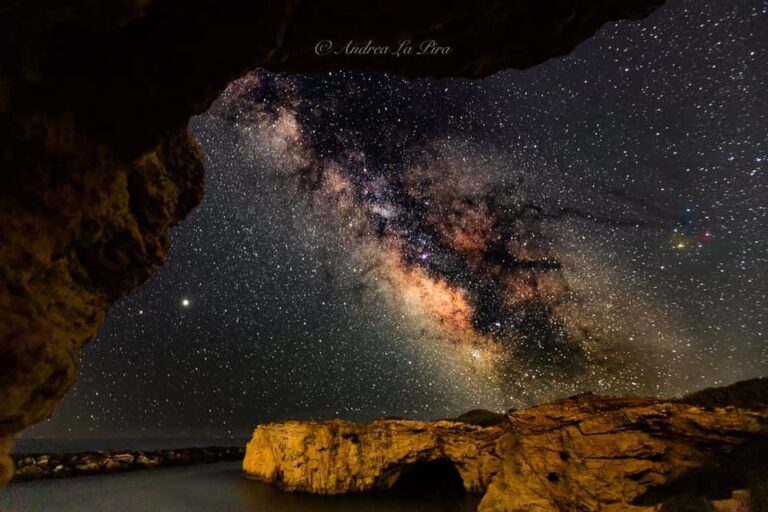
Dr Nahar: You have asked why this subject is exciting to study. Okay, so here is a picture of our Milky Way galaxy at night. It is so beautiful, so fast and so big. It has 200 to 400 billion stars and it is vital to study the Space because it is fascinating with all its beauty and its bounty.
For example, the reason we should study Space or Astronomy is demonstrated by this simple story. 65 million years ago, dinosaurs ruled the Earth. They were happy doing so when an asteroid came and hit the Earth. It was a huge one, reduced to a lot of dust, and the air circulated the dust around the Earth and blocked the sunlight coming down to the surface. So the surface became cold, the Earth became cold.
Everything alive froze to death, including the dinosaurs. Asteroids have since then kept hitting the surface of the Earth and external meteorites at various places. The last big one was in December 2018 and it fell in Siberia on a river, so there were no human casualties. A lake in Tajikistan, up in the mountains, was created by a hit by an asteroid.
The water is very salty now. We can see that we are not very much protected. Even though we are studying, we still don’t know how to protect ourselves from these kinds of disasters.
Nimra: How can we detect asteroids?
Dr. Nahar: We do have many ideas, though. There is a laser tractor beam that we use to deflect the asteroid. Asteroids have very less gravity acting on them so this is possible. Right now, we are doing fine, but what will happen in the future?
Nimrah: Why is the search for life beyond Earth orour solar system so important?
Dr. Nahar: Five to seven million years from now, the sun will expand and become a Giant Red Star. All the hydrogen in it will become helium, which means its fuel is gone, things will collapse and then it will expand. Our Earth will be engulfed by this formation and we all will die.
We have been looking for planets, and we are finding lots of them outside our Solar system. We call such planets exoplanets. We had a feeling that exoplanets existed, but we did not actually physically see them until 2004. We have found 4000 exoplanets but our objective is to find
habitable exoplanets where we can go. The surface has to be solid so we can walk, it has to have oxygen to breathe and water. And we cannot be too close to the star because the radiation will cause cancer in humans.
Nimra: Would you like to share an interestingexperience of yours?
Dr. Nahar: One of my exciting projects was (titled “Phosphorus Puzzle, we are made biosignatures of stardust.”) This clearly extrapolates that we are made from stardust. Whenever we are interested in exoplanets and we search for extraterrestrial life, we search for biosignatures e.g., we have water in our body so we look for water molecules on that exoplanet. Does it have oxygen; does it have methane and such things? We have been looking for these in several places.
Dr. Nahar’s research is on atomic processes of photoionization, electron-ion recombination, photoexcitation, and collision
Strangely we couldn’t find Phosphorus. We found very little of that but in contrast to that our solar system is abundant in Phosphorus. Phosphorus is also present in our DNA and is important in signal passing and information passing. So the question is why we can’t see Phosphorus in other places in Space. Does it mean we do not have any form of life out there? I have this project with some students and a postdoc and we created a spectrum. We matched the energies of photons and tallied them with that of Phosphorus. The purpose of this work was to predict what to look for to identify Phosphorus.
Nimra: Would you please brief us aboutmultidisciplinary aspects of astronomy like how black holes could be helpfulfor cancer treatment?
Dr. Nahar: What is common between black holes and cancer treatment is that Black holes have x-rays and cancer patients are treated by x-rays. We have high energy x-rays in black holes. When atoms move towards the black hole, the electrons and the nucleus don’t have the same speed because the pool is so strong that by the time the atom gets there, it may be stripped of most of its electrons. It may have only two left. Those are very tightly bound electrons. The super-hot ions start to give out very high energy x-rays.
Black holes absorb light, and we can detect one by looking at the surrounding spectrum. We are now studying gold (Au) nanoparticles for cancer treatment in the lab. We are working with a purely physical technique called RNPT (Resonant Nano-Plasma Theranostics) to kill cancer cells.
Nimra: How does astronomy contribute to making our lifebetter?
Dr. Nahar: In the article in an Astronomy Magazine in May 2012, titled ‘What has Astronomy done for you lately?’ The first of the four things discussed is the Global Positioning System (GPS) used for navigation in everyday routine, with the second being wireless internet, which NASA discovered while trying to find connections in Space. The third is RNPT for cancer treatment, and the fourth is the JWS telescope used in hospitals for laser eye surgery. All these technologies came from Astronomy.
Space has frequently been called the last frontier. Certainly, this is true in the sense of physical frontiers, since humankind has now explored the entire land area of the earth, and our sway is rapidly being extended to the oceans and the air as well. Thus, our species has reached a fundamental turning point in history, imposed by the finite size of the earth itself. Either we are to remain an earth-bound civilization, working out our future confines of this single planet, or else we will expand into the solar system and perhaps someday even beyond.
The dream of space is more than a century old, dating from the pioneer writings of Konstantin Tsiolkovsky of Russia and Hermann Oberth of Germany, and from the inspired backyard engineering carried out by Robbert H Goddard, Wernher Von Braun, and others in the private space and rocket organization.
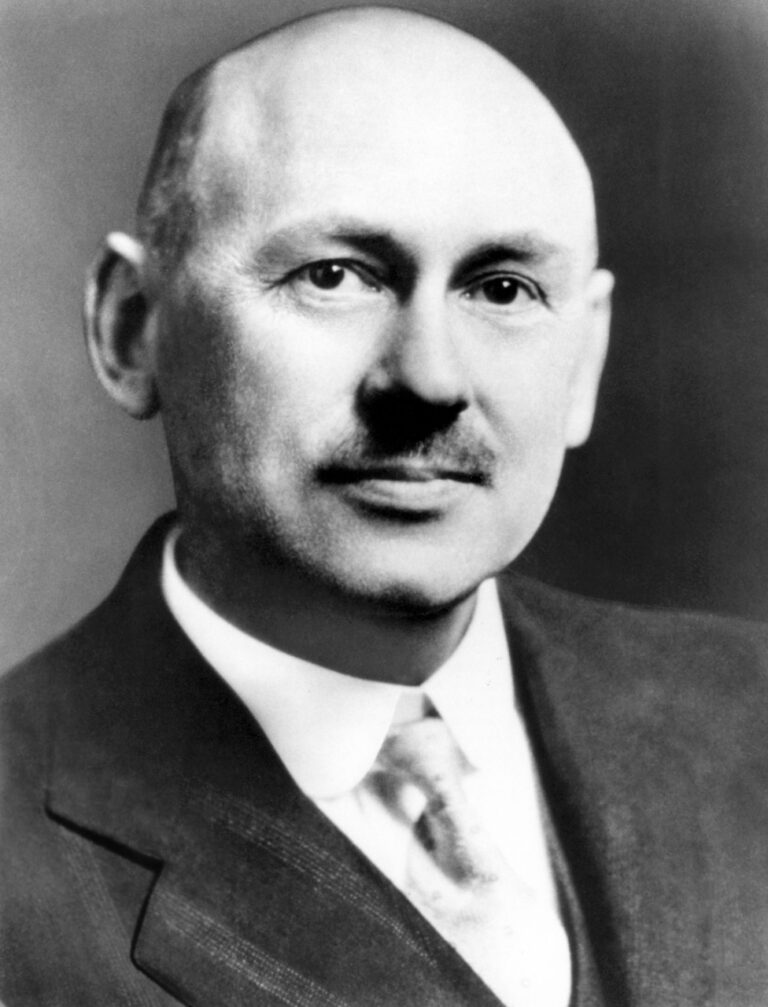
In the early 20th century, American physicist Robert H Goddard came across the idea of liquid fuel propellant while he was conducting a series of practical experiments in rocketry. Goddard, at least figuratively, was over the moon.
Goddard’s fascination with space flight tracked back to his college days at Worcester Polytechnic Institute. He was actually interested in achieving higher altitude but it was a daunting task to build a liquid fuel rocket than solid –propellant rockets. Despite a lack of resources and sufficient funding, Goddard was able to build a liquid-propellant rocket by 1926. This was game-changing.
But the euphoria of Goddard’s discovery did not leave everyone in awe.
Some thought he was a charlatan, others believed science could not have such a leap of discovery in the 1920s. Such was the disbelief in Goddard’s work that the New York Times in an editorial not just ridiculed Goddard’s intellect and integrity but, also accused him of not understanding Newton’s third law of motion.
“Professor Goddard with his chair at Clark College and countenancing of Smithsonian Institution [from where he held the grant to continue his research independently] does not know Newton’s third law of motion,” read the editorial, “and the relationship between action and reaction, and of a need of something better than a vacuum against which to react. Of course, he only seems to lack the knowledge ladled out daily in high schools.”
In the same year, a similar campaign simultaneously sparked out another controversy when Goddard published one of his research works in Scientific American that intensified the prevailing wave of harsh criticism. This propelled other science outlets also arguing that space travel is nearly impossible. Some even claimed that rocketry can be traced back to more than 2,000 years and never had anyone been able to do the unthinkable: travel to space.
But Goddard was a scientist and such criticism by non-scientists was mere noise to him.
Perhaps the greatest influence and the lifelong gift of Goddard to humanity was his deep understanding of rocketry, inspiration, and celebration that space travel would be a reality in a few decades or so later. It was actually Goddard who initially outlined an uncrewed mission to the moon. Little did he realize that this work would become instrumental in American foreign and defense policy. Goddard’s legacy has arguably quietly been absorbed by engineers and scientists at NASA and the Russian space agency, Roscosmos, who worked frantically on Vostok, Gemini, and Apollo space programs.
In 1919, Goddard published his research work entitled “A method of reaching high extreme altitude”, condensation February 1920, Scientific American and Nature August 1920. The paper thoroughly explained the method of attaining a high altitude around 20 miles, beyond the range for surrounding balloons and developed a theory of rocket propulsion taking into account the air resistance and gravity.
Goddard concluded with the statement that if most of the mass of the rocket consists of propellant, its superiority will increase enormously.
Fifty years after, when NASA’s mission “Apollo 11” successfully landed on the moon with Neil Armstrong, Buzz Aldrin, and Michael Collins on July 1969, those who doubted that space travel was a possibility were left stunned. Those in scientific communities who had belligerently opposed the idea of a small capsule being able to land on the moon could not believe the images.
But it was the New York Times who first came to realize its biggest mistake — dismissing the notion of rocket propulsion and the scientist behind it.
“Further investigation and experimentation have confirmed the findings of Isaac Newton in the 17th century and it is now definitely established that a rocket can function in a vacuum as well as in an atmosphere. The Times regrets the error.”
Though this correction was made 24 years after Goddard’s death, history absolved him.
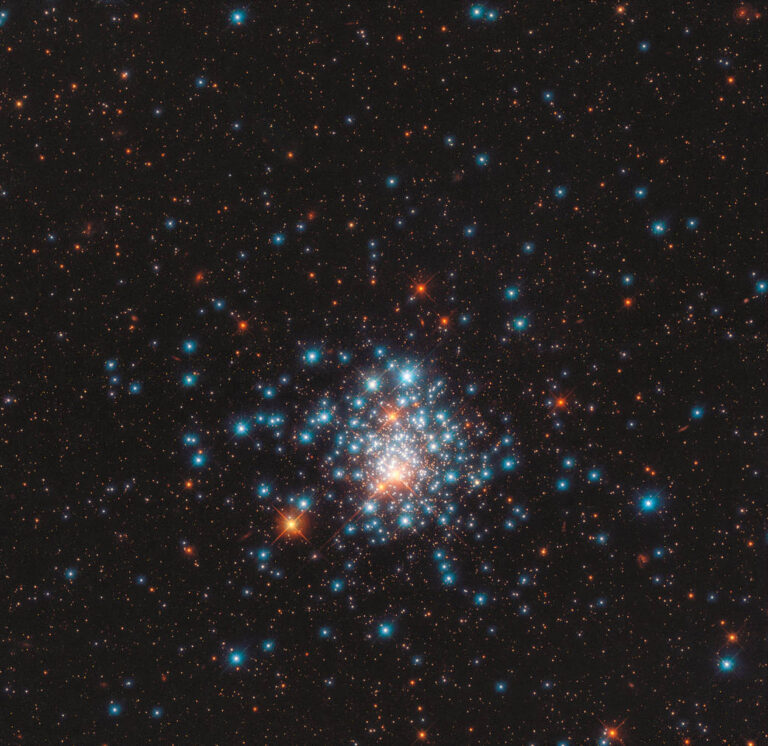
A new image has been revealed by NASA that was taken by the NASA/ESA Hubble Space Telescope. It shows the globular cluster NGC 1805 which has many colorful stars packed close together. There is a satellite galaxy of our Milky Way called the Large Magellanic Cloud near the edge of which this tight grouping of stars is present. They tend to move around each other in an orbital manner which NASA has compared to “bees swarming around a hive.” The planetary systems around these stars are also speculated to be unlikely because, in the dense center of one of these clusters, the stars are 100 to 1000 times closer together than the nearest stars are to our Sun.
This image combines different types of life and thus illustrates the sharp difference in star colors. Blue stars, shining brightest in near-ultraviolet light, and red stars, illuminated in red and near-infrared. As the Hubble telescope is positioned above the atmosphere of the Earth, it can observe ultraviolet. The atmosphere itself absorbs UV, so the telescopes on the ground are unable to visualize that.
NASA also says that “this young globular cluster can be seen from the Southern Hemisphere, in the Dorado constellation, which is Portuguese for dolphinfish.”
Most of the time, globular clusters contain stars that are born at the same time. But NGC 1805 is different as it appears to have two varying star populations which have a difference of million years in ages. The study of this type of phenomenon can aid researchers and astronomers to understand the evolution of these bodies and determine how the end their lives.
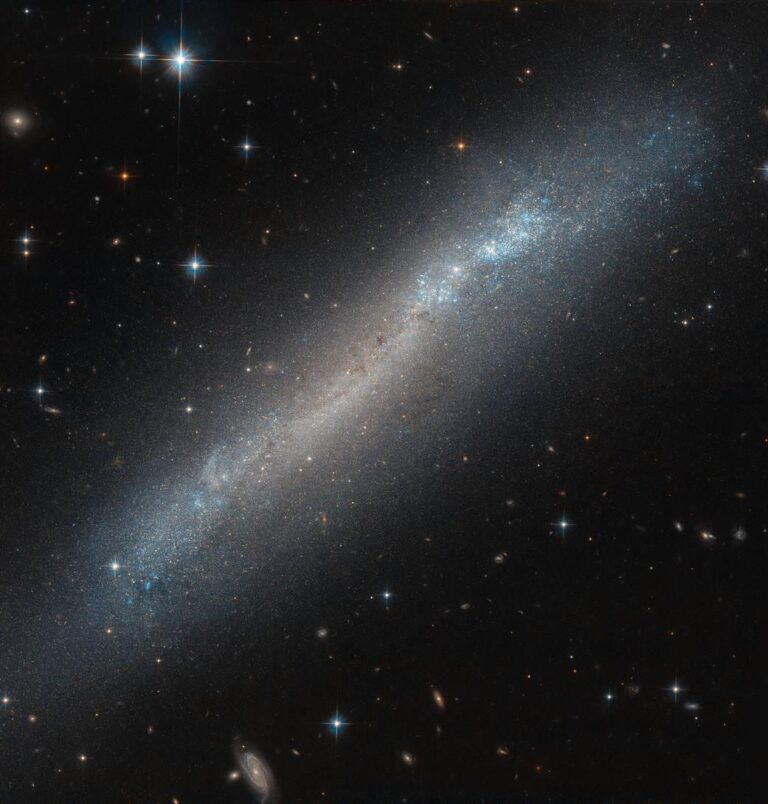
Recently, the NASA/ESA Hubble Space Telescope also captured an image featuring the blue and orange stars of the galaxy called NGC 2188. On a closer first look, the galaxy appears to be made up of a narrow band that produce a mesmerizing look. The astronomers have classified it to be a barred spiral galaxy.
In every society and culture, there are certain words or phrases that, when being said out loud, consequently turn heads. These are the words that often have a particular stigma attached to them. Hence, the topics associated with the words are never talked about in open spaces. Mental health is one such example in Pakistan, among the many more.
What exactly are mental disorders? Mental disorders are defined as the psychological and behavioral disorders that lead to impairment in critical areas of functioning in everyday life. These include a wide range of illnesses such as anxiety, depressions, several personality disorders, eating disorders, schizophrenia, and many more. Contrary to popular belief, these are not only caused by one’s life experience. Genetics, traumatic exposures, the stress in early life, and your surroundings all play a role in the development of these disorders. Mental healthcare practitioners, including psychiatrists and psychologists, diagnose these disorders mostly by using the Diagnostic and Statistical Manual of Mental Disorders, fifth edition (DSM-5). According to the World Health Organization (WHO), up to 450 million people suffer from mental disorders in the world. However, a large proportion of them do not seek help.
The overall scenerio in Pakistan is not so different from the rest of the world. In fact, the mental health sector is probably the most neglected sector in Pakistan. In 2016, Dawn Newspaper published that there are 50 million people in Pakistan suffering from mental disorders and that the number of trained psychiatrists is only 400. This statistics that shows the number of people with mental disorders is probably much higher considering the fact that most people are not diagnosed due to the scarcity of psychiatrists and social norms.
State of Mental Healthcare System in Pakistan
The scarcity of clinical psychiatrists is not the only reason that Pakistan’s mental healthcare system is flawed. The last time any legislation regarding mental disorders was passed was in 2001. The latest policy change occurred in 2006. Mental health was made a provincial topic rather than owned by the federal government, and currently, only Sindh and Punjab have mental health acts in place (Tareen & Tareen, 2016). Moreover, there is no policy regarding the conviction of a mentally ill person. In fact, schizophrenia – a disorder that leads to hallucination, delusion, and disordered thinking – was removed from the list of mental disorders as it did not fall in the legal definition of such disorders in Pakistan. Therefore, any schizophrenic convict may be up for execution in case of murder (Janjua, 2020). Only 0.4% of the healthcare expenditure of the country is allocated to mental health, and there are only five mental hospitals currently operating in Pakistan as compared to hundreds of hospitals for the other sectors.
The stigma; What will people say?
One of the primary reasons that people prevent themselves or their families from seeking mental health advice is due to the stigma associated with the term ‘mental health.’ There are many definitions of stigma. Still, to put it simply, it is a sign of shame related to an event, quality, or person. In rural areas of Pakistan, people would believe their loved ones are possessed rather than just ill and used to take them to the shrines instead of hospitals due to poverty, stigma, and superstitions (BBC, 2016). People are also afraid to hear what others might say if they consult a psychiatrist or psychologist. This fear leads them to ignore any symptoms present around them and disregard them completely. Furthermore, this inevitably leads to the formation of an ignorant society. In fact, anyone who decides to go for a career in mental health is constantly discouraged by others and sometimes even to the point that they are forced to go with another profession.
There is immense stigma associated with the term ‘mental health’
Another reason for this negligence is a severe lack of education regarding mental health in Pakistan. Since we are young, we are taught about the importance of nutrition and the effects of malnutrition on our physical health. What schools fail to teach us is the importance of our mental wellbeing. Is it appropriate to completely disregard mental health as long as we are physically healthy? Moreover, no counseling facility is provided to the students at school to help them deal with stress which is leading to an increase in anxiety, depression, and an overwhelming suicide rate in Pakistan, especially in students.
Susceptibility
Some people are more susceptible to mental disorders than others, and these are the ones who require interventions by mental health professionals to get back on track with their lives. Pakistan is a developing country with a long history of terrorist attacks being conducted in it. The people who come in direct contact with the destruction and tragedy of these attacks need help from professionals to overcome and move on. Psychological first aid should be provided to reduce the occurrence of Post-Traumatic Stress Disorder (PTSD). One such example includes the students, teachers, and their families who bore the brunt of the terrorist attack on Army Public School, Peshawar, in 2014. The proper way for them to deal with the trauma would have been through therapies, but unfortunately, there were not enough mental health professionals who could help them.
Since getting independence in 1947, Pakistan has faced multiple wars and tensions on her borders. The soldiers who come back from these missions often suffer from PTSD but they wouldn’t be provided with the help they need. Additionally, there are other issues that pave the path for the rise of mental disorders such as domestic abuse – an endemic on the rise in Pakistan – which is not only harmful for the victim but also the other family members.
Other than that, several students suffer from depression, anxiety, and stress in school and university life. These are caused due to the burden of studies, peer pressures, and the need to maintain a cheery personality with others at all times. Such instances are often disguised so well that if that person ends up committing suicide, his/her peers say that ‘He/She was happy all the time’. This is why we need mental health education so that we, as a community, may learn to recognize the symptoms and patterns, eventually guiding anyone suffering, for getting help.
Even in the current situation, the COVID-19 pandemic, people have become more vulnerable to mental disorders. Constant checking of the rising COVID-19 cases and deaths, being quarantined in their homes for long periods of time, not being able to meet with their families for months, witnessing a plane crash in a residential area of Karachi, and many people losing their jobs due to lockdown has taken a toll over the whole country.
It is beyond time that we start realizing that mental health is just as important as physical health.
Psychotherapies
In Pakistan, the lack of knowledge and awareness regarding the mental health sector is so extreme that we still believe there are only 2 ways a psychiatrist or a psychologist helps a person and those are either talk therapy or medicine. Different disorders require different types of therapies and ‘talking’ is not the cure for all. In this advanced world, several different types of therapies have been introduced that are used according to the disorder and the patient. For example, we do not have Cognitive Behavioral Therapy (CBT) mostly used to treat depression and anxiety. This is used to change the patterns of thoughts and behaviors that cause difficulties. Moreover, there is Electroconvulsive therapy (ECT) in which seizures are electrically induced to treat mental disorders. It is an extreme form of therapy and only used when other methods fail to provide results.
CBT is used to treat depression and anxiety. Credit: Neelesh Rastogi
These two are not the only types of psychotherapies available around the world. However, they show the great differences present in the modern methods of treatment of mental disorders. A wide range of treatments are known to mental health professionals but in Pakistan, there are not enough professionals who might be specialized in these methods.
What do professionals have to say?
For a better understanding of the ongoing state of mental health in Pakistan, I reached out to a couple professionals. Iqra Nasir, a behavioral therapist, said that there are a lot of people suffering from mental disorders in Sindh but they cannot afford the treatment as there are no such hospitals in close proximity. Contrary, , in several cities there are no schools for children with special needs such as down syndrome and autism. She believes that the government needs to get involved and make more governmental hospitals for the mentally ill people and establish at least one special needs school in each city.
Inamullah Ansari, the Director of Mental Health Emergency and Human Resilience Solicitors Drug Crimes Criminal Defense Lawyer, says that we need to implement psychiatry facilities in teaching hospitals where consultant psychiatrists are available. More public awareness programs should be launched on the media platforms (Ansari, 2015).
Muhammad Tahir Khalily, Senior Clinical Psychologist, believes that mental healthcare needs to be incorporated as a core service in primary care and supported by specialist services. There is a strong need to provide adequate training for general practitioners and postgraduate training for mental health professionals to meet the current demands. A collaborative network between stakeholders in the public and private sector, as well as non-governmental organizations, are required that promote mental health care and advocate for changes in mental health policy (Khalily, 2011).
Solutions
Involvement of government
The government needs to provide the country with an up to date mental health legislation and a refined legal definition for mental disorder. A person with a mental disorder needs the help of a psychiatrist and does not need to be locked up for a crime that he/she does not even understand. On the other hand, prisons should be seen as a correctional facility and the convicts should be helped to become better by the time they have served their sentence, thus forensic psychologists should be present in these facilities at all times.
In Pakistan, people encourage their children to follow professions like medicine, engineering, or finance. Children are primed from the beginning to believe that these are the only areas of study one should pursue. We need to let children know that there are multiple options out there for them to consider instead of just these. The government should also encourage the study of psychiatry and psychology by providing incentives that would make youngsters willing to pursue these fields as it has become prominent that Pakistan needs many more mental health professionals working in the country to help all the people who might need them.
Provision of hospitals and services
We are in dire need of more mental hospitals across the country. The five that are currently operating are located in major cities – Lahore, Rawalpindi, Islamabad, Peshawar, and Quetta – which makes them inaccessible to a lot of people who are not willing to travel long distances or cannot manage to find the time for travelling. Mental health treatments should be available to people easily, which is why more hospitals need to build on immediate notice and the inside workings of the old ones should be updated to provide humane treatment to all the patients.
Conversely, there should be online treatment facilities which could be used to educate parents. People who are unable to travel to the nearest hospital should have access to psychiatrists online. Multi-stakeholder collaboration should be promoted among the private hospitals, pharmaceutical agencies, and international companies to advance local, national and global efforts in favor of good mental health.
In recent years data and technology has played a vital role in treating mental illness and avoiding crisis. By using cell phones and health apps, data can be used to monitor a patient’s progress, behavior patterns, and activities to signal it out that help is needed before a crisis, such as a panic attack, occurs. Moreover, mental health care applications should be advertised and encouraged such as 7Cups, which is an app run mostly by volunteers who are trained to listen to people and then refer them to professionals associated with the app.
7Cups is an app run mostly by volunteers who are trained to listen to people and then refer them to professionals
Mental health Education in Schools
We cannot ignore the significant role that education plays in spreading awareness about a matter and helping in stemming the stigma surrounding something. Psychology should be integrated in the curriculum of schools, either as a permanent subject or a small mandatory course for all students to take. Along with this, every school should have at least one counsellor available on the campus during school hours to help students through any difficulty they might be facing in school or at their homes. Workshops should also be held for the teachers and other staff which educates them in distinguishing symptoms present in students and helping them.
Moreover, mental health workers from Pakistan and other countries should be invited to schools with the help of the government to come forward and raise awareness regarding the matter. Such events should be hosted regularly and have compulsory attendance for the students and their parents along with the school teachers. There are a variety of ways in which these events could run. The visiting professional could use recent articles regarding a problem that is common in Pakistan and explain to the audience how important it is to solve the issue. They could hold a question and answer session with everyone to clear any doubts in the minds of the audience and help them better understand mental health.
Special Need Schools
As mentioned by the psychaitrist Iqra Nasir, Pakistan also needs to invest in schools that are trained to provide education to students with special needs. Most of the schools that fall under this category in Pakistan are for the visually impaired and serve no purpose for the children who suffer from mental disorders such as autism or ADHD. Due to the lack of special need schools, children with mental disorders are prevented from getting the education that is their basic right. There are children with learning disabilities such as dyslexia who fail to get diagnosed and are admitted in normal schools where they lag behind. Unless such children get specially trained teachers and environment to express themselves in other ways and learn in unique styles, they will always be seen as less than other children. These reasons alone should be enough to help establish special educational institutes all over Pakistan.
The role of the NGOs
NGOs are playing a significant role in spreading awareness about mental health and providing help. Their numbers, too, are low but even with their limitations, NGOs could lead in creating more awareness and transforming the mental health status in Pakistan.
Having mental disorders is not a choice or a lifestyle disease, unlike many physical diseases that could be prevented by correcting your lifestyle. Mental health is a grave concern in Pakistan and should be regarded as one. We must have more educated conversations on it so that we can finally break free from the toxic stigma placed on us by our ancestors.
The NASA/ESA Hubble Space Telescope has captured an image featuring the blue and orange stars of the galaxy called NGC 2188. On a closer first look, the galaxy appears to be made up of a narrow band of stars that produce a mesmerizing look. The astronomers have classified it to be a barred spiral galaxy.
Its tilted shape appears like that from our viewpoint on Earth as the center and the spiral arms are farther away from us. Only the outer edge of the disk, which is comparatively narrower, is visible to us. It can be understood by the example of having a dinner plate in your hands and turning it at a certain angle so that only its outer edge is visible. Scientists found out the true shape of the galaxy when studies were done on the distribution of the stars in the inner central bulge and outer disk and by observing the stars’ colors.
NGC 2188 is thought to be approximately half the size of our galaxy (The Milky Way). It is located in the constellation of Columba (the Dove) at 50,000 light-years across. The constellation itself is named after the prophet Noah’s dove in the biblical stories and is relatively small but has many alluring astronomical objects.
Every now and then, we are blessed with beautiful images from the outer space, courtesy of the Hubble Space Telescope. And we can expect many more amazing images in the near future. The James Webb Space Telescope is all set to receive the stardom of being the most magnificent and multifarious orbital observatory to be launched into space. It has seven times the capability of collecting light as Hubble, along with modern infrared imaging technology. With it, scientists mean to find out about distant celestial masses from an unmarred perspective. It is set to launch in 2021.
“The theme that cuts across all of the different research that I’m doing is how do you amplify human potential and reduce inequity in the society,” said Lama Nachman, the Intel scientist who built Stephen Hawking’s communication system is updating it, adding more artificial intelligence to it. Assistive computing for people with disabilities is one piece of that puzzle. She is trying to help Peter Scott Morgan, another scientist and roboticist. He has advanced Motor Neuron Disease, which is similar to ALS or Lou Gehrig’s disease and is losing control of his body.
Nachman’s goal is to enhanced independence, capability, and empowerment for those who are losing control of their bodies. To build something like an AI-enabled exoskeleton-equipped human being. In short, a cyborg. And along with that, try to figure out some deep and fundamental questions about AI, life, and humans.
Intel Fellow and research scientist Lama Nachman.
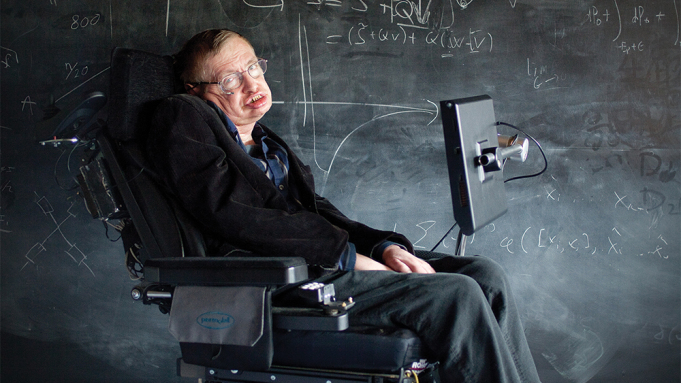
Stephen Hawking could control nearly one muscle in his body, his cheek. When Nachman worked on a communicator for Hawking, she placed a proximity sensor next to his cheek, dangling down his glasses. By flexing his cheek, Hawking could push a button or click on the attached mouse. This was how Intel built a hardware component for Hawking. The software component, however, was much harder. That required building a complete software platform on top of Windows so that Hawking could control an entire operating system from just one single button.
The system worked like old-fashioned radar: scanning for a horizontal line, then scanning for a vertical line. The intersection of the two lines was the point where Hawking needed to click the mouse in each of his attempts; it took literally minutes of interaction.
To avoid relapse in communication, Nachman and her team worked to built predictive technology that would anticipate what Hawking needed and automate it.
Now Nachman is working to provide this facility to thousands or millions differently-abled to use quickly and cheaply. Along with her team, she is getting very close to releasing that into open source is essentially utilizing a straightforward set of electrodes that you can have in a cap, very cheap system. This is a high fidelity, gazillion electrodes, will available in a few hundred dollars.
Astrophysicist Nergis Mavalvala has been named the newDean of MIT’s School of Science, effective Sept. 1. She will succeed Michael Sipser, who will return to the faculty as the Donner Professor of Mathematics, after six years of service.
Mavalvala, the Curtis and Kathleen Marble Professor of Astrophysics, is renowned for her pioneering work in gravitational-wave detection, which she conducted as a leading member of LIGO, the Laser Interferometer Gravitational-Wave Observatory. She has received numerous awards and honors for her research and teaching, and since 2015 has been the associate head of the Department of Physics. Mavalvala will be the first woman to serve as dean in the School of Science.
Quantum Astrophysicist Nargis Mavalvala in an MIT lab (Photo by Darren McCollester/for MacArthur Foundation)
Dr. Nergis Mavalvala attended the Convent of Jesus and Mary, Karachi, for her O-Level and A-Level. She moved to the United States in 1986 and enrolled at Wellesley College and got a bachelor’s degree in physics and astronomy in 1990. As a graduate student at MIT, she conducted her doctoral work under Dr. Rainer Weiss and developed a prototype laser interferometer for detecting gravitational waves. Before graduation, Nargis with her physics professor, Robert Berg, co-authored a paper in Physical Review B: Condensed Matter.
After graduate school, Dr. Mavalvala served a postdoctoral researcher and a research scientist at the California Institute of Technology, kickstarted her work with cosmic microwave background, and then eventually indulge the LIGO project. Mavalvala mainly focuses on two fields of physics: Gravitational Waves Astrophysics and quantum measurement science. She went on to do her Ph.D. in physics from MIT in 1997.
Dr. Mavalvala joined the MIT physics faculty in 2002 and was elected to the National Academy of Sciences in 2017. Born to a Parsi family, she was the younger of the two children. Her parents highly valued their daughters’ educational experiences and encouraged her to pursue higher education overseas. She was always interested in math and science and believed that she was intrinsically good at it.
Mavalval frequently questioned for gender discrimination and how she was able to break down this barrier. In an interview with the Pakistani newspaper Dawn, she states, “I grew up in a family where the stereotypical gender roles were not really observed. Everyone is capable, and I set benchmarks for all these women willing to pursue a career in STEM. Mawalwala is often viewed as a role model for aspiring female scientists of South Asian descent. In her childhood, she involved in handy work and was not bound to stereotypical gender roles in South Asian culture.
In a television interview in 2016, She stated that “When everyone has access to education, that’s when all the other things come into place. You’ve got to do what gives you pleasure, got to find a way to do it. People should just do what they enjoy most, and I think for all of society whether it’s in Pakistan or elsewhere we have to create opportunities for young girls to do what they’re good at and do what they love to do must cultivate the sense of wonder in a child.”
Mavalvala was among the team of scientists who, for the first time, observed ripples in the fabric of spacetime called gravitational waves. On February 11, 2016, the detection of gravitational waves confirmed a major prediction of Albert Einstein’s 1915 general theory of relativity. After the announcement of the observation, she became an instant celebrity scientist in her birthplace of Pakistan. Talking to the press, she claimed that “we are really witnessing the opening of a new tool for doing astronomy.”
During an interview with Pakistani newspaper Dawn, after the detection of gravitational waves, she claimed that she was baffled by the public interest in her research in Pakistan. She said, “I really thought of what I want people to know in Pakistan as I have garnered some attention there. Anybody should be able to succeed — whether you’re a woman, a religious minority, or whether you’re gay. It just doesn’t matter.”
Dr. Mavalvala has also worked on the development of exotic quantum states of light, and in particular, the generation of light in squeezed coherent states. By injecting such states into the kilometer-scale Michelson interferometer of the LIGO detectors, her group significantly improved the sensitivity of the detector by reducing quantum noise such squeezed states also have many other applications in experimental physics.
She also worked on laser cooling, where the Optical cooling of mirrors to nearly absolute zero can help eliminate measurement noise arising from thermal vibrations. Part of her work focused on the extension of laser-cooling techniques to optically cool and trap more and more massive objects, both for the LIGO project and for other applications, such as to enable observation of quantum phenomena in macroscopic objects. Prominent results from her group in this area included cooling of a centimeter-scale object to a temperature of 0.8 kelvins and inspection of a 2.7-kilogram pendulum near its quantum ground state. These experiments lay the foundations for observing quantum behavior in human-scale objects.
On February 20, 2016, Ambassador of Pakistan to the United States, Jalil Abbas Jilani, conveyed the Government of Pakistan’s message of felicitation to Nergis Mavalvala for her outstanding achievement in the field of astrophysics. She won the first Lahore Technology Award launched by Information Technology University on December 17, 2017. In 2017, the Carnegie Corporation of New York honored Mavalvala as one of its Great Immigrants awards recipients. The awards go to “naturalized citizens who have made notable contributions to the progress of American society.” In 2014, NOGLSTP recognized Nergis Mavalvala as the LGBTQ Scientist of the Year. She was awarded a MacArthur Fellowship in 2010.