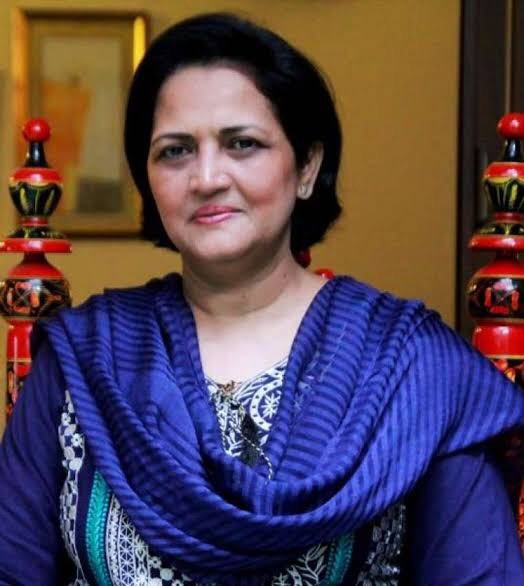
Dr. Shagufta Feroz graduated in 1984 and kick-started her career later in 1988 as a private medical practitioner. She was inclined towards healing with nature from a very young age, and therefore, she specialized in Family Medicine, Holistic Nutrition, Lifestyle, and Integrative Medicines. She is the founder of the Synchronized Lifestyle Modification Program and author of “Living as Nature Intended.”
After 15 years of clinical practice, Feroze recognized the role of a healthy lifestyle in the prevention and reversal of diseases. That realization forced her to switch from drug-dependent medical practice to drugless integrative medicine. Now, for the past 16 years, she is managing a variety of patients through Synchronised Lifestyle Modification (SLP). She uses her knowledge to convert table foods into a remedy by applying her 8-Rules of correct eating.
After 15 years of clinical practice, Feroze recognized the role of a healthy lifestyle in the prevention and reversal of diseases. That realization forced her to switch from drug-dependent medical practice to drugless integrative medicine. Now, for the past 16 years, she is managing a variety of patients through Synchronised Lifestyle Modification (SLP). She uses her knowledge to convert table foods into a remedy by applying her 8-Rules of correct eating.
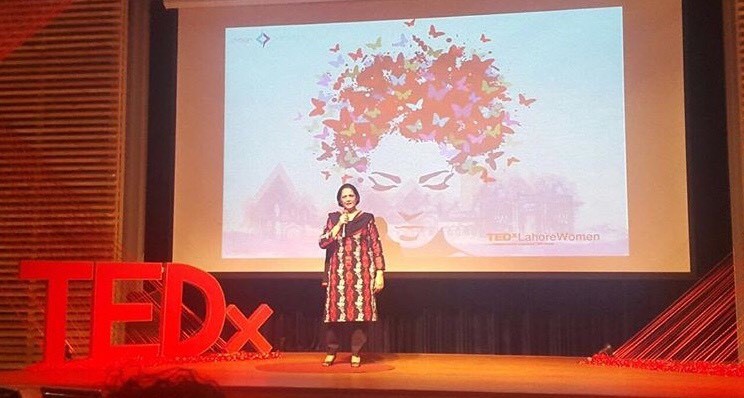
She is a regular speaker at various academic institutes, health forums, doctors forums, and training institutes. In 2015 she spoke at TEDx Lahore on the importance of a healthy lifestyle for the young. She utilizes the power of print, digital, and social media to spread awareness for healthy eating. She has also appeared in over 100 TV health shows.
Team Scientia Pakistan caught Dr. Feroze and interviewed her for its special edition, “Being a professional in the pandemic.” Below is her conversation with Aniqa Mazhar on how a healthy diet and nutrition can help control COVID-19.
Dr. Shagufta is the founder of the Synchronized Lifestyle Modification Program and author of “Living as Nature Intended.”
Aniqa: Can Covid-19 spread from food? If so, which foods should be avoided during the virus outbreak and which should be specially taken? Are dietary supplements of any use against the virus?
Dr. Feroz: It is not proven that Covid-19 can directly spread from the food until and unless the food is being used or is being transported or carried by someone who is Covid-19 positive. Still, all those foods, which are processed foods or food with naked calories, can suppress immunity and make a person more prone to Covid-19.
Dietary supplements are not very effective, but yes, Vitamin C is good, and the best supplement is that one gets Vitamin C from fruit.
Aniqa: Having a proper balanced diet can substantially help a person from not contracting the virus. To what extent is this true?
Dr. Feroz: I never use the word ‘balanced diet.’ It is actually how the person is taking the food. So I talk about ‘correct eating,’ ‘dietary discipline’ etc. If your food is not balanced but is taken correctly, it helps and supports immunity. So, indirectly, a person becomes secure against viruses, and there is less risk of contracting Covid-19.
Aniqa: It is the month of fasting, and people prefer cold beverages in Suhoor and Iftar. Does it increase the risk of getting infected? Or does fasting help us against Coronavirus as it does against certain other diseases?
Dr. Feroz: I strictly inhibit the use of these cold beverages. By taking these cold drinks, you drop your core temperature, which is crucial regarding the maintenance of immunity. There is a research done by Leeds University which says that if the internal body temperature drops from 37 to 33 degrees centigrade, there are strong chances of growth of various viruses. So it is not specifically against Coronavirus but against viruses generally.
I don’t think that fasting will help get rid of Coronavirus or it will have a protective role. Coronavirus, I have seen, affects those who are already carrying comorbidities or who carry poor immunities. So, a weak person cannot fast, and if a vulnerable person is fasting, he or she might get more risk towards Covid-19.
Aniqa: What do you suggest for the diet of the people who have contracted Coronavirus and are undergoing symptoms?
Dr. Feroz: I suggest them to take yakhni (broth or stock) and warm drinks like black tea with some sugar and lemon, green tea or warm water, soups, half-boiled desi (organic) eggs, or toast with shorba (soupy)type of salan (curry).
Aniqa: Most restaurants and food suppliers have taken strict measurements regarding hygiene and social distancing and reopened. Is it safe to order from them?
Dr. Feroz: Regarding restaurants and food supplies, I can’t comment because there are so many factors involved while we put an order for home delivery of food. So, I don’t think that it should be so frequently practiced.
Aniqa: What has increased more during lockdown, malnutrition, or obesity?
Dr. Feroz: Lockdown has had people develop the tendency of putting on weight because they are under stress, and there is no discipline. They are sedentary; there is less physical activity, so they are adding weight.
In 2015, she spoke at TEDx Lahore on the importance of a healthy lifestyle for the young.
Aniqa: Have you had more or fewer patients since the pandemic? What are some of the most common queries?
Dr. Feroz: My specialty is integrative medicine and lifestyle medicine, and food is one of the components, so I am dealing with already complex or complicated or terminal patients. But definitely, I do get patients who want me to tell them about preventive or immune-enhancing foods. Their queries are about the foods that should be taken to enhance our immunity.
Aniqa: Regarding public nutrition during the lockdown, which country is managing the best, and how?
Dr. Feroz: I believe China is managing the best preventive measures because they follow the basic principles of Traditional Chinese Medicine (TCM). I have done a small diploma in this branch of science also and its approach is entirely different. They work on the correction of basic chemistry, core temperature and immunity enhancement.
So, the Chinese have the best knowledge. None of the other countries even have a sense of describing the right food to the patient or coronavirus prevention.
Aniqa: What effects have the pandemic put on the food industry and agriculture globally?
Dr. Feroz: I believe that the pandemic has some positive effect on the food industry in terms of better control of these junk foods and people are now forced to take home-cooked meals. So there is less consumption of food from outside. Regarding agriculture globally, I’m not very sure, but I think definitely, because of other restrictions, agriculture would have been affected.
Aniqa: Do you think that the awareness and prevention campaigns on media against Covid-19 are highlighting the importance of nutrition?
Dr. Feroz: Definitely! I have been using my social media and the most hit post which got viral, the marketing people say, had 60 million views. This was about the prevention and awareness of Coronavirus. So not only nutrition but we have to advise people on how to organize their daily routines as well. People need to utilize this time to do family bonding and give much time to religious and spiritual aspects of life. We need to let people know that they have to incorporate nutrition and to integrate exercise into their routines. People basically have to modify their routines.
As the coronavirus disease 2019 (COVID-19) pandemic progresses, social distancing has emerged as an effective measure to restrain the spread of infections. Many people are now confining themselves to indoor spaces and communicating with their loved ones only through the use of electronic tools. This may have a detrimental effect on mental health, especially for adults over the age of 65 who may be less comfortable with virtual solutions. Dr. Ali Jawaid, a Pakistani-origin Neuroscientist, based in Brain Research Institute, Zurich, Switzerland, has come up with some evidence-based recommendations for protecting the mental health of the elderly that got featured in Science, the highest-ranked scientific journal in the world.
Social isolation in seniors has been linked to increased depression and suicidality, as well as increased pro-inflammatory and decreased anti-viral immune responses. These effects may further increase the susceptibility of this population to COVID-19. Health care systems and communities must consider the mental health burden of social distancing for the elderly and find ways to keep them engaged and motivated.
Mainstream media, such as television and radio, can play an essential role by including content focused on the elderly and encouraging seniors to express their views through live calls. Data indicate that the elderly view television as a medium to cope with depressive symptoms and might benefit from such engagement.
Volunteers can maintain regular phone contact with the homebound elderly population, providing friendship and fostering a mentoring relationship, as it has been shown that adults over 60 years of age find their life more meaningful when they have the opportunity to give advice.
Finally, existing mental health support hotlines could add outgoing calls during which mental health professionals could reach out to the elderly and screen for symptoms of anxiety and depression. These measures could improve older adults’ compliance with social distancing and help reduce the impact of COVID-19 on their mental health.
Later on, Team Scientia Pakistan reached out to Dr. Ali Javed and talked about the mental toll of COVID-19 on the elderly and youngsters. Below are some excerpts of this conversation.
Scientia: Let us know about your research on the mental health impact of COVID19?
Dr: Javed: I am leading this effort with scientists from 12 different countries, and we screened around 13,000 individuals globally for the psychological impact of COVID-19. We also elucidated the factors which increase the likelihood of being psychologically affected by COVID-19. As our study is in review right now, I cannot share the exact findings with you. But we need dynamic optimization of mental health services; otherwise, we are heading into a huge mental health crisis.
Scientia: How can other family members help to reduce the stress on people above the ’60s?
Dr. Javed: Important to ensure that older adults stay engaged- take advice from them, make them feel important, make them understand that the whole world cares for them, and that’s why young people are following physical distancing. It is also crucial that they still have a routine, substitute the activities that they can’t do like usual with new ones. If they would go for a walk in the park, now you take a stroll with them on the terrace. If they were meeting a friend for tea, help them with video calling their friend while serving them tea.
Scientia: Elderly in Pakistan mostly depends on Newspapers and News channels; those are increasing coronavirus anxiety with their fake/ baseless News and 24 hours transmission entirely on the pandemic. What is the duty of other family members to help the elderly in this situation?
Dr. Javed: First and foremost, give them positive stimulation. For example, instead of showing them the number of new cases, let them update about active cases, which also includes the number of recoveries. Second, it probably would be good to limit their ‘screen time,’ especially in the evenings, because anxiety-inducing News can affect their sleep. Also, do talk about things that you plan to do with them in the future, so they have things to look forward to.
Coronavirus pandemic is a humanitarian crisis and there are drastic restrictions designed to minimize the spread of the virus. They may vary from continent to continent, but there is one thing that has been affected in the same magnitude everywhere: a large part of commercial air traffic has come to a standstill.
Normally, a pilot’s life remains on a wheel; apart from their strict duty schedules, they go through flight simulators recurrent every six months which are rigorous training sessions to keep everything in check. In these sessions, pilots go through almost all common emergencies and polish their skills. These refreshers keep the crew up to date and ready for every situation. But ever since the lockdown has been imposed in Pakistan and elsewhere, all such training sessions have also been postponed.
And also, travel is restricted more than ever. It is speculated that major industries associated with it such as tourism and transport are going to receive major setbacks in the coming months. Scientia talks with Captain Jahanzeb, a first officer in Pakistan International Airlines (PIA), about how the recent crisis is impacting air travel and its future.
Captain Jahanzeb is a first officer in Pakistan International Airlines (PIA)
Kaleem: COVID-19 has been wreaking havoc everywhere. How have you, as professional pilots, been personally affected by the spread?
Capt. Jahanzeb: I agree that the recent pandemic has created many unforeseen situations that have now become a global issue, the same is with the aviation world as well and pilots are at the core of it. Many of the airlines are closing down or shrinking worldwide due to instability and pilots are either being furloughed or losing their jobs altogether, luckily Pakistan has not been as hard hit as the US or UK, although the operations have been seriously affected but we as pilots and aviation community are trying to resiliently hold on. Practically now, the flying has reduced and few of the flights that are being operated are high risk due to bio-hazard involved and one needs to be one their toes for it.
Kaleem: Every leading airline around the globe resorting to lay-off due to disruption in the flights caused by the pandemic. How much it affected the employees of private airlines in Pakistan, especially pilots?
Capt. Jahanzeb: I may not be the best person to respond to it but, as far as I know, airlines like Serene have really taken care of their staff and are also showing flexibility by looking forward to some cargo operations as well for the time being. Whereas, another airline that I have heard of is looking into cutting the employee’s salary, which is again going to hurt not only the pilots but a lot of households that are associated with the employees.
Kaleem: As a pilot, you interact with many people around the globe. You have the know-how of people’s social interaction before the outbreak. What type of change do you expect in people’s socialization?
Capt. Jahanzeb: I believe it all depends on the outcome of the Pandemic. If there is some drug or vaccine that works then I do not expect a major change in how we socialize, but if the cure is not simple like taking a pill or intravenous medicine and complications persists then distances would increase, not only physical distances while greeting someone but psychosocial as well.
Captain Jahanzeb says that some airlines have really taken care of their staff and are also showing flexibility by looking forward to some cargo operations as well for the time being.
Kaleem: All of the major airlines across the world have announced cuts to their schedules, and there is a considerable amount of uncertainty in the global airline industry. So, what does all of this, as a pilot, mean to you?
Capt. Jahanzeb: Well, it’s not just what and how it would affect me as a pilot but as a common man it does sound very difficult to cope up with such a situation. All those who are seeing financial implications, that may be indirect such as government policies changing due to the pandemic and its hit on the world economy, it will be hard for them to persist a similar lifestyle as they were leading before the global outbreak. Besides, as a pilot, I would definitely bear in mind that the Company that I am working for may get hit badly financially and that might be effects on the quality of available resources.
Kaleem: Will Pakistan go from a pilot shortage to a pilot surplus due to coronavirus?
Capt. Jahanzeb: As I said earlier that it depends on how we come out of Coronavirus. If it is an easy solution and people don’t have to worry about it anymore, they would definitely start air travel and that would be on the rise. However, domestic air travel which directly affects most Pakistani airlines’ major finances would presumably be the same if not better than before. But again, depends on what is the world scenario after the Virus is gone or managed. So, more air travel means more opportunities for the business and more pilots wanted in the market.
Kaleem: The life of a pilot used to be very busy. After staying at home, even it might have prolonged, do you feel any psychological discomfort or enjoying a stay at home?
Capt. Jahanzeb: As individuals be it the pilot or other professional, we are taught and we self-learn to be flexible, that is what we are being at this moment and hoping for the things to normalize. Besides one should make the best of what is available.
Kaleem: The federal government said limited flight operations would resume soon, and Pakistanis stranded abroad will be brought back home. Do you think that bringing home the stranded citizen is a wise decision?
Capt. Jahanzeb: Yes, I would say that our compatriots shall be brought back home. That’s not only our social but also a moral responsibility. However, managing their entry and ensuring biological safety for them and from any infections that may have traveled along is altogether a different issue and beyond my expertise.
The Coronavirus pandemic is an extreme test of the necessity of many parts of our daily routine. From education to office work and to the business, it hit hard every sphere of life and highlighted the importance of alternatives to traditional ways of communication. With physical distancing, employers’ transition to telework is poised to remake all of those assumptions, both for the current crisis and beyond. Though this surge in teleworking raised many questions about whether the technologies that enable telework like video conferencing, desktops, etc., can scale the enormous traffic. Still, we are bound to depend on telework as it is the only solution to significant problems we all are suffering through after lockdown.
As journalists across the U.S. scramble to cover the impact of coronavirus, while they are grappling with bitter irony. The devastating sweep of COVID19 is the biggest story for this generation that hit hard the U.S., and media outlets are facing a massive drop in advertising due to the global economic recession. To know more about how much the pandemic affected Journalists across the U.S. and how they are figuring out the significant challenges, team Scientia Pakistan had an online conversation with renowned journalist Issam Ahmad.
Issam is a Health, science, and environment reporter for Agency France Press(AFP), resides in Washington D.C. He has been reporting for the Christian Science Monitor, Guardian, Business Insider, Chicago Tribune, Times of India, and many other prominent international media outlets. Below are some excerpts of his recent conversation with our EIC, Saadeqa khan.
The science and health reporters have a far greater workload these days, and our beat is center stage.~ Issam
Saadeqa: It is not easy to work in pandemic days when there is an outburst of fake news and myths about the virus. I can realize that media persons are playing harder. How lockdown and work-from-home have affected your life being a journalist? Have you felt anxious or overburden?
Issam: It’s true that science and health reporters have a far greater workload these days, and our beat is center stage, but that the same time it’s good to keep busy during the lockdown and feel like you’re helping in some small way keeps the public informed. I’m glad to be productive!
Saadeqa: At the moment, global coronavirus cases pass 1.8 million amid fears of the second wave in the U.S. Many U.S. officials, including President Trump, ignored early waning of WHO released in January about the pandemic and now suffering its consequence. Did U.S. media intentionally neglected the severity of the situation, or were they unable to realize initially?
Issam: Actually, I think the WHO was partly responsible for downplaying the outbreak — they first said asymptomatic carriers weren’t an issue, they said there was no need for travel bans, and they didn’t criticize China at all for its early cover-up. The U.S. media was preoccupied with domestic politics well until late February, as I think was media around the world.
Saadeqa: There are a whole bunch of conspiracy theories circling about coronavirus pandemic like death toll in the U.S. has been overstating, often claims right-wing media. We know that Johns Hopkins coronavirus recourse center is releasing accurate data, but how can media and U.S. officials adequately deal with such conspiracies?
Issam: This is a significant problem, as you noted, it appears to come more from the political right. At least the major conservative outlets belatedly changed their tunes, even if more fringe voices haven’t. But on the whole, I’m encouraged by the public’s response to lockdown guidance and orders. Then again, my view might be skewed by living in Washington DC, not a rural Republican state.
Saadeqa: The coronavirus anxiety is getting viral worldwide, and we all are feeling that at a larger scale. What is the role of print and electronic media to descend this overgrowing sense of fear in public?
Issam: Reporting the facts as accurately as possible, and mediating the plethora of scientific studies and data that are emerging — sifting through them, placing them in their context, explaining it well so that it can be understood and acting on. Also, its key does not overhype preliminary work, such as studies that promote or ‘debunk’ one drug or the other based on small studies.
Saadeqa: Public health experts in the U.S. have widely been criticizing Trump administration for the severe lack of planning for such pandemics for the U.S. becoming the global hotspot of coronavirus. What flaws do you locally witness in management while living in Washington, DC?
Issam: The White House downplayed the crisis for too long, overriding the advice of top officials from the CDC. Testing was too slow to get off the mark because of regulatory delays and technical issues. Then the U.S. federal system of governance meant that the states were too late in coordinating their mitigation actions. The President belatedly shifted his tone, but we still see him doing irresponsible things like promoting hydroxyl-chloroquine as a miracle cure. It might work, but we need to listen to the scientists who tell us we need more data in the form of Randomized Control Trials to be sure.
Saadeqa: How lockdown and self-isolation affected reporters/journalists’ contribution to their media outlets and how News editors are managing this situation in the U.S.?
Issam: There were teething issues early on due to coordinating while teleworking, but honestly, I think if anything this period has shown us that teleworking is feasible, especially for text reporters. For our photographer and video colleagues, it’s another story. A might be a good thing to emerge from the crisis might be greater faith in telework, which is overall better for the environment.
Saadeqa: International media outlets have specific science desks, but here in Pakistan, science still never consider as a genre in journalism. Do you think that institutions like CEJ IBA, LUMS, or Karachi University should kick start science reporting courses specifically for WEB/NEWS editors on an immediate notice?
Issam: Yeah, I think that’s not a bad idea. But I think the broader reason for a lack of science reporting in Pakistan is that there isn’t much scientific research happening in Pakistan. It’s practically a non-entity as far as original research is concerned. Even when compared to, for example, neighboring Iran. The problem won’t change until the Pakistani government gets serious about STEM higher education — not just for undergraduate courses but real research. That takes time and money and would need to find ways to stop/reverse the brain drain.
The Covid-19 crisis has put life on hold. It is speculated that the disease will keep spreading and we will have a hard time getting rid of it unless we get to develop a vaccine. It is a very important task and scientists all around the world are working on its development. It is taking extensive research, time, and ideas and resources. But giving up hope will not be the solution; it is important to stay committed and wish for the best.
During such times, it comes as a moment of great pride that a vaccine by a Pakistani scientist and his team in the UK has been listed and selected by the World Health Organization.
Dr. Muhammad Munir recently announced on social media, that the vaccine being developed at Lancaster University is now on the WHO landscape.
A virologist and a veterinarian, Dr. Muhammad Munir, has research experience on virus pathobiology, viral antagonism of immune responses and factors of hosts that can hinder and limit the replication of viruses. He is a lecturer in Biomedicine at Lancaster University. He has been discussing his opinions and views on the different kinds of measures and their efficacies on various media outlets since the outbreak of the coronavirus disease. He recently announced on social media, that the vaccine being developed at Lancaster University is now on the WHO landscape of Covid-19 candidate vaccine.
WHO is closely working with research groups and listing various labs across the world that are working on this task. This is one of the biggest projects in modern history and is required for eliminating the deadly virus that has been creating havoc all around the globe, once and for all. More than 100 vaccines are in pre-clinical trial and around eight are in clinical trials.
But this is going to take quite some time to develop. It is a fairly challenging task and a long way lays ahead. According to Dr. Munir “The most realistic timeline is that we won’t have a Covid-19 vaccine in 2020”.
We can only hope and support our scientists and health workers in this endeavor. The capability of humans is enormous and by working together, we can bring our lives back on track.
Since January 2020, when Coronavirus started spreading in Wuhan, China, and later massively trapped the U.S. and European countries, researchers around the globe, have been racing for an effective cure. By the First week of May 2020, more than 90 vaccines are being developed against COVID-19 by the researchers in pharmaceutical companies and universities across the world. Researchers are trialing different technologies, some of which haven’t been used in a licensed vaccine before. At least six groups have already begun injecting formulations into volunteers in safety trials; others have started testing in animals.
Scientia Pakistan Magazine has interviewed Dr. Michael Gale, Jr., Ph.D. Director of the Centre for Innate Immunity and Immune Disease (C.I.I.I.D.), in the U.S. The C.I.I.I.D. is a research center for immune responses, and viruses and infectious diseases, including coronaviruses. Our senior team member Fawwad Raza and Dr. Micheal discussed how the pandemic has catalyzed the development of novel coronavirus vaccines across the biotech industry, both by pharmaceutical companies and research organizations.
Below are some excerpts of this conversation.
Fawwad: What are the biggest threats of Covid-19 right now?
Dr. Micheal: One of the biggest questions to understand is how the virus is physically recognized by the body and then how it functions to drive the innate and the adaptive immune response in infection.
We found in the patients that they have a very aggressive immune response that is overwhelming and, in the worst cases, debilitating in that the virus turns on immune processes that are actually contributing to disease.
So, we need to know what those processes are, how they are triggered, and how we can intervene with this type of outcome. So I think those are the biggest questions that we are facing right now.
Fawwad: How is Coronavirus different than the other coronaviruses, such as SARS and MERS? How about the flu?
Dr. Micheal: Coronaviruses are physically different from the flu due to the following specific reasons.
The Coronavirus family consists of viruses that have one long genomic piece of RNA and influenza viruses have multiple parts of nucleic acid, in their genome. That is just one of the significant differences.
Physiologically, the coronaviruses, as a family, circulate around the globe and typically cause what we consider to be the common cold. In any given year, people get infected with what we will call contemporary coronaviruses that cause a cold, runny nose, maybe a slight fever, and some aches and pains for a few days. But people recover from that.
So, the severe acute respiratory syndrome coronavirus is SARS that spread out in 200-2003, now this new SARS-Cov-2 is different due to some reasons as it causes very severe and fatal respiratory disease. The current Coronavirus differs from all the other coronaviruses genetically, which gives it its own name.
It is different from SARS-1 because there are multiple genetic distinctions across the genome, and importantly, the spike protein, that gives the Coronavirus its name because it sticks out around the edge of the virus, and makes it look like the corona of the sun if you look at it under an electron microscope.
The spike protein is what attaches to cells and the spike protein from Covid-19- versus previous SARS viruses are unique. It is subtly different, in infection properties. It could be physiologically different, so this current virus has a spread much more extensive and disseminates more rapidly. So the infection behavior is quite a bit different from the previous SARS virus.
And then, of course, the syndrome: The respiratory disease syndrome that it is linked to that we now call Covid-19, that syndrome is different because it is slower in progress. Some patients die. Most people recover just fine.
So the previous SARS was a very aggressive acute infection that was not as widely spread and physiologically created an acute and often devastating disease. Therefore, the two viruses are similar, but they have very clinically different behaviors.
Fawwad: What are some misconceptions about this virus and its spread? And how science addresses them?
Dr. Micheal: Well, the biggest misconception, I would say, is that people are safe and the virus can’t be transmitted that easily. But what we are learning is that it is transmitted very effectively. Science has epidemiology. I think we have, in our own experiences, already proven that the virus is very effectively spread among groups of people through social contact.
So, we had some of the behaviors here in the United States where people were not adhering to social distancing and actually facilitated the spread of the virus when these people should have been staying home and containing the virus on their own.
But we must observe social distancing and use it to stop the spread of the virus because it is very efficiently spread.
Science has shown that the virus can persist on surfaces for specific amounts of time. Science has also demonstrated how we can inactivate the virus through sanitizing procedures. Hand washing is mandatory, Social contact control is very crucial.
If we can stick to those protocols for social distancing, and decontamination adherence personally, and on surfaces, it will slow and even contain the spread of the infection in the population.
Fawwad: You study innate immunity. What do you think is the role of innate immunity for this infection? And why is it important to understand the Coronavirus better?
Dr. Micheal: Yes, a good question indeed. Well, innate immunity is a process that protects us daily, we go throughout our lives. Innate immunity can be considered an immune response on the molecular level that can take place inside of any cell of your body.
If you happen to be out in the public one day and you get exposed to influenza virus, or this Coronavirus, or measles, or mumps, or some new virus that is circulating in the environment, the first thing that is going to happen inside the cells that get infected with that virus is that it is going to induce what we call an innate immune response. When this response works appropriately, it will restrict the virus’s replication at that exact site of infection. The virus won’t get a chance to spread throughout the body and to infect the rest of your tissues and your other organs. Innate immunity is vital for daily protection against viral pathogens in addition to protection against bacterial and parasite pathogens.
Without innate immunity, we become very susceptible to virus infection and an innate response plays a crucial role in controlling virus infection at the site of infection and prevents it from being spread throughout the body.
But when the innate immune response gets turned on too much, it can become dangerous and often turned on when it should not be turned on. This also forms the basis of several different auto-immune diseases that we are familiar with, like lupus, probably multiple sclerosis, and other diseases that can be debilitating.
So we know that innate immunity is crucial to control of infections. But innate immunity itself also has to be controlled.
So, what could be happening, we don’t know this yet, because we need to do more research. But the clinical data suggests that what is happening in [the] SARS COV-2 infection, that underlies Covid 19 disease is an innate immune response. In parallel, the inflammatory response triggered by the infection seems to propagate out of control, and it could be contributing to disease and the lethality of the infection.
So, this could be a situation where we may need to find ways to shut down the innate immune response, or a closure to the inflammatory response, to mitigate Covid-19 disease.
Fawwad: Why are certain people at higher risk of developing a worst [case] disease outcome, than others?
Dr. Micheal: What we are learning is that, with SARS COV-2, affected the elderly most, people over 65 years old, is very susceptible to the infection and is an adverse outcome with the Covid-19. Typically, the aged individuals versus young individuals, there are distinct differences in the capacity of immune response to respond to and control infectious disease pathogens.
We understand this process as part of an aging program in the immune system called immune senescence. It is probably more complicated than that. But what we know is that in aged individuals, the immune response is tuned down, or it switches over more to immune regulation response than a response capable of fast response to an infectious disease. Those people end up being much more susceptible to an adverse outcome than youngsters who have a robust immune response capable of swift action against this virus.
Fawwad: How much can this virus travel in [the] air? And for how much time can it be active to infect human beings?
Dr. Micheal: Yes, the aerosols of the virus are a significant concern. It can survive inside the fomites, and saliva droplets elicited from people when they talk. The virus is probably viable, we think, for several hours in fomites. Fomites get deposited on the surfaces of tables, on your hands, on doorknobs, and anything that you touch. And the virus can survive in that environment, for 30 minutes, to 3 hours, maybe even longer.
That is why it is crucial to decontaminate surfaces and to control the aerosol spread of the virus. You see many people walking around with a mask on their face, to control the spread. We think that it is essential that people who are actually known to be infected, if they are around other people, to wear a mask. If you are not infected, the important thing is to make sure the surfaces you touch are clean, or you are maintaining social distancing to reduce exposure to aerosols coming from someone infected.
Fawwad: As some research published in the Journal of the American Medical Association, warns that the current guidelines are based on outdated models from the 1930s. How much distance is safe from one person to another? 3, 6 feet, or 20 feet?
Dr. Micheal: Yes, this is right, it can be risky. So the best data suggests that six feet of distance, or about two meters, is better than three feet. This is the distance by which fomites: again the aerosol droplets that would contain a virus, travel when people talk.
Some people talk louder than others, so when they speak louder, they expel more air. And that is why maintaining a six-foot distance is better than three feet. Now, on the other hand, when people sneeze, or if somebody is talking underneath an airshaft ventilator that pumps air into the room, then that air can spread several feet, much more than six feet. In that case, social distancing beyond six feet, as you mentioned, 20 to 27 feet, is worth considering.
As I sit here today, there is an air vent above me, blowing air into my room. When I talk, somebody who is sitting across the table would be more apt to be exposed to aerosols that I am exuding. If I were infected, this act could be hazardous, and that air vent above me would blow the air past me many feet, greater than six feet.
That is why it is mandatory to maintain a distance, depending on the configuration of your room, six feet or higher.
The best data suggests that six feet of distance, or about two meters, is better than three feet
Fawwad: Some researchers claim that COVID-19 has mutated. And it can mutate from one person to another. Is that true?
Dr. Micheal: Well, there could be some truth to that, so, what happens with viruses that have RNA genomes, when they replicate they don’t proofread their genome, which is very different from viruses with DNA genomes.
The genome of humans is a DNA genome; we make RNA from that DNA genome as we turn our genes on. But these RNA viruses have an RNA genome. When the cells in our body replicate, our DNA genome undergoes proofreading. And if there are mistakes in it, we have repair mechanisms that correct those mistakes, typically.
RNA viruses don’t proofread, they don’t have much proofreading capacity that DNA viruses have. So they make a lot of mistakes when they replicate.
The coronaviruses have other ways to select for maintaining genome integrity. But overall, they don’t proofread when they replicate. So that can lead to the accumulation of mutations that eventually could drive the outgrowth of a new virus strain.
Now there is not a lot of evidence right now; that what is happening in real-time with Coronavirus. Although from patient to patient, there could be new mutations that accumulate to make the virus more fit for that particular patient.
We don’t fully understand that yet because we haven’t done enough experiments to sequence the genome from different patients across this outbreak. But we know from other RNA virus pandemics including HIV, Hepatitis C. virus, for example, that there is a lot of genome mutation that takes place as the virus replicates and adapts to a new person that it infects.
So, we should expect to see some genetic variation in Coronavirus across the globe as it propagates across populations.
Fawwad: Can blood plasma treatment helps to boost the infected patient’s immune system, to fight against Covid-19?
Dr. Micheal: Yes, such treatment is called Passive Antibody therapy, in which we collect blood plasma that contains antibodies from somebody who survived infection and controlled infection eventually with their own antibodies. We transfer that plasma into another infected individual to treat their disease using the previous person’s antibodies.
Passive antibody therapy can be a very effective treatment. It is experimental still. We don’t know how well it works for this SARS-Cov-2. There are clinical studies that are being developed that directly address whether or not passive antibody therapy will be a viable option for treating Covid-19 disease. So, I see this as a potential therapeutic that holds a lot of hope for treating people. But it has yet to be tested.
Fawwad: What are some vaccines and therapies that are being investigated at the University of Washington or other laboratories in the U.S.?
Dr. Micheal: In the University of Washington, several groups focused on developing therapeutic antibodies that are cloning antibodies from patients who have a successful antibody response. They are attempting to produce them in mass quantity for the treatment of infected patients; those are called human monoclonal antibodies.
Besides, the University of Washington is testing two new vaccines. One of them is already in the phase of clinical trials in the local vaccine trial evaluation units. Another one is undergoing testing in a lab. We will soon be requesting approval from the F.D.A. to go into phase one trials. And these are vaccines that can generate rapid antibodies that have the therapeutic benefit of neutralizing the virus upon first exposure. So we are super excited about these.
Across the country, there are also several different vaccines in the pipeline to be tested in humans.
Fawwad: How much time will it take for a vaccine to be approved for mass production?
Dr. Micheal: Unfortunately, it is going to take at least a year or so, and we are probably looking more like at 18 months before it finishes all the trials and gets human approval. Then it has to be mass-produced and shipped around the world. So, it could be 18 months or two years before starting to see a benefit from the vaccine. Let’s hope it comes earlier.
Fawwad: What does the Centre for Innate Immunity and Immune Disease, do?
Dr. Micheal: The Centre for Innate Immunity and Immune Disease, at the University of Washington, is working very closely with a variety of researchers and also our colleagues throughout the world and in the pharmaceutical industries.
One crucial practice we are doing right now is testing drugs that already have clinical approval for other indications. We are testing them for their ability to inhibit virus replication. The center has got active research going on where we are growing the virus in the lab. And we are taking these pre-approved drugs and treating cells with them to identify those pre-approved drugs that can stop the virus.
Once we identify these drugs, the information will be given back to our pharmaceutical partners, and they will rapidly take that information to the U.S. F.D.A. to request fast track approval for treating SARS-Cov-2 infection.
This process will also take time. But it is much faster than getting a vaccine approved. We hope that the work that is going on at our center will facilitate the delivery of anti-viral therapeutics to the population.
Fawwad: What are some of the opportunities provided by the C.I.I.I.D., and how could Pakistani researchers and physicians get benefit from them?
Dr. Micheal: C.I.I.I.D. has several training opportunities. We have over sixty member labs that bring international students, physicians, and post-doctoral scientists onboard for 3 to 6 months, one or two years to work in the labs and conduct clinical research, basic science research, and interactive, collaborative science. We facilitate them with our research agenda for international partners and of the Centre for Innate Immunity and Immune Disease, itself.
In the past, we have had students and post-doctoral scientists, from Taiwan, who studied Entero-virus 71, Entero-virus 68 infection those commonly spread across Asia.
We have had scientists from Brazil, who studied emerging infectious diseases. More recently, we had a scientist from France and joined us for a whole year on a Fulbright fellowship to study the Zika virus’s innate immunity.
This leads to a vibrant interaction which is loaded with training opportunities in infection and immunity, emerging infectious disease, and in translational medicine to identify therapeutics and bring them into the clinic. These opportunities are available through international partnerships in our center.
We are currently working with the Zika virus, Entero-virus 71, SARS-Cov-2, and other contemporary coronaviruses, along with HIV, SIV, Hepatitis B., Hepatitis C., Influenza A virus. We have previously completed some projects on Hantavirus. And we have an ongoing study developing the HIV vaccine that ideally will be in clinical trials soon, with colleagues at Oregon House Sciences University. So these are fascinating studies that are ongoing.
The interview is compiled by Aniqa Mazhar, a team member of Scientia Pakistan magazine.
Black holes are considered as the apex of astronomical curiosities that we humans have garnered for the last few decades. Last year we even succeeded in capturing an image of a black hole for the very first time since its conception. Why are we so obsessed with the black holes?? The answer lies in the obscurity of these gravitational giants. The secrets about the beginning of space and gravity are believed to lie beyond the horizons of these black holes. Humans have been delayering these secrets in order to find out what truth lies inside the core of a black hole.
A number of attempts have been made towards discovering the existence of black holes in our Milky Way galaxy and other distant galaxies. So far, we have been discovering a number of black holes in the far away galaxies but to our surprise, a black hole has been recently found right in our cosmic backyard. It’s a surprise because despite its existence being so close to our solar system, we haven’t been able to notice its existence yet.
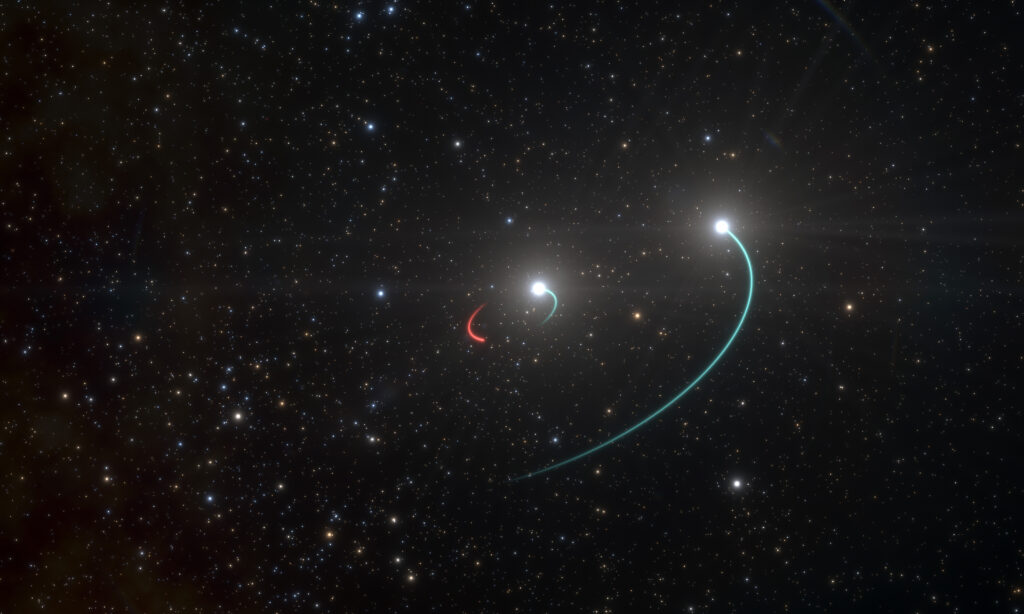
Artist’s impression shows the orbits of the objects in the HR 6819 triple system. This system is made up of an inner binary with one star (orbit in blue) and a newly discovered black hole (orbit in red), as well as a third star, in a wider orbit (also in blue). Credit: ESO/L. Calcada.
A team of astronomers from the European Southern Observatory (ESO) in collaboration with other institutes examined a triple star system (a star system comprising three stars in a formation that the two stars orbit it other in smaller orbits and the third star orbits around the inner pair in an outer bigger orbit). Initially, upon analysing the observations of the system called HR 6819, as a part of their study of double star systems, they revealed a previously undiscovered body in the HR6819: a black hole. This path-breaking discovery was made at the ESO observatory at La Silla, Chilli through its MPG/ESO 2.2-metre telescope. The observations with the FEROS spectrograph on the telescope showed that one of the two visible stars orbits an unseen object every 40 days, while the second star is at a large distance from the inner pair.
The unseen black hole in the HR6819 belongs to the family of the very first stellar-mass black holes found that do not interact violently with their surroundings and thus accretion (disk formation) is seen around them, therefore, are called nonaccreting black holes as they appear truly black. However, its presence could be spotted and its mass could be calculated by studying the orbit of its companion star in the inner orbit. According to the theory of stellar mass limits, this invisible body fits the definition of a black hole as it has a mass four times that of the sun. According to Thomas Rivinius, Emeritus Astronomer based in Chilli, “an invisible object with a mass at least 4 times that of the sun can only be a black hole.”
The black hole found in the HR6819 is special in a way that it doesn’t react to its environment. Out of a couple of dozen black holes found in our galaxy strongly interact with their environment and make their presence known by releasing powerful X-rays. But, after the discovery of an invisible black hole, it is estimated that, over the Milky Way’s lifetime, a significant number of stars ended up as black holes as they died. Their locations in the Milky Way can now be traced by the clues that this discovery of an invisible black in the HR 6819 has provided. As Rivinius shares, “There must be hundreds of millions of black holes out there, but we know about only a few. Knowing what to look for should put us in a better position to find them.” This can be well understood as the fact that this discovery is just the ‘tip of an iceberg’.
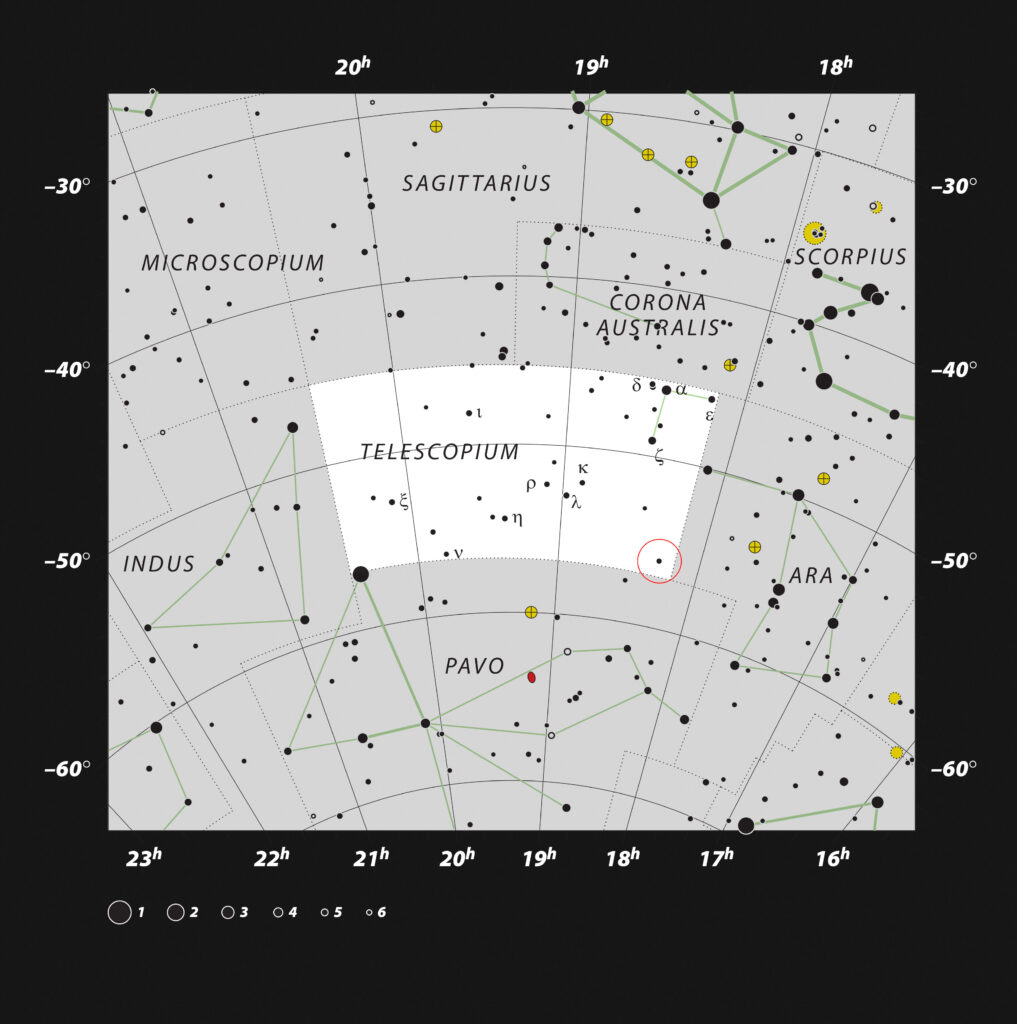
This chart shows the location of the HR 6819 triple system, which includes the closest black hole to Earth, in the constellation of Telescopium. Credit: ESO, IAU and Sky & Telescope.
As science lovers, we must find this discovery as a ticket to a roller coaster that runs across the deep drown secrets of our Milky Way galaxy and way into an unbridled ride of the cosmic ocean. We must understand and observe the might of gravity and the phenomena it is capable to cause. The discoveries of these triple star systems (HR 6819) provide clues about the violent cosmic mergers that release gravitational waves strong enough to reach our planet Earth. Astronomers believe that studying these systems could help them understand how stellar collisions can happen in these systems. According to Marianne Heida, a postdoctoral fellow at ESO, “by finding and studying the triple star systems like HR 6819 or LB-1, we can learn a lot about the formation and evolution of those rare stars that begin their lives with more than about 8 times the mass of the Sun and end with a supernova explosion that leaves behind a black hole.” The existence of this invisible black hole so close to our home has paved way for the possibilities for many more surprises to come in the near future. Who knows, maybe we can find a black hole right in our backyard someday.
In this time of perplexity, when a sense of foreboding is prevailing everywhere around the globe, it is not an easy task to step ahead and works as the frontline fighters. Amid this coronavirus pandemic, healthcare professionals are serving humanity at the expense of their own lives.
Pakistan, with no exception, is also facing the same crisis, with less than minimal resources and an underfunded healthcare system. Amid the chaos, the ones leading from the front are our caregivers, our national heroes. This not only demands to risk your own life but also the life of your loved ones in honor of the commitment they made to their profession, undeniably this requires huge sacrifices and courage.
With more than 1000 health professionals tested positive for corona, these doctors still are doing extraordinary service even without the protective gear and the essentials needed to minimize their exposure to the virus. With our health care system being extremely fragile, sloppy and not able to resist havoc like this- having less than 15000 ventilators in total, and not enough space to accommodate the patients, these warriors not only make themselves vulnerable to the virus by stepping out but also make tough calls deciding who gets a chance to live and who will be left to die; taking a toll on their mental health.
Dr. Zahra Jaan, is one of our white cap heroes, serving in Hayatabad medical complex in the Gynae department. Peshawar being the epicenter of this pandemic outbreak in KPK, Dr. Zahra, has volunteered in the combat team for COVID-19 too. In this dire situation, being responsible for not one but two lives demands an exceptional level of vigilance; we cannot overlook her tremendous courage to take this burden on her shoulders and stand steadfast in the face of this calamity.
Dr. Zahra Jan is a trainee in gynae and obstetrics, Hayatabad Medical complex
To get an insight into the actual situation in KPK, we had a candid conversation with Dr. Zahra Jaan, a qualified doctor and a brave lady. She is serving her people with no fear amid coronavirus breakdown. Here are some excerpts of the conversation:
Sabeeka: During this pandemic, where everyone is freaking out being caged in the houses and gazing empty streets from their windows. Take us into what it is like for a frontline warrior who is potentially putting his life as well as of his loved ones at stake in this fight to combat the disease?
Dr. Zahra: Everyone is scared, and it’s quite natural. But for us being at the frontline, this is our job to be in hospitals. Initially, when the cases were not spiked up, we did not have an absolute idea of how things will unfold, but since I am married, I was scared for my family too. After my first duty, I was in quarantine for 14 days, I could not meet my family, and I did not even see my husband for 21 days. They sent us to the hostel near the hospital, so we didn’t use to come home. So yeah, we miss our family, we are scared and fearful.
But even then, this strength comes from within us when we see people suffering in pain, and we realize that we are the only ones after Allah who can relieve them, pacify their pain. It also reminds us of our oath, the commitment to our profession. With the mindset that this is the time the nation needs us, and it makes us strong enough to put our lives at risk to save others. And after they recover, the blessings they give you, that feeling is something out of this world, totally unmatched, jubilant is a small word for that, but that makes you give your all to your profession. Having said that, inevitably, it is a difficult task to step out as a warrior in this whole fiasco full of risks.
Sabeeka: During this hour of crisis, how is your typical day now different from the one before? Do you have to perform “out of hour” service to meet the demands with the increasing number of patients?
Dr. Zahra: Initially, during the pandemic, our elective surgeries and OPD- everything was open, but when the cases increased, only the batch that got duty on a particular day used to come. We used to go for two days a week to limit our exposure. But to meet the needs with the increasing number of patients, they needed volunteers from every ward for the combat team; that condition was entirely different. We have ordered to stay in the hostel for seven days. During this week, we had consecutive duties of 6 hours at different timings-early morning or evening, depending on the schedule. They sent us buses for pick and drop, and then we were self-isolated in those rooms in the hostel, we were not even allowed to meet our colleagues.
After this week-long duty, we were allowed to go homes, where we were in quarantine for 14 days. After that, my regular duty started in the gynecology department. Still, when we return home from our regular duty, we are supposed to remove our shoes, overalls, or any extra thing we have at our gates. Even the essentials we have like stethoscope and phones; we sanitize them regularly with the alcohol swabs, take a shower, and then meet our families. And we don’t take any extra accessories to the hospitals, including our purses.
Sabeeka: As a leading health expert, how do you see the COVID-19 different from other viruses like Ebola, Zika, HIV, and SARS? And what makes an individual vulnerable to the virus, and how can one generally catch the virus?
Dr. Zahra: The significant difference is that it’s very contagious, as we speak of HIV, it is transmitted through body fluids, though it is more fatal than COVID-19. Similarly, when we look at the transmission of influenza, it is one to one. The problem with COVID-19, it is extremely contagious, another distinct feature is its viral load, the one getting infected will have the same viral load as that of the transmitter. It only depends on your immune system, whether it is capable of fighting the provided viral load or not. And the primary means of its transmission are droplets though it’s not an airborne disease, if you sneeze, cough, or even breathe closer to a potential carrier of the virus, you are likely to get it.
Sabeeka: Being a trainee in the gynae department, you are aware of the vulnerability of pregnant women to this virus. What extra precautions is your department taking in this regard?
Dr. Zahra: We make sure that every patient we deal with is wearing a mask and taking all the precautionary measures. On our end, we neither allow more than one attendant with the patient nor do we check more than two patients simultaneously. We have minimized the use of a stethoscope, we monitor fetal heart through machines. Other than that, we prioritize patients if it seems that a patient has come for an antenatal checkup, and there is not anything serious. We can keep them from entering the ward and recommend them home treatment.
But, when it comes to the labor room, we can’t do much as everyone out there is in a critical condition, and there is havoc, but we have tried to distance the beds and everyone in the staff wears PPE when they enter there. The most we can do right now is to ensure their safety and this is what we are doing.
Sabeeka: We have witnessed that the doctors compelled to compromise their safety. With your hospital, are you in the same predicament? How well are you people equipped with the PPE?
Dr. Zahra: With our hospital, our seniors made sure that everyone got their PPE. Although PPEs are not disposable, we have to wash them daily, yet this is the most they can do for us with limited resources. Our buses for pick and drop and our hostels where we used to live were decontaminated regularly, and everything is government-funded. But I don’t think the conditions are as favorable as our hospital in the surrounding hospitals.
Sabeeka: What is the potential protocol for testing the patients? Any vital signs? Have you witnessed any asymptomatic patient?
Dr. Zahra: Initially, we didn’t have our PCR machine here in the hospital. We got our PCR last week, but obviously, we can’t test all of the patients. Our first priority is any faculty member who develops symptoms- we treat them as the suspect of COVID-19, and the next priority is the patients who are vitally unstable with high respiratory rate and shallow oxygen saturation rate like below 96.
Initially, we used to consider their travel history too, but now as the cases in the community are increasing, travel history is not that important. Instead, we test the elderly having any other comorbidities or underlying illnesses. The ones with mild symptoms or no apparent signs having a travel history are registered and recommended to a private hospital for the test, later, the reports are checked. In the case of mild symptoms, we only recommend them to self-isolate in their homes.
Dr. Zahra screening the suspected patient of covid19
Sabeeka: What would you suggest to the potential COVID-19 patients with mild symptoms at-home treatment?
Dr. Zahra: They can take Steam inhalations, Panadol for fever, cough syrup, or spray for throat soreness and incorporate colored vegetables in their food and fruits with a high content of vitamin C like oranges and do exercise to boost their immunity.
Sabeeka: How many tests are you guys conducting per day at HMC Peshawar? Is the government satisfying the needs of the hospital concerning testing kits?
Dr.Zahra: Here at HMC, we used to conduct almost 30-60 tests per day. The testing rate is slower in KPK, which is one of the main reasons that the fatality rate of COVID-19 is higher enough in KPK.
Sabeeka: Are you worried that it is a matter of time that the hospitals will run out of the equipment, masks, ventilators, PPE? Are you seeing the coming days leading us to a catastrophe and the trajectory only going straight uphill? What is your opinion regarding the idea of a partial lockdown?
Dr. Zahra: People have no idea how delicate the situation is, if they keep on with their non-serious, irresponsible behavior, we will no longer be able to control the situation. Talking of our health care system, we have 3-4 ventilators in a hospital. Even in times of normalcy, we don’t have a free bed in ICU in case of an emergency, and we have converted 2 wards into intensive care units already. Where all hale health care units have come down to their knees, what will we do with meager resources and ill-equipped system?
Due to ease in lockdown, we are all set to open our gates to a more severe catastrophe. With the stroke of the curve going upward every day, the coming 15 days will be crucial for us, and unfortunately, people are not dealing it the right way. At the moment, we don’t even know the exact number of potential COVID-19 patients and not even the precise mechanism of this virus- nothing is definite. And unfortunately, we don’t see the trajectory getting flattered anytime soon.
Sabeeka: Many conflicting ideas go viral about the portion of the population this virus is targeting. In your opinion, and from what you see, are the elderly or those with some sort of sickness more prone to the disease?
Dr. Zahra: The coronavirus doesn’t spare anyone irrespective of age, we have even seen cases of newborns infected with the virus. Nothing is going to protect you regardless of your age. You may get mild or no symptoms if you are young and contract the disease, but you will infect the elders in your home who may lose their lives. Yes, you can say that if you are young and you don’t have any underlying illness, you have high chances of recovery as the fatality rate is meager in such cases.
Sabeeka: Several things are being exchanged on social media regarding dugs and treatment to cure coronavirus without any authenticity. What will you say about this self-medication people are practicing and the threats it can pose?
Dr. Zahra: I cannot emphasize enough how dangerous this self-medication can be. People are taking a high dosage of antimalarial drugs for COVID-19 without knowing the side effects they can have likeHydroxychloroquine disturbs heart rhythm. You can have a heart attack while the excessive dosage of Panadol can cause kidney failure. You do not have an idea about any underlying disease or allergy you may have, and any of the ingredients in the medicine you are taking can cause a shock or trigger a reaction in your body.
Sabeeka: Is there any message for the people on civil responsibility they should show to curb the spread of this disease?
Dr. Zahra: Social distancing is the only way to curtail the spread of coronavirus. If you don’t go outside to get the virus, it’s highly unlikely to reach you in your home, so please stay at home. Especially for the young lot, if you won’t practice social distancing, you may not be affected this much, but your elders won’t be able to survive if they contract it. Our health system has already started to cripple, doctors in our fraternity have started getting affected- we are at the cusps of an unmanageable crisis. Take it seriously and follow the precautionary measures. Don’t hide your history, be honest with your health care providers, and don’t hoard as there is an apocalypse waiting for you out there. To take care of others, start taking care of yourself.
The coronavirus has disturbed our daily lifestyle to a great extent. It has also immensely burdened health care systems. Countries are striving hard to find a balance between health-driven lockdown and economies. The sole superpower of the world is alleging that China deliberately released and spread the virus while the third world is endeavoring hard to get some financial benefit out of it in the form of debt reliefs. These macro questions encompass the working of actors in the international system. To understand the development in the world Dr. Afsa Qazi answered these questions upon our request.
Dr. Afsah Qazi is serving as the Assistant Professor at the Department of International Relations, National Defense University, Islamabad. Dr. Qazi is a Ph. D in IR fromthe School of International and Public Affairs (SIPA), Jilin University, Changchun, China.
Below are some excerpts of her recent conversation with Scientia’s team member Faryal Qazi.
Dr. Afsah Qazi is serving as the Assistant Professor at the Department of International Relations, National Defense University, Islamabad
Faryal: The U.S alleged China for deliberately spreading this virus. What political and economic benefits would China get on the political chessboard of the world if the virus stays in Europe and the U.S for an extended period?
Dr.Qazi: First, as far as the US allegations vis-à-vis China regarding the deliberate spread of Covid-19 are concerned, these continue to appear grossly ill-founded despite President Trump’s consistent effort to label it as Chinese or Wuhan virus; no logically coherent and scientifically correct trail of Chinese involvement has so far been identified. Second, the very understanding needed to fight this pandemic globally is to internalize the fact that it does not benefit anyone, either in short or long run.
When considering that a particular state might have knowingly spread the virus to the rest, it must also be realized that in an intensively interconnected and interdependent world that we have today, what goes around comes around even faster. That said, looking at what in common parlance is known as the Chinese miracle, had been achieved by getting China integrated into the world markets, especially with the developed ones in the U.S and Europe.
Therefore, even if China wishes to get back to normal (as businesses and industries in China reopen) after having controlled the spread of the virus, it would be hard given the double-edged demand shock that market is bound to face due to a decrease in global demand (lowering Chinese exports that might continue if western economies do not get back to normal) and a contraction in domestic spending (due to record high levels (6.2%) of unemployment and psychological stressors inside China). The only political advantage for China might be a better global image for dealing efficiently along with helping others fight the pandemic – again which the war of narrative being led by the US continuously tries to hinder.
Faryal: Fighting this global pandemic measures taken by autocratic countries like China, North Korea, and Russia were better and Speedy. In fact, China is a role model during this crisis, but it wreaked havoc in Europe and the U.S. Does this mean that autocratic regimes are better to deal with such crises, can it be called a failure of democracy?
Dr.Qazi: The observation that non-democracies have dealt more efficiently with the pandemic in comparison to democracies might be correct to some extent, but the generalization is still hard since countries like South Korea, Japan, New Zealand, etc are on the list too. Rather than having an either-or approach regarding the preferred political system, what needs a mention is the state capacity to have the best possible utilization of the resources at its disposal in the times of crises, which in turn depends largely on how states behave/act in times of relative peace when no imminent threats/pressures exist. For example, China’s efforts to transform its huge population or cheap labor into an asset/skilled labor have lasted over decades – this huge skilled workforce, in addition to governmental control and the will to implement policies aimed at delivering public goods (for the sake of sustaining the ruling party’s legitimacy) is what has allowed China to avoid the worst possible outcomes.
Contrarily, the U.S and many of its developed democratic allies in Europe have failed to curb both the spread and mortality rates not because democracies are theoretically or conceptually faulty, but due to the irrational spending preferences of the regimes in-charge, despite the general public desire for better health-care and social security policies across the world.
Faryal: Do you think the U.S is fulfilling its role as a hegemon considering it did not provide any sort of help to affected countries instead it withdrew its pre coronavirus funding from WHO? Whereas, China appears to be fulfilling the vacuum that is left by the U.S. Does the U.S appear as a viable hegemon in the future?
Dr.Qazi: US’ ability to achieve its desired outcomes from emerging situations is for sure on the decline and China is indeed enhancing its image and influence by targeting the areas where the U.S lags. In this context, Chinese proactive engagement and material aid come amidst a lessened American potential for global engagement due to a worsening domestic situation. China’s image and its influence as an alternate public goods provider might improve due to this, however, this is just one of the multitude of public goods that the U.S has appeared to be providing globally for decades.
To what extent China is willing to go for seizing the moment if it really intends to replace the incumbent hegemon (the idea which ‘peaceful development’ narrative tries to negate) will determine who keeps the place at the apex of the system. A hegemonic state is both capable and willing to lead the system; Chinese capability and willingness are both not definitive so far, and how strong or weak the U.S comes out of the ongoing crisis would help find clearer answers to the question.
Faryal: Do international monetary organizations provide debt reliefs based on humanitarian considerations as liberals propagate. Or is it again interplay of power politics that drives the condition of these relief packages? What is your IR expert opinion based on the debt reliefs provided by IMF?
Dr.Qazi: Two aspects need to be clarified to gauge the work of international monetary organizations. One, they are not philanthropic entities guided by benevolence; instead, they do business with the broader agenda of containing any major upheaval that might turn the interconnected world financial or economic systems upside down. Even if a bail-out is given to rescue the fate of a country’s population, the state bears responsibility and has to pay the price for such favor – so bail-outs always have a give and take involved. Second, IMF has a reserve currency pool that consists of funds deposited by states; the larger a state’s reserve in the IMF, the greater its quota and greater the voting share, thereby making that state’s stance important to deciding for or against a requested bail-out.
This is where power-politics might have an influence, but again, decisions are not taken unilaterally. As far as the issue of conditions on relief packages are concerned, the IMF being a formal organization follows a rule-based approach in this regard rather than following any particular state’s preferences. This is to say that several categories of relief packages have been defined and mandated under IMF – the general rule follows that more substantial the amount being requested and weaker the economic credentials of the requesting state, stricter the conditions. So, conditionalities have something to do with the track record and economic performance of the states asking for bail-outs. However, since the member contributions make up the IMF’s reserves, when the USA, having the largest reserve withdraws them, there are cuts on the organization’s overall reserve, thus constraining its capacity to bail-out.
Dr Salman Hameed is Charles Taylor Chair and Associate Professor of Integrated Science & Humanities in the School of Cognitive Science. He is also the director of Center for the Study of Science in Muslim Societies (SSiMS). He holds a Ph.D. in astronomy from New Mexico State University at Las Cruces and a B.S. in physics and astronomy from the State University of New York at Stony Brook.
His primary research interest focuses on understanding the reception of science in the Muslim world and how Muslims view the relationship between science & religion. His other research interests include analyzing reconciliation efforts over sacred objects and places of astronomical importance. His past astronomy research focused on understanding star formation in spiral galaxies.
Dr Salman has taught courses on “Evolution, Islam, and modernity”, “Science in the Muslim world”, “Creating science fiction short films using real science” (with Dr. Jason Tor), “Science & Religion: Biological evolution in the public sphere”, “Aliens: Close Encounters of a Multidisciplinary Kind” and “History and Philosophy of Science & Religion” (with Dr. Laura Sizer) at Hampshire College.
We got a chance to have a conversation with him during this lockdown. Following are parts of the conversation:
Abdullah: You were born and raised in Karachi. Let us know about your academics?
Dr. Salman: I did my Matric from Bai Virbaiji Soparivala Parsi High School (B.V.S.P) and then my Intermediate from D.J. Science College. I did not know I will be pursuing astronomy later on, but my interest was always towards the sciences. After my Intermediate, I got into N.E.D. Engineering University in Mechanical Engineering program. I only spent a month there before leaving for the State University of New York at Stony Brook. I was admitted into the Computer Science major, but I soon discovered that I was spending all my time in the Earth and Space Sciences Library.
To the consternation of my parents, by the end of my first year of undergraduate, I switched my major to astronomy and physics. It was tough, especially the physics part, but my love for astronomy encouraged me to accept this challenge. After my bachelor’s, I moved to New Mexico State University (NMSU) in Las Cruces for my Ph.D. The night sky in New Mexico is amazingly dark, and it was perfect for doing astronomy.
Carl Sagan’s “Cosmos” was a huge source of inspiration for Dr. Salman
For my doctorate, I looked at how stars form in spiral galaxies. To do this, I was lucky to use some of the world’s best telescopes in the US, Chile, and Spain. It was awe-inspiring to visit these stunning places to explore questions about galaxies millions of light-years away. I should mention that when visiting these places, I would mostly be listening to Nusrat Fateh Ali Khan, and his music in my mind is now inextricably tied to these places.
Abdullah: How did you get interested in Astronomy?
Dr. Salman: I was always interested in staring up at the stars. But what reshaped my life was the airing of Carl Sagan’s “Cosmos” on PTV in 1984. I was in 9th grade at the time. Before that, I did not know that one can go with astronomy as a profession. Just imagine: Working full time on your favorite hobby! At the end of the first episode, I had decided that I want to be an astronomer. And 17 years later (!) I got my Ph.D. I never got a chance to thank Carl Sagan as he died in 1996. But I did meet his widow, Ann Druyan, and conveyed my thanks to her.
Abdullah: You were among the pioneer astronomers who established Amateur astronomers’ society of Pakistan (Amstropak) in 1987. Let us know about its achievements?
Dr.Salman: Today we have a thriving amateur astronomy scene in Pakistan. At the time, however, we starved even for basic astronomy information. This was the reason why a few of us – all under the age of 17 – formed an amateur astronomical society in Karachi. We started a newsletter that provided astronomy basics and hosted symposia on Mars, Supernova 1987A, and Voyager spacecraft’s encounter of Neptune. The symposium on Mars included a live teleconference by one of the leading Mars experts, Chris McKay. This was relatively special as this was a time well before the ubiquity of the internet and Skype chats. Apart from the general public, professors and students of Karachi University and the members of SUPARCO attended these symposia. Even though Amastropak ceased to exist in the mid-1990s, I hope that its existence has played at least a minor role in the later blossoming of amateur astronomy societies in Pakistan.
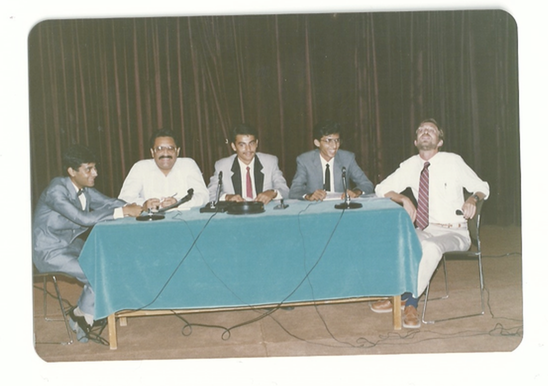
Amstropak conference in 1988
Abdullah: In 1989 you moved to the US for higher studies, how was that experience? Would you like to share your thesis that triggered the research of star formation in spiral galaxies?
DR. Salman: This is a brief question, I will sum up it in two main things that I want to highlight. First, I learned quickly that you have to submit your homework on time. In Pakistan, we were used to cramming for exams at the end of the year. But in the undergraduate program at the State University of New York at Stony Brook, I realized that missed assignments even at the beginning of the semester can cost you your grade. This was a good lesson as deadlines are essential for telescope and grant proposals as well. You cannot submit a proposal even a second late. Secondly, because of graduating requirements, I was forced to take courses in sociology, art, film, etc. At that time, I resented these non-science classes, as I absolutely loved astronomy and felt that this was taking precious time away. However, some of these classes have had a huge impact in making me the person I am today and for that, I’m extremely grateful!
My PhD. thesis at New Mexico State University in Las Cruces focused on how stars form in spiral galaxies and I used telescopes in Chile, Spain, and of course the US. I was looking at particular types of galaxies that are defined by their “bulge” of old stars. Compared to other spiral galaxies, it was thought that these have relatively few new stars forming. However, my advisor and I suspected that in many cases their star formation may be hidden from view by this bulge of stars. We used a technique to subtract out the light from the old stars to reveal substantial star formation an insignificant number of these galaxies. I still had to explain why some of these galaxies are going through this high rate of star formation and I suspected that we are catching them in the act of cannibalizing small galaxies (our own Milky Way has also cannibalized many small galaxies over its history). I found the smoking gun by tracing some leftover signatures of such cannibalization using the Very Large Array radio telescope in New Mexico. I continued this work during my post-doctorate fellowship at Five College Astronomy Department (FCAD) in Massachusetts.
Abdullah: What were the causes behind your keen interest in the way young Muslim scientists view biological evolution and modern science?
Dr.Salman: This has to do with encountering students in my astronomy classes who believed in UFOs. To me, this was surprising and fascinating. These were smart and educated students, and yet they believed in alien visitations. I started to get more interested in how social, political, and cultural factors shape our beliefs. Biological evolution is interesting from this perspective. The idea that species have changed over the past 4.5 billion years of our planet is a fact of science, and natural selection is the accepted mechanism for this change. I learned that in the 9th-grade biology textbook in Pakistan as well and did not see any conflict with religion. And yet, evolution is controversial in the US, but not in most Christian majority countries. In fact, in the US, political affiliation correlates with one’s acceptance or rejection of evolution.
While a lot of research has been done on evolution attitudes amongst Christians, very little research has done for Muslims. Given the diversity of Muslims in the world, from South Asia and Saudi Arabia to Albania, Senegal, and African-American Muslims in the US, it is a fascinating question. It would come as no surprise that there is no monolithic Muslim position on evolution. Even the word “evolution” means different things to different people. From a research perspective, I’m fascinated by the political, social, and historical factors that shape these responses.
Abdullah: Your primary research work focuses on understanding the reception of science in the Muslim world. During the current coronavirus pandemic, Muslim countries like Pakistan and Iran show a severe lack of scientific knowledge even for health and general precaution awareness from an epidemic. There have been problems enforcing lockdowns and a lack of understanding of concepts of social distancing and quarantine. What do you suggest Muslim countries should include in their educational curricula so that the general populations are more receptive to science rather than myths and conspiracies?
Dr. Salman: There are a couple of things to say here. This is not just a Muslim society’s problem. Look at the protests currently going on in the US against social distancing. The problem is that people are looking for certainty in an incredibly uncertain time. This is understandable. There are also real economic concerns for a large segment of the population who do not have the luxury of being isolated and work from home. What you need in this time is strong leadership that trusts science and has an underlying understanding of the process by which scientists are trying to understand Covid-19 and create its vaccine. It would be unfair to bring the Chancellor of Germany into the mix because she has a PhD. in quantum chemistry. But just look at the fantastic leadership shown by the Prime Minister of New Zealand, Jacinda Ardern. In a time of such global uncertainty, we need good leaders.
But what should be included in science curricula that can be helpful? I think the key would be to understand the methodology of science, including concepts like double-blind tests and the difference between causation and correlation. But most importantly, to appreciate uncertainty. Unlike the popular perception, science thrives when we don’t know the answer. Scientists (at least the good ones) are quite comfortable saying, “we don’t know.” After all, this is precisely the place where exciting research is done. It will be quite dull to work on a problem that has already been solved. Therefore, we get trained to appreciate uncertainty. But we also learn how to solve problems methodically and how to be critical of our results. It is these things in the curricula that can help the public understand and appreciate the process of science.
Dr. Salman also hosts astronomy video series on his YouTube channel, Kainaat Astronomy in Urdu.
Abdullah: I have a keen interest in astronomy since my childhood, and I do believe that seeking knowledge of the heavens helps us to understand the grand mechanism of this universe and universal laws of nature. Do you think that pandemics like Bubonic plague, Spanish flu, and now COVID19 are part of nature’s grand plan to find the “survival of the fittest”?
Dr. Salman: If we go by that logic, then we should not take antibiotics or do any surgery that can save lives. After all, are we not interfering in nature by saving lives via medicine and technology? Second, we are part of nature. We cannot take ourselves out of nature. Whatever we do, by the very definition, would also be part of nature. All of this does not mean that we should not take care of the planet. Humans are the only species in the history that now can wipe out most species on Earth. Our destruction of Earth’s ecosystem can lead to a lot of misery and can potentially lead to our extinction as well.
Abdullah: How would you explain to a layman that Coronavirus is not a curse of Almighty?
Dr. Salman: I think the first thing would acknowledge why people would want to see this as a curse. This is a significant global tragedy, and humans wish to seek explanations and certainty. Unfortunately, a scientific explanation currently provides neither. Instead of a discussion of a ‘curse,’ I would turn to the issue of benefits to humanity. If we can find the vaccine and a cure, then that would save a large number of lives, and this is something consonant with the teachings of Islam and all other religions as well. Second, I would compare plagues to earthquakes. Traditionally earthquakes have been interpreted as ‘punishments’ for ‘sin’ as well. Some of this was brought up after the tragic 2005 earthquake in the northern regions of Pakistan that killed over 80,000 people. But humans now understand how the movement of continental plates causes these tremors. The location of earthquakes strikingly match the boundaries of these continental plates.
This particular knowledge saves thousands of lives each year, as buildings in many of these earthquake-prone areas are designed to withstand the shaking of the Earth. Sure enough, we cannot argue that the punishment from Almighty is only concentrated on people where continental plates meet and onto those countries that cannot afford earthquake-proof buildings? If we can argue that earthquakes are part of natural processes we can possibly extend that analogy to include Coronavirus as well. Not everyone will immediately change their minds and that is okay. But some (many?) probably will. We should not alienate or mock those who do not agree with this viewpoint as some will change their minds tomorrow.
Abdullah: After worldwide lockdown, NASA released very clear satellite images that showed decreasing levels of air pollution across the globe. These clear skies are an amazingly awesome chance not only for astronomers but for amateur stargazers too. Are there any fun ways astronomy lovers can spend their time indoors keeping themselves busy observing the cosmos? How are you spending your time in this lockdown?
Dr. Salman: I think this is a fantastic opportunity to learn about the stars. Even a global lockdown cannot keep the stars out. You can use any basic app (such as Stellarium or Star Walk or Night Sky, etc.) about the location of planets and stars each evening and learn about the objects as well. Venus is bright in the evening sky, and Mars, Jupiter, and Saturn are putting up a show in early morning skies to the east. With your naked eye, you can spot a cluster of stars called the Pleiades and know that you are looking at a collection of a few hundred stars (you can only see the brightest seven with the naked eye) that are all relatively young and are located about 400 light-years away. Our Sun, a long time ago, formed in a cluster like the Pleiades. We do not know where the Sun’s siblings are today. But the Pleiades is a reminder of our own Sun’s youthful days. If interested, you can watch my video on how to identify stars and planets in the night sky: https://youtu.be/lcLA0WGv0nw.
Abdullah: You have been hosting astronomy video series on your channel, Kainaat Astronomy, in Urdu. What is the philosophy behind this initiative?
Dr. Salman: The primary purpose is to create curiosity about the universe in a language that is understood by most people in Pakistan. With the internet, you can find hundreds of videos on any topic. But your language makes a difference. The goal of these videos is not to lecture for a course. Instead, to inspire individuals to think and appreciate how we have come to know so much about our universe and how much more there is to know! Please come and visit Kainaat Astronomy in Urdu: https://www.youtube.com/KainaatAstronomyInUrdu