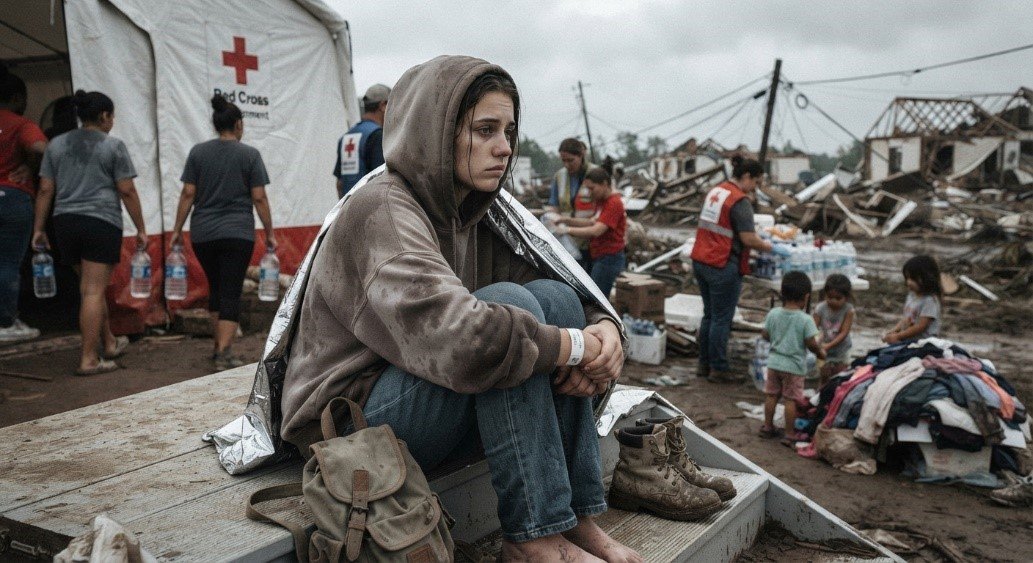
When the ground stops shaking, and the rivers stop flooding, it doesn’t mean the fear is over. The terror of the incidents follows the survivors in nightmares and daily behavioural patterns.
Studies of the Sichuan earthquake of 2008, the Bam earthquake of 2003, and Hurricane Katrina of 2005 have provided major insights into how trauma severity is influenced by socio-demographic factors, environmental settings, and organizational support systems. Natural disasters create the need for large-scale renovation and can cause economic imbalance. The psychological manifestations of illness are part of the health crises they create.
“We cannot stop natural disasters, but we can arm ourselves with knowledge: so many lives wouldn’t have to be lost if there were enough disaster preparedness”
Petra Nemcova
The grief reactions, if unaddressed, can turn into prolonged clinical disorders. Among them, post-traumatic stress disorder (PTSD) remains a prevalent mental illness. Symptoms include flashbacks, nightmares, insomnia, irritability, and avoidance behaviour. Clinicians evaluate it using diagnostic inventories such as the Impact of Event Scale or the PTSD Checklist. Besides PTSD, there are higher rates of general psychological distress, depressive episodes, and social dysfunction. In events including massive loss of life, such as the Bam earthquake, studies report that two-thirds of survivors exhibit extended grief, and their treatment is challenging at the same time due to lack of resources in emergencies.
Sensitivity of Elderly People
Detailed population-based assessments give a picture of age vulnerability during disasters. From the Sichuan earthquake follow-up data, it was found that elderly survivors experienced significantly higher rates of psychological damage than younger adults. They exhibited PTSD symptoms (22.5% vs. 8.0%) and general psychiatric illnesses (42.0% vs. 25.4%) compared with younger adults. Several factors contribute to compounding the risk of depression. These include chronic medical conditions, hearing defects, vision impairments, reduced mobility, and economic restrictions. Moreover, increased isolation of some older individuals due to lack of family can reduce their psychological resilience.
Sensitivity of Children
Natural disasters can noticeably affect the mental health of children, leading to acute stress reactions including PTSD. The symptoms vary with the child’s age, cultural background and the diagnostic tools used during the study. Younger children manifest stress through changes in their behaviour, like separation anxiety and sleep disorders. Moreover, parents and teachers underestimate the duration and intensity of these stress reactions. This raises the need for systematic, age-appropriate screening.
Primary healthcare personnel and teachers can be trained to deliver emotional first aid, while mental health professionals focus on managing complex cases in children. Established psychological treatments, like cognitive behavioural therapy (CBT) and play therapy, help children manage grief. Moreover, involving parents and re-establishing normal daily routines are important steps in fostering resilience.
Gender and Socioeconomic Inequalities
Gender, economic class, and societal roles act as layers that shape the distribution of trauma. Both qualitative and quantitative findings from events such as the Bam earthquake indicate that women are more prone to psychological distress, grief, and other depressive symptoms. Moreover, women from lower socioeconomic backgrounds face multiple vulnerabilities. When homes are destroyed, domestic stability is stripped away. This increases pressure on women responsible for household management. On the contrary, middle-class women face intense psychological distress arising from property loss and shifting to temporary shelters.

Psychological Reactions
Survivors experience painful memories and nightmares. Individuals are reassured that these symptoms are normal. Increased nervous system arousal interferes with daily life activities. Some pseudo-somatic disorders are also reported without any organic origin.
Independent Risk Factors
Disaster research, using multivariate regression analyses, has isolated specific variables that drastically increase an individual’s probability of developing prolonged psychological disorders. Individuals experiencing serious injuries and direct danger, like being trapped under rubble, exhibit an increased risk of developing chronic PTSD. The loss of close relatives, children and a spouse leads to states of deep grief. The survivors feel guilty or helpless as family members lost their lives. At times, it is not the human loss but pet loss or loss of other personal items of deep sentimental value that can worsen the psychiatric distress.
Coping Mechanisms
In the absence of psychological first aid, survivors may adopt maladaptive behaviours to deal with staggering distress. They may turn to alcohol, tobacco, or other unprescribed sedatives, thereby increasing the risk of long-term dependence. The rates of suicide attempts or suicidal ideation may increase out of despair, loneliness, and untreated PTSD. These problems may worsen due to lack of management in temporary settlements. Survivors experience anger, emotional numbness, and severe strain. Their marital life and family relationships suffer as there is no privacy in temporary shelters.
Trauma is not what happens to you. Trauma is what happens inside you as a result of what happens to you.
Dr. Gabor Matė
Post-traumatic Growth
Through appropriate healthcare services, individuals experience psychological healing across five major dimensions: recognition of personal growth, finding possibilities, living positive relationships, developing appreciation of life, and spiritual growth.
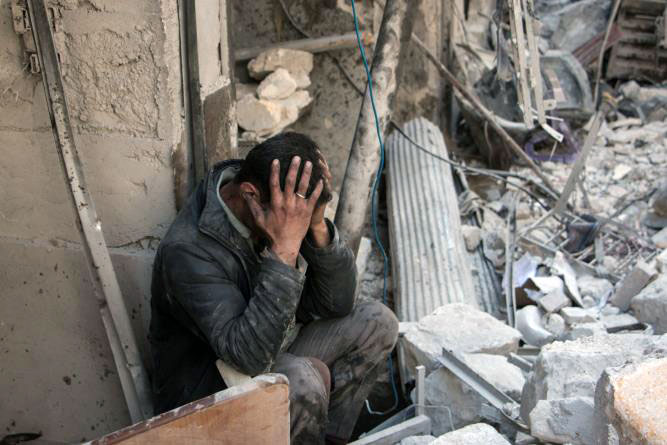
Shortcomings and Recommendations
Lack of professional mental health services is a critical flaw identified during disaster management. Less than 10% of individuals experiencing psychological distress can receive professional care. Older adults and those with limited economic and social resources never seek help.
Mental health services should play a proactive role in community-based screenings to identify elderly individuals, widows, widowers, and children. Physical reconstruction can accelerate recovery from grief. Psychological recovery is linked to accelerating progress towards permanent housing and rebuilding community infrastructure. Steps should be taken towards a long-term support program rather than relying solely on temporary interventions. Establishing permanent mental health infrastructure ensures continuous care and promotes long-term social and psychological stability. Care should be taken of the self-respect and independence of the survivors by avoiding passive victimization. A systematic support pyramid structure should be followed, in which there are four layers: basic services and security, community and family support, non-specialized support, and specialized clinical support.
Natural disasters are not under our control, but our response to the aftermath matters. We need to address the unseen psychological cracks in the survivors. This is definitely under our control, and we can do it effectively.
References
Jia, Z., Tian, W., Liu, W., Cao, Y., Yan, J., & Shun, Z. (2010). Is the elderly more vulnerable to the psychological impact of natural disaster? A population-based survey of adult survivors of the 2008 Sichuan earthquake. BMC Public Health, 10(1), 172.
Kamaledini, M., & Azkia, M. (2021). The psychosocial consequences of natural disasters: A case study.
Fergusson, D. M., & Boden, J. M. (2014). The psychological impacts of major disasters. Australian & New Zealand Journal of Psychiatry, 48(7), 597-599.
Jogia, J., Kulatunga, U., Yates, G. P., & Wedawatta, G. (2014). Culture and the psychological impacts of natural disasters: Implications for disaster management and disaster mental health. Built and human environment review, 7(1), 1.
Heanoy, E. Z., & Brown, N. R. (2024, September). Impact of natural disasters on mental health: evidence and implications. In Healthcare (Vol. 12, No. 18, p. 1812). MDPI.
Kousky, C. (2016). Impacts of natural disasters on children. The Future of Children, 26(1), 73-92.
Mojtabai, R. (2025). Measuring the Psychological Impact of Natural Disasters. JAMA Network Open, 8(8), e2528551.
Saeed, S. A., & Gargano, S. P. (2022). Natural disasters and mental health. International review of psychiatry, 34(1), 16-25.
Perry, R. W., & Lindell, M. K. (1978). The psychological consequences of natural disaster: A review of research on American communities. Mass Emergencies, 3(2-3), 105-115.
Beaglehole, B., Mulder, R. T., Frampton, C. M., Boden, J. M., Newton-Howes, G., & Bell, C. J. (2018). Psychological distress and psychiatric disorder after natural disasters: systematic review and meta-analysis. The British Journal of Psychiatry, 213(6), 716-722.
Kar, N. (2009). Psychological impact of disasters on children: review of assessment and interventions. World journal of pediatrics, 5(1), 5-11.
Mason, V., Andrews, H., & Upton, D. (2010). The psychological impact of exposure to floods. Psychology, health & medicine, 15(1), 61-73.
Warsini, S., West, C., Ed, G. D., Res Meth, G. C., Mills, J., & Usher, K. (2014). The psychosocial impact of natural disasters among adult survivors: An integrative review. Issues in Mental Health Nursing, 35(6), 420-436.
Amiri, H., & Jahanitabesh, A. (2022). Psychological reactions after disasters.
Also read:Bystander Effect: Understanding Its Causes, Psychology, and Real-World Impact

Syeda Khair-ul-Bariyah has been associated with teaching since 2007. She is a synthetic organic chemist and a science and fiction writer. She has publications in both national and international journals in the field of Chemistry. Moreover, she is the author of a stage playbook, “Peregrination of the Soul,” and has a couple of articles and poems published on various websites.

