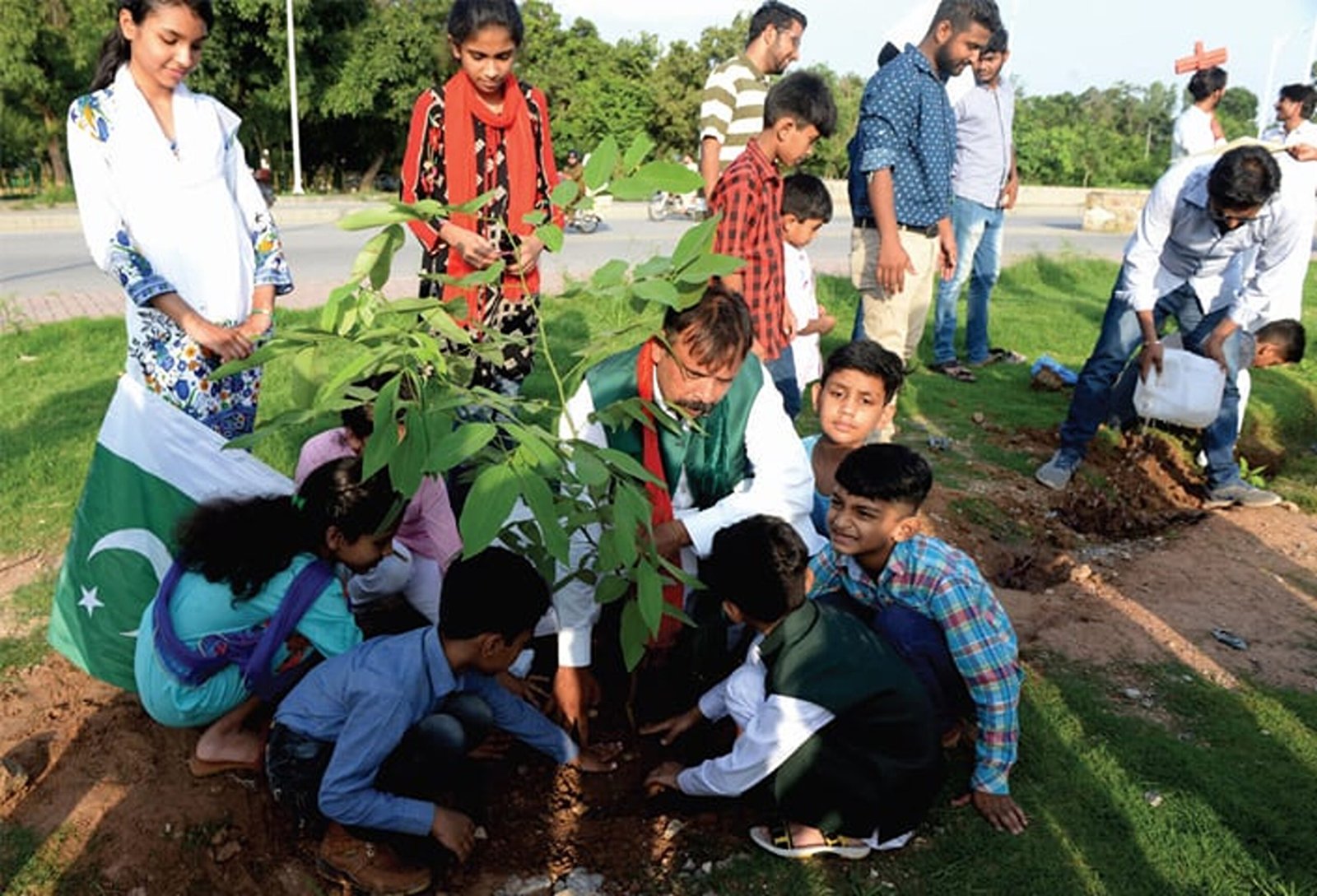
As I am thinking about the opening statement of this article and it comes to my mind the story of a shepherd who used to plant oak trees in a barren area comes to mind, and after a few years, he single-handedly transformed an arid land into a lush green valley. This is the power a single person holds.
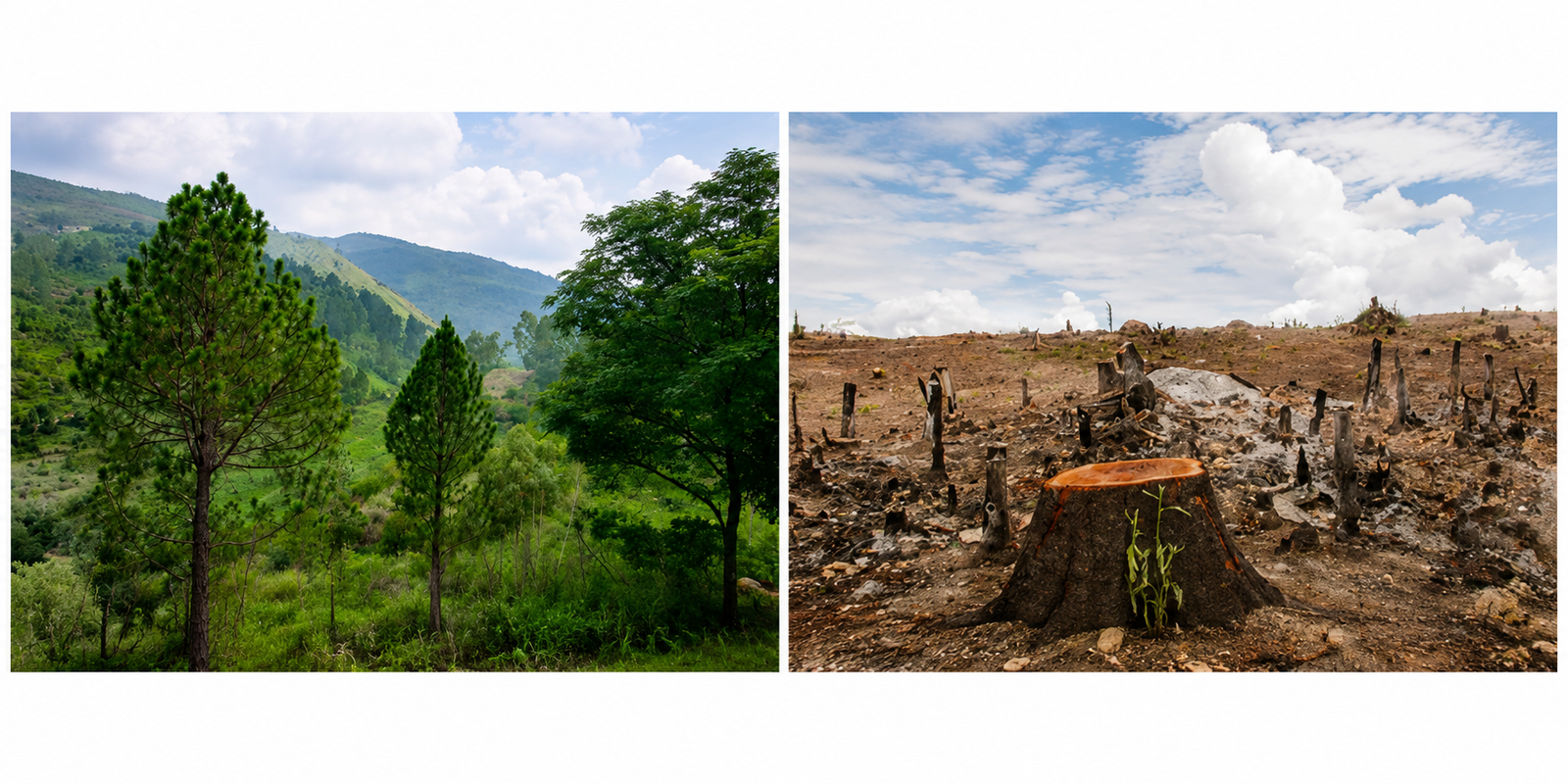
The extreme environmental atrocities and environmental degradation events that are occurring on a routine basis are not just isolated events but a pattern. Every year, Pakistan is losing 11,000 hectares of forest cover as per the statement issued by WWF-Pakistan on International Day of Forests. Deforestation is the primary reason why we rank as the most climate-vulnerable nation with forest cover of only 5%.
To understand the public awareness regarding the importance of forests and promote conservation efforts, we conducted a digital survey named “Greenfluence Campaign” involving 51 respondents of different age groups from different cities across Pakistan.
The survey results revealed that there is a high level of awareness regarding the relationship between deforestation and climate change. Most of the respondents rated their awareness as high, and 42 out of 51 respondents showed that forest loss contributes to environmental degradation. Every respondent agreed that forests are responsible for reducing flood severity and heatwaves. These findings are reassuring because public awareness is the most crucial step toward environmental action. It becomes easier to support conservation programs and adopt environmentally responsible behavior when citizens understand the value of forests.
Summary of main findings of the Greenfluence survey 2025 are;
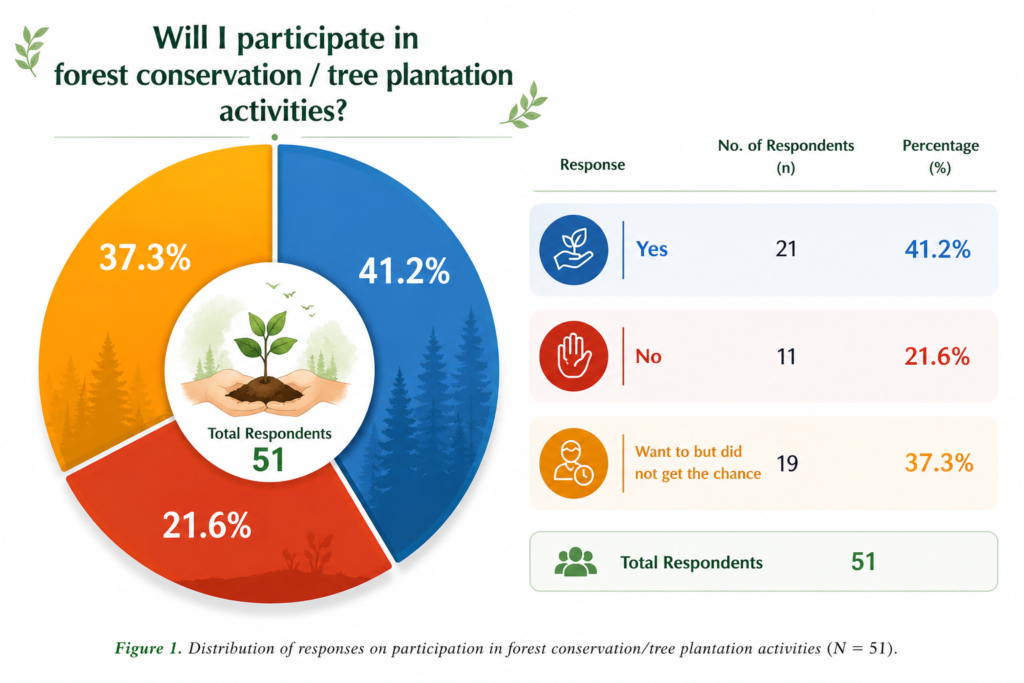
- 21.5% of respondents never participated in any forest conservation activity
- 37% wanted to contribute, but never got the opportunity
- 25% had not planted a single tree in the past year
- 45% reported lack of access to saplings or seeds as the main barrier
- 18.8% said that planting trees was not their personal priority
These findings indicate that Pakistan has the public access problem, not the public awareness problem.
Forests and their importance in Pakistan
Forests are the main natural defence system of Pakistan against climate-related disasters and provide environmental, economic, and social protection. These varied ecosystems, ranging from the northern coniferous mountains to coastal mangroves, absorb carbon dioxide, reduce rainwater runoff, and provide shade and evapotranspiration to cool communities, while also preventing devastating floods, soil erosion and record-breaking heatwaves. They are also economically important for their timber, fodder and medicinal plants, which support rural households, but are at great risk from illegal logging, urban expansion and climate change-induced droughts.
The public well understood these key benefits, but there has been a long-standing disconnect between awareness and action. The survey results show that only 41% of respondents had a history of active involvement in planting activities, with 21.5% not planting any trees in the last year, and 18% of the respondents saying that forest conservation was not a priority for them.
The study shows that there is tremendous potential for mobilization after the individual action and the realisation of their importance. It reveals that 84% of the participants are willing to participate in environmental protection. This dramatic turnaround demonstrates how the resource and awareness gap can be bridged to create active, community-led climate resilience.
As one respondent said, “One idea is to support and promote community-led reforestation programs; locals often know best how to care for their land. Also, reducing paper and meat consumption can significantly lessen deforestation pressure.”
Significance of planting “ONE” tree
The basic unit of an ecological revolution is a single mature tree, which is a very efficient micro-powerhouse that absorbs approximately 48 pounds (22 kilograms) of carbon dioxide per year and as much as 1 ton over its lifetime. At the same time, it cleanses the air by generating 10 to 150 gallons of stormwater to stop localized flash floods and reduces the surrounding urban surface temperatures by up to 8 degrees Celsius due to evapotranspiration.
These micro-actions can have a huge impact when they multiply across a community: 15-20 trees can cancel out an individual’s annual carbon footprint. This cumulative effect makes one citizen one decentralized urban forest, and a green revolution on a national scale doesn’t have to occur all at once around the world, but rather the exact, localized ignition of one person planting one tree.
As per the respondent: “Well, in my view, public awareness is crucial for the protection of forests and climate. If everyone plants a tree and tries to shift to environmentally friendly things, it will show a huge impact.”
In cities, the obstacles are structural. People lack access to the sapling source. Around 45% of non-planter respondents cited access as their main barrier rather than indifference. This means that the solution is not motivational but rather logistical. This gap can be closed by subsidized sapling distribution at grocery stores, community nurseries, union council offices, and schools. As a student in Lahore said:
“Raise awareness not in the form of a slogan, but we should teach this at schools, apart from the course book, to make our children aware of how important it is to plant a tree. We should help them to build a habit to plant at least 1 plant per month.”
Future of Pakistan’s Forests
The future of forests in Pakistan depends on transitioning from short-term planting to long-term ecological survival. The country demonstrated its ability to mobilise on a historic scale and with ambitious goals in the 2019 Ten Billion Tree Tsunami Programme (TBTTP). Still, independent audits revealed significant challenges, such as inconsistent sapling survival and property disputes, which showed that a tree planted is not a tree grown. To combat this, recent efforts are using more structured, technologically sophisticated approaches.
For example, the Green Pakistan Programme has been scaled up and has been given a lot of attention to provincial integration, with more than 2.2 billion saplings distributed and regenerated. Meanwhile, provincial initiatives like the Punjab Plantation Drive have embraced large-scale restoration efforts with cutting-edge technologies, including GIS labs for tracking canopy development and AI drones for discouraging illegal logging. However, the effectiveness of these state-led initiatives relies on the ability to connect with community-led initiatives.
Decentralized approaches, including the Pakistan Forests Recovery Program and specific social forestry agreements, actively engage local landholders and school partnerships. Incorporating local nurseries and monitoring from the top can transform environmental goals into community-safeguarded ecosystems in Pakistan. As one respondent said:
“This year I saw many social media posts in 9th Muharram where people of Karachi disturbed free plants and trees as a sabeel of Imam Hussain; this is a very great initiative, and everyone should participate in such type of activities.”
Final Words
The shepherd’s story is a testament to the power of one person to make a difference, even without institutional support or resources. But Pakistan does not have to rely on such exceptional efforts exclusively. The Greenfluence survey found that 59% of the respondents were willing to plant a tree after just filling out the survey, indicating that Pakistan is not a country that lacks shepherds; it has plenty of people willing to do their part if they are given the chance.
The real challenge is not to get people to understand that forests are important, but to create opportunities for them to take action. By implementing practical measures such as community nurseries, easy access to saplings, and incorporating tree planting into school programs, Pakistan can make a significant impact on forest conservation and a lasting difference in the environment.
References:
https://biologyinsights.com/what-trees-absorb-the-most-co2-a-list-of-top-species/
Pakistan losing 11,000 hectares of forest cover every year: WWF-P – Pakistan – DAWN.COM
2.2bn trees planted in four years under green Pakistan initiative – Daily Times
Punjab Launches Historic Tree Plantation Drive Under Green Punjab Mission – Nature News
Pakistan Forests Recovery Program
More from the author: Flood Prevention Revolution: Harnessing Karez and Advanced Bio-Ecological Drainage for a Safer Future


