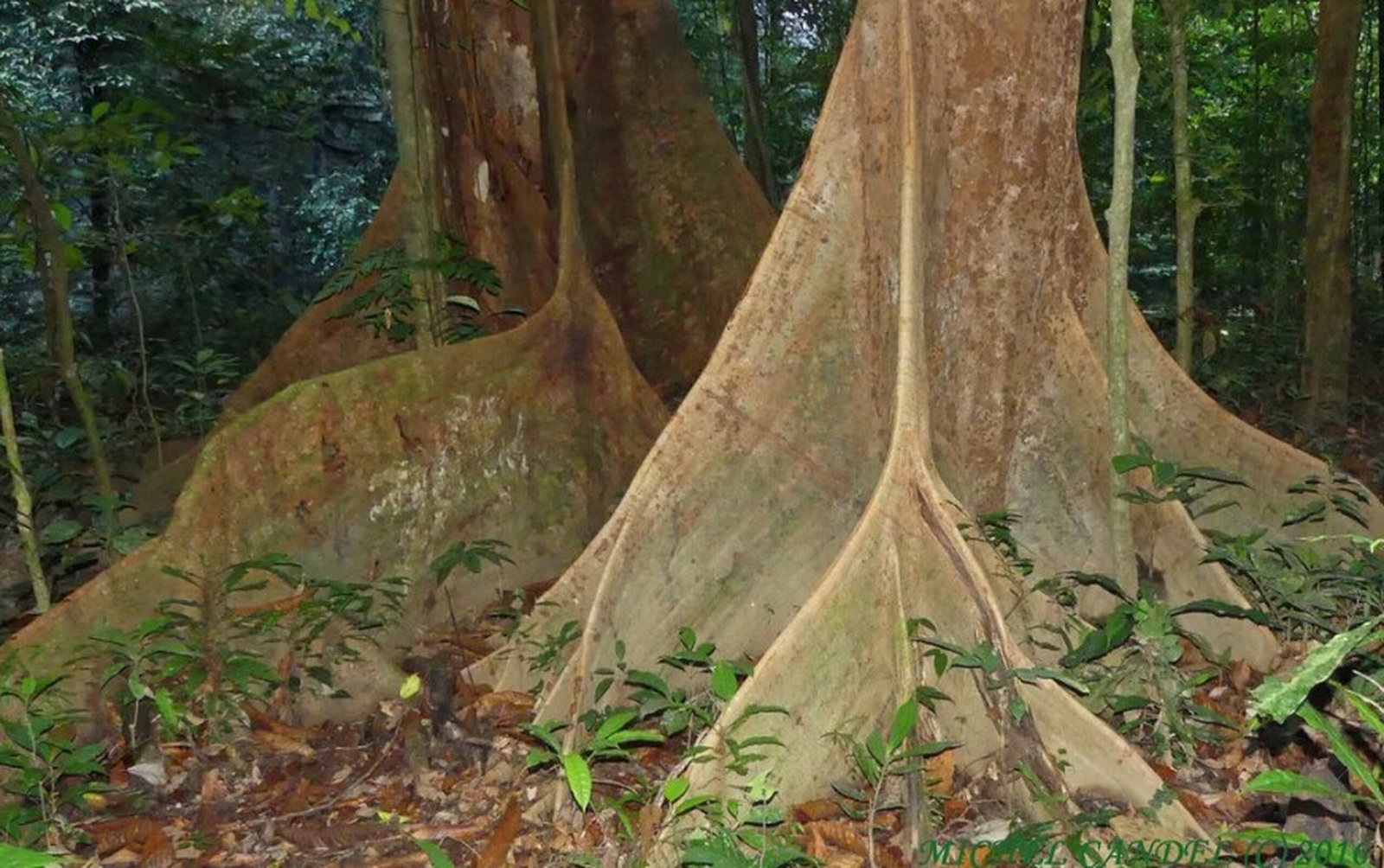
Towering dipterocarp trees dominate the lush rainforest of Malaysia’s Kabili-Sepilok Forest Reserve, with some giants rising more than 65 meters above the forest floor. Climate change now brings more intense and longer drought periods. Scientists are uncovering the remarkable survival strategies these giant trees use to withstand water scarcity and adapt to an increasingly harsh environment.
A new study published on July 2 in Science reveals that the giant dipterocarp trees dominating the rainforests of Borneo are no more vulnerable to drought than the shorter trees around them. Researchers found that the trees’ internal water transport systems continue to function effectively even during dry conditions. It challenges the long-held belief that gravity makes towering trees more susceptible to dehydration by limiting water flow to their upper branches and crowns.
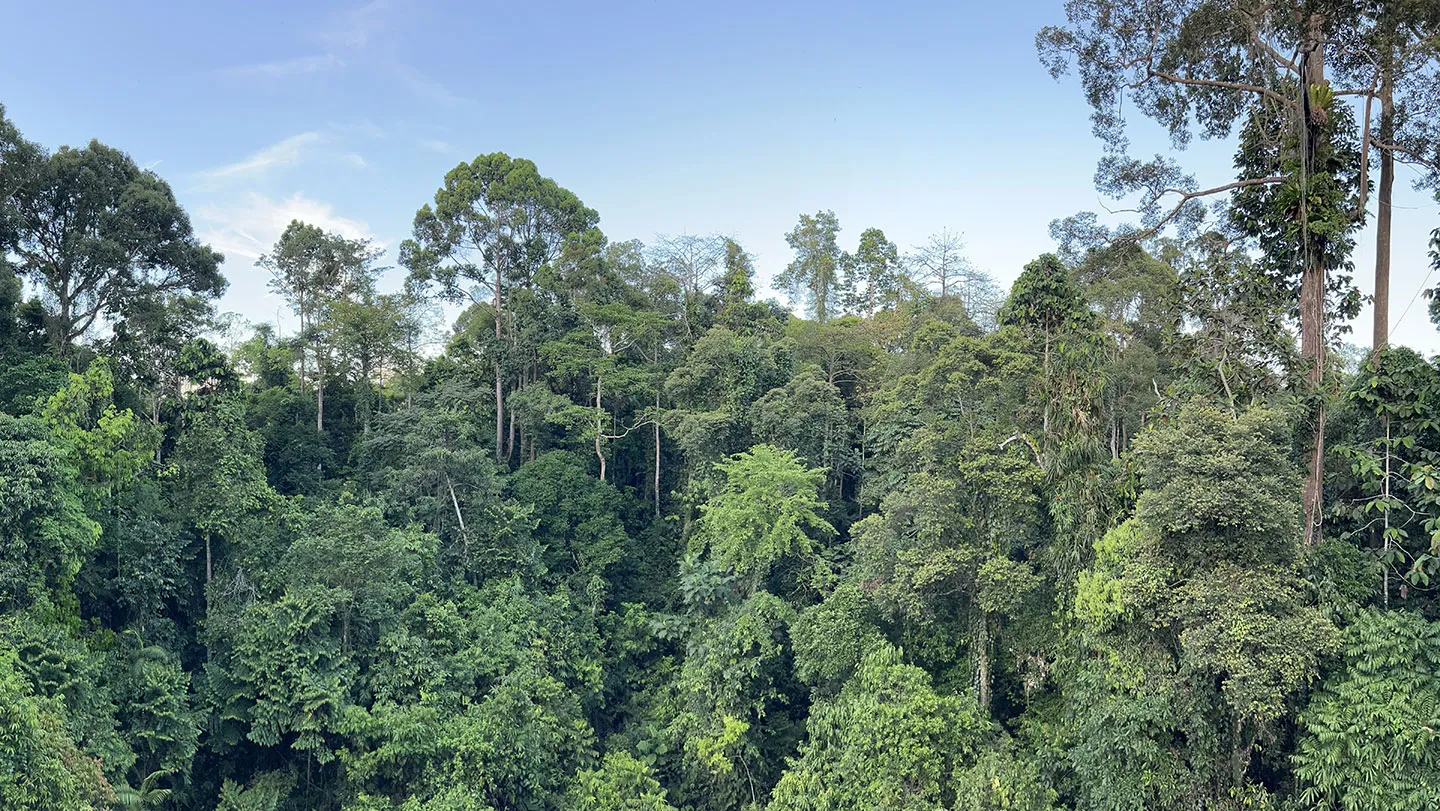
While these findings may not apply to every tree family, they provide valuable insights that could help scientists and conservationists better protect tropical forests. Climate change has intensified drought worldwide, and El Niño can cause more intense droughts in the coming months.
How do giant rainforest trees cope with drought?
To better understand how giant rainforest trees cope with drought, the researchers conducted an extensive field study that required the expertise of professional tree climbers. Beginning before sunrise each day, the team collected leaf, trunk, and branch samples from multiple heights within each tree to track changes in water movement throughout the day.
They examined 38 trees representing five dipterocarp species, with heights ranging from 7.7 meters to an impressive 71 meters, more than three-quarters the height of the Statue of Liberty. These scientists then analyzed 25 physiological traits linked to water transport. They provided one of the most comprehensive assessments yet of how these towering rainforest giants maintain hydration in drought seasons.
The researchers found that taller trees have naturally wider xylem vessels at the base of their trunks, allowing them to transport water more efficiently over greater heights. This structural adaptation helps offset the increased resistance caused by gravity as water travels from the roots to the canopy. In addition, leaves growing high in the crown can tolerate greater dehydration. This enables them to function even when less water reaches the upper branches.
These remarkable adaptations proved effective during the severe 2023–2024 drought. Despite a prolonged dry season, the scientists observed no significant decline in growth rates among taller trees compared with shorter ones. The findings suggest that a tree’s ability to withstand drought depends more on its physiological adaptations than on its height. This offers encouraging insights into the resilience of tropical rainforests in a warming climate.
Refererences:
https://doi.org/10.1126/science.aea9013
https://doi.org/10.1093/aob/mcae054
https://doi.org/10.1126/science.aea9013
Similar Articles:
Is cloud seeding effective in combatting drought?
When Water Turns to Conflict: A Global Story of Scarcity, Security, and Violence