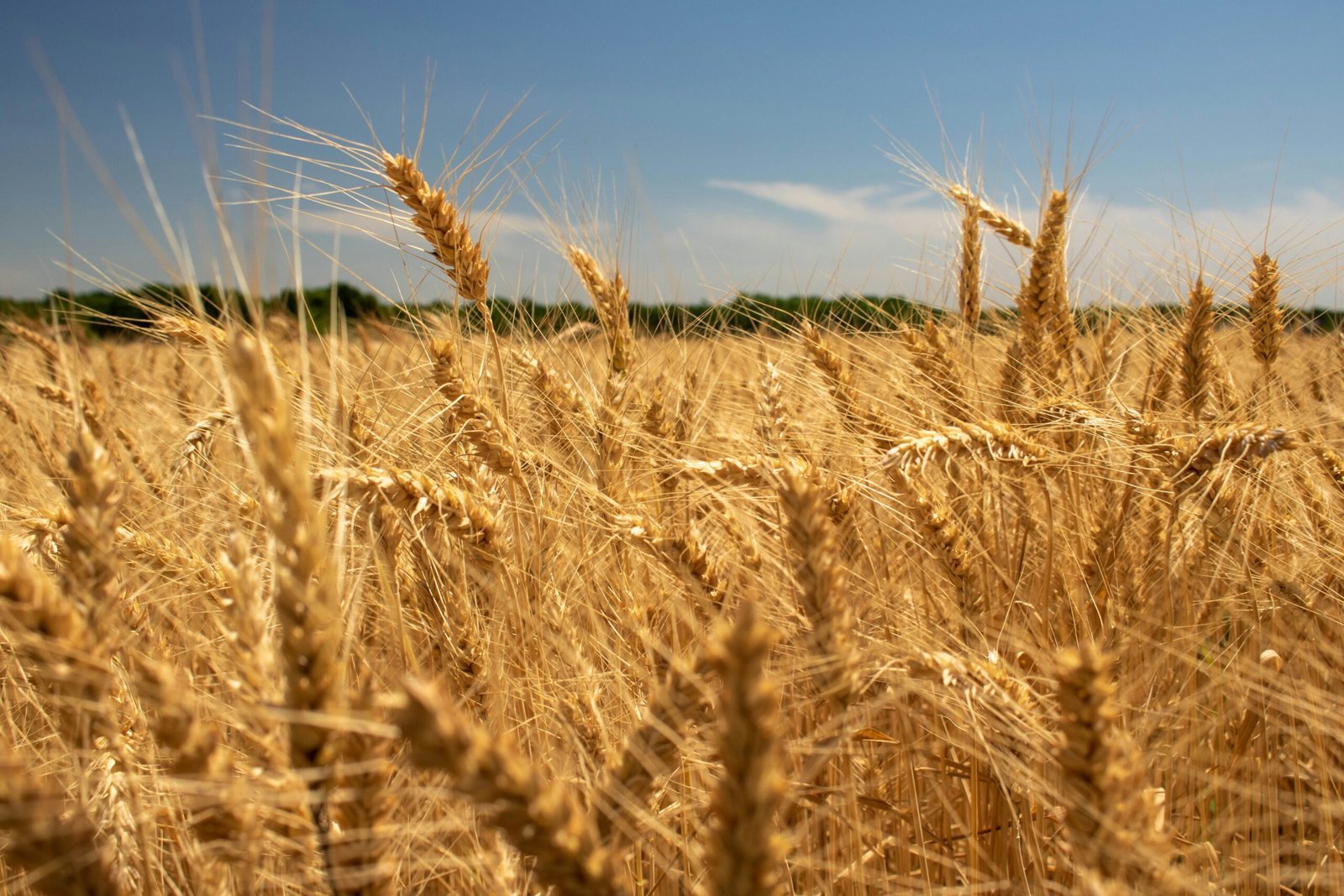
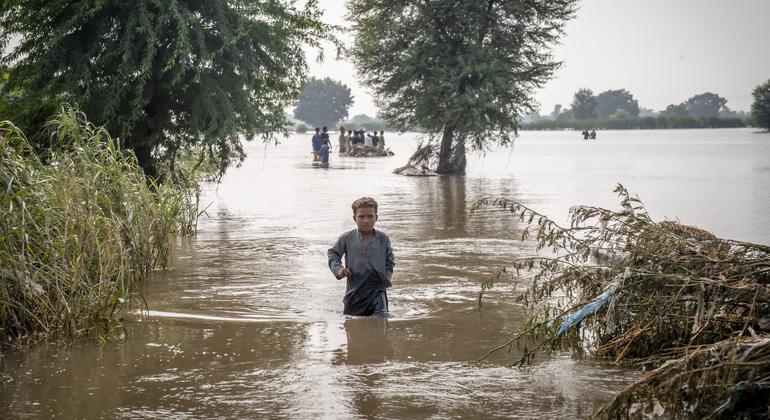
The water is gone now, but the damage is still here. The 2025 monsoon floods hit Punjab harder than any flood in the last 40 years, destroying homes and swallowing the country’s biggest farmlands. About 2.2 million hectares of farmland were lost in the affected provinces, and agricultural losses reached around US$1.23 billion in Punjab, Sindh, and Khyber Pakhtunkhwa [1]. The floods destroyed rice, cotton, and sugarcane across Punjab. These crops put money in farmers’ pockets and bring export earnings to the country [2]. These losses will soon reach the negotiating table. Leaders will gather in Antalya, Turkiye, on November 9 for COP31, where food security stands as one of the ten main topics in the Presidency’s Action Agenda [3]. Pakistan is among the first five pilot countries, along with Ethiopia, Fiji, Indonesia, and Uzbekistan to join the Climate Implementation Bridge (BRIDGE). It is an initiative that aims to turn climate commitments into projects ready for funding [4].
The Hunger Picture
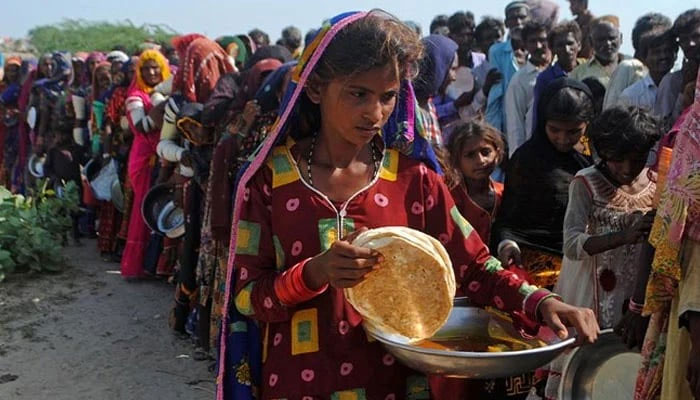
The latest Integrated Food Security Phase Classification (IPC) analysis, released in April 2026, reported that 7.5 million people faced Crisis levels (Phase 3) or worse between December 2025 and March 2026. About 1.25 million of them were in Emergency (Phase 4), a condition marked by large food gaps and high acute malnutrition. These people live in 45 vulnerable districts across Baluchistan, Sindh, and Khyber Pakhtunkhwa and represent 21 percent of the rural population analyzed in these areas [5]. In other words, one in five rural families in these districts could not meet their basic food needs. Many had already lost their crops, livestock, and income to the floods. By winter, they had no reserves left. The key question is whether COP31’s food security agenda combined with Pakistan’s BRIDGE pilot status can turn implementation pledges into adaptation finance that reaches the districts where hunger runs deepest.
Where the Farm Meets the Flood
In Punjab, the province that feeds Pakistan, floods hit 1.12 million hectares. That is about 9 percent of its farmland. In Sindh, floods hit another 291,744 hectares. Within one week, from 28 August to 4 September, flour prices jumped by 25 percent in some areas. The people who grow the country’s food have the least protection. Pakistan has 8.2 million farmers, but only 9.5 percent hold insurance against disaster risk, and most of that insurance comes through loans [6]. For a smallholder outside those loan schemes, one flooded season can wipe out a whole year with nothing to replace it.
NDC 3.0 and the National Adaptation Plan
On paper, Pakistan has made farming its top priority. The National Adaptation Plan 2023 lists the agriculture-water nexus as its first priority [7] and the third Nationally Determined Contribution (NDC 3.0) submitted in September 2025 identifies agriculture as the key sector for adaptation [8]. The rationale is clear that irrigated agriculture accounts for about 95 percent of the country’s water withdrawals [7]. However, funding does not reflect that priority. NDC 3.0 estimates that Pakistan will need US$565.7 billion by 2035. Of this, only US$6.5 billion (1%) is allocated to irrigation modernization, the only adaptation item that directly mentions farming. The remaining agricultural measures have no targets or timelines [8]. The National Adaptation Plan also proposes broad time frames and calls for crop insurance, but does not assign costs [7]. Since agriculture is a provincial subject, these national commitments carry little weight without costed provincial plans [9].
The Finance Gap
Pakistan’s climate plans carry a very large price tag. Its third Nationally Determined Contribution (NDC 3.0) estimates that the country will need US$565.7 billion by 2035, with 33 of its 50 percentage points of planned emissions cuts dependent on international grant-based finance [8]. Past experience offers little reassurance. After the 2022 floods, Pakistan estimated its recovery needs at US$16.3 billion [7]. At the Geneva donors’ conference in January 2023, pledges totalled about US$11 billion, but Pakistan’s then finance minister said nearly 90 percent were project loans. By April 2024, only US$2.8 billion had been disbursed, and about half of that was used for non-flood purposes [10]. Adaptation finance remains even more scarce. At COP30, Pakistan’s climate change secretary told UNFCCC Executive Secretary Simon Stiell that even tripling adaptation finance would not be sufficient, as the current baseline is too low [11].
What Pakistan Should Seek in Antalya
At the COP31 Action Agenda launch in New York on 21 September, Finance Minister Muhammad Aurangzeb listed food security and climate-resilient agriculture among Pakistan’s shared priorities with the presidency [12]. In Antalya, Pakistan should turn that alignment into four clear demands.
First, finance before the flood. In 2025, WFP and FAO gave 15,000 people in Sindh’s Khairpur district US$179 each, three days before peak flooding, to buy food, evacuate, and protect livestock [13]. WFP estimates every dollar spent this way saves up to US$7. Pakistan now has a national anticipatory action strategy, but automatic pre-disaster financing is still missing [14].
Second, insurance for smallholders. Less than 2 percent of cultivated land has formal crop insurance. The State Bank’s CLIS+ scheme is expected to nearly triple coverage, but it remains tied to crop loans, leaving farmers outside the banking system uncovered [15].
Third, grants over loans. NDC 3.0 links a third of Pakistan’s emission cuts to grant-based finance and puts debt servicing at 46.7 percent of the national budget [8]. After the 2022 floods, about 90 percent of the US$11 billion pledged in Geneva were project loans [10].
Fourth, targets with deadlines. Pakistan’s own NDC farm measures carry no deadlines. Interim targets would allow progress to be tracked well before 2035. Antalya alone will not feed anyone. But with El Niño warnings of drought and flash floods already issued for 2026 [13], COP31 will matter only if its pledges reach Pakistan’s fields before the next flood does.
References
- United Nations Office for the Coordination of Humanitarian Affairs. (2025, October). Pakistan 2025 monsoon floods: Support plan for relief and early recovery (October 2025–April 2026). ReliefWeb. https://reliefweb.int/report/pakistan/pakistan-2025-monsoon-floods-support-plan-relief-and-early-recovery-october-2025-april-2026
- Food and Agriculture Organization of the United Nations. (2025). Flood impact assessment in Punjab from 1 August to 28 September 2025. https://openknowledge.fao.org/server/api/core/bitstreams/13c2e5fd-f170-49ed-88a8-9c51fc74127e/content
- COP31 Presidency. (n.d.). COP31 Türkiye Antalya 2026 UN Climate Change Conference. https://cop31.tr/
- COP31 Presidency. (2026, September). COP31 Presidency elevates finance and city action in implementation-focused agenda [Press release]. https://cop31.tr/news-detail/cop31-presidency-elevates-finance-and-city-action
- Integrated Food Security Phase Classification. (2026, April 17). Pakistan: Acute food insecurity situation for December 2025–March 2026 and projection for April–September 2026. https://www.ipcinfo.org/ipc-country-analysis/details-map/en/c/1161020/
- United Nations Office for the Coordination of Humanitarian Affairs. (2025, October). Pakistan 2025 monsoon floods: Support plan for relief and early recovery (October 2025–April 2026). ReliefWeb. https://reliefweb.int/report/pakistan/pakistan-2025-monsoon-floods-support-plan-relief-and-early-recovery-october-2025-april-2026
- Ministry of Climate Change and Environmental Coordination. (2023). National Adaptation Plan Pakistan 2023. Government of Pakistan. https://unfccc.int/sites/default/files/resource/National_Adaptation_Plan_Pakistan.pdf
- Government of Pakistan. (2025). Pakistan’s third Nationally Determined Contribution (NDC 3.0). Ministry of Climate Change and Environmental Coordination. https://unfccc.int/sites/default/files/2025-09/Pakistan_NDC3.0_24%20Sep.pdf
- (2025, October). Developing provincial NDCs. Dawn. https://www.dawn.com/news/1947584
- Express Tribune. (2024, June). Pakistan receives $2.8b in flood relief so far. The Express Tribune. https://tribune.com.pk/story/2469793/pakistan-receives-28b-in-flood-relief-so-far
- Islamabad Post. (2025, November). Pakistan, UNFCCC leaders discuss climate finance and COP30 priorities. https://islamabadpost.com.pk/pakistan-unfccc-leaders-discuss-climate-finance-and-cop30-priorities/
- (2026, September 22). Pakistan supports COP31 Action Agenda, says minister. https://www.24newshd.tv/22-Sep-2026/pakistan-supports-cop31-action-agenda-says-minister
- Sabah News. (2026, June). Pakistan strengthens anticipatory action to reduce the impact of climate-related disasters. https://sabahnews.net/english/news/pakistan-strengthens-anticipatory-action-to-reduce-the-impact-of-climate-related-disasters/
- (2026, June 30). Pakistan launches first anticipatory action strategy to reduce climate disaster risks. https://news.fundsforngos.org/2026/06/30/pakistan-launches-first-anticipatory-action-strategy-to-reduce-climate-disaster-risks/
- Hisham, M. (2026, July 9). CLIS+: Transforming agricultural risk protection in Pakistan. Business Recorder. https://www.brecorder.com/news/40429286
Also Read: Climate change linked to frequent landslides in Pakistan

Manahil Tauseef is an Environmental Science Graduate and MPhil Researcher at GCU Lahore, conducting research on WWF’s constructed wetland project. She also serves as Capacity Building Coordinator for Youth@COP at Climate Forward Pakistan. She is passionate about climate action, environmental policy and community outreach.

 or worse.)