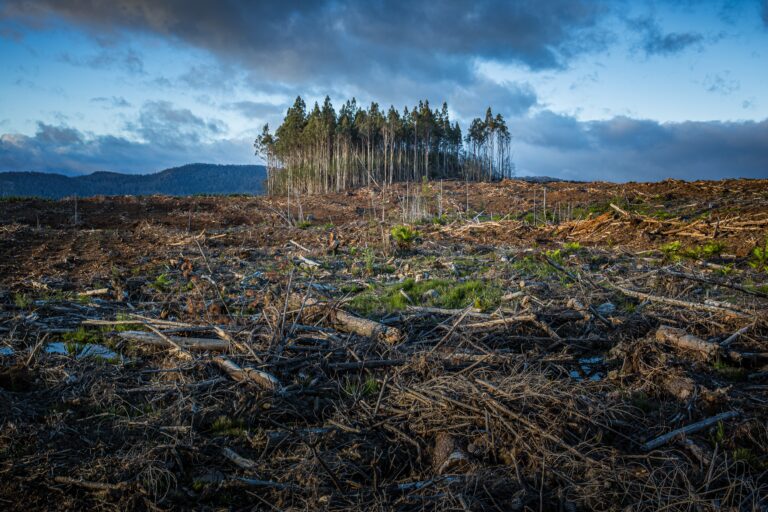
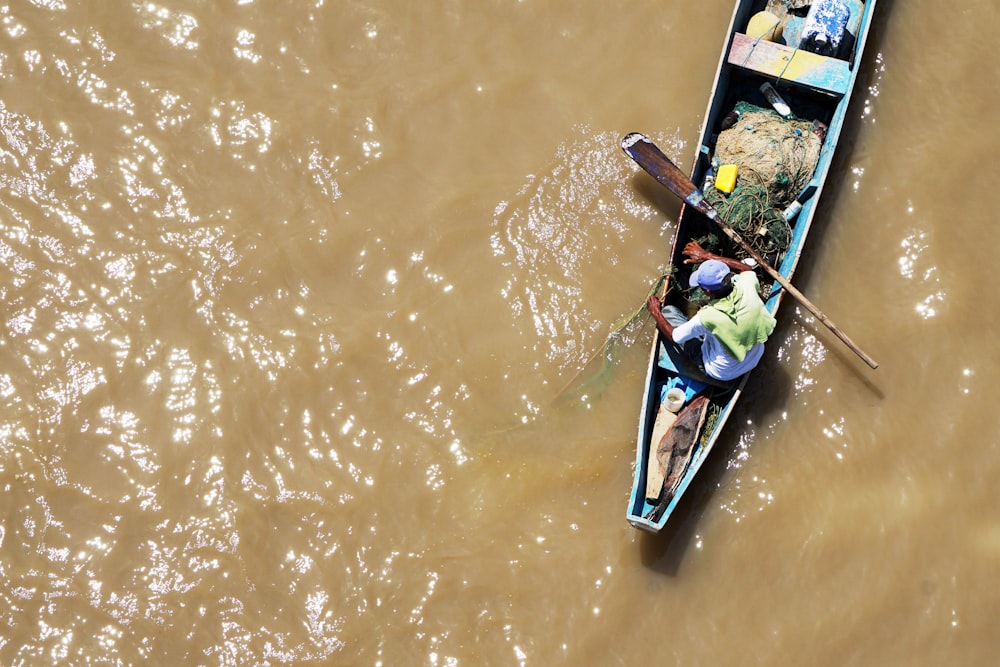
Climate change looms in every part of the world; people are experiencing both the subtle and stark effects in the form of gradually shifting weather patterns, severe drought, supercharged storms, massive flooding, blistering heat waves, glacier melt, and sea-level rise. The latest IPCC report clearly indicates that humankind will experience the severity of environmental depletion at a larger scale in the coming years if the global temperature rise is not restricted to 1.5 centigrade.
The negative impacts of climate change are not bound to a region or continent. Still, the most vulnerable population are those living in low-income countries with mere necessities of life. This was the significant issue widely discussed in the recently ended Glasgow climate conference. Millions of people will be plunged into further poverty if the environmental depletion worsens.
In fact, the poorest communities around the globe mostly live in the most fragile land patches and are often politically, socially, and economically marginalized. Due to global warming and environmental depletion, their income sources have been greatly affected, making it difficult to feed their families and secure a decent future.
The growing pace of poverty is interlinked with climate changes. The increasing occurrence and intensity of extreme weather events like storms, hurricanes, wildfires, volcanic eruptions, massive flooding, glacier melt, and land sliding threaten the lives of these frontline communities and increase the risk of more conflicts, hunger, and poverty worldwide.
Climate change places compound stress on our environment and ecosystems, puts people’s lives at risk by undermining overall development and creating a shortage of basic necessities like food, water, and employment. Droughts alone impact around 55 million people every year, and the damage hits the agriculture and livestock industries that are the primary sources of income for people in developing and poor counties.
This is why the poor and underdeveloped countries are demanding financial assistance from affluent nations for a long to cope with climate changes effectively. The UN Secretary-General has named 2021 a “make or break” year earlier before the climate conference kick-started in Glasgow, which was deemed a crucial step to bring climate changes under control.
Almost 200 countries were asked for their plans to cut carbon emission with the most ambitious emission reduction targets for 2030. It was the primary point of the COP26 agenda that the developed counties would provide financial assistance to the poor and most vulnerable nations waging their wars against climate change with mere resources.
In Pakistan, people who live in remote and rural areas are primarily vulnerable to environmental degradation. Due to low precipitations, Pakistan could run out of clean water by 2025, which has terribly impacted agriculture practices, especially in Sind and Punjab provinces.
Due to low precipitations, Pakistan could run out of clean water by 2025
Here, crops are being irrigated with contaminated water, which gives rise to cancer, lung, kidney, and other diseases. The majority of people living in poverty rely on agriculture and natural resources to survive. For these people, the effects of climate change like limited water resources, shifting weather patterns, low precipitation, and increasing competition for resources are a real matter of life and death. As the effects of climate change increase for these people, the ingenuity of the world’s responses must provide them with sufficient sources to survive.
At the moments when the world leaders are gathered in Glasgow, grappling to come across a joint future plan against climate changes, Scientia Pakistan brings its exclusive edition on “Ecology”.
We have got some engaging content on coastal ecology, the role of Phytoplankton in the marine ecosystem, damages to National parks of Pakistan, food habits and environment, youth’s participation in environmental movements, COP26, Paris agreement, and net-zero dilemma, and much more.
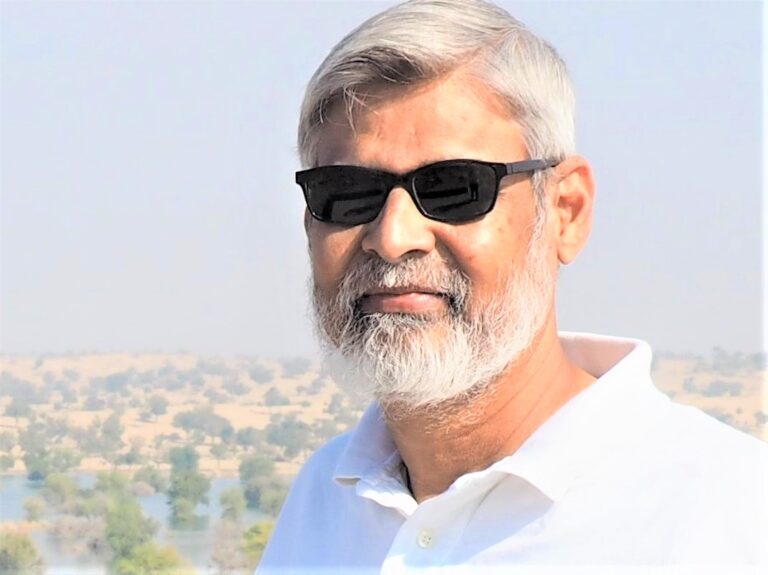
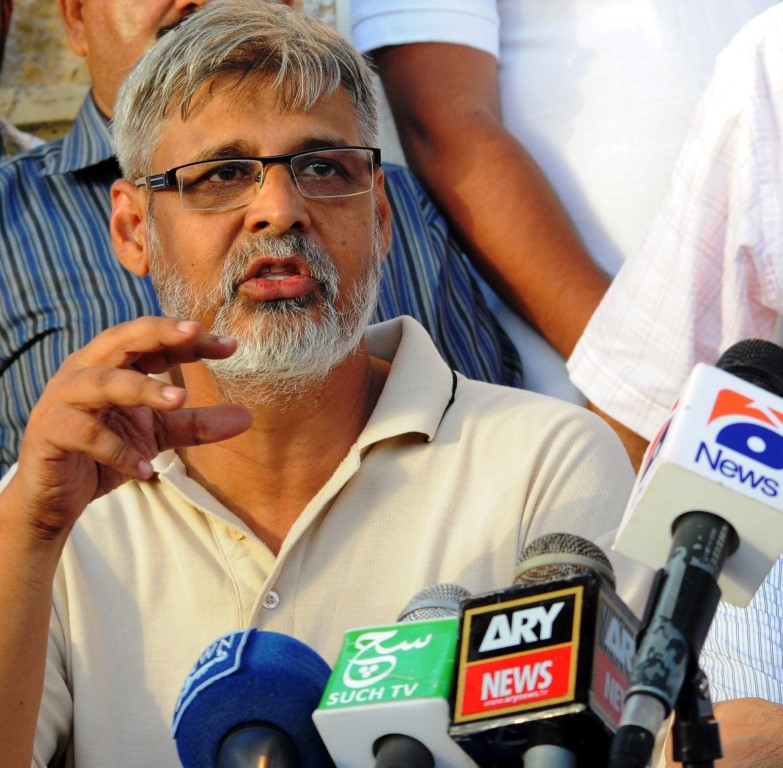
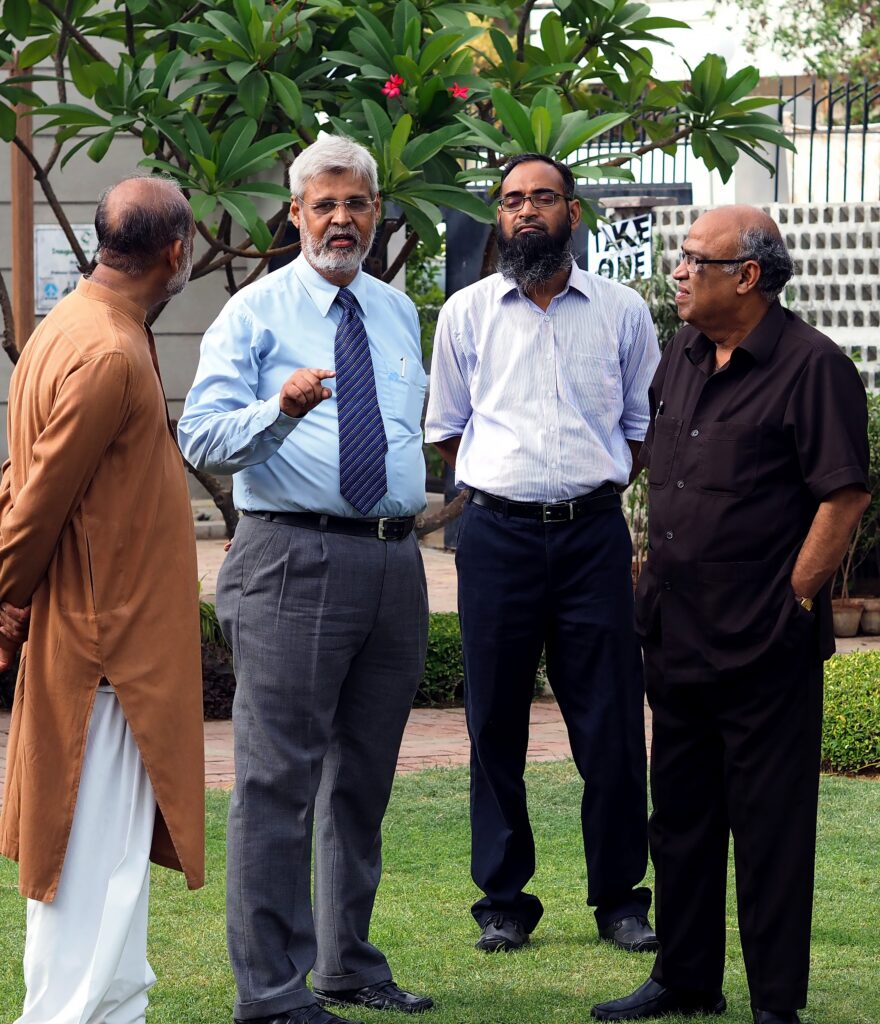
We interviewed Pakistan’s prominent ecologist Dr. Rafi ul Haq who has broad experience working with IUCN Pakistan. Dr. Haq provided us with an insight into the ecological challenges of the marginalized communities of Pakistan. Summing up, the edition is a feast to all environment enthusiasts.
Pakistan is the land of high mountains, fertile river valleys, inhospitable desert, and has a long coastline along Sindh and Baluchistan provinces. These eco-regions are the hub to a wide range of flora and fauna. Like the rest of the world, climate change poses enormous threats to the several ecosystems of Pakistan, including but limited to sea-level rise, coral bleaching due to ocean acidification, glacier melt, and drastic changes in weather patterns. In the last two decades, a significant decline has been observed in the population of several species, and many endangered one has gone extinct.
The state of the environment and its proper management is the prerequisite condition for the sustainable development of every country, and Pakistan is no exception. For our special edition on “Ecology”, our Chief Editor Saadeqa Khan has reached out to prominent ecologist Mr. Rafi ul Haq to get an insight into the ecological threats that Pakistan encounters at the moment. Haq had been associated with IUCN Pakistan in various capacities and has vast experience working as an ecologist in the national and international arena.
Below are excerpts of his conversation with Saadeqa Khan.
Saadeqa: Tell us about yourself and how you got to where you are these days? Let us know about the obstacles in your career as an ecologist of international repute?
Haq: I work as a Consultant Ecologist, enjoying my relationship with IUCN as a commission member for ecosystem management (CEM). My career started in 1988, immediately after completing my M.Sc. in Plant Ecology from Karachi University, the engagement was initially as academics and then as a researcher. We were lucky to have well-trained and meritorious senior academics in the Department of Botany, most of them with international exposure. Their presence indeed helped a lot to overcome potential professional difficulties in becoming high achievers. Specifically, the conceptual development in Ecology, Autecology, and Synecology, with a clear understanding of ecology in urban setups.
All credits to my teachers and my parents for their continuous support and encouragement. Specifically, Prof. Dr. Shahid Shaukat, Prof. Dr. Zafar Iqbal, Prof Dr. (Late) M. Ajmal Khan, Vice-Chancellor, University of Karachi, and (Late) Prof. Dr. Abdul Ghaffar, who was then Chairman, Department of Botany, University of Karachi. I must acknowledge the sizeable contributions of my teachers, who inculcated confidence and regular exposer to the latest developments in the field of ecology. Dr. J.D. Ross of Plant Science Laboratories, Reading University, played a booster role in further refining my skills. He engaged me to assist him in his undergraduate and post-graduate classes. I enjoyed my tenure as researcher cum academics.
Regarding obstacles, initially, there was a tough professional saturation followed by a lack of opportunities and financial constraints for an ecologist to survive. It was overcome by practicing the acquired knowledge, articulation in diversified trades helped a lot in adjusting professional niches and simultaneously fulfilling the material needs. In a nutshell, I relatively feel lucky to avail the circumstantial benefits of an emerging enabling environment coupled with my urge to learn and interact with the national and international arena.
Mr. Haq works as a Consultant Ecologist, and also works as a commission member for ecosystem management (CEM), IUCN
Saadeqa: Would you like to tell us about an experience working with IUCN Pakistan or any other organization in which you evaluated results and found most threatening to the ecosystem/ biodiversity in Pakistan?
Haq: There are plenty of such experiences, not restricted to IUCN or any specific organization; it happens everywhere in Pakistan and almost every day.
The root cause is significantly ignorance and is potentially supported by the visibility factors. Here to be precise, I would like to discuss two such cases; the first one is the division of opinion on an ecologically a critical factor is ignorance in respecting the integrity and characteristics of our water bodies, i.e., ignoring the E- flows, transforming the flowing bodies in stagnant reservoirs or even for developing plantations, and withdrawing/degrading the water disregarding the ecosystem requirement. Manchar Lake, where agricultural effluents were allowed in lake water, ultimately resulting in degradation of the ecological composition of Manchar Lake. The affected ecosystem precisely fell in the category of Wetlands.
The other such deviation mainly threatening the urban ecosystem; this relates explicitly to plantation campaigns; We have two defined seasons for this campaigns to run, the spring season starts on the 15th of February and ends on the 15th of April, whereas the second season is Monsoon, starting from 15th of July and ending at 15th of September. This is the month of November; if we check with social media, we may find innumerable reports of the sizeable plantation. This activity in naivety often contributes to failures, contributing negatively to the wellbeing of the ecosystem.
The other essential concomitant of degradation is unawareness/ignorance from the International guidance on alien and invasive species. We often see promontory messages encouraging masses to promote nonnative flora without realizing the growing needs of a species and the follow-up required as post plantation care.
Saadeqa: What is the difference between an ecological niche and a habitat? What are the biggest threats to natural habitat to wildlife, specifically endangered species?
Haq: The ecological niche has been defined as a conceptual boundary, representing the physical and biological requirements of a species or an ecosystem in time and space, whereas the habitat is where the species live.
The species live in association with each other; respecting the needs of the others are termed as coexistence; their presence, if not beneficial, may not disturb others. If the two species struggle for the same resources, they may enter into a situation called competition. This competition results in readjustments of niches; they may compromise and learn to live with each other or may eliminate original inhabitants in case of invasive species.
To make it clear, which reflects the lowest strata of trophic level (Producers), if there could be a change in habitat, natural or manmade, it has a direct impact on the life form of advanced trophic levels. Some of them were threatened by lustful harvest, mainly impacting the population dynamics of that life form, for example, if a set of herbivores is to be fed to the next trophic level, however, if the balance of population somehow gets disturbed, this challenges the existence of other species and ultimately impacting the ecosystem.
A recent example is a reintroduction of wolves in Yellowstone national park to contain the population of probably Antelope (Cervus Canadensis). Some of the species are facing evolutionary changes, like unpredictable changes in physical parameters, seasonal drift, etc., but primarily due to human interference, as use of a pesticide Dichlorophen reached the food chain of vultures, where it caused non-viable egg hatching; ultimately resulting in threats to the vulture population.
Saadeqa: How is ecology linked with climate change? What are the devastating impacts of global warming, air/water pollution, and climate change on different ecosystems in Pakistan?
Haq: Ecology is the study of relationships between physical and biological entities of the systems, whereas climate change tells us the impacts or deviation in physical parameters of the system. Ecology actually helps the resource managers to adapt so that the damages or losses can be contained.
There are a few recent examples from Pakistan; in 2010-11, we had two mega floods, one can recall the social, material, and economic devastations. The other most devastating consequences of climate change were experienced in Karachi in 2015 when an urban heat spell resulted in the death of some 1300 people in a day. There was chaos and insufficient space available in mortuaries to accommodate the dead bodies; the dead were buried in mass graves. Due to unusual low pressure in the Arabian Sea, which persisted for more than 48 hours.
Similar extremes of drought and unexpected wet weather have been reported from Baluchistan and Sindh. Pakistan’s Northern areas face GLOF (Glacial Lake Outfall Burst), formation of Ata Abad lake was another well-known event.
According to Mr. Haq, the division of opinion on an ecologically critical factor is ignorance in respecting the integrity and characteristics of our water bodies
Saadeqa: The recent IPCC report is a warning to global leadership. What do you think; Pakistan could effectively manage environmental security amid a severe climate crisis?
Haq: Yes, it’s a pity that Pakistan’s contribution to the global carbon footprint is less than 1 % (0.8%), but it has been drifting to attain 6th position in the vulnerability list due to climate change. Despite resource limitations and until now, Pakistan played a responsible role in abating the climate crisis, these efforts need to be reciprocated by the larger community.
Pakistan is coping with climate change impacts; crisis management needs resources, which require economic stability. The truth is that most of the financial decisions were linked to political priorities. This is very unfortunate to see the response; this is unfortunate to see the response to the big economy to the climate crisis.
There seems no seriousness on the issue; weaker economies, instead of awarding relaxation, were seen to be placed in stress mode by putting them on some restricted lists. I wonder, if the attitude remains persistent, the imminent ultimate is the mass extinction, which this globe has experienced 5 times earlier and is leading to the 6th mass extinction; if learned from our experience, this could be averted, the only solution is inclusiveness and mutual respect from an individual to an international level.
Saadeqa: A recent report of the UN shows that Pakistan could run out of clean water by 2025. What are projects under work/ under consideration by IUCN Pakistan to cope with this situation? Do you think that Floating Wetland Treatments (FTWs) developed by Dr. M Afzal could be a game-changer considering water scarcity?
Haq: Some 225 water bodies of varying sizes spread all over Pakistan; they collectively represent some 9-10% of the national surface area. Not all of these bodies experience pollution; however, a sizeable area in the south is experiencing odd conditions.
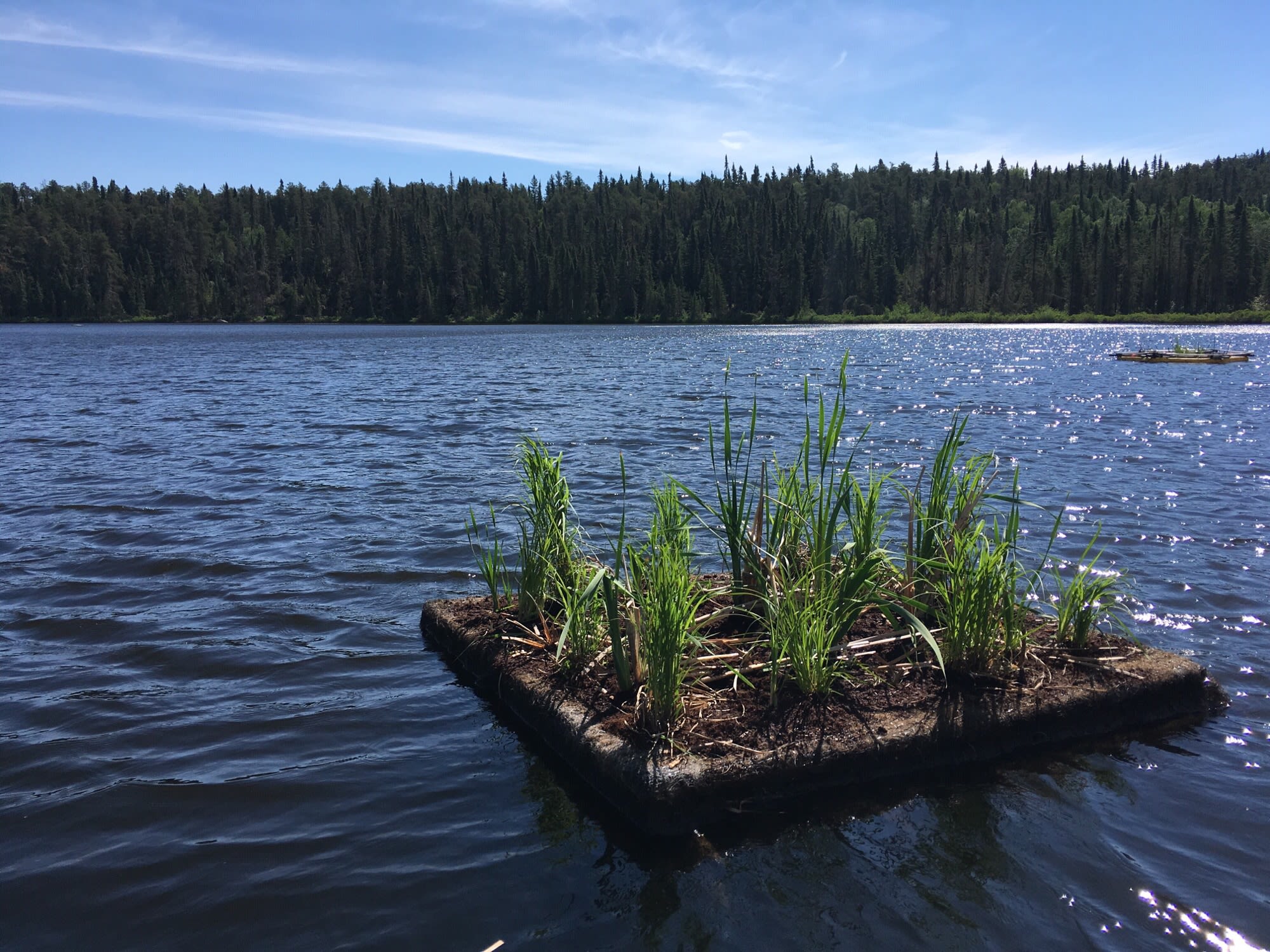
The idea of floating wetlands is quite exciting; they can be scaled up to the sites needed. To declare it as a game-changer could be too early; the reason is that floating structures here carry floating vegetation having their roots to absorb obnoxious material. This apparently has a cleaning role on one side. I believe the floating raft would be recharged after completing its shelf life, i. e. it would have a provision of periodic replacements of grown vegetation.
I fear there is likely to be a compromise in the wetland’s DO (dissolve oxygen); at least 4% DO is required to support other sub-surface life forms in the wetlands. The sunlight would be obstructed by the floating structure, these radiations help in the photosynthetic activities of the autotrophs in the subsurface of the water body. I wonder if the project has the provision to address the compromise?
Saadeqa: Last year, I interviewed Dr. Shoaib Kiani from the Marine science department, Karachi University. He updated me with some horrible facts and figures about the extinction of Green and Olive Ridley Turtles, Dolphins, etc., along the coastline of Sindh and Baluchistan. What efforts are taken for their preservation?
Haq: Infect, ignorance and human lust has created a mess; It was fortunate for me to get interacted with Dr. Nicolas Pilcher is the chair of the turtle group in SSC (Species Survival Commission), the IUCN commission famous for bringing out Red data book of Threaten Species, earlier there was a study commissioned by IUCN Pakistan to have an authentic update. The study was conducted by (Late) Dr. Syed Ali Ghalib, a renowned wildlife expert ex-Director Zoological Survey of Pakistan.
“The idea of floating wetlands is quite exciting; they can be scaled up to the sites needed,” says Mr. Haq. Credit: IISD
The report has some interesting findings. Green turtles and Olive ridley were initially reported in Karachi coast (Sandspit) for nesting, but after some time, probably after the Tasman sprit oil spill, calling of Olive ridley was stopped, later on; by virtue of this study, it was found that Olive ridley has changed its calling area for nesting and it was found calling in the eastern part of Ormara.
Later on, as a routine activity, a small population of Leatherback turtles was also found, calling for nesting on the western coast of Baluchistan (Darran). Dolphins can still be seen in the Indus delta but were drifted away due to human activities; this can be taken as niche adjustment. The situation is concerning but not horrific; it needs attention but not to be sensational.
Haq: Pakistan has a coastline of 990 Kms; until now, there are three functional coal-fired power stations, and one more is to be added, so making a total of 4 with a concentric spread along the eastern and western coastline of Karachi. The western ones are located in Baluchistan (Hub), and the eastern ones are in the Port Qasim area.
This coastline is fortunately blessed with winds blowing from the southwest with a range of 3-33 knots per hour; the other supporting factor is the sparse human habitation in the vicinity, the establishment of such facilities is usually looked at by developing air dispersion models. Firstly, the blown southwestern air is directed towards the land, which has a very dispersed population.
The air dispersion models were critically analyzed by the respective EPAs, and based on the strategic demand of maintaining an energy mix, these generation units were allowed. Another encouraging factor was reducing dependency on imported fuel by consuming locally extracted coal from Thar.
Saadeqa: It is no longer a riddle that environmental degradation drains Pakistan’s economy and causes massive unemployment due to a slight decline in agriculture practices, fisheries, and tourism. What should be the long-term goals/ necessary steps to better cope with these looming challenges?
Haq: A well-integrated and inclusive approach, as it has been proved recently by dealing with locust control, which was a transboundary issue, but it has been taken seriously by all stakeholders, this includes a range of expertise and skills.
Pakistan, which has an agrarian economy, has to look for a well-coordinated and cohesive approach to deal with climate resilience. Effective use of ecological tools would significantly be helpful for sustainable solutions.
Saadeqa: Do you think our educational/ research institutions play their role in combatting the climate crisis? Do we reasonably utilize modern technologies/ software to figure out ecological changes?
Haq: Yes, potentially they have a role, but this requires an instant response; if we stick to stereotypes and obsolete knowledge-based learning systems, it would be challenging to cope with the demands. I am afraid the synchronization, inclusiveness, and integration of interdisciplinary and intradisciplinary topics are not up to the mark. Those conversant with the software are not adequately equipped with other dynamics of the subject. We are still lagging behind in this field.
Phytoplankton needs nutrients, carbon dioxide, and sunlight to flourish. Deforestation, the burning of fossil fuels, and other human activities have all contributed to severe climate change, impacting Phytoplankton productivity and functionality. The rate of Phytoplankton in our marine ecosystem decreases due to rising temperatures, which will result in less oxygen being available to us. Eventually, it contributed to an increase in global warming as a whole.
Let’s first discover what Phytoplanktons are and their influential role in various ecosystems of planet Earth.
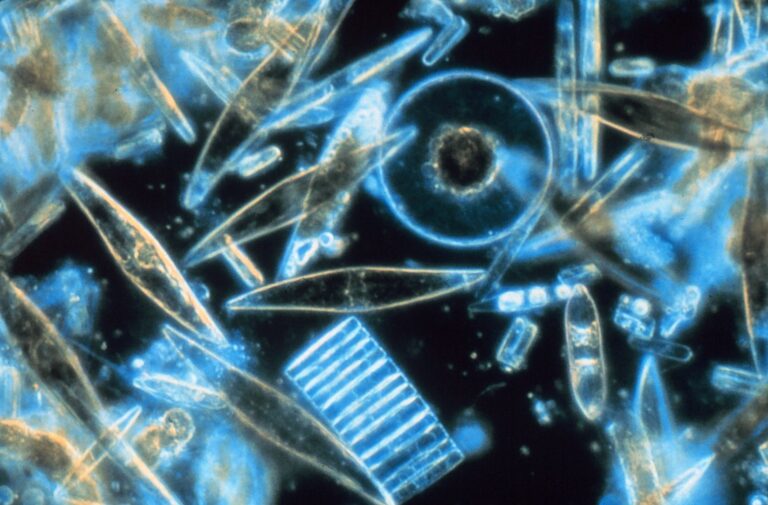
Phytoplankton is microscopic organisms that live in both freshwater and saltwater. The term “Phytoplankton” is derived from the Greek terms “Phyto” (plant) and “plankton” (sea creatures) (made to float or drift). There are numerous phytoplankton species, which include bacteria, protists, and single-celled plants. Green algae, dinoflagellates, cyanobacteria, and coccolithophores are only a few more frequent kinds (coccolithophores with a chalk coating).
Phytoplankton, like terrestrial plants, converts photographic energy to chemical energy via chlorophyll. They breathe in carbon dioxide and exhale oxygen. All Phytoplankton species obtain energy primarily by photosynthesis; however, some consume from other organisms such as bacteria and algae. Numerous factors influence the growth of ocean Phytoplankton, including carbon dioxide, sunlight, and nutrient availability.
Phytoplankton species require varying amounts of calcium, nitrate, phosphate, and silicate, much as terrestrial plants do. Certain Phytoplankton species can bloom in the presence of low nitrate concentrations in the water. Plant development is impeded in many locations due to low iron concentrations in the water. Growth rates of Phytoplankton are regulated by a range of factors, including water temperature and salinity, water depth, wind, and the types of predators that graze on Phytoplankton.
Diatoms and dinoflagellates are major phytoplankton groups. On top of all that, they absorb CO2 from the surface of water and use it for photosynthesis via carbon cycling. They absorb carbon dioxide from the atmosphere and exhale oxygen back into it, providing us half of the oxygen we take daily. Phytoplankton is vital to marine life because they form the foundation of the food chain and web. Phytoplankton is the primary food source for most oceanic creatures—for example, larval fish feed on Phytoplankton, which is found in the water.
Phytoplankton species require varying amounts of calcium, nitrate, phosphate, and silicate, much as terrestrial plants do.
Phytoplankton diatoms have silica shells and are a type of diatom. Their bodies are buried in the ocean floor, where they decompose to make it healthy. Phytoplankton provides numerous advantages to marine life. As a result, these microscopic organisms play a critical role in the survival of marine life and, ultimately, in the survival of life on Earth. As the American oceanographer and marine biologist Sylvia A. Earle said:
“Even if you never have the chance to see or touch the ocean, the ocean touches you with every breath you take, every drop of water you drink, every bite you consume. Everyone everywhere is inextricably connected to and utterly dependent upon the existence of the sea.”
Phytoplankton and their types
Phytoplankton is a diverse group of organisms. Protists, which comprise complex eukaryotic cells such as protozoans, are classed as single-celled algae. Along with diatoms, several different species can be found along beaches. The population of this species can grow at an alarming rate in reaction to seasonal changes and the availability of nutrients such as nitrogen, iron, and phosphorus in the environment. Photosynthetic bacteria are a more primitive and abundant type of phytoplankton cell than algae, and they are a more primitive type of phytoplankton cell than algae.
Despite their diminutive size, each tablespoon of ocean water contains hundreds of thousands of these microscopic cells. Due to their minuscule size and inability to be caught in nets, these organisms were virtually unnoticeable until the 1970s. Apart from being the most abundant animal in the sea, these bacteria account for half of the ocean’s primary productivity. There are various species of cyanobacteria, which are considered among the earliest organisms on the planet and are responsible for the chloroplasts found in plant cells.
Importance to the Marine Ecosystem
Phytoplankton is essential for the survival of marine environments. The majority of marine food webs are based on autotrophs, or producers, rather than consumers. Their ability to store chemical energy in the form of sugars is since they are photosynthetic animals, which means they can convert solar energy to chemical energy. Other microscopic organisms, like Zooplankton, consume Phytoplankton as a food source. A growing number of different microorganisms are consumed by both Omnivores and Carnivores, which results in increasingly complex trophic connections between them and other creatures.
Aquatic creatures rely on autotrophic Phytoplankton as their principal source of nutrition, accounting for more than 98 percent of their total caloric expenditure. Phytoplankton is the building block of many aquatic food webs, including those that support plankton. They provide a diverse range of sea animals with nutritious food in a safe environment. For Phytoplankton (also known as microalgae) to survive and thrive, sunlight is required. This is similar to the situation with terrestrial plants.
Loss of Phytoplankton for marine food chains.
When the marine habitat is depleted and on the verge of extinction, several alternative scenarios are possible. As a result of various factors, the oxygen concentration in water declines to the point where aquatic life cannot exist. As a result, the water may become contaminated by contaminants from the surrounding environment, such as pollution from the ocean or air. As a result of such destruction, the majority of plants and animals become extinct. If animals perceive a hostile aspect in their natural environment, they are likely to be driven to relocate.
Phytoplankton is the building block of many aquatic food webs, including those that support plankton.
Affected residents living close to this body of water may be unable to benefit from the aquatic flora and animals that thrive there. There is a relationship between terrestrial and marine life, and the depletion of the latter will influence the former. This circumstance is noteworthy since octopus, starfish, salmon, and various other saltwater Species give substantial nutritional benefits to humans. Without a doubt, people will suffer as a result of the ozone layer’s loss.
Seals and other aquatic creatures are a food source for several marine animals, including whales, sharks, and a variety of other sea creatures. When one species dies, the entire food chain perishes with it. Coastal habitats are being lost or degraded, resulting in animal deaths and migration. Certain plants fail and eventually become extinct as a result of harsh environmental conditions. When water bodies are lost or degraded due to marine habitat degradation and loss, the rate of land conversion accelerates rapidly. While this may aid human settlement, additional benefits associated with aquatic life are almost guaranteed to be lost as a result.
What future holds for Phytoplankton?
As one creature relies on another for nutrients and so on, the food chain is interrelated. Shrimp populations will suffer if plankton levels in the water decrease and salmon populations suffer from food scarcity. The Phytoplankton population’s health affects the global climate’s health. Phytoplankton photosynthesis accounts for almost half of all photosynthesis on the globe. They are the primary scavengers of carbon dioxide in our atmosphere, extracting the gas and replacing it with oxygen. Winding up, Phytoplankton is a tremendous overlooked asset to the ecosystem.
References
Bullock, H. A., Luo, H., & Whitman, W. B. (2017). Evolution of dimethylsulfoniopropionate metabolism in marine Phytoplankton and bacteria. Frontiers in Microbiology, 8, 637.
Yang, L., Li, H., Zhang, Y., & Jiao, N. (2019). Environmental risk assessment of triazine herbicides in the Bohai Sea and the Yellow Sea and their toxicity to Phytoplankton at environmental concentrations. Environment international, 133, 105175.
Zhongming, Z., Linong, L., Wangqiang, Z., & Wei, L. (2018). Later tropical blooms could affect marine life.
Naselli-Flores, L., Zohary, T., & Padisák, J. (2021). Life in suspension and its impact on phytoplankton morphology: an homage to Colin S. Reynolds. Hydrobiologia, 848(1), 7-30.
Jorda, G., Marbà, N., Bennett, S., Santana-Garcon, J., Agusti, S., & Duarte, C. M. (2020). Ocean warming compresses the three-dimensional habitat of marine life. Nature Ecology & Evolution, 4(1), 109-114.
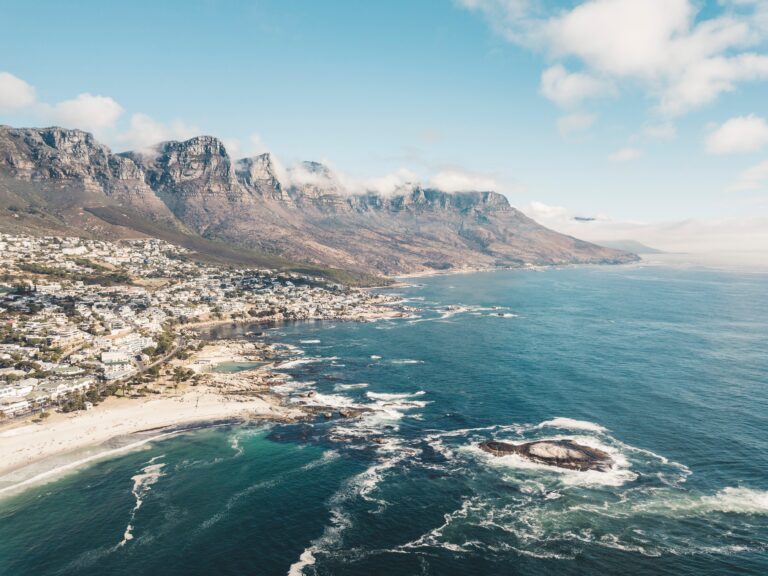
Fractionated into two, Pakistan’s coastline stretches over 990 km across Sindh (270 km) and Makran coast (720 km). Supporting a disposition of diverse creatures, natural resources, and the geographical location of Pakistan’s marine coastal belt makes it pertinent. An enriched and firm marine ecosystem influences economic stability, sustainable development, and the growth of ecosystems. With such high stakes, the protection, development, and sustenance of marine ecology are demanded.
“Coastal Ecology” elucidates the region where land and water meet. Coastal ecosystems bestow habitats for numerous varieties of marine plants and animals. It is also a hub of innumerable natural resources such as mineral deposits, oil and natural gas, and peat deposits.
Climate commutation and coastal ecology are two peas in a pod. The fluctuation in the climate not only affects land activities but undoubtedly strikes marine life. With Earth warming up, the planet saturating with population, and the ever-increasing demand for natural resources to suffice the masses, we are exhausting the natural resources. This composition will focus on looking into the coastal ecology of Pakistan, identifying the red zones, and framing out practical measures to restore nature.
“The least movement is of importance to all nature. The entire ocean is affected by a pebble” Blaise Pascal
Salient Features of Pakistan’s coastline
Pakistan’s coastline has some prominent geographical, economic, and environmental features, which explains why we need to keep a keen eye on its health. Some key features include:
Sandspit and Hawksbay beaches are two of the eleven cardinal nesting beaches for Green Sea Turtles (Chelonia mydas) across the globe.
Gawadar Bay is a marine wetland shared between Iran and Pakistan. It accommodates marine fisheries is a hub for various marine animals, including whales, dolphins, sea turtles, migratory birds, and mangroves.
A region of Bundle and Buddo Islands have abundant growth of mangroves.
The Churna-Kaio Islands are rich in biodiversity as it supports a range of habitats.
Eastern coast of Pakistan. Credit: IUCN Pakistan
Dynamics in Pakistan
Coastal erosion and sediment deposition by Indus waters significantly affect the flourishing of mangrove ecosystems, called the shields of nature. Unpredictable rainfalls increase surface runoff which reduces the mudflat development, a prerequisite for mangrove development.
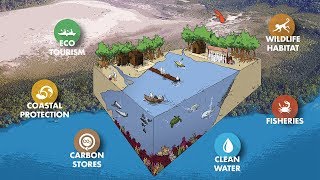
Mangroves are characteristically pivotal growths as they protect the coastline from erosion, provide breeding grounds for multiple species of sea animals, source of timber and fuel, and much more. Hydrological alterations (changes in magnitude, intensity, frequency, time, and duration of natural streams and their flow) linger a constant threat to the productivity of mangroves.
Furthermore, unforeseeable rainfalls cause vast water to gush towards flatlands, taking along the dirt. Such episodes reduce the availability of freshwater to marine life, including plants and animals. Lack of water for consumption affects the overall health of these living organisms. These unpredicted rainfalls impair coastal agriculture, which is practiced in areas of Badin and Thatta in Sindh. Water scarcity hurts the growth of crops.
Coral Reefs house approximately 25% of marine creatures in total. They are ecologically supreme creatures due to their functioning and diversity. Irrespective of this, their amount is diminished at alarming rates primarily due to climatic shifts. Rising water temperatures disturb the symbiotic relationship shared between coral reefs and microalgae. High temperatures lead to coral bleaching, a phenomenon that makes coral weak and highly prone to competing plants and diseases.
Apart from coral bleaching, soaring atmospheric temperatures cause rapid melting of frozen water bodies such as Himalayan glaciers, which upsurges water levels in water bodies. Sea level rise (SLR) increases the salinity rates of estuaries and coastal wetlands. Salinity is a threat to the water residing living beings as it disrupts the water to minerals ratio.
The marine life receives nutrient-rich sediment piles from the Indus River discharge. However, the construction of dams upstream to store water has resulted in a change in fluvial patterns. Dynamic variations in water-borne rich nutrients end in the drying of coastal creeks.
Fluctuations in the weather conditions reduce the efficiency of coastal area operations. These coastal activities earn livelihoods to many individuals and are a source of income for them. However, the water transport for freight and tourism discharges copious amounts of effluent and waste directly into water bodies. The discharge includes chemicals, toxins, and other heavy metals, leading to their death when choked by marine animals.
Significant operations in coastal areas
Below is a list of different operations carried out in coastal areas of Pakistan.
Coastal agriculture
Shipping
Fishery
Communication (transport routes)
Oil, gas, and minerals extraction
Tourism
Energy generation
Lack of temperature consistency will affect the metabolism, reproductivity, and species interactions. Species facing such issues due to climatic shifts will be unable to reproduce, gain enough nutrition, which may cause them to be extinct over time.
Importance of mangroves. Credit: Mangrove Action Project
In addition to this, the release of unfiltered toxic gases into the atmosphere results in acid rain. When it falls into water bodies, this acid rain can potentially change the pH, harmful to underwater species.
Furthermore, alteration of wind patterns can affect water circulation. Such changes can influence water’s movement in water bodies linked to the distribution of essential nutrients and oxygen to the marine ecosystem. Variation in the distribution of nutrients can cause displacement of aquatic species into new regions within water bodies enhancing competition between species for food.
Biologically productive regions, including wetlands, estuaries, and coral reefs, are highly affected due to climatic changes, and disturbances in their functioning can threaten their ecological stability.
Marine Turtle Extinction along Pakistan’s coastline
Inhabiting this planet since the time of dinosaurs, marine turtles are to date living on this planet. However, their seven species were declared “Endangered” long ago by the International Union for Conservation of Nature (IUCN). A few preventative measures should be taken immediately to stop this extinction.
Seven species of marine turtles were declared “Endangered” long ago by the International Union for Conservation of Nature (IUCN)
Although WWF-P has played a considerable role in the coastline of Sindh, where Hawks Bay and Sandspit are the main turtle nesting beaches, for protecting their habitats, they keep poachers and hunters away to ensure turtles’ wellbeing. Similarly, it should be a joint effort to understand, protect and promote the safety of marine species and preserve the marine ecosystem.
Meliorating the Coastal Ecology
First and foremost, we need to cut back on the release of toxic gases into the atmosphere (carbon dioxides, oxides of nitrogen), which contribute to global warming, damage the ozone layer, all of which end up increasing the temperature of Earth’s surface.
Secondly, constant monitoring of water bodies (sea and ocean) is required, including their role in the carbon cycle. Along with this, satellite imaging should be employed to understand the weather patterns and precipitation timings better to get an idea of upcoming climatic shifts. It will enable authorities to plan beforehand and prepare for the alternates in case of weather extremities.
Mangroves’ growth should be promoted; they are vital breeding grounds for sea creatures and are silt-checking checkpoints. While talking about silt, soil erosion needs to be managed. Plantations should be done in upstream regions and along the coast to minimize the fertile soil layer losses.
In addition to this, optimal planning, field studies, and simulation models can enhance the efficacy of the cause as they would aid in developing practical tools and management strategies to conserve coastal ecology during rapidly changing weather conditions.
Spreading awareness among people is a crucial step towards the preservation of coastal ecology. People should be taught about potential benefits and harms accompanied by prospects of the marine ecosystem and climatic change. Implementation of laws is a must. Anyone who tends to violate drafted laws should be penalized.
“If we wipe out the fish, the oceans are going to die. If the oceans die, we die” -Paul Watson
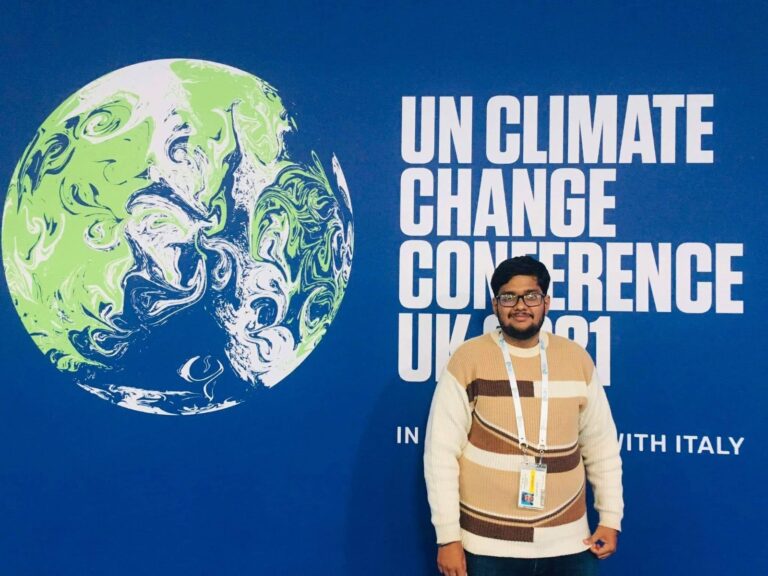
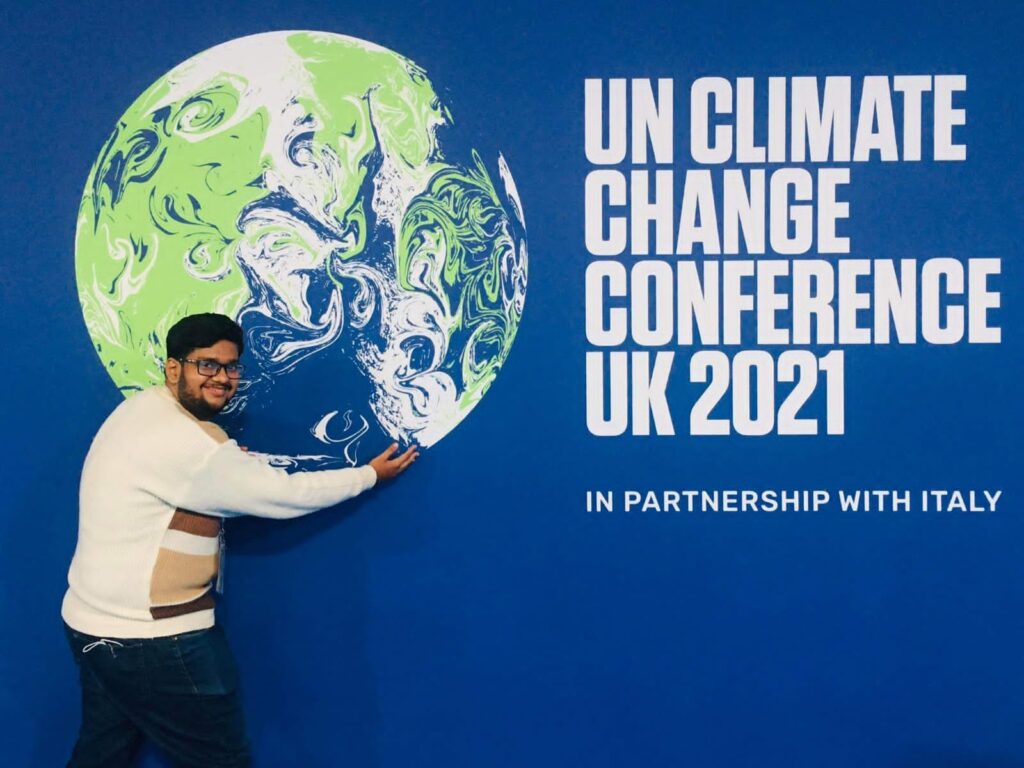
Durlabh Ashok, who represented Pakistan at the Glasgow Conference, has been active in environment protection since he was 13. In an exclusive interview, Durlabh Ashok talks about the significant cause of global warming that is irresponsible human activities, with growing industries and greenhouse gas emissions. He has worked on 18 projects that aimed at facilitate
According to experts, indiscriminate deforestation and the use of wood and coal as fuel have gradually given rise to global temperatures. But with the use of oil and natural gas, the temperature has risen even more sharply. Combustion of these fossil fuels emits greenhouse gases such as methane, carbon dioxide, etc., which increase the atmosphere’s temperature by absorbing and trapping the sunlight. The amount of carbon dioxide in the atmosphere has increased by about 12% in the last two decades.
Why is the Glasgow Conference so important?
Opening the World Environment Conference in Glasgow, COP26 President Alok Sharma said, “We all know that the planet is in turmoil at the moment. We are all here together to find the desired solutions to these problems. The problem is not so simple as it involves a lot of government policy. Governments generally do not formulate their policies following the guidelines provided by environmentalists, which are necessary to deal with climate change.
Pakistan based environment activist Durlabh Ashok says that the United States, European Union, China, and Russia are the biggest emitters of greenhouse gases worldwide, while poor and developing countries, including Pakistan, have a mere share. But everyone is being affected, so representatives of several developing countries are putting forward their demands in Glasgow conference, which include top-notch funding for tackling climate change.” The dangers to the planet are common to all, so everyone must help each other clean up their mess.
Where does Pakistan stand in the environment war?
Durlabh Ashok said that our share in climate change is negligible; Pakistan’s share in the total global greenhouse gas emissions is only 0.72%, “but we see that Pakistan is being severely affected by climate change.
Several Pakistani cities topped the list of hottest cities in the world this summer. Sindh and Balochistan are in the grip of severe drought due to a change in rainfall patterns, and rising temperatures are causing the Himalayan glaciers to melt faster than ever before. At the same time, Pakistan also faces an energy crisis. Durlabh Ashok further said that Prime Minister Imran Khan had announced the closure of coal power plants as they have played a key role in increasing carbon emissions in the atmosphere.
Durlabh Ashok, who represented Pakistan at the Glasgow Conference, has been active in environmental protection since the age of 13
Climate change is having devastating impacts on human life. According to Ashok, however, the problem is that layperson in Pakistan are not well aware of finding the solutions to these problems on their own, as we see in Africa, Bangladesh, China, and India. There are positive outcomes from the efforts of the layperson and their self-sustained projects.”
Durlabh further added that in COP 26, as a board member of the “Plant for Plant Foundation”, he represents Pakistan in two more panel discussions, including Climate Change Youth Leadership. When forests are cut down or burned, carbon dioxide is lost. This is why several European countries, including the United States, are opting for bio-energy or biomass instead of wind and solar energy as renewable energy resources, which not only allows us to restore our lost forests but also through the use of biomass, the emissions of greenhouse gases could be minimized.
He says this requires mobilizing the younger generation and launching tree planting campaigns at the national level with proper planning and strategy. Durlabh hopes that he will learn a lot and return to Pakistan with several new projects.
According to a report released by the IPCC in 2021, extreme heatwaves, storms, catastrophic rains, and floods are now common in different parts of the world due to rising temperatures. If global warming is not limited to 1.5 degrees Celsius in the coming years, there will be more horrific natural disasters in the future.
The 2015 Paris Agreement stipulates that countries that are causing more greenhouse gas emissions will co-operate to keep global warming below 2 degrees Celsius. But due to the countries’ own interests and non-cooperation, this has not been possible so far.
The hole in the ozone layer that develops annually is “rather larger than usual” and is currently bigger than Antarctica, say the scientists who have monitored it for decades.
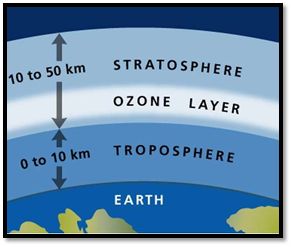
The ozone layer. Ozone cover, a safe zone for Earth, is one of the predominant features supporting life on this planet. Engulfing the upper layer of the atmosphere, the stratosphere (between 10 km to 50 km altitude), ozone comprises three oxygen atoms (O3).
This chemical composition of the layer makes it reactive towards different other chemicals. This blanket prevents ultraviolet rays of a wavelength less than 290 nm (nanometer) from reaching the Earth by absorbing them. Not all the ozone resides in the stratosphere (the upper atmosphere): a part of it lies in the troposphere, the lowest region of the Earth’s atmosphere. Ozone depletion is a matter of grave concern and for all the right reasons.
Figure 1: Location of Ozone in the atmosphere
Meeting Ozone
Ozone gas (O3) is a pale blue gas with a pungent smell composed of inorganic molecules. The ozone layer is thicker in the atmosphere over the poles as compared to above equator. It functions by absorbing the ultraviolet rays (UV) of the highest energy, the UV-B and UV-C.
How is it produced?
The concept of a white blanket surrounding the Earth seems mythological; its presence is what has made the Earth a habitable planet for all. The phenomenon of its production is a crucial aspect in understanding its role. The oxygen molecules in the atmosphere are split into individual oxygen atoms due to the action of the sun’s ultraviolet rays. These single oxygen atoms have the affinity to bind with adjacent oxygen molecules to form ozone (O3). Ozone is the result of both natural processes and human activities.
Figure 2: The process of ozone formation
Ozone as sanctuary
Ozone is a protective duvet around the Earth that absorbs the sun’s harmful ultraviolet rays, thus halting them from reaching the Earth’s surface. In the absence of ozone, Ultraviolet rays would reach the surface and cause severe damage that includes skin cancers, eye cataracts, and damaged DNA in plants and animals, leading to various mutations. Scorching heat and high energy of Ultraviolet rays negatively affect plant and plankton growth. Plankton or marine drifters form the base of the food chains, responsible for maintaining the food chain. Their lack of production will disturb the majority of food chains and hence be detrimental to the survival of other organisms.
Commination to Ozone
Prospective scarring of ozone became an eyeopener when a Dutch scientist, Paul Crutzen, published a paper showing that the nitrogen oxide catalytic cycle negatively affects ozone layer concentration. In the 1970s, the production of supersonic transports (SST) was resisted due to their potential release of nitrogen compounds, primarily nitrogen oxides, which could impair ozone. This phase marked the enlightenment of the scientific society with the realization that the ozone layer was diminishing.
The concept of a white blanket surrounding the Earth seems mythological; its presence is what has made the Earth a habitable planet for all.
On a larger scale, there are two significant reasons for ozone depletion: Anthropogenic and Natural.
1. Anthropogenic activities
Commonly known as human activities, anthropogenic activities increase the concentration of atmospheric pollutants, thus playing a significant role in ozone slumping. Chemical compounds (Ozone-Depleting Substances) that release gaseous chlorine and bromine are most prone to ozone damage. Ozone-depleting substances (ODS) that release chlorine encompass chlorofluorocarbons (CFCs), hydrochlorofluorocarbons (HCFCs), carbon tetrachloride, and methyl chloroform. Once CFCs are released into the atmosphere, they make their way to the upper layers of the atmosphere stratosphere, where the action of ultraviolet rays breaks them. This dissociation liberates chlorine atoms which are detrimental to ozone.
Halogens and methyl bromide are the ODS that liberate bromine. These chemicals are released on the Earth’s surface; they can travel to the stratosphere, thus posing a threat to the ozone layer.
Another drawback of ODS is that they remain within the atmosphere and do not come down to land with rain. Thus, their ability to stay within the atmosphere for a more extended period makes them harmful substances to the ozone layer.
Key ODS sources
Halocarbon refrigerants
Aerosol propellants
Fire extinguishers
Foam blowing agents
Figure 3: The effect of anthropogenic activities on ozone
2. Natural causes
Sunspots, volcanic eruptions, and stratospheric episodes pose a small percentage (1%-2%) of threat to ozone depletion.
The Current Status
The ozone hole over the Antarctic is the biggest one till now. Till early October 2020, it covered an area of 24 million square kilometers. Post extensive studies and close monitoring of the ozone hole, the scientists at NASA claim that the ozone hole over the Antarctic has reached its peak. According to the UN Environment Programme Scientific Assessment of Ozone Depletion (presented in 2018), it is stated that the ozone layer will possibly recover to its pre-1980 levels by 2060. However, this ozone depletion is not restricted to the Antarctic only but occurs over other regions, including North America, Europe, and Asia.
The Unfortunate Effects
Ozone shrinking is a matter of grave concern giving rise to numerous unfavorable aftereffects. Some of the significant drawbacks of ozone depletion include:
Damage to human health
Exposure to high-energy ultraviolet rays can cause cancers, severe sunburns, and the gradual weakening of the immune system. Such adverse effects can subside the quality of life.
Environmental deterioration
Plants also have a range of tolerance of UV light of a given energy. Continuous exposure to highly high-energy UV rays can hamper the average growth and reproduction of plants, such as the process of germination, photosynthesis, and flowering. Crops sensitive to high-energy UV radiation include wheat, barley, tomato, etc.
Risk to Marine life
Just like land beings, life underwater is also exposed to energetic UV radiations. These high-intensity radiations can prove to be detrimental to plankton, the basis of the food chain. If plankton growth is reduced, it will disrupt the entire food chain mechanism and thus the productivity of sea life.
Ozone for life
Restoring ozone levels to how they initially were, is a vast but acute undertaking. The Montreal Protocol of 1986, an international agreement aimed to address the ozone depletion issue, should be focused on. Firstly, we need to cut down cleaning agents containing corrosive and harmful solvents and replace them with non-toxic agents. Secondly, there is a need to minimize the use of ample transport vehicles. Rather than using a separate transport accommodation, where possible, we should use public transport.
This will contribute to a decrease in the carbon footprint. Thirdly, to further narrow down the carbon footprint, we must source and utilize locally manufactured products. In addition, proper maintenance of refrigerators and air conditioners should be done as their inefficient working can release CFCs into the air. Though the recovery process is time taking, one step at a time can make a crucial difference.
Earth without ozone is like a house without a roof.
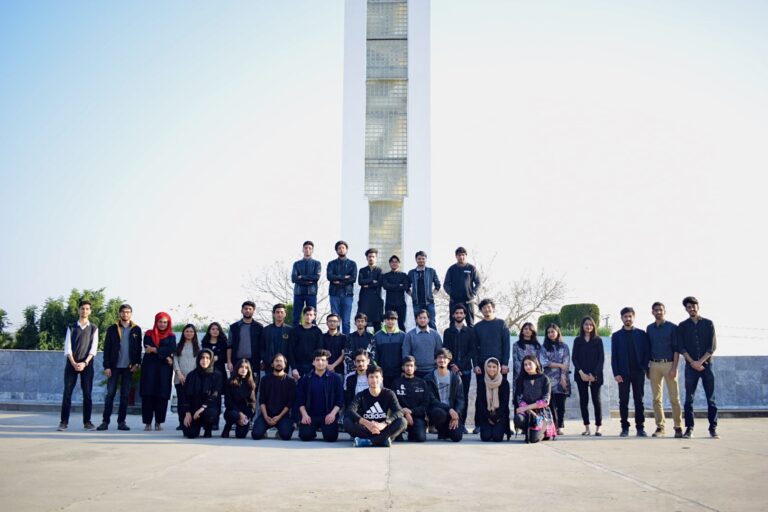
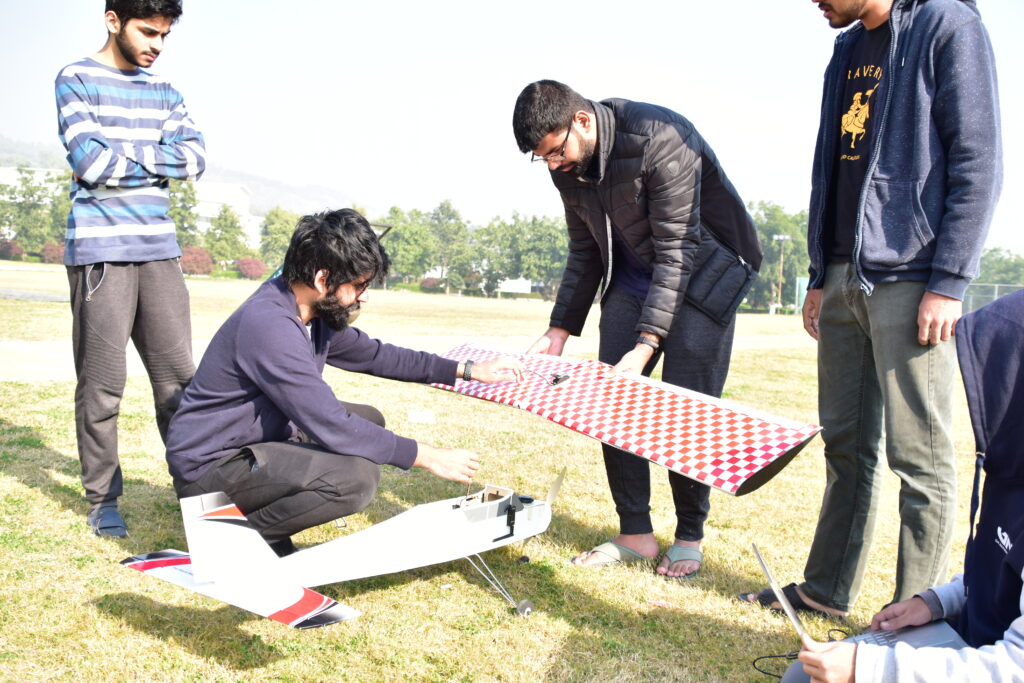
Foxtrot is a student-run team based in Ghulam Ishaq Khan Institute of Engineering Sciences and Technology (GIKI), which specializes in building planes, drones, and Unmanned Aerial Vehicles (UAVs). With the passion for developing UAVs and the intention of representing Pakistan and GIKI internationally, the team competes in the UAS (Unmanned Aircraft Systems) Challenge which is hosted annually in the United Kingdom by IMechE (Institution of Mechanical Engineers).
It is to be noted that autonomous systems are very different from radio-controlled (or RC) systems. Autonomous systems operate completely on their own, without any human intervention once they are commanded to run: unlike RC operations, where human input is required each time an action is to be performed.
Team Foxtrot has been competing in the IMechE UAS Challenge in the United Kingdom (UK), and in the debut year of the challenge won the “Highest Place New Entrant Award of 2019”, and also stood among the top 10 participating teams from across the globe. This year, in 2021, Team Foxtrot bagged the Business Proposition award, while also finishing in an esteemed 5th place in the competition. The team also scored a perfect 15/15 score on its First Design Review: a feat that is worthy of appraisal.
Foxtrot is a student-run team based in Ghulam Ishaq Khan Institute of Engineering Sciences and Technology (GIKI), which specializes in building planes, drones, and Unmanned Aerial Vehicles (UAVs)
Team Foxtrot also organizes STEM outreach programs in schools to enlighten students about the endless possibilities and opportunities in the world of engineering and to empower girls who are interested in the field. It focuses on enabling young minds to acquire UAV-related cognitive skills and teaching pupils about the practical applications of autonomous UAVs in the present period, including their use in humanitarian aid missions.
Team Foxtrot also organizes STEM outreach programs in schools
About the IMechE UAS Challenge
For the past seven years, the IMechE UAS Challenge has been held in the UK. The challenge’s main goal is to train and develop professional engineers while also providing them with a dynamic and specialized environment in which to hone their problem-solving abilities.
The challenge is divided into three major stages, which are as follows:
1. Design
2. Development
3. Demonstration
A plethora of teams from around the world design their UAVs and compete in this challenge, where they perform timed tasks and follow a strict set of guidelines by performing a full design and building cycle of UAS with specific goals prioritized. The main task for each is to construct a UAV for the tasks to be completed successfully. These include area searches, waypoint navigation, dropping an aid package correctly, and consequently returning to the base via a well-defined route.
It is not unusual to hear that despite its many benefits, cyberspace has, at the same time, opened doors for that intent on achieving criminal aims. Cyber blackmail, identity theft, and fraud are some of how these have been previously witnessed. Cybersecurity poses an existential threat to the way of life; more specifically, it appears to be a matter of national security these days.
The driving force behind cybersecurity is the threat of cyber attacks. Each level of a cyber-physical infrastructure, comprised of operational software, information, and people -is susceptible to security breakdown, whether through attack, infiltration, or accident. Cyber threats are asymmetric because they allow the few to perpetrate attacks upon the masses.
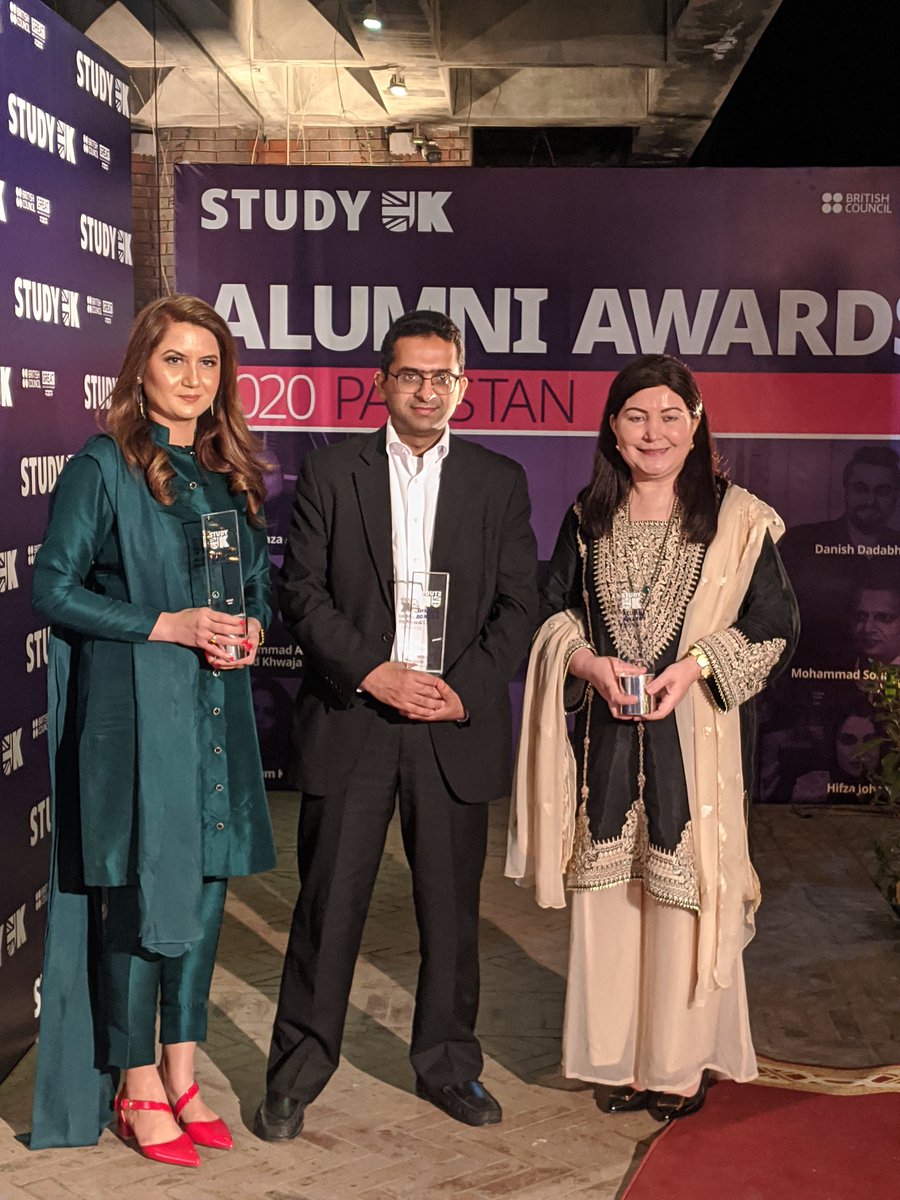
To get an insight into the role and impacts of cyberspace in national security, Our team member Abdullah Khan reached out to Dr. Fauzia Idrees Abro, Pakistan’s first female military cyber-security analyst. Dr. Abro currently works as the Director of Business Incubation Center and cybersecurity program coordinator at Dawood University of Engineering and Technology. She is a pleasant surprise for many science enthusiasts.
Dr. Abro started her educational career when she obtained her Bachelor of Engineering in Electronics from Mehran University of Engineering and Technology (MUET), Jamshoro. She hails from rural Sindh, and despite all the hurdles against the education of women, she pursued her passion and obtained a master’s in Cryptology from NUST. This was just the beginning of her career which took her to pursue a Ph.D. in Cyber Security from City, University of London.
Her research interests are malware analysis, detection and prevention, mobile security, VoIP, network security, machine learning, IoT, and Artificial Intelligence, published in various academic journals and conference proceedings. She serves on several editorial boards and program committees of international journals and conferences.
Dr. Abro (on left) at UK Alumni Awards
Below are some excerpts of her conversation about the impacts of cyberspace on national security.
Abdullah: The concept of security has evolved from the traditional security dilemma of a state to the vulnerabilities faced by individuals. What are the threats and challenges faced by individuals and states in the context of cyber security?
Dr. Abro: With the ever-increasing role of the internet in almost everything we do, we’re more and more vulnerable to cyber threats. Anyone using the internet for anything is exposed; hence awareness about requisite security measures is essential for each individual. It’s an ever-evolving field that requires persistence and continuous focus of both the developers and end-users. Although every organization is conscious of the threat and ensures regular measures, we still see so many breaches worldwide very frequently. This implies that the importance of cyber security will always remain highly critical for both individuals and organizations all over the globe.
Abdullah: The emergence of cyberspace has opened new battlegrounds. How will future developments in cyberspace and new technologies shape any future warfare?
Dr. Abro: Almost all contemporary and future concepts of warfare has a very heavy dependence on cyberspace. With the emergence of super computational technologies and rapid developments in associate gadgetry, each segment of cyberspace is being exploited as an essential tool of warfare. A paradigm shift in warfare is that cyber warfare is now an everlasting activity that would only intensify in times to come.
We should realize that each smart gadget is not very smart against cyber threats and each social media application is accruing our personal information from our gadgets.
Abdullah: What can be done at an individual level to get secured from cyber threats?
Dr. Abro: First of all, each individual should get himself acquainted with the potentials and impact of cyber threats on our daily life. Usage of social media is increasing, and so are the chances of cyber threats for the users. We need to educate our children to be careful while sharing their personal information on social media. We should realize that each smart gadget is not very smart against cyber threats, and each social media application is accruing our personal information from our gadgets.
We must know that Cameras, Mics, and our files in our gadgets are accessible to cyber attackers. We need to be careful about what we are sharing on social media, storing on our smart devices, and how we are accessing the internet. Use strong passwords for online services accounts, install good anti-virus programs and update the software regularly.
Abdullah: Are there any global efforts done by the international society and bodies to overcome the threats of cyberwar between states or any cyber-attack by a group or individual?
Dr. Abro: International bodies monitor hackers and cyber activities, but we must know that all international intelligence agencies are intensely involved in cyber monitoring and use individuals’ data for their covert activities. The UN, Council on foreign relations, and some other international organizations and think tanks for regulating cyberspace, especially cyber-attacks and cyber warfare, are ongoing global efforts.
Abdullah: Pakistan drafted its cyber security policy in April 2019. Is this policy comprehensive enough to tackle the challenges faced by Pakistani users and state?
Dr. Abro: As per my knowledge, some work was kick-started to formulate the cyber security policy guidelines, but it’s not complete yet. Cyber security policy is a subject that needs to be reviewed very frequently and should be formulated by competent professionals with the involvement of different state stakeholders.
Abdullah: What is next for you? Your message for womenfolk in Pakistan?
Dr. Abro: I try to remain abreast with the latest research and development in the domains of cyber security. I see myself as a leading cyber security entrepreneur in the next five years, providing its products and services worldwide. I’m an enthusiast to provide a flexible and conducive working platform for cyber security and STEM women.
My message to the women of Pakistan is to work hard and know their potentials. Only courage can lead to success and motivate others who struggle to survive in very challenging environments. To get something extra, you need to do extra.
“We plan on the adversary’s capabilities, not intentions.” Gen(R) Kyani.
To understand Pakistan’s missile program and its motives, one first needs to grasp the idea of deterrence. An effective defense is based upon factors like detect, deter, deny and defend.
The word deter means to scare off; hence deterrence would be anything that scares off the adversary, e.g., a weapon, technology, or diplomatic means.
Pakistan, unfortunately, has arch-rival many times bigger in size, resources and military might. In an all-out war, Pakistan would be at a significant disadvantage vs. India as it neither has large territory to trade for time nor the resources to fight a long brutal war. The wars of 1965 and 1971 both taught Pakistan some precious lessons. The deterrence then possessed was not enough to scare off an enemy three times larger in military might. Pakistan vowed never to let that happen again. Hence it started the quest for nuclear weapons. On 11 March 1983, PAEC did the first subcritical test of a nuclear device, proving Pakistan’s capability of making a successful atomic device.
The next step in the process was nuclear arsenal dispatch. For that purpose, we had aircraft like Mirages and later F16s. But during the 1980s, India started a program for a ballistic missile named Prithvi. Eventually, India also had aircraft for nuclear delivery, so the question was why to go for ballistic missiles that are far more expensive and complex.
Ballistic Missiles
Ballistic missiles are more survivable, can carry larger payloads to a greater distance, and sometimes can carry more than one warhead; they can use to target multiple cities. A ballistic missile follows a ballistic trajectory to aim at a predetermined target. Guided and powered only for a short duration of their flight, they were initially not very accurate but improved later on. The types of Ballistic missiles, depending upon their ranges, are
Battlefield Range Ballistic Missile with range less than 300 Kms,
Short Range Ballistic Missiles with ranges between 300 to 1000 kms,
Medium Range Ballistic Missiles with ranges between 1000 to 3000 kms,
Intermediate Range Ballistic missile with ranges between 3000 to 5,500 kms,
Intercontinental Ballistic Missile with ranges more than 5,500 kms.
Intercepting a ballistic missile need tons of infrastructure ranging from satellite sensors, kinetic hit to kill interceptors carry out mid-course interception, ground or sea-based radar systems, effective command and control center, and interoperability among the assets mentioned above. Few countries possess this kind of capability, and even fewer can perform in real-time.
Dawn of Pakistan’s missile program
Pakistan’s missile program started in 1988 with PM Benazir Bhutto and General Mirza Aslam Baig as COAS. It was started as a response to the already existing Indian program of developing different kinds of missiles using knowledge gained from soviet technology. One of those missiles to be designed and produced was “Prithvi.” It was named after a Hindu raja; it was a short-range ballistic missile, first tested on 25th February 1988.
Pakistan started its program to develop short to medium-range ballistic missiles. Planning of the program began in 1987 under the supervision of Gen. Zia-Ul-Haq, based upon intelligence gathered about the Indian program.
Under this program, PAEC, KRL, SUPARCO, and DESTO were authorized to start designing and developing their designs separately for the first ballistic missile of Pakistan.
Among these institutions, SUPARCO was best qualified in rocket sciences as they had been working with rockets in cooperation with NASA to carry out atmospheric studies. Missiles of Pakistan were given the name “Hatf” and their individual names, such as Ghauri, Abdali, Ababeel, etc., in cooperation with NASA to carry out atmospheric studies.
During Benazir Bhutto’s era, the rapid design and deployment of missiles were emphasized to thwart the already present Indian missile threat. Joint SUPARCO and KRL project cooperation resulted in the production of the Hatf-1 missile.
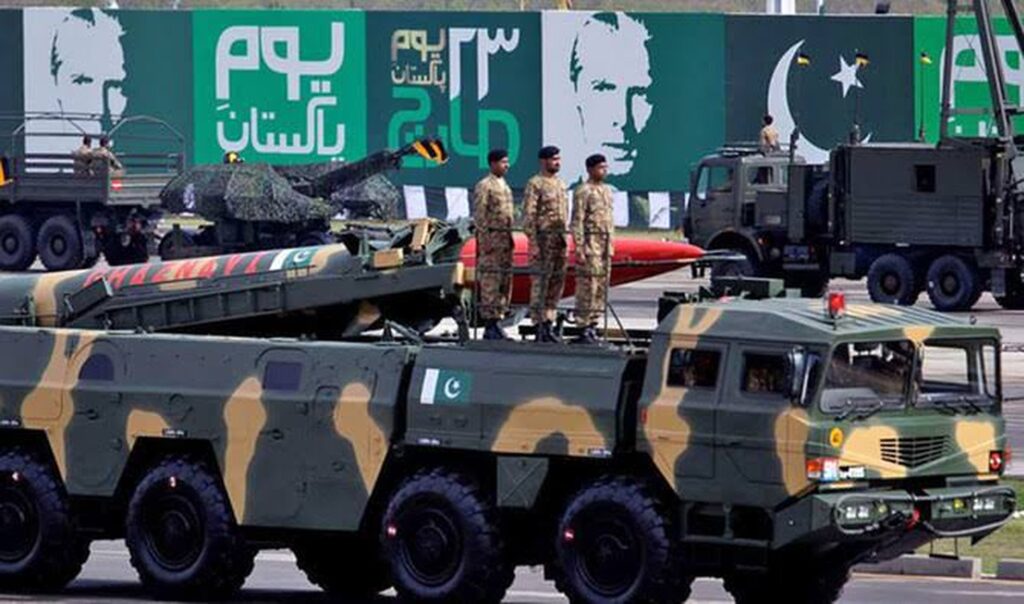
Hatf-1
Class: BRBM
Mass: 1500 kg
Range: 100 km (upgraded hatf-1b version) Payload: 500 kg conventional/nuclear warhead In service: 1989-present
Manufacturer: SUPARCO and KRL.
Hatf-1 is Pakistan’s first BRBM. It is more likely to be used as an artillery shell to bombard an area. Cheap to produce and easy to maintain and transfer, Hatf-1 has a TEL (Transporter Erector Launcher) launch platform, making it highly mobile. It uses a solid propellant which means it can be launched on short notice, unlike liquid propelled missiles which need to be fueled before launch.
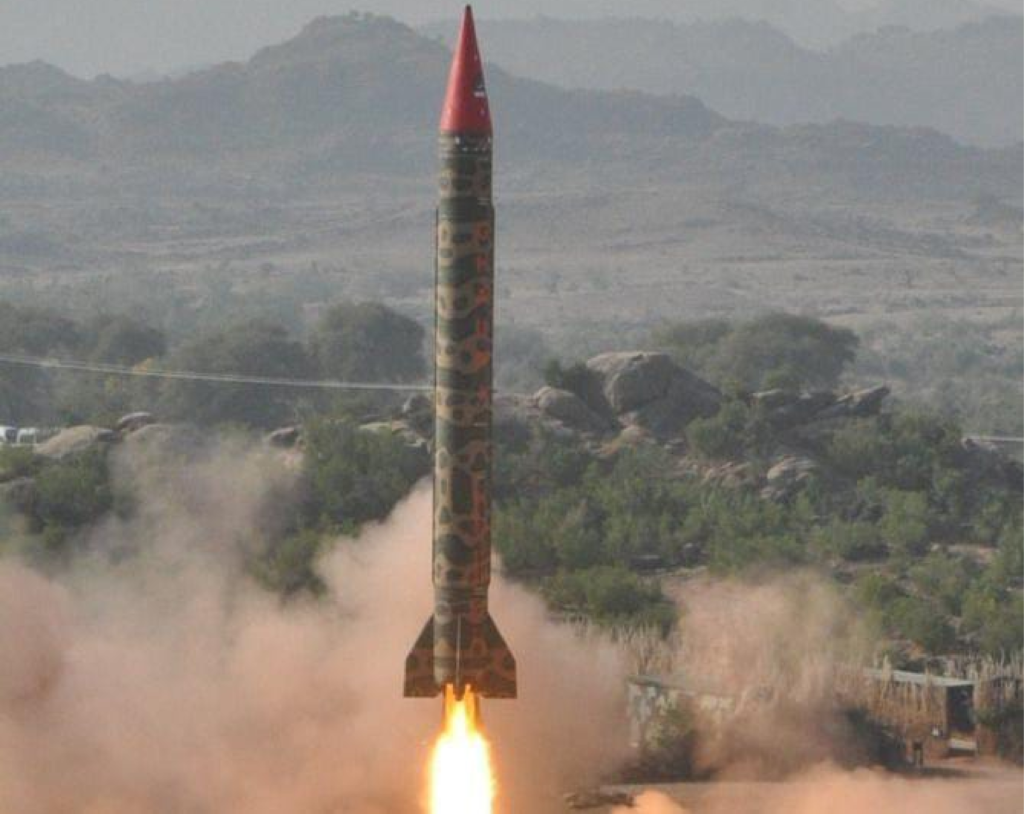
Hatf- One missile, Copyright to ISPR
Many suspect French and Chinese assistance in building Hatf-1 as its design remarkably resembles the French missile Eridan sounding rocket.
Hatf-1 initially had poor accuracy and could land within several kilometers of the target, but later Hatf-1b possessed guidance systems making it land within several meters of the target. Pakistan states that it is a conventional missile, but theoretically, if mated with a miniaturized nuclear warhead, it can also be used as a nuclear-tipped missile.
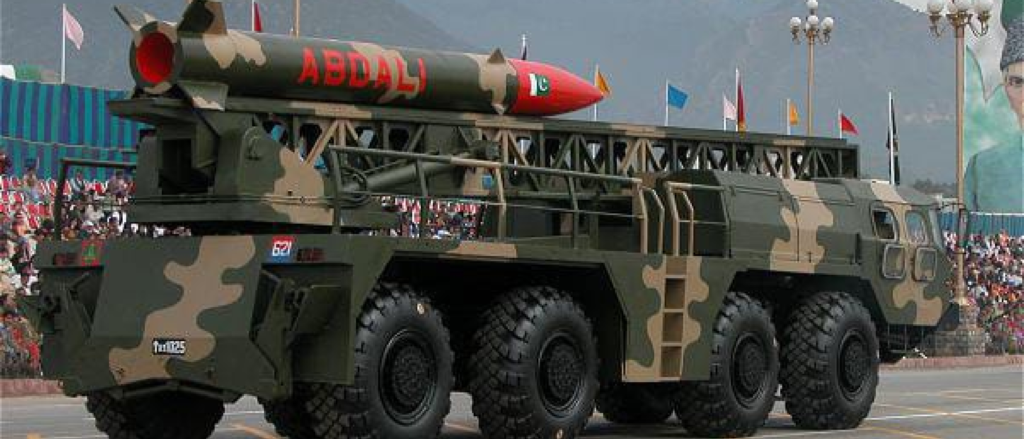
Abdali (Hatf-2)
Class: SRBM Mass: 1750 Kg
Range 280-450 Km
Payload: 300-500 kg conventional/submunitions In service: 2005-present
Manufacturer: SUPARCO.
Hatf-2, Abdali missile, Copyright to ISPR
Hatf 2 was initially planned to be a two-stage Hatf-1 missile. A solid-propellant stage was considered for attachment with Hatf-1 for extending its range; SUPARCO, later on, rejected the idea due to lack of resources and designed a single-stage missile with the characteristics mentioned above and named it Abdali-1. Hatf-2 comes with a built-in guidance system, making it land within 100 to 150 meters of the intended target. Its large payload and accuracy make it ideal for targeting vital military installations and resources, whether they are enemy communication lines or supply lines. It has a TEL-based launch platform.
Ghaznavi (Hatf-3)
Class: SRBM Mass: 5,256
Range: 290 Km
Payload: 700 Kg
In service: 2004-present Manufacturer: NDC.
Hatf-3-Ghaznavi missile. Copyright to ISPR
Hatf 3 is a short-range ballistic missile in use by Army Strategic Forces Command (ASFC). It has an inertial navigation system and can hit a target with 250 meters of CEP (Circular Error Probability). This missile closely resembles the Chinese DF11 missile. Pakistan initially tried to procure Chinese missiles off the shelf but abandoned the idea due to international limitations. Some still speculate that the Chinese sold this missile to Pakistan but officially, there is no confirmation to date.
Pakistan has successfully carried out many tests for training and validating weapon parameters.
Shaheen-1 (Hatf-4)
Class: SRBM
Mass: 10,000 Kg (Shaheen 1-A) Range: 1000 Km
Payload: 1000 Kg single conventional/nuclear warhead
In service: 2003-present Manufacturer: NDC and NESCOM.
Hatf-4-Shaheen-1 missile, Copyright to ISPR
Shaheen 1 is a part of the Shaheen series of missiles (Shaheen 1, 2, 3) and boasts much more sophisticated features than missiles tested before. It features an excellent terminal guidance system. Its stealthy warhead design makes it difficult for Missile defense systems to intercept. The goal of the shaheen program was to develop a missile capable enough to defeat modern air defense systems. As the adversary’s capability grew in missile defense, so did the need for better missiles. Shaheen 1 features a Post Separation Altitude Correction system and thrusters to correct the warhead’s trajectory via satellite navigation, dramatically increasing its accuracy.
Developing Shaheen 1 was a challenging task. Still, it was accomplished thanks to the resilience and hard work of Pakistan’s scientists.
Ghauri (Hatf-5)
Class: MRBM Mass: 15,850 Kg
Range: 1500-2300 Km (Hatf 5-Hatf 5A) Payload: 700 Kg conventional/nuclear warhead In-Service: 2003-present
Manufacturer: KRL.
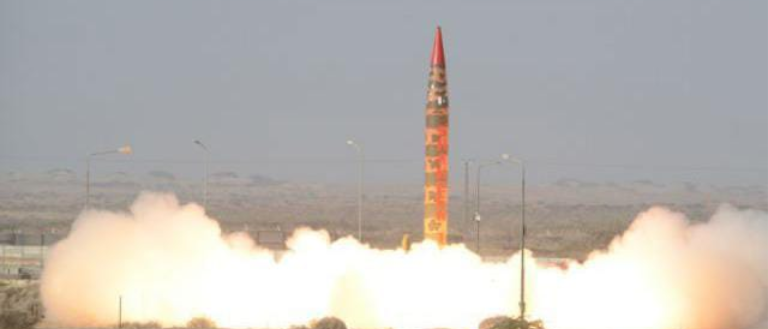
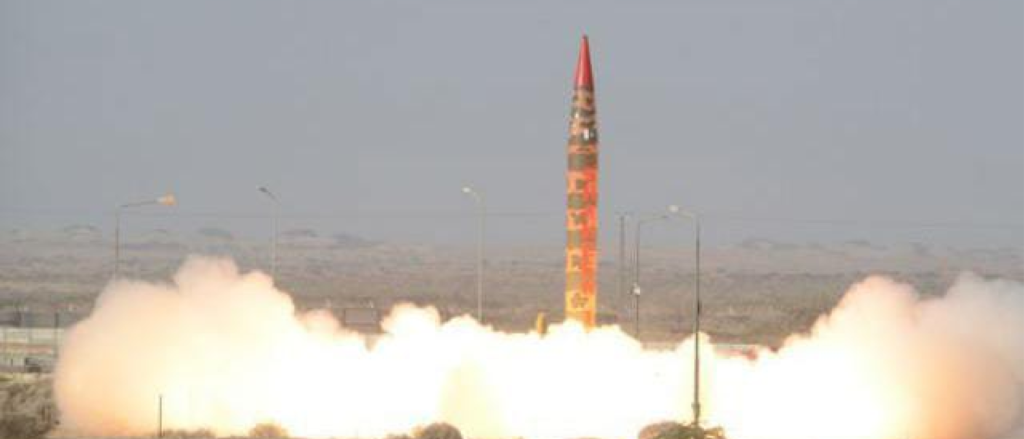
Hatf-5, Ghouri missile launch in Oct 2018. Copyright to ISPR
Gauri missile is made by KRL and is Pakistan’s only liquid-propelled missile program. Missile design is considered to be heavily influenced by the North Korean missile Rodong-1. The missile initially had a range of 1500 Km, which later extended to 2300 Km, making it capable of targeting most of the Indian territory with a 700 Kg warhead. Ghauri is guided by an INS (Inertial Navigation System) and has a CEP of 190 meters. The missile has to be refueled before launch, making it vulnerable to pre-emptive strikes, but it is cheaper than solid-fueled missiles. First tested in 1988 Ghauri missile was handed over to Pakistan Army in 2003
Shaheen-2 (Hatf-6)
Class: MRBM Mass: 25,000 Kg
Range: 2000 Km
Payload: 700 Kg conventional/nuclear warhead In Service: 2014
Manufacturer: NESCOM and NDC.
Hatf 6, Shaheen-2 missile test in 2019. Copyright to ISPR
Shaheen 2 is a 2-stage solid propelled MRBM developed by NDC and NESCOM. First tested in 2004, Shaheen 2 has a TEL-based launch platform. It features Delta control fins at the rear fuselage and has side thrusters mounted at the re-entry vehicle to provide more accuracy before entering the atmosphere; the same thrusters can be used to carry out maneuvers to prevent interception as they would deny defense to calculate the accurate trajectory for interception. Hatf-6 has terminal guidance in the form of INS and has a CEP of 350meters. Re-entry vehicles are also speculated to feature GPS guidance that, if true, would increase missile accuracy up to a great extent.
Note: Hatf-7 and Hatf-8 are cruise missiles and will not be discussed in this article.
Hatf-9
Class: BRBM
Mass: 1200 Kg
Range: 90 Km
Payload: 400 Kg conventional/ tactical nuclear warhead In Service: 2013
Manufacturer: NDC.
Hatf-9, Nasr missile. Copyright to ISPR
Nasar is a BRBM believed to have been developed as a direct response to the Indian Cold Start Doctrine. Indian doctrine revolves around saturating Pakistani defenses by gathering many forces along the border and making shallow incursions in Pakistan’s territory. Under the assumption that by the time Pakistan counterattacks, it would have lost territory to Indian assault, UN and International intervention would come in place, thereby declaring India victorious.
Therefore, Nasr was developed to deliver the same deterrence at a shorter range than Shaheen-2, and Ghauri delivered at longer ranges. Nasr can be mated with a low-yield tactical nuclear warhead against Indian forces on Pakistani soil. It has a minimum blast effect and maximum ionizing radiation effect, making it more dangerous/damaging for the enemy. Nasr provides the ability to “Shoot and Scoot” and can defeat enemy air defenses. Although the actual CEP of Nasr has not been revealed, the test video shows it to be highly accurate.
Shaheen-3
(Hatf 10) Class: MRBM
Range: 2750 Km
Inservice: Speculated not to be operationally deployed right now Payload: Conventional /Nuclear.
Manufacturer: Nescom and SUPARCO.
Initially designed as a space booster for future SLV of Pakistan, Shaheen-3 currently has the most extended range among missiles in Pakistan’s arsenal. Shaheen-3 was first tested on 9 March 2015. It is a two-stage missile featuring solid propulsion and is road-mobile. This missile is capable of delivering a nuclear warhead up to 2750 Km. For the first time, Pakistan is now capable of striking the whole Indian mainland along with Nicobar and Andaman Islands, which resided outside of Pakistan’s missile envelope.
India was developing them as strategic bases. The idea behind this Shaheen-3 was to develop a missile, which would leave India with no safe havens and would deny India “the second-strike capability.” To reach the Nicobar Islands, these missiles are required to launch from very eastern parts of Pakistan. This missile can reach up to 18 times the speed of sound. They were making it extremely difficult to intercept.
Ababeel is a three-stage, solid-propelled MRBM. This missile holds a unique place, at least for now, in Pakistan’s missile arsenal as it is the first Pakistani missile capable of delivering multiple warheads at different locations with accuracy over a distance of 2,200 Km. This missile was developed by KRL and was publicly tested on 24 January 2017. Ababeel is believed to be based upon the Shaheen-3 airframe. This missile was a breakthrough in Pakistan’s missile technology as by successfully testing this missile, Pakistan stood among very few nations that possessed MIRV (Multiple Independently Targetable Reentry Vehicle).
Today, Pakistani missiles cover all Indian territory. They can hit a target in even the middle east, so now Pakistan might emphasize improving the missile’s survivability rather than its range. Attaining MIRV technology can be a step towards it as MIRV vehicles can be an excellent challenge for BMD (Ballistic Missile Defense) systems. A BMD works by calculating missile/warhead trajectory and then releases an interceptor for a mid-course interception, but in the case of MIRV, it would be facing multiple warheads and decoys, traveling many times the speed of sound and targeting different places at once; hence it would be hard to defend against such missile.
Pakistan’s journey in the world of ballistic missiles might continue or end, but one thing’s for sure that the nation owes it to all those who soldiered on in the face of hardships, ridicule, fear, resource lessness and made us what we are today.
V for Vendetta was directed by James McTeigue, written by Wachowski, and came out in the year 2006. The film stars Natalie Portman as Evie and Hugo Weaving as V- the protagonist labeled a terrorist by a totalitarian government that has taken control over England in a very vicious way. They have outlawed art; a harsh curfew is imposed upon everyone and police officers that are in control are not abiding by the law themselves, committing heinous crimes.
This movie is based on Alan Moore’s graphic novel which, if you have not read, is filled with a ton of great characters, and has a really great storytelling element to it. One may think of it as just an action-packed extravaganza, and yes, there are great action sequences in V for Vendetta, but it is also a movie that talks about politics and how a government can control its people, and how people can rise up against its government in vengeance when the environment becomes unbearable. It subtly presents a lot of ideas along with fantastic action. The movie has great storytelling, and its performances are stellar.
The movie is set in a “futuristic” fictional world. The year is 2020 and a virus has spread globally (pretty much true of what happened last year). Many Americans lose their life. Britain is ruled by fascist leaders, and they have imposed a curfew on everything. During these times rises a man in a mask named V. He thinks that killing significant dignitaries and bombing important sites will wake up the people against the corrupted government. He tries to commemorate Guy Fawkes who blew up British Parliament in 1605 and hopes to do the same on November the 5th.
V saves a reporter girl (Evie) from rapist policemen on eve of the 5th of November. She forms an alliance with him later in the movie and helps him in his cause. V bombs an old building and later announces on national TV that within 12 months’ time he will blow up the parliament. People who are against the corrupt government should show their support. Either he is a terrorist or a freedom fighter – that is for the audience to judge, I won’t give away much.
The film stars Natalie Portman as Evie and Hugo Weaving as V
This movie came out only five years after the devastating attack of 9/11. This film has a main character labeled as a terrorist and portrays him in a sympathetic light, so we understand his motivations and what he wants to do, and why he’s doing it. It was very brave to release such a movie in that tense environment when labeling anyone a terrorist was easy.
Now granted the world surrounding V in this movie is a futuristic depiction of a fictionalized world in which everything has gone disarray. And there is this one government that is acting like everything is fine. So, in that way you can watch and understand why someone would revolt against it, but also must reiterate that this is a fictional film. Many critics at that time said that this is a disturbing movie and sympathizes with terrorism, which is not much true as it is a fictional world, and it should not be compared to real-life situations.
V for Vendetta has the most phenomenal performances by Hugo Weaving and Natalie Portman. The script for V is great and poetic, filled with quotes such as, “People should not be afraid of their governments. Governments should be afraid of their people.” And the most famous “Remember, remember, the fifth of November, gunpowder treason and plot. I see no reason why the gunpowder treason should ever be forgot.”
All in all, the movie is a classic. It is riveting and exciting to watch. It checks all the boxes being gripping, chilling, intense, exciting, heartbreaking all at once. It is not a big typical action movie, but it has some striking action sequences. The most surprising thing is that even after 15 years, this movie is still relatable regarding what is happening in the world right now. Watching this today is eerily identical to current events.