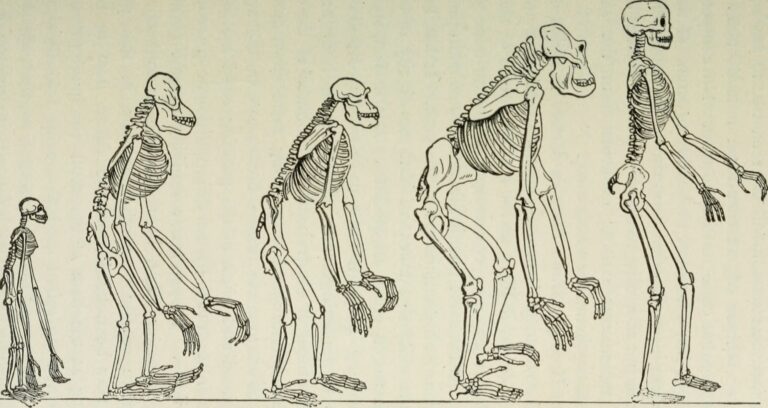
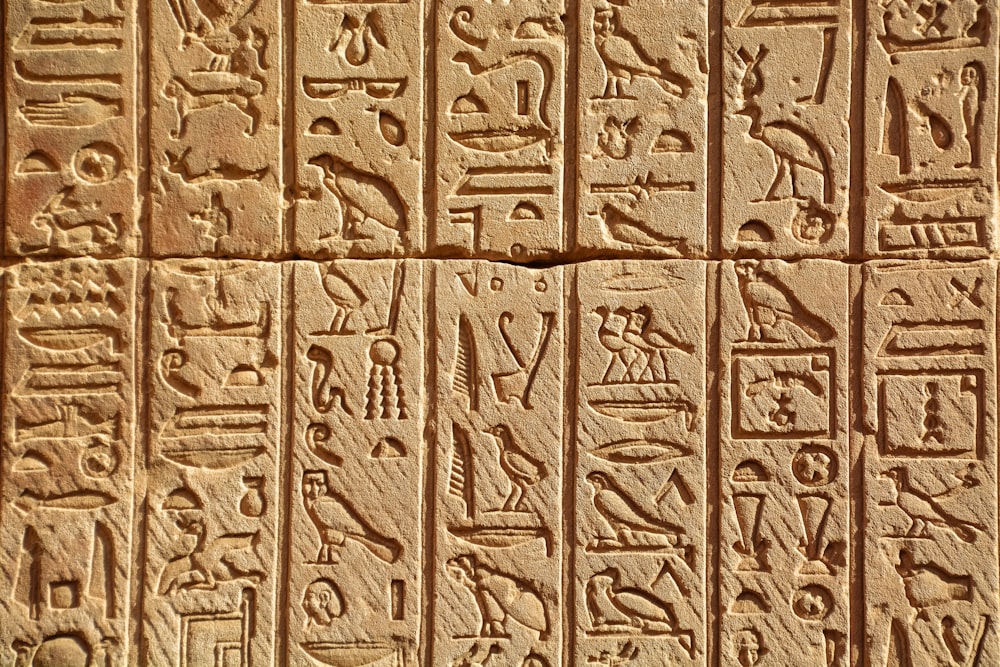
Homo sapiens originated from Africa over 300,000 years ago, and genetically modern humans emerged at least 195,000 years ago. History shows that the first signs of early modern humans outside Africa were found in Israel 194,000 to 177,000 years ago and in Greece 210,000 years ago. Modern human remains were recorded in East Asia 80,000 years ago. Some archeological evidence revealed that they reached Australia 65,000 years ago.
However, in Europe, their appearance seems to have occurred much later, perhaps because of ecological barriers and the region’s occupation by Neanderthals. The earliest evidence of Homo sapiens settlement in Europe was found around 45,000-43,000 years ago based on five isolated dental remains from three Italian sites and one in Bulgaria.
Together with history, anthropology, and social science, Archeology has struggled to find the answers to some crucial questions about the origin of the earliest societies and their cultures. The search was started somewhere in the 1980s; researchers have come to understand and now explain the existence of facts and attitudes in the human way of living and thinking that constituted behaviors.
With the help of new concepts and methods, anthropologists have learned about ancient civilizations’ social and cultural aspects. Meanwhile, their main quest was to explore more about the ‘otherness of others,’ a rather complicated concept in anthropology that has been the focus of several renowned anthropologists since 1980.
The earliest evidence of Homo sapiens settlement in Europe was found around 45,000-43,000 years ago based on five isolated dental remains from three Italian sites and one in Bulgaria.
An example that best explains the concept of the otherness of others is the human ego. Anthropologists have been trying to figure out the existence of cognitive ego in humans for a long. They found that the cognitive ego is different from the social ego and intimate ego in humans.
Together with history, anthropology, and social science, Archeology has struggled to find the answers to some crucial questions about the origin of the earliest societies and their cultures.
The social ego can be inherited from ancestors, but it mainly develops and grows over the course of a lifetime. However, the intimate ego is fashioned from birth by pleasant or painful encounters with others; it is also called ‘the ego of desires and sufferings.’
More often than not, anthropologists immerse themselves in another society or another milieu to better study and understand the societal norms and behavioral patterns. Their observations are based on their participation in daily life chores of the concerning cultures. This practice requires struggle, high passion, and sweat and is entirely different from going hunting with a group of people.
Realizing the significance of anthropology in the modern world, Scientia Pakistan brings its exclusive edition on Anthropology. We have got some exciting stories on the Nabatian kingdom, the cultural diversity of Pakistan, progressive political anthropology, the significance of modernization in anthropology, South Asian languages, the RNA world, and much more.
We reached out to some prominent anthropologists and chatted about the significance of anthropological studies in Pakistan.
Summing up, this edition will be fantastic entertainment for all anthropology and social science lovers.
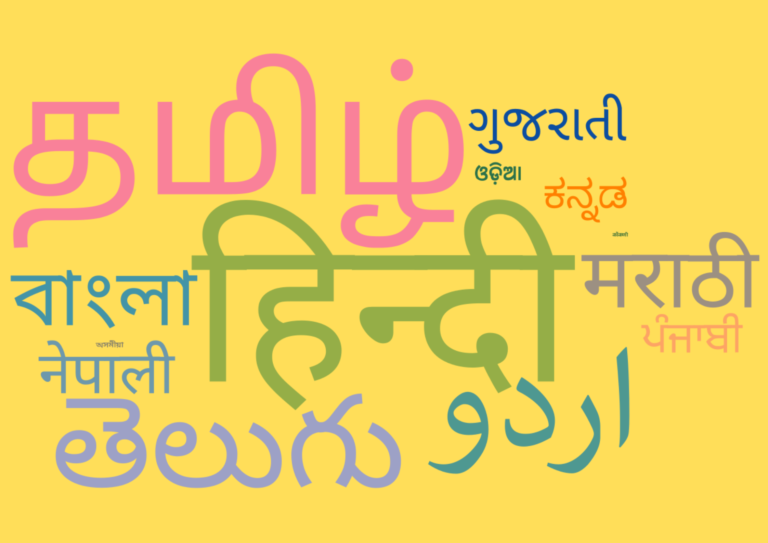
South Asia is home to a plethora of languages ranging from approximately three hundred to well over a thousand. However, most of these languages are derivatives of each other but have different technical aspects. In South Asia, language and culture are closely associated; that is why many people claim that replacing local languages with English can cause a shift in cultural values and is therefore not promoted in some parts.
In his book, The Languages of South Asia, a Russian linguist, G.A Zograf, claims four primary language families in South Asia: Indo-Aryan, Dravidian Austro-Asiatic, and Tibeto-Burman. The first two of these constitute most of the languages spoken across this diverse world territory. They all have their own unique origins and evolutionary histories, and we will discuss each of them in detail in this article.
INDO-ARYAN
It is one of the most widely spoken language families in the World and has more than 800 million speakers. Its origin dates back to the mid-first millennium B.C, with the evolution of Sanskrit. There are further three subcategories of this family, based on their growth. Old Indo-Aryan, which constitutes Vedic and Sanskrit, developed into the Middle Indo-Aryan family comprising Prakrt, Maharashtra, Pali, etc. By the end of the first millennium B.C, the current New Indo-Aryan family gradually evolved, incorporating many of South Asia’s most widely used spoken languages.
In the Northwest, Dardic (Kashmiri, Kalasha, Kohistani, etc.), Punjabi, Sindhi, and various Pahari languages are widely spoken. Maithali, Bengali, Assamese, and Oriya are famous in the eastern part of South Asia. The major languages consist of Hindi, Urdu, Bhojpuri, Awadhi, and various Rajasthani languages. Gujarati, Maharashtri, and Sinhala in Sri Lanka are other widely used languages in this diverse family.
Sanskrit has a significant influence on this language family, as it is clear from the numerous modifications that took place during the evolutionary phase of the current modern languages. These changes follow a regular pattern, e.g., ‘hand in hasta was modified to ‘Hatha’ in Pali and then ‘hath’ in Hindi/Urdu. Similarly: ‘eye’ in aksi was modified to ‘akkhi or acchi’ in Pali and then ‘ankh’ in Hindi/Urdu. Most of the Indo-Aryan languages follow these trends except for some Dardic languages.
Maithali, Bengali, Assamese, and Oriya are famous in the eastern part of South Asia.
The Turkish and Iranian invasion of the Indian subcontinent also added a lot of new words to the vocabulary of these modern languages. Urdu, sometimes referred to as the sister language of Hindi, was heavily influenced by Turkish and Persian, as well as Arabic. Portuguese, Dutch and French also had a minor influence on the vocabulary of these languages.
In South Asia, language and culture are closely associated; that is why many people claim that replacing local languages with English can cause a shift in cultural values and is therefore not promoted in some parts.
DRAVIDIAN
It is also a popular language family spoken by more than 220 million people in South Asia and is divided into four branches. The languages spoken in the northern parts comprise Brahul in Balochistan, Malto, and Kurukh; the southern central one consists of Telugu and Gondi. The main parts have a few less famous languages like Kolami or Parji, and the southern regions have Tamil, Malayalam, Tulu, and Kannada as major languages.
Although there is little research available about Dravidian origin, it is speculated that it was first noted on the walls of caves in Madurai and Tamil Nadu. Some linguistics argues that these languages were brought to South Asia by migrations from the Iranian plateau. Researchers also claim that Dravidians were present before the arrival of the Indo-Aryans, approximately 3500 years ago, and were the most widely spoken languages in the Indian subcontinent. Connections exist between Dravidian and other language families, especially the Indo-Aryan family, and significantly influence Telugu and Malayalam.
It was Alexander D. Campbell who pointed out the presence of the Dravidian language in his book, “Grammar of the Teloogoo Language.” Robert Caldwell, in 1856 published his Comparative Grammar of the Dravidian or South Indian Family of Languages, which proved to be a significant event in the expansion and establishment of Dravidian as one of the major language families of the World.
AUSTRO-ASIATIC
Austro-Asiatic combines two Latin words for “South” and “Asia.” It is also one of the major language families in South Asia and Southeast Asia, spoken by more than 117 million speakers in various parts of the World, including Thailand, India, Bangladesh, Nepal, China, Vietnam, and Cambodia.
Austro-Asiatic combines two Latin words for “South” and “Asia.”
According to research, approximately 168 Austro-Asiatic languages are divided into three groups; Munda, Mon-Khmer, and Khasi-Khmuic. Two of these languages, i.e., Vietnamese and Khmer, are the official languages in Vietnam and Cambodia. There is no clear evidence available about its origin.
TIBETO-BURMAN
This family has more than four hundred languages spoken by 60 million people in various parts of South Asia, Southeast Asia, and East Asia. Its name stems from two of the most widely spoken language families of this group, namely Burmese, which almost 35 million people speak, and over 8 million people speak Tibetan languages.
Its origin is linked to the great Sino-Tibetan language family, subdivided into Chinese and Tibeto-Burman. This language family is further divided into various branches. The most notable are Kamarupan, spoken in Northeast India and West Myanmar, Himalayish in Tibet, Nepal, Bhutan, Jingpho-Nungish-Luish, Lolo-Burmese-Naxi, and Karenic in Thailand and Myanmar.
South Asia is one of the World’s most diverse territories, and just like other attributes, the languages spoken here are also unique in their features. These languages originated from different areas and evolved considerably with time. Even after British rule, the love and connection with these languages didn’t fade away. Considering the population growth in South Asia, it is highly expected that the popularity of these languages will only be increased in the years to come.
At present, Pakistan is in the midst of an engrained socio-political crisis and economic polarisation, poverty, violence, extremist religiosity, gender inequality, urban and environmental deterioration, and center-province power hierarchies. This multifaceted crisis in Pakistan calls for a feeling of urgency to take up a radically progressive political standpoint informed by social sciences and humanities.
Ironically, in Pakistan, the critical, scholarly epistemic potential of social science and humanities studies is hardly cultivated and deployed. In the context of global, political anthropology the critical positioning carried out by five anthropologists in ‘Collaborative Manifesto for Political Anthropology in an Age of Crises’ (Vine David et al, 2021) deeply inspires us to deal with anthropology’s critical, practical role and purpose.
This article provokes methodological primacy within the anthropology of Pakistan that holds the promise to recognize progressive politics. The author shows how an anthropological awareness of the presence of progressive politics in Sindh can inform and set out new thinking and purpose of anthropology in/of Pakistan.
In anthropological research, teaching, and engaged connected scholarly practice (Wassan 2019) author’s work in the wider domain of critical art, heritage, cultural expression, and the Muslim public sphere focuses on three key strands. They are public art, socially engaged/protest art, and alternative/counterculture narratives. The three strands tend to represent and imagine the aesthetics and anthropology of progressive politics. For instance, in the domain of music and dance author’s ethnographic work in Sindh has brought out the creative, critical artistic practice of Sufi heritage that contains a profound potential for progressive knowledge production.
One of three key strands on which the author’s work focuses is public art. Courtesy of Walls of Peace Project by I AM Karachi
This work on the performance of critical Sufi heritage in Sindh has consciously drawn attention to the contentious and dialogical public culture and viewpoint that dare to contest the monopoly over religious knowledge by retrogressive clerics in Islam.
The author’s anthropological engagement with the research theme of progressive politics in terms of social transformation arose through rights-based social sensitivity, participatory research projects in rural villages and urban slums, and social interactions with public forums (op-ed writings), movements, public culture, Sufi artists, feminist, human rights activists, and secular poets, playwrights, writers, and academics in Sindh province in Pakistan.
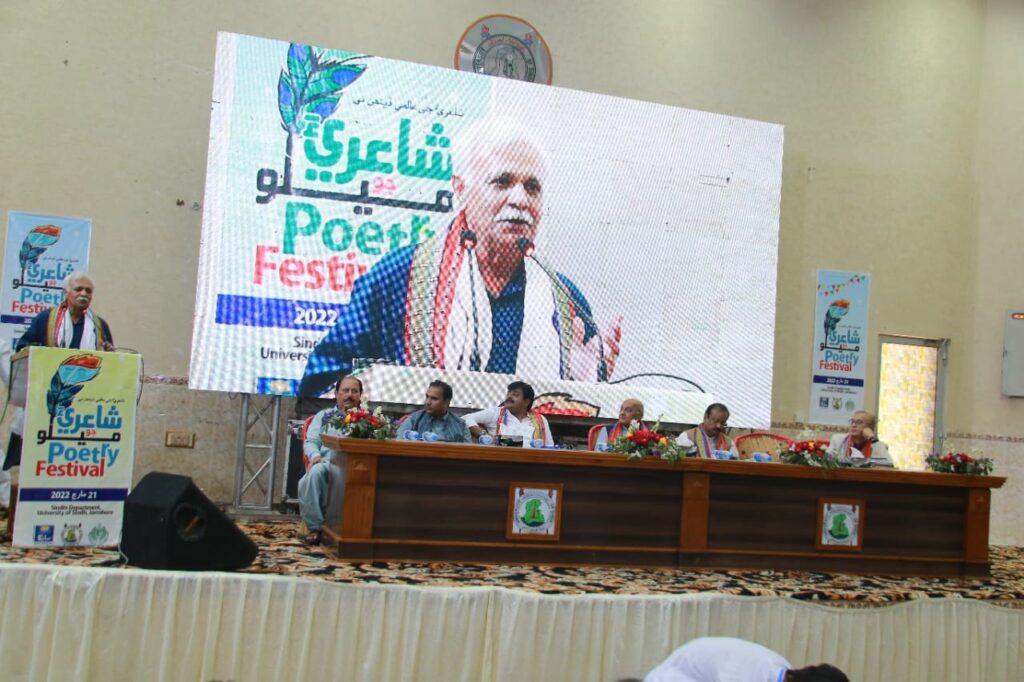
Ashoo Lal speaks at the Poetry Festival at the University of Sindh, Jamshoro held on March 21, 2022. Photo Wassan
This multi-sited work with diverse social actors and public settings has created a novel methodological experience and process. In March 2022, the author had the chance to participate in the Poetry Festival held at Sindh University Jamshoro organized by the Department of Sindhi. At the festival, he was invited to moderate a session with the Seraiki language protest poet Ashoo Lal Fakir. The theme of the talk focused on ‘Poetry and the River’. Ashoo Lal Fakir is a radical progressive voice, and the protection of the Indus River and its ecology lies at the center of his protest-induced cultural expression.
Wassan’s work on Sindh’s Sufi music heritage engages with the politically progressive artist Saif Samejo. Saif Samejo is the founder of Sufi folk-rock band The Sketches and organizer of the mega annual Lahooti Melo (festival) in Hyderabad that celebrates music, dance, and poetry. To promote the pluralist cultural identity of Pakistan, Lahooti Melo celebrates the rich artistic diversity by inviting local, national, and international artists, writers, activists, and intellectuals.
Saif Samejo is the founder of Sufi folk-rock band The Sketches and organizer of the mega annual Lahooti Melo (festival) in Hyderabad
In his artistic work, Saif Samejo has produced protest songs that touch upon the critical progressive politics around the issues of gender injustice, religious hatred and extremism, and protection of the environment and ecology. In his progressive cultural production, Saif Samejo has raised a critical voice for the protection of indigenous land, resources, and people in Thar against the coal-fired extractive industry.
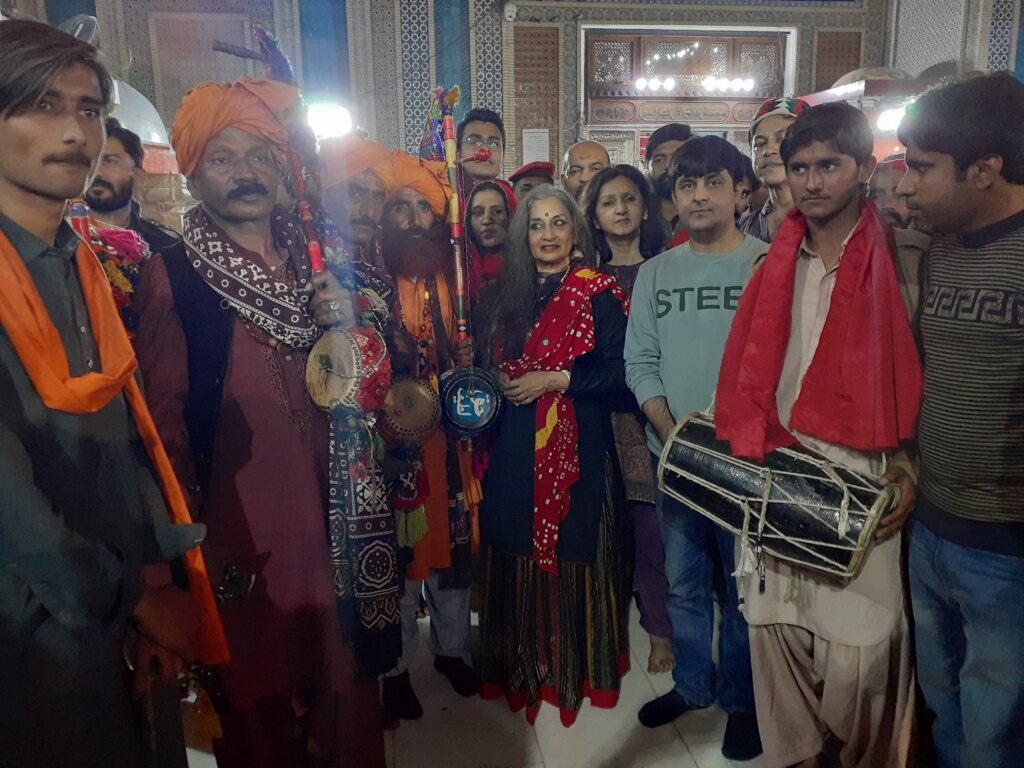
Another instance and source of my ethnographic awareness of radical progressive politics in Pakistan appear through Sheema Kermani the renowned Kathak dance artist, feminist, and human rights activist. Her public art performances espouse a powerful political protest and voice for the rights of marginalized strata. In recent years her public performances at the Sufi shrine of Lal Shahbaz Qalandar in Sehwan and Aurat March (Women March) specifically signify the radical political protest and action against religious extremism and patriarchy in Pakistan.
After a public performance Sheema Kermani in a group photo along with Sindhi Sufi artists and civil society at the Sufi shrine of Lal Shahbaz Qalandar in Sehwan, Sindh. Photo Wassan
As Apla Shah has stressed in the ‘Collaborative Manifesto’ to champion the value of ‘intellectual dissidence’ in anthropology Sheema Kermani’s public performances in Pakistan reveal the value of radical activist dissidence. The author’s ethnographic turn to anti-colonial history and heritage of the Hur Movement in British Sindh tends to communicate another instance of anthropological awareness to document indigenous movements that challenged the dominant power structures.
In sum, the four specific cases discussed in this article articulate an anthropological awareness to pay attention to progressive political practice and action in Pakistan. More specifically, it shows the critical role and purpose of anthropological knowledge to address contemporary crises. Anthropologists in Pakistan need to cultivate collaborative research, and institutional, and public policy agendas that give special credence to and extend the practice-based knowledge and transformative purpose of anthropology.
References
Vine, David, David N.Gellner, Mark Schuller, Alpa Shah, Chandra L. Middleton, Gwen Burnyeat, and Melissa Maceyko. 2021. “Collaborative Manifesto for Political Anthropology in an Age of Crises.” Anthropology News website, July 16, 2021.
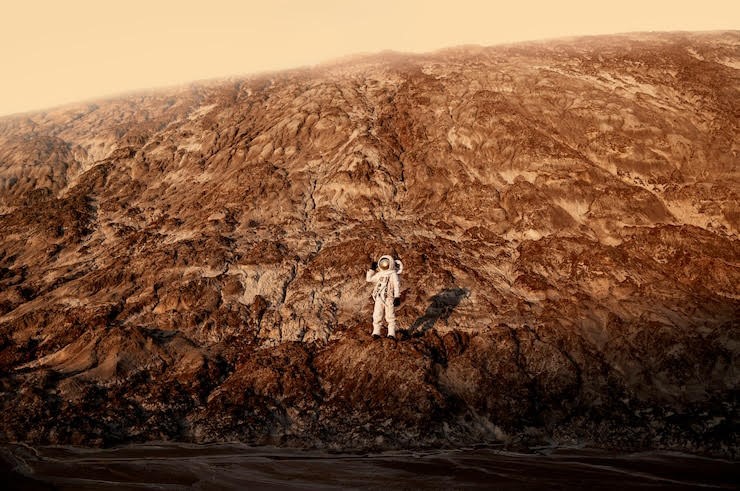
Space humanization seems just a few steps away. The human race is now technologically advanced to find themselves out of the Earth’s layers and into space, stepping on the Moon, living in orbit, and working to develop a habitat on Mars. We finally are in the era where we are looking deep further into the ocean of stars and galaxies way beyond from own solar system and galaxy.
We can look back in time and track the future based on it. Looking to take the leap of faith by looping onto the exoplanets and discussing migrating into extraterrestrial zones. Anthropology seems to be a crucial part of understanding, facilitating, and unleashing the process of future outer space human civilization.
Many cultures throughout history have migrated from their native habitats into an unknown world. Biological advancement has also evolved the cultural analogies of the human race. Anthropology seems to have contributed less to our technical and futuristic originality as escalating into space. The idea of space migration keeps anthropology at its core for moving people with their culture and attributes to other celestial bodies into outer space.
In reality, anthropologists focused highly on the long past of humanity and its evolution rather than on its future perspective, which made them study small tribes rather than large industrial societies. The analogies in anthropology that apply to space facilitate us in realizing human consequences of leaving our natural and native habitat “Earth” to the vast cosmos into an unknown world.
Since humans set foot on other planets, we’ve been fascinated by space. We’ve looked up at the stars, dreamed of traveling to them, and imagined what life might be like outside our planet’s atmosphere. But what makes space migration such an exciting topic is that it asks questions about who we are as a species and how we define ourselves concerning the universe around us.
We all know that humans have been exploring and settling space for centuries, but what we may not know is that this activity has had a significant impact on anthropology. Exploring the humanization of space and how it has changed over time is inevitable, which leads us to the implications of space migration on the development of human societies.
With the help of technology, we can now explore and understand the vast reaches of our universe.
We are constantly surrounded by technology that has shaped the way we live. Our world has become increasingly reliant on technology, from smartphones to air travel. But what is the impact of technology on human beings? And how has technology shaped the way we think about space?
With the help of technology, we can now explore and understand the vast reaches of our universe. As humans, we are constantly exploring and expanding our understanding of the world around us. We have reached our beginning, deciphering the formation of our world, unleashing the facts of solar system formation, discovering the mysteries of the cosmos, and looking back in space-time. But, what the future holds for us and how we can rectify it is the question that we are looking for.
A Short History of Space Migration: Why Migrants Live in Outer Space?
The first humans who ventured into outer space were not astronauts but rather a group of migrants. Throughout history, humans have been fascinated by space and the idea of migrating to new and unexplored territories. The mystery and the promise of new opportunities have drawn people to space-time and time again, whether explorers like Marco Polo or the pioneers of space travel like Neil Armstrong. Today, we continue this human fascination with space migration by studying the motives and motivations behind migrants who live in outer space.
How Will We Survive Future Extinction Events? Scientists Work on a Plan for Surviving Mars!
The harsh realities of space have always fascinated us. Whether contemplating how life might start on another planet or envisioning what the future might hold for humanity, space has always held a special place in our hearts. And now, as we face the possibility of future extinction events, it’s more important than ever to explore space and all that it has to offer. One of the ways we’re exploring space is by undertaking space migration, which is the process of moving human beings and their belongings to another planet or Moon.
The Biggest Threat to Human Civilization- Could It Be Starvation and Famine?
Space migration is one of the most pressing issues facing humanity today, as it is feared that a massive human extinction event could befall us if we do not find a way to survive in space. With our population overgrowing and more people moving into urban areas, space has become an increasingly vital resource. However, we are far from being able to fully utilize this resource, as a lack of resources in space leaves us vulnerable to starvation and famine. For example, water is the critical ingredient for life, and without it, we would rapidly perish in a vacuum. As harsh as it may seem, space migration may be the only way for us to save ourselves from an impending human extinction event.
Anthropology, Technology and the Anthropocene: From Fossil Fuels to Solar Power
With climate change becoming an increasingly pressing global issue, it is no surprise that many people are looking to find ways to mitigate its effects. One of the most promising solutions may be space migration, where humans could be transplanted to other parts of the universe using advanced technology.
Space migration has long been considered a viable solution to address environmental problems on Earth. Recent developments in space technology make it possible for us to explore and colonize other planets. As we understand the psychological and social implications of space colonization, we will be better equipped to manage this complex process.
How Humans Will Live in Space: A Primer on Moon-Based Colonies, Asteroid Domes, and Other Futuristic Settlements
Most people know that we need to find a way to live sustainably on Earth, as the planet is finite. But few people know that we need to do the same thing for space as well. The Earth is not our only home, and we’ve already started colonizing space! Humans have been living in space for over 50 years, and there are several habitats in space that we currently call home. In this article, we will be discussing some of these habitats and what they entail for humans. We will also be looking at some of the challenges we face regarding space colonization and how we are currently addressing them. So buckle up because this is going to be an exciting ride!
Space migration has long been considered a viable solution to address environmental problems on Earth.
Why should we think of anthropology while planning space migration?
We live in an era of unprecedented change and the humanization of space. Just a few decades ago, humans only knew about the planet Eartharth its neighboring planets. But today, we have space exploration and travel at our fingertips, thanks to the ever-growing network of satellites. This has led to a new field of study called space anthropology, which is concerned with documenting and studying the cultures of extraterrestrial societies. It is essential to think of anthropology while planning space migration. It will help us understand the motivations behind why people would choose to leave their home planet and journey into unknown territory.
Future of space migration and moving people and their culture to other celestial bodies in outer space
With the rise of commercial space travel and the increasing interest in space exploration, the future of space migration is looking very bright. As humanity begins to explore and settle other celestial bodies in outer space, people will inevitably move their culture and civilization there. This will undoubtedly bring about new challenges and opportunities and will profoundly impact human life on Eartharthth technological advances; we can expect to see a gradual humanization of space, as people can migrate and establish settlements on other worlds.
Conclusion
Space migration is an inevitable future trend that will play a significant role in humanizing and exploring space. Overcoming the sociocultural barriers to working and living in space is necessary if we want to pave the way for a better, more unified human civilization. Anthropology must continue to hold the key to promoting understanding among differentiated branches of humankind scattered through space. By doing so, we can work together towards realizing our dreams of living and thriving in space!
References:
David Valentine, “Encountering the future: Anthropology and outer space,” Anthropology new, December 2009
Clearwater, Yvonne. 1985, A Human Place in Outer Space. Psychology Today19 (7): 34:43
Wachter, Kenneth W, 1985. Predicting Demographic Contours of an Interstellar Future. In Interstellar Migration and the Human Experience ed. Ben R. Finney and Eric M. Jones, 120-133. Berkeley: Univ. of Calif. Press.
Cheston, T. Stephen; Charles M. Chafer; and Sallie B. Chafer. 1984. Social Sciences and Space Exploration. NASA EP-192.
The ringing alarm went off, and I woke up startled yet realizing that I didn’t have time on my side; I got off the bed almost in a springy fashion and stood next to the hotel room window. Parting the heavy curtains, I could see twilight on the distant horizon. As nature painted colors on the canvas of sunrise in Amman, Jordan, I freshened up and double-checked my backpack. Water bottle, check, shades and pea cap, my camera gear, check.
I was to return to Riyadh that day after attending a conference over the preceding two days. Before embarking on the trip, I had already decided that even if I get the slightest time window, I would visit the archaeological remains of the city of Petra, which along with Al Hegra near the city of Madina in Saudi Arabia, are the footprints in the sands of time of the Nabatean Kingdom.
Nature painted colors on the canvas of sunrise in Amman, Jordan; photo: Dr. Hunain Riaz.
The Journey begins
A Medical Doctor fascinated by ancient history, the mysterious, and beyond, I took it upon myself to give Petra a visit since I had read about it and seen a lot of gorgeous photography. The previous evening, I had roamed around the hotel acquiring information as to the distance and time required for the Petra excursion ( though I had worked out the details before coming to Amman, the locals knew better). Learning enough Arabic to conversate with the locals was a plus. I made a done deal with a cab guy who was supposed to pick me up the following day before the break of dawn.
The Cab finally arrived, and after a brief chit-chat with the driver, we were on our way. It was still twilight, and I had left without having breakfast. It would take three-plus hours to reach our destination, and I had difficulty fighting off the drowsiness ( obviously without my cup of joe in the morning!). He assured me that he would make a pit stop as soon as he was on the main road outside Amman. And that he did, at a small tuck shop making coffee as well, to my delight.
A croissant to compliment the kick of the caffeine did the trick. Suddenly I was upright in the back seat. My mind was racing over what I came across at Petra, how grand it would be, and would I be able to see the whole thing and return in time for the flight back home. I also thought about which mentioned in the Holy Quran regarding the ‘Thamud’ civilization. It is purported to have been the very people of the Nabatean Kingdom.
It was explicitly mentioned about their mastery over building immense structures out of giant rocks and mountains and how they all came to a crashing halt. Snapping me out of my intellectual daze, the cabbie alerted me that our destination was near. It shows how time can be relative, passing by quickly when you are engrossed in something.
We reached the entrance of the ruins of Petra; the driver dropped me off at the entrance while giving me a pseudo-ultimatum of three hours to be out of the place since he said we wouldn’t be able to return to Amman in time. I walked to the ticketing office and got my pass as excited as ever ( after a few selfies at the gate, obviously!). I knew that the whole walk up the path to the city and back would roughly take 4 hours on a brisk foot ( 8 Km in total). I had to make it count and return in time.
I knew that the whole walk up the path to the city and back would roughly take 4 hours on a brisk foot. Photo Dr. Hunain.
The city structure of Petra and the Nabatean people
The Nabateans were Arabs who, in all likelihood, were nomads who originated from Southern Arabia and eventually settled in the area of present-day Southern Jordan, Palestine, and Northern/North-Western Arabia around the 6th century B. Some historians date the Nabatean Kingdom to have been established around mid of the 4th Century BC to 168 C.E when the Romans annexed it. Petra was the capital of the Kingdom.
As I could see, this area was in the middle of the desert, with extreme sun, aridness, and large red-colored mountains and rock formations. The Nabateans had these conditions to cope with; they were expert builders with exquisite engineering skills. They had the skills to pool and store water in underground water cisterns and aqueducts. This created a ready reserve of water in those times, and we all know how civilization and Kingdoms thrive around water bodies or even oases.
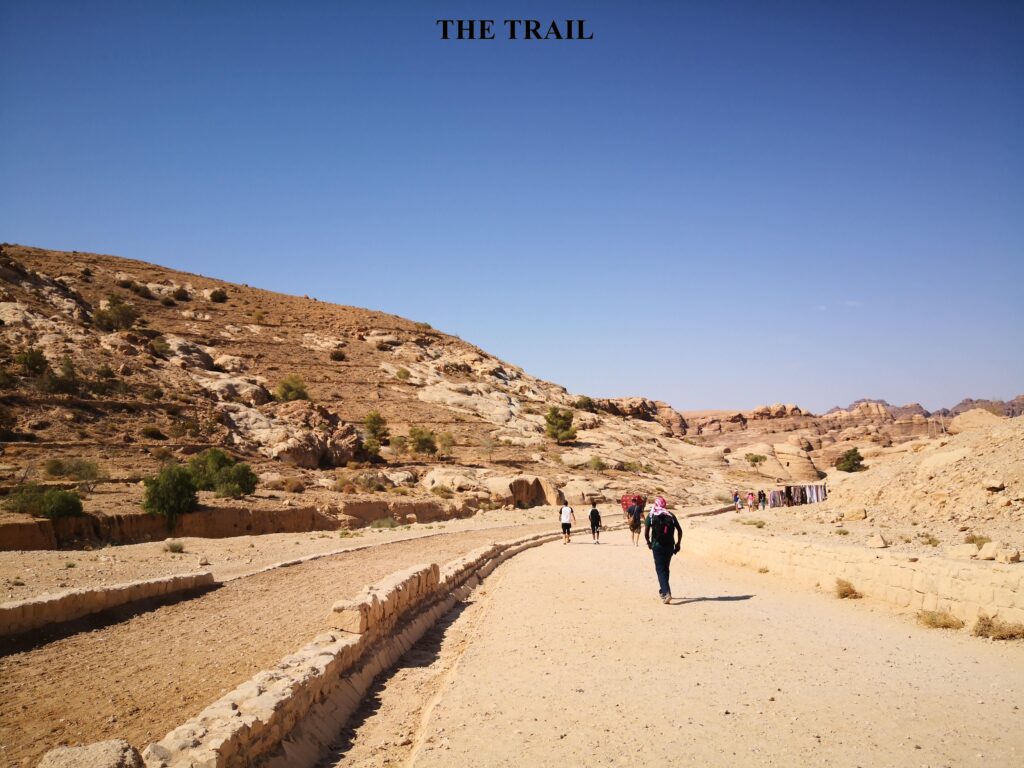
As I walked towards the security checkpoint, I ended up in a barren and dry expanse with a walking trail winding ahead. Raised rock formations eroded by the forces of nature and the passage of time on the sides of the walkway. After five or so minutes of trekking under the scorching October midday sun, huge red sandstone mountains loomed with a vertical break between the rock formations. The sheer size of these natural formations put me in awe.
The entrance through the mountains was marked ‘The Siq,’ which snaked its way through the enormous cliffs. I weighted my photography gear on my back while I kept taking photos. Cool air hugged my face and body as I walked through the twisting trail. This is expected when the shade under the rocks and temperature difference creates a cooling effect in such rock formations. On both sides of the snaking path were inscriptions, pottery, and artifacts neatly decorating the fringes.
Along these walls was evidence of depressions similar to water conduits which probably were aqueducts carrying water from outside the rock formations into the city for storage and use. Such productive use of nature’s creativity! As we talked along the continuing trail, I noticed that this was a city that was enclosed by a range of large, seemingly impenetrable mountains which served as fortification for the city.
So, the Siq, though nature’s work of art, served two purposes, first, protection and secondly, to channel water from outside the city from the surrounding city. Since the city of Petra is lower in elevation than the surroundings, this, combined with marvelous engineering, worked wonders in storing rainwater. I met a guy from South Sudan who was also busy taking shots. We exchanged pleasantries and shared our mutual interest in Photography & Ancient History.
As we reached the trail’s end, we could see a towering building through the wide slit. Reaching the spot, we were mesmerized by what appeared to be a magnificent pillared structure, the pillars so smooth, with symmetry between them. The finesse which had gone into making this was nothing short of spectacular. As my homework on the place served me well, this was the ‘Treasury’ or ‘Al- Khazneh’ as they call it, of the city.
The Nabateans were sharply skilled masons. They made immense structures out of sandstone, basically carving them out of the rock. It’s hard to believe structures like these were carved out more than a couple of millennia ago. These people had a definite structure to their society, with a Royal family ruling the city while the common folk during their assigned duties. There were practically no enslaved people.
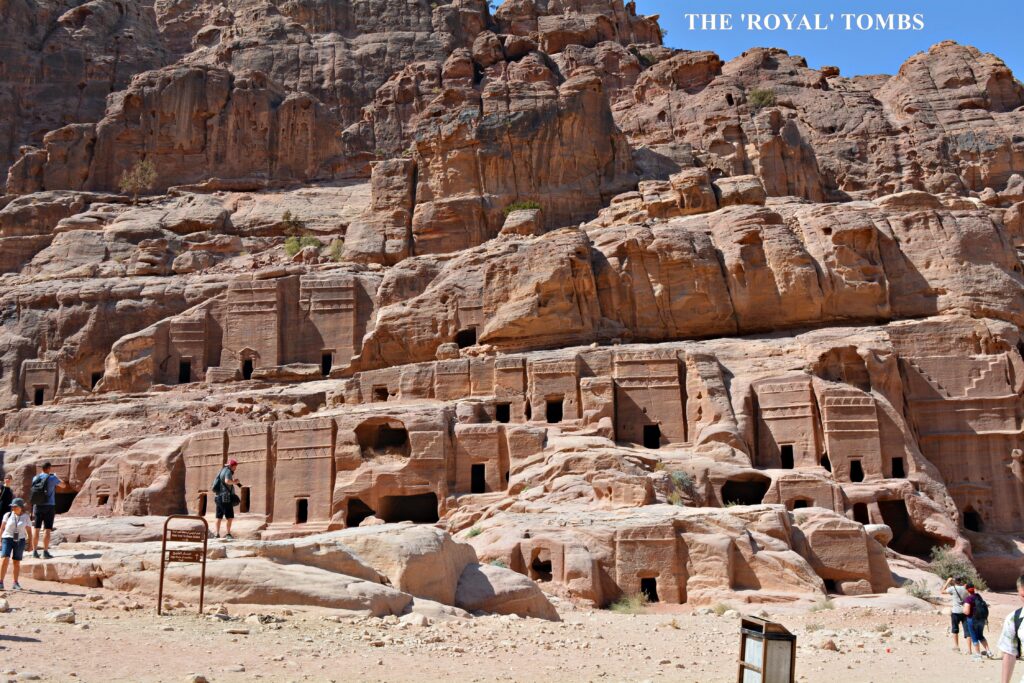
The locals spoke a dialect of Arabic; however, one rarely finds inscriptions or records in Arabic in ruins. Most of their history, which has been transmitted, has been through the Greek and Roman historians. As we trekked along the trail, it opened up to a large plain with massive rock formations on the sides and tents, camels, and groups of people thronging the area. This was the ‘street of facades.’ Remains of tombs, and typical houses of people, were carved into the cliffs higher up on the sides.
There were tombs of the royals and the commoners. The royal tombs were built on the upper side of the cliffs while there were holes and caverns carved out below them. These are purported to be houses/tombs of the commoners. Flocks of people were gathered on the highest points of the sandstone cliffs to take photos and get a glimpse into these houses. There was a hustle of people in the central area of the plain, where there was a thriving marketplace—stalls selling souvenirs and trinkets, tuck shops selling drinks and snacks in the scorching heat.
Camels and mules with multicolored saddles; gave me a feel of what It would have been like back in the Kingdom’s hay day. There was a small ‘Theatre’ as in a Roman theater, with a semicircular theater which could probably seat 50 odd people. This was meant for public events or perhaps entertainment. The structures I had seen till now were reminiscent of Greek & Roman architecture. From around 2000 to 2400 years ago, the Greeks were thriving in the regions bordering the Kingdom, and the Romans annexed and settled in the area later on.
There was a small ‘Theatre’ as in a Roman theater, with a semicircular theater which could probably seat 50 odd people. Photo Dr. Hunain.
The structures I had seen till now were reminiscent of Greek & Roman architecture. Photo Dr. Hunain.
Religion and civil matters
The Nabatean society had special rights of equality for women. They rose to the position of Priestesses and had property rights and to co-rule. The idols of Allat, Manawaat, and Al-Uzza were female deities. They had attributed different responsibilities to a host of Gods.
The most enduring one is Dashura, the sun god. The inscriptions can be on coins even during the Roman tenure after they annexed the Kingdom. This is reflected in their practice of idol worship as well. They held public ( festivals ) but mostly private worship. The inscriptions and markings reflecting these deities can be seen in their tombs, on top of doorways and pottery.
My Pal and I scurried onwards and came across a freestanding structure (the largest freestanding structure in the city ), tall and partially intact. It was called ‘Qasr-bint.’ It was the city’s main temple, and the idol deity Dushura was worshipped here. The temple is made of blocks with decorative plasterwork on both the inside and outsides of the walls. Strings of wood course between the blocks and line the walls. This was quite intricate civil engineering.
We came across this sizeable staired structure with an endless number of steps to the top where numerous bases of pillars could be seen in a row. It was a temple. Again, it probably served ceremonial and religious purposes. The remains of the pillars remind us of how grand the structure would have been. I went up there and spent a few minutes carrying on with my newfound pal.
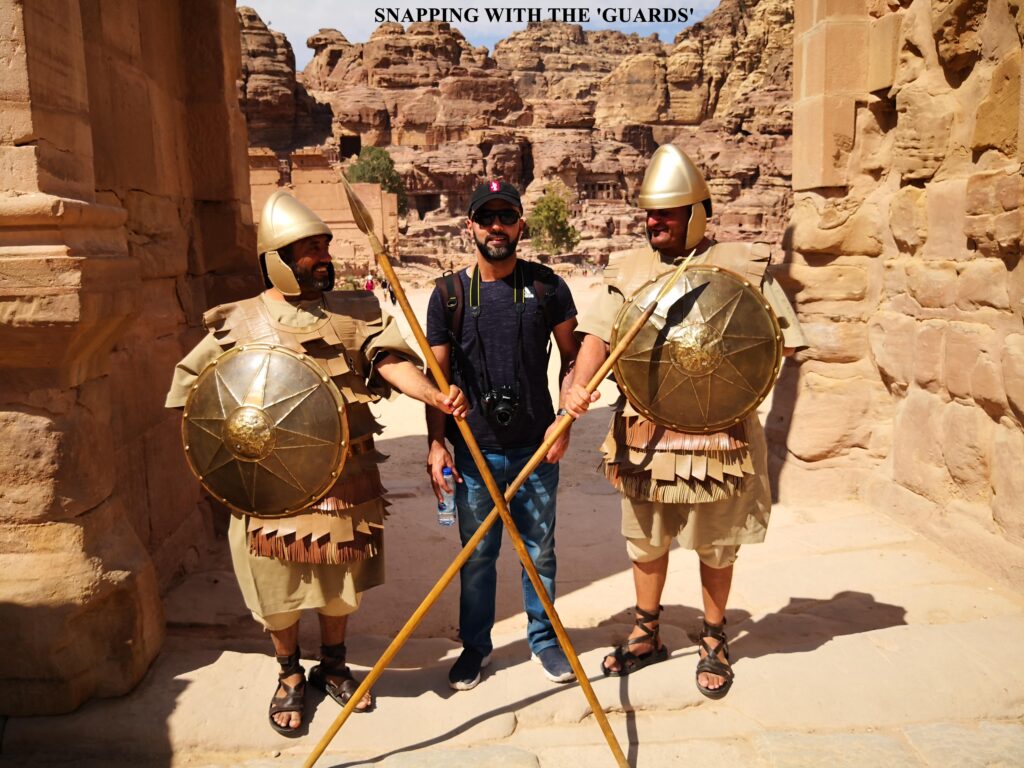
A few men dressed as Nabatean guards were standing near an entrance of sorts along the path. This looked like a check post which would have served the purpose of security for what lay ahead. The men wore an imitation of armor and helmets and were wielding spears. They gleefully posed for photos with us!
The men wore an imitation of armor and helmets and were wielding spears. They gleefully posed for photos with us! Photo Dr. Hunain.
Nabatean Trade and Wealth
Further hurrying down the trail, we found makeshift shops and permanent ones selling some stuff in large bowls. On closer inspection, it was a wide colorful range of spices and frankincense (aromatic extracts from particular tree bark). Frankincense has been used and traded for millennia. It is burnt, and the aroma, which is earthy, sweet, and musky, is said to purify the surroundings and calm your soul. The Nabatean Kingdom’s primary revenue was generated from the trade route extended from the Yemeni coast in Southern Arabia to the dead and Mediterranean seas.
This route enabled them to do business and interact with the civilizations bordering them. Namely the Greeks, Romans, Persians, and Assyrians. They had exclusivity to this trade. The returns came in thick and fast, which enabled the Kingdom to flourish by leaps and bounds. They had an outpost called Al Hegra which in present-day is around 350 km from the Holy City of Madina. The output served as a pitstop for the trading caravans. Al Hegra also had a thriving population. The tombs and houses carved out of sandstone rock can still be seen standing amidst the barren desert.
The success of their trade and immense wealth were reasons for envy for the neighboring Greeks, with numerous attempts made to capture parts of the route; however, they were warded off by the Nabateans. Demetrius, son of the Greek King, Antigonus I, tried to raid the city in 312 B.C but failed and, in a later encounter, suffered the same fate again.
On closer inspection, it was a wide colorful range of spices and frankincense (aromatic extracts from particular tree bark). Photo Dr. Hunain
The collapse of the Nabatean Civilization and epilogue
To my respite, we ended up near the entrance of the city of Petra. I bought a few souvenirs from the market, walked towards the taxi stand, turned back, and gave it one last look. Realize how Civilizations and Kingdoms flourish with such majestic skills and wealth and how they eventually fall. They went to war many times with the Greeks in skirmishes which they finally won, but they were no match for the invading Romans at the turn of the common era ( C.E ).
Numerous Nabatean Kings succeeded each other. However, considered to be their greatest King was Arteus IV, reigning from 9 B.C to 40 C.E. Under him, the Nabateans regained territory from the Romans. The latter had captured it in earlier confrontations. Art, crafts, and civil rights all flourished during his reign. However, the kings succeeding him lost more territory to the Romans, and eventually, the Kingdom weakened, and wealth dwindled due to the loss of trade routes.
The Roman empire was growing in power simultaneously and eventually annexed the region as the Roman Province of Arabia Petra in 106 C.E. The cities under Roman rule went into a downward spiral. However, a devastating earthquake shook the cities in probably the later half of the 4th century C.E. This was the final nail in the coffin. Many died along with the loss of infrastructure. The Roman Empire tried to resurrect the city’s spirit by re-igniting commerce and building churches. It said that they forcibly tried to convert many locals to Christianity.
Many probably fled the area with no sense of ownership and religious persecution. Another earthquake struck the region in the 6th century C.E. This led to widespread destruction and eventually abandonment of the cities. This is further confirmed when during the expansion of the Islamic Empire during the region of Caliph Umar, the Muslim armies found these cities deserted and forlorn. European explorers discovered the region in the 19th and 20th centuries, and the world was exposed to these magnificent ruins. The city was declared World Heritage in 1985 and one of the 7 New Wonders of the World in 2007.
I got into the cab and went on my way to the Hotel in Amman city center. What I witnessed was a testimony to how Civilizations rise to power no matter their status, prowess, or grandeur. All are swept away by the relentless flow of time. The remains of their presence are an eye-opener for us of how fragile we are.
Pakistan, located at the crossroads of South Asia, Central Asia, and the Middle East, is a nation celebrated for its rich cultural diversity. With a population comprising numerous ethnicities, languages, religions, and traditions, Pakistan’s cultural landscape is a tapestry of identities and histories. In this comprehensive article, we delve into the vibrant world of cultural diversity in Pakistan, exploring its various facets, historical context, challenges, and the enduring spirit of coexistence.
The cultural and ethnic diversity across the four provinces of Pakistan makes this multi-ethnic country stand out. From Punjabis to Sindhis or from Pashtuns to Muhajirs, you will find it all within Pakistan. Pakistan is culturally, religiously, and ethnically a versatile land, and we will discover the true essence and beauty of these distinct cultures and their development through the ages below.
Cultural diversity in Pakistan
Historically Diverse Background
Cultural diversity in Pakistan is deeply rooted in its history, dating back to ancient civilizations such as the Indus Valley. Over the centuries, various empires, including the Mauryan, Gupta, Mughal, and British, have influenced the region’s culture, leaving their imprints on language, art, architecture, and cuisine.
There is an extensive history of Pakistan’s land and how communities/ tribes from diverse backgrounds, with specific cultures and ethnicities, landed in Pakistan, creating a unified yet vicious web of cultures and traditions. Pakistan’s heritage culture dates back to the times of the Indus civilization, approximately five thousand years ago. Since then, the penetration of Islamic ideology has played a considerable role in shaping Pakistan’s current cultural dynamic. The cultural modifications in Pakistan were highly influenced by Arabic-Persian cultures and, a few decades back, by Western cultures.
To date, numerous traditions, celebrations, food, and lifestyles have a hint of Western and Indian cultures. Celebrations such as Holi (Hindu celebration), Christmas, and Thanksgiving (Western celebrations) have become prevalent in Pakistan. The more we explore the culture of the West, the more we follow them.
Ethnicity
Accommodating more than fifteen major ethnic groups, Pakistan is a land of cultural and ethnic heterogeneity. The most notable communities include Punjabis, Sindhis, Pashtuns (Pathans), Balochi, Kashmiris, and Muhajirs (communities that migrated from India to Pakistan during the partition). The core communities for each ethnicity are primarily divided across provinces of Pakistan, i.e., Pashtuns are mainly concentrated in KPK (Khyber Pakhtunkhwa), Sindhis towards the South, Punjabis towards the East, and Balochis towards the South-West. The intermixing of these several cultures, their traditions, and lifestyles is well-developed, and people are intrigued to learn about neighboring cultures within Pakistan.
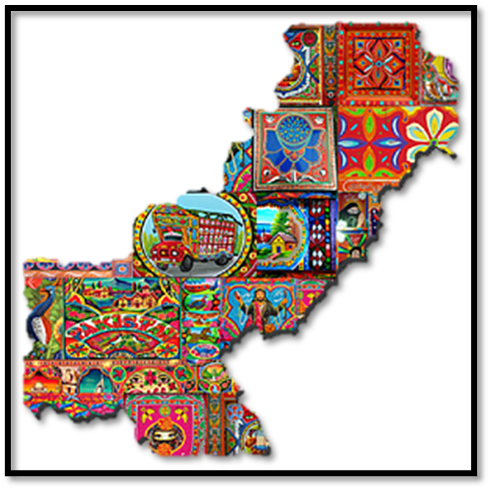
Ethnicities across Pakistan
Languages
Although Pakistan’s national language is Urdu, you will discover people communicating in various languages. Pashto, Urdu, Punjabi, Saraiki, and many others. Not to forget, the use of the English language in daily life has increased. If one observes, children are taught to communicate in English when they go to school. The teaching medium in educational institutes is a mix of both English and Urdu.
One remarkable ability in Pakistani households is using two or more languages in homes, like Urdu and Punjabi, Balochi and Seraiki, Sindhi and Urdu. It shows the cultural assortment and acceptability of different ethnic groups in our lives. With this artistic growth, the gap between fluent spoken and written Urdu rises. It may be a sign of us adopting other cultures at the expense of compromising the command of our national language.
Family Structure
One of the critical features of Pakistani culture is its “Collectiveness.” Various communities, families, and associates are highly interlinked and interdependent on one another. Social, political, and professional connections and relations are given immense regard, making Pakistan a socially complex society. These loyalties within communities go across generations. The nature of this collectiveness explains the family set-ups in Pakistan. Large, extended families have lived together under one roof for decades, and to date, many family set-ups follow the same tradition.
However, with rising independence and primarily the influence of Western culture, many households have been divided so that each house caters to one particular family. People are inclined towards separate, independent homes to relieve them of financial constraints, have privacy, and have a greater focus on their children and upbringing.
Food and Dining Etiquettes
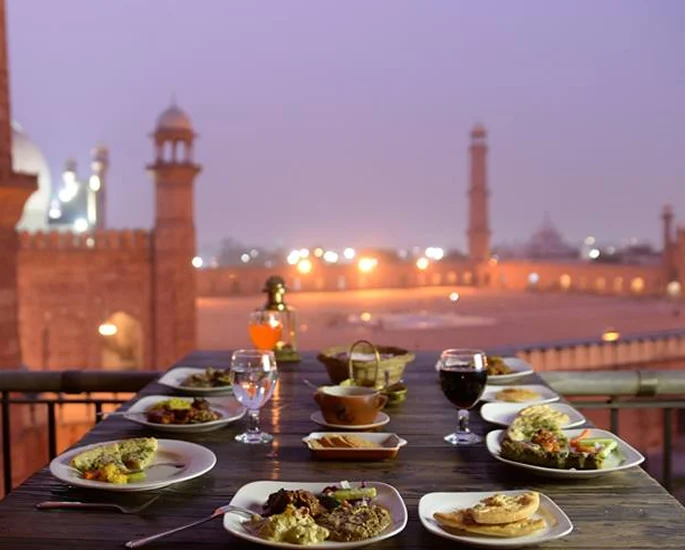
Food is what brings Pakistani families and communities closer. A few traditional Pakistani foods include biryani and karahi. Pakistan is a Muslim country; hence, only halal meat is consumed. Pork or alcohol is not used in meal preparations. Food preparation and cooking style utilize a lot of spices, rich, vibrant colors, and mouthwatering aromas. Along with desi (traditional) foods, food from other countries and cultures such as Korean, Indian, and American are also consumed regularly and found on menus in restaurants around Pakistan.
Photo, Asiancustomes
Dining etiquette has been a significant part of Pakistani culture and heritage when it comes to food. It has been the same for decades: the entire family sits together (preferably on the floor) and eats. While eating, discussions are generally based around routine life and some words of wisdom from the elders. However, the family dining experience and culture have somehow diminished in the present times. Each family member eats according to their convenience, and the spirit of a close-knit, productive dining table family discussion seems to be lost.
Clothing and Fashion
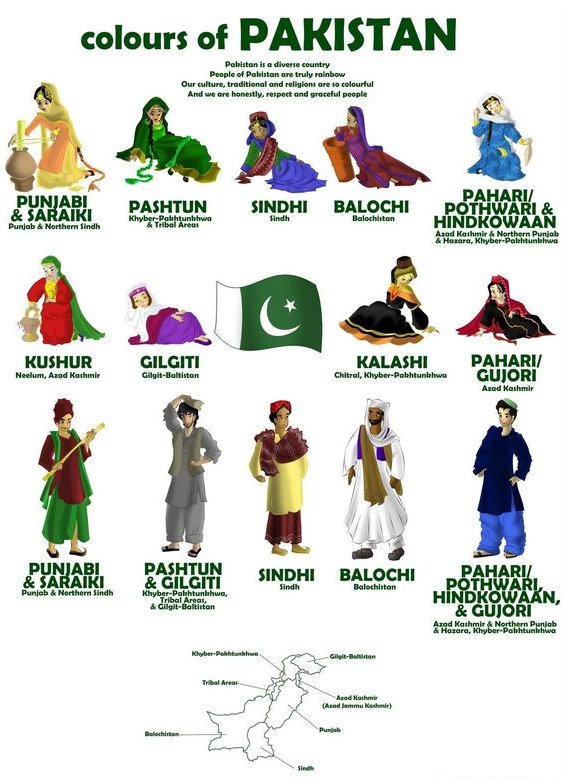
Each particular culture and ethnic group has its traditional clothing piece which portrays its identity. For instance, in Sindhis, Ajrak is a popular clothing item. However, these conventional clothing pieces are still utilized today but with a touch of modern fashion. The styling and accessorizing of clothes have been a key in cultural growth and development.
Diversity in outfits and fashion in Pakistan. Photo, Global Source
The use of jeans and T-shirts is more common than the use of shalwar kameez in daily life. The youth of the nation predominantly revolutionizes lifestyle, getting inspiration from the international market and fashion trends and incorporating them into their cultural wear. However, we need to think: Is this exposure adding to the artistic growth or erasing the traces of actual ethnicity of various cultures in Pakistan?
Gender Roles
Traditionally, gender roles were very distinct. Females stayed in the house and took care of domestic chores, while men used to work and earn money. However, cultural growth has varied gender roles. Nowadays, females are working in all sectors of life, including medicine, engineering, aeronautics, and business. Higher female education has now been given priority across all cultures, contrary to the traditional norms that focus on male education only. Females are gaining financial independence and are encouraged by families. Early marriages have significantly reduced in numbers as the focus is shifted to education, employment, and freedom.
Multi-culturalist Pakistan is the new Pakistan. The array of cultures, traditions, and the way they have evolved over the ages is simply beautiful. Exposure to copious cultures is an essential tool for personal growth. It is what defines Pakistan.
You switch on your laptop and talk to a friend on Zoom who lives in the US, email a colleague in Germany, order a new outfit from Bangalore, India, and apply online for a scholarship in the UK. This interconnection is just one way to show that you are a part of globalization.
Globalization makes people more connected socially, economically, and politically. At the same time, it assists in better interaction and behavioral understanding by letting us learn about different cultures.
In that era, most people believed that cultural globalization would lead to a more sophisticated marketplace where underdeveloped countries would get support from developed countries financially and in humanitarian efforts.
Nonetheless, many people have reservations about its pros and cons. They realized that the evolution of a global village would raise conflicts among nations and could result in further fragmentation of societies and their cultures. Another concern was a division of power and domination of certain developed counties. This concern was rightly highlighted, and we witness hybrid cultures in several countries, including Pakistan.
In today’s world, the national understanding of culture has expanded due to the new world cultural framework created through the progressing interconnectedness of varied local cultures. In a broader sense, cultures are now more accurately seen as sub-cultures. And they need to understand the context of their geographical surroundings.
According to Anthropologist UIF Hanners, it is the local level where global influences are filtered, transformed, and incorporated into beliefs and practices. Hanners thinks that the local daily life is where international cultural elements get the opportunity to make themselves at home.
Hanners thinks that the local daily life is where international cultural elements get the opportunity to make themselves at home.
Impacts of Modernization
The anthropological meanings of modernization refer to the evolution process that brought about cultural, social, and economic changes with the passage of time.
In the 5th century AD, Roman adapted to Christianity and coined the term modern to differentiate themselves from Barbarians. The Barbarians were non-Christian, particularly people of the Jewish faith. During the renaissance, one had to cultivate a lifestyle based on classical Greek and Roman civilizations to be modern. At the same time, during the enlightenment period, rationalism, science-based knowledge, and the pursuit of progress were modernity’s hallmarks.
Meanwhile, several or all underdeveloped civilizations were affected by the powerful influence of developed counties, like the US, UK, Russia, and the European Union. This is why several anthropologists think of globalization as the westernization of the world.
While analyzing the detrimental impacts of westernization, socialists and anthropologists mostly blamed the US for its alleged imposition of culture and mass media. Nonetheless, several other developed countries such as China, Russia, and Europe are also to blame as they reinforce their culture globally.
Without an objective and inclusive analysis of these issues, we will be unprepared for the rollercoaster of cultural mayhem that could inevitably ensue.
Several anthropologists assert that cultural contact creates uniformity, standardization, and homogenization. The global monoculture that we observe is sterile, dull, and artificial. A prime example of this aggravation is the proliferation of American fast food restaurant chains in foreign countries. McDonald’s, Burger King, Pizza Hut, and KFC taint the cities of even former Eastern blocked countries such as Hungary. Contrary, the extended chains of Chinese, Indian and Thai foods are fanning these cultures in host countries.
By definition, culture is something that connects the deep values and structures in society, and the local or mother language plays a vital role in strengthening this bond. But we see that several languages around the globe have potentially been lost. At the same time, we observed a powerful dominance of several languages like British and American English.
A database website called “languages of the world” reveals that more than 6,912 languages, half are in danger and maybe disappear in the next several decades; they list them as “Endangered Languages.” Losing these languages poses serious cultural threats because archeologists and anthropologists are losing aspects of these smaller cultures. They are now unable to articulate their beliefs and knowledge due to the extinction of their language.
Acculturation is a process of contact and exchange within a culture through which a group of people adopts specific values and practices of another culture that is not originally their own. The adaptation could be minor or, to a greater extent, results in a cultural shift.
When the transitioning process is extreme, assimilation occurs wherein the original culture is entirely abandoned and, as a result, a new culture emerges. However, other outcomes can vary from minor change to total change, including separation, integration, marginalization, and transmutation.
Meredith Small, a cultural anthropologist and author of the book “Our Babies, Ourselves: How Biology and Culture Shape the Way We Parent, describes a test case she studied. This is about Lebanese and Australian mothers whose cultures led them to parent in very different ways. As a result, they feel resentful toward the mothers of the other culture.
Since children play a significant role in all world cultures, it makes sense that each culture would have very different expectations and customs surrounding parenting. This tiny slice of cultural practice is representative of many other ingrained cultural differences around the globe. Perhaps if existing cultures were not already set up to contradict each other, a peaceful threshold could be reached.
With these changes comes responsibility, as humans, to consider the implications of our shifting realities. Without an objective and inclusive analysis of these issues, we will be unprepared for the rollercoaster of cultural mayhem that could inevitably ensue.
It is idealistic to assume a situation where cultures can merge without losing their essence while staying peaceful about how global culture gets in a new shape. Each country feels secure only when it protects its cultural beliefs. Nonetheless, the world has to shift to noncontroversial models with the growing pace of modernization.
Our galactic home, the milky way, hosts a Sagittarius A* Black Hole but we had not seen its image. That was until now after we got the First Direct Visual Evidence of its existence. The photo was taken by the observations of the Event Horizon Telescope Collaboration (EHT), an Earth-sized array of Eight – Observatories. Together, capturing the data of its constant and bulleting movements throughout a prolonged time.
The Sagittarius A* had previously made headlines after its discovery was cited as a “Supermassive compact object at the center of our galaxy” and bagged the 2020 Nobel Prize in Physics by Reinhard Genzel and Andrea Ghez. Earlier this week, Dr. Feryal Ozel, a professor at the University of Arizona and a member of the Event Horizon Telescope Science Council held a press conference and presented this groundbreaking discovery, an additional contribution to research by EHT Collaboration after previously developing the picture of M87 Galaxy’s Black Hole.
The First Image of a Black Hole in the M87 Galaxy was revealed on April 19, 2019. Credit: EHT Collaboration
Known to be around 4 million times the mass of our Sun. As you can see a center-principal dark region, where the Black Hole is, is orbited by the light coming from magnificently heated gas around it under the cause of gravitational acceleration. For a similitude of understanding scale, the ring has the size of Mercury’s orbit around our Sun.
Breaking into the Science of Sagittarius A* Black Hole Image. Credits: EHT & BBC Science
Breaking into the science of this image, we know that the image was taken in submillimeter radio waves, revealing the presence of the Black Hole in the heart of the galaxy, eating the nearby hydrogen gas, the clarity of the image to this extent took several years, from the data collected in 2017. As the Sagittarius A is continuously evolving, when compared to the data of the previously released M87 Black Hole, because the M87 was so massive that it takes hours to complete a full orbit due to the matter whirling around it, this means that we can observe M87 for a longer time, while having a shorter time to observe the Sagittarius A*, as it’s approximately 1,000 times less small than the M87 Blackhole, eventually having 1000 times faster change – Analogically speaking. The black hole lives about 27,000 light-years away from Earth.
The work of the 2020 Nobel Prize determined the faster orbits of the stars around the Sagittarius A Black Hole. Credits: ESO/S.GILLESSEN ET AL.
Dr. Katie Bouman, a Computer Scientist & Astronomer at the California Institute of Technology, who also co-led the EHT’s Imaging Working Group explained that the orbit of matter around the BlackHole is so quick that it’s changing every minute. Comparing it with taking a time-lapse photo of a speeding bullet, is not easy to do, which took several years to bring the end product – The Image of the Sagittarius A* Black Hole. (Quoted from Scientific American)
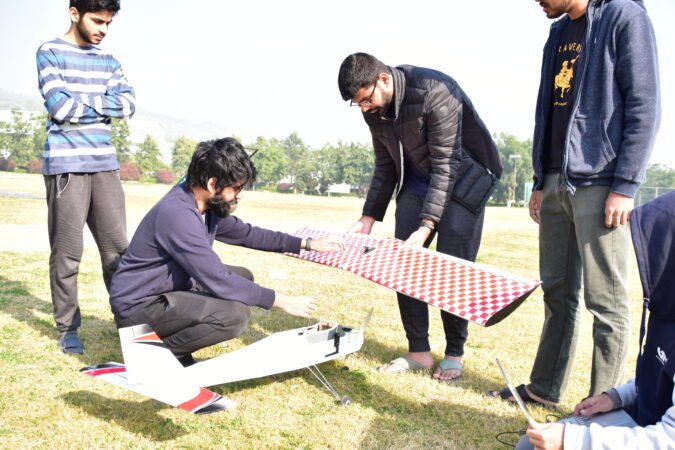
Foxtrot is a student-run team based in Ghulam Ishaq Khan Institute of Engineering Sciences and Technology (GIKI), specializing in building planes, drones, and Unmanned Aerial Vehicles (UAVs). With a passion for developing UAVs and the intention of representing Pakistan and GIKI internationally, the team competes in the UAS (Unmanned Aircraft Systems) Challenge, which is hosted annually in the United Kingdom by IMechE (Institution of Mechanical Engineers).
Team Foxtrot is divided into several sub-teams: Design, Fabrication, Automation Systems, Imaging Systems, and Testing.
The IMechE UAS Challenge
The IMechE UAS Challenge has been held in the UK for the past seven years. The main challenge goal of the competition is to train and develop professional engineers, providing them with a dynamic and specialized environment to hone their problem-solving abilities.
A plethora of teams from around the world competes in this challenge. They perform timed tasks and follow a strict set of guidelines by performing a complete design and building cycle of UAS with specific goals prioritized. The main task for each team is to construct a UAV for the tasks to be completed successfully. These include area search, waypoint navigation, endurance task, dropping an aid package correctly, and consequently returning to the base via a well-defined route.
Foxtrot is a student-run team based in Ghulam Ishaq Khan Institute of Engineering Sciences and Technology (GIKI), which specializes in building planes, drones, and Unmanned Aerial Vehicles (UAVs)
The challenge is divided into three major stages, which are as follows:
Design
Development
Demonstration
Accomplishments
Team Foxtrot has competed in the IMechE UAS Challenge in the United Kingdom (UK). In the debut year of the challenge, they won the “Highest Place New Entrant Award of 2019” and stood among the Top 10 participating teams from across the globe. In 2021, Team Foxtrot bagged the Business Proposition Award while also finishing in an esteemed 5th place in the virtual competition.
The team also scored a perfect 15/15 score on its First Design Review: a feat that is worthy of appraisal. In this year’s challenge, the Team scored another perfect score of 20/20 on its Preliminary Design Review. The team was warmly welcomed by national media for their extraordinary achievements and invited for interviews by Expresso, Neo News, and PTV World.
Team Foxtrot also organizes STEM outreach programs in schools to enlighten them about the endless possibilities and opportunities in engineering and empower girls interested in the field. It focuses on enabling young minds to acquire UAV-related cognitive skills and teaching pupils about the practical applications of autonomous UAVs in the present period, including their use in humanitarian aid missions.
Generous sponsors have enabled them to receive these accolades in a short period. Their previous sponsors/partners include HBL, E-Wall, and FFC, whereas Smart Hobby and Woot Tech are our current ones.
This Year’s Challenger
This year’s project, Barq, is designed to complete all core tasks of the challenge besides the optional tasks of Endurance and Area Search. Project Barq is a CTOL (Conventional Take-Off and Landing) design having a tri-motor configuration to enable short take-off and precision landing within a limited 10 x 10 m area. The aircraft uses a V-tail and glider wings to combat air resistance and is fabricated of carbon fiber and polystyrene to maximize the strength to weight ratio. This also gives it high maneuverability and an enhanced endurance capability. In addition, it has retractable landing gears and a maximum take-off mass of 9.3 kg with a payload-carrying capacity of up to 3.5 kg.
It can fly to speeds of up to 60 knots and has a reverse-thrust mechanism. With appreciative feedback from the IMechE and all members working hard in their respective domains, Project Barq is all set to fly high and make us proud in the 2022 UAS Challenge.
Being 13.8 billion years old, the universe is the current estimation of the creation itself. We have recently sent NASA’s James Webb Space Telescope at the position L2 to look back into the time, looking into the Infrared-NIR radiation. So, we can look for one of the first stars and galaxies in the universe. Interestingly, a staggering discovery was made by the Hubble Space Telescope as “Earendal,” the farthest known star yet – relating from the beginning of time, astronomers are calling it. In old English, it’s known as the “Dawn Star.”
Earendal was discovered through the Gravitational Lensing technique through the Hubble Space Telescope, to a comoving distance of 12.9 Billion Light-Years away from the HST. The distant star could be from the first 900 million light-years from the big bang. This discovery broke the previous farthest known star MACS J1149 Lensed Star 1, a supergiant blue, with a distance of 9.34 light-years in time, a distant second to only WHL0137-LS discovered earlier this year. The research came to the public by the astronomers in a paper in nature, “A Highly Magnified Star at Redshift 6.2”, suggesting the last confirmations of the star by James Webb Space Telescope’s observations for spectral classification and retaken distances.
This image highlights the star, Earendal’s location, and a ripple of space-time that helps the star be magnified and found over such a vast distance – nearly 12.9 billion light-years. Credit: Credits: NASA, ESA, Brian Welch (JHU), Dan Coe (STScI)
The studies mentioned above suggest that the mass of these types of stars is somewhere approximately 50 times of our sun. The image shown from the Hubble data made the discoverer notice the fragile, long red arc, which seemed to be a galaxy warped and amplified light by the cluster. Atop that bright red arc, there’s “Earendel,” a spot that is too small to be considered a galaxy; after rigorous research and methods, “We stumbled into finding that this was a lensed star.” quoting Brian Welch, the lead author of the paper and discoverer of the farthest star.