Scientists have been working on cancer treatment in the United States used CRISPR―a gene editing tool―for the first time for the growth of genetically modified blood cells of two patients. Human body naturally contains T cells, which help the body in fighting against bacteria, viruses, and any other parasites.
According to ongoing research at the University of Pennsylvania which involves genetically modified ” T cells” in a human’s body, the aim is to attack and destroy cancerous cells. The researchers collected the blood sample from the patient’s body and modified their generic makeup before inducing into the patient’s body.
The breakthrough involves two kinds of modifications: 1. a gene was added to the T cells to make them attack cancer cells; 2. by using CRISPR, a gene called PD-1, which acted as a brake to the body’s immune system responses, was deleted. Although, pharmaceutical drugs, called immunotherapies, which suppress PD-1 have effectively been used to treat a few cancers. But now the idea is to directly install the suppressing capability into the DNA of T cells.
It is worth mentioning here that CRISPR, read as crisper is an abbreviation of CRISPR-Cas9, a novel DNA modifying technique that won the Nobel Prize for physiology or medicine in 2018. Like a pair of scissors that more often use to modify DNA with precision this technique works.
The Pennsylvania cancer study is just one of the many studies being carried out in the world of medicine. A patient in Europe, for example, became the first person to be treated for an inherited disease, beta thalassemia, using CRISPR. Similarly, Chinese hospitals and research groups employed scores of related efforts using CRISPR.
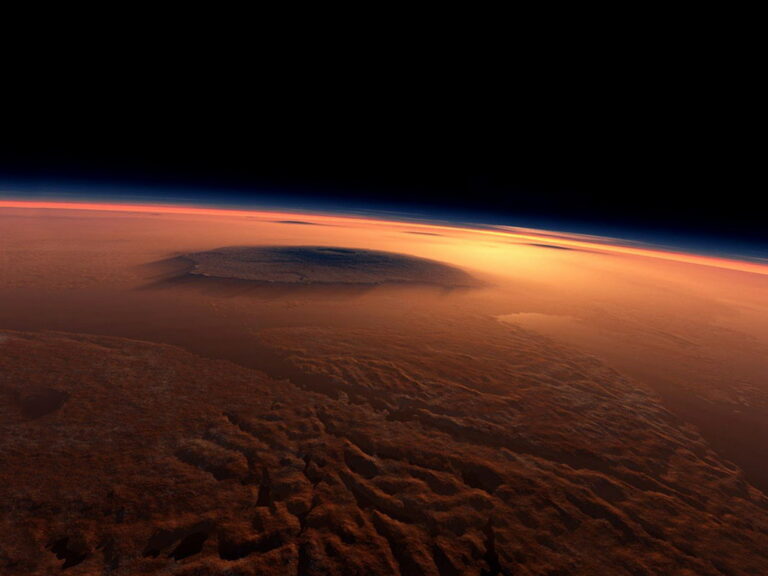
A ‘Marsquake’ has recently detected for the first time since the human exploration of the red planet started. A quiet but distinguished shaking of the Martian surface detected by NASA’s Insight Lander in support with UK’s Space Agency which had helped to develop silicon sensors for detecting seismic activities on Mars.
Image NASA
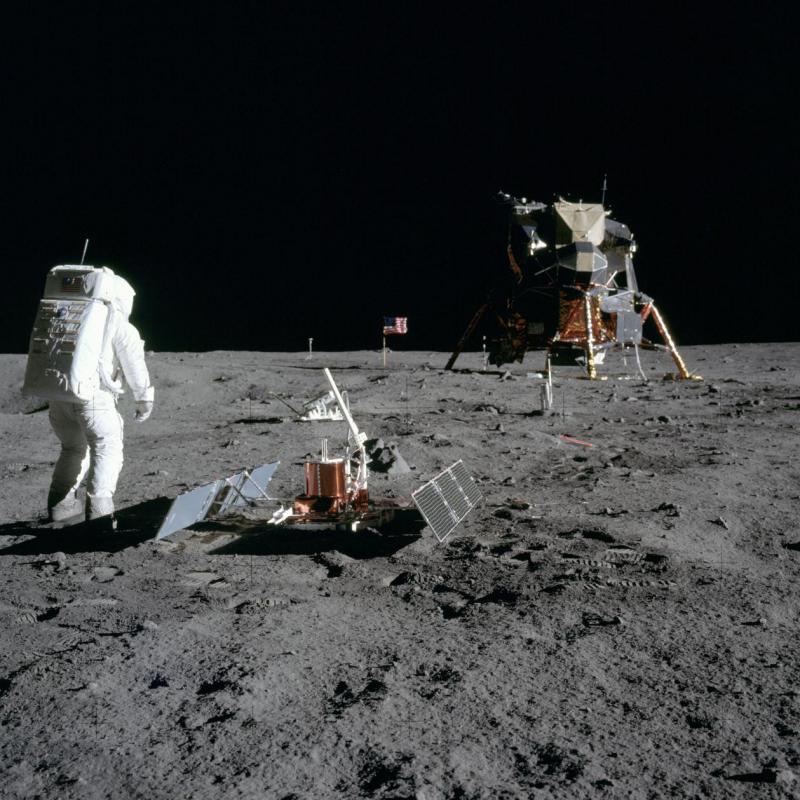
UK Science Minister Chris Skidmore said that: “detecting these quakes on a planet 140 million miles from Earth is a spectacular feat of science and engineering”. While earthquakes were known to human beings for hundreds of years, moonquakes discovered in the 1960s, thanks to Apollo missions. The existence of seismic activities on a neighbor planet could help provide insights about Mars.
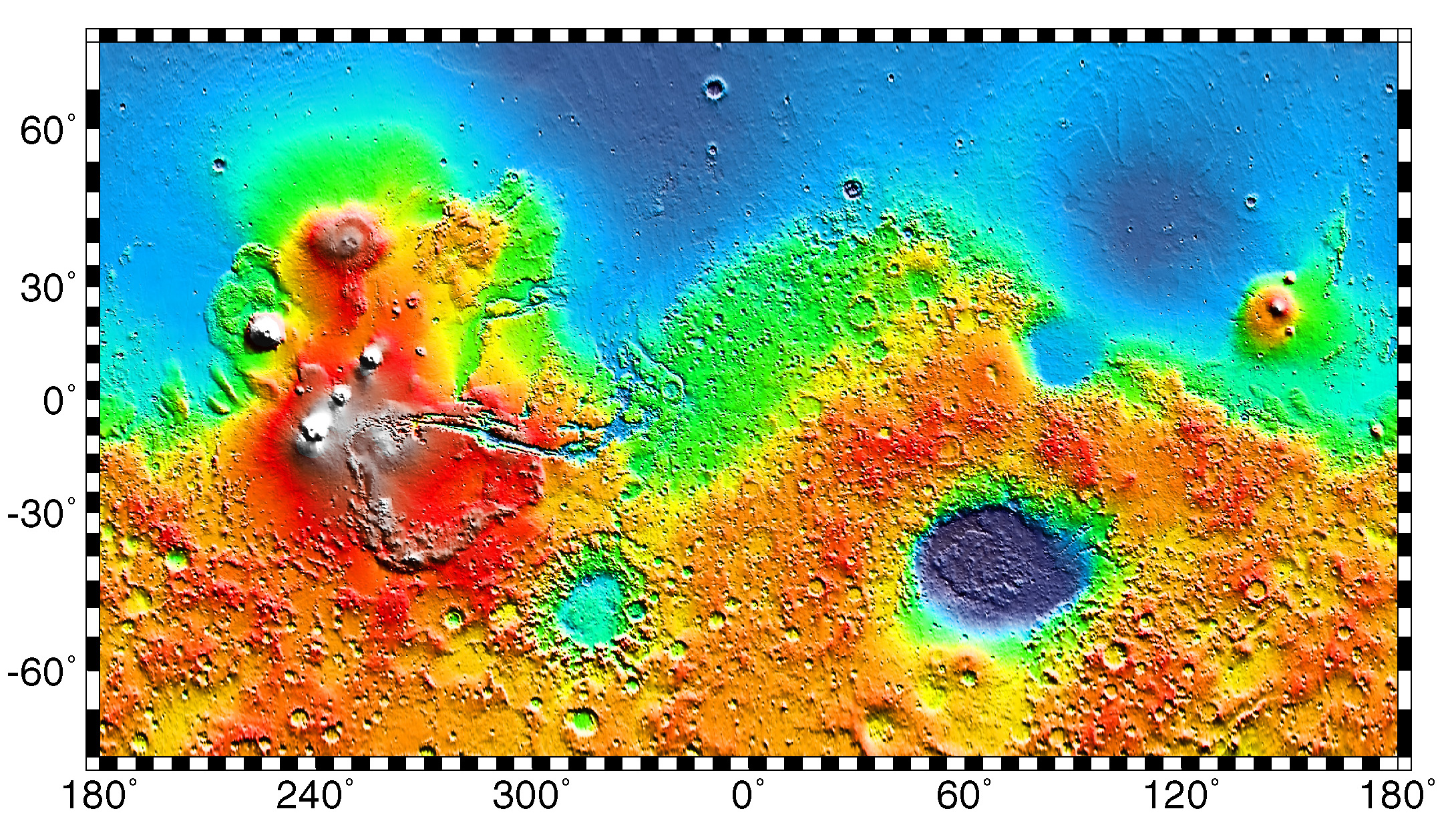
Image map of global topography of Mars
The vibrations on Mars detected by InSight’s Seismic Experiment for Interior Structure (SEIS). The lander placed SEIS on Mars surface in December 2018 that was a joint project under the partnership of Imperial College London, Oxford University, and STFC RAL Space and funded £ 4 million by UK government.
According to Prof. Tom Pike of Imperial College London, these silicon sensors of SEIS are the most sensitive silicon sensors on earth sent to Mars. The sensors recorded the first sounds ever recorded on Mars directly― a haunting, low rumble caused by vibrations from the wind. This recording of Martian winds helped scientists to separate “noise” from actual Marsquakes.
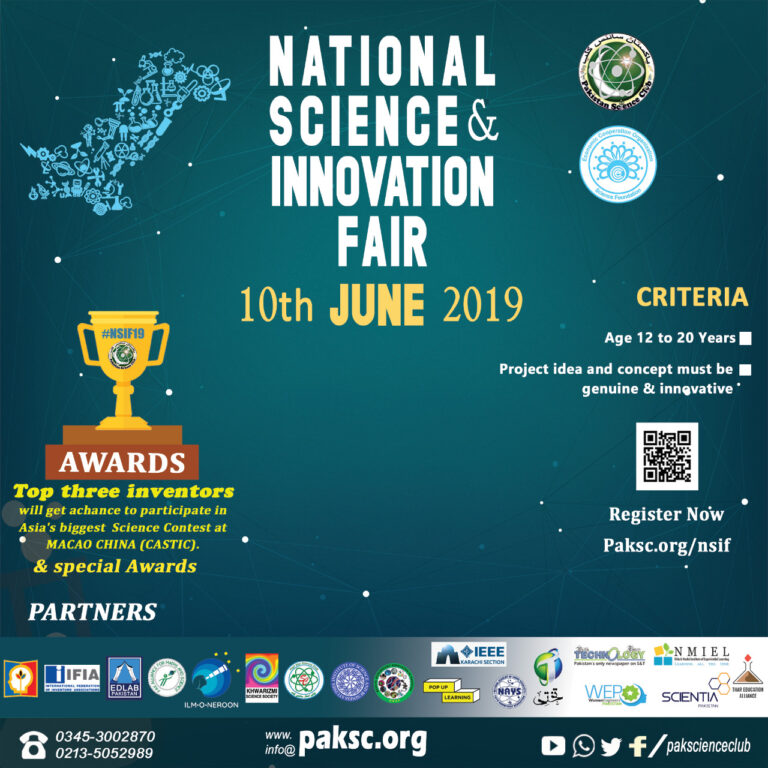
Despite having brilliant minds and energetic youth, Pakistan is far behind in the field of science & technology as compare to the modern world. One of the main reasons is not having a proper platform for the young generation to express their talent. Now more than ever, we need our nation’s best and brightest minds to pursue their interest in science and use their capacities to solve various local and global problems. Pakistan Science Club is providing an opportunity to Young scientists for expressing their aptitude in National Science & Innovation Fair 2019.
National Science & Innovation Fair 2019 is an exciting challenge for the students of age 12-20 years to participate and display their novel ideas and projects. Participants from all over the country are invited to present and compete their independent research on various fields of science and technology for the solution of local and global problems.
The top three winners of the NSIF’19 will get a chance to participate in China Adolescents Science and Technology Innovation Contest (CASTIC), the biggest science contest of Asia in Macao, China “from July 20 to 26th, 2019”.
National Science and Innovation Fair 2019 is a joint venture of Pakistan Science Club and ECO Science Foundation along with more than 20 network partners including International Federation of Inventors Associations (IFIA), Mad lab UK, Khwarizmi Science Society, Pakistan Alliance for Maths and Science and many more.
The competition will not only contribute towards the social development of the participants but will also help them to think in a rational way to explore the possibilities for the betterment of society using scientific concepts and innovative approach.
Event will be held in Karachi on 10th June 2019.
Pre-event workshops of NSIF’19 are already started and will be conducted by 10th May 2019.
For registration and complete details visit PSC website: www.paksc.org/nsif
Recent research shows that stimulating parts of the brain can help in solving the problem of age-related memory loss in elderly persons. The research carried out by a team of scientists at Boston University.
In this resaerch, a series of tasks were assigned to perform to several groups of young and elders. The youngsters, as expected, did better than the elder subjects of the study. Later on in another experiment, the participants’ heads were covered with a cap fitted with electrodes to stimulate specific parts of the brain. The temporal and prefrontal cortex of the participants were stimulated for 25 minutes so that the brain waves of each participant brought into sync.
However, when the groups asked to perform the same memory-related tasks their performance slightly improved as compared to those participants who did not subject to the stimulation. Surprisingly, the elderly subject also performed better– as good as 20-year- olds.
The research published in the Nature Neuroscience journal that seems highly effective as it can help breakthrough in age-related memory loss problems and give a hope that there might be a way to solve.
Take a look into the most exciting astronomy news of the month.
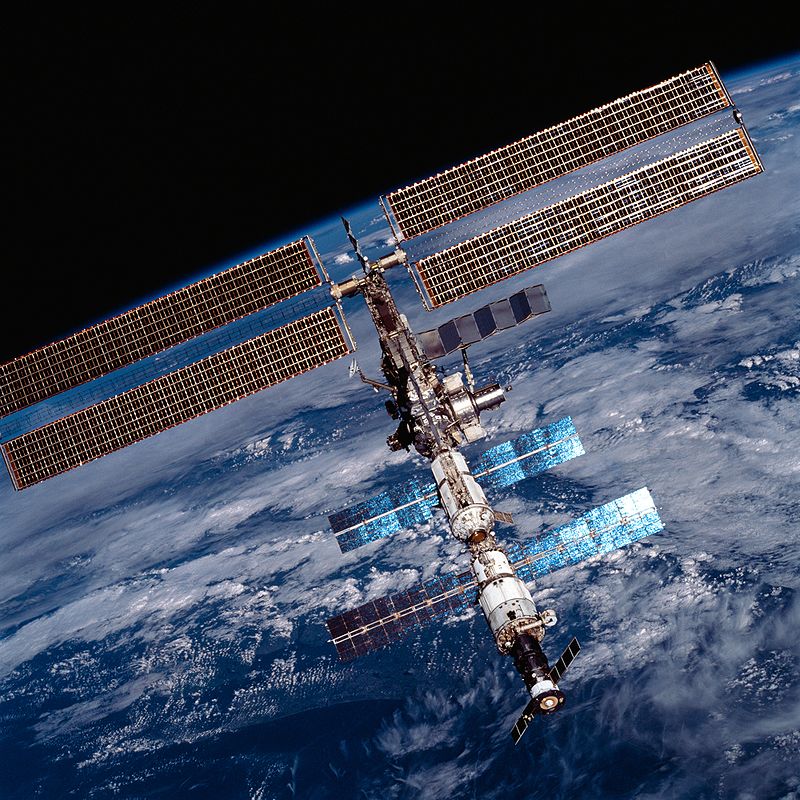
NASA Fears the Safety of ISS Due to The Debris from India’s Satellite Destruction Test
NASA Fears the Safety of ISS
Last week, India destroyed one of its satellite that was orbiting around the earth, leading to the creation of debris that was large enough to hit the International Space station according to NASA. The administrator complained that this was an abominable attempt that resulted in dangerous debris in the orbit and such an act would compromise the future of human space flight that is being planned. NASA calculated that the potential impact of the debris hitting the space station increased by 44 percent in almost a week. It was also made clear that the station crew was safe in that they are prepared to steer out of danger if required.
The Indian Prime Minister announced that India was now in a position as a space power, as it became one of the few countries to test out such an act in space. Even though the pieces will dissipate over time and burn up on reentry to the Earth’s atmosphere, the overall outcome will not be pleasant to the outer space.
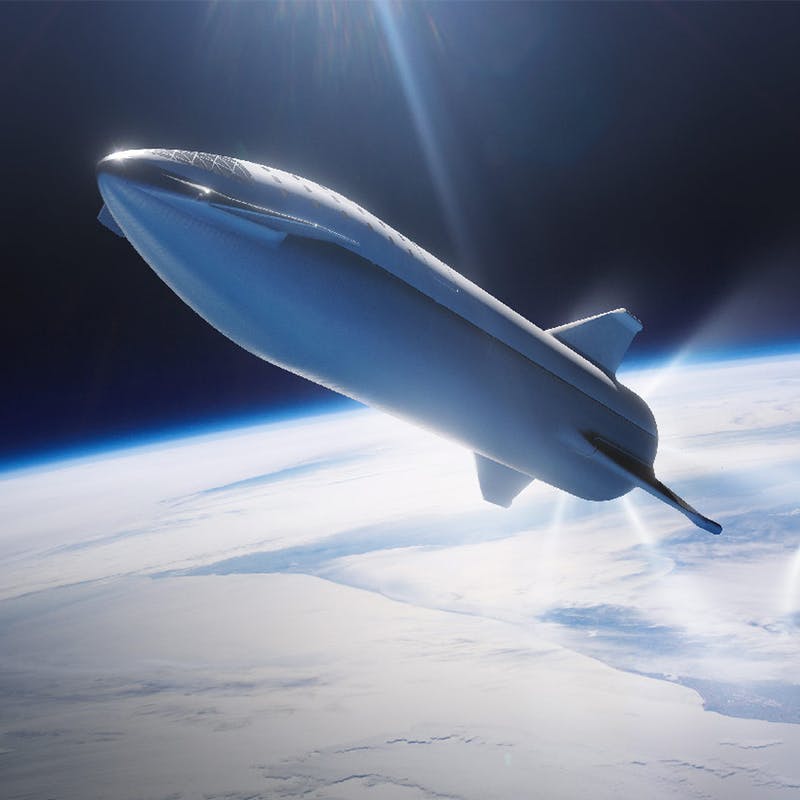
Elon Musk Announces the Reason for Delay of The Mission to Mars
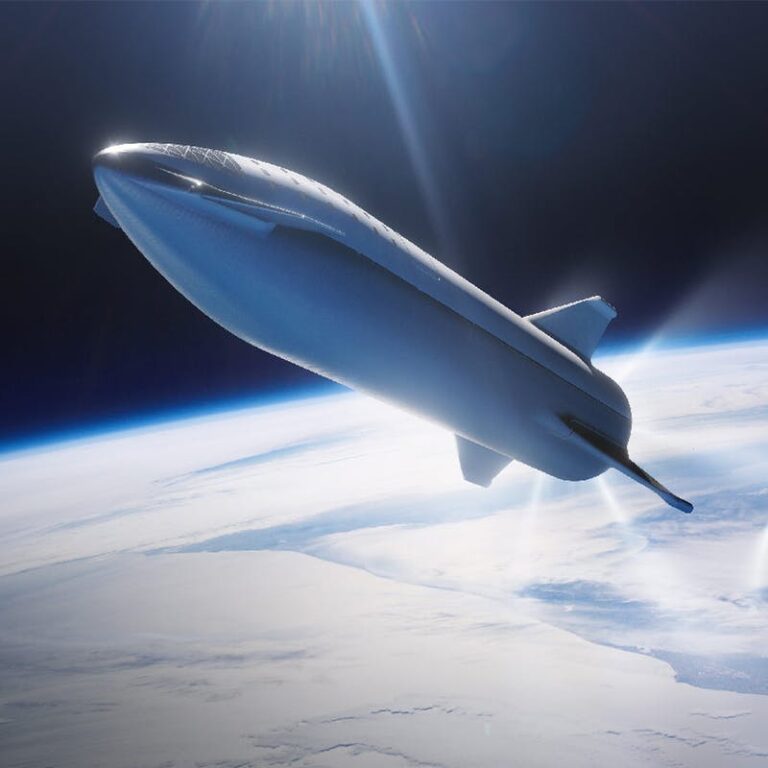
Elon Musk, CEO of SpaceX, announced the reason for the delay of the launch of the Starship Hopper. He declared on Twitter that due to some challenges like the formation of ice in the cryogenic propellant, the mission received a setback. The Starship Hopper is a miniaturized version of the craft designed to launch humans to Mars. It was scheduled for a test flight from a site in Texas at the beginning of this year but got delayed to some issues that are now revealed. This rocket is an initial step into the plan of the human visit to Mars. The ship has engines that will use liquid oxygen and methane as rocket propellent. The propellant system that is now declared faulty, is essential for storing the fuel for higher efficiency. This technology is not only used by SpaceX but also by NASA who has already sent equipment to the International Space Station for checking the efficiency and fluid transfer. As the issues are being resolved, the Starship Hopper is under further testing and upon flying the porotype, its trip to the moon will be also ready in 2023.
An Undergrad Student Discovers Exoplanets Using Artificial Intelligence
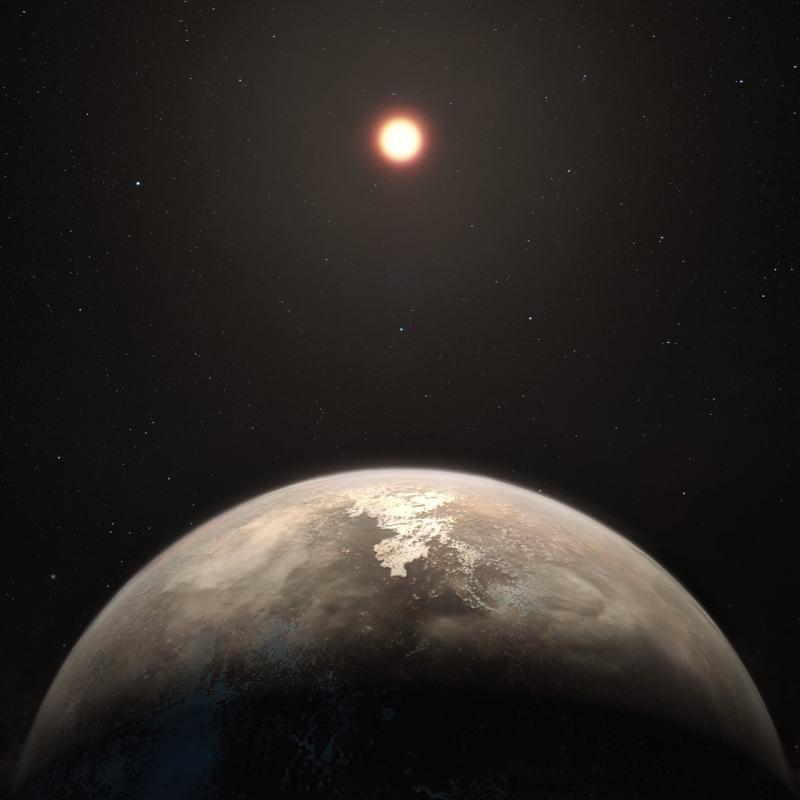
An Exoplanet-just-11-light-years-away-could-support-life
An undergraduate student in Texas, the USA working in collaboration with established astronomers have jointly discovered two planets that are orbiting stars some thousands of light years away from Earth. Even though many similar exoplanets have been found until now, this got more attention due to its unique story of discovery. The student, named Anne Dattilo, used an artificial intelligence program to go through the data from the Kepler telescope of NASA which was launched almost a decade ago. She was inspired by one of the professors Andrew Vanderburg, who used information from the Kepler telescope to look for new planets. Dattilo used a program AstroNet-K2 and through some modifications found stars having planets. Using the telescope on the grounds, the findings were confirmed. These new planets were in the constellation Aquarius and have size a bit larger than Earth.
Vice President of the USA Urges NASA to Speed Up Launch of Manned Missions to The Moon
The Vice President of the United States of America has announced that the government has pledged to send manned missions to Mars by 2024, four years earlier than the deadline given by NASA. Mike Pence said that the strategies were being developed to reach this goal no matter what hurdles are in the way. He asked NASA to speed up the process and develop a new schedule that could be followed on time. Because of that, the administration will have to abandon some of the contractors and create and use commercial rockets. The VP promised that resources will be amply provided, and space policy will not be compromised. NASA has never really declared the definitive timeline for the missions and is apparently not pleased by these new suggestions. The agency is currently experimenting and developing rockets for the capsule launch and has also asked for designs from the commercial companies.
The Famous Cyclone of Jupiter Found to Be Shrinking
Jupiter-great-red-spot-death-cyclone
New research shows that the storm on Jupiter, known as The Great Red Spot, has been rapidly changing over time. This cyclone is almost 300 years old and can change color as well. It is now found to be getting circular and taller and is also reducing in size. The Great Red Spot is a very famous feature of Jupiter and has a speed more than 300 miles per hour. Even though the history of its origin and its color is still unclear, it has been a captivating phenomenon for a long time. Researchers have claimed its position to be 22 degrees south of the equator in latitude. But changes in longitude have been found and evidence suggests some regions are sinking into the surrounding atmosphere. There is variation in its color as well and it is expected that data from NASA’s Juno spacecraft will help provide answers to these questions.
Salim became a symbol of women’s empowerment when she was awarded the ‘First Pakistani Astronaut’ title in 2006
Namira Salim
Going into space is a dream only a select few can turn into reality. A dream seemingly even less achievable for women.
Nonetheless, there are luminaries who have set foot into the unknown alongside men. The first woman in space was Russian cosmonaut Valentina Tereshkova. Following her footsteps were Indian astronaut Kalpana Chawla, Judith Resnik and Peggy Whitson, who has five space expeditions to her credit.
She may not be fully there yet but Namira Salim became a symbol of women’s empowerment in Pakistan when in August 2006, the Ministry of Information and Broadcasting, government of Pakistan launched her as the “First Pakistani Astronaut.”
Later in 2008, she presented her sub-orbital space flight training certificate to the then president of Pakistan Pervez Musharraf. Since then, as a private citizen, she has made several significant contributions to Pakistan’s space programme and worked in close association with Pakistan’s Space and Upper Atmosphere Research Commission (Suparco).
Salim being awarded a certificate by then president Pervez Musharraf
Hailing from Karachi, Namira is an impassioned traveller. She is the first Pakistani to have travelled to the North and South poles and the first Asian to skydive (in tandem) from Mount Everest. She hoisted a peace flag on behalf of the nation at the two poles of the world.
In 2013, she was awarded the ‘Power of 100 Trailblazer Award’ in London for her efforts to promote international peace and harmony. In 2015, she founded her non-profit ‘Space Trust’ to promote Space as the New Frontier for Peace, particularly to support the work of the UN Office for Outer Space Affairs. In September 2018, she, along with her UN partners, established the first space conference during the UN General Assembly High-Level Week, when all world leaders gather in New York.
Here are some excerpts from her recent interview with Eos:
What are your early memories of Karachi where you were born and raised?
My most memorable moment is of a beautiful night sky when my father introduced me to the stars — the Pole Star to be more exact — and my journey into space began. I still remember when, at the age of five, I cried and told my parents that I didn’t like to play with toys and just wanted to go to space. Since my childhood, I was a dreamer and loved spending my time in the company of the stars.
I was never the academic type or conventionally bookish. I was born with a creative and idealistic spirit and always followed my heart.
Who or what prompted your love for space and to become an astronaut?
To be honest, space is what makes my DNA. This is the only explanation I have found [for my passion]. I romanced the stars and the farthest stretches of the universe drew me closer every day. For me, life on Earth is too mundane. I believe connecting to the heavens and going to space is a spiritual journey that I am destined to fulfil in my lifetime. Even as a child, there was this deep connection with stars — as if something was calling out to me. By the time I was 13, I announced to my cousins and friends that I would grow up to become an astronaut.
What kind of medical testing is mandatory for a female astronaut or space tourist?
It is not very demanding for space tourists going on a suborbital flight, which means we cross the Karman Line, which lies at 100 km above sea level and the line defines the boundary of outer space. Training takes a few days and as long as one is in decent health and generally fit, one can take the G-forces [gravitational forces]of a suborbital flight, which go as high as 6 Gs. Fighter pilots experience as high as 9Gs.
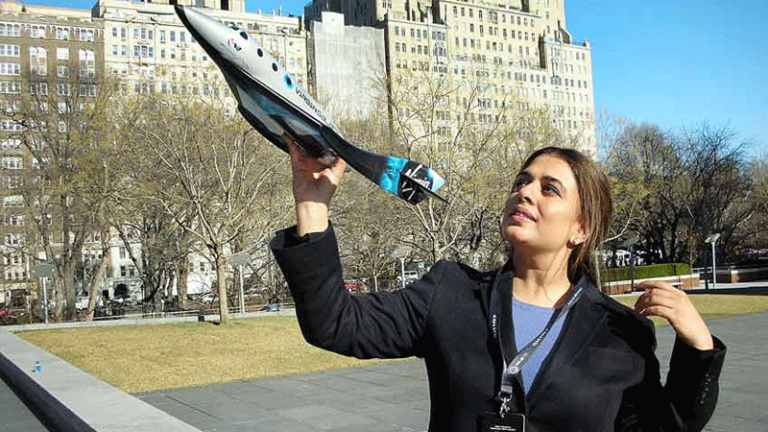
I was trained in the world’s most advanced high-performance centrifuge: the STS-400 at the Nastar Centre in the US, under the supervision of Virgin Galactic. This was a full simulation and an immersive experience into the way the actual spaceflight would be during launch/release, rocket motor ignition and the climb to altitude, weightlessness, and later the re-entry into the Earth’s atmosphere. The training process assessed my ability to tolerate and adapt to increasing gravitational forces and motion sickness during my potential sub-orbital space flight.
Salim with Richard Branson
Initially, I felt completely weighed down by the G-Forces as if I was being crushed down by an elephant and then, before I knew it, I was floating in space, as light as a feather.
Share with us the highlights of your travels on Earth.
These were my “out of the world” experiences before breaking the orbit. It was my passion to go as far as possible on earth before reaching for the stars. I touched the two poles of the world [and the highest mountain]in my own unique way by raising my peace flag “Peace Making with Nation Souls.” Heading to the North Pole in April 2007 was the most challenging due to ferocious weather conditions and because this was my first rendezvous with such a massive expanse of ice.
But it was really living on the Ice Camp in Antarctica [Patriot Hills] at 80 degrees south for 10 days which I enjoyed the most, just before heading for the South Pole in January 2008. It was amazing to see the midnight sun and the 24-hour long daylight as the sky blushed in red-orange hues towards the close of the day, yet remained well-lit.
Luckily, there I got a chance to meet the most seasoned mountaineers and adventurers. Their encouragement led to my skydive over Mount Everest and my 10-day trek through the Himalayas as part of the first historic Everest Skydives, in October 2008. Despite a plane crash claiming the lives of 17 Swiss jumpers and two fellow jumpers meeting with an accident, I did not surrender and lived the fabulous experience of descending from the roof of the world, at 29,480 feet to touch down at Syangboche, the world’s highest drop zone located at 12,340 feet above sea level.
Do you think your achievements and potential spaceflight will help inspire Pakistani women to follow their dreams?
I believe anyone can find inspiration, [belonging to] any level of society, and I’ve heard many stories of young girls following my example. It gives them [motivation] to break the glass ceiling and helps them achieve the impossible.
They can take pride in the fact that the first Pakistani astronaut and the first South Asian space tourist is a woman. Sometimes women contact me and say that they used my name as an example to convince their parents to send them to study abroad or to adopt a profession of their own choice.
Being a Muslim and Pakistani have you ever encountered gender discrimination or sexism?
Not at all. After so many years of working abroad, I realised that women who believe in gender discrimination will always face it. These words don’t exist in my dictionary. I am a global citizen and I work in an industry which is universal. These incidents don’t happen when one performs with excellence, good work ethics and exemplary conduct.
In fact, armed with such values, one commands respect, carves out a niche and leads by example. Sometimes, one becomes a subject of envy or jealousy which should not be of concern and this should not deter one from grasping one’s dreams. For women, I would like to say: believe in yourself. A woman is like a full circle and within her is the power to create, nurture and transform herself into a confident, strong and independent woman.
What is the mission of the Space Trust? How can we use space as a driver for peace?
Space Trust was founded to support the work of the UN Office for Outer Space Affairs. The mission of Space Trust is to find innovative solutions for a peaceful world by advocating space as the New Frontier for Peace on Earth. Our lead initiative is the “0G [zero gravity] Summit” in support of Space2030 and the UN Sustainable Development Agenda of 2030. The first member country of 0G Summit is Cyprus. Last September, along with our UN Partners, we established the first space conference during the UN General Assembly High-Level Week, to advocate space as a sustainable tool for peace-making on Earth.
Do you think that spaceflight will be accessible to the masses in our lifetime?
Yes, certainly. What we are developing is commercial space tourism, something which will allow anyone who has dreamt of reaching the stars to go to space, not only the rich and famous. Virgin Galactic will mark the advent of the commercial spaceflight, which will make private spaceflight affordable.
For instance, the first Trans-Atlantic flight in (1939) cost 50,000 US dollars, but today anyone can afford to fly across the Atlantic for a few hundred dollars. The private space industry will be a consumer industry and will make way for researchers, scientists, satellites and payloads into space at a much more affordable price and in an environment-friendly manner. Even leading space agencies, such as NASA, are now developing commercial crews with private spaceflight companies, such as SpaceX and Boeing.
Pakistan has recently announced its first manned mission to space by 2022. Why should we send people into space and how can we educate our masses about the peaceful effects of outer space in their daily life?
I am proud to confess that on August 17, 2006, I was launched officially to the nation by the government as the First Pakistani Astronaut. Since then, as a private citizen, I have made several humble yet significant contributions to our space programme and worked in close association with Suparco. I am glad that Pakistan has announced its first Astronaut via Suparco under a government programme, with the cooperation and technical assistance of China.
What’s next for you? Would you like to give some message for your countrymen/women?
I am currently working on developing a Cube Satellite which will be launched in 2020 to play messages of peace in orbit in the voices of world leaders. It is a Space Trust project with leading space industry veterans, in line with making Space the New Frontier for Peace and envisioned in cooperation with the United Nations. It would be fitting for Pakistan to be part of this mission.
Moreover, my message is for our politicians to understand the potential outer space offers towards Peace and Space Diplomacy for resolving historic conflicts on Earth, which can lead our country to a whole new level of peace-making.
Saadeqa Khan is a freelance science journalist based in Quetta. She tweets @saadeqakhan
“30 meters, 20 meters, 17 meters, standing by for touchdown… Touchdown confirmed!” As the controller repeated the statement, the entire control room erupted into cheers and her voice got lost amid the roaring celebrations. This was the scene at the NASA’s Jet Propulsion Laboratory on 26 November 2018, when the InSight rover landed on Mars.
The JPL is no stranger to these kinds of monumental moments. Over the decades, it has seen some historic landings on the extraterrestrial bodies and has successfully launched various telescopes and rovers into space. It is one of the leading centers for research, atmospheric studies, and robotic exploration of the solar system with an established facility and skilled engineers and researchers. The different facilities at the institute are available for the faculty as well as the students. Collaboration with other agencies has enabled the attainment of valuable data on galaxies as well as the Earth.
Established at the Caltech campus in California, USA, this center has been a prime innovator and a partner with the National Aeronautics and Space Administration (NASA). In the 1930s, a Professor at the Caltech Guggenheim Aeronautical Lab, authorized an offsite location to be used by his students for conducting their experiments, after they had a mishap on campus. In 1936, five of the graduates and two rocket fanatics launched several rockets from this site which would later become the Jet Propulsion Laboratory. The US military took notice of their successful experiments and commissioned them to create products to be used in the Army. After a while, the researchers agreed to extend the work to nonmilitary missions and successfully developed Explorer 1, the first successful US satellite, which was launched into orbit on 1 Jan 1958. This led to the transfer of JPL to the civilian administration and it was taken in charge by NASA.
Over the years, JPL has carried out major missions for space explorations. These include the Curiosity rover, the Juno spacecraft orbiting Jupiter, InSight, Spitzer Space Telescope, Mariner 10, etc. Its Mariner 2 spacecraft was the first probe to orbit and observe the planet Venus closely. It led the Mars Pathfinder mission to Mars, Voyager Spacecraft, the Mars Odyssey orbiter, Spirit and Opportunity rover to the red planet, Dawn Spacecraft, and surely, the manned Apollo missions to the moon couldn’t be possible without the assistance of JPL.
The road
to success
JPL’s shot to its success didn’t happen quickly. It took years and years of research, testing and experiments to create missions that would help unravel the mysteries of the universe. Looking into the working of the lab, it is apparent that certain unique features helped to achieve its monumental success.
One such thing is the creation of this lab in a university. Space programs and institutes of other countries have failed as they made their labs exclusive to specific people only. JPL, on the other hand, has not only access to great scientists and engineers, but it also invites the talented students and the bright minds of the Caltech Institute and elsewhere to join. They have allowed public access to the labs through tours etc. and such an open environment has enabled many things; the biggest of it: Inspiration. Students and the general public having complete access to the workings of the lab, see for themselves the mind-blowing feats it has achieved and how the extraterrestrial data can unlock the true nature of our planet and the universe. Such an experience leads to the development of questions and raises curiosity. And when curiosity is attained, passion for the answer is ignited by itself leading to the creation of spectacular works. This work of harmony was beautifully acknowledged by the Caltech President Thomas F. Rosenbaum who said:
“The spirit and ambition of JPL helps define the character of Caltech. Together, we unlock the secrets of the universe, trace the changes on our planet, capture the imagination of our fellow citizens, and inspire the next generation of scholars. We are able to think big because the separation between our campuses remains small.”
Like others, JPL was under the military administration in the beginning, but the real success came when it first started to work under the civilian body and helped satisfy the inquisitive appetite in human nature. It allowed everyone to work and collaborate and reach to the levels of brilliance no one else could due to their restrictions. This freedom helped create such a name for JPL that almost every space enthusiast in the world knows about it.
Opportunities
for curious minds
Research and development are fired up when chances are given to the young curious minds. At JPL, internships are the amazing opportunities that allow students to work with scientists and engineers who have helped make it a leading center of research. But the internships are available for the U.S. citizens only which sets a limitation on the dreams of the aspiring individuals across the globe. As NASA is an agency funded through the tax of the US public, it can’t help in grooming non-U.S. citizens, mostly due to security issues. We can’t blame them in this regard as their reasons are right, so we can instead establish models inspired by NASA across nations where there is a dire need of advanced scientific research. It is not an easy task, and, in most countries, such agencies work entirely under the military command. In the underdeveloped and perilous states, most budgets are spent on the military for strengthening the defense system. Looking at the example of JPL, it can be concluded that although defense is extremely critical, nurturing the bright minds towards achieving an even bigger goal is also important.
Such freedom and mentorship can lead to a sustainable community and state. JPL working alongside NASA have given us the picture formed as a result of collaborative work and efforts and developing such environments are key to answering the questions of our existence and what is present out there in the universe.
Until others follow this pursuit, JPL continues to roar in the world of space exploration, discovering amazing phenomenon in the universe, giving us those celebratory videos from the mission control rooms, landing on Mars and beyond, and fostering capable individuals to do the same.
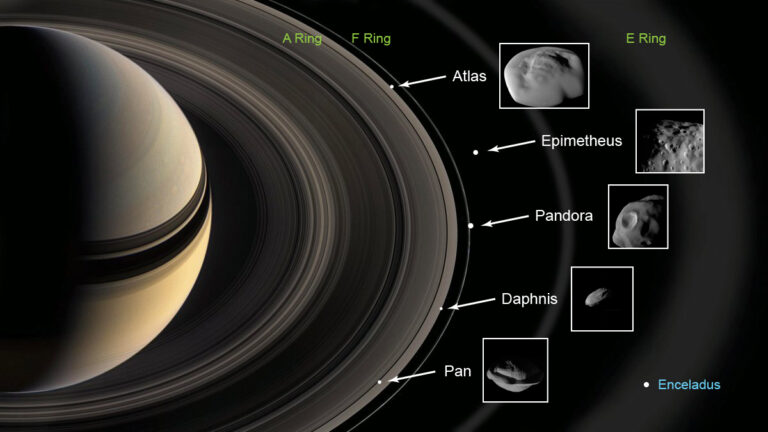
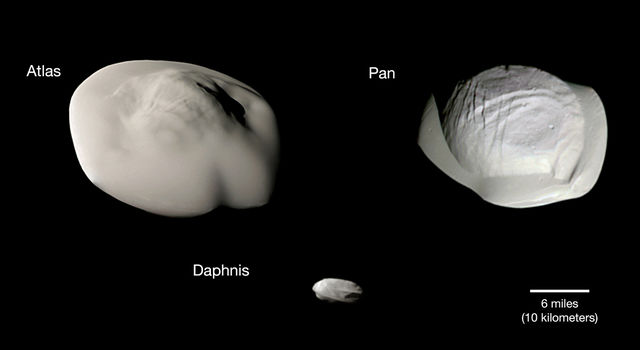
Saturn’s ring moons Pan, Daphnis, Atlas, Pandora, and Epimetheus
New findings have revealed that five tiny moons snuggled in and near Saturn’s rings. The closest-ever flybys by NASA’s Cassini spacecraft disclose that the surfaces of these unusual moons are covered with material from the planet’s rings and from the icy particles emrging out of Saturn’s larger moon Enceladus. This research succesfully draws a picture of the competing processes shaping these tiny-moons.
The daring, close flybys of these odd little moons let us find how they interact with Saturn’s rings,” said Bonnie Buratti of NASA’s Jet Propulsion Laboratory in Pasadena, California, who led a team of 35 co-authors that published their work in the journal Science on March 28. One of a Pakistani Planetory scientists Dr. Nozair Khawaja was among these co-authors.
The new research carried out from data gathered by six of Cassini’s instruments before its mission ended in 2017, is a strong vindiction that dust and ice from the rings accretes onto the moons embedded within and near the rings.
Scientists also found that the moon surfaces are highly porous, further verified that they were formed in multiple stages as ring material settled onto denser cores that might be remnants of a larger object that broke apart. The porosity also helps explain their shape: Rather than being spherical, they are blobby and ravioli-like, with material stuck around their equators.
Image. JPL NASA
The process may be going on throughout the rings, and the largest ring particles are also accreting ring material around them. Detailed analysis of these tiny ring moons may further provide us more about the charactrastics of the ring particles themselves.
Of the satellites studied, the surfaces of those closest to Saturn — Daphnis and Pan — are the most altered by ring materials. The surfaces of the moons Atlas, Prometheus and Pandora, farther out from Saturn, have ring material as well — but they’re also coated with the bright icy particles and water vapor from the plume spraying out of Enceladus. (A broad outer ring of Saturn, known as the E ring, is formed by the icy material that fans out from Enceladus’ plume.)
Scientist got the main data set from Cassini’s Visible and Infrared Mapping Spectrometer (VIMS), which gathered light visible to the human eye and also infrared light of longer wavelengths. It was the first time Cassini was close enough to create a spectral map of the surface of the innermost moon Pan. By analyzing the spectra, VIMS was able to learn about the composition of materials on all five moons.
VIMS observed that the ring moons closest to Saturn look the reddest, similar to the color of the main rings. Though Scientists are not fully aware with the exact composition of the material that appears red, but they hold on it is likely a mixture of organics and iron. The moons just outside the main rings, on the other hand, appear more blue, similar to the light from Enceladus’ icy plumes.
The six uber-close flybys of the ring moons, completed between December 2016 and April 2017, involved all of Cassini’s optical remote sensing instruments that study the electromagnetic spectrum. They worked alongside the instruments that examined the dust, plasma and magnetic fields and how those elements interact with the moons.
Resaerchers are craving to come across that what triggered the moons to form? For finding a reasoable answwr scientists will use the new data to model scenarios and could apply the insights to small moons around other planets and possibly even to asteroids.
This week millions of science enthusiasts across the globe gazed at the image of one of the most extraordinary and mysterious things in the universe, the black hole which was previously considered to be non-observable. The woman who made this historical feat possible is just 29 years old. Katie Bouman, a computer scientist at Massachusetts Institute of Technology (MIT), led the development of an algorithm which proved to be critical in the image development of a supermassive black hole some 55 million light years away from earth. Katie Bouman instantly got recognition across the internet and applauds for her contribution to this historical milestone.
The recently released image of a super massive black hole
Katie Bouman, a Ph.D. student at MIT, started working on the algorithm nearly three years ago when she was in her graduate studies while leading the project and assisted by teams from MIT’s Computer Science and Artificial Laboratory, MIT Haystack Observatory and Harvard- Smithsonian Center for Astrophysics. Due to the extremely high gravitational pull of a black hole, nothing, not even light, can escape from. Although, Einstein’s theory of General relativity predict their presence in the universe. Since then no single telescope was powerful enough to capture a black hole, a network of telescopes spread all over the world, collected the data simultaneously on hundreds of hard drives. Dr. Bouman’s method was crucial for the transformation of enormous data into an image through the multiple algorithms she spearheaded. The results of the algorithms were then analyzed by different teams to provide a credibility to the findings.
Humanity’s quest to explore the cosmos is as old as the history
of civilization. The principles of rocket science can be traced back to more
than two thousand years. The first rocketeers did not know much about the
scientific underpinnings of rockets, they learned by doing, often failing. Through
their discoveries they laid the foundation for modern rocketry.
Rocket development dates back to somewhere “between 428 to 347
BC” when Archytus, a Greek philosopher, mathematician, and astronomer, reported
having constructed and flown the first self-propelled, small bird-shaped flying
device. The ‘bird’ was suspended by wire or mounted at the end of a bar
that revolved around a pivot. Using a jet of steam, Archytus, was able to propel the bird through the air; in
effect he demonstrated the concept of reactive propulsion.
Over 500 years later, between 65 and 125 AD, another Greek
inventor, known as Hero of Alexandria, developed the first known device to use steam for propulsion, called
‘Hero engine’. It consisted of a hollow sphere placed on top of a vessel of heated
water. Around the same time, the Chinese developed a simple form of gunpowder,
prepared with saltpeter, sulfur and charcoal dust, which when ignited, produced
colorful sparks and smoke. They used these fireworks for religious and
social festivals. Soon they started experimenting by filling bamboo tubes with
gunpowder and noticed that if one end of the bamboo tube was tightly sealed
with clay and ignited, the fireworks escaped from the other end, producing an
upward thrust that led to the invention of the first solid rocket. However,
they were unaware that this could be used for destructive purposes or even for
travelling into space, from this point forward the use of rockets spread
to India and Europe.
Meanwhile, in the 13th century, Roger Bacon, an English monk, worked and improved the formula for
gunpowder so that it could result in more explosive power. He wrote down his
insights in manuscripts that became a part of a growing body of knowledge on
rocketry. By the 16th century, the chemistry and mechanics of rockets were
becoming well-known and military manuals included chapters on designing and
building rockets.
Later on,Kazimierz
Siemienowicz a commander in the Polish
Royal Artillery studied rocket design; one of his manuscript included a design
for a multistage rocket, consisting of two or more stages, each of which
contained its own engines and propellant. The staging became a critical
technology for rockets designed for space. The 16th and 17th centuries were
significant because of incredible advancements in astronomy, chemistry, physics,
and mathematics and the great contributors to these advancements
were Galileo and Newton.
Galileo investigated the effect of gravity on falling bodies and
summarized that all bodies fall at a uniform rate of acceleration assuming
there is no air resistance, while Isaac Newton turned out to be a game changer in rocketry and his three laws
of motion lay down the solid foundation for rocket development, his first law
of motion which stated, “A body will persist to do whatever it happens to be
doing unless it is acted upon by a force”, was key in these developments.
However, even with Newton’s scientific underpinnings, no further fundamental
advancements were made in the manufacture of rockets until Colonel William Congreve, who developed a standard set of rockets and made the greatest
impact by standardizing their parts and manufacturing techniques.
The 19th century is remembered as significant for
scientific evolution and rocket science reached new heights during the same
time. Robert H
Goddard regarded as the “father of modern rocketry”. Although his basic
concept of liquid-fueled rocket got validation a few years after his death,
actually it was Goddard who launched his prototype space rocket in 1926 for the
first time in history. He and his team launched around 34 rockets between 1926
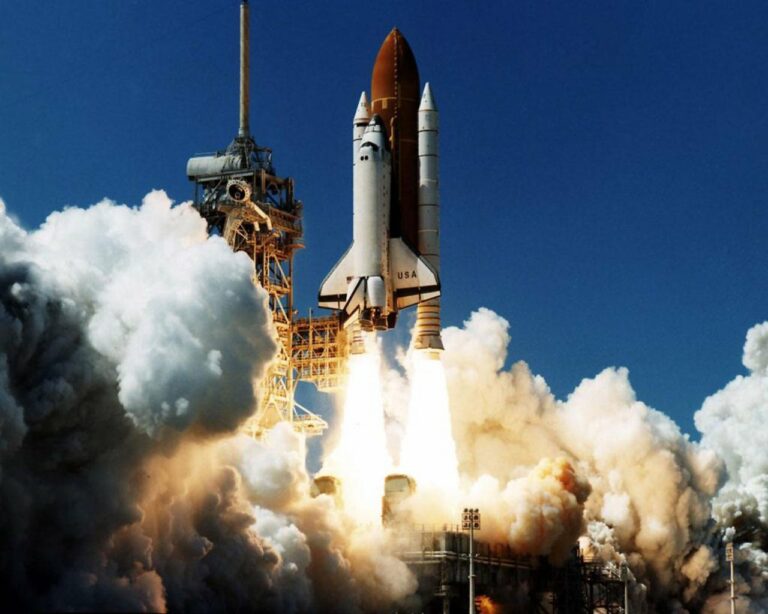
to 1941 through private sources. Due to Goddard’s efforts Yuri Gagarin carried out the first manned flight into space on 12th April 1961.
In 2011 the United Nations General assembly marked 12th April
as the International
Day of Human Space Flight. Since then, it is
celebrated across the globe to pay homage to the thousands of individuals whose
contributions turned an ancient dream into a reality.