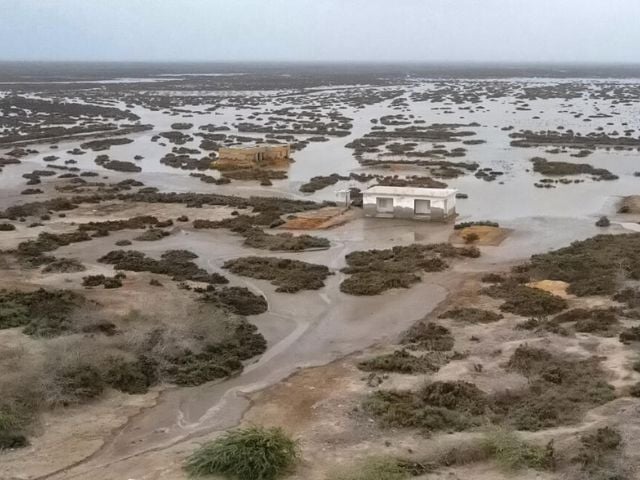
It was a warm and humid evening in August when Rasadullah, an aging fisherman, dragged his weather-beaten net across the muddy shoreline. The sea breeze that once promised abundance now carries only silence and devastation. He has been trying to catch fish since dawn, but his nets were still empty. This has been happening for years; he merely catches a few fish that his family eats at night. There’s no more hope for his profession, and he was nearly giving up…
Rasadullah lives with his family in Mubarak Goth in Kimari Town, Karachi. Mubarak Goth is a fishing village once famous for the abundance of fish and was an appealing tourist spot; is now losing its spark, yes, due to profound climate change.
The Delta of the River Indus was once the sixth largest delta in the world, stretching nearly 400 kilometers from Karachi to the Rann of Kutch and covering an area of approximately 600,000 hectares. It was a region of immense ecological, environmental, and economic significance, supporting a wide range of biodiversity, fisheries, mangrove forests, and a long list of agricultural activities.
However, in recent decades, the Indus Delta has been facing severe degradation due to a continuous decline in river water flow caused by reduced freshwater discharge, construction of barrages and dams, over-extraction of water for irrigation purposes, and climate change impacts. As a result, the mangrove ecosystems are shrinking, soil salinity is increasing gradually, and fisheries, which were once the primary source of livelihood for thousands of local communities, are now under serious threat.
The consequent loss of freshwater inflow has also allowed seawater intrusion deep into the deltaic region, rendering vast stretches of land uncultivable and displacing many local populations. Consequently, the economic activities depending on the healthy functioning of the delta, like fishing, farming, and small-scale cottage industries, are being extensively destroyed, leading to growing unemployment and poverty among the inhabitants.
The experts warned that if immediate and sustainable water management measures are not implemented, the Indus Delta, once a thriving ecological hub, will further increase the risk of irreversible environmental damage and the collapse of its socio-economic fabric. 2
Newly planted mangroves in Keti Bandar town. Photo, Asif Hassan/ AFP
Ali Anjum of the World Wide Fund for Nature-Pakistan (WWF-P) noted, while talking to Dawn, that “The consequences of these changes are stark. The Indus delta has shrunk by over 90 per cent in recent decades, millions of acres of fertile land have been lost to seawater intrusion, and groundwater salinity has rendered much of the region’s water undrinkable and unfit for irrigation, leading to a continued human tragedy,” he shared.
Mentioning the land losses in three talukas — Keti Bandar, Khharo Chhan, and Shah Bandar — Anjum said that so far 263,272 hectares had turned barren.
Agriculture losses are around 4.2 million PKR, while fishery and forestry losses stand at 3.5 million and Rs 145 million, respectively. If this trend continues for the next 25 years, we shall bear 4 billion PKR in losses,” he said, adding that a WWF study revealed that 1.5 inches of mangrove land was being eroded daily.
Anjum also raised concern over coastal pollution, stating that 450 million gallons daily (MGD) of untreated wastewater from more than 6,000 industrial units was being dumped into mangrove habitats, leading to growth retention and degradation of the marine ecosystem.
Once, these waters of the Delta teemed with a variety of fish such as Hilsa, shrimp, and mullet, feeding generations and sustaining villages. Today, the fish are vanishing, mangroves are thinning, and the sea is creeping further inland. “The sea has changed its mood, from silence to fierce,” Rasadullah says, pointing to a barren stretch where mangroves once stood tall, shielding his community from storms.
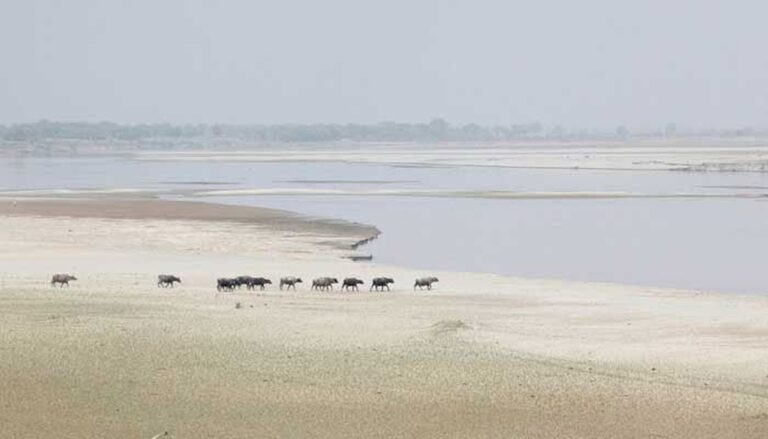
Seawater intrusion into the delta, where the Indus River meets the Arabian Sea in the south of the country, has triggered the collapse of farming and fishing communities.
“The saline water has surrounded us from all four sides,” said Khatti from Abdullah Mirbahar village in the town of Kharo Chan, about 15km (9 miles) from where the river empties into the sea.1
“Our destruction began when dams were built on the Indus, blocking its natural flow. The Indus’ final destination is the sea, and according to both natural and international law, the people living at the end of the river, particularly the people of the delta, have the first right to its waters. The river’s water is crucial for the ecology of the sea and the mangrove forests.”
The waters of the Indus are strong and push the seawater away, leaving behind fertile soil that builds the land. They reduce the acidity of the sea and keep the sea’s temperature normal. Now, due to the absence of the river’s water, coastal erosion has swallowed up almost 4.2 million acres of land.
In Pakistan, particularly in Sindh, the effects of climate change are the most severe on the coastal belt. Due to global climate change, not only has coastal erosion increased, but sea levels have also risen. The sea, which would return to its normal position in mid-August, now brings towering waves and high winds throughout September and October.
We now only have two seasons (summer and winter), with a shorter winter and a longer summer. The fishing season, which previously lasted from August to November, has shrunk, as by the time the sea settles, the season is over. Rains are either scarce or excessive and untimely.5
The change is not just in the tides but in the very lifeline of the delta. Reduced freshwater flows below the Kotri Barrage, rising sea levels, and climate change have disrupted the delta’s balance. Without enough river water and sediment to push back, the sea intrudes, turning once-fertile creeks into salty wastelands. Mangrove forests, the natural guardians of Karachi’s coast, are disappearing, leaving fishing grounds barren and shorelines exposed to erosion.
For Mubarak Goth, a coastal settlement that still draws tourists for its rocky beaches, the crisis is deeply personal. Fishing families here report dwindling catches, harsher seas, and younger generations abandoning the coast for uncertain lives inland. The community has no jetty, no protective infrastructure; only the stubborn resilience of its people.
Scientists warned long ago that the Indus Delta is drying and sinking. The river that once poured life into 17 major creeks now trickles weakly to the sea. Pakistan’s most productive fishing grounds are collapsing, threatening both local livelihoods and national food security.
The ongoing flooding in Sindh, after India released floodwater in the Ravi and several other rivers of Punjab, threatens the Indus Delta by worsening existing vulnerabilities such as coastal erosion, sea intrusion, and land degradation. Increased water levels slow drainage, heighten inundation, damage crops and infrastructure, and displace vulnerable communities. Experts warn these conditions could critically harm the delta’s mangrove forests and local livelihoods.
Nasir Panhwar, an environmentalist and former coordinator for WWF’s Indus for All Programme, said, “The reservoirs on the Indus and its tributaries were constructed to serve the needs of expanding agriculture as well as the subsequent industrial development. He said that today the delta is starved of sediment because economic priorities overruled the ecological consequences that will haunt us for years to come.”
He blamed the severe degradation of the delta on the upstream diversions of the river. “It is one of the worst examples of human interventions in nature.” 6
Still, Rasadullah refuses to leave his place, saying, “This water carries the memory of my ancestors. We have our roots here”, then he started casting his net once more. Each throw is not just an attempt to feed his family; it is an act of protest, a hope and a prayer, a reminder of what is at stake: a culture, a community, and an ecological treasure that once fed the nation.
A 23-hour drive, narrow roads, and mountains on every side. This is what separated Hunza and me at the start of my journey. This journey was neither for amusement nor a vacation, but rather to be part of an effort led by IEI Pakistan, an organization inspiring the youth and people in the North.
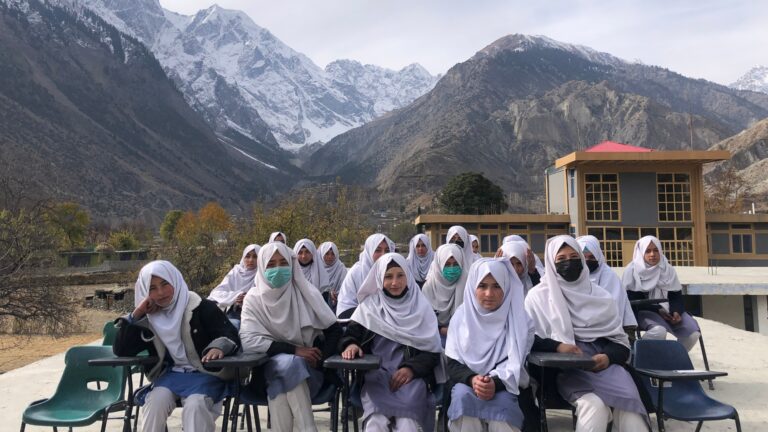
Innovate Educate & Inspire Pakistan, or IEI Pakistan, began as a travel-based, voluntary, in-residence teaching program. A pioneer in this field in Pakistan, providing people with an opportunity to teach and support public education in the North. Now, a registered non-profit organization, IEI focuses on improving the accessibility of quality education and learning experiences for children in remote and low-income communities in the Gilgit Baltistan region. The organization is not limited to its travel-based program, but also offers climate education trainings, female-exclusive teaching circles, as well as summer camps.
My glimpse of this beautiful endeavor was achieved when I got the chance to volunteer for their teaching program. The journey to Hunza is grueling as one must travel through mountains, beside flowing rivers. The city is far from any operational airport and sits as if a hermit in his peaceful cave, surrounded by the Karakoram range on all sides.
The Hunza valley itself is a surreal place, plucked out of one’s best dreams; my first look made me forget the struggle I had to go through to reach this place. The time when I was in the middle of the Karakoram Highway, endeavoring to get a single internet signal to inform Saadeqa Khan of my unavailability for a webinar I had to attend, now lies behind my awe for the nature in Hunza. I was completing my two-month science writing internship program, Scientia Pakistan, and alongside discussing my final writing project with Chief Editor Saadeqa Khan.
Another highlight is IEI Libraries, aims to increase the number of libraries for students studying in remote public schools. These libraries are equipped with digital tools to encourage digital literacy as well as colorful spaces. Photo, IEI
Soon, I found myself near the building where IEI has its office. Tucked away in a tourist-free area was a stone-carved staircase that led one into an endearing wooden cottage. Here lies the ever-important machine driving the organization: The team behind IEI. I had to spend a whole week there, so I presented the material I was going to teach the kids there. Each day showcased a new activity and a different part of astronomy.
Kids from ages 7 to 17 sat in an ellipse around me as I introduced myself and start the first lesson on our solar system and its planets. I expected to be the one holding the charge of the lesson; however, all the kids provided their part as well. It was not a classroom but a conference talk, not professional or official one, but equally as entertaining for all.
Every kid had a spark that contributed to the flame of the class, whether it was the ever-so-curious Hanaan or Aaliyah, who had an answer for every question. All these sparks needed was a gush of encouragement and improvement to burn even brighter. The fan providing this gush was IEI.
Gilgit Baltistan has the highest literacy rate in Pakistan, with 95% of the people having completed their education. It is not a place to be underestimated, but a bastion of talent waiting to spread. IEI catalyzes this awareness through its various programs, including Climate Educator Training. These areas were massively effected with recent flooding and glacier melting. Therefore, a virtual teacher training program is designed to encourage middle school and primary students to find the solution of rising issues due to climate change.
ESD School Ispinj, Chipursan program aims to address the lack of educational opportunities for children aging 2-5 in the village of Ispinj. For this program, IEI has collaborated with the Polish aid and opened a school to provide the students with an opportunity to learn and flourish.
Another highlight is IEI Libraries, aims to increase the number of libraries for students studying in remote public schools. These libraries are equipped with digital tools to encourage digital literacy as well as colorful spaces.
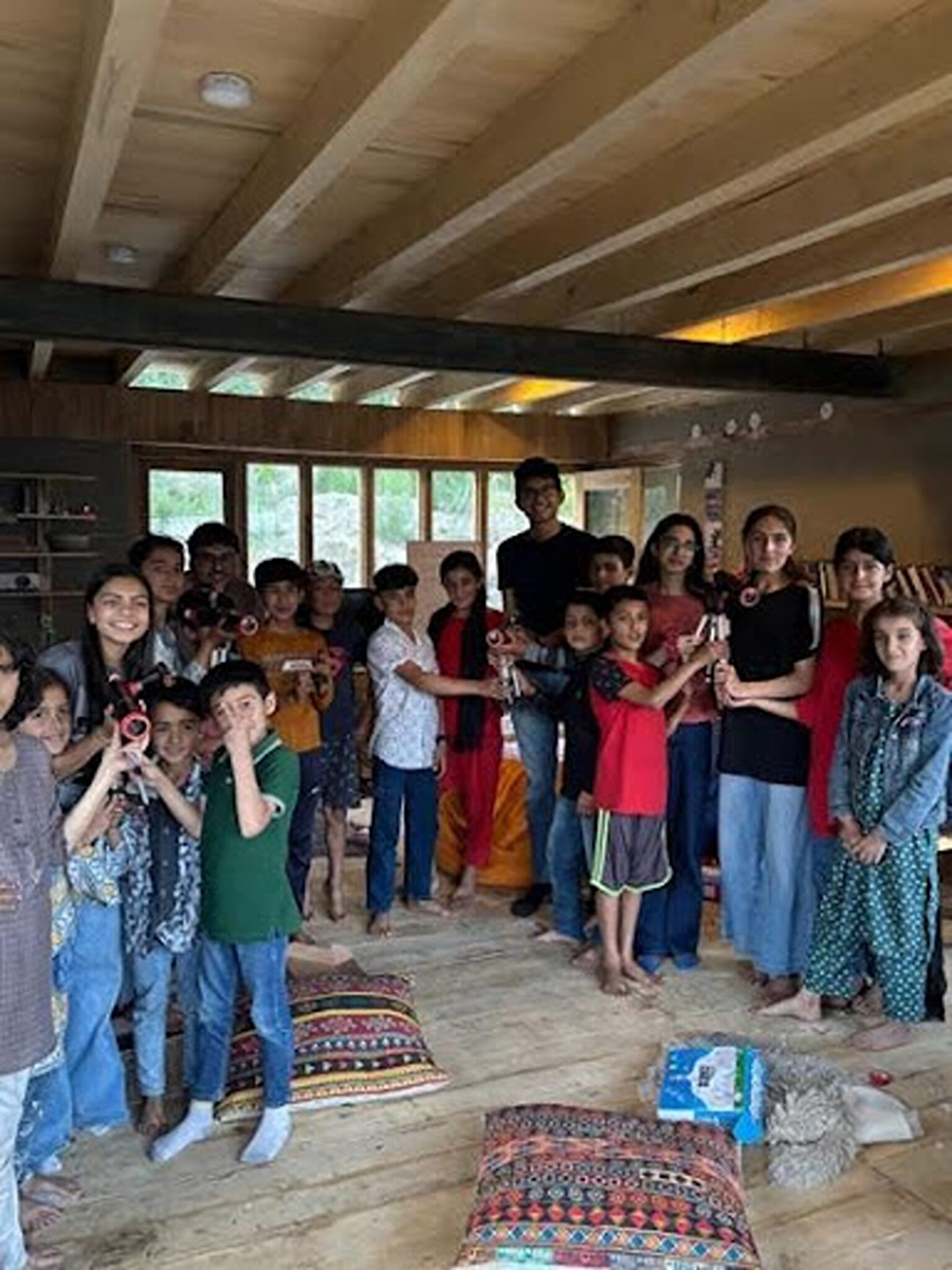
It was not a classroom but a conference talk. Not as professional as an official one, but equally as entertaining and important to me. Ahmed with the kids. Photo, Ahmed
The program that inspires me most is “Saheli Leaders Fellowship”, a unique opportunity for young girls to travel to Hunza and make a positive impact on the lives of adolescent girls and women. The program teaches girls leadership skills, while also providing life skills education and a safe space for young girls in remote mountain villages. Tech Sahelis is a branch of this program that mainly focuses on improving digital skills among women.
In Summer camp programs, kids are taught through a series of activities that encourage learning and foster joy. Another highlight of their efforts is IEI Films, which is designed to equip the youth with modern filmmaking techniques. Workshops are held that teach kids about different filming techniques and processes.
My volunteering opportunity was a cog in the wonderful machine that IEI is. For nearly ten years, it has been improving and inspiring the youth. Nevertheless, this venture taught me the importance of local efforts for improving the lives of our people. IEI’s work highlights that even in the series of turmoil and catastrophes that our country finds itself in, there are still guardians who are trying to help and take care of the nation.
Astronomy, for many centuries, has educated us about the wonders of the cosmos. From the first discovery of a supernova in Cassiopeia (a constellation) by Tycho Brahe to today’s powerful telescopes, such as the Event Horizon Telescope (EHT) or the James Webb, humanity has made significant technological advancements within the realm of Astronomy. As this discipline has evolved into a global multi-billion-dollar industry, questions have emerged about how to sustain excellent research while considering its environmental impact.
Climate change is the most pressing issue humanity faces today, and it is the responsibility of the residents of this only known living planet to nurture and take care of our homes. To avert the crisis, we all should play our roles, especially scientists, in acting upon what is necessary for the environment and engaging in proper advocacy for environmental sustainability as responsible citizens.
A group of astronomers took matters into their own hands and estimated the carbon footprint of astronomical research on the climate of Earth. Hence, it became the starting point for the formation of an organization called ‘Astronomers for Planet Earth’ (A4E). A group where astronomers, using their unique astronomical perspective, mobilize researchers around the world to address the present climate crisis.
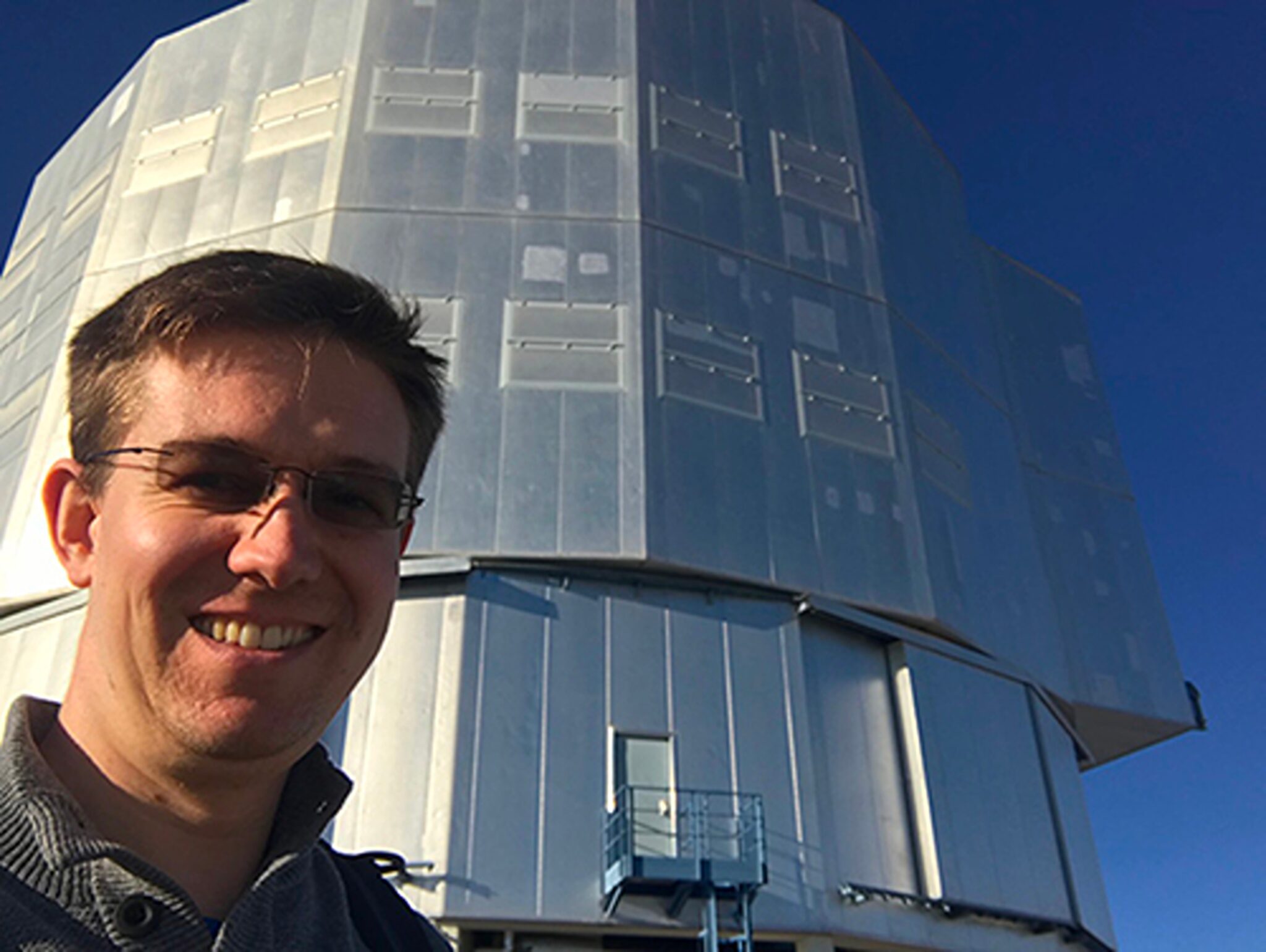
As individual astronomers, the best thing we can do is share the astronomical perspective, particularly the ‘Pale-Blue-Dot’ story. Photo, Dr Leo
Here, we are happy to share our conversation with one of the founding members of A4E, Dr. Leonard Burtscher. He sheds light on the organization’s mission and the importance of understanding astronomy’s carbon footprint.
Aly:Beginning with, could you share about your work and elaborate on your area of research as an astronomer?
Leo: I worked in astronomy for 15 years, during which time I completed my PhD in Infrared Interferometry. Subsequently, I joined the Max Planck Institute for Extraterrestrial Physics in Garching near Munich, where I contributed to the development of the new instrument GRAVITY, which played a role in winning the Nobel Prize for my research group leader three years ago.
After that, I became a staff scientist at Leiden University, working on the new ELT instrument, METIS. METIS is a mid-infrared instrument designed to characterize Earth-like planets and study active galaxies, which has been my primary focus. However, this is my past to some degree. Approximately one year ago, I switched the courses completely. I am now an energy and climate policy advisor at a small NGO, a non-governmental organization called the Umweltinstitut – The Munich Environmental Institute.
In the past three or four years, I realized that studying distant galaxies and dusty clouds around supermassive black holes, while fascinating, was no longer aligned with my interests. Therefore, I joined this activist group and am essentially trying to reduce energy consumption in Germany, which is currently one of my main priorities.
Aly: Nice! Can you highlight what ‘Astronomers for Planet Earth’ A4E is all about, its mission, and how it came to be? I assume that it has an interesting story behind its formation.
Leo: A4E is now over four years old and stands as the only, and certainly the largest, grassroots organization in astronomy dedicated to sustainability. It was created simultaneously at two locations. The first group, predominantly centered in San Francisco and Yale University, was made up of individuals such as Adrienne Cool and Debra Fischer, who had long been part of the AAS Sustainability Committee for the American Astronomical Society.
The second group, based in Europe, coalesced a few months later and jointly called ourselves‚ ‘Astronomers for Planet Earth.’ They initiated discussions on the social media platform Twitter during the European Astronomical Society annual meeting in Lyon, France, in 2019 — an event marked by a heatwave. The University of Lyon, where the meeting took place, lacked air conditioning, so it was very hot in all the meeting rooms. Not as hot for Pakistani conditions, probably, but hot for European conditions
Some of us began to argue about whether astronomers were part of this problem with frequent flying and extensive use of supercomputing. That is when we said, Okay, we need to look into that and improve it by recognizing the need to first reduce the carbon footprint of astronomy itself. Our conviction was grounded in the belief that taking personal action was a prerequisite for advocating change to others.
Therefore, from the beginning, A4E outlined a four-year plan with two central pillars. The first involved reducing the carbon footprint of astronomy research, and the second aimed at utilizing astronomy to communicate what they termed the “astronomical perspective.” This perspective was inspired by the iconic image from Voyager 1—the ‘pale blue dot,” where we can see a tiny dot representing Earth from far away out of our solar system, all that we have, as Carl Sagan so beautifully wrote. Hence, we see ourselves as the Climate Voice in Astronomy. But also, the Astronomy Voice in the Climate Movement.” That’s how I would describe what A4E is and does.
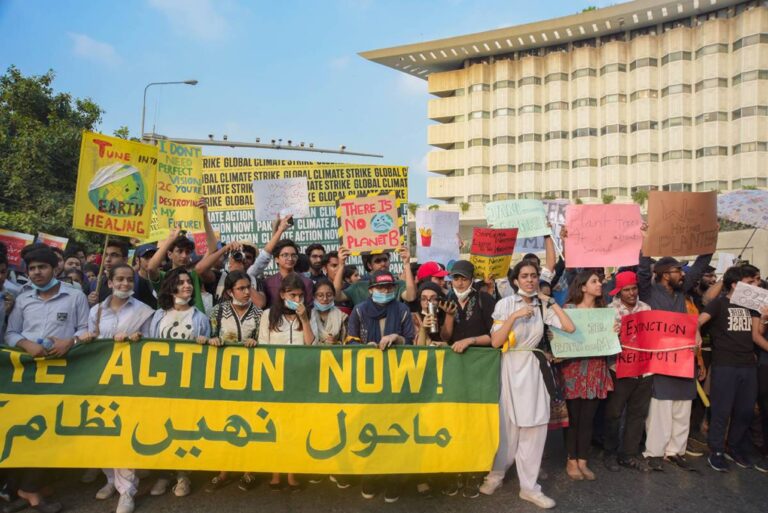
Aly: It is all about realizing and making astronomical research sustainable. Quite fascinating indeed. A very strong message is visible from nearly all A4E campaigns: “There is no PLANET B”. Certainly, it’s not just a catchy and attractive phrase but the truth. Can you tell me more about how astronomers came to this realization and why you think it is important to emphasize?
Leo: Certainly, one of the statements we, as scientists, aim to affirm, which is often shown at climate demonstrations, is true, and it’s astronomical science that says this.
Astronomers have discovered planets outside our solar system in recent years. The discovery of ‘51 Pegasi b’, for which the Nobel Prize was given to Michael Mayor and Didier Queloz in 2019. The Kepler mission further accelerated this revolution, revealing over 2600 exoplanets, and today, our knowledge extends to more than 5,500 planets outside our solar system. Some of these distant worlds bear similarities to Earth, with intriguing atmospheres that could potentially support life, including planets with oceans—a captivating prospect.
However, the story behind Planet B is that, even if you find another planet that’s just like Earth, there’s a catch: you have to be able to get there, and for a scientist, it’s always very clear that this is impossible likely for centuries to come. Therefore, as scientists, we emphasize to the public that while exploring exoplanets is fascinating, it should not be viewed as an alternative to safeguarding our planet.
It is crucial to convey this message and use it as a powerful motivator for discussions on sustainability. The increasing fascination that people have with astronomy makes it an ideal catalyst for encouraging contemplation about our place in space and how unique Earth is. That is why the No Planet B story is so good praise for astronomy.
Aly: It is significant to understand the Carbon Footprint of Astronomy. Could you explain how big the carbon footprint of astronomical research is and how it is affecting our climate?
Leo: I will say that there are some caveats with computing accurate carbon footprints because that requires thorough research. While some researchers, including myself, have delved into this realm, it’s crucial to acknowledge that not all sources of emissions are always accounted for. What is relatively easy to compute is the emissions from flying to conferences. Knowing where people come from and which mode of travel they use, one can compute the emissions for a conference.
Together with my colleagues, I conducted such calculations for the 2019 Meeting in Lyon and the 2020 online European Astronomical Society meetings. We found that the difference in emissions between the in-person and online meetings was a factor of 3000. A single round-trip flight within Europe amounts to roughly one ton of emissions, with even higher footprints for those traveling from Asia, Australia, or the US.
However, even in this seemingly straightforward calculation, there are discussions surrounding the impact of airplane emissions, considering the radiative forcing index. C02 emissions released at high altitudes have different effects than C02 emissions on the ground. Additionally, planes have contrails that have effects that are not fully understood.
Expanding the analysis to the institute level involves accounting for heating, electricity, commuting, and possibly even food emissions. Supercomputing also contributes to emissions, depending on the power source of the supercomputer.
In a comprehensive analysis catering to all the institutes in the Netherlands, we found that total emissions per staff researcher ranged from about 3 to 10 tons per year of CO2 equivalent emissions, including the radiative forcing index for flights.
A more recent study by Jürgen Knödlseder evaluated the carbon emissions of astronomical infrastructure, considering all the necessary concrete and steel. This analysis revealed the emissions were 37 tons of CO2 equivalent per year per astronomer (with quite some uncertainty due to the estimation method). Still, this is probably the single largest source of emissions for astronomy research.
We should consider these emissions when discussing new astronomical infrastructure, e.g., do we need three extremely large telescopes, or would two be sufficient if we focus more on collaboration instead of competition, perhaps? We can see from these papers that it’s a bit hard to pin it down to one number.
One of the earliest papers addressing the carbon footprint of research activities initially found a very high carbon footprint for research done in Australia, reflecting the country’s heavy reliance on coal for electricity production. Later, the number was updated when their utility switched to a cleaner form of energy, and the carbon footprint was suddenly a lot smaller, although they used the same machines.
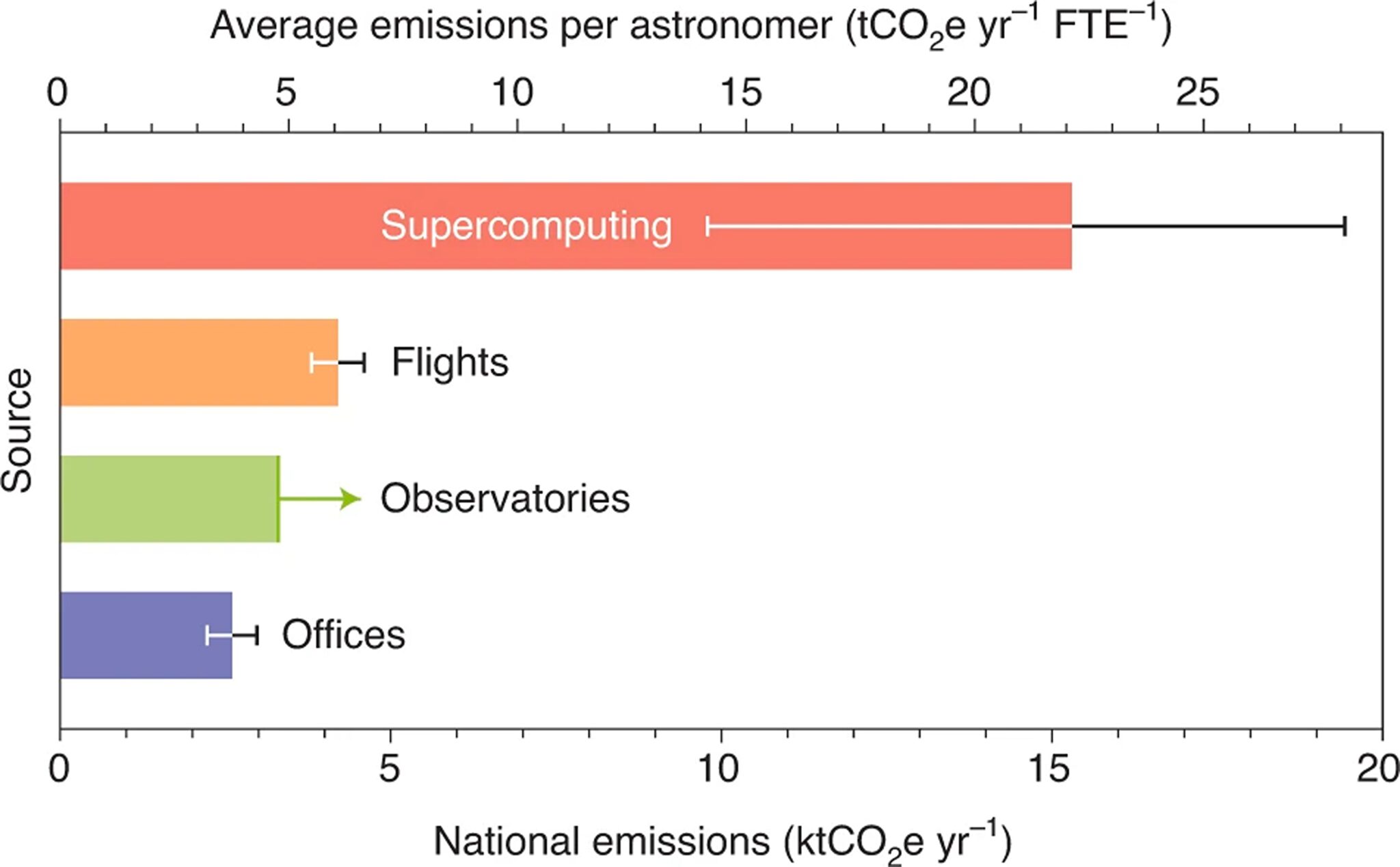
A breakdown of four sources of Australian astronomers’ emissions was analyzed by Stevens et al.
Therefore, it depends on the location and which sources and scopes of emissions you include. One widely accepted carbon accounting standard is the greenhouse gas protocol. “The answer is complicated, but as a rough number, I would say something between 5 and 30 tons currently is probably the carbon footprint per astronomer per year, just for astronomy work!”
Aly: When you first started this initiative and went to the public, how did people react to this idea?
Leo: Among other astronomers, we had mostly positive reactions. When discussing our goals of measuring and reducing our carbon footprint and enhancing public communication, many expressed openness and acknowledged the importance of taking action. They eventually realized that we cannot go on and fly around like crazy and do nothing; we need to take active measures ourselves.
Unfortunately, some institutions, including professional societies, were not as open to embracing this change. They saw the difficulties in changing their meeting format. Sometimes, they see financial challenges in doing hybrid meetings, where they think they need to spend a lot of money to implement these. However, much more economical ways of implementing hybrid meetings are available and have been tested successfully. The European Astronomical Society, for example, shifted back to in-person meetings, expressing a belief that online meetings alone may not align with participants’ preferences. The reactions, therefore, were a bit mixed.
Organizations like the European Southern Observatory (ESO) have taken steps toward sustainability by installing solar panels for telescopes in Chile. Another site, La Silla, has already had a photovoltaic plant for a couple of years. However, they’re having a hard time being smart about flying for observations. While there have been improvements, the pace and extent of change have not met the rigorous standards advocated by A4E.
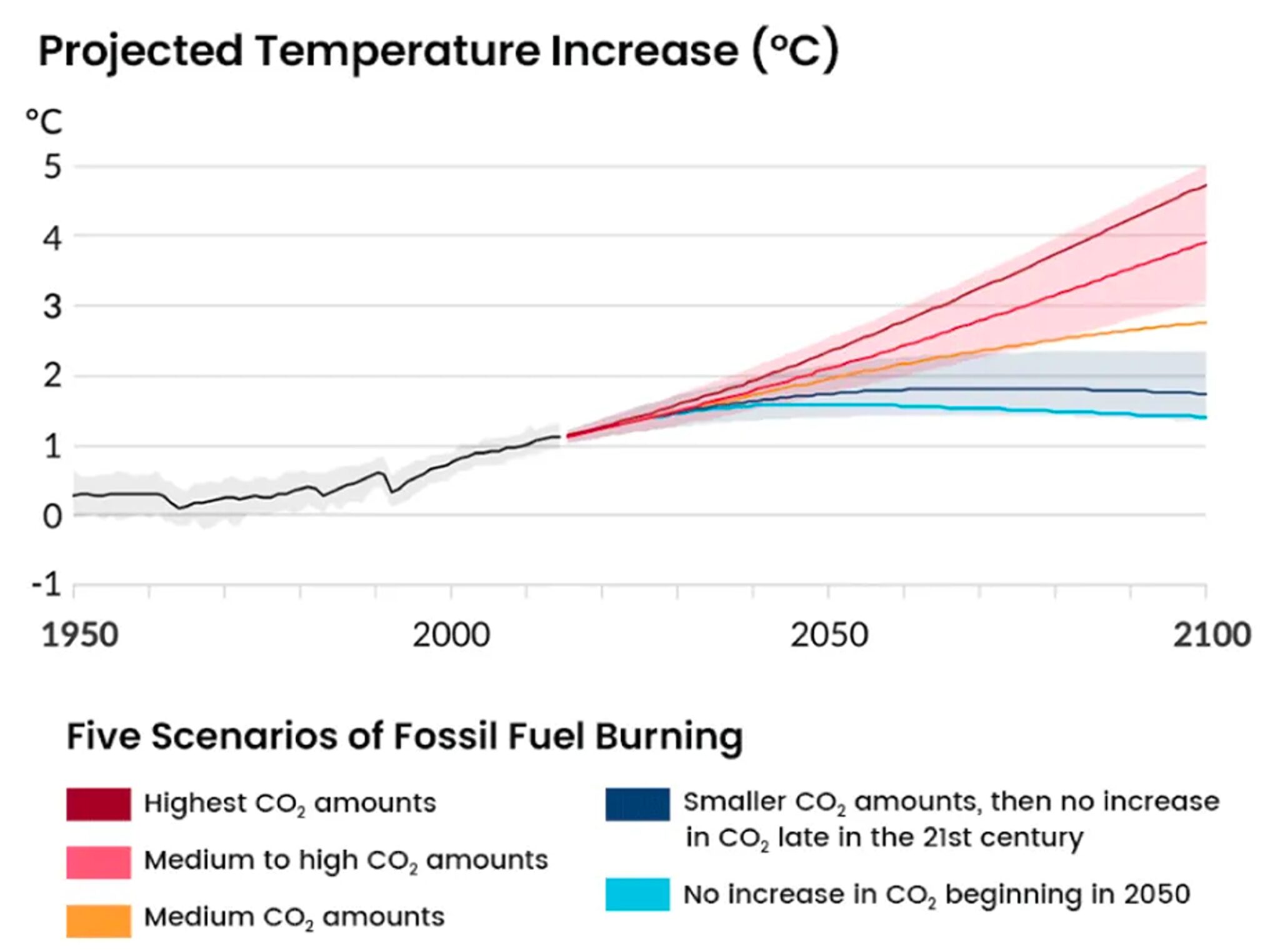
The amount of climate change by the end of the century. (Source: IPCC Sixth Assessment Report)
Aly: Apart from the engaging videos I have seen, what other initiatives or projects has A4E undertaken to advocate the seriousness of the climate crisis? How can one approach spreading this message effectively?
Leo: Activities under the A4E umbrella, apart from these videos, several publications have been produced, including two special issues in Nature Astronomy. Ongoing work, led by Andrea Gokus, is delving into flight emissions of astronomers in 2019 on a global scale, analyzing correlations between emissions, conferences, and the wealth of the country where the astronomers are from.
We also organize events at society meetings, collaborating with entities such as the American Astronomical Society (AAS) Sustainability Committee and the Astronomical Society of the Pacific. Special A4E-themed meetings have addressed astronomy and sustainability, featuring discussions with climate scientists, experts in light pollution, and representatives from telescope consortia sharing strategies to minimize emissions.
One of the biggest activities we initiated was an open letter to astronomy institutions and societies calling upon them to become active and to do whatever is in their power to reduce emissions. The letter gathered approximately 3,500 signatures within a few weeks, being quite successful.
More recently, A4E has engaged in localized outreach efforts, such as organizing an astronomical organ concert in Germany. This unique event combined the powerful experience of organ music with compelling videos from A4E, evoking emotional responses from attendees. Such events aim to convey the urgency of environmental stewardship and emphasize a positive narrative.
Our key focus is shaping a climate change narrative that goes beyond scientific facts. Recognizing the need for adaptation, the organization advocates framing this change positively. The aim is to frame this narrative not as a loss of conveniences like flying or fashion but as an opportunity to protect the planet and still ensure a high quality of life for all. By sharing this story, A4E endeavors to inspire positive action and a collective commitment to environmental preservation. This is what we all should try to do.
Aly: As we wrap up our conversation, I would love to hear your advice for members of the astronomy community who are eager to spread this positive message about sustainability. What individual actions would you recommend to help tackle the climate crisis?
Leo: Quoting one of the climate communicators in the US, Katharine Hayhoe, who advocates for a climate positivity movement, emphasizes the importance of talking about the climate crisis. The idea is to ensure that individuals don’t feel isolated with their concerns but connect with others to collectively address the challenges.
As an individual, you can very quickly get the impression that there’s nothing you can do. While one person may feel limited in what they can achieve, the power lies in the collective effort of many individuals coming together. Some positive examples of movements started with something small, but with a group, they changed the world for the better.
This is the kind of hope that I would like to share with people, and I hope that you’re not alone with this, and this is also what A4E is for. We have a platform to foster this connection and maintain a network where people can share information, resources, and insights. One of the most important aspects of A4E is that it helps people feel like they are not alone and tackle these huge problems as a collective team.
As individual astronomers, the best thing we can do is share the astronomical perspective, particularly the ‘Pale-Blue-Dot’ story. A4E encourages various creative ways to communicate this perspective, such as organizing astronomical organ concerts or hosting discussions during mountain hikes.
For better global collaboration, the key is to incorporate elements that connect astronomy to the broader story of our place in the universe and the importance of protecting our planet. The overarching message is to get people thinking about our place in the universe, about our place on Earth, and that it’s probably a good idea to protect this planet for a little while longer.
When we picture humanity’s future among the stars, the images are often bold and familiar: astronauts treading across the rusty plains of Mars, glittering domes rising on the Moon, or massive spacecraft funded by space giants like NASA, ESA, or CNSA. These visions spark awe and excitement, but they also tend to leave much of the world out of the frame.
For many developing countries, the story is very different, where daily life can mean coping with rolling blackouts, navigating fragile healthcare systems, or struggling through gaps in education. In such places, the dream of space colonization often feels impossibly far away and something that belongs to wealthier nations with deep pockets and advanced technologies.
Yet, the question that refuses to fade is this: should the stars really be the privilege of a few, or can nations still fighting battles here on Earth also play a meaningful role in building humanity’s future beyond it?
The answer, though complex, is not a simple “NO.” While the barriers are undeniably steep, new opportunities in the growing space economy and the spirit of international collaboration are beginning to unlock doors that once seemed firmly shut. For nations like Pakistan, Bangladesh, Nigeria, or even India, before their remarkable breakthroughs, the true challenge is finding a balance in meeting urgent needs on the ground while still daring to look upward.
Barriers That Hold Developing Nations Back
The first and most visible obstacle is cost. Running a space program is not just about science; it is about sustaining billions of dollars in investments year after year. For developing nations, those same resources are often needed for urgent priorities like education, healthcare, and poverty reduction.
Putting things into perspective, Pakistan spends less than 1% of its GDP on research and development, while NASA alone operates with an annual budget of more than $25 billion. With such disparities, it is no surprise that agencies like Pakistan’s Space and Upper Atmosphere Research Commission (SUPARCO) struggle to compete on a global scale.
Infrastructure is another steep challenge. Many developing countries lack rocket launch pads, advanced laboratories, and training institutes that can nurture a skilled space workforce. This gap forces them to rely on international partners for the most critical steps. For instance, Pakistan’s PRSS-1 satellite reached orbit through China’s assistance, while Bangladesh’s Bangabandhu-1 satellite was launched aboard a SpaceX rocket. These partnerships are valuable, but they also highlight a dependence that slows the journey toward self-sufficiency.
Then there is the issue of policy. Space exploration isn’t only about technology; it also depends on strong legal and institutional frameworks. Without clear rules on space technology, data rights, and safety standards, investment remains uncertain and innovation often stalls. For nations with limited governance capacity, building this foundation is a difficult but essential step toward attracting private investment and creating sustainable space ventures.
Emerging Opportunities in the Space Economy
Despite these obstacles, the global space landscape is shifting in ways that create real openings for developing nations. The emerging space economy is breaking down old barriers and creating new pathways for participation. Lower launch costs, driven by reusable rockets and innovations from companies like SpaceX and Rocket Lab, mean that access to orbit is no longer reserved for wealthy nations.
What once required massive government budgets can now be achieved at a fraction of the cost, giving developing countries the ability to pursue satellite programs and space research with realistic financial commitments.
Ride-sharing rockets and shared missions further expand these opportunities. Instead of funding entire launches, smaller nations can now send satellites or experiments into orbit as part of multi-cargo missions. This collaborative approach not only saves money but also strengthens international partnerships. Universities, student groups, and research centers in developing countries are increasingly able to send CubeSats and other small payloads into space, often in coordination with global partners.
Beyond simply accessing space, developing countries are finding vocations where they can make specialized contributions. From providing ground-station networks and data processing services to developing satellite applications for agriculture, disaster management, and climate monitoring, these nations are carving out roles that align with their domestic priorities. By focusing on such targeted contributions, countries across South Asia, Africa, and Latin America are proving that participation in the space economy does not depend solely on rocket ownership but also depends on innovation, adaptability, and the ability to meet global needs.
“Perhaps the first crops grown on Mars will be tended not by a superpower, but by a scientist whose education was shaped in Dhaka or Lahore.”
Why Collaboration Is Essential
If the future of space habitats is to be truly inclusive, collaboration must be at its heart. The cost of colonizing Mars or building lunar cities is far too great for any single nation, and for developing countries, partnerships are not just helpful, but they are the only realistic path forward. International frameworks like the Outer Space Treaty already describe space as “the province of all humankind,” but turning that principle into reality will depend on whether leading agencies such as NASA, ESA, CNSA, and ISRO actively broaden access to research, data, and training.
In recent years, several developing countries have stepped into space exploration through authentic collaborations and contracts with more established partners. Pakistan offers one of the most notable examples.
In February 2025, its space agency, SUPARCO, signed a landmark agreement with China’s space authorities to train two Pakistani astronauts. Under this arrangement, one of them will be selected as a payload specialist to take part in a mission to China’s Tiangong Space Station, making Pakistan the first foreign nation to officially join China’s astronaut training programme. This move not only symbolizes Pakistan’s entry into human spaceflight but also shows how strategic partnerships can compensate for the absence of domestic infrastructure.
On a global scale, the United Nations’ Human Space Technology Initiative (HSTI) has provided another collaborative platform. This programme seeks to involve non-spacefaring nations in human spaceflight activities through workshops, educational tools, and microgravity experiments. By lowering barriers to entry, the UN initiative creates opportunities for countries that lack their own space agencies to still participate in space science and exploration.
Paksat-1R – a communications satellite operated by the Space and Upper Atmosphere Research Commission. Photo: SUPARCO
Why It Matters for Developing Nations
Critics often argue that countries struggling with poverty, fragile healthcare, or underfunded education systems should fix problems at home before turning their gaze to the stars. But this view overlooks a crucial fact: many of the very technologies that improve lives on Earth were born out of space research. From water purification systems and solar panels to medical imaging devices, satellite communications, and disaster prediction tools, innovations designed for space have become lifelines for communities across the Global South.
Across developing nations, the benefits are already visible. In Pakistan, Earth-observation satellites support flood monitoring, agricultural planning, and climate tracking are helpful for long-term survival. In Bangladesh, satellite data has strengthened disaster preparedness in one of the most flood-prone regions in the world, saving lives during cyclones and monsoon seasons.
Nigeria, through its NigeriaSat program, uses satellites to improve urban planning, monitor deforestation, and aid in disaster response. These examples make one thing clear that investing in space is not a luxury. It is a strategic choice that addresses urgent local needs while linking nations to the pulse of global innovation.
And there is also a deeper, moral question of equity. If only wealthy nations dominate the creation of space habitats, humanity risks exporting the same inequalities that divide us on Earth into the cosmos. Giving developing countries from South Asia to Africa to Latin America a genuine stake in space ensures that the rewards of exploration flow across the globe. The future among the stars cannot be reserved for a privileged few; it must be shaped as a shared journey. Only then will space truly become, as the treaties promise, the province of all humankind.
A Shared Journey Beyond Earth
The race to build space habitats does not need to be a race of exclusion. As launch costs continue to fall, as private-sector opportunities multiply, and as international cooperation expands, developing nations can find their place in humanity’s shared journey.
Perhaps the first crops grown on Mars will be tended not by a superpower, but by a scientist whose education was shaped in Dhaka or Lahore. Perhaps the innovations needed to sustain life in orbit will come from the creativity of students in Nairobi or Kathmandu. The stars may seem distant, but the path to them is being reshaped in ways that can bring the whole world along.
The “space habitat race” does not have to be a race of exclusion. With falling launch costs, private-sector innovation, and meaningful international collaboration, developing countries can stake their claim in humanity’s cosmic future. If our journey beyond Earth is to succeed, it must reflect the diversity, resilience, and shared destiny of the people who call Earth home.
References:
European Space Agency. (n.d.). The Outer Space Treaty. Retrieved from https://www.esa.int/Enabling_Support/Space_Law/The_Outer_Space_Treaty
Malik, A. (2025, February 19). Pakistan inks deal with China for astronaut training under Tiangong programme. Dawn News. Retrieved from https://www.dawn.com
National Aeronautics and Space Administration. (2024). NASA budget estimates for fiscal year 2025. Retrieved fromhttps://www.nasa.gov
United Nations Office for Outer Space Affairs. (n.d.). Human Space Technology Initiative (HSTI). Retrieved from https://www.unoosa.org
World Bank. (2023). Research and development expenditure (% of GDP) – Pakistan. World Development Indicators. Retrieved from https://data.worldbank.org
“Globally, no study has shown an increase in heart disease or sudden deaths among COVID-19 vaccinated individuals,” as quoted by Professor Dr Nadeem Rizvi, a senior cardiologist, talking with a Samaa news representative [1]. This statement came in light of rising concerns and misinformation on social media following the tragic, sudden death of Niaz Ahmad, a 36-year-old teacher in Lahore in early July 2025.
Dr Steven Gundry presented a non-peer-reviewed abstract in November 2021 at a medical conference, claiming that mRNA vaccines could “dramatically increase” endothelial inflammation, potentially raising the risk of future heart attacks [1]. Though the study lacked rigorous scientific endorsement, it ignited online speculation, driven largely by influential figures and conspiracy-oriented platforms that have exaggerated the link between vaccination and heart conditions.
However, it is crucial to note that the Centers for Disease Control and Prevention (CDC) has firmly concluded, since 2022, that there is no increased risk of heart defects associated with the COVID-19 vaccine. [2]
In the years following the pandemic, both Pakistan and India reported a troubling rise in sudden cardiac emergencies among younger individuals. In Karachi, for instance, experts at the Aga Khan University Hospital (AKUH) noted that cardiac emergencies had almost doubled since 2021, with cases involving patients as young as eighteen. [3]
Similarly, India’s Health Ministry acknowledged reports of sudden deaths among youths after COVID-19, and stated that there was insufficient evidence to directly link them to infection or vaccination. [4] Their local media also highlighted a worrying increase in heart attacks among young people, sparking public concern, even as doctors cautioned that lifestyle and genetic risk factors could also play a role.
When Niaz’s death was captured on video and widely shared, it quickly merged into a larger narrative shaped by earlier cases. People started linking these sudden deaths since 2021 to COVID-19 vaccines, drawing on previous non-peer-reviewed research. The panic spread quickly as communities searched for answers.
What were the facts?
While COVID-19 vaccines are generally safe, ongoing safety monitoring has identified rare adverse events, such as myocarditis and pericarditis, which are primarily associated with mRNA vaccines. These were quickly investigated by regulatory bodies such as the EMA’s PRAC [5].
Peer-reviewed research proved that COVID-19 vaccines may cause myocarditis, which is an inflammation of the heart muscle. Most cases linked to COVID-19 mRNA vaccines are mild, temporary, and resolve without long-term effects. Similarly, global surveillance and studies have also found a risk of myocarditis following mRNA vaccination, especially in males aged 12–30, typically occurring within 1–14 days after the second dose.
Israeli health records also show that while mRNA vaccination increases myocarditis risk, SARS-CoV-2 infection poses a much greater risk. [5]
Is the Myocarditis Risk before Vaccination higher than after Vaccination?
There is a slight chance of myocarditis after vaccination, but let’s be honest. Before the vaccine rollout, COVID-19 infection itself was already associated with a significantly higher risk of myocarditis, about 16 times greater than in uninfected individuals. Significantly, myocarditis following vaccination is associated with significantly lower mortality compared to myocarditis caused by the virus.
In the EU and European Economic Area, mRNA vaccines were widely used and deployed earlier than other vaccine types. While they are associated with a small increase in myocarditis risk, the overall benefit far outweighs the risk. The exact biological mechanism behind vaccine-associated myocarditis remains unknown, and further research is ongoing [5].
Cases with Irregular Heartbeat after the COVID-19 Vaccine
Atrial fibrillation (AF), a type of irregular heartbeat, has been rarely reported after COVID-19 vaccination. Although heart-related side effects after immunization were uncommon, there hasn’t been much data specifically about AF.
To learn more, researchers looked at reports from VAERS, a U.S. vaccine safety system run by the CDC and FDA. They reviewed AF cases reported up to January 7, 2022, after people received the Pfizer, Moderna, or Johnson & Johnson vaccines. They also checked a global safety database from the World Health Organization (called VigiBase), which showed only 35 cases of AF among 5,000 heart-related vaccine reports. This suggests that AF is an infrequent short-term side effect of COVID-19 vaccination [2].
What’s to Conclude?
The above data revealed that scientific misinterpretation can contribute to misinformation, causing widespread public fear and eroding confidence in life-saving interventions. Despite ongoing social media speculation, scientific data show no increase in heart disease or sudden cardiac deaths due to COVID-19 vaccines.
Rare side effects like myocarditis and atrial fibrillation (AF) have been documented after mRNA vaccination, but they are usually mild, temporary, and occur within days after vaccination.
These events were thoroughly investigated by global health authorities like the CDC, FDA, and EMA, all of which confirmed that the benefits of vaccination far outweigh the risks. In fact, COVID-19 infection itself poses a much greater risk of causing heart complications than the vaccine.
It’s 8 PM on a hot and still June night in Karachi. Sweat trickles down your forehead as the fan does little more than shoot jets of hot air at you. You step outside your apartment expecting a cool breeze – instead, the air hits you like a blow dryer. The sun has long set below the horizon, but its presence lingers in the heat radiating from every surface.
Everything around you is scorching hot. A cyclist wipes his forehead at a traffic signal, and a nearby shopkeeper fans himself with a newspaper. Frustrated, you call your cousin back in rural Sindh, inquiring about the weather there. Expecting worse due to their village being beyond the reach of the cool sea breezes, you are taken aback upon hearing that your whole family is curled up in a blanket. Why such a huge temperature difference?
“No fan, no shade—just sweat and headaches,” complains Rafiq, a laborer.
Welcome to the world of Urban Heat Island – a cruel reality for billions dwelling in congested, poorly-planned urban agglomerations like Karachi. UHI refers to the stark temperature difference between urban and rural areas, primarily due to human activity, excessive construction, and a lack of vegetation and bare soil. In cities, heat is trapped by asphalt pavements, cement buildings, high-rise buildings, and other infrastructure. And even when the sun sets, that heat doesn’t leave – it radiates back into the air throughout the night.
The Toll of Karachi’s Heat
Karachi, Pakistan’s commercial hub, main port, and largest city, is turning into a concrete jungle at an alarming rate. Satellite thermal imagery from NASA’s Landsat program and research, such as Sajjad et al. (2015) shows worrying trends. The UHI effect causes spiraling average surface temperatures throughout the city, with some dense neighborhoods like Orangi town reporting night-time temperatures that are 7°C to 9°C higher than in the unpaved rural outskirts.
While these temperature spikes may seem like an urban nuisance, they’re far more dangerous than most realize. The effects aren’t just sweaty t-shirts and sleepless nights – they’re often fatal. Karachi’s urban heat disproportionately affects the poor.
Impoverished residents living in squatter settlements often have poorly-ventilated homes without access to air conditioning, and often even electricity. After 12 hours of back-breaking manual labor on the streets under the scorching sun, they suffer through long, restless nights, a big test of their patience and resilience, as even the dark refuses to cool.
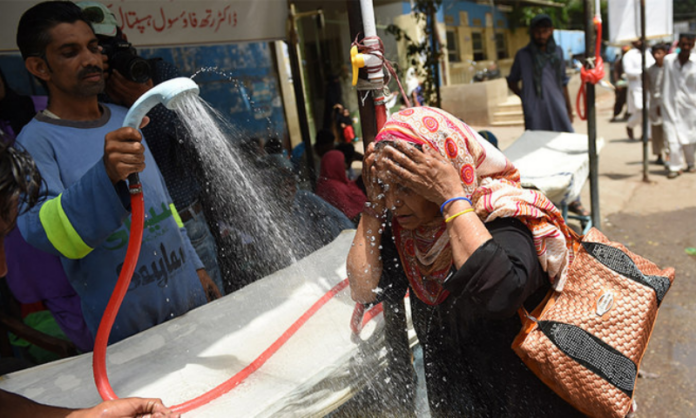
Heatwaves in Karachi have become the norm. Credit: Pakistan Today
“I’m on duty 12 hours a night, sweating in my uniform while others sleep in AC rooms,” says Kamran, a security guard outside an apartment complex.
In 2015, a devastating heatwave in Karachi killed over 1000 people in just three days. Hospitals were overwhelmed, graveyards ran out of space, and power outages marred the city, turning it into a furnace. Many of those who died lived in the most heat-vulnerable zones—densely built squatter settlements with narrow, encroached streets allowing for little wind to flow, no trees or bare soil, and fully paved asphalt streets that absorb more heat than they reflect.
What’s Baking the City?
Karachi is dominated by concrete, steel, and asphalt. Unlike natural surfaces like grass or soil, these materials absorb a lot of heat during the day, slowly releasing their stored energy well into the night. Add to that the heat expelled by air conditioners, exhaust fumes, and factories, and you’ve got a city that bakes itself from the inside.
Vegetation, which naturally cools the air by providing shade and through transpiration, is in scarcity. Decades of haphazard development have replaced green spaces with residential colonies, roads, shopping plazas, and commercial buildings. In many neighborhoods, trees are cut during road-widening as well as building infrastructure for public transport, often without any replanting.
Karachi is dominated by concrete, steel, and asphalt. Credit: Wikimedia Commons
Bare soil, once found on the outskirts or in residential gardens, has been buried under concrete. While this may reduce dust pollution, it also eliminates natural cooling systems that could otherwise mitigate the UHI effect.
Karachi needs Small Fixes!
While the problem is critical, solutions are not so complicated. Some are surprisingly simple.
Planting the Right Trees in the Right Places
Urban forestry and median strip plantations can significantly reduce local temperatures. A study by UCLA researchers (De Guzman et al.) found that expanding tree cover and using reflective surfaces could reduce heat‑related medical visits in LA by close to 70%. Cities like Los Angeles have launched huge urban afforestation programs targeting backward neighborhoods. Karachi can follow their footsteps while prioritizing native, drought-resistant tree species.
Neem and Peepal are fast-growing and develop large canopies, providing shade while also being able to withstand the harsh, hot, and dry weather of Karachi. For parks and green spaces, trees like Gul Mohr and Amaltas would not only help with cooling but also add to the scenic beauty through their flowers and fruits.
Pavement and Permeable Surfaces
Depaving means taking out excess concrete or asphalt and replacing it with natural ground—like soil, grass, or surfaces that let water pass through. Hard surfaces like asphalt soak up heat throughout the day and slowly release it at night, making cities warmer even after sunset. Meanwhile, depaved areas (soil, grass, vegetation) absorb less heat and cool the surroundings through evapotranspiration. Natural ground also soaks up rainwater, reducing urban flooding.
A notable case is the Cheonggyecheon Stream Restoration in Seoul, South Korea. A 5.8 km highway was replaced by green spaces and a stream, which resulted in an average land surface temperature (LST) decrease of ~7 °C along the former highway corridor compared to surrounding built-up urban zones
Cool Roofs and Reflective Materials
Buildings can be painted with white or reflective coatings to reduce heat absorption. Ahmedabad, India, launched a successful “cool roof” initiative that saw average surface temperatures plummet by as much as 5°C. Karachi’s squatter settlements, where afforestation could be challenging due to high population density, could benefit tremendously from such low-cost adaptations.
As climate change worsens, cities like Karachi face more than discomfort—they face serious health risks. In overcrowded, poorly planned areas, extreme heat can be deadly, especially for children, the elderly, and the sick. The solution isn’t complex: plant more trees, reduce concrete, and cool rooftops. What’s lacking is commitment from city officials and citizens alike.
References:
De Guzman, V., et al. (2024). City trees save lives: How urban greening and reflective surfaces reduce heat-related illnesses in Los Angeles.https://www.wired.com/story/city-trees-save-lives
Hussain Sajjad, S., et al. (2015). Urban Heat Island intensity and its impact on the microclimate of Karachi. Journal of Basic and Applied Sciences. https://www.sceintific-array.org/index.php/jbas/article/view/1281
National Disaster Management Authority. (2015). Pakistan heatwave report – June 2015. https://en.wikipedia.org/wiki/2015_Pakistan_heat_wave
NRDC. (2023). India’s Ahmedabad honored for life-saving heat action and cool roof plans. Natural Resources Defense Council. https://www.nrdc.org/press-releases/indias-ahmedabad-honored-life-saving-heat-action-and-cool-roofs-plans
Reuters. (2025, March 10). Indian slums get cool roofs to combat extreme heat. https://www.reuters.com/world/india/indian-slums-get-cool-roofs-combat-extreme-heat-2025-03-10/
Jane Goodall, the famed primatologist, anthropologist, and conservationist, has passed away, according to the institute she founded. She was 91 years old. Goodall died of natural causes while in California on a speaking tour of the United States, the institute said in a statement on social media on Wednesday.
The British primatologist’s discoveries as an ethologist revolutionized science, and she was a tireless advocate for the protection and restoration of our natural world.
At the age of 26, Goodall first traveled to Tanzania and began her research on chimpanzees in the wild forests. Her extensive research on species has demonstrated that primates exhibit various behaviors similar to humans, including the ability to develop distinct personalities and to create and utilize their own tools.
At a time when female scientists were frequently perceived as too delicate and overly emotional for rigorous fieldwork, Jane Goodall defied these stereotypes and proved everyone wrong. The British primatologist, recognized as the world’s foremost expert on chimpanzees, dedicated over 55 years to meticulously studying wild chimpanzee populations in Gombe Stream National Park in Tanzania.
During her groundbreaking research, Goodall made the remarkable discovery of tool-making and usage among chimpanzees—an ability that had previously been thought to be exclusive to humans—when she observed them ingeniously using sticks to fish for termites. Beyond her pioneering contributions to the field of primatology, Goodall is also a committed advocate for animal welfare and environmental conservation, tirelessly working to promote the protection of wildlife and their habitats.
Her efforts include founding the Jane Goodall Institute, which focuses on research, education, and outreach programs to foster greater understanding and respect for primates and the ecosystems they inhabit. Equally significant is Goodall’s role as an inspirational figure for countless individuals, particularly women in science.
Reflecting on her childhood dream of traveling to Africa—which she once laughed at due to financial constraints, societal norms that depicted Africa as the ‘dark continent,’ and the prevailing belief that a girl could not pursue such aspirations—Goodall has become a symbol of determination and resilience. Today, she is celebrated not just for her scientific achievements but also for redefining humanity through her compassionate understanding of our closest relatives in the animal kingdom.
Dr Jane Goodall with members of the Gordon Roots & Shoots group from Michigan during the 2019 Chicago Roots & Shoots Showcase. Photo, Roots & Shoots Program
Jane has taught not only the scientific community but the world at large that true science begins with compassion. Through her pioneering work in ethology, she has revealed the complex emotional and social lives of chimpanzees, fundamentally altering our understanding of how humans perceive their place within the animal kingdom. Her commitment to conservation and animal welfare enhanced the reputation of the Jane Goodall Institute, which works tirelessly to promote wildlife research, education, and community-centered conservation efforts.
Additionally, Jane’s Roots & Shoots program has inspired and mobilized countless young people worldwide to advocate for animals, people, and the environment, empowering them to make meaningful changes in their communities. Jane was a powerful reminder that “what you do makes a difference, and you have to decide what kind of difference you want to make”.
Her legacy challenges the world to remain intellectually curious, to lead with compassion in our endeavors, and to strive tirelessly for a world where all forms of life are valued and respected.
I will never forget the summer of 2022. That was when the Kabul River rose and swallowed my hometown, Charsadda. Even now, it feels like it happened just yesterday. I remember the water rushing in with a force no one could stop. Within hours, the flood tore through our streets, our fields, and our homes. Schools, houses, everything disappeared under thick, muddy water. Families climbed onto rooftops, waving helplessly as their belongings and memories were washed away.
What I saw still haunts me: friends and relatives standing in shock, children shivering and crying from hunger, mothers holding their babies under the open sky, fathers watching their life’s work vanish in a single night. The silence was the hardest to bear, a heavy silence broken only by the cries of those left behind. That flood was not just a natural disaster; it was a human tragedy. It robbed people not only of their homes and livelihoods, but also of their hope.
But amidst that overwhelming devastation, I saw something incredible rise. Climate Forward Pakistan (CFP), a youth-led organization I’m proud to be part of, stepped into the void. While we waited for government relief to mobilize, our volunteers were already on the ground, moving fast to reach those who needed help most. We moved from one makeshift shelter to another, distributing food, tents, and medicine to families who had lost everything. But what made CFP different was that we saw the wounds you couldn’t see.
We saw the trauma and the quiet grief carried by the women and children. So, we set up small counselling circles, safe spaces where survivors could share their pain and start to heal. I’ll never forget watching women who had lost their homes and their livelihoods slowly find the strength to smile again. Their dignity was being rebuilt through simple compassion. That experience changed me. It made me understand that disaster relief isn’t just about rebuilding houses; it’s about rebuilding lives, mending broken emotions, and restoring hope
In times like these, community-based organizations (CBOs) like CFP play a role that no one else can. They know their people, their culture, and their daily struggles in a way outsiders never will. Because they live right here, they understand the small, crucial details, the vulnerabilities, the traditions, the unspoken fears that big, official relief operations often miss. This closeness lets them cut through the red tape and act immediately.
When disaster strikes, CBOs are always the first on the scene with essentials: food, shelter, and basic medical care. Yet their role goes deeper than physical needs. They stand with people emotionally, helping to restore dignity when all feels lost. Most importantly, they focus on those who are most often forgotten: women, children, and marginalized groups.
In a disaster, every second counts, and the ability of a CBO to respond with both speed and sensitivity can literally mean the difference between life and death, between despair and resilience.
This brings me to the second reason CBOs are so vital: trust. In a crisis, people accept help from those they know. That inherent trust allows local groups to organize evacuations, distribute aid fairly, and ensure everything is done in a way that respects local culture and sensitivities. I saw this firsthand in Charsadda. Many families were hesitant to speak with government officials, but when we, as CFP volunteers, approached them, they welcomed us without a second thought.
Why? Because we were their neighbors. They knew we understood. In contrast, formal state aid often arrived late and felt distant, disconnected from the reality on the ground. This is the strength of youth-led organizations: we move with urgency, we act with empathy, and we get the culture in a way a bureaucracy never can
CFP’s work has now reached far beyond Charsadda, touching disaster-prone areas across Pakistan. Time and again, we’ve brought young people together to respond to climate crises, from floods to heatwaves to landslides. I’ve seen our energy and dedication make a real, tangible difference.
In Gilgit-Baltistan, for example, awareness campaigns led by young volunteers convinced families to evacuate before landslides hit, saving countless lives. What’s special is that these efforts are never one-size-fits-all. Every community has its own unique challenges, and CFP adapts, providing immediate help while also working to build long-term resilience.
In northern Pakistan, the youth volunteers we trained have successfully led pre-emptive evacuations. Photo, CFP
As our leaders at CFP always say, relief and resilience must go hand in hand. One of our coordinators put it perfectly: “Relief helps us survive today, but resilience prepares us for tomorrow. If we empower our communities, we can reduce the destruction before it even begins.” Guided by this belief, we’ve invested in disaster preparedness programs in schools, trained volunteer first responders, and run awareness campaigns focused on women.
In Charsadda, women who once battled trauma are now local advocates for preparedness. In northern Pakistan, the youth volunteers we trained have successfully led pre-emptive evacuations. These results prove a powerful point: when empowered, communities are not passive victims; they become active agents of their own resilience.
The 2022 floods in Charsadda and everything that followed taught me one crucial lesson: Pakistan cannot rely on government institutions alone to manage disasters. As climate disasters become more frequent and fiercer, the role of youth-led, community-based organizations like Climate Forward Pakistan isn’t just valuable, it is essential.
We respond quickly, with empathy and a deep understanding that large systems often lack. Supporting organizations like ours isn’t just charity; it’s a critical investment in protecting lives, strengthening our nation’s resilience, and preserving the dignity of our most vulnerable people.
References:
Abid, S. K., ul Haq, M., Rizwan-ul-Haq, H., Ali, S., Iqbal, N., Raza, M., & Ejaz, A. (2020). Strengthening community resilience: Developing a community-based model for sustainable volunteer engagement in emergency and disaster management in Pakistan. Qlantic Journal of Social Sciences.
Shah, A. A., Ullah, A., Khan, N. A., Tariq, M. A. U. R., & Xu, C. (2023). Community social barriers to non-technical aspects of flood early warning systems and NGO-led interventions: The case of Pakistan. Frontiers in Earth Science, 11, 1068721
World Bank. (2022). Pakistan floods 2022: Post-disaster needs assessment. Government of Pakistan.
Note: This article was prepared in collaboration with Climate Forward Pakistan, cfpakistan.org
Astronomers may have finally found a clue to explain the strange “little red dots” that the James Webb Space Telescope spotted in 2022. The newly discovered object, nicknamed the Cliff, hints that these dots could be something entirely new in the universe — “a black hole star.” This happens when a black hole feeds so quickly that the gas around it lights up, making it look like a glowing star.
Before this, scientists thought the red dots might be huge early galaxies or supermassive black holes actively consuming matter.
Scientists are still debating what the mysterious “little red dots” really are. They might be exotic new objects, or perhaps just a stage in how galaxies and black holes grow. When the James Webb Space Telescope first spotted them in 2022, researchers even nicknamed them “universe breakers” because they looked too old to exist so early in cosmic history.
To explain them, astronomers have put forward two main ideas. One is that these dots are incredibly compact galaxies, packed with stars forming at an unusually fast rate. If true, they would represent a brand-new kind of dense galaxy shaped by processes we’ve never seen before.
The other idea is that the dots are powered by huge black holes sitting at their centers. In this case, the redness would come from thick clouds of dust surrounding the black hole. These galaxies would act like active galactic nuclei (AGN) — galaxies lit up by a feeding black hole. But unlike quasars, which are also black hole–powered and shine brightly without dust hiding them, these dusty AGNs would be much harder to spot.
At the moment, scientists don’t know how — or if — these two types of objects are connected. The mystery remains open.
Similar to Single Stars!
With this unmissable, unusual feature, The Cliff looked like it did not fit any of the interpretations that had been proposed for little red dots. But lead scientist De Graaff and her colleagues wanted to make sure. They constructed diverse variations of all the models that tried to cast little red dots either as massive star-forming galaxies or as dust-shrouded active galactic nuclei, attempted to reproduce the spectrum of The Cliff with each one, and failed every single time.
On this basis, de Graaff and her team of scientists developed a model, giving it the name “black hole star,” written as BH*: An active galactic nucleus, that is, a supermassive black hole with an accretion disk, but surrounded and reddened not by dust, but by virtue of being embedded in a thick envelope of hydrogen gas. The BH* is not a star in the strict sense, since there is no nuclear fusion reactor in its center.
In addition, the gas in the envelope is swirling much more violently (there is much stronger turbulence) than in any ordinary stellar atmosphere. But the basic physics is similar: The active galactic nucleus heats the surrounding gas envelope, just like the nuclear-fusion-driven center of a star heats the star’s outer layers, so the external appearance has marked similarities.
Once called the “grain basket of the region,” Sindh now stands at a crossroads. The Indus River, which carved life into this desert province, is under threat; not from war or politics, but from climate change. Extreme heatwaves, erratic rainfall, and worsening water scarcity have turned once-fertile fields into barren soil.
In just the past five years, wheat production in Sindh has declined significantly (due to various reasons, including climate change), posing a challenge not only to the livelihoods of farmers but to national food security. According to the Pakistan Bureau of Statistics, wheat yield per hectare in Sindh dropped from 2,763 kg/ha in 2018 to 2,588 kg/ha in 2023, a 6.3% decline in a province responsible for nearly 15% of the country’s wheat output.
For centuries, Sindh has spoken through its soil. Its fields once swayed to the rhythm of Bhittai’s verses, its farmers rooted like Marvi; loyal to the land through drought and dust storms alike. But today, the land is falling silent. Wheat, the lifeline of its people, is wilting under a new storm: climate change.
In this quiet crisis, a humble institution in Sakrand rises like a disciple of that legacy, protecting Sindh’s golden grain. For them, it is not a matter of providing food, but of saving livelihoods as agriculture remains the backbone of rural communities. It is estimated, from rural household data, that around 70% of the population directly depends on agriculture.
Against this backdrop, researchers at the Wheat Research Center in Sakrand are racing against time. In an interview with Sir Jay Kumar, Scientific Officer, it becomes clear: this is not just a battle for better yields, it’s a mission to adapt wheat to an entirely new climate reality.
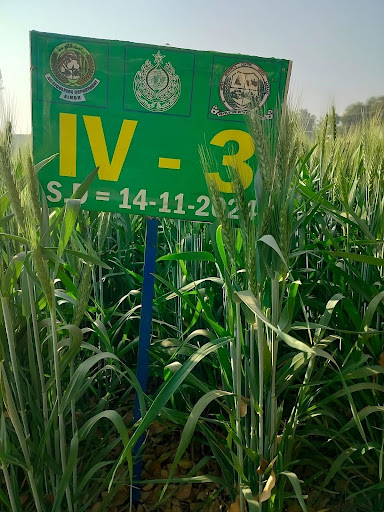
Sakrand Wheat Research Center, established in 1986, has been working tirelessly for its province. The institution has released 13 approved varieties; the most widely cultivated are IV‑2 (released in 2020 with a potential of 70 maunds per acre) and IV‑3 (released in 2024 with a potential of 75 maunds per acre), known for high yield potential, pest resistance, and adaptation to Sindh’s saline soils.
“It was a victim of its own success, underlining the delicate balance between adaptability and disease resistance,” remarked Sir Jay Kumar, Scientific Officer, Wheat Breeding Institute, Wheat Research Center, Sakrand. Photo, Bushra Lakho
The centre develops tailor-made wheat varieties, the most celebrated of which is TD‑1 (released in 2004 with a potential of 80 maunds per acre), a high‑yielding, short-statured cultivar that transformed wheat farming across Sindh. Reports indicate up to 20 million acres nationwide were planted with TD‑1 at its peak.
Its popularity soared to such heights that it was later introduced to Punjab, Pakistan’s traditional wheat powerhouse. But success came with new challenges. In Punjab’s warmer, more humid climate, TD‑1 succumbed to rust, a fungal disease caused by Puccinia spp. that devastates wheat. “It was a victim of its own success, underlining the delicate balance between adaptability and disease resistance,” remarked Sir Jay Kumar, Scientific Officer, Wheat Breeding Institute, Wheat Research Center, Sakrand
With the looming threat of climate change and Sindh being the most affected province of Pakistan, wheat is in dire need of another generation of improvements, specifically heat and drought tolerance. Photo, Bushra Lakho
With the looming threat of climate change and Sindh being the most affected province of Pakistan, wheat is in dire need of another generation of improvements, specifically heat and drought tolerance. This represents a new frontier for Sakrand’s scientists. All previous varieties have been developed through the breeding selection method (F1–F7 selection cycles), not via genetic modification or genome editing.
Until now, breeding focused on increasing yield and resistance to pests; traits for abiotic stress tolerance, like heat or drought, were not systematically selected. “This wasn’t seen as urgent because water scarcity had always been a chronic issue in Sindh,” said Sir Jay Kumar, “but as climate change accelerates, it was short-sighted not to develop climate-resilient traits earlier.”
To close this gap, the center has forged partnerships with leading institutions such as the International Maize and Wheat Improvement Center (CIMMYT) and the International Center for Agricultural Research in the Dry Areas (ICARDA). CIMMYT has contributed several elite germplasm lines, selected for drought tolerance, osmotic adjustment, canopy-temperature depression, and high pre-anthesis biomass, traits that international breeding models call part of the “drought-resistant ideotype”.
ICARDA brings expertise in arid-zone breeding adapted to salinity and water stress conditions. These global nurseries provide genetic starting points that Sakrand scientists adapt locally through multi-locational trials and farmer feedback cycles.
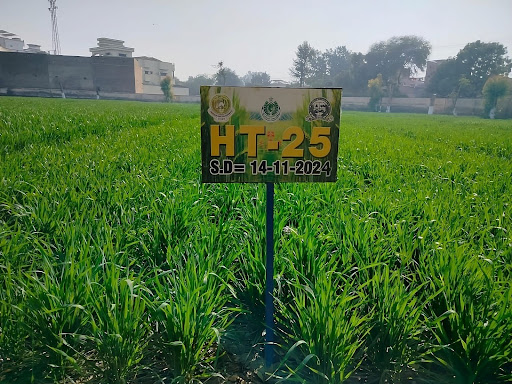
To protect the golden grain, the Wheat Research Center has begun trials for a new experimental variety, HT‑25 (High Temperature 25), derived from CIMMYT nurseries. Though still in early-stage lab trials and not yet released, HT‑25 is being bred for drought resilience, rust resistance, and yield performance equal to or above IV‑3, traits critical for Sindh’s food security.
Developing a stable variety via conventional breeding takes 10–12 years, and HT‑25 has just started this long cycle. But with wheat being a staple for millions in Sindh, the success of such varieties may determine how farmers survive the escalating climate crisis.