Native to eucalypt forests and eucalypt woodlands. These herbivorous marsupials play a significant role in ecological maintenance and overall environment stability. This adorable creature has been declared endangered by the Australian government to our utter dismay. We will try to find answers as to what circumstances lead to koalas being declared endangered. We need to act before such unique species vanishes from the face of the earth.
Survival of koalas is not only cardinal for biodiversity conversation but the ecosystem as well. First and foremost, they are an integral part of the food chain. Being the prey for larger carnivores, they help keep the food chain in a cycle. Furthermore, when koalas feed on branches and leaves, they break down these branches, making them available for ground animals.
Survival of koalas is not only cardinal for biodiversity conversation but the ecosystem as well.
Koalas feed on excess vegetation in eucalyptus forests, thereby reducing dry biomass content. The accumulation of dry biomass is one of the major causes of intense forest fires during dry seasons. Koalas aid in the prevention of these catastrophes.
Moreover, koala droppings act as the nutritional source for small rodents and insects during the rainy season. It further enriches the fertility content of the soil, which is beneficial for plant growth. Surprisingly, koala fur is used by birds for their nests. The fur acts as an insulation medium that protects bird nests against harsh climatic conditions. Speaking of climate, greenhouse emissions have exacerbated, resulting in drastic climatic shifts.
Survival of koalas is not only cardinal for biodiversity conversation but the ecosystem as well.
Koala forests absorb carbon dioxide from the environment and convert it to organic carbon. This property enables efficient carbon dioxide utilization, thus helping to combat climate changes. Eucalyptus trees found in koala forests are the most efficient trees in producing clean oxygen and storing carbon.
To ensure the persistence of koalas as fundamental living creatures on the planet, we need to identify and exterminate the causes of their potential extinction. Two of the most prominent reasons are mentioned below:
Chlamydia, a sexually transmitted disease in koalas in another cause of their declining numbers. Chlamydia led to cyst formation and blindness. The prevalence of this sexually transmitted disease also increased the infertility rates in adult koalas leading to ack of viable off springs.
Recent statistical data released by the Australian Koala Foundation reports a decline of approximately 30% of koala’s population within three years. The severity of the situation can be analyzed because koala extinction is expected by 2050 if no proper measures are taken.
Knowing the sensitivity, the Australian government is taking concrete initiatives to ensure the complete restoration of the koala population. They claimed an investment of around $12.8 million for koala health research and rehabilitation of koala habitat.
Apart from this, the Australian government should draft laws following the guidelines provided by WHO in protecting them. Koala resident forests should not be exploited, and human settlements should be kept away from their vicinity.
When they are gone, when every last life has been stolen, how will you remember them? Extinction is forever.
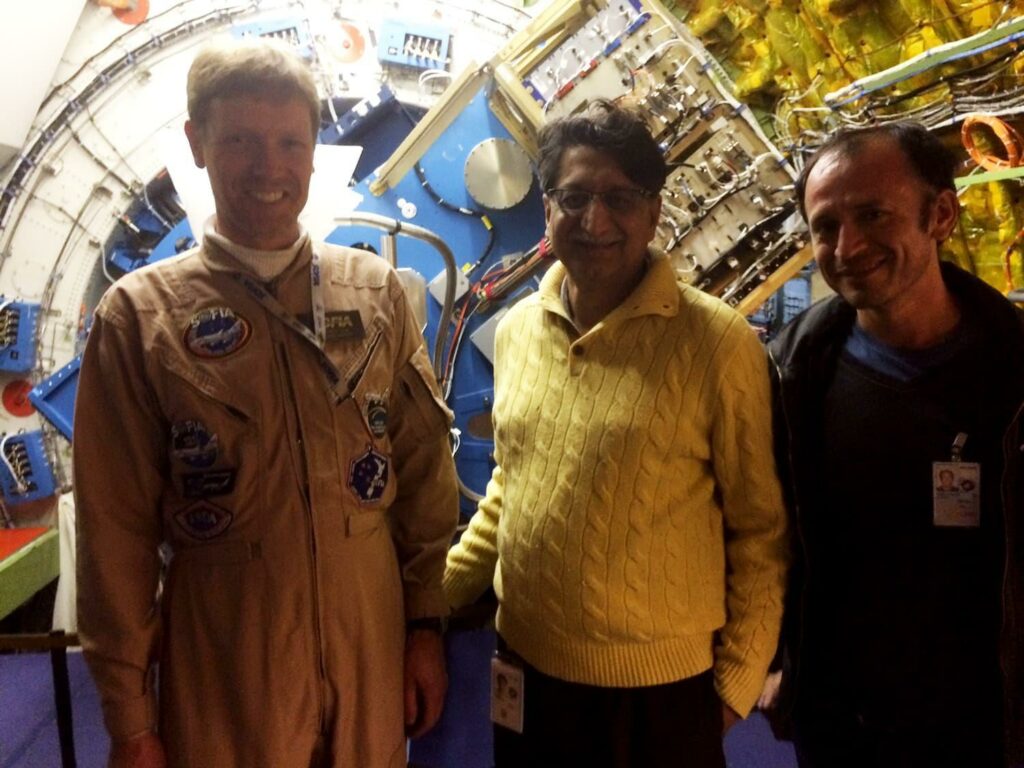
Mansoor is at present filling in as the Associate Director of the Astrophysics Projects Division just as the Program Manager for the Physics of the Cosmos program and the Cosmic Origins program at NASA Goddard Space Flight Center.
Mansoor Ahmed has spent the majority of his vocation in serving the Hubble Space Telescope (HST) program in various limits, including the Flight Operations Manager and the Project Manager for HST tasks. He has taken an interest in everything except one Hubble adjusting mission. During a short spell far from HST, Mansoor has filled in as the Mission Manager for the Compton Gamma Ray Observatory Orbit mission and afterward as the appointee venture administrator for the James Web Space Telescope.
I don’t think I can imagine a single dull moment during my career at Goddard. Photo, Mansoor Ahmad
How long have you been serving for NASA? What advice do you have for your countrymen regarding your type of services?
I have been with NASA for more than 38 years years. NASA is a government agency so I am a civil servant, doing this work on behalf of the American public. As a civil servant, one has to always keep in mind that we serve at the pleasure of our population, who have contributed their hard-earned money to the government so that the entire nation can benefit from the work of the government. As a civil servant, it is an honor to be given this responsibility and we should do our utmost to work hard and honestly to fulfill our obligations to our public.
JWST is infrared while Hubble is an optical telescope. What do you feel about the future of Hubble? Is it true that JWST got more importance than Hubble?
Hubble and JWST are equally important tools for answering astrophysics questions. Just like Hubble cannot see infrared light, JWST cannot see optical and ultraviolet light. Together they can solve more mysteries than either one can by itself. Hubble continues to be in perfect health. The scientific community is eagerly awaiting when both of these amazing observatories will work hand in hand.
How our knowledge has expanded via space-based astronomy with observations like Hubble & JWST?
Hubble has made amazing discoveries up to now. It has determined the exact age of the universe, it has proved the existence of black holes that were only theoretical before Hubble, it has observed gravitational lensing as predicted by Einstein and so much more. As it has answered so many questions, it has also introduced us to so many more mysteries that we didn’t know existed.
Dark matter and dark energy for example. Being an optical telescope, Hubble’s eyes reach a limit when looking for the oldest galaxies and stars. The older the galaxies, the faster they are moving away from us so their light reaches us in infrared (due to Doppler shift) and Hubble cannot see them. With James Web, we will be able to see those galaxies and determine how and when the very first stars in the universe were born.
Do you have a favorite science result that came from Hubble, especially considering the fact that you have been an active part of the Hubble repair mission?
It is very difficult to narrow down the most favourite result from Hubble; there are so many beautiful pictures of exploding stars and merging galaxies that everyone would be amazed by. The most profound image in my mind is the Hubble Deep Field image. We decided to point Hubble to a tiny, seemingly dark spot in the sky where there was nothing the naked eye could see.
Hubble stayed at that spot for 11 days, capturing any photons that might come from that direction to construct the final picture (remember my example of taking a photo in the dark). When completed, it was amazing to see that the picture was full of bright objects, thousands of them. Each one of them was a galaxy consisting of trillions of stars.
That image illustrates how vast our universe is and makes one wonder about our significance (or insignificance) in this universe. The other great discovery, which is scientifically the most significant, is that of dark energy. Before Hubble was launched, the biggest question in astrophysics revolved around the fate of the universe.
Will it continue to expand because of the initial force of the Big Bang or will it slow down and start contracting due to the gravitational pull of the matter in the universe?
What our universe will do depends on the total mass in the universe, which defines the gravitational force in the system. Sir Edwin Hubble (whom the telescope is named after) determined the critical value of the mass (known as the Hubble Constant) that would define the fate of the universe.
If the mass is less than that value, then the universe will continue to expand, eventually cooling off and dying. If the mass is more than the value, then the universe will slow down, start contracting and end up as a singularity resulting in yet another big bang, with this cycle continuing forever.
One of the primary objectives of Hubble (the telescope) was to determine the Hubble Constant. Instead, what Hubble discovered was that the universe is neither slowing down nor expanding at a constant speed, but a few billion years ago, had started to expand faster than before.
This can only happen if there is some form of energy that appeared from somewhere, and is making the universe expand faster (Newton’s first law of motion). We call it dark energy because we have no clue what it is.
Solving the dark energy mystery has now become one of the top questions in astrophysics.
Have you encountered obstacles during your career, what is the most interesting thing about your job at Goddard Space Flight Centre, NASA, & what is the least?
I don’t think I can imagine a single dull moment during my career at Goddard. It has been amazing to be working on so many interesting and challenging projects with so many amazing scientists and engineers who are motivated and hard-working to meet the mission objectives.
A few parts of this interview earlier published in DAWN.COM, reshared with the permission of author and publication.
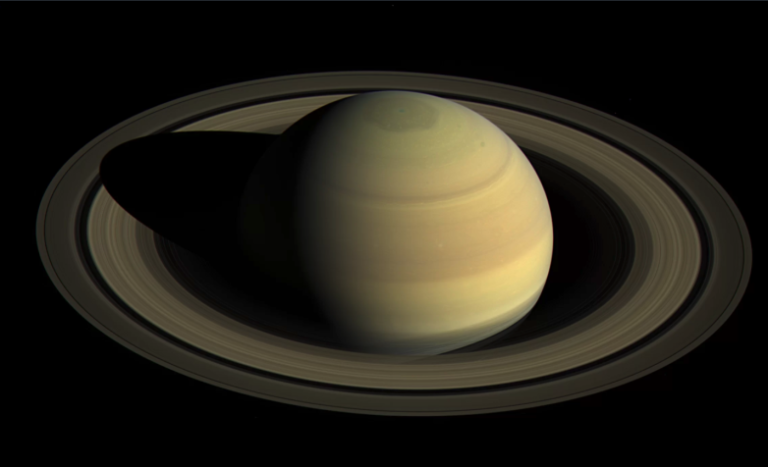
Saturn’s rings are thought to be made of comets, space rocks, or broken moons that split up before they arrived at the planet, destroyed by Saturn’s intense gravity. Apparently, it is disclosed that they are made of billions of tiny lumps of ice and rock covered with different materials like residue. Saturn’s frigid rings are not simply aesthetical wonders. One of them likewise records a lovely planetary soundtrack.
Saturn’s unusual ring
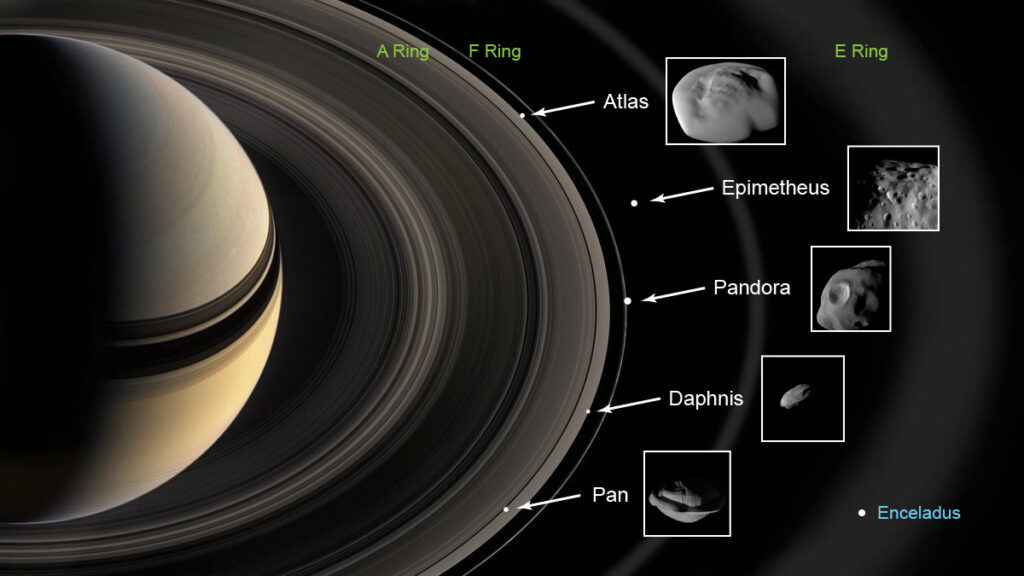
Since the hour of the Voyager flybys of Saturn in 1980-1981, Saturn’s unusual F ring has been known to go with on one or the other side by faint strands of material. Cassini’s perceptions show that these strands, at first deciphered as concentric ring fragments, are truth be told associated and structure a solitary one-arm following twisting something like multiple times around Saturn.
The winding turns around Saturn with the orbital movement of its constituent particles. This design is possible the aftereffect of differential orbital activity extending an underlying haze of particles dispersed from the thick center of the F ring. Various situations of arrangement, suggesting curl satellite communications, are investigated. A late found moon applicant, S/2004 S6, is on a circle that crosses the F-ring center at the convergence of the winding with the ring, which recommends a dynamical association between S/2004 S6 and the twisting (Cassini,2005).
These peculiar skips can appear as twisting waves, and unmistakable arrangements of waves uncover the attributes of specific highlights of Saturn’s internal parts.
Saturn’s broad C ring
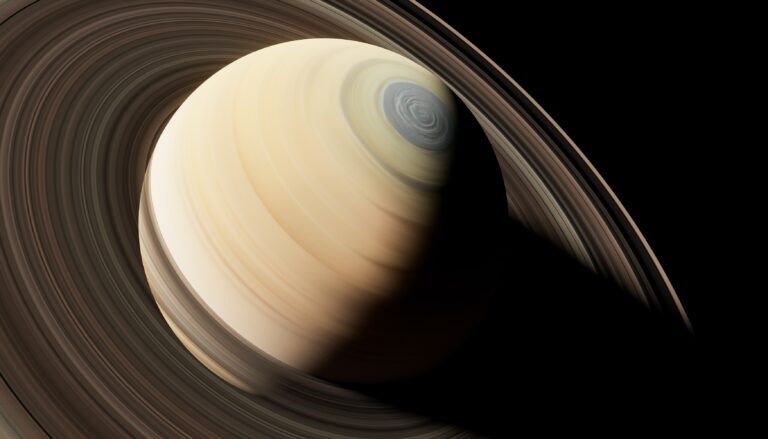
The Saturn planet inside, covered underneath a cover of, for the most part, hydrogen gas, writhes. This causes shifts in the neighborhood gravity field, which pulls at particles in Saturn’s broad C ring and makes them dance. These peculiar skips can appear as twisting waves, and unmistakable arrangements of waves uncover the attributes of specific highlights of Saturn’s internal parts.
The viewpoint math of Saturn’s rings shows shut structure articulations to assessing a space apparatus’ general situation just as its scientific covariance. Mathematical reenactments detail the presentation and awareness of the position gauges. An Extended Kalman Filter melds the broad position gauges with rocket elements for precise relative position and speed.
An Enceladus test assortment mission fills in as a contextual analysis where the proposed strategy appears to be suitable. With sifting, reproduction of an Enceladus test assortment mission accomplishes the most extreme three-sigma limits of 43 km and 0.024 km/s for relative position and speed gauges, separately, during its Enceladus experience. An Independent route might lessen the expense of such a mission to where a few little rockets can accomplish the science goals (Kalani R.,2022).
Saturn losing its rings
New NASA research affirms that Saturn is losing its unique rings at the most extreme rate assessed from Voyager 1 and 2 perceptions made many years prior. The rings are maneuvered into Saturn by gravity as a dusty downpour of ice particles affected by Saturn’s attractive field.
“We gauge that this ‘ring precipitation’ depletes a measure of water items that could fill an Olympic-sized pool from Saturn’s rings in thirty minutes,”
~ ( James O’Donoghue of NASA’s Goddard Space Flight Center in Greenbelt, Maryland.)
“By itself, the whole ring framework will be gone in 300 million years. However, add to this, the Cassini-space apparatus estimated ring-material distinguished falling into Saturn’s equator, and the rings have under 100 million years to live. This is somewhat short, contrasted with Saturn’s period of more than 4 billion years.” O’Donoghue is the lead creator of a review on Saturn’s ring precipitation showing up in Icarus on December 17, 2018 (Nasa,2018).
The internal construction of Saturn and its rings
The best requirements on the interior constructions of goliath planets have generally come from estimations of their gravity fields. For the most part, this gravity information is intrinsical delicate to a planet’s external areas, giving just free imperatives on the profound insides of Jupiter and Saturn. This significant limit obstructs endeavors to quantify the mass and conservativeness of these planets’ centers, urgent properties for understanding their development pathways and advancement.
Nonetheless, investigations of Saturn’s rings have uncovered waves driven by throb modes inside Saturn, offering independent seismic tests of Saturn’s inside. The perceptions reveal gravity mode (g mode) throbs, showing that creation angles steadily separate Saturn’s interior. The g mode frequencies straightforwardly test the lightness recurrence inside the planet.
Here, we contrast primary models and gravity and seismic estimations to show that the information must be clarified by a diffuse, steadily separated center envelope progress area in Saturn reaching out to roughly 60% of the planet’s sweep and containing around 17 Earth masses of ice and rock. The slow dispersion of weighty components compels blending processes at work in Saturn, and it might mirror the planet’s early-stage construction and gradual addition history (Christopher Mankovich, 2021).
Colonizing the highest number of individuals thriving on less than a dollar per day, food insecurity is endemic in South Asia. Hunger is not merely an issue of charity; it is the issue of justice concerning the availability, distribution, and utilization of food resources. Food insecurity is rampant in third-world countries which are on the course of development.
“You cannot tell a hungry child that you gave him food yesterday”
The World food crisis of 1972-1974 introduced the concept of “Food Security”. The United Nation’s Committee on World Food Security defines it as physical, social, and economic access of all people to sufficient, safe, and nutritious food at all times. The access of food to each entity should meet their food preferences and dietary needs for a healthy lifestyle.
However, in the past decade, we are more accustomed to “Food Insecurity”. This write-up seeks to uncover governments’ causes, loopholes, and incompetence in providing food security in South Asian countries. Additionally, this article reflects the adverse effect of the COVID-19 pandemic on Food Insecurity.
Hunger is not merely an issue of charity; it is the issue of justice concerning the availability, distribution, and utilization of food resources.
Most South Asian countries are thriving on agro-based economies. Inadequate agricultural output coupled with escalating population rate, lack of arable land, insufficient resources, and poor management strategies is Food Insecurity’s main factors.
World Bank statistics reveal that although 50% of the South Asian population is affiliated with agriculture, agricultural output contributes only 20% to the region’s GDP. These figures are evidence of lower productivity and increased unemployment in the region. The diagram below gives an overview of the significant causes that exacerbate the severity of food insecurity in South Asia.
Dearth of arable land
Plainland with fertile alluvial soil is ideal for crop growth. This adds to land productivity and requires fewer additional facilities and resources. However, there has been a pronounced loss in arable land in the past few years. Some of the factors involved include deforestation, soil erosion, surface runoff, and soil exhaustion by planting more crops than the land can support.
Urbanization has led to deforestation as land is needed for infrastructure (buildings, highways, industries, etc.). This has further reduced the available arable land for crop growth.
This situation has worsened during the COVID-19 pandemic. Due to strict lockdowns across the World, the mobility of laborers has decreased, which means there are fewer human resources to work on farms. This leads to less agricultural output and, in turn, less food for the population. This has a more severe impact on agro-based countries, including most South Asian countries.
Ineffective policies
Failure to implement the policies regarding farmlands, their distribution, and getting incentives from the government is one of the primary reasons for food insecurity. Especially in rural areas, land annexation is a common practice due to the misuse of power by a few corrupt government officials. In return, the farmers or the local owners of the farms get much less output from the lands.
This situation leads to unemployment and lower per capita income. Rising inflation makes it difficult for farmers to obtain adequate food supplies. This ends with nutritional deficiencies and a lack of constant access to food.
Moreover, the role of global market plays an essential role in food security. Not to forget, during the pandemic, the unemployment rate has skyrocketed hand in hand with the prices of goods. Thus, if earlier any random household had Rs 5000 for a month’s grocery, now it falls short of food requirement. The quality and quantity of food supplies are adversely affected by inflation.
Population growth
Still, a matter of grave concern is the ever-increasing population growth rate. Rapidly accelerating population rate means increased stipulation for sufficient food. With almost 25% of the World’s population residing in South Asia, food demand and supply chain are mismatched.
Amidst the pandemic, population growth has significantly increased, adding additional pressure on farmlands to produce abundant food crops. However, the loss of economy and loss of jobs has left many with few dollars in their savings. It gets tiresome to feed the families thrice a day and save money. This has led to depression in many and many dying of starvation.
Bioenergy
Green energy is the upcoming technology for energy production to meet industrial and domestic power requirements. The use of non-renewable energy resources led to paramount levels of greenhouse gases being released into the environment. To overcome this, scientists proposed to use biofuels as an alternative.
Biofuels basically use biomass to generate energy which dramatically reduces greenhouse gas emissions. The raw material for biofuels includes corn, sugarcane, cotton, and plant seeds. Biofuel production dwindles the availability of food crops to feed the population. This further enhances the grievousness of food scarcity.
Biofuels basically use biomass to generate energy which dramatically reduces greenhouse gas emissions.
Furthermore, work at home became a new trend since COVID-19 driven lockdowns started across the globe. With industries operating and high demand for energy for the domestic sector, the burden on energy production provisions has dramatically expanded. Combating hunger at one end and using alternative energy resources for energy production, the governments are stuck between the devil and the deep sea. Food insecurity has been exacerbated since the phenomenon of biofuels has been practically implemented.
Climate Change
Assurance of climatic patterns is closely monitored in agro-based countries to ensure maximum crop output. The World has seen a substantial transition in climatic patterns over the past few decades. The unpredictability of rainfall, harsh winds, increased humidity in summers, and natural disasters such as floods, cyclones, and dust storms resulted in unpredictable agricultural output.
Significant changes in daytime temperatures throughout the year have led to decreased food production. Countermeasures against the drastic climatic changes are essential to maintain considerable agricultural output. However, this requires substantial money, land, and technology to ensure quality food production irrespective of climatic variations.
The clauses mentioned above seem impractical, along with a staggering economy, a ban on imports and exports, and a lack of economic growth during the pandemic. The shift of seasons throughout the year has led to a change in crops’ sowing and harvesting season. The land is given less rest to replenish its nutrients due to increasing food demands. All of these scenarios result in loss of productivity, aggravating the hunger status.
Food wastage
The disparity between the production, availability, and access of food supplies is a vital aspect contributing to food insecurity. Food wastage is an unethical practice but a relatively common one. We tend to exceed our requirements when it comes to buying food supplies.
A significant portion of the food either expires or rots away when it is not consumed promptly. This leads to unnecessary food wastage. The food being wasted can feed another family if proper portioning is done. Food wastage is more prevalent in urban areas, which leaves less for people in rural areas.
The disparity between the production, availability, and access of food supplies is a vital aspect contributing to food insecurity.
Moreover, the Worldwide lockdown led people to stock food supplies in their homes. The aisles in food sections were cleared within the blink of an eye as people fought. This unfair division of food supplies has caused many to starve to death, especially with the ongoing coronavirus. For those who could afford it, the stockpiles were a blessing, but food insecurity was another reason for deaths for others.
In the light of the current events, the ongoing COVID-19 pandemic, food shortages, and increasing population, it is mandatory to keep a check and balance on food production. Government must provide incentives to farmers and ensure proper implementation of policies even if it requires renewal of agricultural policies.
Corrupt government officials must be checked upon and punishment for their misuse of power. All the farmlands must be registered, filed, and kept a record with their due owners. Researchers should find practical, pocket, and environmentally friendly solutions to maximize agricultural output while keeping soil healthy. The prices of goods must be revised to make food supplies accessible to the masses at a cheaper rate. Spreading awareness in people regarding population growth, food portioning, and jobs generation is necessary.
A safe, affordable and plentiful supply of food is a national security issue ~ Doug Ose
Have you ever noticed our solar system with the beautiful distribution of different kinds of planets placed at different distances?
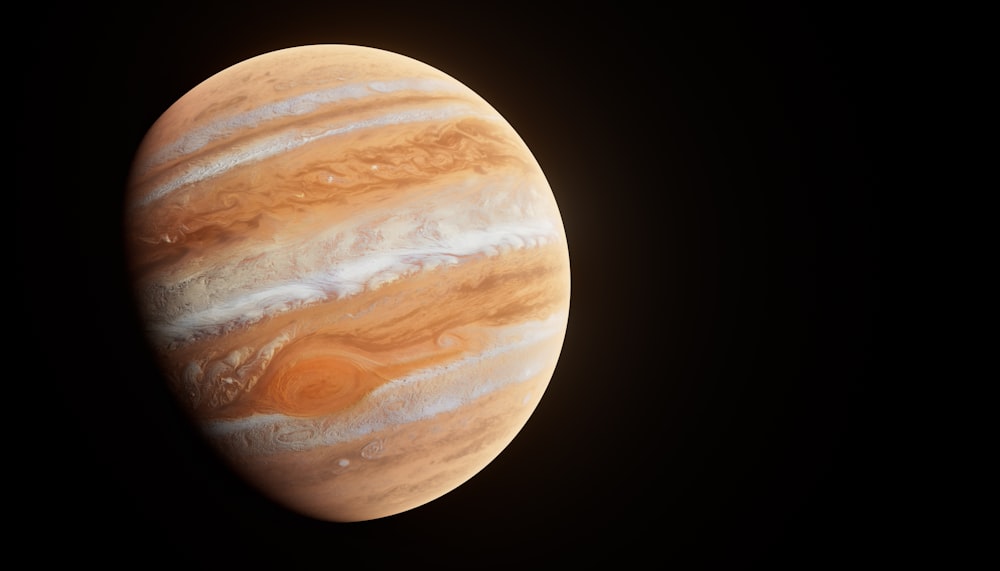
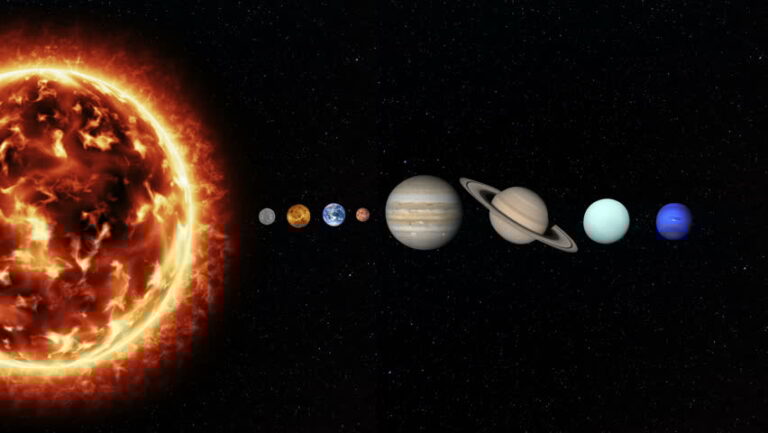
If we travel from our sun outwards, we have four terrestrial planets. Terrestrial planets are the four closest to the Sun i.e., Mercury, Venus, Earth, and Mars. The other planets, Jupiter, the oldest and largest, Saturn, home to the magnificent ring system, Uranus, and Neptune are called Gas Giants.
Since the formation of our solar system, research and studies reveal so many interesting facts about Gas Giants. All of them have the continuous chemical reaction of extreme weather that drives a vast range of fascinating phenomena.
The term Gas Giant has been given by science fiction author James Blish in 1952.
Gas Giants have a rocky or molten core but are topped with thick layers of Hydrogen and Helium in different states. Most of the time the gas part refers to hydrogen and helium but is not very accurate because the vast region is not in a gaseous state but actually becomes more intense under high pressure. As a result, the matter present there reaches a state called “critical point,” a state at which the distinction between liquid and gas disappears.
Gas Giants have a rocky or molten core but are topped with thick layers of Hydrogen and Helium in different states.
These Giants must have to be two or three times larger than Earth and several times massive, and with time they can also grow to be much larger.
But it’s to be noticed that the mass doesn’t relate to their giant size. Then why is it so? In this case, heavier gas giants have more mass that eventually exerts more gravitational pull, becomes more compact and tight making them smaller in size. But in any case, their vast upper atmosphere drives extreme weather which makes the surface with bands and spots and other fascinating features.
But what makes them different if Gas Giants are made out of the same core as the inner terrestrial planets?
The gas giants begin their life as large rocky planetary cores that grow larger and larger through the accumulation of mass, same as the terrestrial ones, but the difference, however, is that gas giants formed beyond the snow line of the solar system – the boundary beyond which water and other volatile substances are present in the form of solids like rocks that provide so much extra material in the formation of these planets.
In the atmosphere of gas giants, hydrogen and helium clouds are abundant creating an enveloping layer around the planet and it becomes so heavy and pressurized that the rocky surface of the planet is transformed, turning the whole thing into a massive ball of liquified gasses in the various form under unimaginable pressure.
Faisal Ur Rahman is an Astrophysicist and Data Scientist, interested in learning and testing theories related to the evolution and expansion of our universe. He mostly employs modern tools like data sciences, data visualization, machine learning, and statistics to seek answers related to cosmology, dark energy, and things on the big scale. Academically, he is in the last year of his Ph.D. candidateship at the Institute of Space Sciences & Technology – at the University of Karachi. He is working as a Senior Researcher & Instructor at the Karachi Institute of Technology and Entrepreneurship (KITE) and has been teaching as a visiting faculty member at different higher education institutions in Karachi.
He has worked in the academia & IT industry for more than 14 years. He also works with one of the largest surveys of radio astronomy – EMU or Evolutionary Map of the Universe, with more than 300 scientists from 30 different countries. The EMU project is expected to detect millions of radio sources using the ASKAP telescope based in the MidWest region of Western Australia. Faisal Ur Rahman works from Pakistan as a collaborator.
We ardently had the privilege to get the story of his journey and his view of the Solar System and the Universe. We started the conversation with his background that led him to pursue his career as a professional astronomer.
Faisal ur Rehman is currently working as a Senior Researcher & Instructor at the Karachi Institute of Technology and Entrepreneurship (KITE)
Fouz: How did you get interested in Astronomy and Cosmology? As these are not very popular career choices in Pakistan.
Faisal Ur Rahman: I have always liked science-fictional shows, so that sparked some basic level of interest for me to explore the field as a professional. However, I seriously started to consider Astrophysics & Cosmology, as the area which I can pursue in research, during my Australian National University days while completing my master’s degree. I later got the opportunity as an HSN researcher which helped me in joining EMU Radio Astronomy collaboration and CAASTRO. I have also joined the WALLABY-ASKAP collaboration which is another major Radio Astronomy collaboration. These opportunities exposed me to a lot of interesting work. My undergrad degree is in Telecommunication Engineering & my industry experience was (and still is) mostly related to software and business intelligence (BI) development. A good thing about Astronomy is that a lot of this industry experience became relevant & useful in my Astronomy research and also Astronomy research helped in developing more skills (especially in data sciences) that are relevant to the industry.
Fouz: Well, hearing your introduction was very surprising. It’s interesting how you employed your engineering and programming background in Data-Driven Astronomy. Well, coming to our main topic of the Solar System, we would like to get your vantage point as a researcher, what scientific questions should we seek within our solar system, for instance?
Faisal Ur Rahman: Although my focus is mainly on studying cosmology and the evolution of our universe at very large scales, I think we have a lot to learn about our immediate neighborhood and our own solar system too. For me, a major area where we can work is to expand human civilization beyond Earth. Studying the possibility of life beyond Earth can potentially lead to a new evolutionary phase for humanity. Some countries are working on it which is also helping them in advancing their science & technological developmental capacity in many other areas too and I hope someday Pakistan will play its part in such endeavors too. Pursuing such projects will not only help in advancing some interesting science goals but the process of pursuing these science goals will help in developing our industrial capacity, technical human resources, and overall sci-tech R & D capacity which can play an important part in our socio-economic development and the advancement of our civilization.
Fouz: What do you think we currently know about our solar system? Do you think that there can be other identical solar systems in the universe like ours?
Faisal Ur Rahman: Humanity has been studying our solar system for a long time. We know about the planets, moons, our stars (sun), asteroids, and many other objects in our solar system. However, there are many things that we still don’t know about and I think we still have a lot of work to do and solve a lot of interesting problems. This is how humanity evolves: we face challenges and unsolved problems, we look for the answers, we learn new things, we build new things, we find some answers and then we look for new interesting problems. As of now, NASA’s Transiting Exoplanet Survey Satellite (TESS) has identified 5000+ detections of potential exoplanets, revolving around different stars, and there are other teams working on exploring new exoplanets too.
Illustration of NASA’s Transiting Exoplanet Survey Satellite – TESS. Image Credit: NASA’s Goddard Space Flight Center
There are various teams that are working on exploring the atmospheres of exoplanets. This suggests there is a great interest in the astronomy community and general public too about finding planets outside of our solar system and the possibility of life on other planets.
Fouz: Recently, the much-talked-about JWST was launched in an effort to search for our origin. Will we be studying/observing our own solar system?
Faisal Ur Rahman: JWST is aimed at observing our universe at infrared wavelengths. Apart from studying galaxy formation, star formation, exoplanets, and other goals which require observing the objects beyond our solar system, JWST will also help astronomers in learning more about our own solar system too like studying the atmosphere of Mars or Saturn, observing asteroids, observing Kuiper Belt objects, etc. This is one of the most exciting times for humanity, as emerging technologies are helping us in exploring new frontiers in space research which are helping us in improving our understanding of the universe.
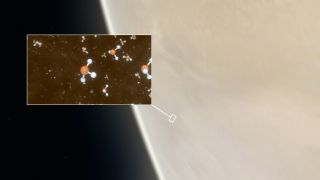
Fouz: What do you think about the recent controversy of having the Phosphine found in Venus? Is there any possibility that we may have any microbial life on our neighboring planets?
Faisal Ur Rahman: Detection of Phosphine on Venus could have indicated the occurrence of some biological processes in the atmosphere of Venus and the mere possibility of it created a lot of interest in people especially the way the media reported it. However, further analysis by other teams suggested no evidence of the trace gas phosphine in the atmosphere of Venus. This is how science works. We look for evidence, we recheck that evidence and we publish results to open our findings for peer review.
No, evidence with current data doesn’t negate the possibility of finding such traces in future studies.
An artist’s depiction of Venus and, in the inset, phosphine molecules. Image credit: ESO/M. Kornmesser/L. Calçada & NASA/JPL-Caltech
Fouz: We live in times where we think that we can be interplanetary species. Do you think it is possible for humans to live on Mars?
Faisal Ur Rahman: If we are able to develop and apply the right technologies then maybe in a few decades humans will start living on Mars, various space agencies and startups are working on it and it’s entirely possible. With the current level of advancement in science, it is possible for humanity to become an interplanetary species but it will require resources, feasible engineering solutions, and commitment to make it a reality.
Fouz: As you have been researching Astrophysics and Cosmology for quite a long time, what do you think is the most interesting fact we know about the universe?
Faisal Ur Rahman: For me, the really interesting things are actually the ones which we don’t know much about like what is the nature of things that make up 95-96% of our universe (Dark Energy and Dark Matter). Why is there an unexpectedly large cold spot in CMB maps? Why are we getting different values for the Hubble Constant from different signatures? So, these questions keep me curious and provoke my thoughts.
Fouz: Do you think that we have a promising future in Astronomy or Space Sciences as a career in Pakistan for young people?
Faisal Ur Rahman: In Pakistan, unfortunately, we don’t have any serious Astronomy research programs and we don’t even have any professional quality telescopes in the country. So purely pursuing Astronomy research as a career will be challenging for anyone. However, the skills you will gain and the learning capacity you develop, during your space science education (undergraduate and graduate), can help you in getting jobs in various other areas (Data Science, Physics, Programming, Aerospace, GIS). But this entirely depends on your own circumstances, interests, and efforts. I suggest students keep developing programming and database skills and develop a good background in mathematics and statistics. These technical skills and knowledge base, backed by your interpersonal skills and desire to learn new things, can not only help you in your research in areas related to Astronomy and Space Sciences but can open doors in other areas as well.
Ceres is the only dwarf planet in the inner solar system and the largest object in the asteroid belt between Mars and Jupiter. When Giuseppe Piazzi discovered it in 1801, it was the first discovered member of the asteroid belt. Ceres became the first dwarf planet to have a spacecraft visit when Dawn arrived in 2015.
It was previously classed as an asteroid. In 2006, astronomers classified it as a dwarf planet because Ceres is so much more significant and different from its rocky neighbors. Even though it makes up 25% of the overall mass of the asteroid belt, Pluto is 14 times more massive.
New research data from NASA’s Dawn spacecraft revealed that this dwarf planet is geologically alive with ice volcanos and surviving pockets of an ancient ocean. When the Dawn was running out of fuel during its final orbit, it collected some instrumental data about Ceres. These close flyby observations show that the Dwarf has briny liquid seeping out of its surface and mounds and hills that most probably formed when the ice melted and refroze after an asteroid impact nearly 20 million years ago.
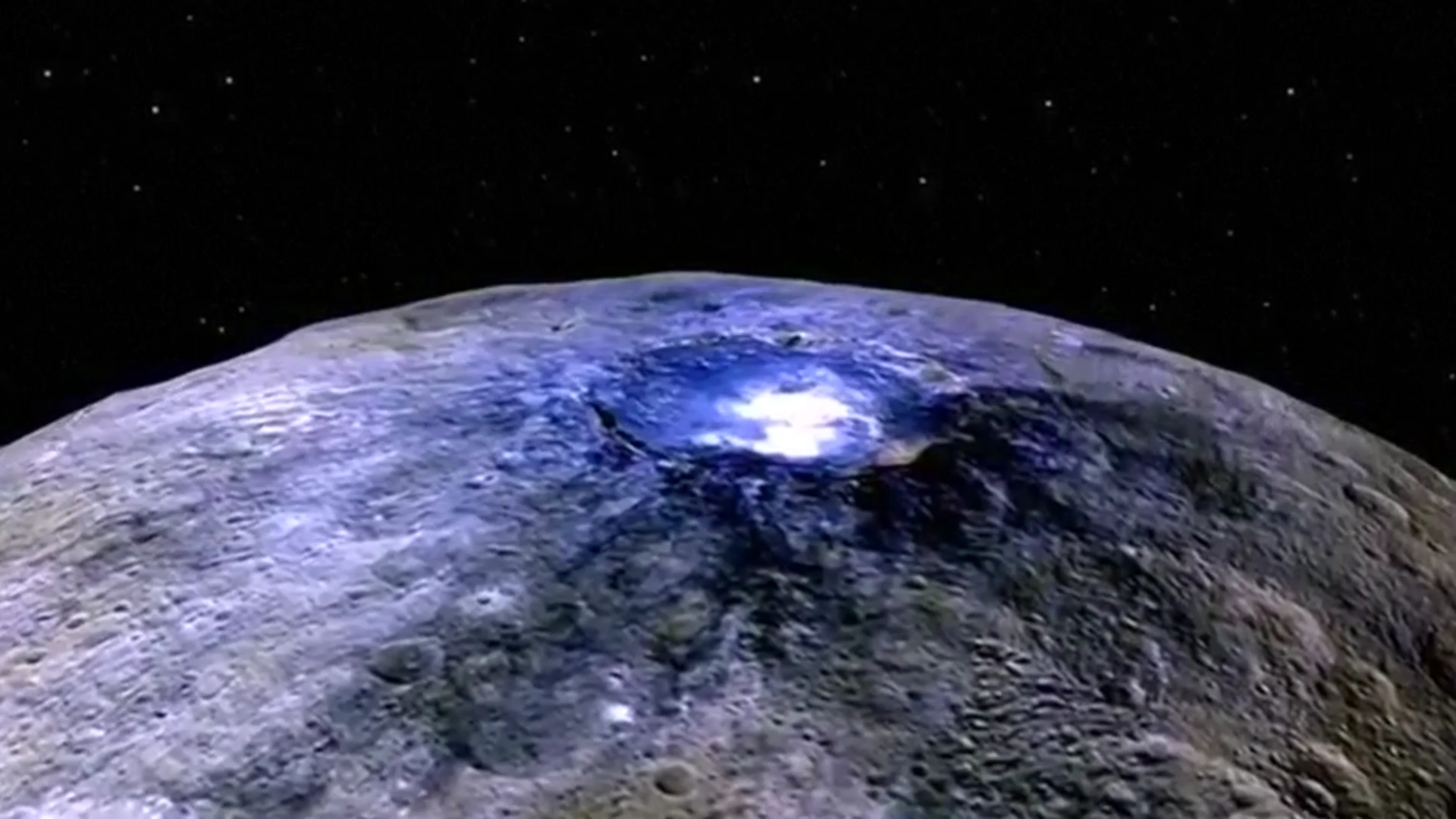
New research from the Max Planck Institute for Solar System Research suggests that the bright spots on dwarf planet Ceres’s surface are a type of salt
Now humankind knows that that tiny world is geologically alive. These findings help resolve other mysteries that surrounded the Dwarf for a long. The article presents some fascinating information about it.
Ceres is named after Ceres, the Roman god of corn and harvests. The word cereal is derived from the same word.
Atmosphere
Ceres’ atmosphere is fragile, and there is evidence that it includes water vapor. Ice volcanoes or sublimating ice near the surface could produce vapors (transforming from solid to gas).
Formation
Ceres formed around 4.5 billion years ago; with the rest of the solar system, gravity drew spinning gas and dust into creating a small dwarf planet. Ceres is classified as an “embryonic planet” meaning it began to form but did not fully develop. Jupiter’s powerful gravity kept it from becoming a complete planet. Ceres landed into its current location in the asteroid belt between Mars and Jupiter around 4 billion years ago, among the remaining parts of planetary creation.
Dwarf planet Ceres’ ‘lonely mountain’ mystery has been solved
Size & Distance
Ceres is 1/13 the radius of Earth, with a radius of 296 miles (476 kilometers). It would be around the size of a poppy seed if Earth were the size of a nickel. It is located at a distance of 2.8 astronomical units from the sun (257 million miles, 413 million kilometers). The distance between the sun and Earth is measured in astronomical units (abbreviated as AU). It takes 22 minutes for sunlight to get from the sun to Ceres at this distance.
Rotation
Ceres completes one orbit around the sun every 1,682 Earth days (4.6 Earth years). Ceres’ day is one of the shortest in our solar system because it rotates once every 9 hours. Its rotation axis is only 4 degrees off the plane of its orbit around the sun. This implies it rotates nearly completely upright and has no seasons like other planets with more tilted orbits.
Structure
Ceres is closer to the terrestrial planets than its asteroid companions (Mercury, Venus, Earth, and Mars), yet it is far less dense. Ceres is thought to have a solid core and a water-ice mantle, and it could have a water content of up to 25%. Ceres has more water than Earth, if this is right. Ceres’ crust is rough, dusty, and covered with massive salt deposits. The salts on Ceres aren’t like table salt (sodium chloride) but are made up of a variety of minerals such as magnesium sulfate.
Surface
Ceres has a plethora of small, new craters, none of which are greater than 175 miles (280 kilometers) in diameter. Given that multiple massive asteroids must have hit the dwarf planet during its 4.5 billion-year existence, this is astonishing. The lack of craters may be due to ice layers beneath the surface.
If ice or another lower-density material, such as salt, is present near the surface, the surface characteristics may smooth out with time. Some enormous craters may have been obliterated by prior hydrothermal activity, such as ice volcanoes. Some areas of Ceres’ craters are always in shadow. These “cold traps” could have water freeze in them for long periods if they aren’t exposed directly to the sunshine.
It has a 57 miles wide impact crater known as Occator covered with perplexing bright salt spots. Researchers suggested that as recently as 1.2 million years ago, cold underground brine drained out from this crater’s floor and formed salty deposits.
Existence of Life
Ceres is one of the few planets in our solar system where scientists hope to find evidence of life. The Dwarf possesses something that few other planets do: water. Water is necessary for life on Earth. Thus it’s plausible that life may exist there if few conditions are met. The living organisms out there will most likely be very minute germs akin to bacteria. While it may not have any living things today, there may be evidence that it had in the past.
Soil, water, fire, and wind: Where there’s energy, there’s life. Though a habitable planet supports life, Earth’s capacity to sustain life declines. The exponential rise in the population rate has led to a drastic disbalance in the availability, distribution, and utilization of natural and synthetic resources.
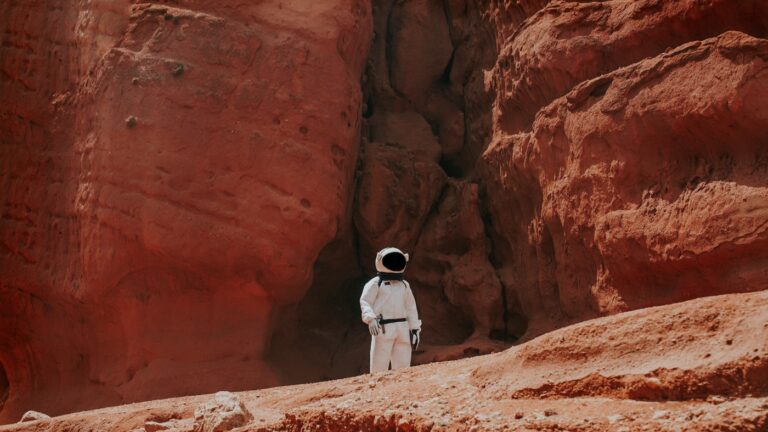
Aware of this harsh reality, scientists have been trying to come up with a solution for the existence of mankind, even if it demands inhabiting a new planet altogether. The Red Planet marks the top list. Let’s peak in and see if Mars is really the savior.
The reservoir of hidden water
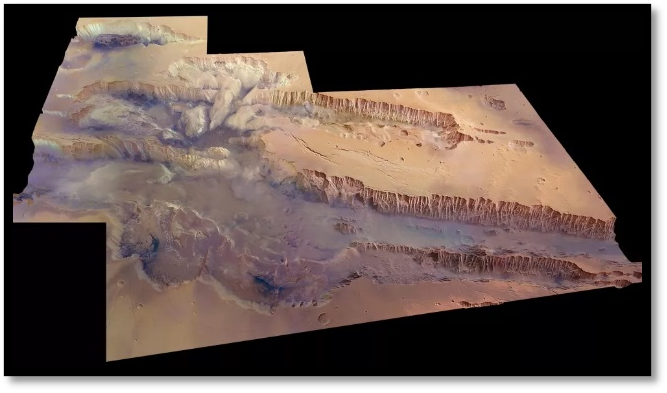
A considerable amount of water has been found in the Valles Marineris canyon, the largest canyon in the solar system. Valles Marineris canyons are landscapes found along the Martian surface (Mars equator).
This discovery by “The European Space Agency’s ExoMars orbiter” is a game-changer that indicates the possibility of sustaining life on Mars. The discovered water is primarily in the form of ice and is believed to cover an area of approximately 15,830 square miles.
Valles Marineris, at Mars, the largest known canyon in the solar system
Alexey Malakhov, a scientist at the Space Research Institute of the Russian Academy of Sciences, also stated on this discovery, “We found a central part of Valles Marineris (Candor Chaos) to be packed full of water — far more water than we expected.”
Basically, an instrument called “Trace Gas Orbiter’s (TGO) Fine-Resolution Epithermal Neutron Detector (FREND)” detected a significant amount of hydrogen, along with oxygen, that forms water. One of the reasons Earth is habitable is the availability of water, an essential need of living organisms. The possibility of water prevalence on Mars hints at possible life on Mars in the past.
The prevalence of hydrated mineral streaks on Mars also shows the possibility of inhabiting the planet. Mars is smaller, has less gravity, and has a thick atmospheric blanket compared to Earth. This means that the water evaporated, and less of it came back on the surface of Mars, leaving behind salty streaks.
In 2011, these salty streaks, or Recurring Slope Lineae (RSL), were observed via a High-Resolution Imaging Science Experiment (HiRISE) camera aboard the Mars Reconnaissance Orbiter (MRO) and appeared dark in color. Though seen occasionally, they seemed to be salty water lakes running down the surface of the Red Planet.
Underground Lakes on Mars
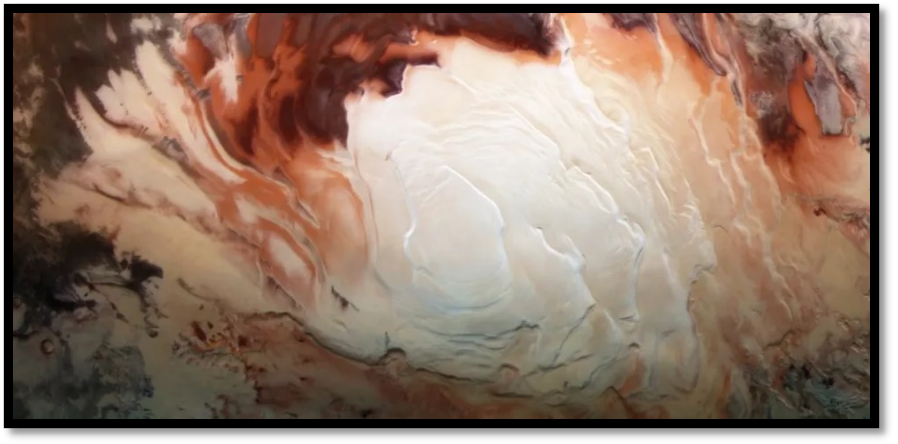
Subsurface water at the Southern pole was another potential water source predicted to prevail on Mars. Scientists employed the European Mars Express spacecraft to confirm its presence, which used its Mars Advanced Radar for Subsurface and Ionosphere Sounding (MARSIS) for detecting the proposed water presence.
This technology basically works by penetrating a radar underground that sends pulses to the surface. The time taken for radar pulses to be reflected underground and reach back to the surface of Mars is observed. This technology enabled the discovery of three topographical bodies, interpreted as underground lakes, each of approximately 6 miles.
Moreover, further analysis of already existing data provided by MARSIS led scientists to conclude that there are multiple radar reflections just as those observed for the plausible underground lakes, but they cannot confirm if these bodies are actually underground frozen lakes. This uncertainty lies in the fact that these possible underground lakes are not frozen, which is confusing.
The white region is the icy cap that covers the south pole of Mars
Aditya Khuller, a doctoral student at Arizona State University, and MARSIS co-principal investigator Jeffrey Plaut, of NASA’s Jet Propulsion Laboratory (JPL) in Southern California, are currently working on the mystery of the proposed underground lakes at Mars, intending to find concrete evidence that would explain the episodes of radar pulses.
Is there light at the end of the Tunnel?
Atmosphere comprising primarily carbon dioxide, approximately 40% of Earth’s gravity, small size, and cold temperatures (-63ºC) are premier reasons why inhabiting Mars is a challenge. In addition, the transition from Earth to Mars is an arduous task.
There are numerous questions: How could men construct colonies at Mars and obtain drinking water? How will men grow food for feeding the population? How would humans manage life at such a low temperature? The list of questions is never-ending.
Furthermore, it is not easy to land humans on Mars. The voyage can take around 150-300 days, depending on the distance between two planets at the time of launch and the viability and efficiency of rockets (fuel used, machinery needed, maintenance required).
The size of Mars restricts the number of living individuals it can support, which means that a mechanism is needed to classify the group of people that will end up on Mars. It is a tedious task to select individuals who will be given another chance at life on a new planet with the current population.
Ideally, the people landing on Mars should be skilled individuals with different backgrounds (scientists, engineers. doctors, teachers) with no underlying health conditions. The selection process of these individuals can cause chaos and unrest among the rest of the population.
Additionally, establishing a settlement viable for mankind at Mars is demanding. Brainstorming is needed to find ways to transport construction material to Mars, keeping in mind the pressure changes, temperature changes, radiation exposures, and other environmental conditions at Mars compared to Earth.
Growing plants and rearing animals is another challenge as the surface of Mars needs to be modified to support such activities. Hydroponics or aeroponics plants are an alternate, but in practical terms, their maintenance and acclimatization of the atmosphere at Mars to produce maximum output is complicated. A substantial amount of food reserves and oxygen supply is required till the former and latter are acquired on Mars.
Although there is evidence for water on Mars’s surface, the accessibility of water for human use is an area of expertise. Mainly, salty streaks of water are found to be purified for consumption. The amount of water readily available at Mars is not pure. This could pose a potential problem regarding water accessibility and utilization for the individuals who will colonize Mars.
A Step forward for finding potential solution for colonizing Mars
Scientists across the World and at NASA are stepping forward to find potential long-term solutions to the complications associated with inhabiting Mars. One of the initiatives is the MOXIE experiment on NASA’s Perseverance rover that aims to utilize the abundant carbon dioxide on Mars and convert it to oxygen for respiration.
Additionally, scientists are working on improving the range and sophistication of laboratory experiments and performing initial tests at Mars, especially on making the inhospitable areas of Mars hospitable.
For food production, scientists are gearing up to introduce particular microorganisms that photosynthesize in low natural illumination. This would create a great blend of gasses required for breathing.
At International Space Station (ISS), scientists are maneuvering potential functional microorganisms that have the tendency to survive and reproduce in climactic alien conditions as present on Mars.
Theoretically, the idea of colonizing and inhabiting Mars seems reasonably achievable, but practically it is far stretched. Numerous studies modified and upgraded technological developments, experimentation, and analysis are required to cross out all the concerns related to life on Mars. If mankind achieves its goals, it could undergo a tremendous living experience on a new planet.
“Only those who can see the invisible can do the impossible” – Jeffrey Fry.
Humans have been fascinated by the limitless space from the beginning. It makes one wonder what lies in outer space. NASA has played a critical role in making us understand outer space more effectively.
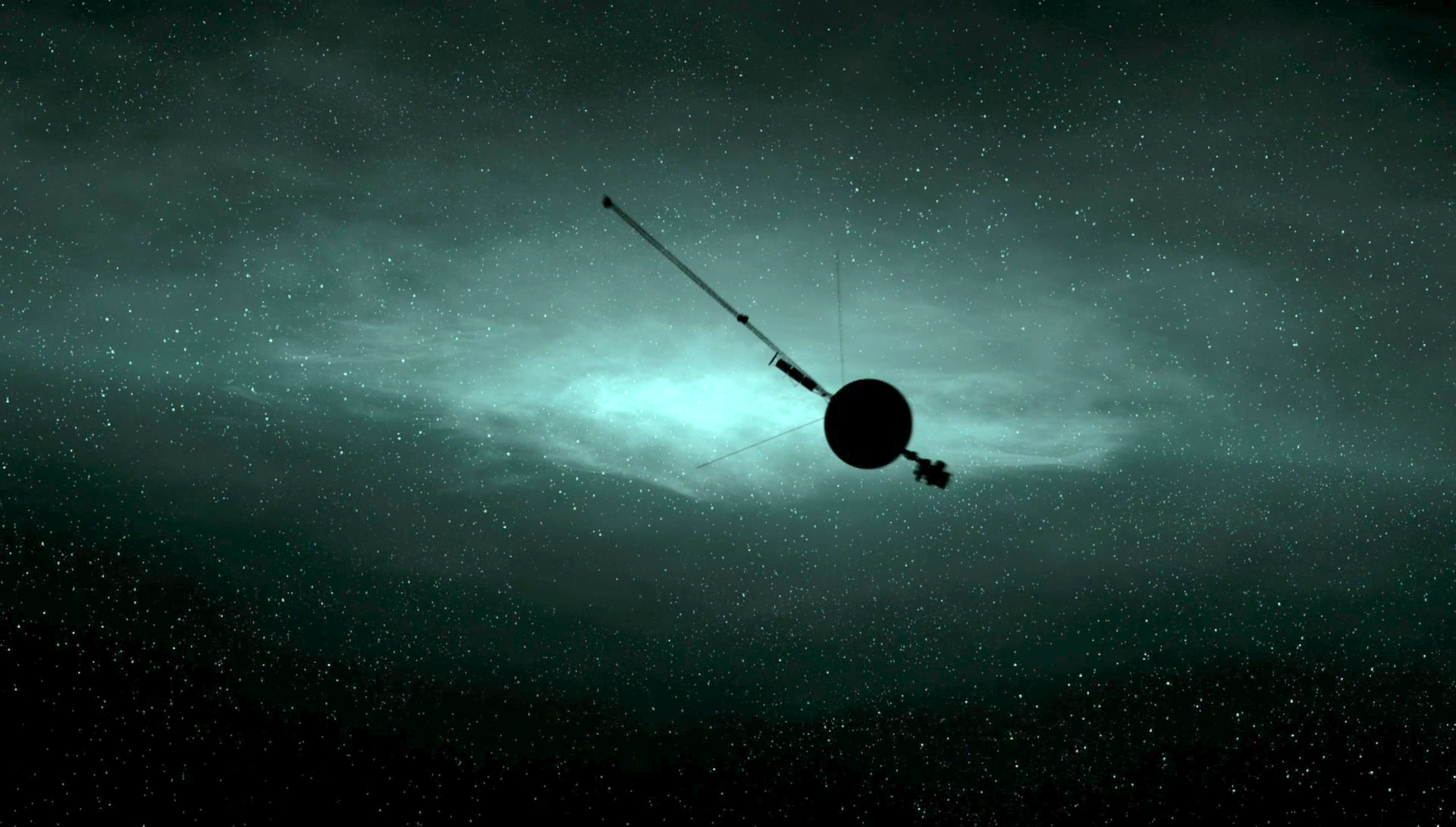
The documentary “The Farthest”, directed by Emer Reynolds, encompasses the achievements of all the brilliant scientists and engineers who played their part in sending Voyager 1 & 2 into space. Voyagers I & II were launched into space in 1977. At that time, with limited technology, this launch was considered the most successful feat of humankind to reach outer space.
The Voyager 1 reached Saturn and its moon Titan, a billion miles away from the Earth in 1980. While Voyager 2 reached Uranus and Neptune in 1986. In 2012, first time in human history, Voyager 1 (a man-made object) crossed the solar system and entered interstellar space. Voyager 1 is still going beyond infinity and sends signals to Earth. Meanwhile, Voyager 2 is on its way back to Earth.
Voyager 1 spacecraft has a golden disc enclosed in both vessels that contained greeting messages in various languages of Earth, different pieces of music from cultures around the globe, and diagrams. These were sent in space to connect to living beings in outer space if there is any.
Launched in 1977, NASA’s epic Voyager missions revolutionized our understanding of Jupiter, Saturn, Uranus, Neptune, and their spectacular moons and rings. In 2012, Voyager 1 left our solar system.
The documentary released in 2017 covers interviews of several scientists and team laypersons who contributed to creating the golden disc. One of the engineers named Linda Morabito shows her excitement as “I had the first evidence of active volcanism beyond Earth”. This was when she got the signal from Voyager showing volcano eruptions on Jupiter.
The Farthest took a whole three decades to formulate and display the most up-to-date information about the journey of both Voyager spacecraft. It shows how space science is stimulating and enthralling.
The journey that took about 40 years is described by an imaging specialist, Brad Smith, as “We did something really, really great”. We thanked NASA, the director, scientists, engineers, and experts involved in the project and made this mission possible. We tapped the potential technology in the 1970s and explored the universe beyond our solar system.
Voyager 1 spacecraft has a golden disc enclosed in both vessels that contained greeting messages in various languages of Earth, different pieces of music from cultures around the globe, and diagrams. These were sent in space to connect to living beings in outer space if there is any.
At one point, this documentary makes you feel proud. Humans planned such a feat of reaching farthest and consequently accomplished it. The imagery used in the documentary shows the beauty of the outer planets in our solar system. The documentary is packed with facts, stats, and exquisite visuals as well.
The documentary is not only captivating from an informational point of view, but it also put such a powerful, unexpected emotional impact on the viewers. It grabs the viewer’s senses from start to end and gives hope to the future of space exploration.
The Farthest is an engaging, inspirational documentary that leaves viewers in awe. I will highly recommend this documentary to all space sciences enthusiasts —A must-watch for those who wander into space.
More often than not, mankind gained knowledge of the universe the same way a child learns about society. Just like a growing child progressively becomes of the larger units of human organization— Family, neighborhood, city, and so on. Astronomers have slowly endorsed the hierarchical arrangement of the heavens. So, the astronomers come up with the idea of extraterrestrial life to find the possibility of the existence of life beyond Earth.
A few mind-blowing questions have been asked throughout the history of astronomy are, can life exist beyond the Earth? If so, what form might it likely take? Are there other solar systems like ours? And how many solar systems are in our Milky Way galaxy?
Further findings for extraterrestrial life (ET-Life) led to an entirely new branch of science—Exobiology, though we cannot find exact answers so far.
There is still a sizeable discussion about the origin of extraterrestrial life. In the early 20th century, Swedish scientist Svante Arrhenius proposed the “panspermia theory”, according to which life on Earth did not stem here but was brought by some of the meteorites that collided with Earth. Though this idea never met much support due to the complexities, it further resulted. Later, Sir Fred Hoyle revived the idea on his hypothesis; life on Earth originated somewhere in Space and was brought here by a Comet. This idea was too mere support because whole recourses of Space were mandatory rather than a restricted area like planet earth.
Photo, Exoplanets & Planetary Astronomy
In carrying out practical research for the extraterrestrial life on other planets as in our solar system, the scientists had to be dependent on the space research method, so the world, like the moon, might rule out at once. Venus is also ill-suited in every quarter since the giant and closest planet to the Earth has no solid surface. Saturn’s satellite Titan and Enceladus seem good candidates for ET-life since all ingredients of life are evident there. But the shallow temperature appeared to preclude them.
We left with only one candidate—Mars, which has always been regarded as the possible abode of life. After a decade’s long research and analysis carried out by NASA’s multiple Mars rovers, scientists still lack confidence that they could colonize Mars in the future.
Astronomers, therefore, shifted their search to beyond our solar system and have discovered dozens of potentially habitable planets in other solar systems—called “Super-Earths” concerning extraterrestrial life. In February 2017, they caught another solar system—Trappist-One, quite similar to our solar system and had seven earth-sized planets in its habitable zone. Since then, the researchers came across plenty of places that could park as men’s first interstellar colonies.
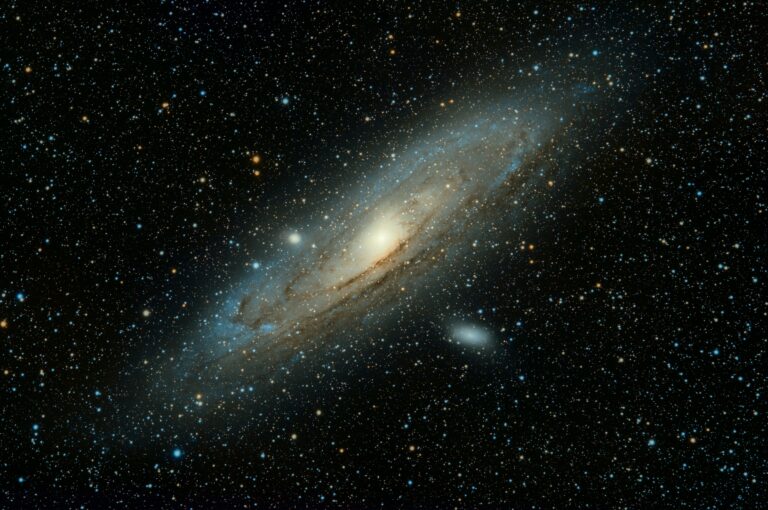
To date, astronomers have discovered more than 3200 stars with planets orbiting them in our Milky Way galaxy. But, our planetary system is the only candidate named “Solar System”. Our Sun is of the about 200 billion stars in our galaxy. So, one couldn’t disregard the possibility of more such planetary systems waiting to be discovered.
With the recent launch of the James Webb Space Telescope (JWST), mankind enters into a new era of discoveries in astronomy. JWST is a giant, most complex, and powerful telescope ever built. A substantial fraction of the JWST observing programme will be devoted to studying exoplanets and their atmosphere.
JWST will most likely briefly study our home planetary system, like the atmosphere of gas giants Jupiter and Saturn, and closely analyze the ice giants Neptune and Uranus. Its great sensitivity will enable the identification and characterization of comets and icy bodies in the outermost region of our solar system.
On the historical launch of JWST, Scientia Pakistan brings its exclusive edition with the theme “Solar System”. We have got exciting stories on Space and the human body, an analysis of research at ISS, the Tiny world Ceres, possibilities of colonizing Mars, history of Comets, Rings of Saturn, the historic launch of JWST, Parker Solar Probe, and a documentary review on The Farthest, and much more.
We have reached out to Pakistan’s astronomy circle and interviewed Astrophysicist Faisal-ul-Rehman, and an ambassador to Dark skies, Rayan Khan.
Summing up, this edition will be an excellent entertainment for astronomy enthusiasts worldwide. Have a fantastic read!